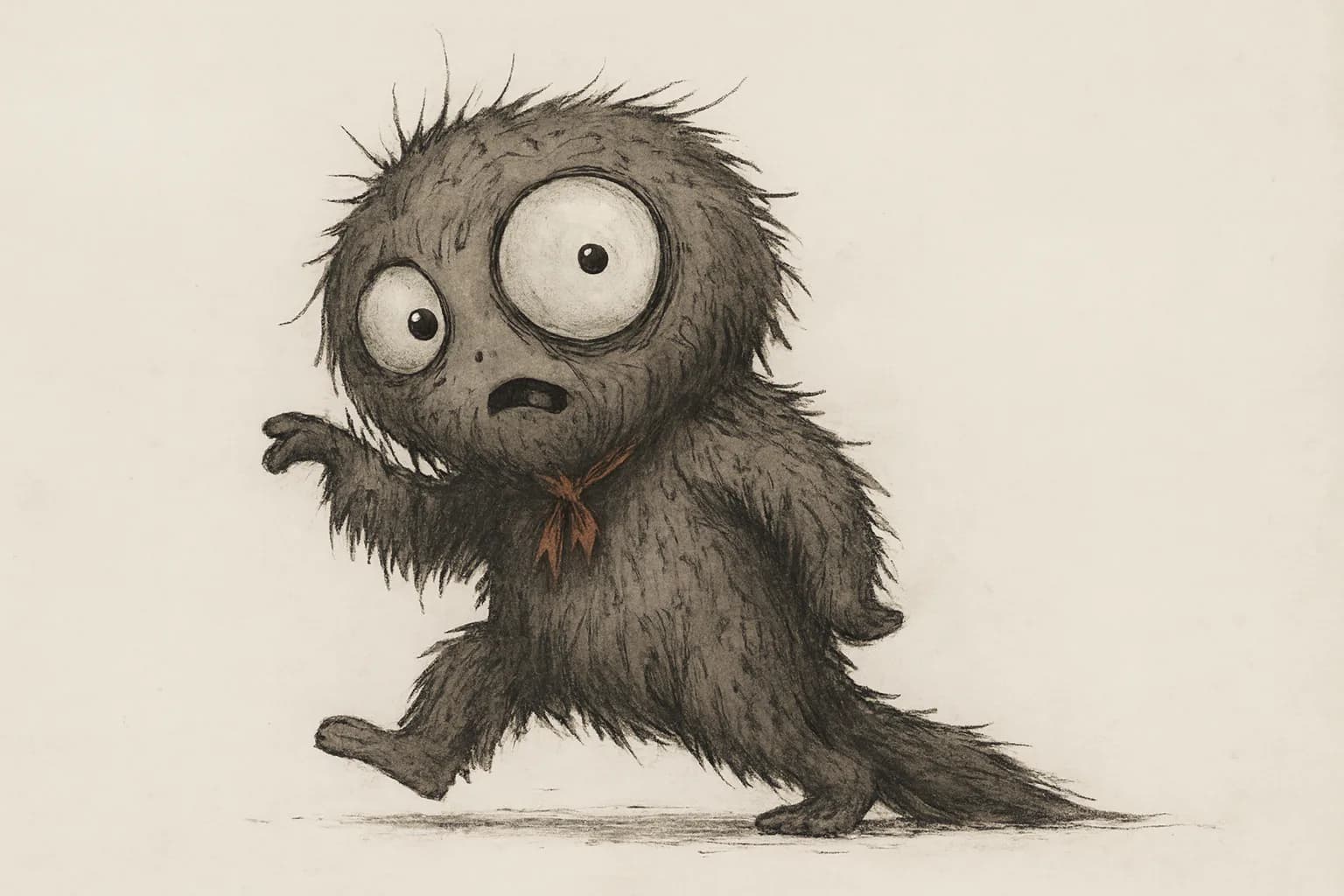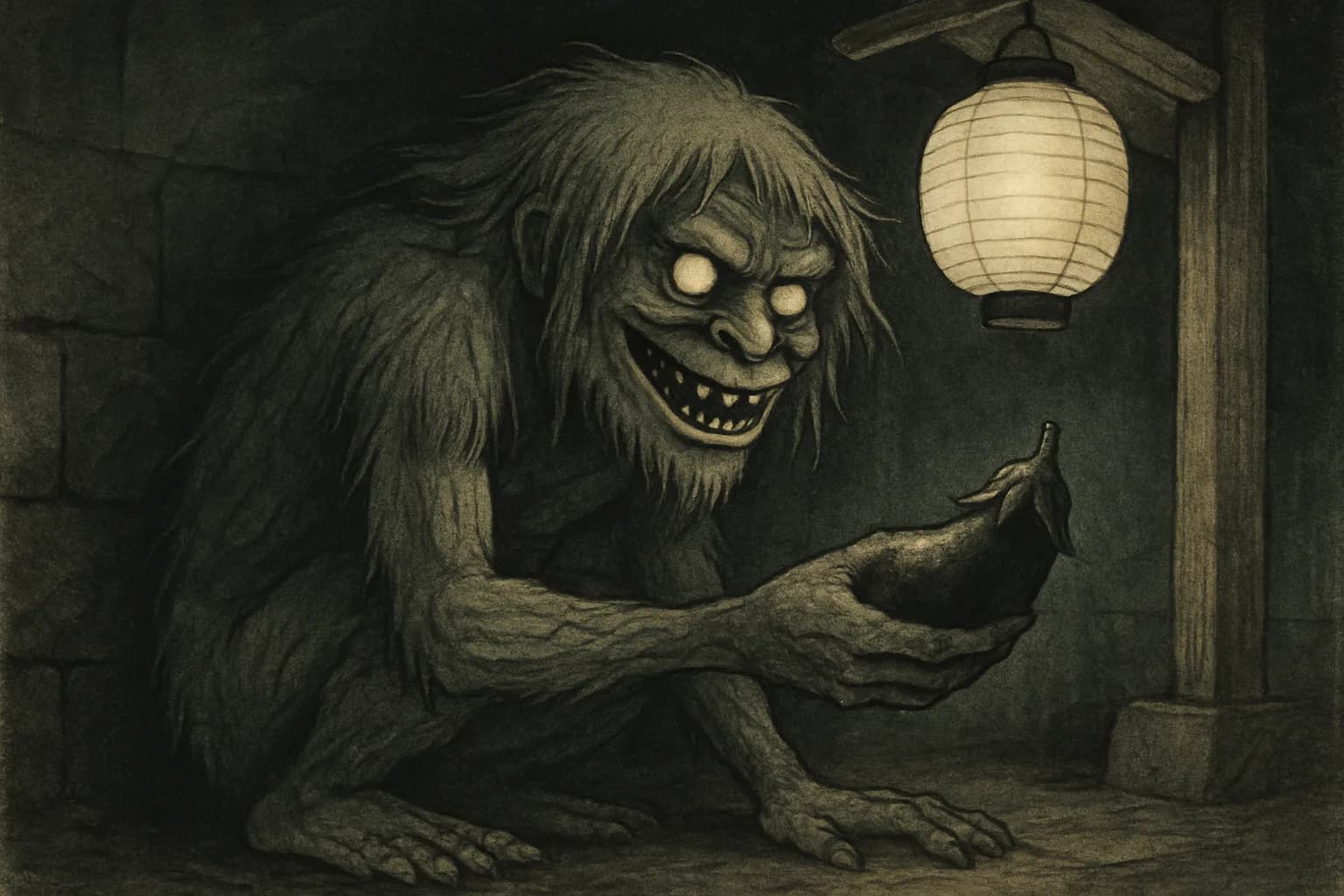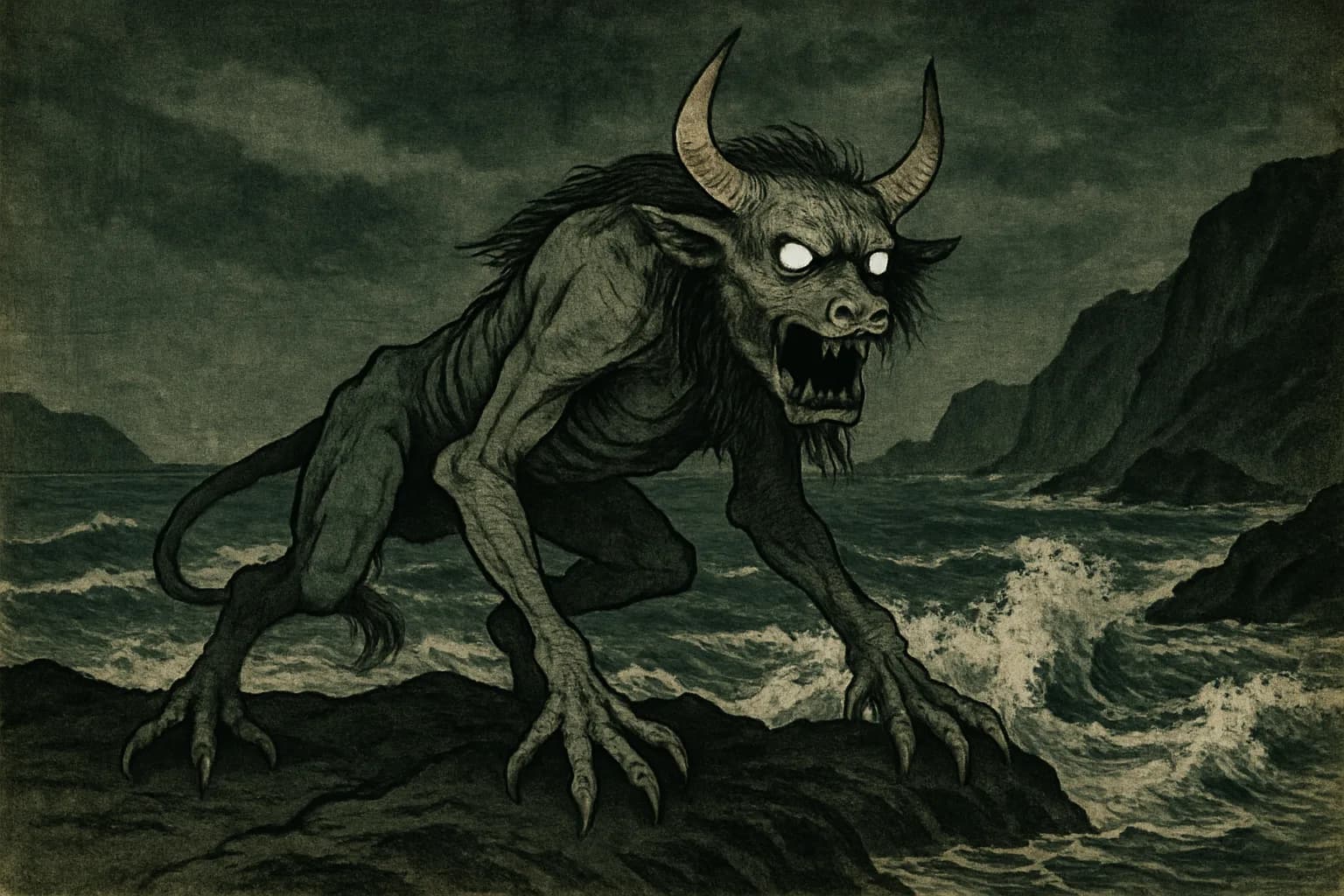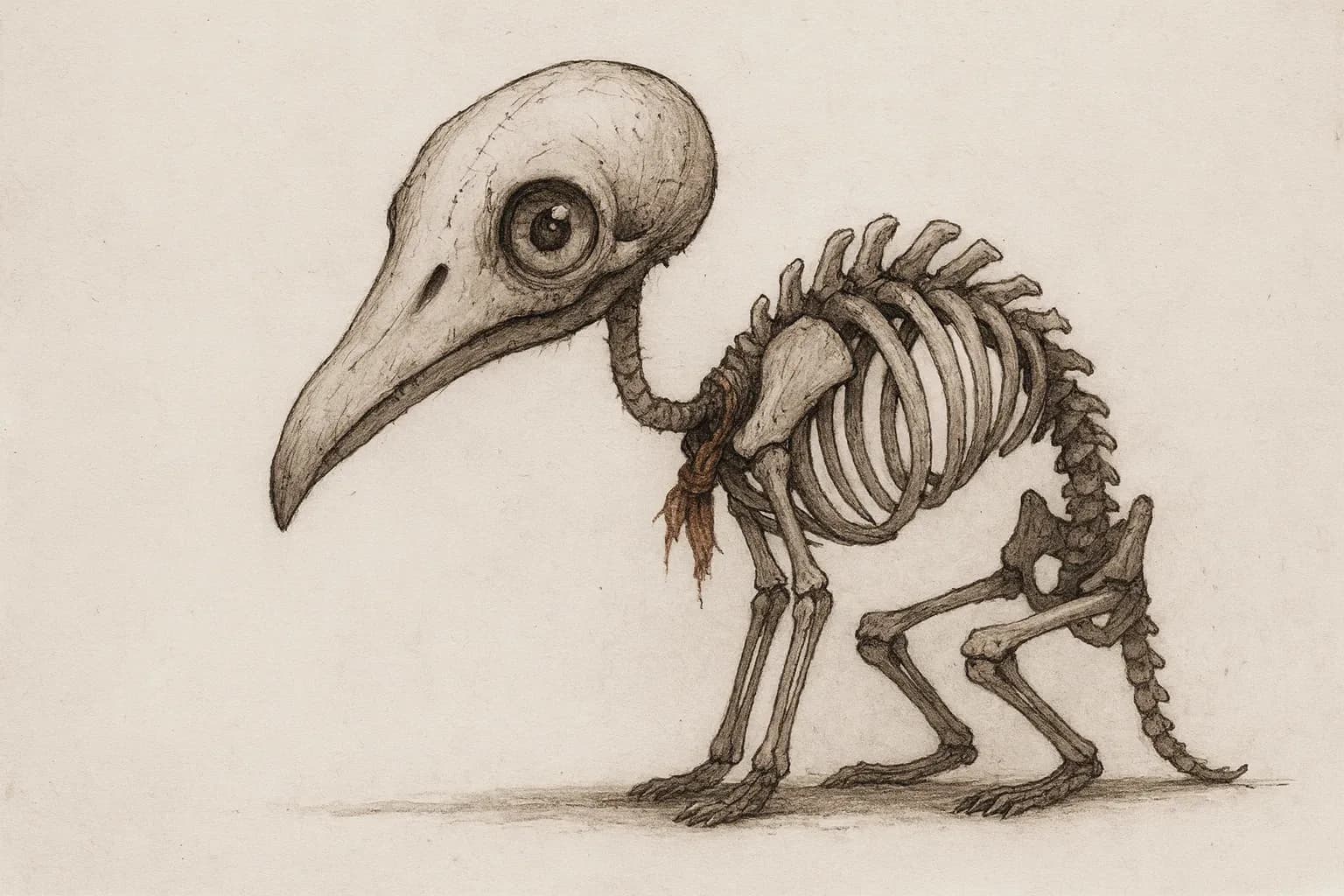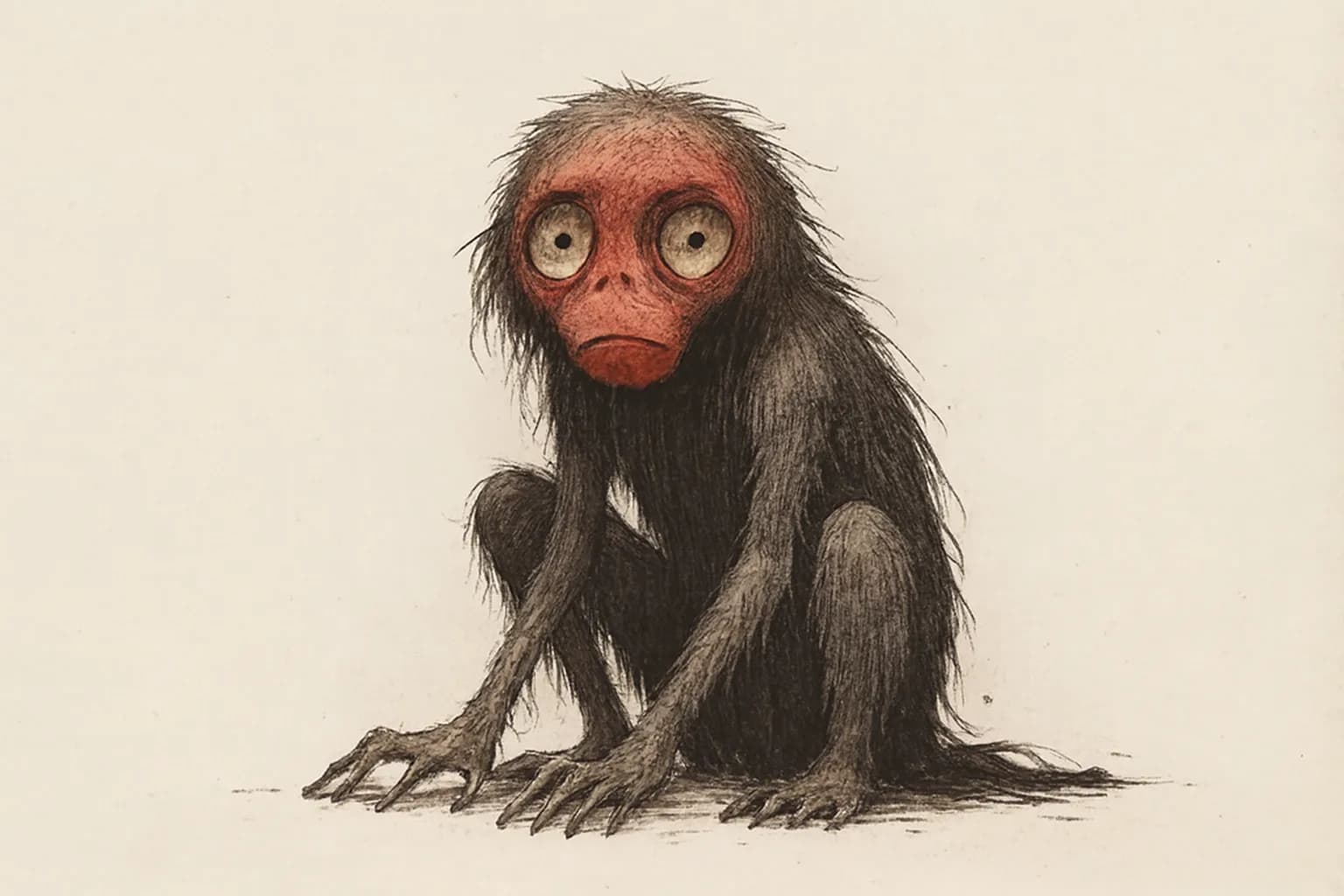
Along the rivers of Hiroshima and across western Japan, people did not blame drownings on the usual kappa. They blamed the enko — a kappa covered in hair, with a monkey's face and no shell. Its name, 猿猴 (enkō), is built from two old words for monkey: 猿 (en) and 猴 (kō). Put together, they simply mean "monkey." That is exactly what people thought they were looking at.
What does an enko look like?
Accounts from Tosa Province, now Kōchi, describe something about the size of a three-year-old child. Its limbs are long and end in claws. Its skin feels slimy, like a catfish.
One story is more specific. In 1863, in Tosa, people said they caught an enko alive. It had a red face. Its legs looked almost human. Its hands, the story adds, could stretch and shrink however it liked.
That single detail — hair, not a shell — is the whole difference from a normal kappa. Everything else about the enko's menace works the same way.
A river monster with its own habits
Like most kappa, the enko lives in rivers and in the sea. It attacks people who go in to swim. The old accounts say it reaches in through the body and pulls out the ikigimo, the "living liver." It is also said to hate metal.
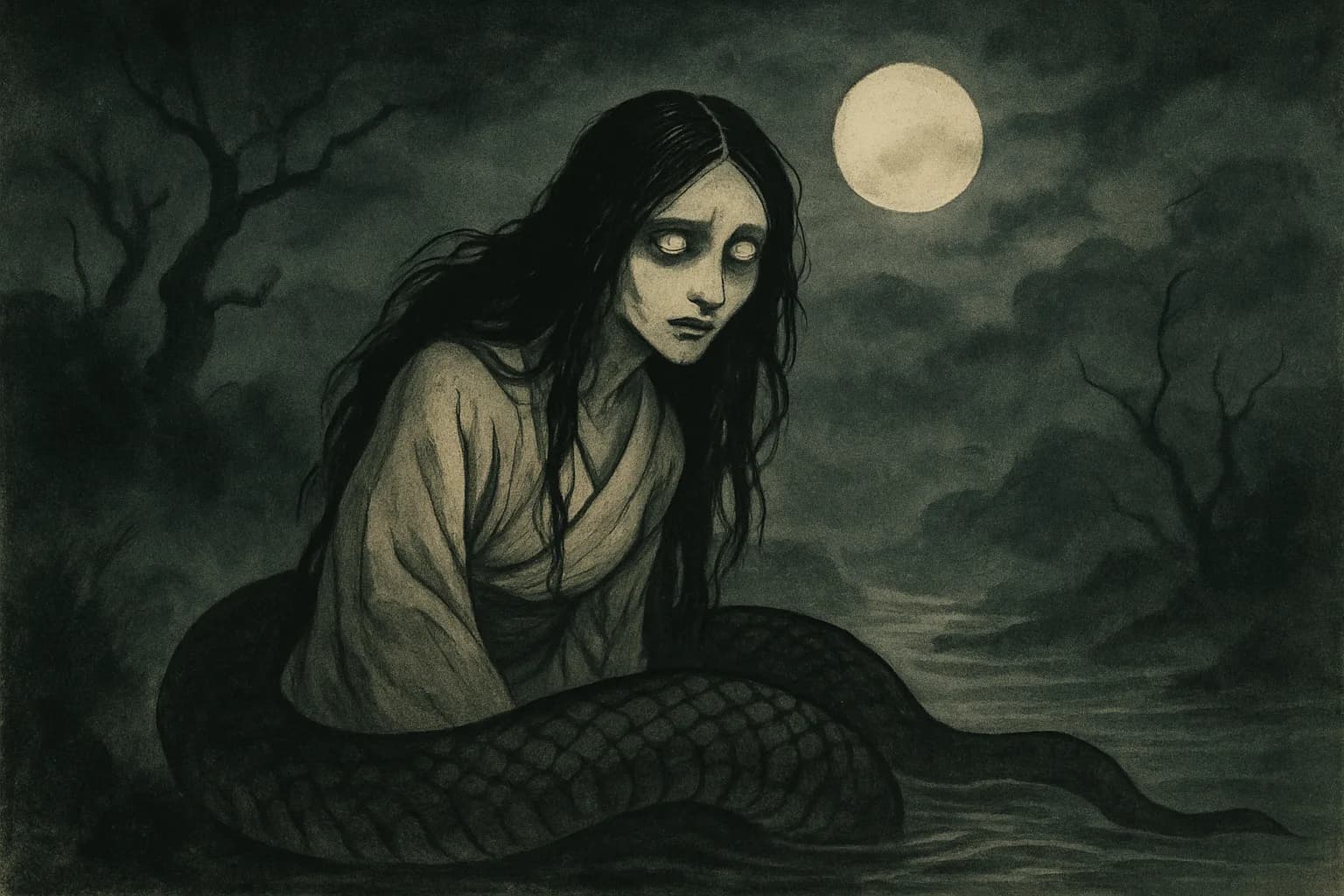
Some tellings add that it can turn into a woman. No story explains why. It is simply one more shape the enko is said to wear.
The enko of Tosa
Tosa's enko stories go further than most. In one, a man tied his horse by a riverbank. An enko kept yanking the horse's legs for sport. The man grabbed its arm and twisted it, meaning to teach it a lesson — but the twisting had no end. He was still at it come morning.
A folklorist named Katsurai Kazuo recorded another local belief: the Tosa enko can disguise itself as an ichimatsu ningyo, a traditional doll, and sit at night-fishing spots. Poke the doll, and it smiles back at you.
The darkest Tosa story says an enko can force itself on a human woman. Any child born from that is said to carry a plate on its head, like a kappa's, and to be born with one tooth already grown in. The story ends with that child burned to death.
Other ways to become an enko
Not every enko starts out as one. Across Shikoku and Chūgoku, other river spirits are said to turn into enko under the right conditions.
Shibaten, a kappa-like spirit found elsewhere on Shikoku, is said to enter the river and become an enko on one day each year — the Gion festival, the sixth day of the sixth lunar month. People float cucumbers downriver that day, since cucumbers are the creature's favorite food.
In Yamaguchi Prefecture, on Hagi's Ōshima island and in Abu District, villagers told of a kappa-like creature called Takiwaro. It spends three years in the mountains, then three years in the river. Only after that does it become an enko.
Where it comes from
The record itself calls the enko 河童の一種 — "a kind of kappa." That is the clue to how it started. It is not a new monster, just an old one redrawn with local features.
Most of Japan's kappa carry a water-filled dish on the head and wear something like a turtle's shell. No enko story gives it either. It wears fur and a monkey's face instead, and nothing more.
The Shibaten and Takiwaro stories add another layer. Each treats "becoming an enko" as a stage a river spirit passes through, on a schedule or a festival date, rather than a fixed species. Different valleys along the Inland Sea coast, it seems, each built their own path to the same creature.
Enko in Hiroshima today
The legend left its name on real geography. The Enkō River runs through Minami Ward in Hiroshima City, named directly for the creature. Locals still hold the Enkōgawa Kappa Festival on its banks, a yearly nod to the monster said to lurk in the water nearby.
Hiroshima's own kappa, it turns out, never lost its monkey coat.