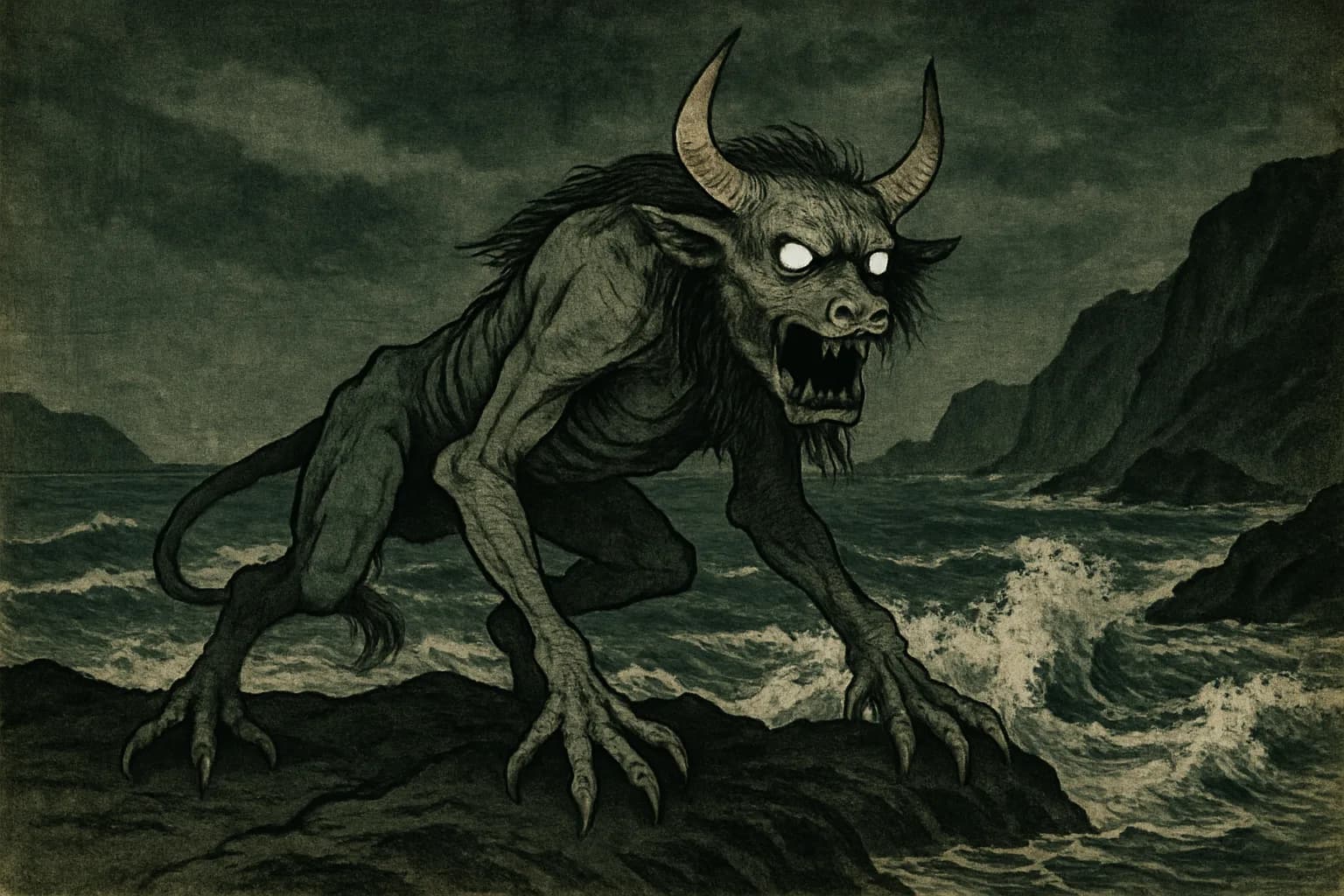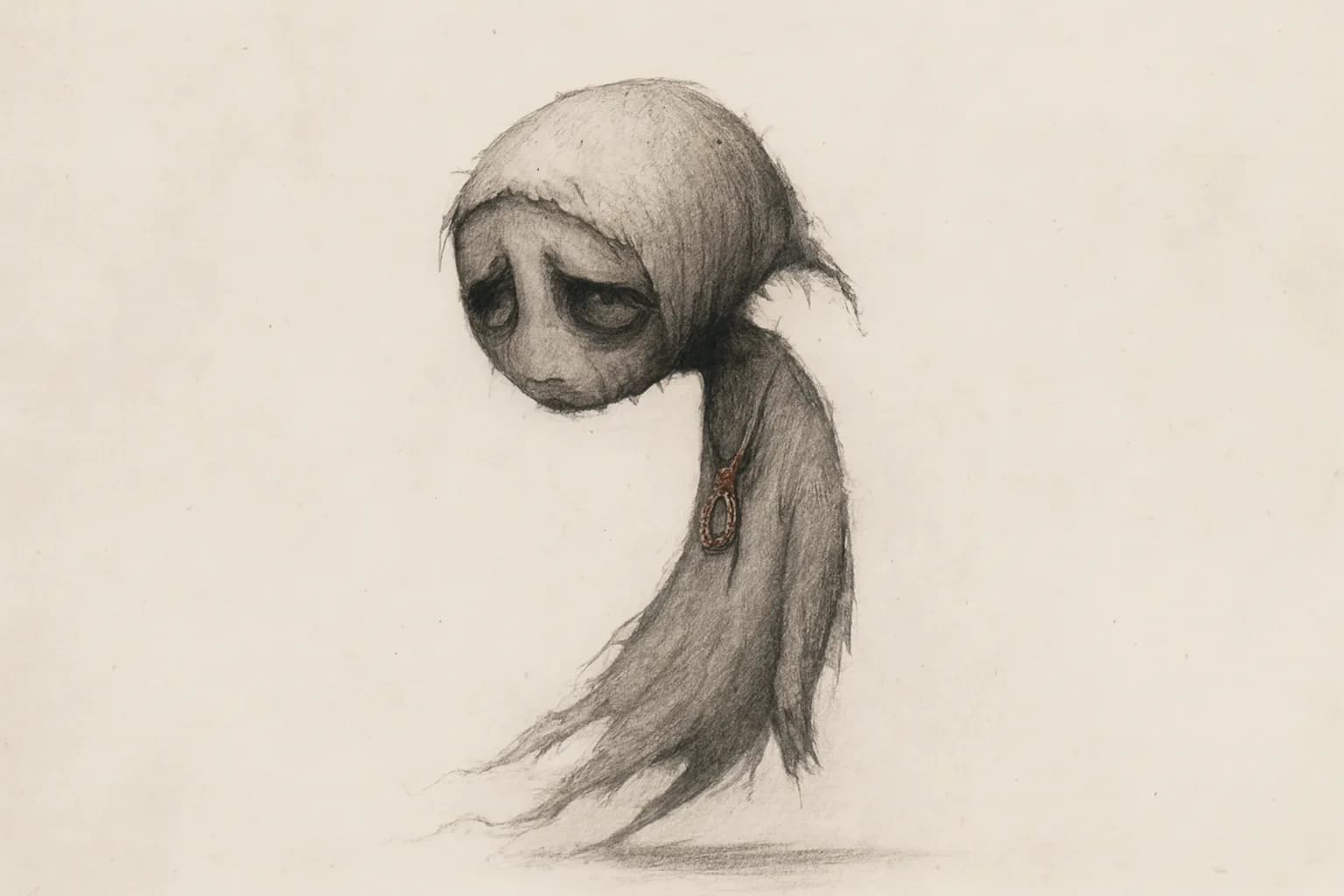
Fish Urado Bay long enough, old accounts say, and sooner or later you would hear it. A boom rolls across the water. The bay goes dark, then suddenly bright. After that the fish stop biting — all of them, for the rest of the night. It is also simply called ジャン, Jan. The fuller name is 孕のジャン, Harami no Jan. Harami names the headlands and channel where the mountains along Kōchi's coast break apart around the bay.
A sound with no shape
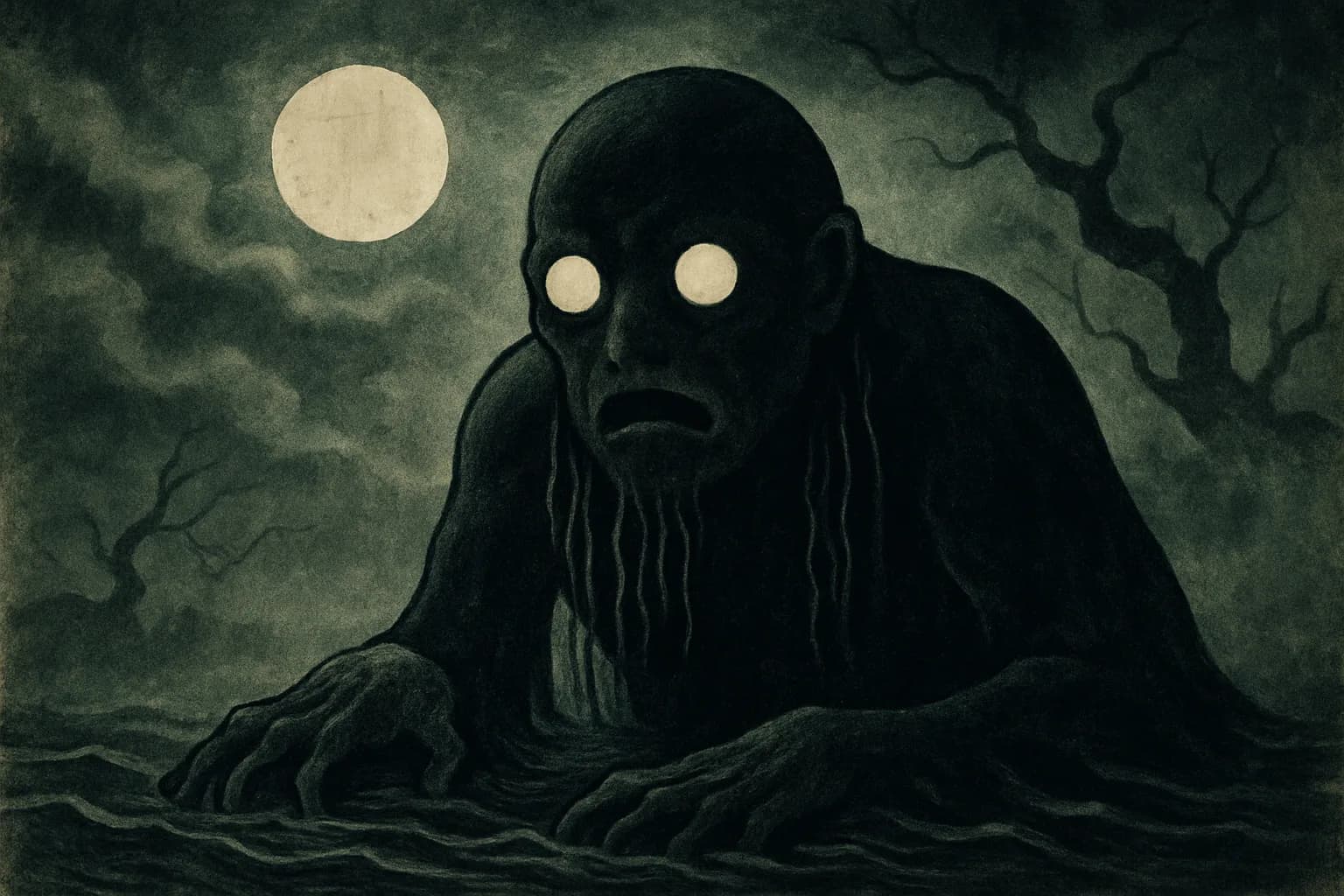
Jan has no face and no body. Old records describe sound, sometimes light, but never a creature. One account sits in Tosa no Kaidan, a 1981 collection of kaidan (ghost stories) edited by Ichihara Rin'ichirō. In it, the dark bay suddenly brightens. A sound like a thunderbolt cracks out: Jan. It echoes across the water as "Jan" and "Wanwan." After that, no one on the bay catches another fish that night.
One of Tosa's three wonders
Kōchi Prefecture was once the province of Tosa. An early boys' magazine, Nihon no Shōnen, forerunner to Shōnen Sekai, counted Jan as one of the "three wonders of Tosa."
Fish, and the fishermen who heard it
A 1955 folklore glossary, Sōgō Nihon Minzoku Goi, states the rule plainly: hear the sound, and the fishing is finished for the night. People in early Shōwa said night fishers on Urado Bay always met the phenomenon once or twice. One such account, set in the Shōwa 20s (1945–1954), describes a calm sea where fish suddenly began jumping. The moonlit water turned pitch black. Then a wave rolled in, the seafloor lit up bright as day, and a sound like "Jaan" rang out. Nothing bit again that night.
An everyday word it may explain
Jan may have left a mark on everyday Japanese. The common word ojan, used today when a plan falls through, is usually traced to the sound of an Edo-period fire bell signaling that a blaze was finally out. But the 1955 glossary records another theory: that ojan instead comes from this very bay sound. A smaller, similar story is told at Usa Bay, elsewhere in Kōchi. There, at night, a dolphin nearby made a loud "dobon" splash and disrupted the fishing. "Dobon" is also gambling slang for going bust — the same idea as Jan, on a smaller scale.
Where it comes from
Meiji-era physicist Terada Torahiko offered a scientific reading. The theory appears in his essay collection, 寺田寅彦随筆集 (Terada Torahiko Zuihitsu-shū), compiled by editor Komiya Toyotaka and first published posthumously in 1948. Terada noted that quakes have struck this coast for centuries: the ancient Hakuhō earthquake, and the Edo-period Hōei and Ansei Nankai earthquakes. He also noted that Harami's mountains are cut by fault lines, a visible crack in the crust. He guessed that Jan is jinari, underground rumbling, caused by small landslides inside strained rock near that fault.
Large earthquakes are sometimes preceded by strange flashes of light in the sky. In 1990, the journal Nature published a Japanese research team's finding that breaking rock, such as andesite, releases a surge of charged particles. Some have linked that finding to the light reported with Jan. It is not proof. It is only, so far, the closest thing to a clue.