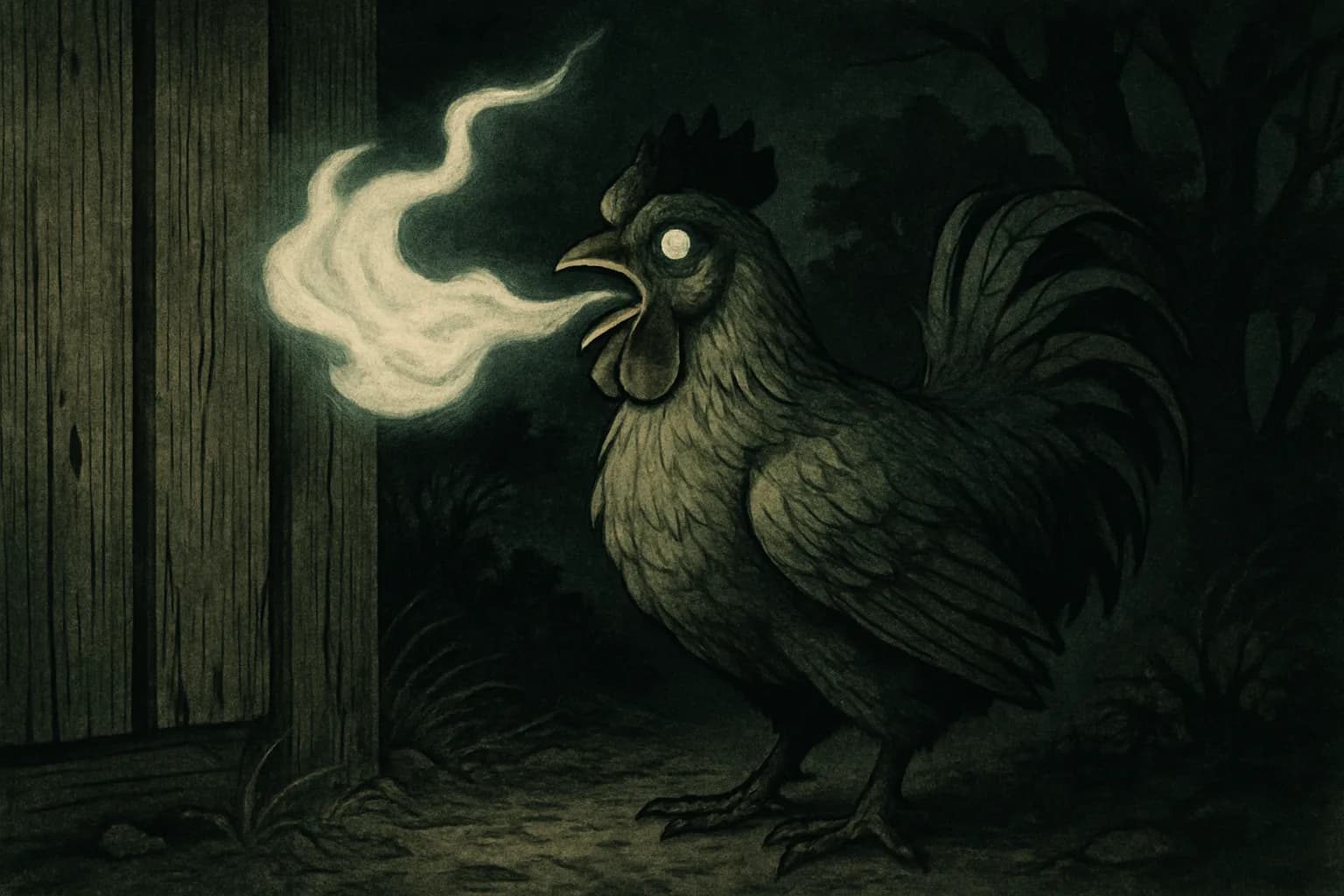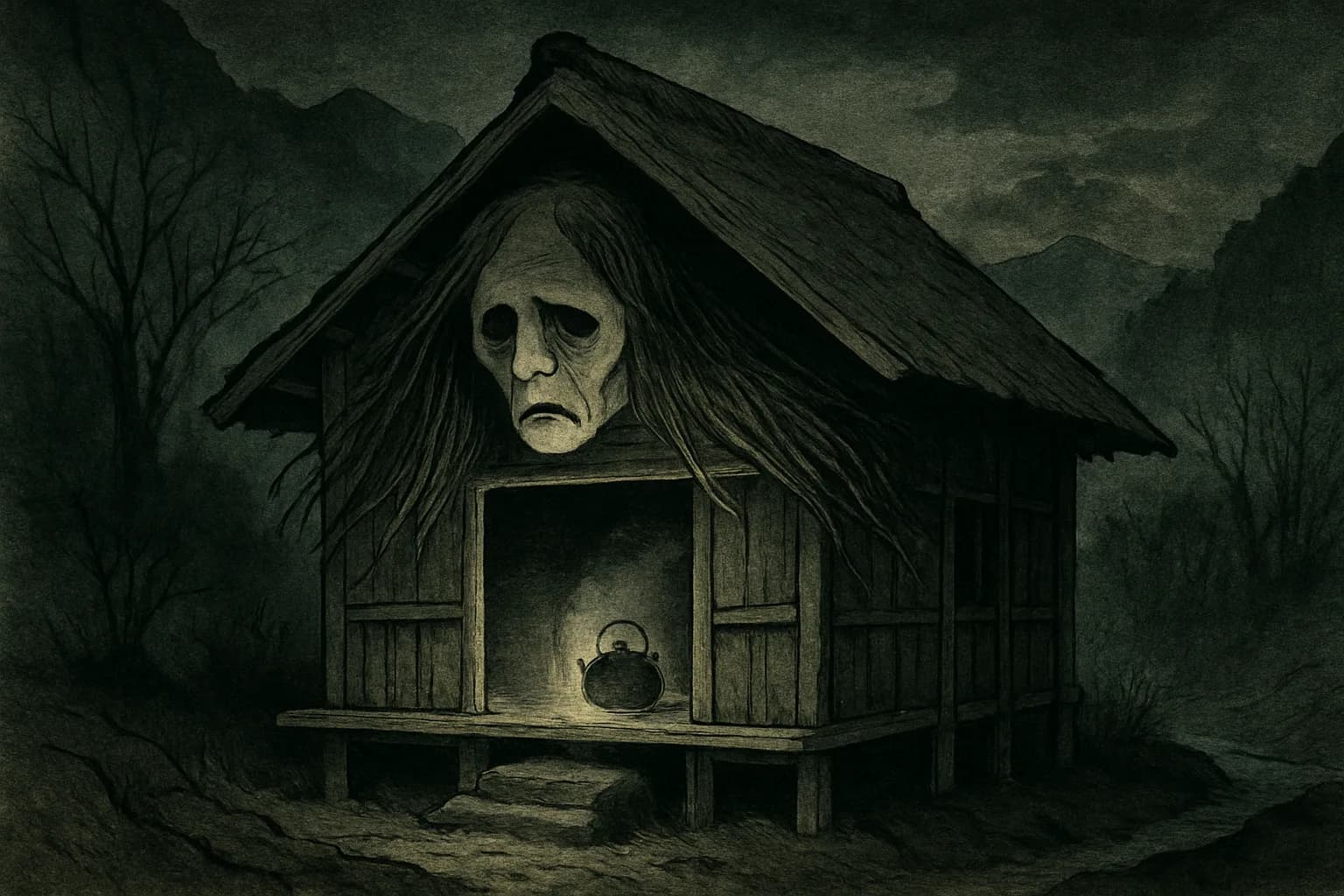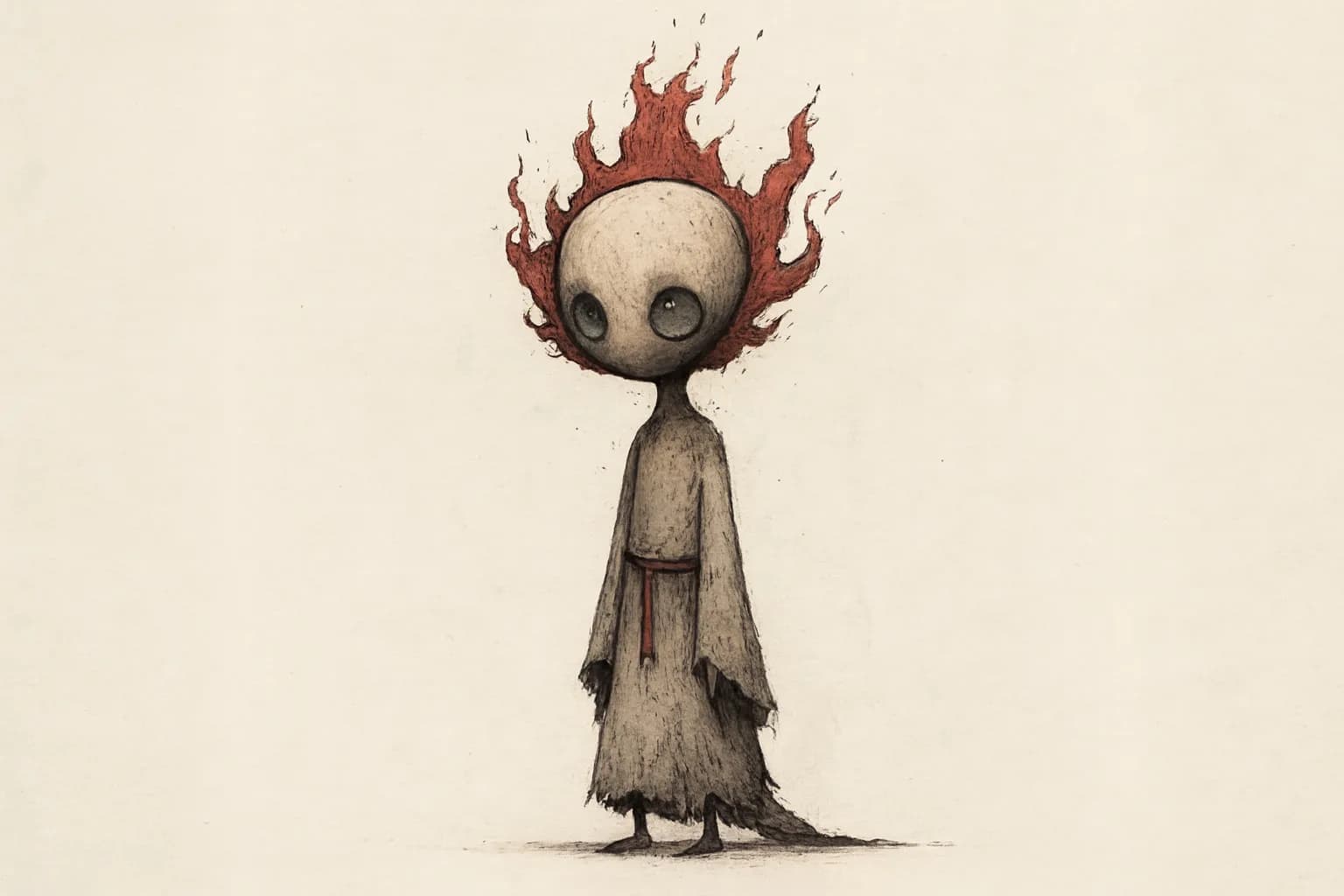
Shout a name into a mountain valley in Japan and something shouts it back. For most of the country's history, that reply had an explanation with a face: the yamabiko, a creature small enough to stay hidden in the rocks and trees, whose sole occupation is repeating whatever it hears back at you.
What does a yamabiko look like?
Unlike a lot of yokai, the yamabiko was rarely seen — only heard — so accounts of its shape are thin and inconsistent, which is fitting for a thing defined by imitation rather than appearance. When Toriyama Sekien drew it for his 1776 bestiary Gazu Hyakki Yagyo (画図百鬼夜行), he gave it a small, shaggy body, somewhere between a dog and a monkey, crouched low as if listening. Other Edo-period sources are vaguer still, treating it less as an animal and more as a voice that happens to live in the mountains. That ambiguity is part of the point: nobody claimed to have gotten a good look at one.
A spirit that only answers
The yamabiko's entire behavior is contained in its name: 山 (yama, "mountain") + 彦 (hiko, an old word for a young man, here closer to "spirit" or "echoing presence"). Call out in a mountain valley — your own name, a warning, a joke — and if a voice answers from the rocks a beat later, tradition says that's the yamabiko, not empty air bouncing sound back at you. It doesn't originate anything. It repeats. Woodcutters, hunters, and travelers making their way through remote passes used the phenomenon to explain why a mountain could feel occupied even when no one else was around.
Because the yamabiko was defined entirely by sound, it slid easily into whatever else was already frightening about deep mountains at night: strange footsteps with no walker, a voice calling a name from an empty ridge, laughter with no source. In places without a strong yamabiko tradition of their own, the same phantom-echo phenomenon sometimes got pinned on foxes or tanuki instead, animals already credited with mimicking human voices to lead travelers astray.
Cousin of the kodama
Japanese folklore keeps a close relative just a few characters away: the kodama (木霊), a tree spirit whose voice is likewise an echo — traditionally the sound that answers when you strike or fell an old tree deep in the forest. The two are often confused, and some regional traditions treat them as more or less the same thing under different names. The distinction, where it holds, is about what's answering: the kodama belongs to a specific tree, singular and rooted; the yamabiko belongs to the mountain itself, and can seem to answer from anywhere in the valley.
Where the yamabiko comes from
The most straightforward reading of the yamabiko is that it's a folk explanation for a real acoustic phenomenon — sound reflecting off cliff faces and valley walls, arriving back at the speaker delayed and altered. What makes the yamabiko interesting isn't the physics but the choice to personify it. Rather than leave an echo as an inert fact of geography, Edo-period villagers gave it a listener and a will: something in the mountain that had heard you and chose to answer. That habit of mind — assuming an unexplained sound in the wild has an agent behind it — runs through a huge share of Japanese mountain folklore, from the yamabiko's harmless mimicry to far more dangerous entities blamed for missing hikers and toppled trees.
Yamabiko today
The word never really left everyday Japanese — yamabiko is still the ordinary term for "echo," used the same casual way an English speaker says "the hills are alive with the sound of music" without thinking about spirits at all. It's also, more concretely, the name of one of the Tohoku Shinkansen's train services, running between Tokyo and Morioka — a small, deliberate nod to the idea of a voice traveling up into the mountains and coming back.