Walk deep enough into an old-growth Japanese forest and you will eventually find a tree wrapped in a thick straw rope, hung with folded white paper. Nobody is going to cut that tree down. The rope, a shimenawa, marks it as inhabited — and the resident is a kodama, the spirit said to live inside trees that have stood long enough to earn one.
What is a kodama, exactly?
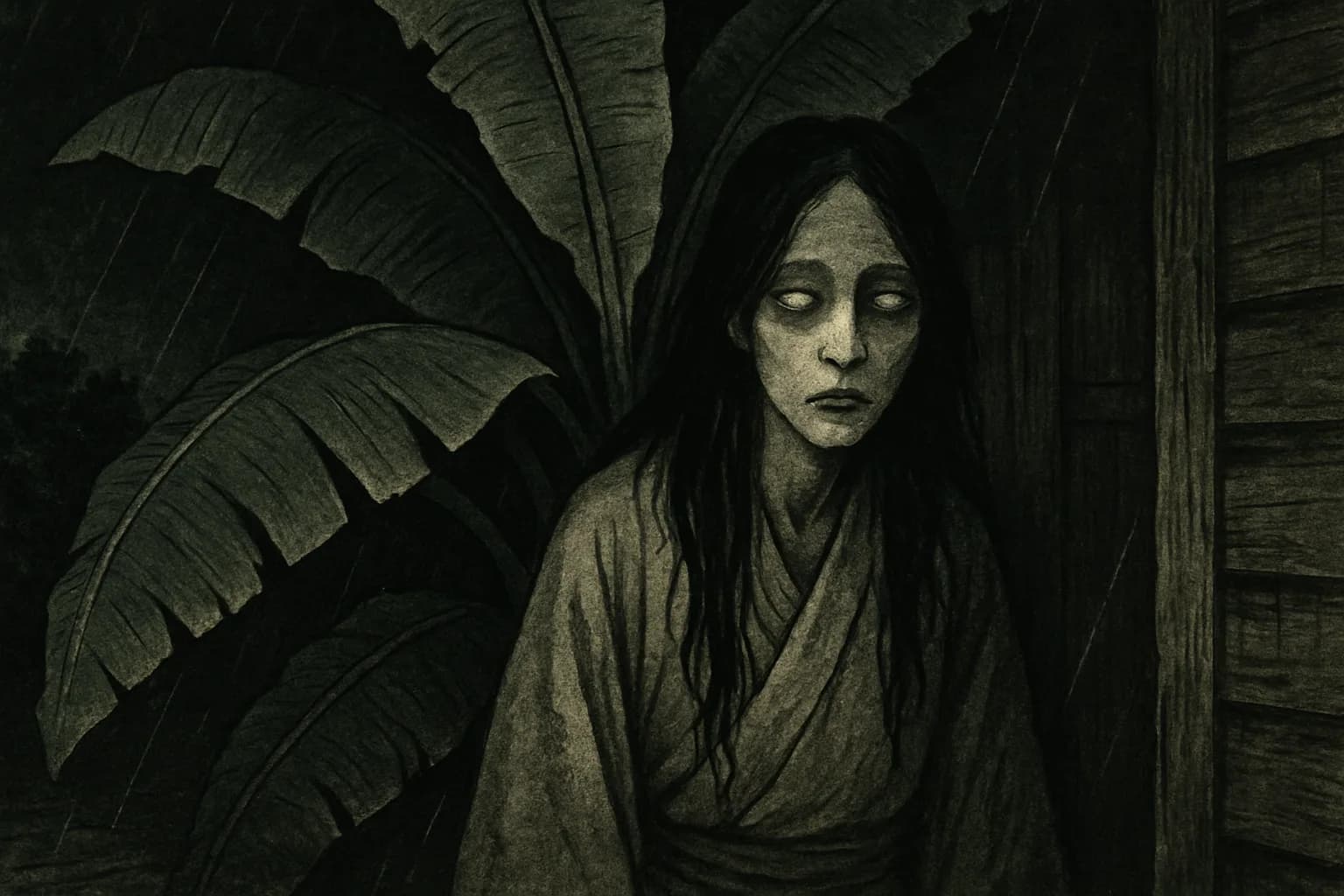
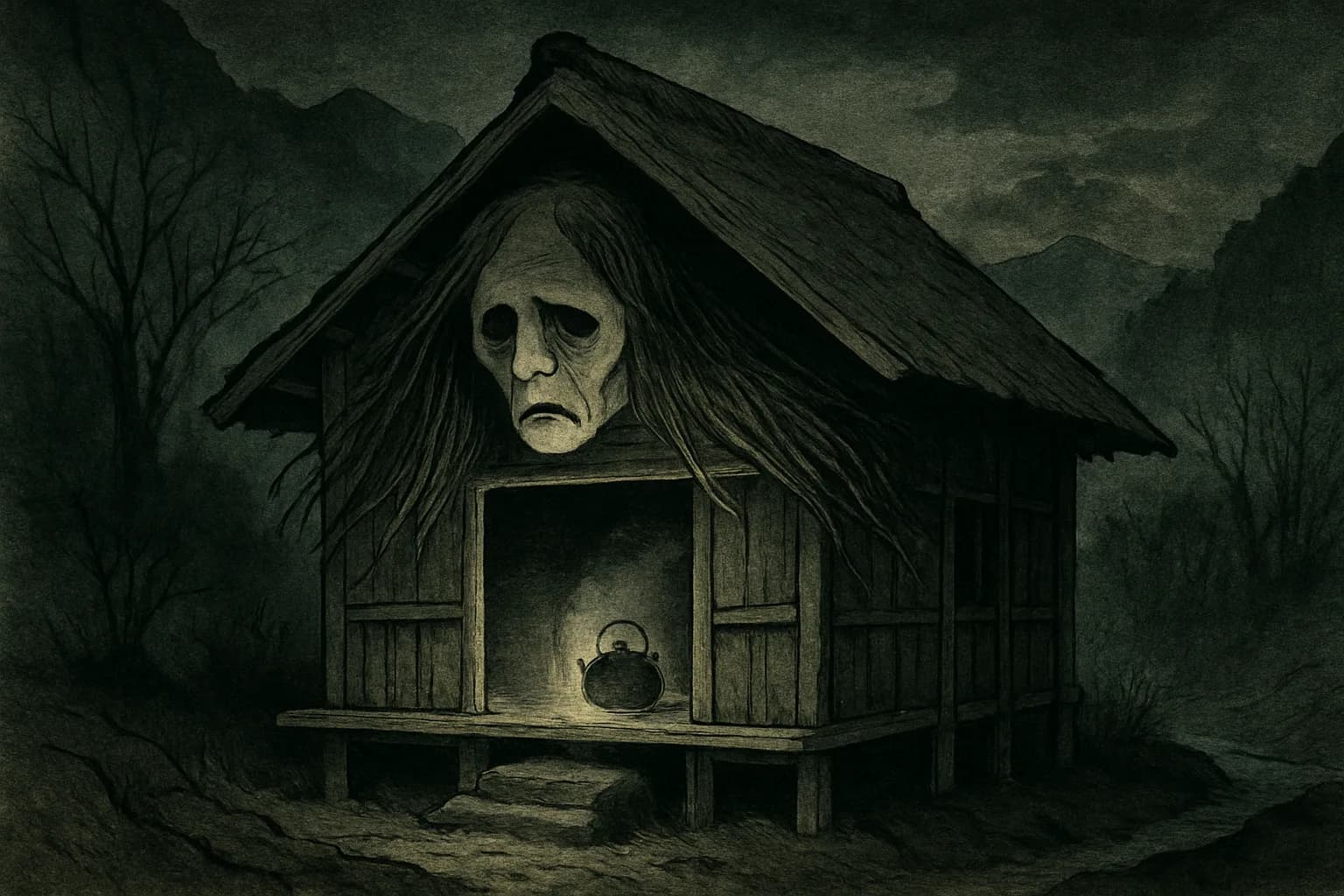
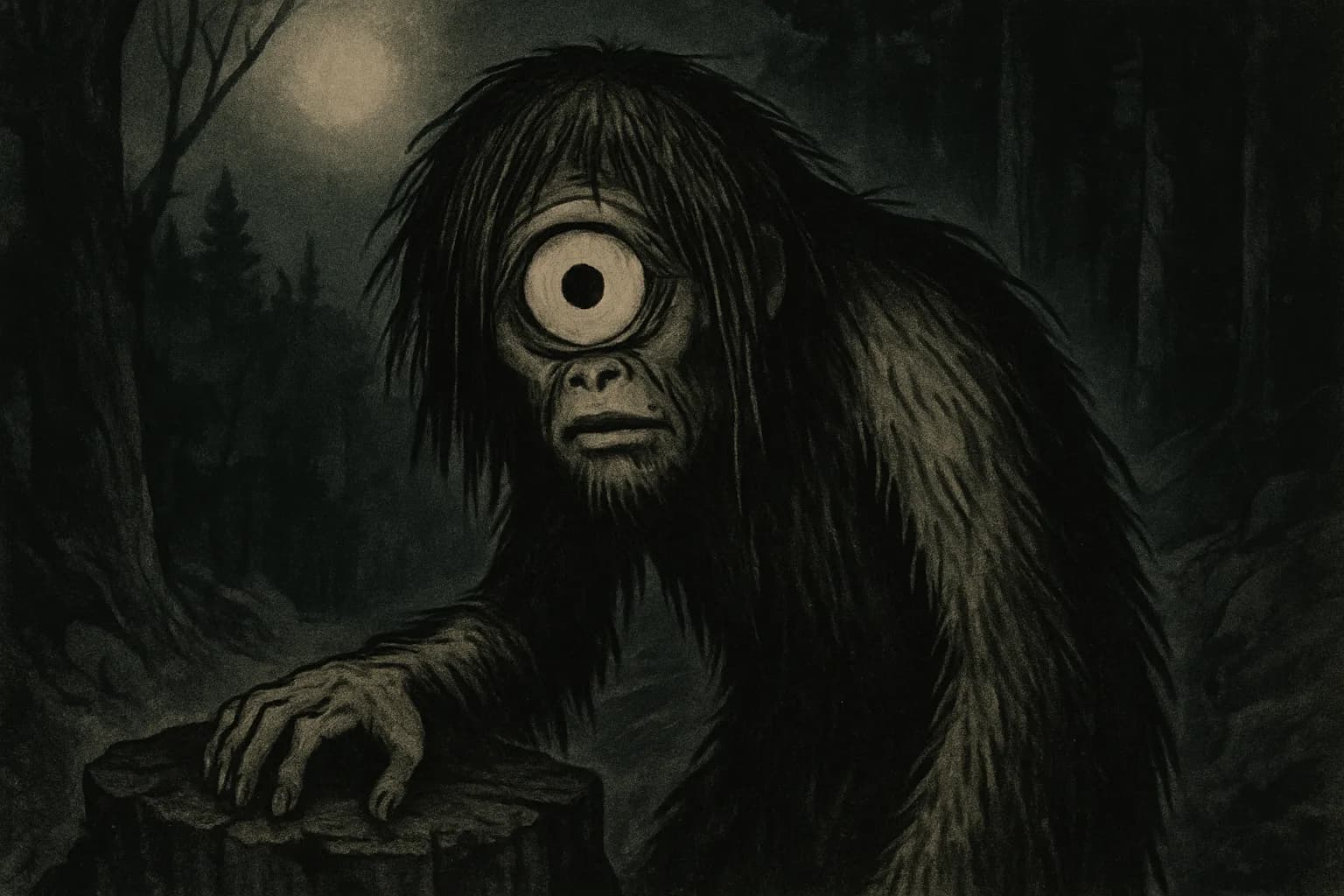
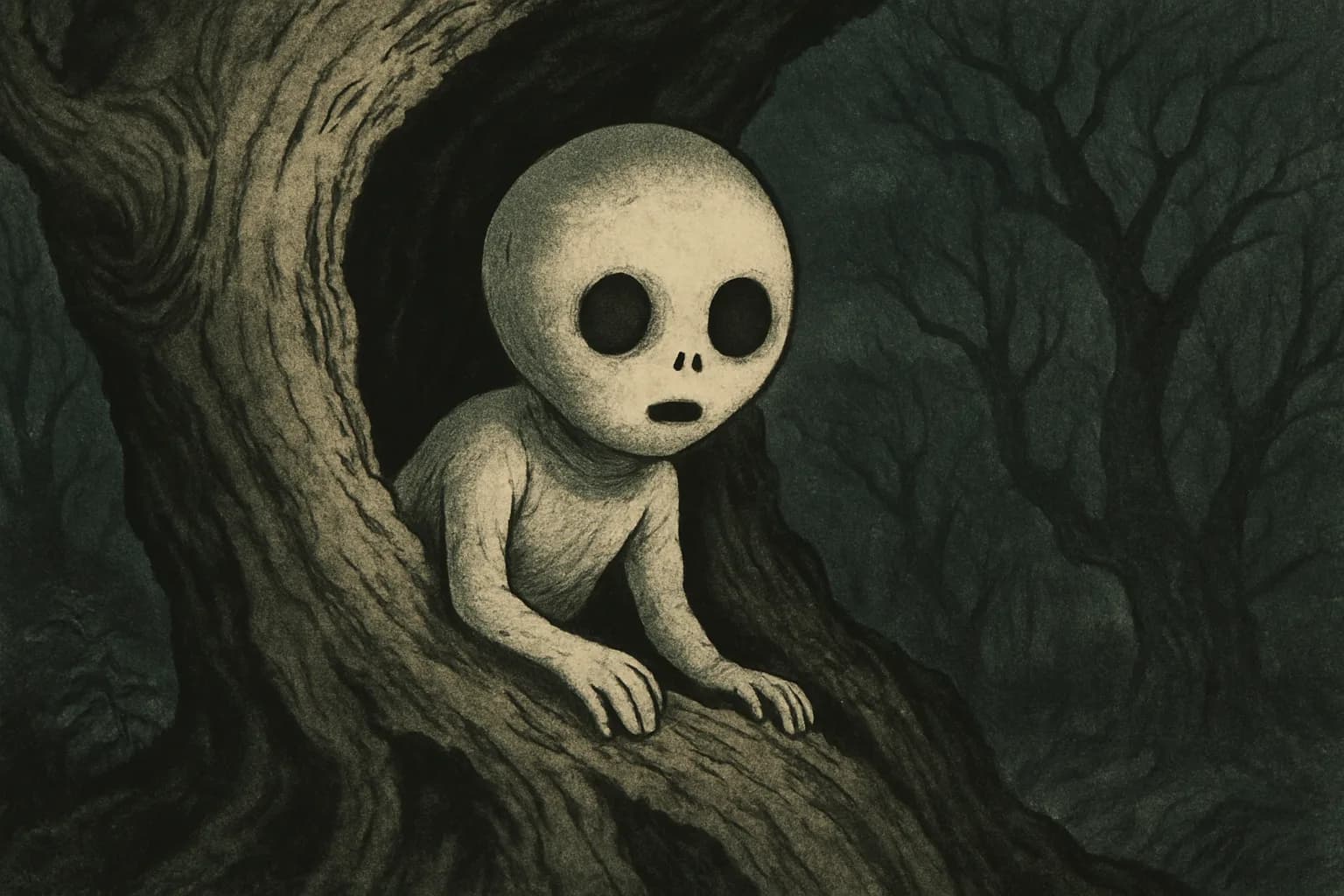
Most yokai come with a face. The kodama mostly doesn't. Older accounts treat it less as a creature you'd meet and more as a presence — something that lives inside the wood itself and makes its home known only through sound: a groan when the tree is struck, a rustle with no wind behind it, an echo that answers a shout in the grove a half-second after it should have died out. Toriyama Sekien included the kodama in his 1776 bestiary Gazu Hyakki Yagyo (画図百鬼夜行), and even there the emphasis falls on the phenomenon more than a fixed physical form. Later folk tradition sometimes gave the spirit a shape when it chose to appear — an old man or woman stepping out from the trunk, a drifting ball of light, a small figure no taller than a child — but no single image ever became standard. The name itself explains why: 木 (ko, "tree") and 霊 (dama, "spirit"), a spirit that belongs to the wood, not a body of its own.
The tree you don't cut
The core belief attached to the kodama is practical, almost like a forestry rule dressed up as folklore: a very old tree may be the home of a kodama, and cutting it down brings misfortune — to the woodcutter, to his household, sometimes to the whole village. Loggers who worked the old forests were said to listen for a tree's response before putting an axe to it, and a tree that seemed to groan, bleed sap like blood, or resist the blade unnaturally was left alone rather than risk the spirit's anger. Shrines built around a single ancient cedar or camphor tree, roped off with a shimenawa and left to grow for centuries, are the visible remains of this caution — some of Japan's oldest trees are still standing today specifically because they were treated as a kodama's dwelling rather than timber.
The belief did real conservation work. A superstition that makes a five-hundred-year-old cedar too dangerous to fell is, in effect, a very old form of forest protection, and Shinto shrine groves (chinju no mori) still preserve stands of trees that would otherwise have been cleared generations ago.
A voice among the trees
Sekien's bestiary places the kodama near another spirit defined entirely by sound: the yamabiko, blamed for echoes in the mountains generally. The two are often blurred together in regional tradition, and some tellings treat an echo answering from deep forest as a kodama, while the same phenomenon on open mountainside gets credited to a yamabiko instead. Where villages drew the line usually came down to where the sound seemed to originate — from a specific ancient tree, or from the mountain as a whole.
Where the kodama comes from
The kodama sits close to a much older idea in Japanese religion: that trees, mountains, rivers, and stones can all hold a spirit, or kami, and that especially old or striking specimens deserve reverence rather than use. Shinto's tree deity Kukunochi is a formal, mythological version of this instinct; the kodama is its folk-belief cousin, less a named god than a diffuse sense that something is in there and shouldn't be disturbed. Animist reverence for old trees predates organized Shinto shrine architecture by a long way, and the kodama is one of the clearest yokai examples of that reverence surviving as a story rather than a doctrine.
Kodama today
The clearest bridge from folklore to a modern audience is Studio Ghibli's Princess Mononoke (1997), whose small, white, rattle-headed forest spirits are explicitly called kodama and take their inspiration from the ancient cedar forest of Yakushima, where Miyazaki scouted locations before writing the film. The design is Ghibli's own invention, not a copy of any Edo-period image, but the underlying idea — a spirit tied to old-growth trees, whose presence signals a healthy forest and whose disappearance signals something has gone wrong — is drawn straight from the folk belief this article describes. Yakushima's own tourism now leans into the connection, with guided walks through its cedar forest marketed as kodama territory, straw-roped trees included.