Ask for a friendly yokai and most lists give you whatever looks cute. That is a ranking by feel. We wanted a ranking by evidence.
So here is the rule. Each creature is ranked by how directly an old record shows it doing something for people. Guarding, warning, bringing luck and helping with work score highest. Simply doing no harm scores lowest. Where the record is thin, the creature drops.
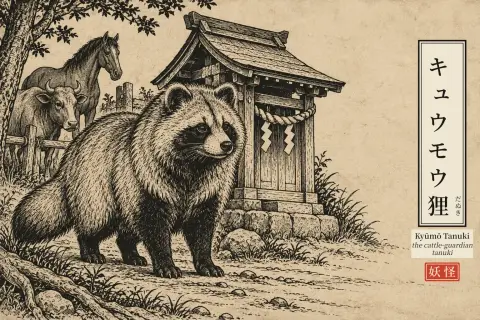
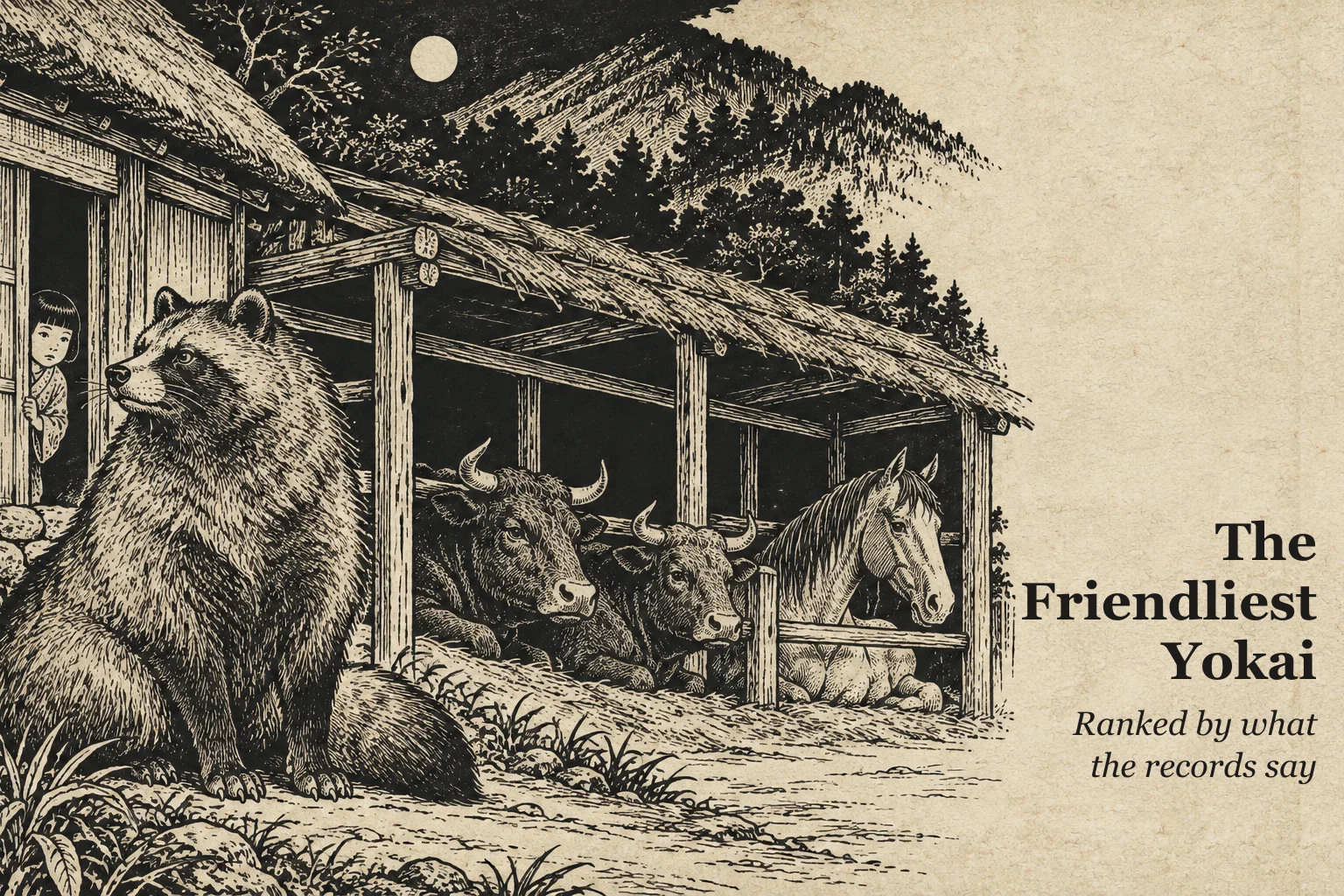
By the records, the friendliest yokai is Kyūmō-danuki. It is a tanuki from Okayama that made a promise to a village. Then it kept the promise, and the village built it a shrine.
Our ledger holds 327 yokai. Fifty-three are tagged kind, harmless, playful or a gentle giant. The ten below come from the 25 of those with full articles.
The ten, in order
| Rank | Yokai | What it does for people | The record |
|---|---|---|---|
| 1 | Kyūmō-danuki | Guards cattle and horses, warns of fire and theft | Bizen Kamo Nippon-ichi Tanuki Yurai-ki (Edo period) |
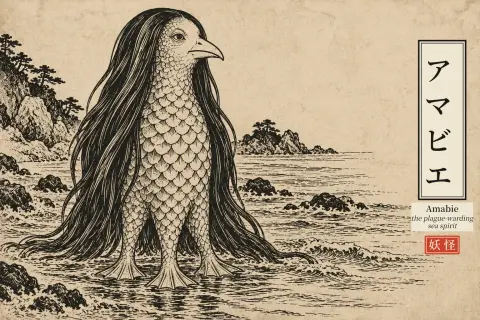
| 2 | Amabie | Warns of disease and gives the cure | Kawaraban broadsheet, Higo (1846) |
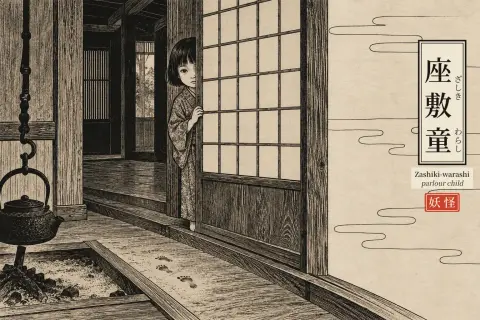
| 3 | Zashiki-warashi | Keeps a house rich while it stays | Tōno Monogatari (1910), tale 18 |
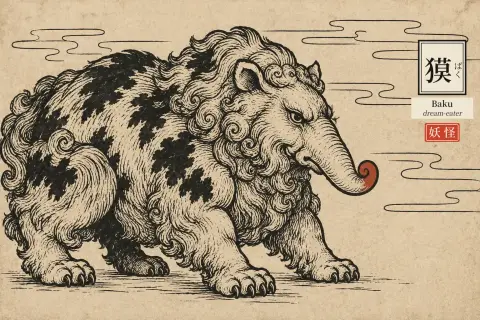
| 4 | Baku | Eats your nightmare when you call it | Edo charms, pillows and carvings |
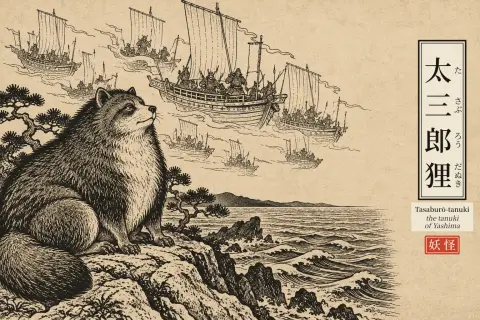
| 5 | Tasaburo-tanuki | Led a lost monk out of the fog | Temple lore of Yashima-ji |
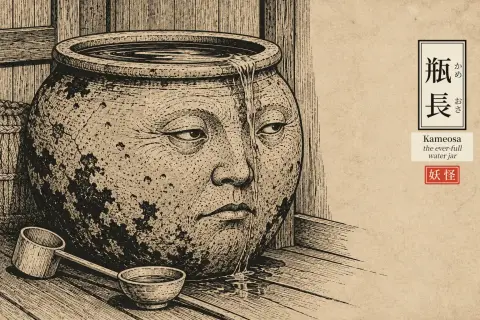
| 6 | Kameosa | A water jar that never runs dry | Sekien, Hyakki Tsurezure Bukuro (1784) |
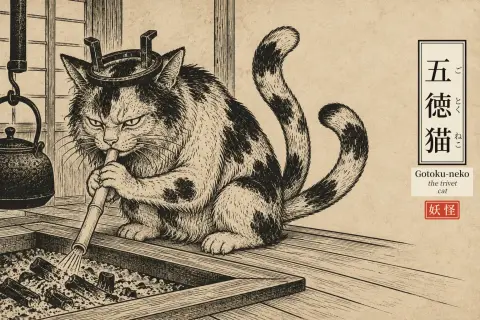
| 7 | Gotoku-neko | An old cat that tends the fire | Sekien, Hyakki Tsurezure Bukuro (1784) |
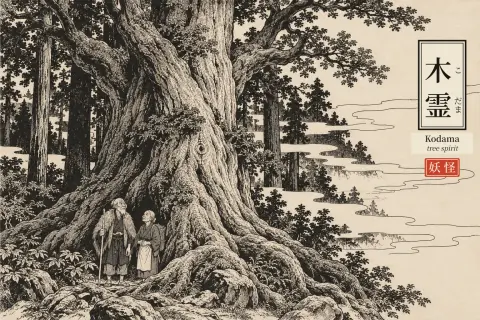
| 8 | Kodama | Guards old trees, and so the forest | Wamyō Ruijushō (10th c.); Sekien (1776) |
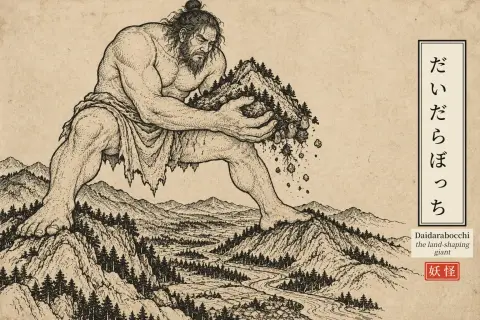
| 9 | Daidarabocchi | A giant who shaped hills, harming no one | Hitachi no Kuni Fudoki (8th c.) |
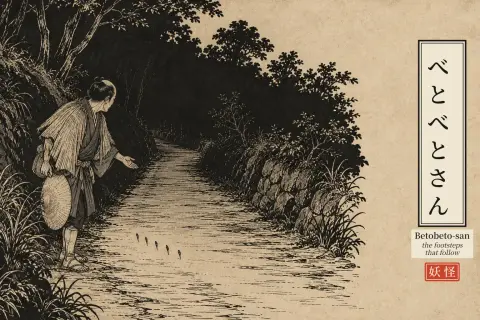
| 10 | Betobeto-san | Footsteps that leave when asked | Yanagita, Yōkai Dangi (1956) |
The top two made a promise
1. Kyūmō-danuki. The legend. A tanuki is said to have crossed the sea on a foreign ship in the late 1500s. It came out near the Kamo copper mine in Okayama. Later it vowed to guard the village's cattle and horses, and to warn of fire and theft.
Why first. An Edo-period Yurai-ki records a promise and a job. No other entry has both. The catch: before the vow, it set fire to the houses of tanuki hunters.
How to treat it. Do not hunt it. People left cattle plaques at its shrines. At Kubota Shrine, they still leave fried tofu by a hole behind the main hall.
2. Amabie. The legend. In 1846 a light kept rising from the sea off Higo, now Kumamoto. An official went to look. A scaled, beaked creature told him of six good harvests, and of a coming disease.
Why second. It gave a warning and a cure in one visit. The catch is size. The whole record is one broadsheet, kept at Kyoto University.
How to treat it. The broadsheet says it plainly. Copy its picture and show it to others.
Luck that can walk out of the house
3. Zashiki-warashi. The legend. Tale 18 of Yanagita Kunio's Tōno Monogatari (1910) is set in Iwate. A man meets two unknown girls near a bridge. They say they come from the rich Yamaguchi house and are going to another. Soon after, more than twenty people in that house die of poisonous mushrooms.
Why third. The belief says the child spirit makes a house rich. But the famous record shows the leaving, not the luck.
How to treat it. The record gives no rule for keeping it. It only shows what happens when it goes. Families listened for its small footsteps. Nobody dared to send it away.
4. Baku. The legend. It began in China as an animal that ate iron and copper. In Japan it gained a new job: eating bad dreams.
Why fourth. Its whole purpose is help. But no single dated book holds the belief. It lives in Edo charms, pillows and temple carvings instead.
How to treat it. Wake from a nightmare and say "Baku, kurae" — "Baku, eat this" — three times. Keep its picture under your pillow.
Smaller kindnesses
5. Tasaburo-tanuki. The legend. The monk Kōbō Daishi climbed Yashima in Shikoku and lost his way in thick fog. An old man appeared and guided him. It was Tasaburo in disguise. It was Tasaburo in disguise.
Why fifth. He helped a stranger for nothing. But the story is temple lore at Yashima-ji, with no dated book.
How to treat it. People pray to him and his wife at a small shrine inside the temple. They ask for a good marriage and children.
6. Kameosa. The legend. There is no told story. Toriyama Sekien drew a water jar with a face in Hyakki Tsurezure Bukuro (1784). His caption says it never runs dry, however much you drink.
Why sixth. It gives without being asked. Sekien wonders if it is an omen of good luck. But it is one artist's picture, not a village belief.
How to treat it. The record says nothing about this.
7. Gotoku-neko. The legend. Again no story, only a print in the same 1784 book. An old two-tailed cat sits at the hearth. It wears an iron trivet like a crown and blows on the coals.
Why seventh. It does a chore instead of making trouble. Modern books say it lights fires by itself. That idea came later.
How to treat it. The record gives nothing here either.
Kind only if you leave it alone
8. Kodama. The legend. A spirit lives inside a very old tree. The Wamyō Ruijushō, a tenth-century dictionary, already lists its name. Sekien drew it in 1776. Try to cut its tree, and you are cursed.
Why eighth. It protects the forest, but by punishing the axe. Cut its tree and bad luck falls on the woodcutter.
How to treat it. Do not cut its tree. A straw rope with white paper marks the trees that are lived in.
9. Daidarabocchi. The legend. The Hitachi no Kuni Fudoki (8th century) tells of a giant sitting on a hill. He reached down to the shore to scoop clams. The shells piled up into a mound.
Why ninth. He helps nobody on purpose. He also harms nobody.
How to treat it. The record asks nothing. People only point at a pond or a hill and say he walked there.
10. Betobeto-san. The legend. On a dark road in Uda, Nara, you hear footsteps behind you. Nobody is there. Yanagita listed it in Yōkai Dangi (1956).
Why tenth. It only makes a sound. The writer Tada Katsumi adds that it does no harm.
How to treat it. Step to the side. Say "Betobeto-san, please go on ahead." It leaves.
Every one of them asks for something small
Look at where these ten live. A guest room, a hearth, a kitchen jar, a pillow, a village shrine, the road home. None of them lives far away in the wild. They sit inside daily life.
Look at who they help. Not a hero, but a household or a village.
Then look at the price. Fried tofu by a hole. A picture copied and passed on. A tree left uncut. A polite step aside. The price is always small, and always a habit.
The two that ask for nothing, the jar and the cat, are Sekien's jokes. Nobody lived by them. So the friendly yokai that people really believed in came with a rule. That suggests what the stories were for. They were less about meeting a spirit than about keeping good habits at home.