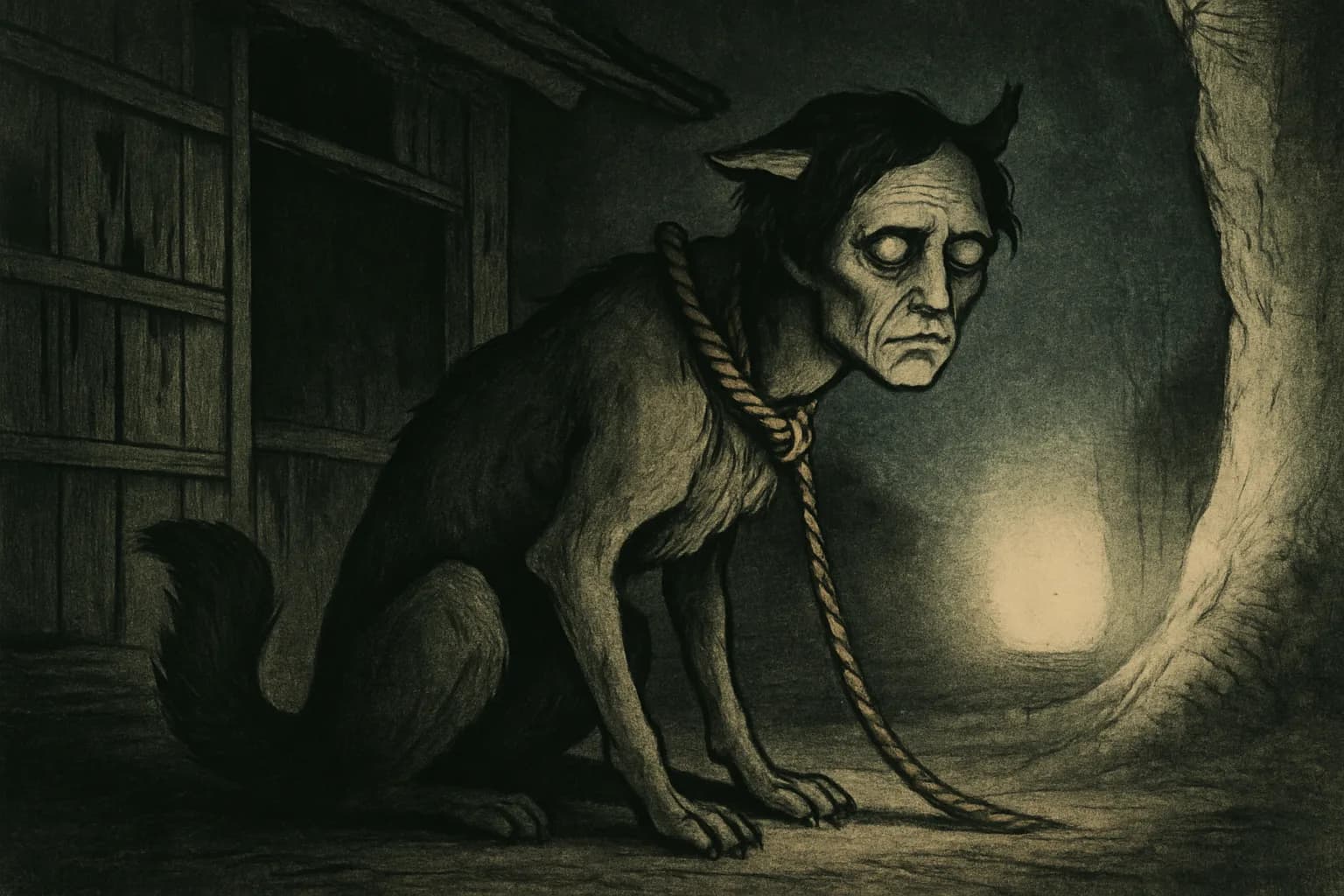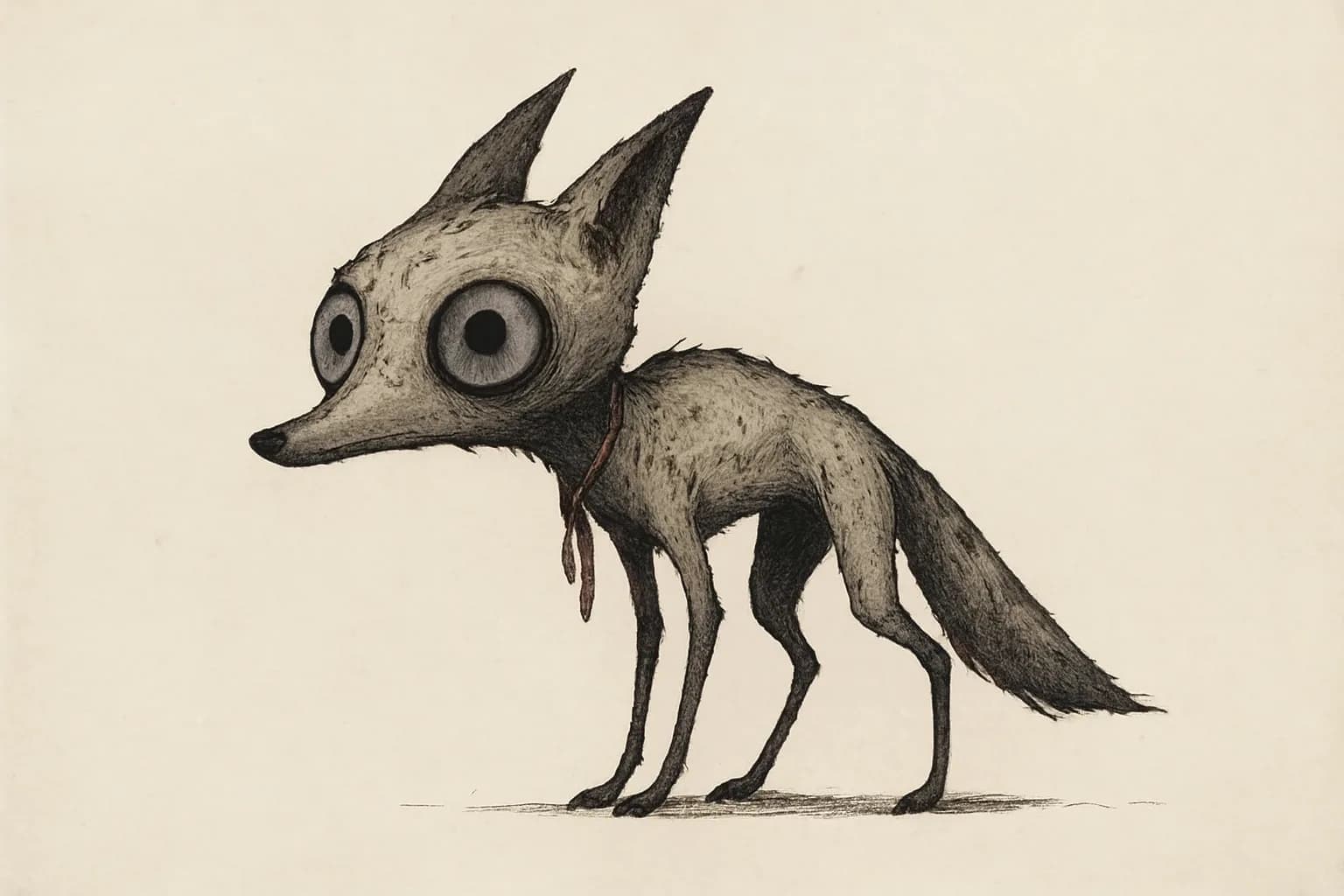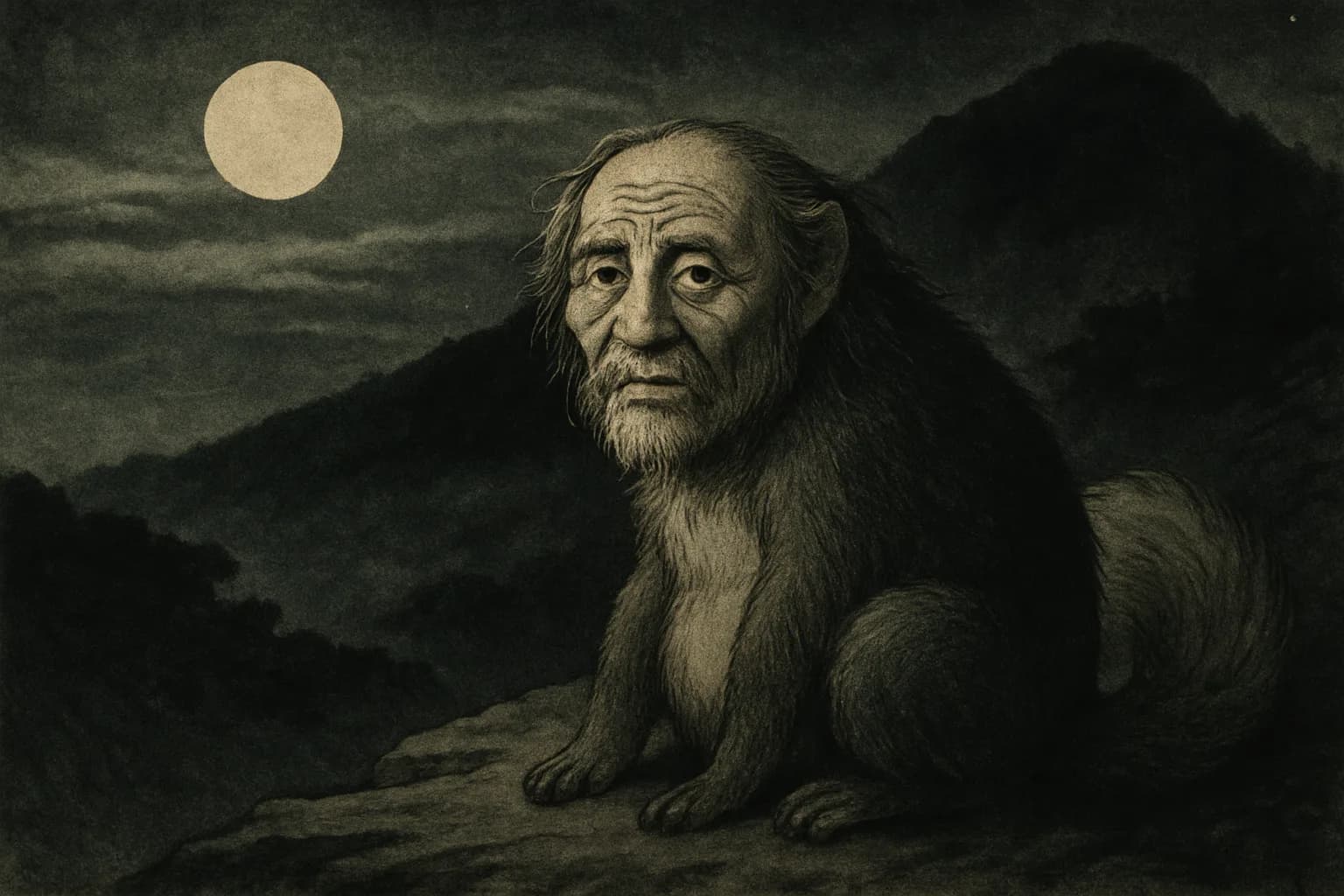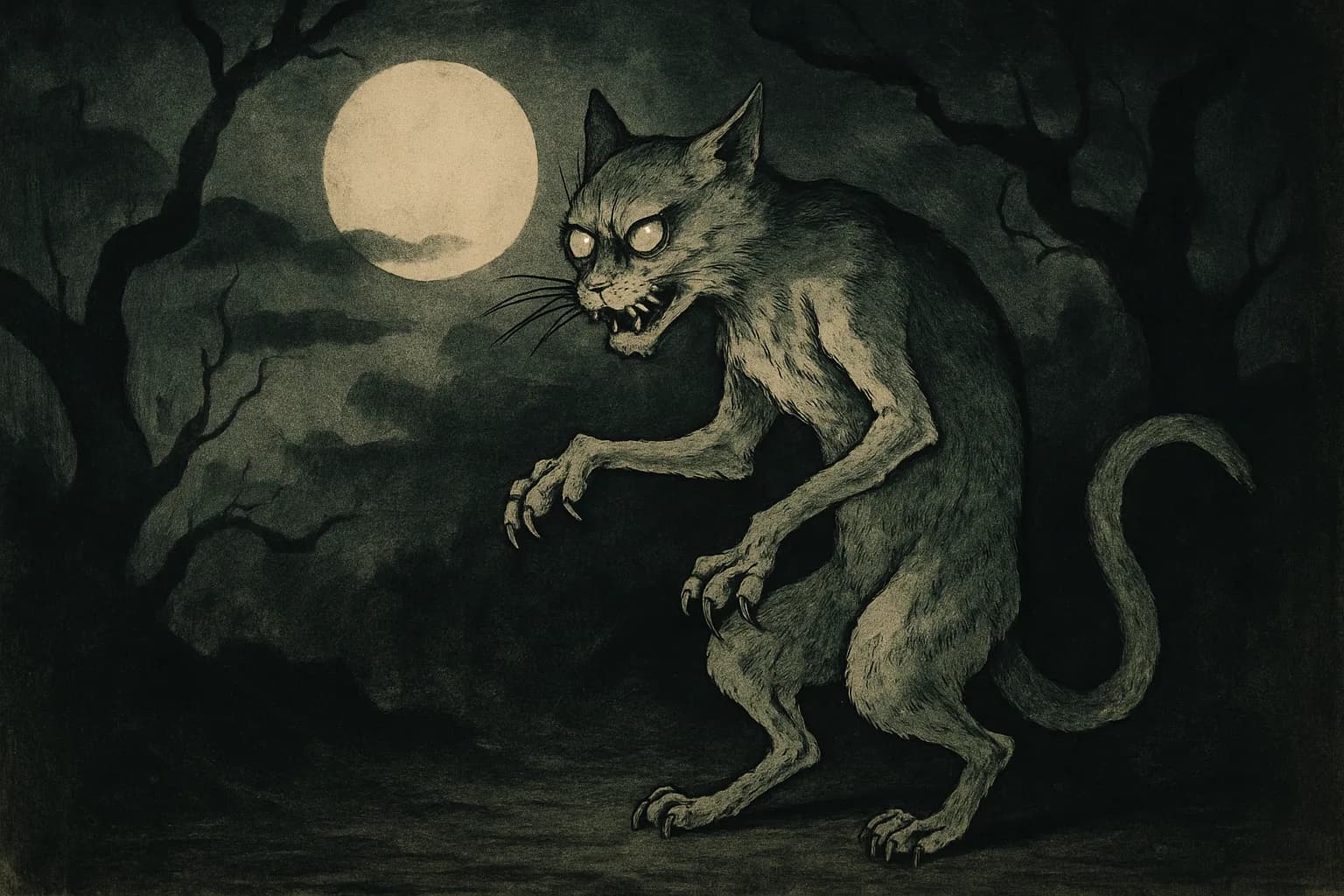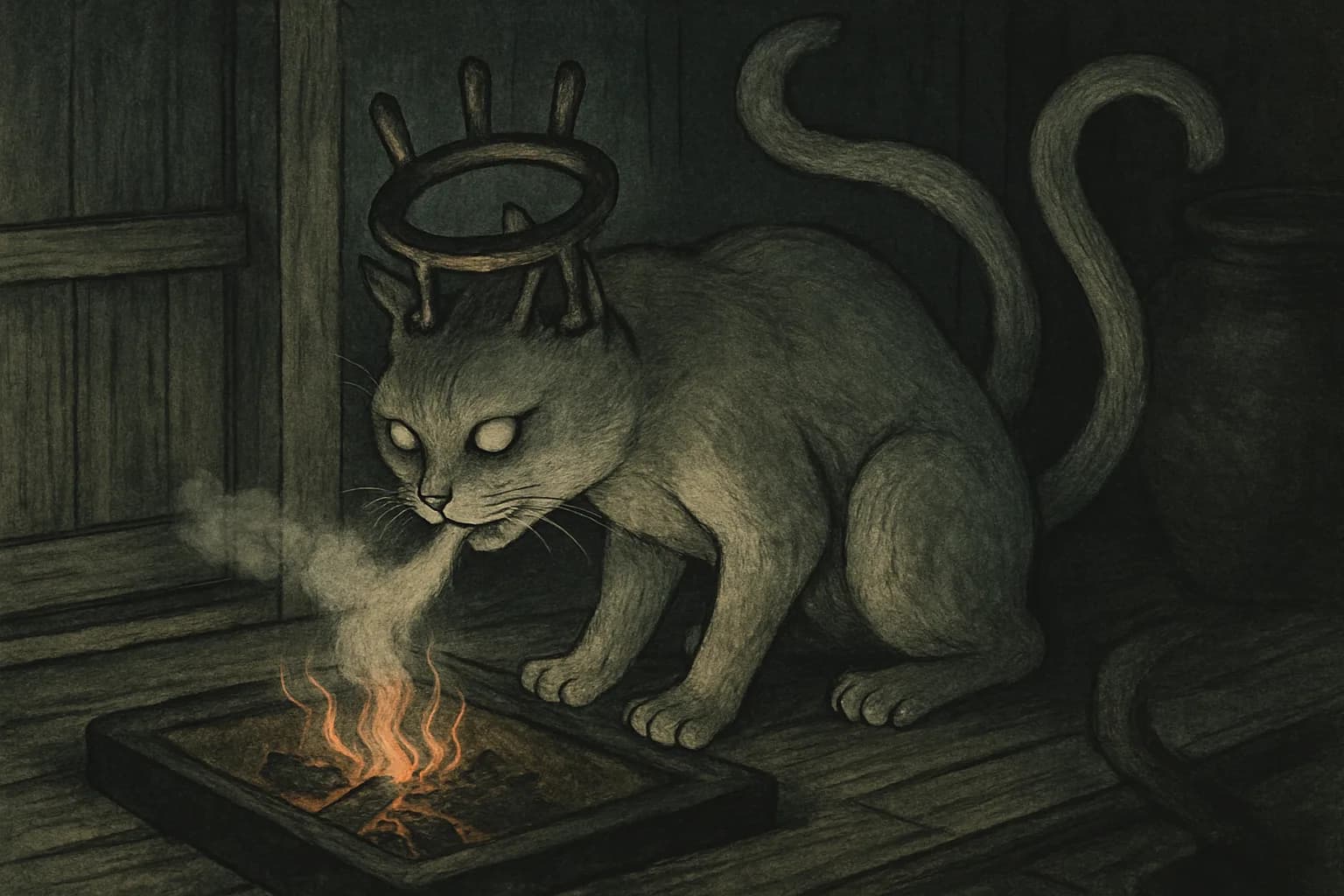
Most enshrined tanuki in Japan grew out of local trouble. Kyūmō is stranger. Legend says it arrived from across the sea, hid in the mountains near Kamo, Bizen — today's Okayama — for two hundred years, and only then agreed to protect anyone at all. Villagers built it a shrine for the trouble and gave it a new name: Mahō-sama.
What does it look like?
Most tellings keep Kyūmō close to an ordinary tanuki. It has a stout, round body and the masked face of a raccoon dog. Shrine images show a plain animal, not a monster. The story cares more about what it does than what it looks like. During its long years in hiding, it is said to have taken human shape — an old traveler, a young farmhand — to move through the villages unnoticed. Underneath, it stayed a tanuki.
A stowaway from over the sea
The origin story is unusual for a Japanese yokai. Kyūmō is said to have crossed the sea hidden aboard a foreign ship, sometime in the late 1500s. Some tellings name a Portuguese vessel among the traders and missionaries then reaching Japan's coast. After landing, it travelled inland and settled into a cave near Kamo, in Bizen province. There it mostly stayed out of sight, for close to two hundred years.
Two centuries of small trouble
Kyūmō did not stay quiet once it came out of hiding, around 1772. It shape-shifted through the villages and joined in the rice planting. It made strange cries in the hills at night. It is said to have turned leaves into coins to spend in town. When a copper mine opened nearby, more mischief followed — swindling, mimicry, small fires blamed on its restlessness. None of it was kind. None of it was fatal either.
The vow that made it a god
By the old account, Kyūmō then changed. It promised to guard the village's cattle and horses, and to warn of fire and theft before either struck. The villagers stopped treating it as a pest and started treating it as a protector. They gave it a new name for the role: Mahō-sama (魔法様), from 魔法 (mahō, "magic") and 様 (sama), an honorific for someone owed respect. The tanuki underneath kept its own name, Kyūmō. The title belonged to the guardian it had become.
Worshippers still bring wooden plaques shaped like cattle and horses to its shrines. They leave fried tofu too, the offering tanuki and foxes are both said to favor in Japanese folklore.
Where it comes from
The story survives mainly through one Edo-period text, the Bizen Kamo Nihon-ichi Tanuki Yurai-ki, printed in 1849 and later collected in Okayama no Densetsu. A stowaway-from-overseas origin is rare in tanuki lore. It likely reflects the era the text was written in — a stretch of Japanese history newly aware of Portuguese and Dutch ships along its coast.
Kyūmō fits a wider western-Japan habit of naming and ranking individual tanuki. Gyobu-danuki of Shikoku shares the same pattern, another tanuki granted a title and a following of his own. Most of those named tanuki lead armies or hold court rank. Kyūmō's claim is plainer: a promise kept, and a shrine to show for it.
Kyūmō-danuki today
The shrines are still standing. Mahō Shrine in Sōja City, and the Kaminari and Kubota shrines in neighboring Kibichūō, still draw visitors on festival days. Some still arrive leading cattle by hand, the way the old accounts describe. Smaller roadside markers reading Mahō-sama turn up across the wider Kibi area too, well beyond any single shrine building. Unlike Shikoku's famous tanuki lords, Kyūmō rarely turns up in anime or games. Its story stayed local — a village god still doing its one job, under a borrowed name.