Most tanuki in folklore are tricksters. Gyōbu-danuki was something rarer: a guard. For years he was said to protect Matsuyama Castle, on Shikoku. He led eight hundred and eight tanuki under him. He even held a real title, given by the castle lord's own family. Then a feud broke out inside the castle. His own side sealed him in a mountain cave.
What does it look like?
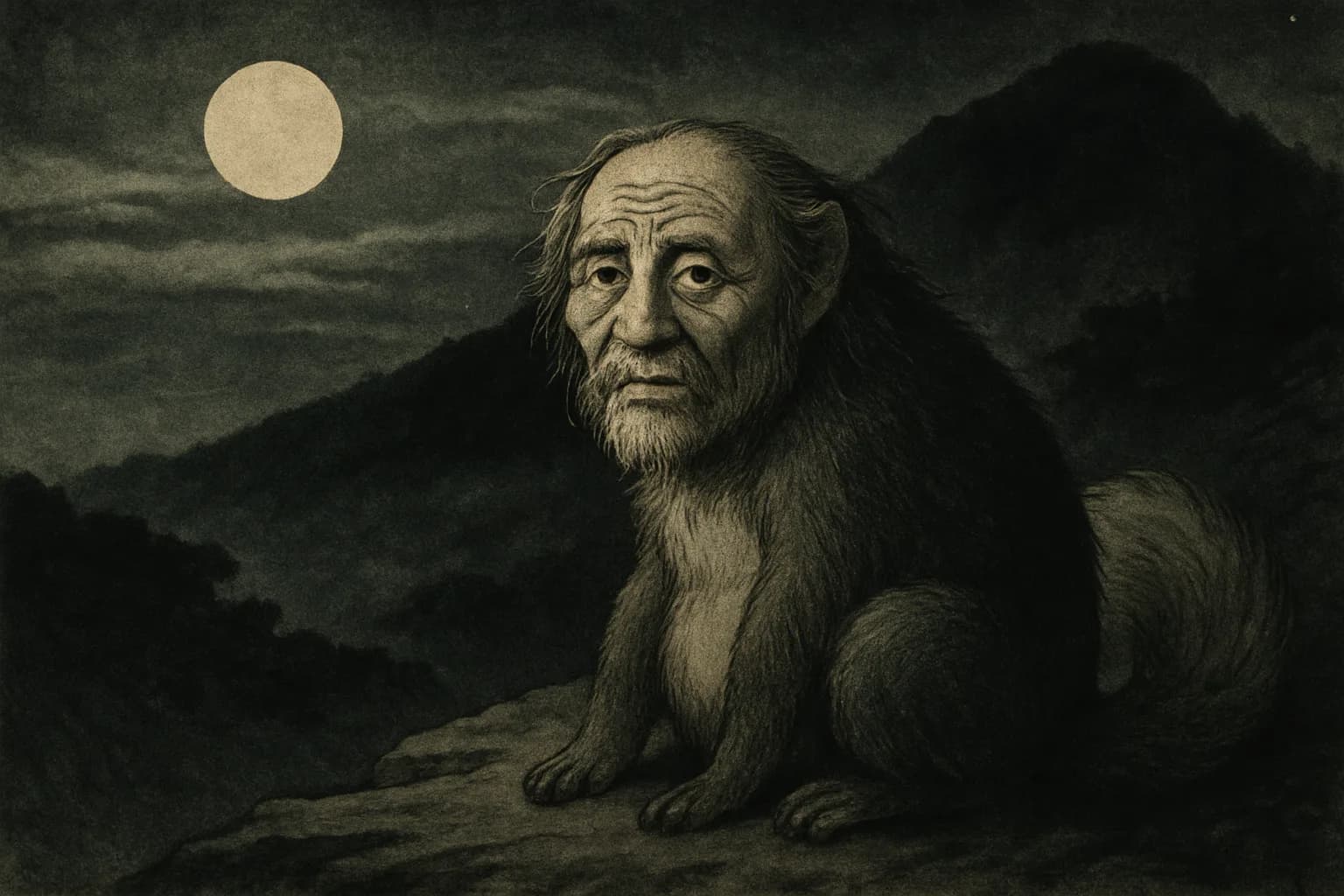
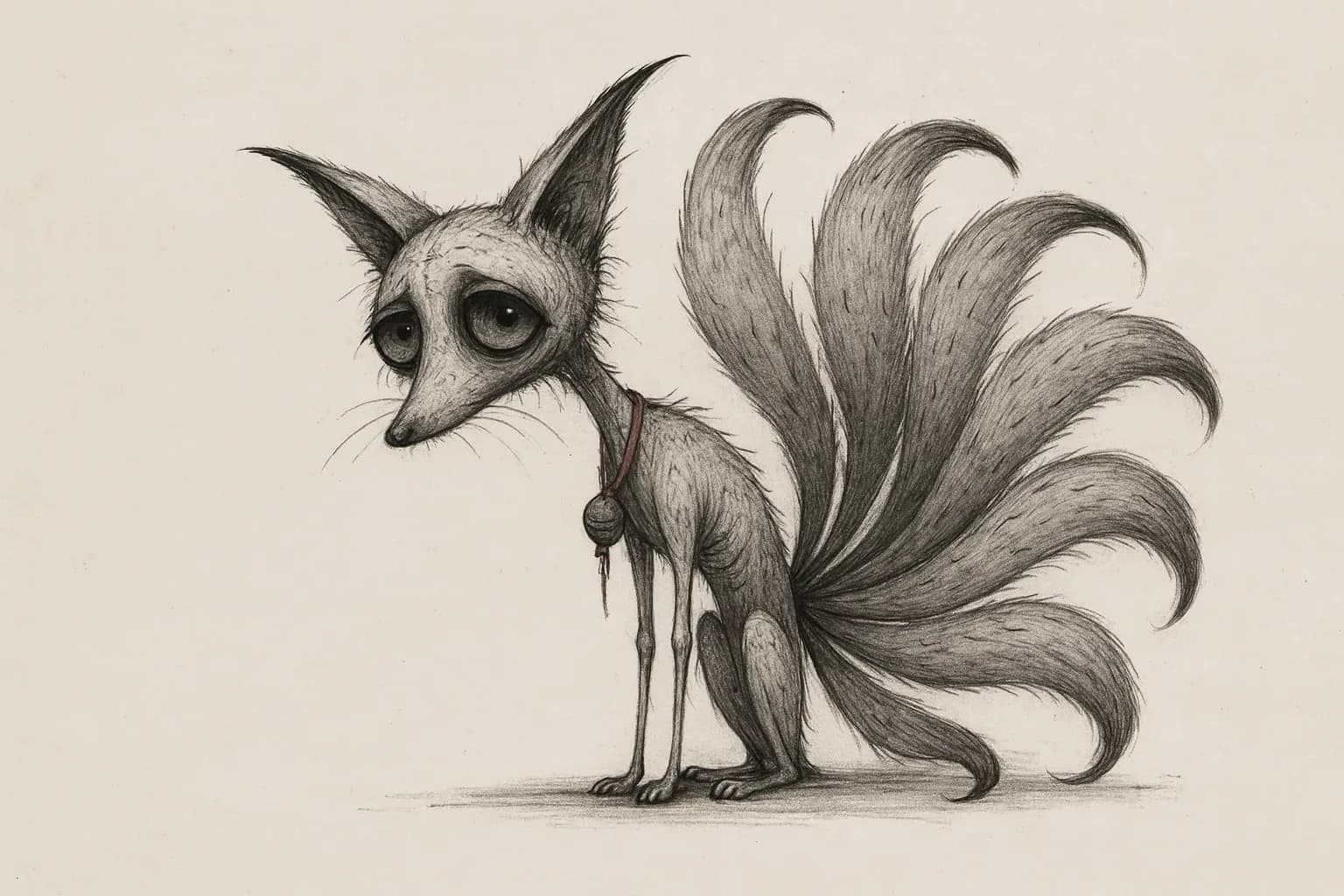
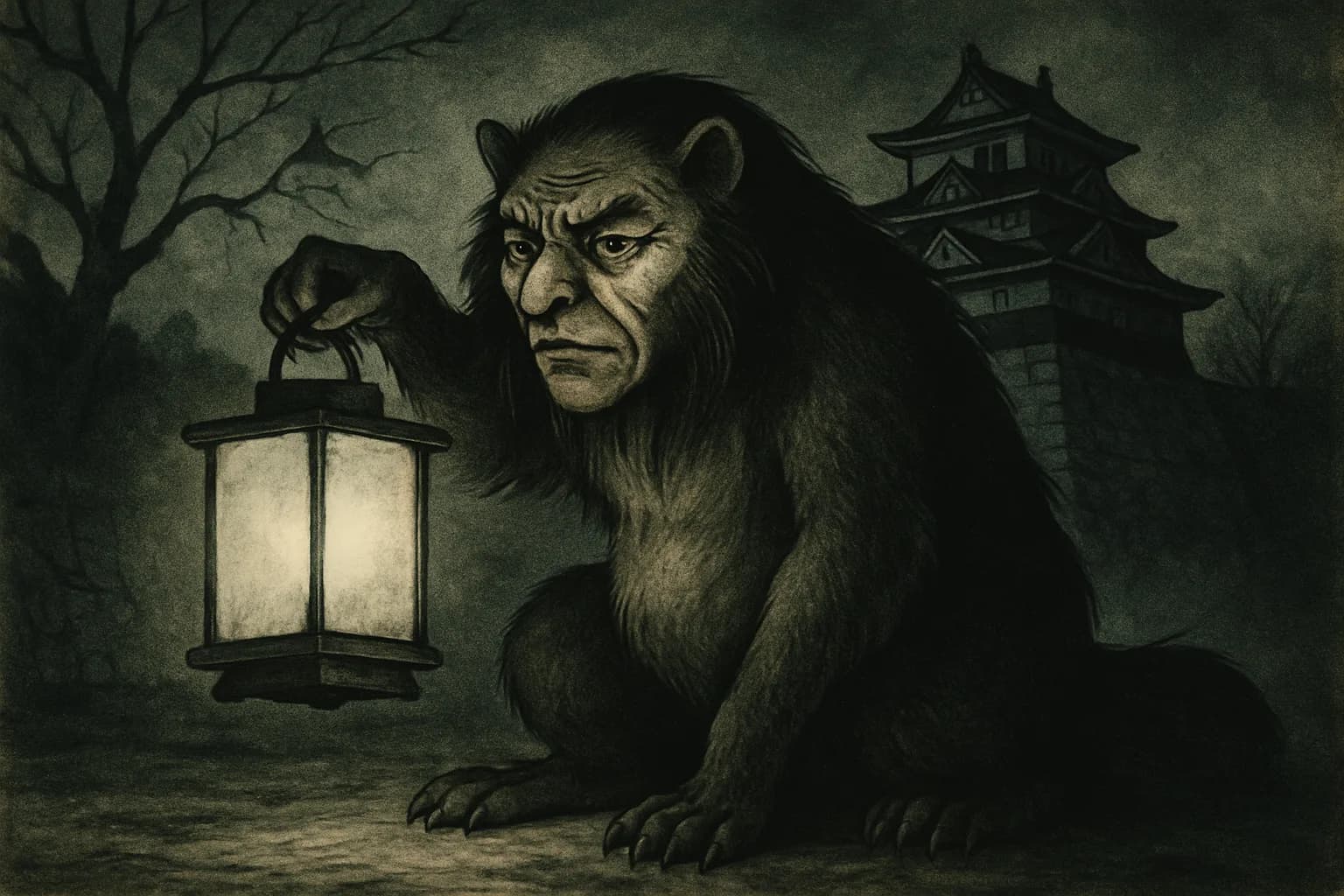
Most tellings keep him close to an ordinary tanuki, the round raccoon dog of folklore. He has a stout body and a masked face. Folklore makes him bigger, to match his rank. Some tales make him huge, big enough to dwarf a man. Others give him a second form: an old guard in formal dress, fit for his place in the castle. He is rarely drawn as a monster. A guard with a real title looks less like a threat and more like a soldier. His eight hundred and eight followers are named only in passing, an army implied but never drawn one by one.
A rank inside the castle
Local legend traces him back to Emperor Tenji, in the 600s. By the Edo period he lived in a rock cave on Mt. Kuma, above Matsuyama. From there he was said to guard Matsuyama Castle. The title Gyōbu, an old ministry post, came from the castle lord's own family. Retainers and townsfolk treated him like a minor god. Command of eight hundred and eight tanuki gave the tale its name: Happyaku-ya-danuki, "the eight hundred and eight tanuki."
The Matsuyama Sōdō
Guard duty did not last. During the Kyōhō era, Matsuyama was hit by a family feud, made worse by famine. A clan elder named Okudaira Kyūhei was accused of theft. Gyōbu-danuki is said to have tried to stop him, turning his shapeshifting powers against him. The plan failed. A rival guard, Inō Butayū, faced the tanuki instead. Inō carried a holy staff, given by the god Usa Hachiman. With it he sealed Gyōbu-danuki and all eight hundred and eight of his followers inside the cave on Mt. Kuma. Tellings do not agree on whether Gyōbu was ever truly guilty.
The cave that is still there
The sealed cave is still on the map. Today it is Yamaguchi Reishin Shrine, in the Kuya-Nakagumi part of Matsuyama. People still leave gifts there for Gyōbu-danuki, treating the sealed guard less like a threat and more like a spirit worth keeping happy. A sign nearby names the site, part of Shikoku's wider line of named, ranked tanuki.
Where it comes from
The tale began as something close to true crime. In 1805 (Bunka 2), the feud was written down as Iyo Nagusa, a plain account of the scandal. It named real people and a real theft case. Years later, in the late Edo period, a storyteller named Tanabe Nanryū reworked it. He added the tanuki, the sealing, and a strange cause behind the family's troubles. The result became Matsuyama Sōdō Happyaku-ya-danuki Monogatari, one of the region's best-known kaidan (ghost story). A real scandal had turned into a yokai tale, years after the fact.
Gyōbu-danuki fits a wider Shikoku custom: tanuki with names, ranks, and shrines of their own. Tasaburo-tanuki of Yashima shares the same pattern, another tanuki said to lead troops of his own. Both trace back to an older, more common tanuki: the shapeshifting trickster found all over the country.
Gyōbu-danuki today
Studio Ghibli's Pom Poko (1994) uses him directly. Among the legendary tanuki summoned to fight for Tokyo's raccoon dogs is Inugami Gyōbu, alongside Yashima's own Tasaburo-tanuki. The film treats him as a local leader, true to the old tales. A bronze statue of Gyōbu-danuki also stands on Mizuki Shigeru Road, the yokai-themed street in Sakaiminato. Most figures on that street come from Shigeru Mizuki's own comics. Gyōbu-danuki reached it from something older: a real feud, a real cave, and eight hundred and eight tanuki nobody ever saw again.