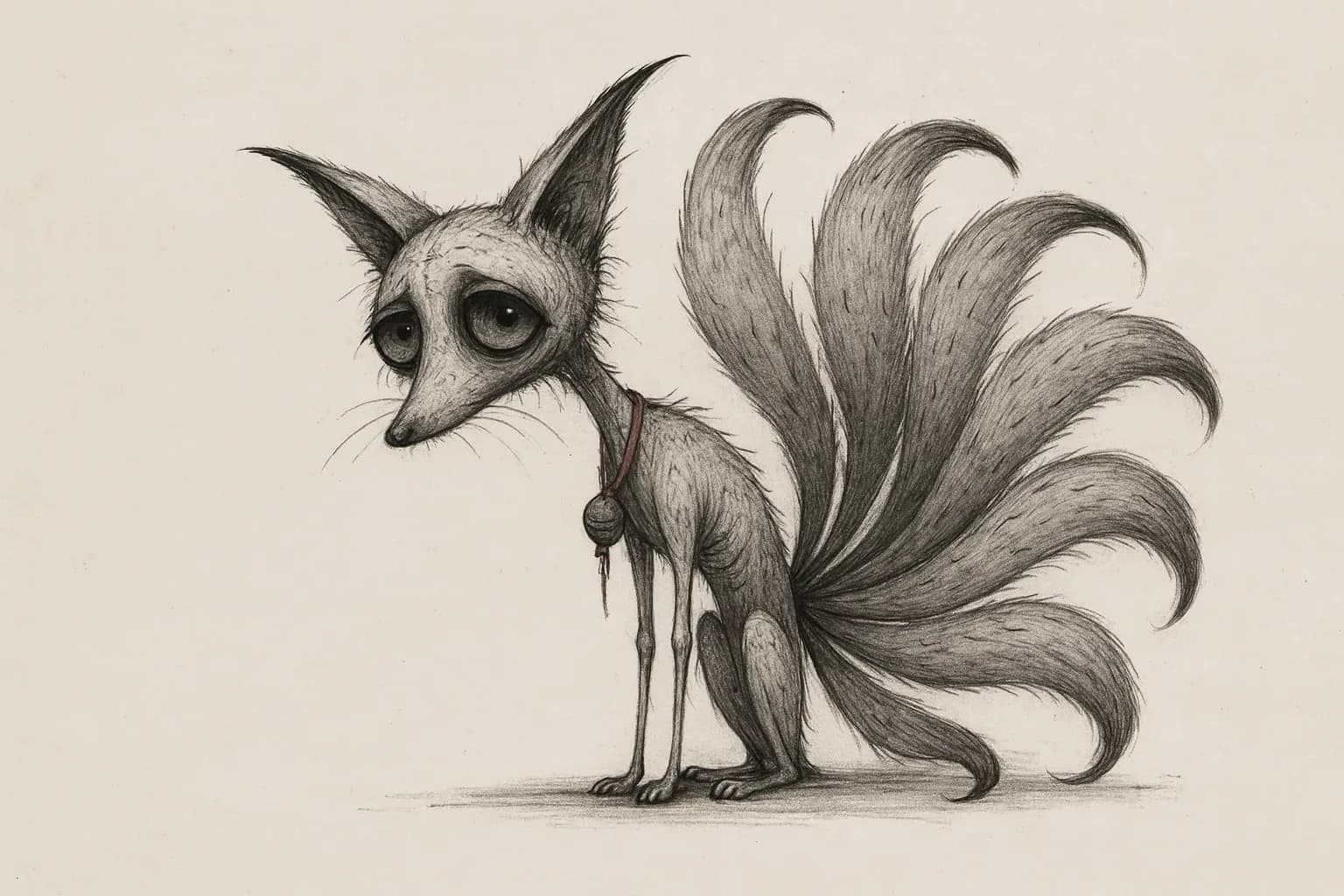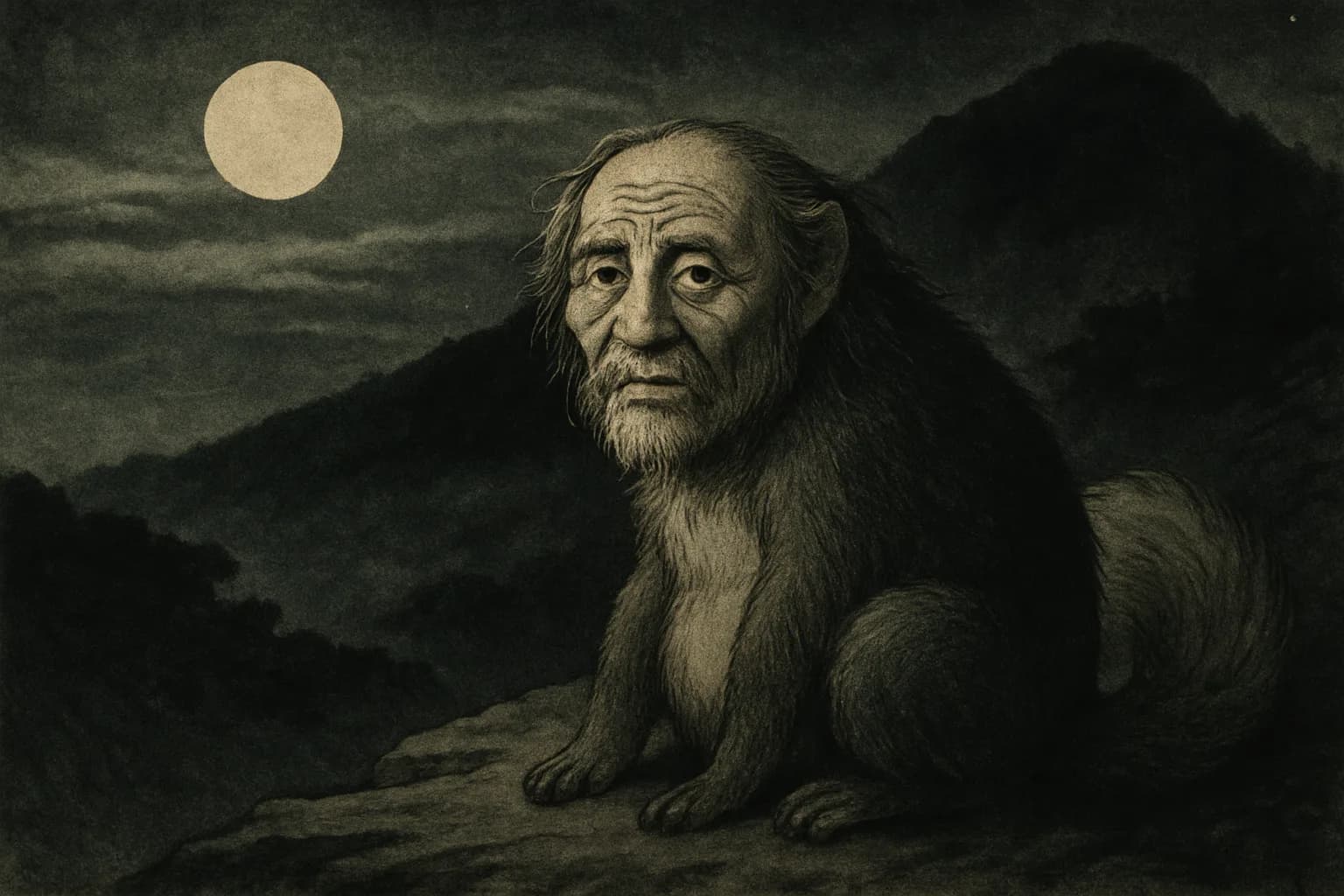
At Yashima-ji, a temple on a flat-topped mountain above Takamatsu, the head priest changes only once a generation. Local memory says the handover always brings the same dream. A great battle, fought below the mountain centuries ago, replays in full. The tanuki behind it is buried nearby under a grander name than most yokai get. He is Tasaburo-tanuki, a shapeshifter with a rank, a shrine, and a debt he has been repaying for eight hundred years.
What does it look like?
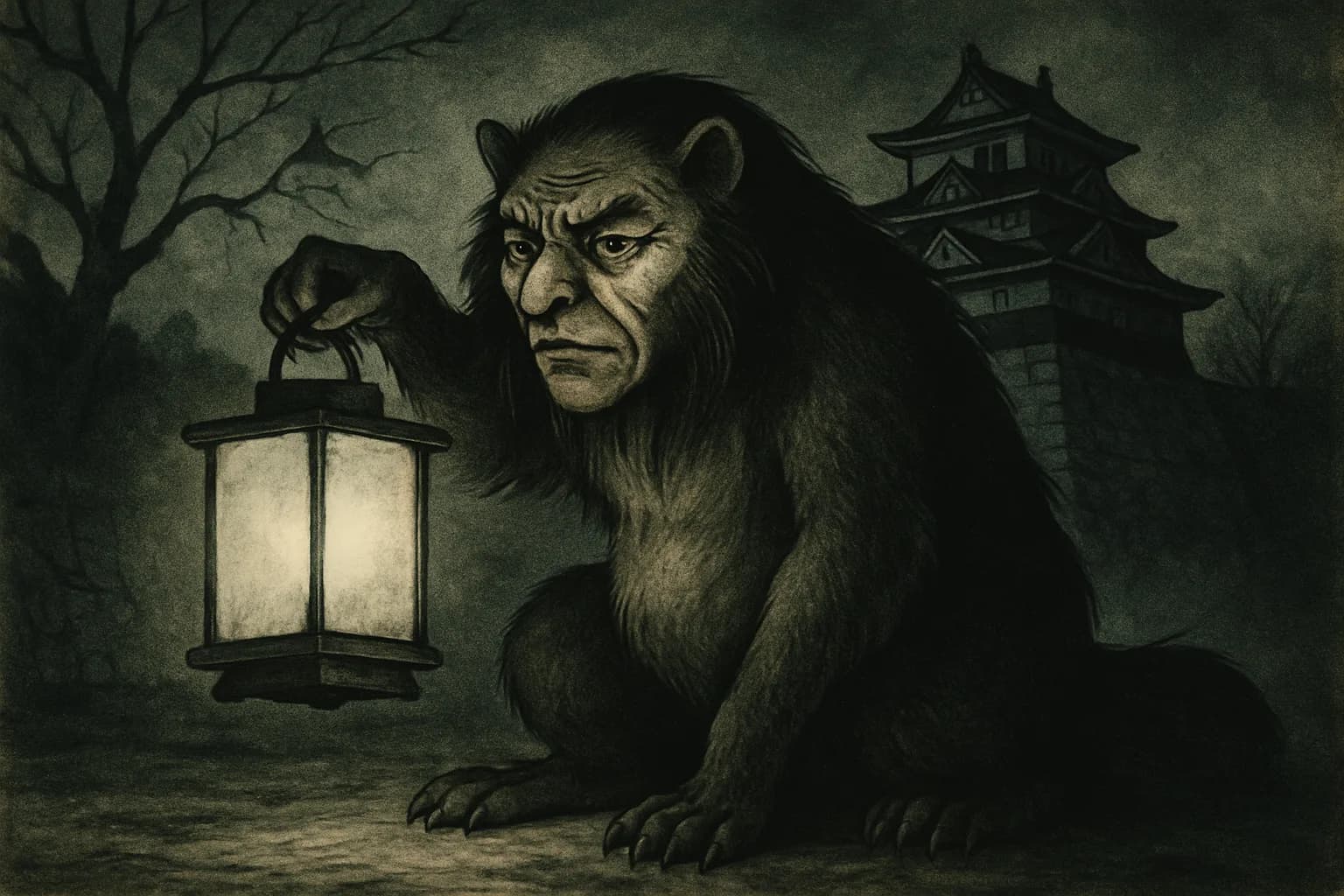
Most tellings give him the plain shape of an old raccoon dog. His fur is said to grey at the muzzle. His better-known form is human: an old man in a straw raincoat and hat. That was ordinary dress for a Sanuki farmer caught in bad weather. The disguise shows up in his oldest story. He rarely appears as anything monstrous. The carvings at Yashima instead show a dignified, seated figure beside his wife. He looks more like a household god than a trickster.
He also carries a second name, Yashima no Hage-tanuki — "the bald tanuki of Yashima." Unlike the shapeshifting, the name needs no explaining. It simply describes his head.
A debt from the Genpei War
The legend starts with an arrow. An ancestor tanuki was wounded and near death. Taira no Shigemori, a lord of the Heike (the Taira clan), saved him. In gratitude, the tanuki swore his family to protect the Taira line. That promise mattered, because Yashima was about to matter too. In 1185 it became a battleground of the Genpei War, the conflict that decided which samurai clan would rule Japan. The Heike lost. Their protector's descendant kept the vow anyway.
Once the Taira were gone, the tanuki took on a new job. Now known as Tasaburo, or Hage-tanuki, he became the guardian spirit of Yashima-ji itself, the 84th temple on the Shikoku 88-temple pilgrimage. His shapeshifting was said to be the best in the country. In time he rose to something like a military rank: supreme commander of every tanuki in Shikoku.
The winter illusion
Tasaburo's specialty is memory, not mischief. Each year, at the coldest point of winter, some 300 tanuki are said to gather at Yashima under his command. For them he replays the old battle, the one he watched himself: Minamoto no Yoshitsune's famous leap from boat to boat, an arrow lost and recovered under enemy fire, the whole clash conjured as moving illusion in the night air. When a new head priest takes over the temple, the same battle is said to return once more, this time in the priest's dreams.
An older story explains how he earned his standing in the first place. The monk Kōbō Daishi once climbed Yashima in thick fog and lost his way. An old man in a straw hat found him, guided him safely to the summit, and vanished. It was Tasaburo in disguise, doing a favor for a stranger long before he had any temple to guard.
Where it comes from
Tasaburo belongs to a small, specific class of tanuki folklore. These are not solitary tricksters, but named individuals with biographies, ranks, and shrines, each tied to one real place. Local tradition ranks him alongside two others as the Nihon San-dai Tanuki, Japan's Three Great Tanuki. The other two are Danzaburo-danuki of Sado Island and Shibaemon-tanuki of Awaji. All three legends follow the same shape. An animal spirit earns a debt, repays it with loyalty, and ends up worshipped rather than feared. It is folklore doing what shrines do everywhere in Japan: giving a local mountain a name and a personality of its own.
His kanji make the same point in miniature. Most yokai get a description — 河童, "river child." Tasaburo gets a person's name, 太三郎, with 狸 simply added on. The raccoon dog reads almost as an afterthought next to the man.
Tasaburo-tanuki today
Worshippers still visit the Minoyama Daimyojin shrine inside the Yashima-ji grounds. They pray to Tasaburo and his wife for marriage, family harmony, and safe childbirth. One telling insists the couple's own devotion to each other was as absolute as his loyalty to the Heike.
Studio Ghibli's Pom Poko (1994) borrows him directly. Among the legendary tanuki summoned to fight for Tokyo's raccoon dogs are Yashima no Hage, Kinchō-danuki, and Inugami Gyōbu. All three are regional tanuki generals lifted straight from real shrine folklore, Tasaburo among them. The film changes nothing about who he is supposed to be. It just moves him to a new war.