In the fourth month of 1846, a glowing light kept appearing over the sea off the coast of Higo Province, in what is now Kumamoto. Night after night it showed up in the same stretch of water, until a local official finally rowed out to see for himself. What rose to meet him, according to the broadsheet printed soon after, was not a fish or a spirit of the drowned but something that spoke: it identified itself as Amabie, said it lived in the sea, and delivered a warning about the years ahead.
What does it look like?
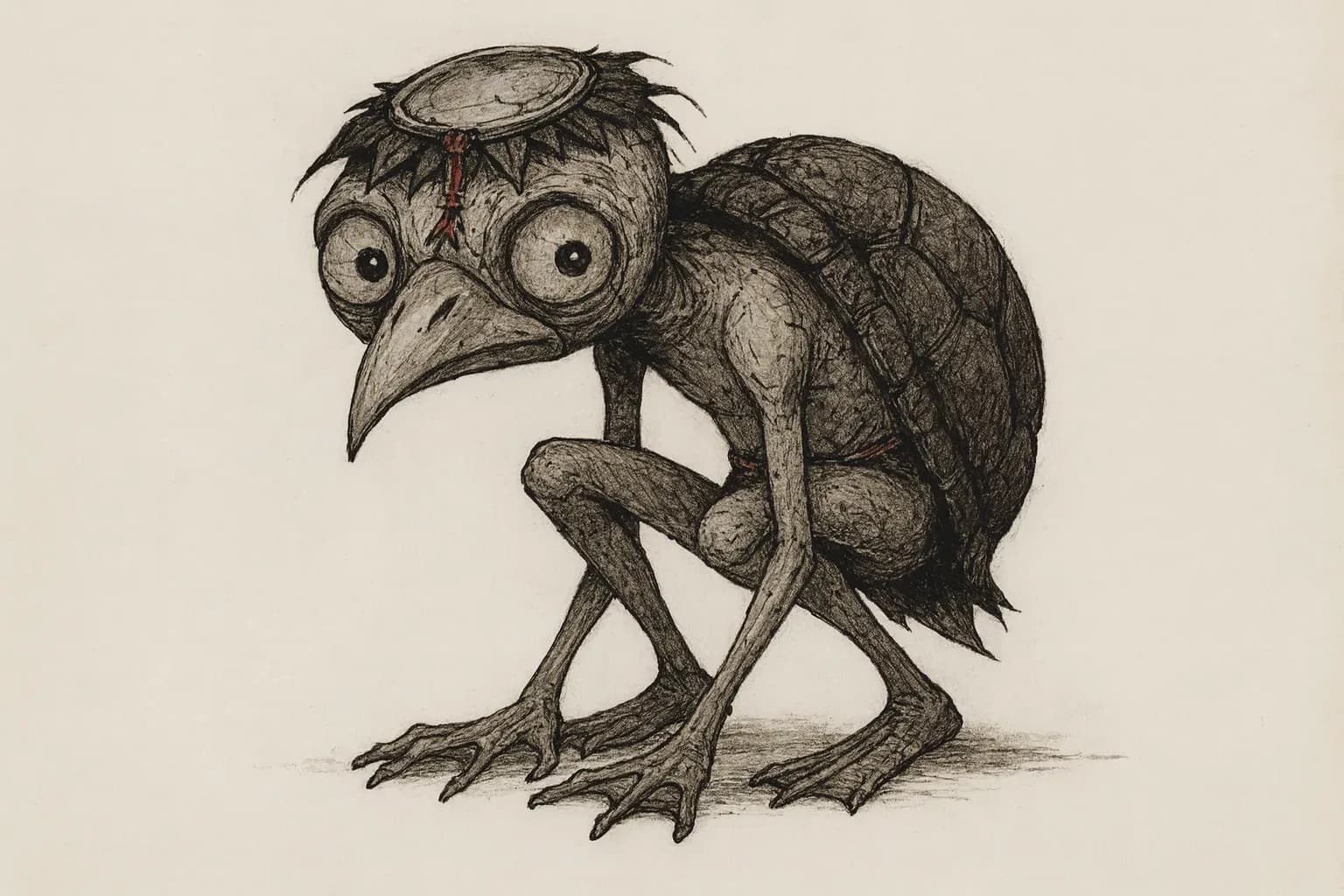
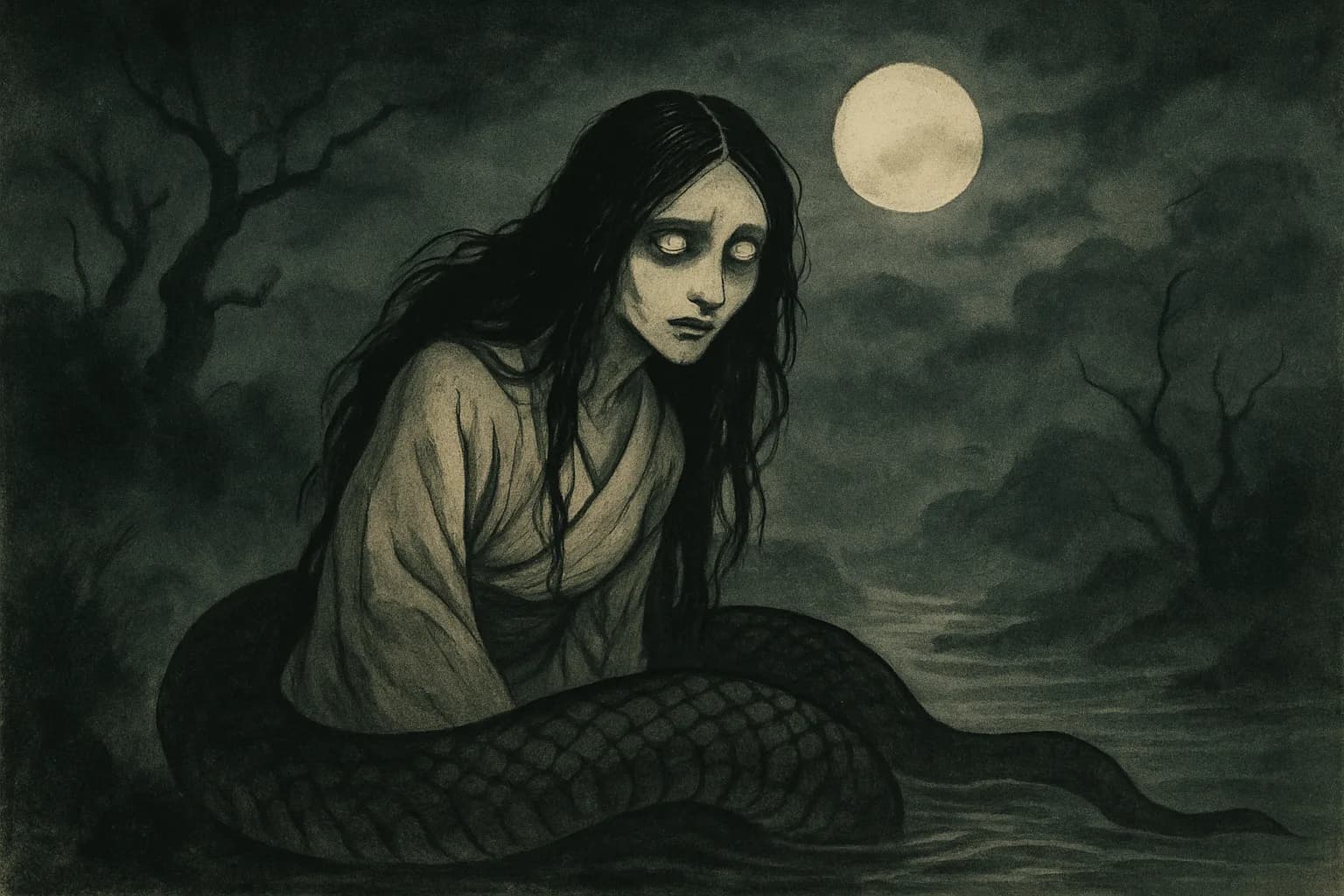
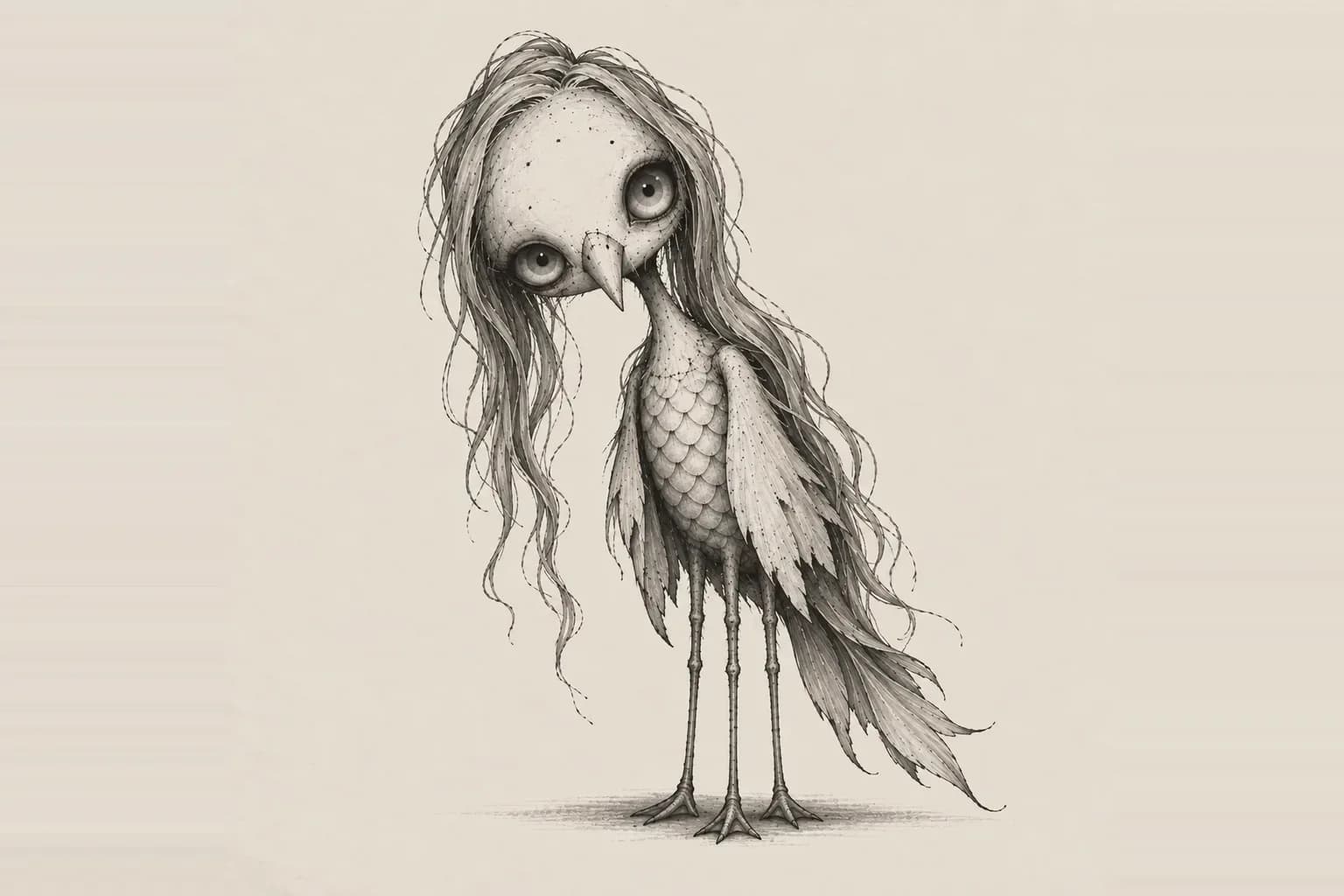
The 1846 print shows a slight, almost graceful figure — long flowing hair, a beak-like mouth (kuchibashi) rather than a human face, a body covered in scales like a fish, and three legs instead of two. It reads as part bird, part mermaid, part fish, standing upright in the shallows. Unlike the horned oni or the shaggy yamauba, Amabie has no menace in its design at all; every account describes it as calm and forthcoming, a messenger rather than a monster.
The prophecy at Higo Bay
Amabie told the official two things. First, that the coming years would bring a bountiful harvest across the provinces. Second, and more urgently, that if disease should spread, people should make a picture of Amabie itself and show it to others — and by doing so, be spared. Having said its piece, it returned to the sea and was not seen again. The official had the encounter recorded and the creature's image copied onto a kawaraban, the cheap woodblock-printed news sheets that circulated information — and rumor — through Edo-period Japan.
That single 1846 print is the entire historical record of Amabie. There is no earlier mention, no temple carving, no other sighting. Everything known about the creature comes from one broadsheet, which survives today in the Fujikawa Bunko, a Kyoto University Library collection of historical medical documents assembled by the physician and medical historian Fujikawa Yū.
A picture as protection
What sets Amabie apart from most yokai is that the folklore hands you an instruction rather than a weapon or a trick. You don't bow to it, feed it, or outrun it — you draw it, and you show the drawing to others. That act of copying and circulating the image is, within the story, the entire cure. It is a piece of folklore built for reproduction: the print exists because the legend told people to make more of it.
Where it comes from
Amabie belongs to a small, loosely related genre of Edo-period prophetic beings that folklorists call yogenju, "prophesying beasts." The folklorist Kunio Yanagita wrote about this category in a 1936 essay, grouping Amabie together with similar figures such as Amabiko — a comparable creature reported in other provinces around the same years, sometimes drawn with two legs or an apelike face instead of three legs and scales — and with Kudan, the cow-headed human said to be born, deliver a prophecy of famine or war, and die within days. Because the sources are so thin and the names so close, some scholars treat Amabie as a variant or a transcription of Amabiko rather than a wholly separate figure. Either way, all of them share the same basic shape of story: a strange being surfaces briefly, warns of hardship to come, and tells people how an image of itself can help them through it.
Amabie today
Amabie was a minor, half-forgotten figure until the spring of 2020, when Japan was heading into the COVID-19 pandemic. Its 180-year-old instruction — draw me and share the drawing — matched the moment almost exactly, and illustrations of Amabie spread across Japanese social media within weeks, tagged with its name in hashtags. Japan's Ministry of Health, Labour and Welfare adopted an Amabie illustration for its official public health awareness materials that spring, and the character appeared on everything from bakery pastries to shrine amulets during the following months. For a creature known from a single sheet of paper, it had turned out to be extraordinarily good at doing the one thing its legend asked of it.