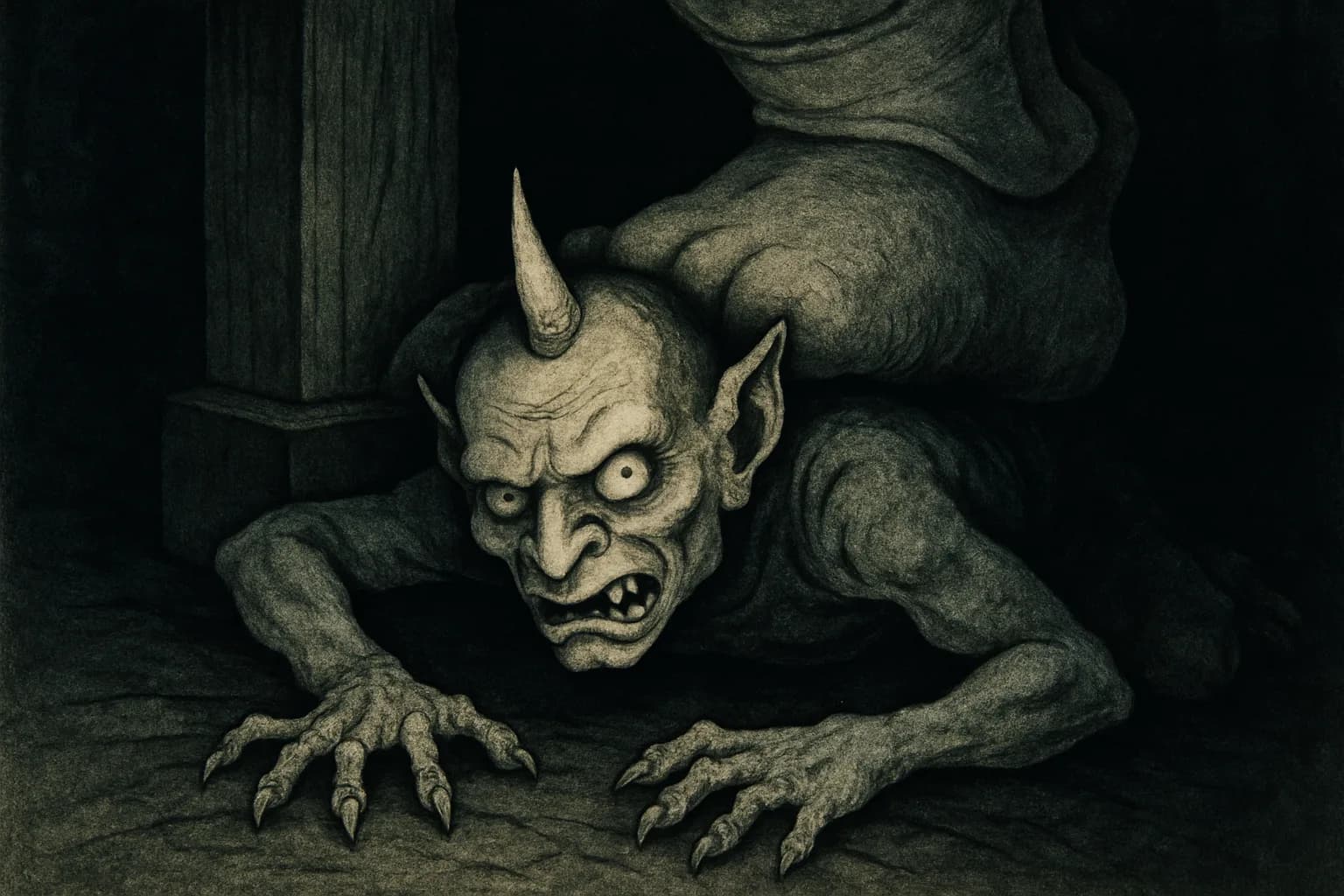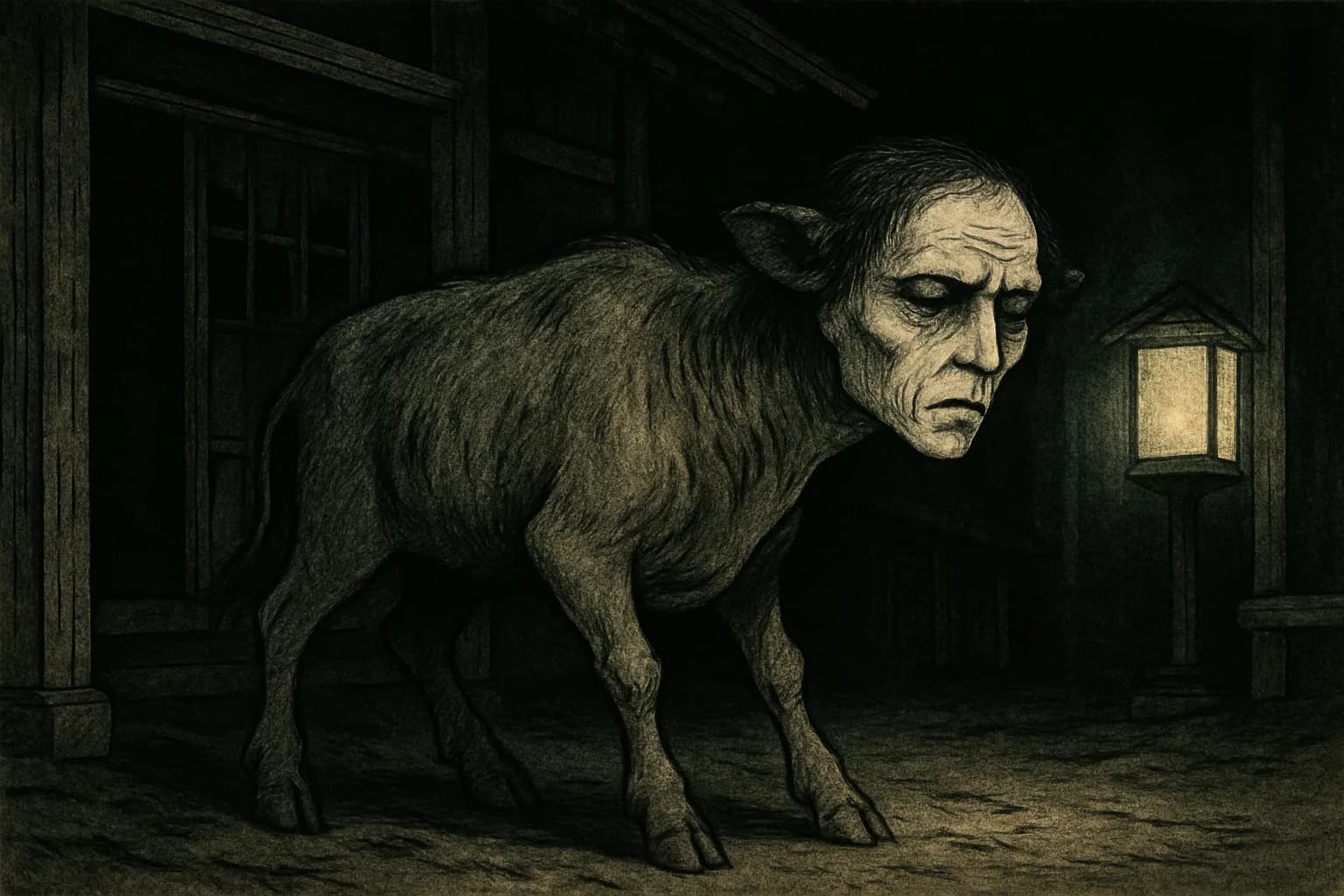
Open a formal Japanese document today — a contract, a certificate, an old deed — and it may still close with the words 件の如し, kudan no gotoshi: "as stated above." Almost no one signing that paperwork thinks about where the phrase comes from. But 件, the kanji for "the matter at hand," is also the name of a yokai whose single defining trait is that it cannot lie. Whatever a kudan predicts comes true, every time, which is exactly why its name ended up meaning "the facts of the case" — and why, when word spread that one had been born somewhere in Edo or Meiji Japan, people took it seriously.
What does it look like?
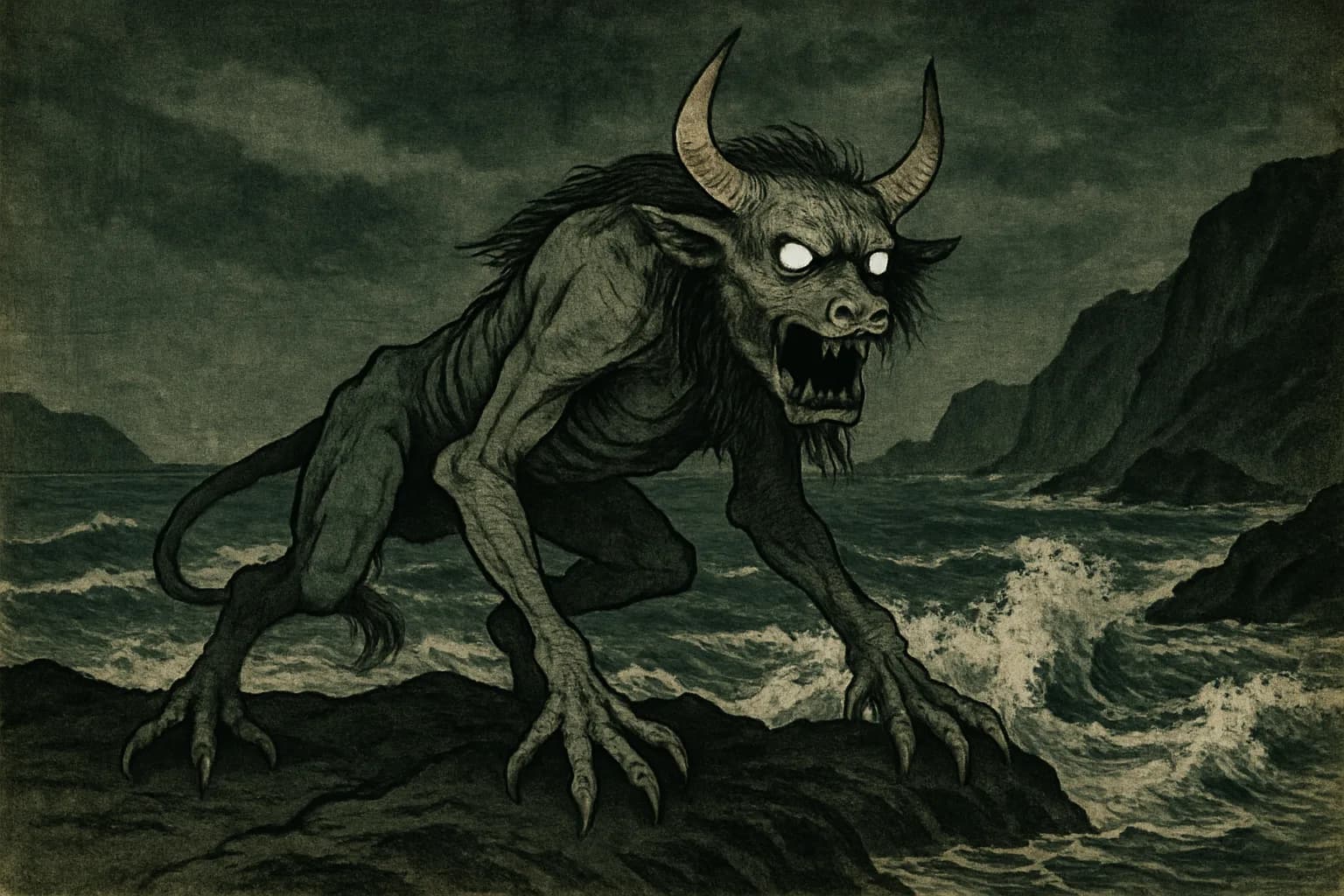
A kudan is born from an ordinary cow but arrives with a human face, and in some accounts a human voice to go with it, on a body that otherwise stays four-legged and bovine. The kanji itself spells this out structurally: 件 is built from 人 (person) set beside 牛 (cow), the hybrid written directly into the character. Reports agree on one further point almost without exception — a kudan lives only days, sometimes only hours, delivering its message and dying almost as soon as it has spoken.
A prophecy nobody could question
The pattern in every account is the same. A calf is born wrong — a human face where a calf's face should be — and before it dies it speaks: a coming harvest will fail or thrive, an epidemic is on its way, a war is coming. Villagers who heard the report didn't treat it as a curiosity. Folk belief held that a kudan's words never once failed to come true, which made its warnings worth more than an ordinary rumor and far more than an ordinary omen — most prophetic yokai hedge; a kudan doesn't.
What the broadsheets recorded
The surviving evidence for kudan sightings comes mostly from kawaraban — cheap, woodblock-printed news sheets hawked on street corners, Japan's closest Edo-period equivalent to a tabloid, equally happy to report a fire, a scandal, or a monster birth. One widely cited kawaraban places a kudan's birth in Bicchū Province, in what is now Okayama, during the Tenpō famine of the 1830s — and its message was unusually welcome news: a good harvest was coming despite the hardship. Other broadsheets describe kudan born just ahead of epidemics, giving villages a few days' warning to prepare. Because the animal died so quickly, almost nobody claimed to have seen one directly. The story arrived the way most kudan stories still do — already printed, already traveling.
A cousin from the mountains
Folklore from Etchū Province, in present-day Toyama, describes a near-identical creature called kutabe: a human-faced beast that appeared during a nineteenth-century cholera outbreak specifically to tell people which remedy would work. Folklorists generally treat kutabe as a regional cousin of the kudan rather than a separate creature — the same idea of a short-lived hybrid animal born to deliver one urgent, guaranteed truth before it dies.
Where it comes from
The built-in unfalsifiability is likely the point. A kudan's reputation for perfect honesty meant that any dire prediction attributed to one carried more weight than an ordinary rumor — and kawaraban printers knew that a headline reading "a kudan has prophesied" would sell during a famine or an epidemic, when people were hungry for certainty about what was coming. The compound kanji itself is older than any of the surviving printed reports, and the survival of the fixed phrase kudan no gotoshi in ordinary written Japanese suggests the belief in the creature's absolute honesty was old and widespread enough to leave a permanent mark on the language, independent of any single sighting.
Kudan today
The story resurfaced in wartime and postwar rumor, and it produced at least one lasting piece of fiction: Sakyo Komatsu's 1968 short story "Kudan no Haha" ("The Kudan's Mother") ties a kudan's birth directly to a prophecy of Japan's defeat in the final months of the Second World War, and it remains one of Komatsu's most anthologized stories. The creature also turns up as a recurring demon in Atlus's Shin Megami Tensei video game series, summonable alongside the rest of the franchise's cast of folkloric and mythological beings, its human-faced, four-legged silhouette still recognizable from the original broadsheet descriptions.
Sign a Japanese document today that closes with 件の如し, and the words on the page are borrowed from a monster that, as far as the people who wrote down its sightings were concerned, never once got it wrong.