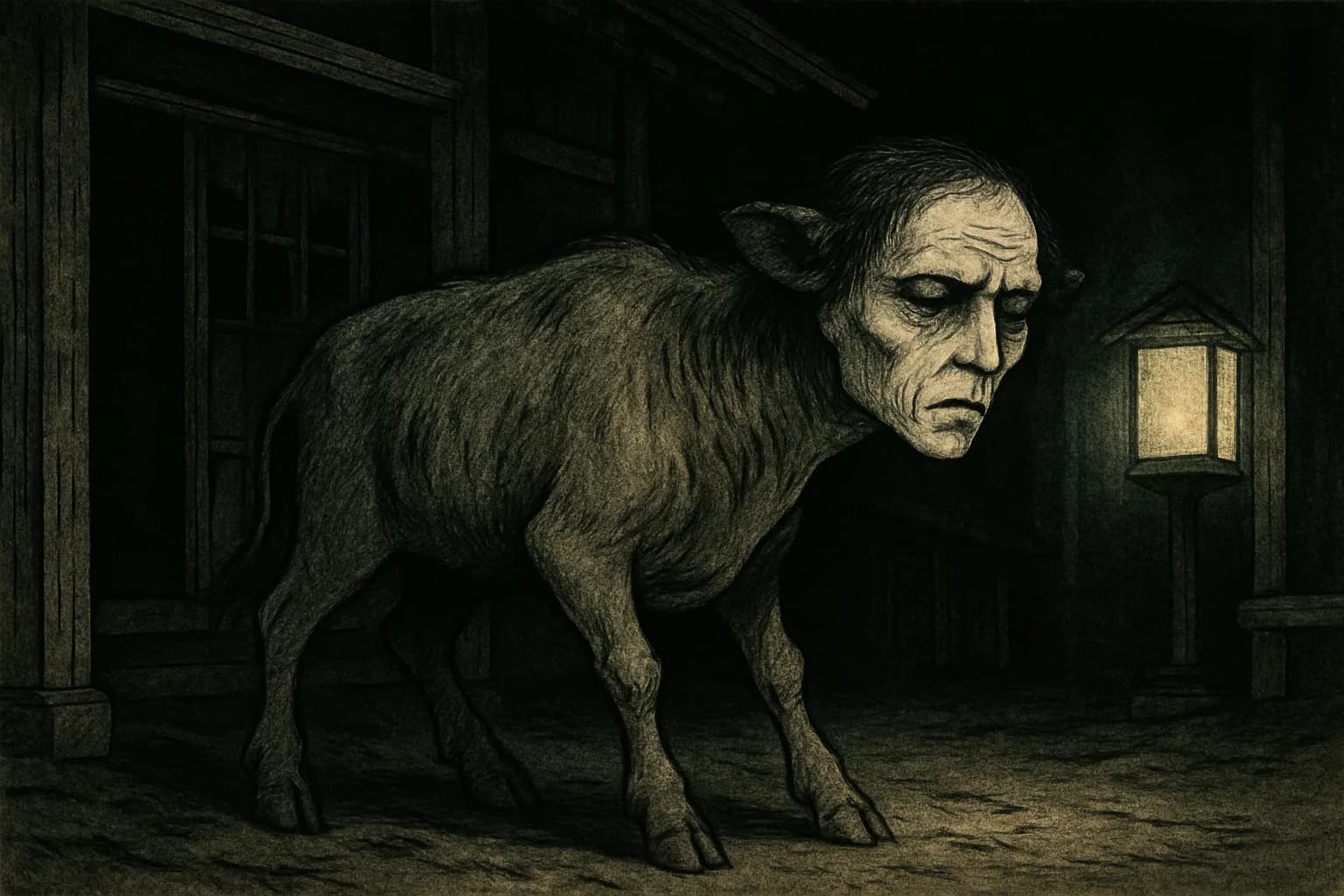
Most yokai come with a hometown, a face, and centuries of paintings behind them. This one has none of that. It appears exactly once, in a government report from 733. It eats a man in a single line, then vanishes from every record that follows. It doesn't even have a name of its own. Scholars just call it the Oni of Ayo, after the place it happened. That place is the reason a six-line story still matters: it holds the oldest surviving use of the word oni (鬼) attached to an actual demon, anywhere in Japanese writing.
What does it look like?
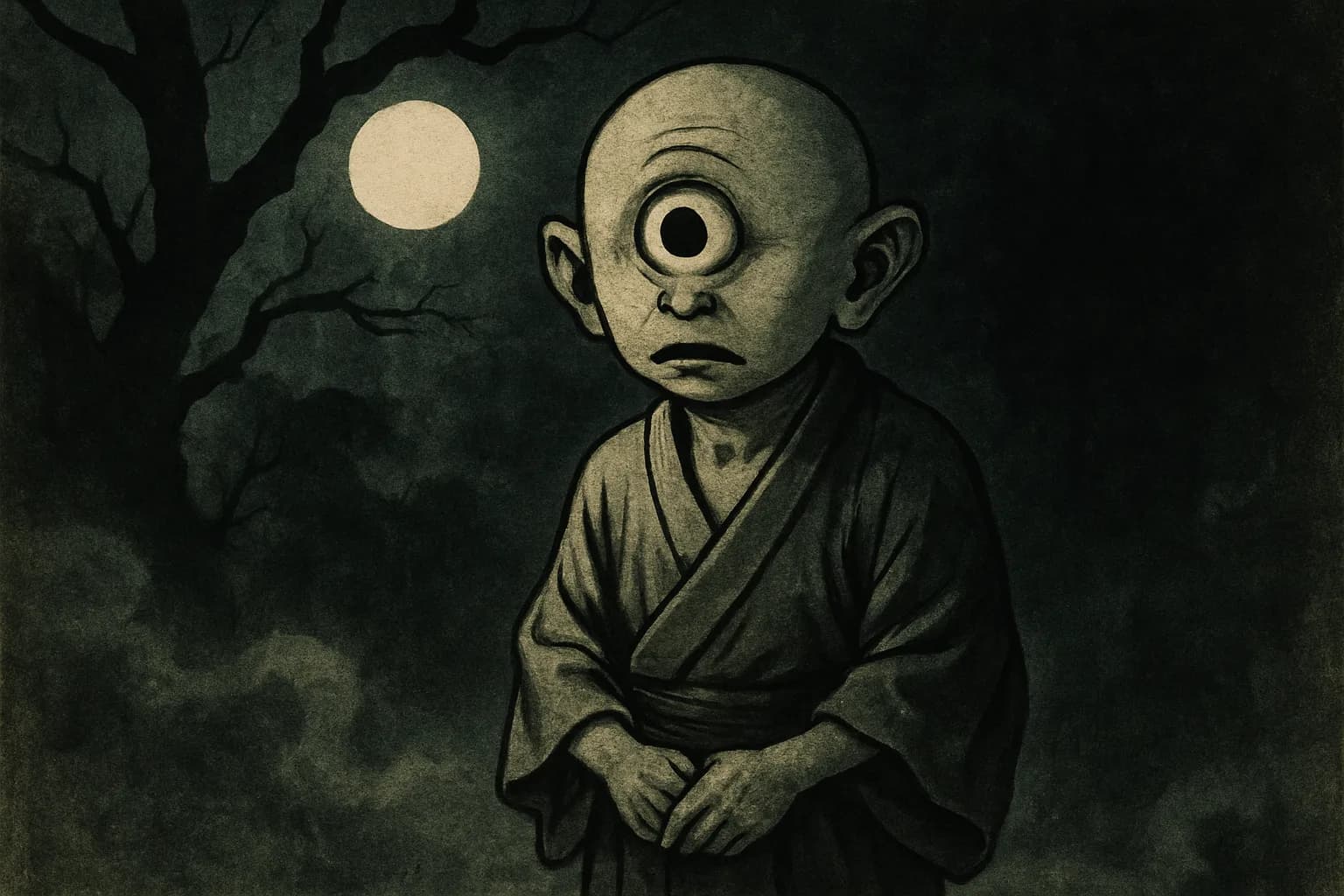
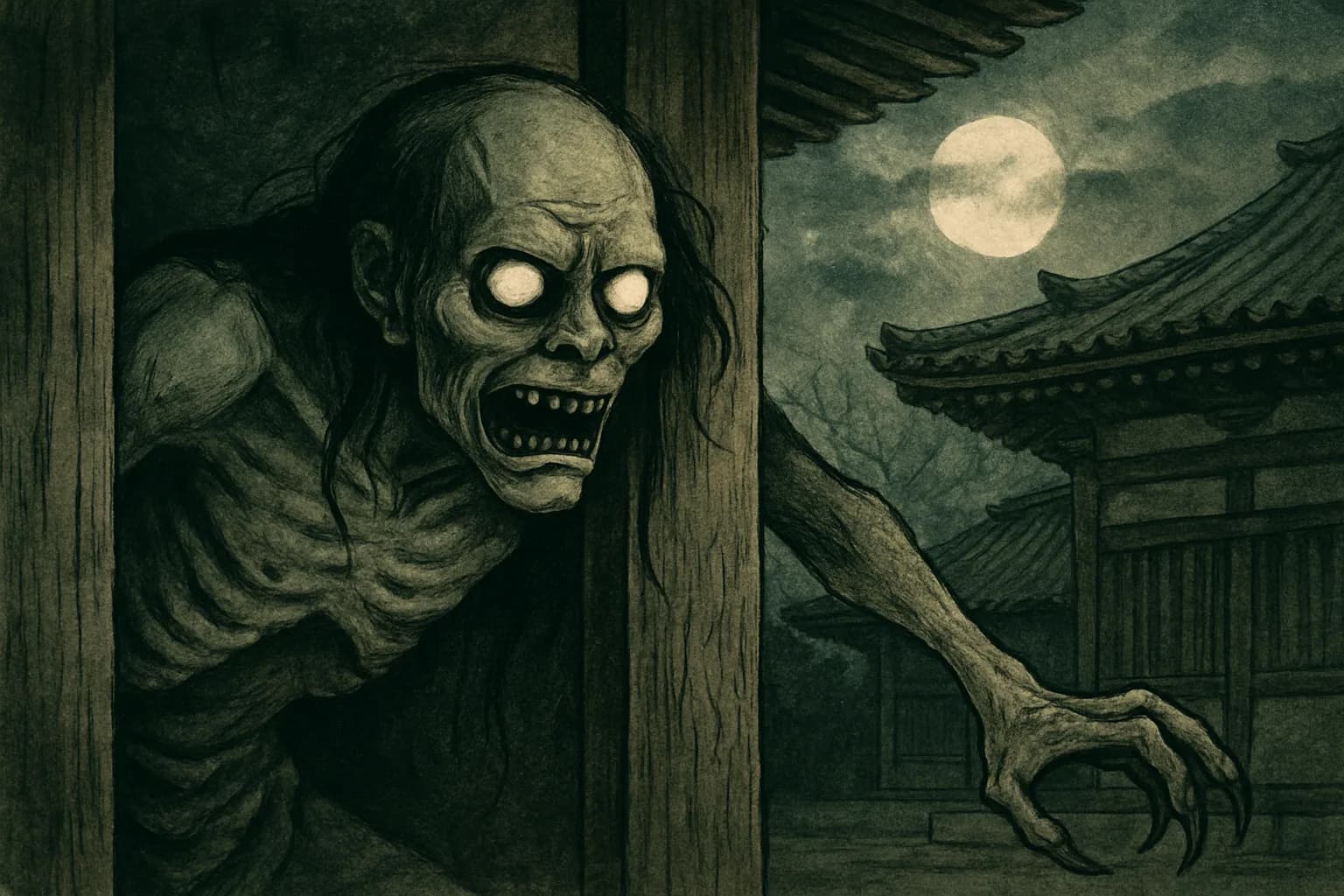
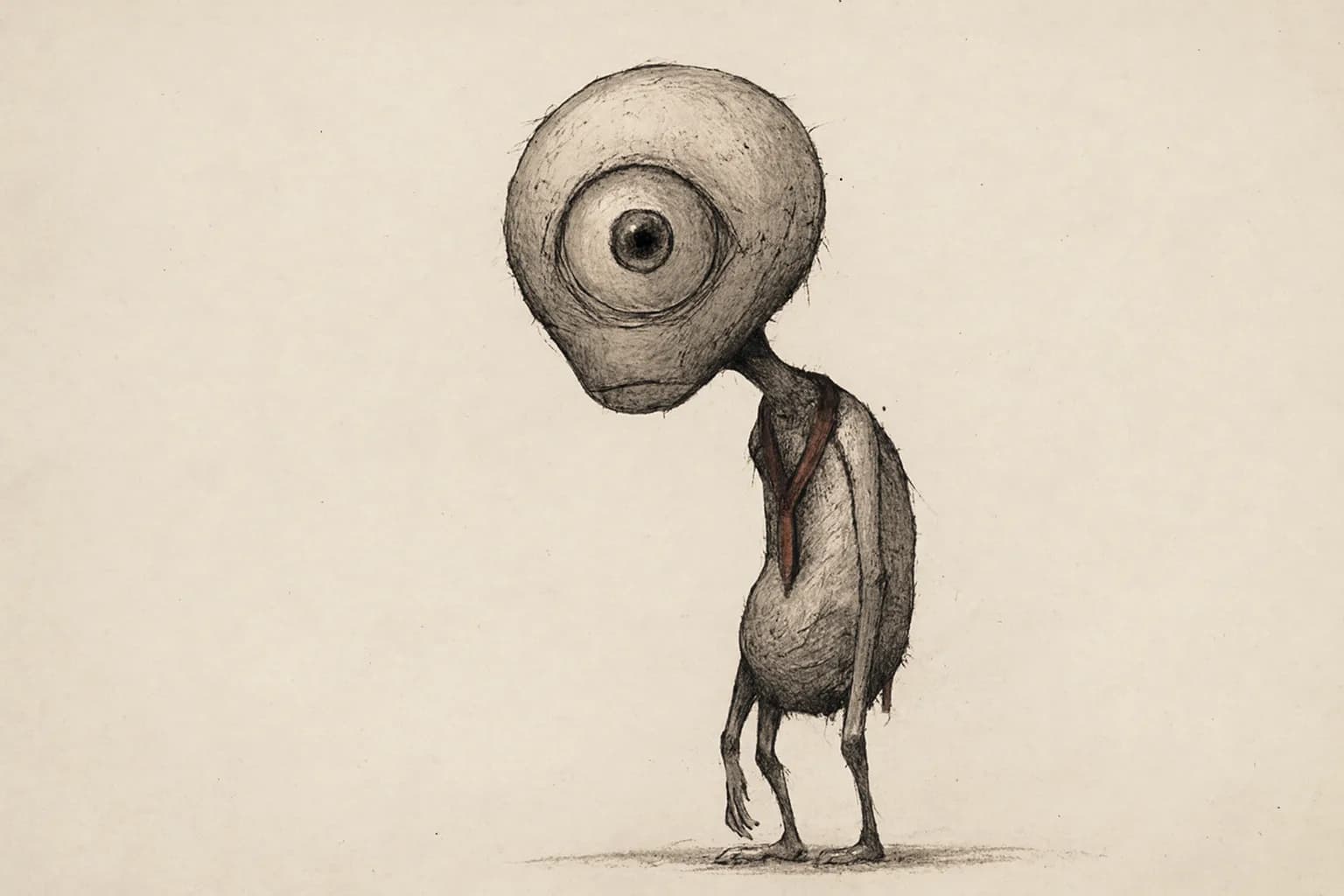
The text gives almost no physical detail. It says only that the demon had one eye. The original calls it me-hitotsu no oni (目一鬼) — literally "one-eyed demon." That single fact is the whole description. No horns, no color, no size, no weapon. The red skin, the horned head, the tiger-skin loincloth people now picture when they hear "oni" all belong to a much later tradition. In 733, one eye alone was apparently strange enough to be worth recording.
The story the Fudoki tells
The tale is short enough to repeat in full. A farmer was working a mountain field in Ayo, a small village in Izumo province. A one-eyed demon came out and ate him. His parents were hiding nearby, in a stand of bamboo. As the man was being eaten, he cried out — the text keeps the sound, not the words. His parents heard him scream as the bamboo leaves shivered around them. That is the whole story. No fight, no rescue, no moral. The report isn't interested in what happened to the parents afterward, or in punishing the demon. It only wants to explain a place name.
A village named after a scream
Izumo no Kuni Fudoki wasn't written as folklore. It was a geography report, ordered from every province by the imperial court in 713 and finally finished for Izumo in 733. Each entry lists a district, a village, and notes on where its name came from. Ayo's entry exists only to explain where "Ayo" came from. The dying man's cry is recorded as the sound ayo, ayo. Villagers took up the sound, and the place kept it. A later note in the same district shows the characters used to write it were formally changed in 726, from one spelling to another — before the report itself was even finished. The full old name, 阿用郷 (Ayo no sato), just means "Ayo village." Add 鬼 (oni) and the whole phrase becomes "the demon of Ayo village" — a place named after its own monster.
Where it comes from
Folklorists have long argued over what a one-eyed demon meant to the people who wrote this down. Izumo was iron country. The region ran tatara, traditional charcoal-fired smelting furnaces, for over a thousand years, and smiths who stared into that heat for a living sometimes lost sight in one eye. Some scholars read the Ayo demon as a folk memory of that world — an iron-worker or bandit, half-mythologized by the farming villages he passed through. It's a reading, not something the text confirms; the Fudoki never mentions a forge. But the theory fits a wider pattern in Japanese folklore, where one-eyed gods and monsters cluster in old ironworking regions. Centuries later, a different one-eyed figure, hitotsume-kozo, turns up in Kanto — a small boy who startles travelers on back roads instead of eating them. The two never met in any story, but they share the same missing eye.
The Oni of Ayo today
The village never stopped being real. Ayo still sits on the map, inside modern Unnan City in Shimane Prefecture, and a river nearby still carries the name. Shimane Prefecture treats the Izumo no Kuni Fudoki as a genuine historical record, not just old folklore, and keeps markers across the province at the real places its stories name. Historians tracing the roots of Japanese demon lore return to this six-line entry more than to any painted scroll, because the paintings came centuries later — Toriyama Sekien's famous demon prints date from the 1700s. This farmer's cry is from 733. Whatever oni eventually became — horned, red-skinned, driven out of houses every February at Setsubun, the bean-throwing festival — it started, on paper, as one unnamed eye in a mountain field.