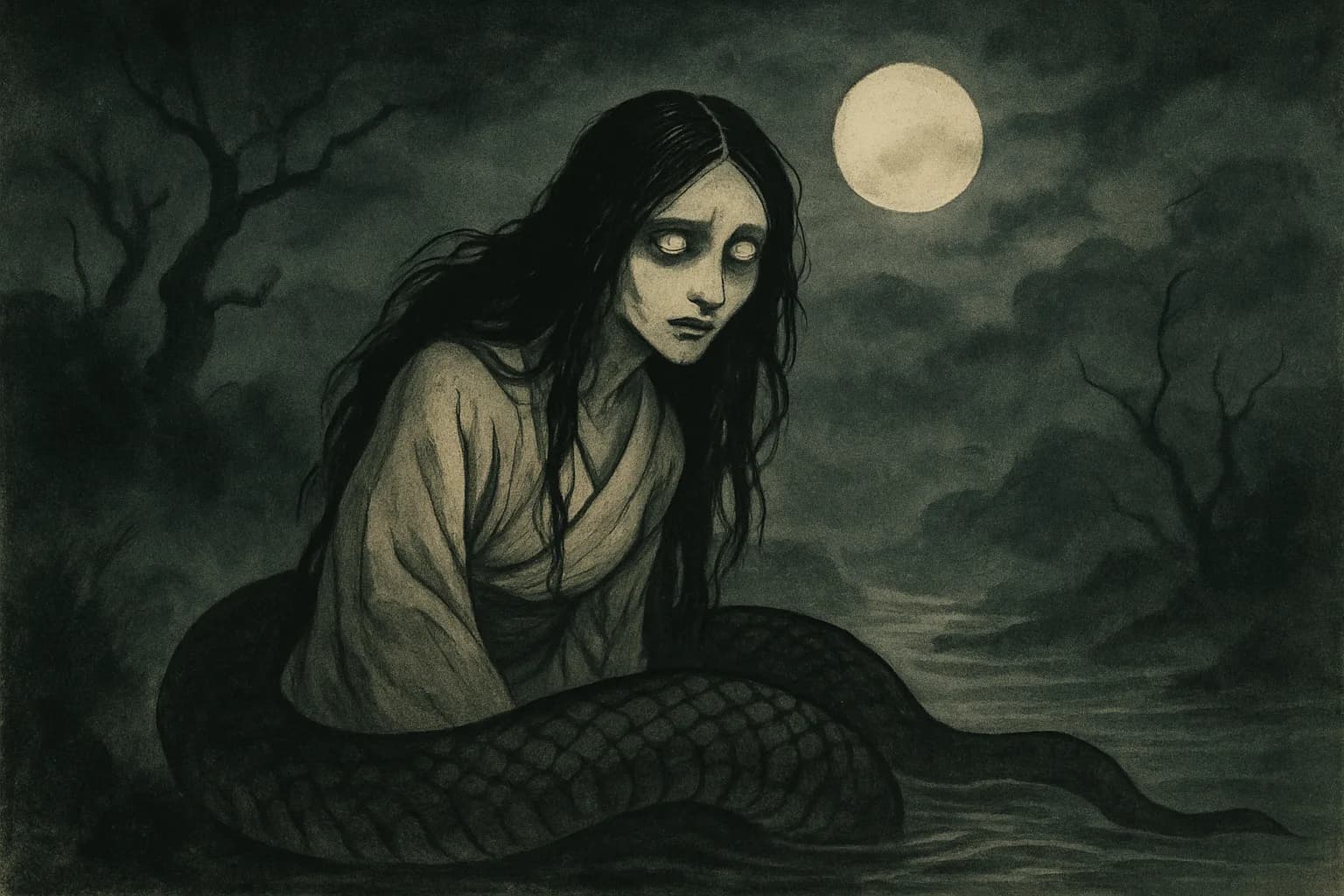
In parts of old Saga, households drew a bath before sunset and left it standing empty rather than let the last of the family bathe in it first. The water wasn't for a guest. It was set out so that whatever crept up from the river that night would use it, get its fill, and leave the family's own bathwater alone. That visitor was the hyosube — a hairy, kappa-like yokai that villages in northern Kyushu blamed for filthy bathwater, stripped eggplant patches, and a shriek in the dark that no one wanted to go outside and investigate.
What does a hyosube look like?
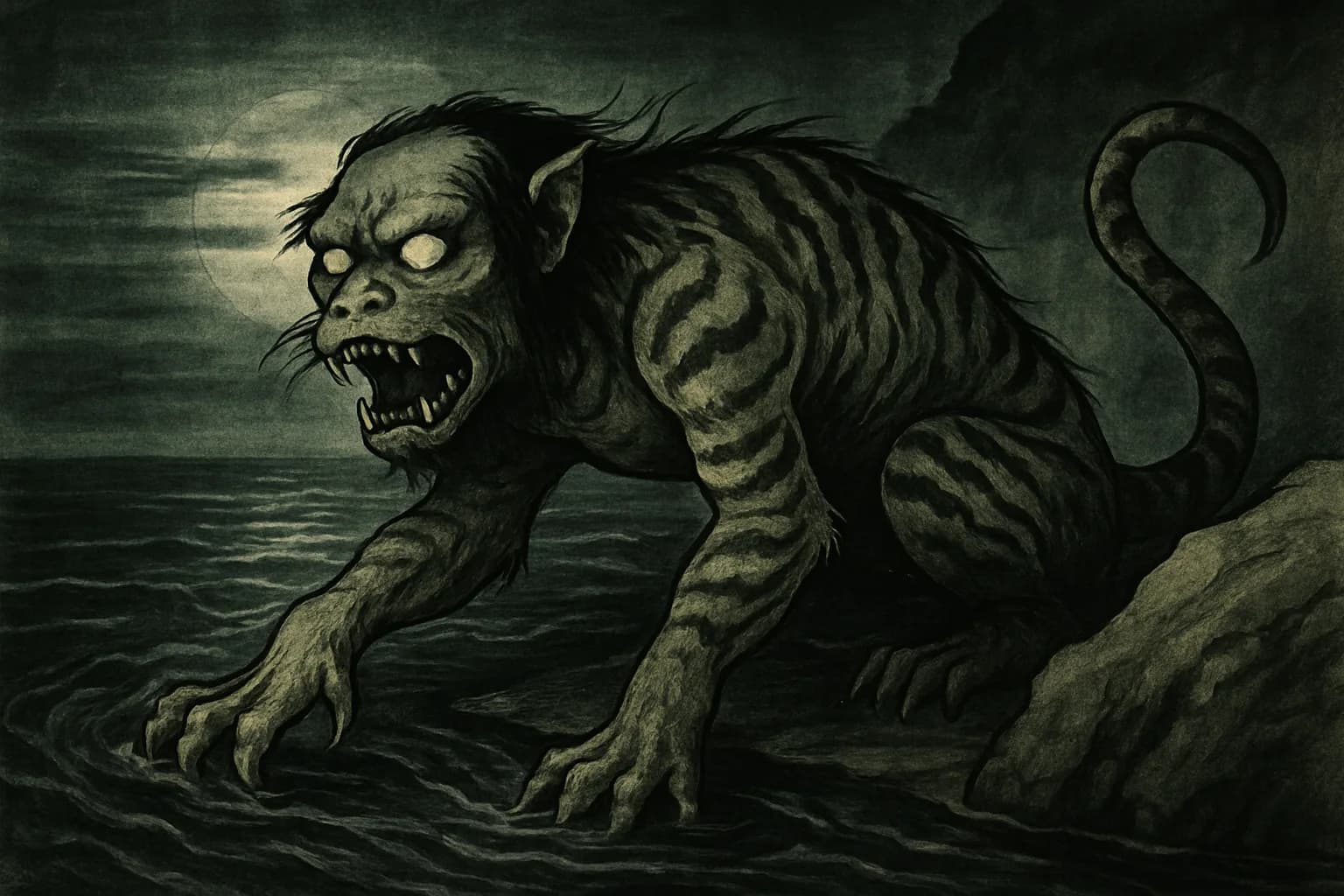
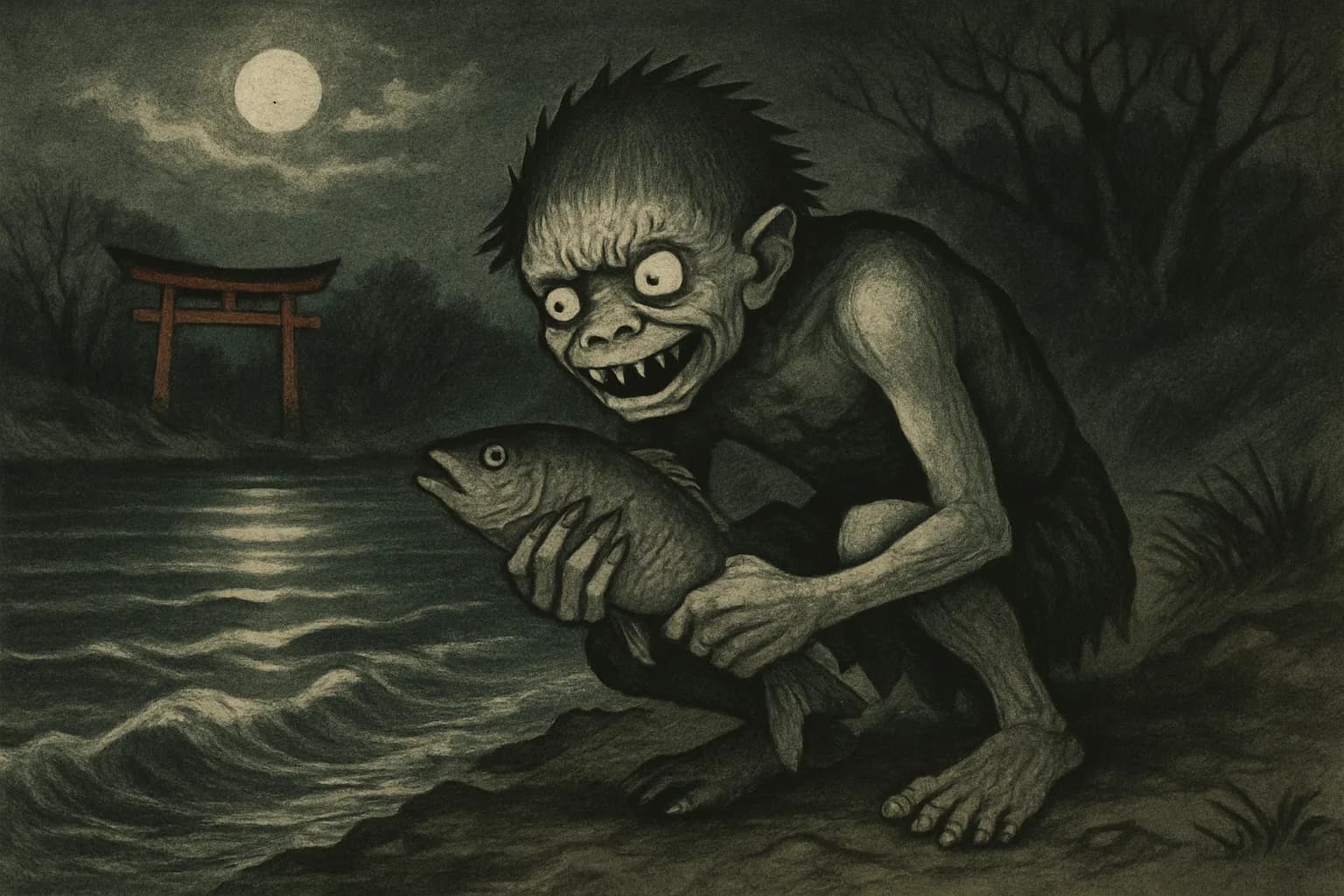
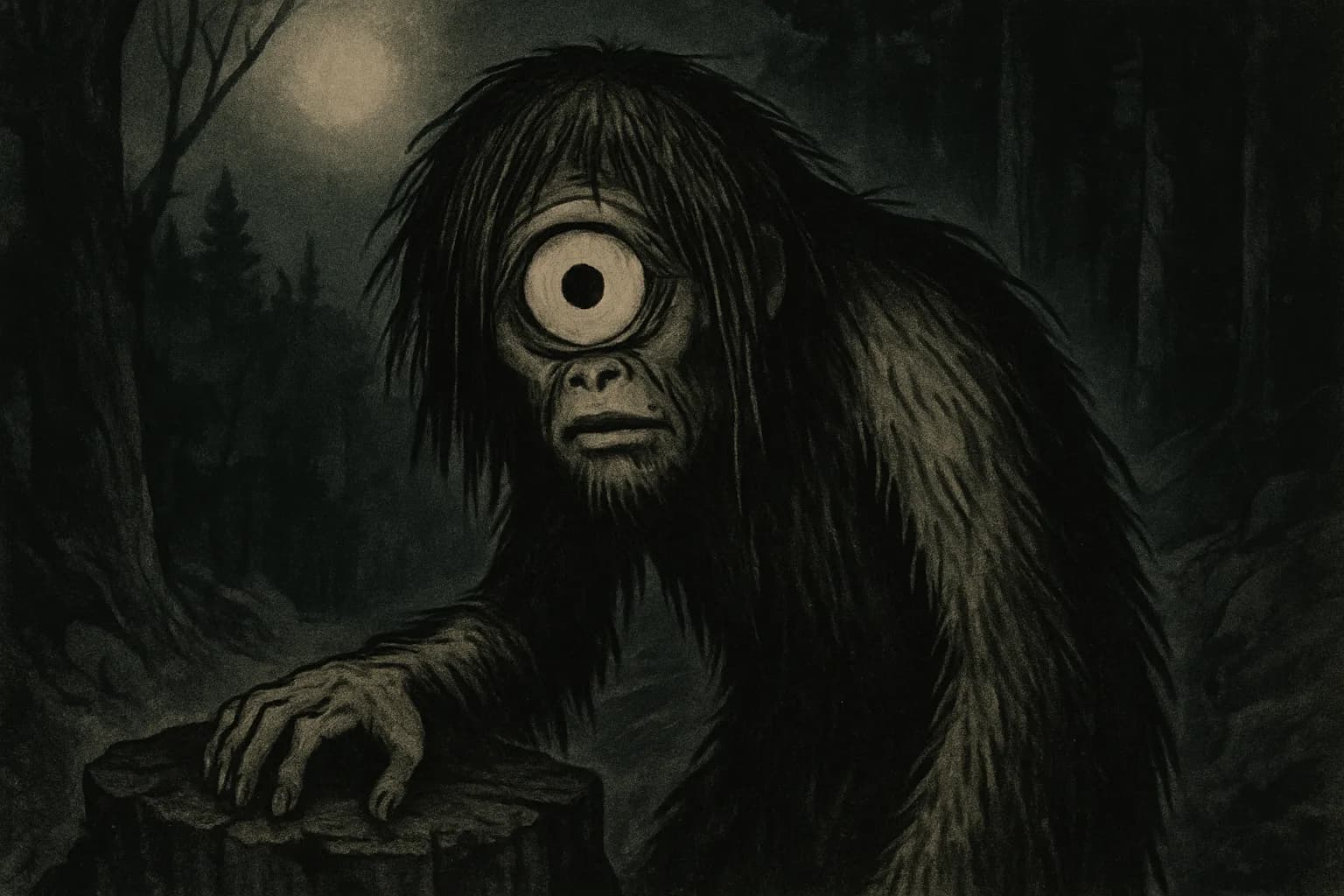
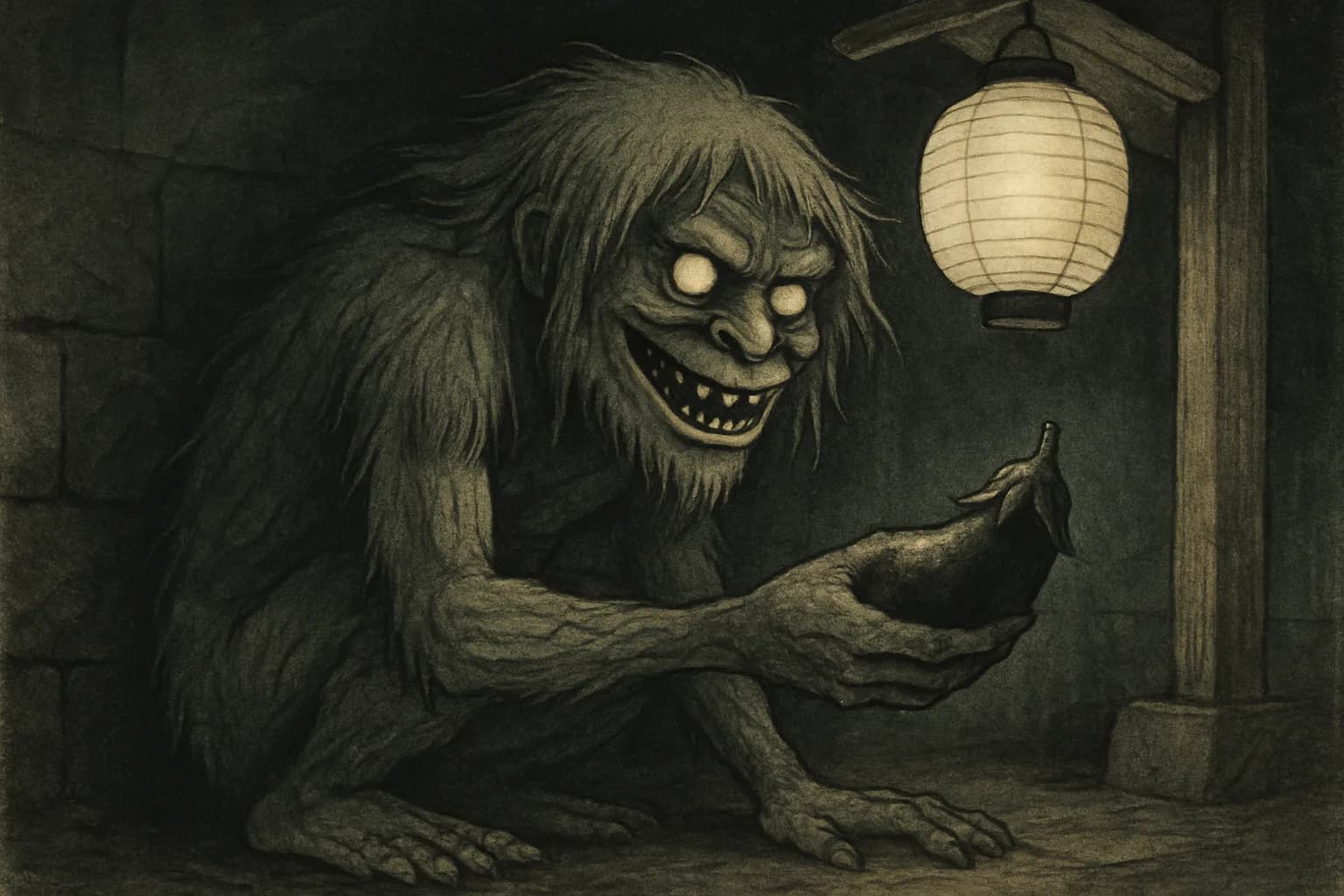
Toriyama Sekien drew the hyosube in his 1781 catalogue Konjaku Hyakki Shūi (今昔百鬼拾遺) as a squat, ape-like figure covered head to foot in shaggy hair, with a wide grinning mouth and small, watchful eyes. Unlike the kappa, it carries no shell and no dish of water on its head — the hair alone marks it, matted and dripping when it climbs out of the river. Regional accounts describe it as roughly child-sized, quick on land despite its hunched build, and unmistakably foul-smelling after a night of wandering.
An eggplant thief and an uninvited bather
The hyosube's mischief runs along two tracks, and both are oddly domestic for a river monster.
Fields near water were its favorite target. Farmers in Saga and the surrounding Kyushu countryside blamed disappearing eggplants — the vegetable it was said to crave above anything else — on hyosube raiding parties that stripped a row overnight and left the stalks bare. A missing crop with no footprints and no obvious animal culprit was, in these villages, a hyosube's work.
Its other habit was bathing. A house near a river might find its bathwater already grimy, hair floating on the surface, before anyone in the family had used it. The story held that the hyosube let itself into the bathhouse after dark and climbed in, uninvited and unannounced. The custom of drawing a plain bath and leaving it out — sometimes called a sacrifice bath — was a direct, practical answer to this: give the creature a bath of its own, first, so the family's water stays clean.
Where it comes from
Sekien's own gloss on the hyosube ties its name to Hyōzu, a war god brought from the continent and enshrined at Hyōzu shrines scattered through western Japan. In the story he records, the hyosube was originally one of the god's attendants — part of the be, the hereditary service clans of ancient Japan, that group's very name folded into the yokai's own. Left behind when the god's worship faded or moved on, the servant went wild, took to the rivers, and turned into the hairy, grinning creature that raided gardens and bathhouses. It is, in that reading, a divine retainer gone feral rather than a river god cut down to size the way scholars often describe the kappa.
Because the tale is so tightly bound to Hyōzu shrine worship, the hyosube never spread much beyond the parts of Kyushu — chiefly Saga, with echoes into neighboring Hizen and Higo — where that cult once had a footing. Sekien classed it alongside the kappa as a regional cousin, close enough in behavior that later tellers sometimes blurred the two figures into one.
Hyosube today
The hyosube never picked up a mascot's second life the way the kappa did. It survives mainly in Sekien's catalogue and in the folklore collections that record Kyushu's bath-leaving custom, a minor, distinctly local yokai next to its much more famous relative. That narrowness is itself the point: this is a monster that only makes sense once you know which shrine used to stand nearby, and which vegetable patch was closest to the river.