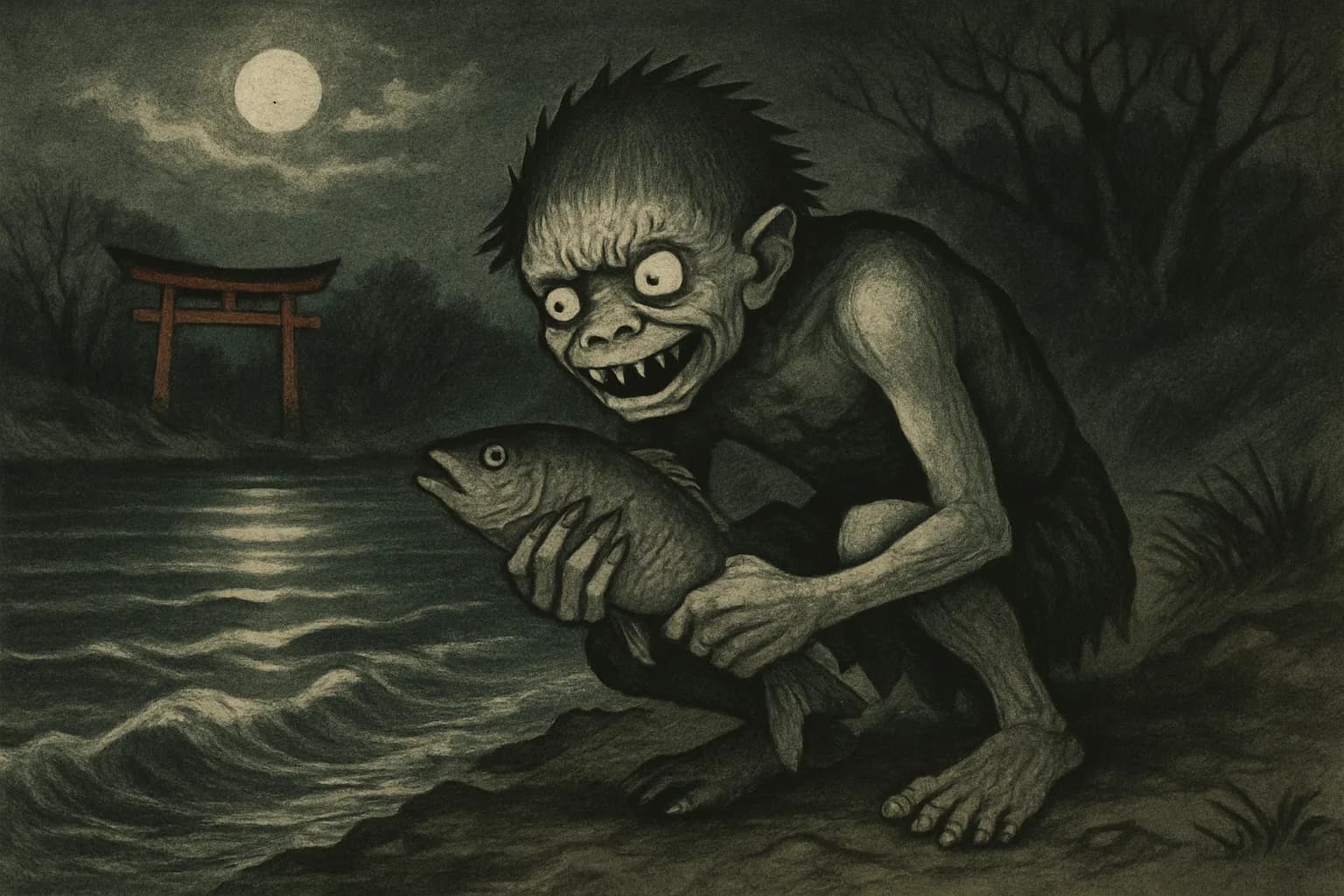
Toriyama Sekien's 1781 bestiary Konjaku Hyakki Shūi (今昔百鬼拾遺) is full of creatures that read like a kappa left in the rain too long, and gangi-kozo (岸涯小僧) is the clearest case of it. Same child-sized build, same home in moving water, same taste for fish — but the dish on the head is gone, the shell is gone, and in their place is a body covered in shaggy fur and a mouth full of teeth built for something rougher than sumo wrestling. Sekien gave it a few lines. Nobody since has given it much more.
What does it look like?
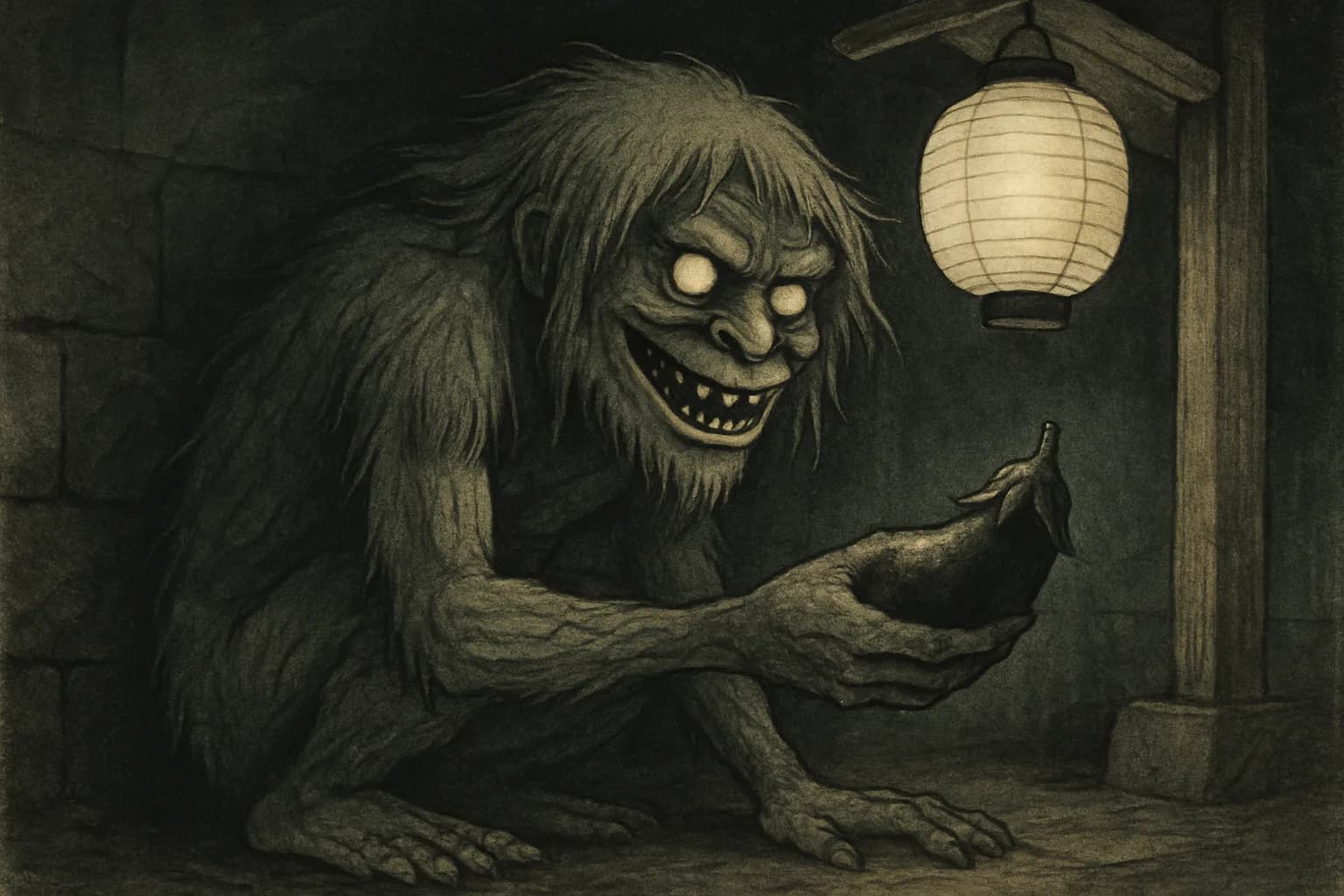
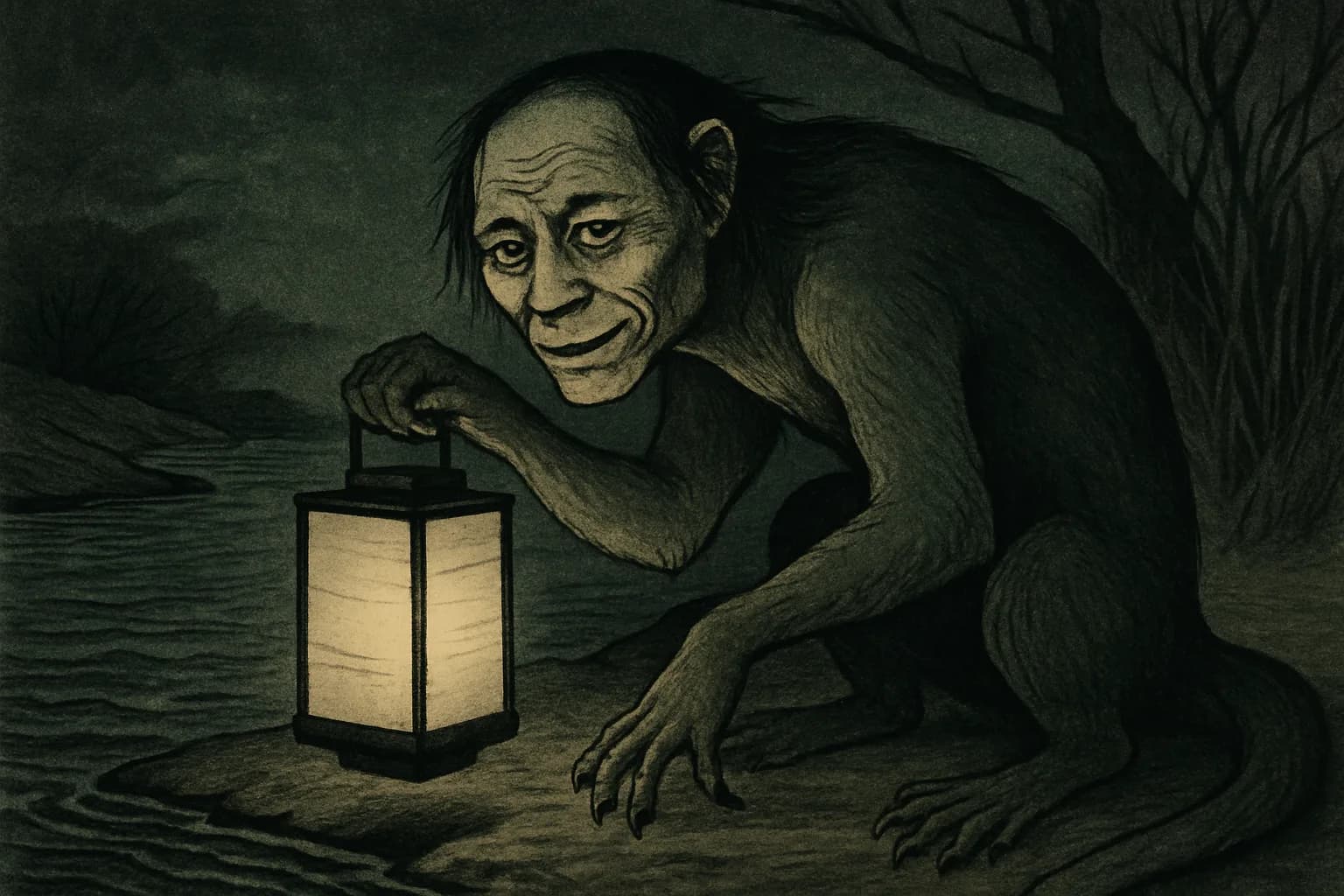
Where the kappa is smooth-skinned and turtle-shelled, gangi-kozo is described as entirely hair-covered, closer to a wet animal than the amphibious child-figure of its more famous relative. Its face carries a mouth of visibly sharp teeth rather than the kappa's flat beak, and it carries neither the water-filled sara nor the shell that make a kappa recognizable at a glance. What it keeps is the setting: steep riverbanks and mountain streams, which is exactly what its name spells out — 岸 (gan), a riverbank or shore, and 涯 (gi), its edge or brink. A kozō finishes the name, the same word used for a young boy or a temple's junior monk, and it's the word that turns "riverbank edge" into a creature rather than a place.
An impossible fisherman
The one specific skill Sekien's entry attaches to gangi-kozo is fishing — and not merely competent fishing. It is said to pull fish from the water faster and more surely than any human angler could manage, wading or crouched at the water's edge with a speed no fisherman could match by hand or by net. It's the same move as the kappa's dish of water: give the creature one implausible advantage over people who share its territory, and let that single detail carry the whole folk memory of "something in this river is better at this than you are."
The kappa's rougher cousin
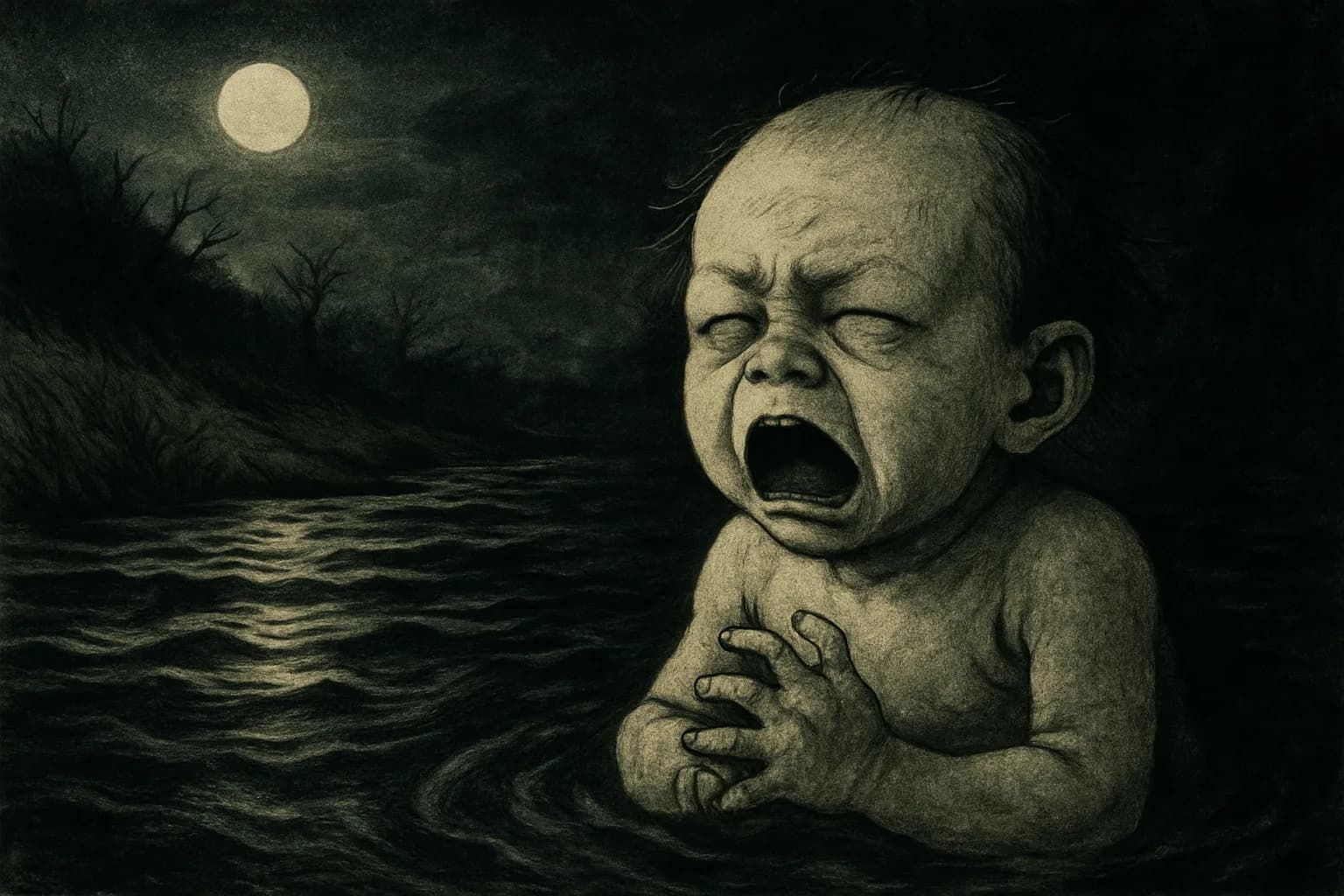
Sekien filed gangi-kozo close to the kappa in his catalogue, and later readers have generally treated it as a regional or degraded variant — a river child that missed out on the kappa's more famous features rather than an unrelated species. It shares that lineage with other river yokai recorded in the same period: hyosube, the hairy, kappa-like figure of Kyushu folklore blamed for raided eggplant patches and dirtied bathwater, and kawaakago, the disembodied infant's cry Sekien drew rising from open water in an earlier volume. All three sit in the same family of "kappa, but" — kappa without the shell, kappa without the body, kappa without the dish — as if Edo-period collectors kept running into local variations on the same river spirit and needed a separate entry for each one that didn't quite match the template.
Unlike the kappa, gangi-kozo never picked up a body of village stories to go with its picture. There's no recorded trick for defeating it, no cucumber it craves, no bargain a farmer struck with one. It has an appearance and a single talent, and that's the whole of what survives.
Where it comes from
The Chūbu region's mountain rivers, particularly around Gifu, are where the name is anchored, but even there gangi-kozo reads less like a creature anyone actually claimed to have seen and more like Sekien's attempt to catalogue a rumor of "a hairy thing that fishes too well" that was circulating without a fixed shape. Sekien catalogued it once, in a single entry, and no village folklore collection independently backs it up with a local telling of its own — no named encounter, no shrine, no seasonal custom built around keeping it away. That absence is itself informative: plenty of Edo-period yokai are Sekien's illustrations of stories townspeople already told each other, but a handful, gangi-kozo among them, look more like sketches of a half-formed regional rumor that never grew into a proper tale before it was written down and fixed in place.
Gangi-kozo today
Gangi-kozo has no mascot, no snack, no anime cameo worth citing — it stayed exactly what it was in 1781, a minor entry a reader only meets by working through Konjaku Hyakki Shūi past the famous names. That's true of most of Sekien's stranger catalogue entries: for every kappa that became a national mascot, there are several riverbank cousins that never left the page, still waiting at the edge of a Gifu stream for a fisherman they can out-fish.