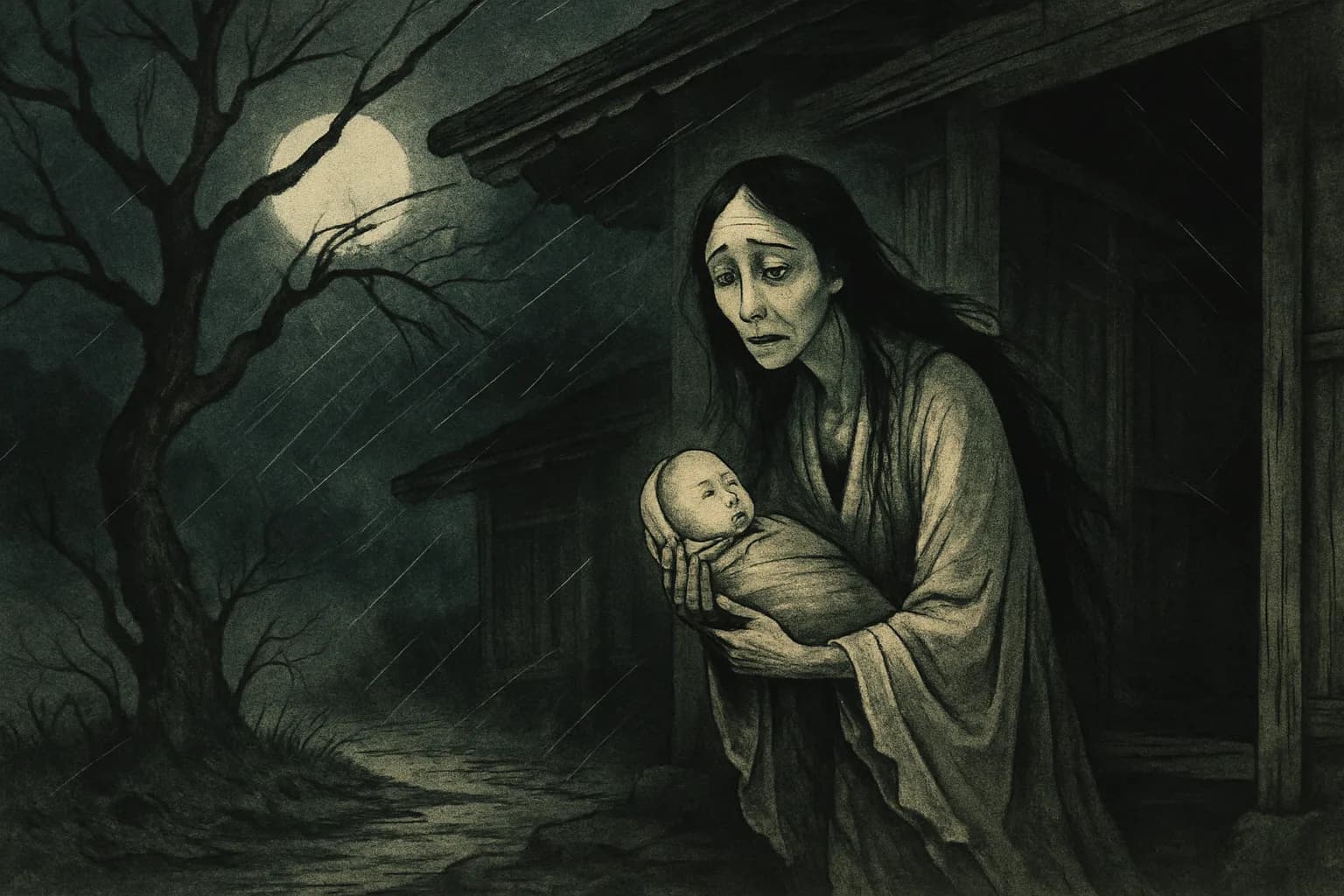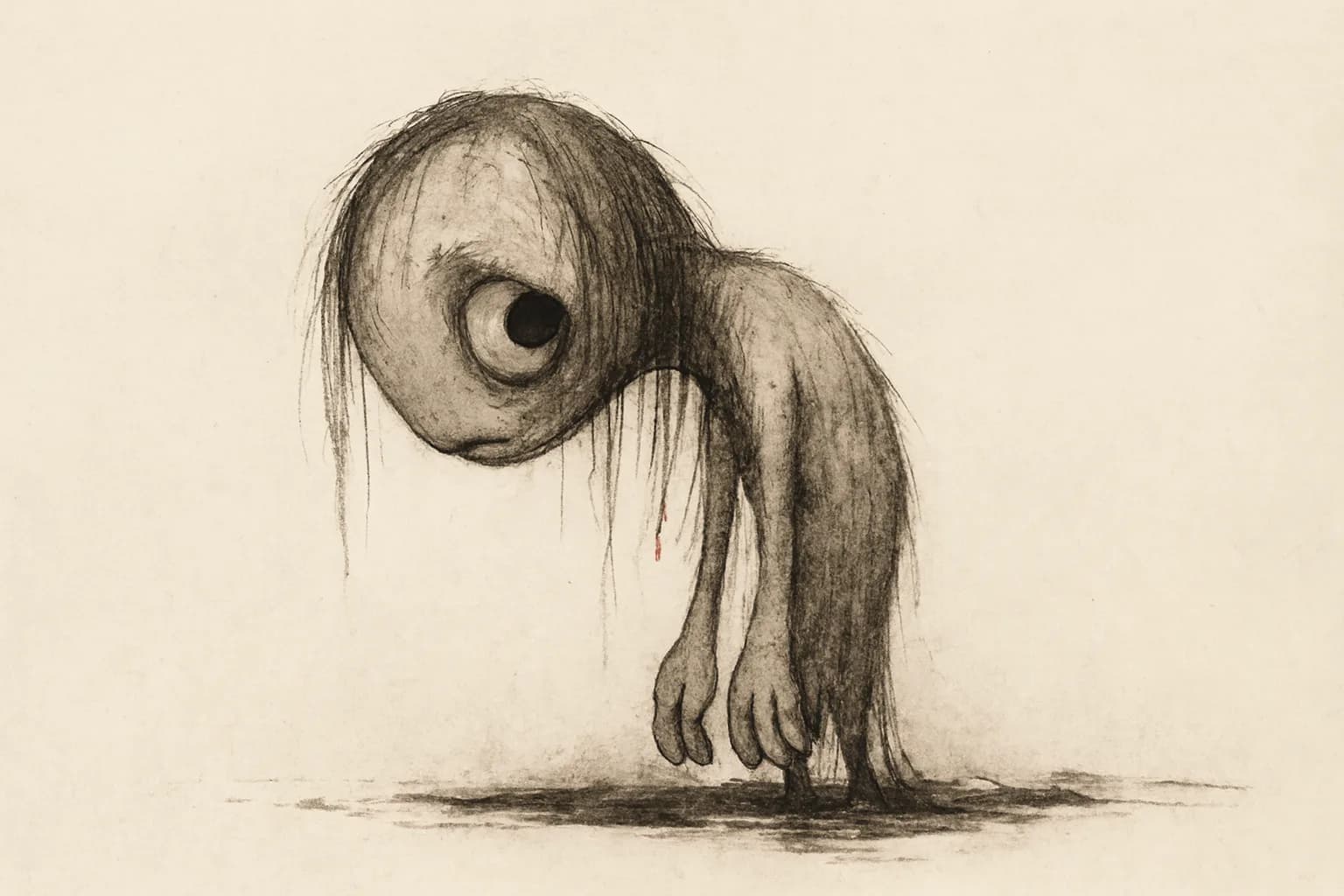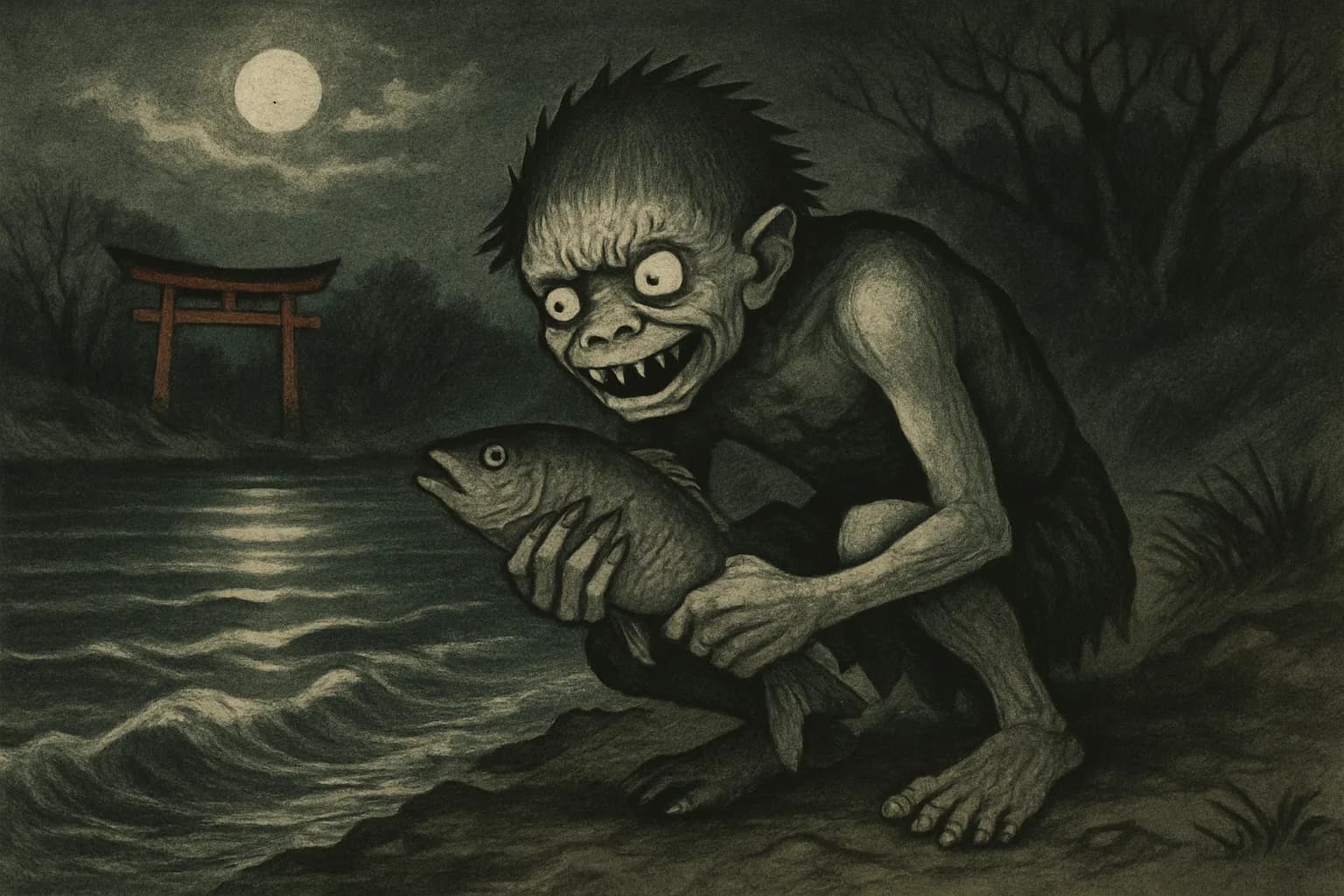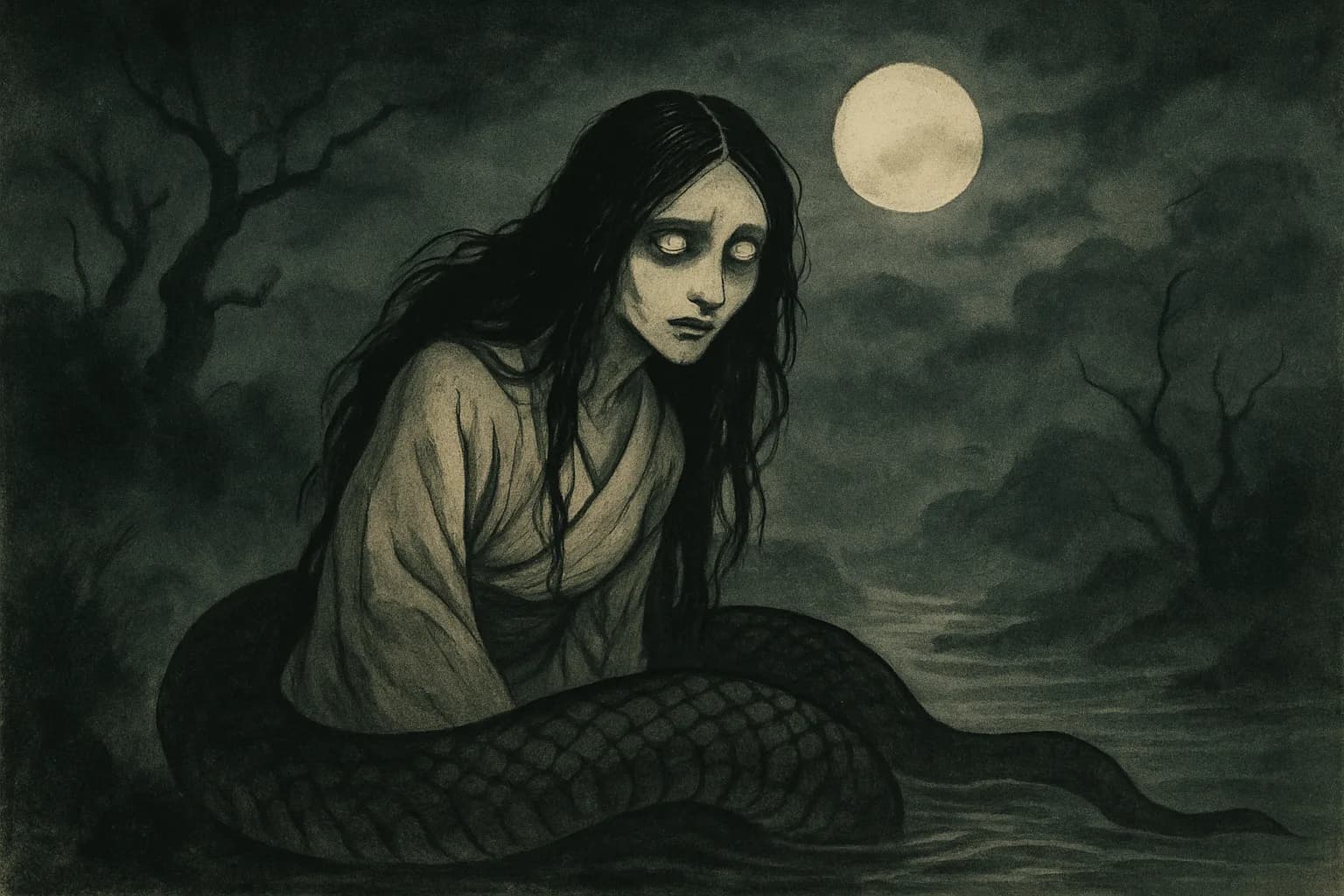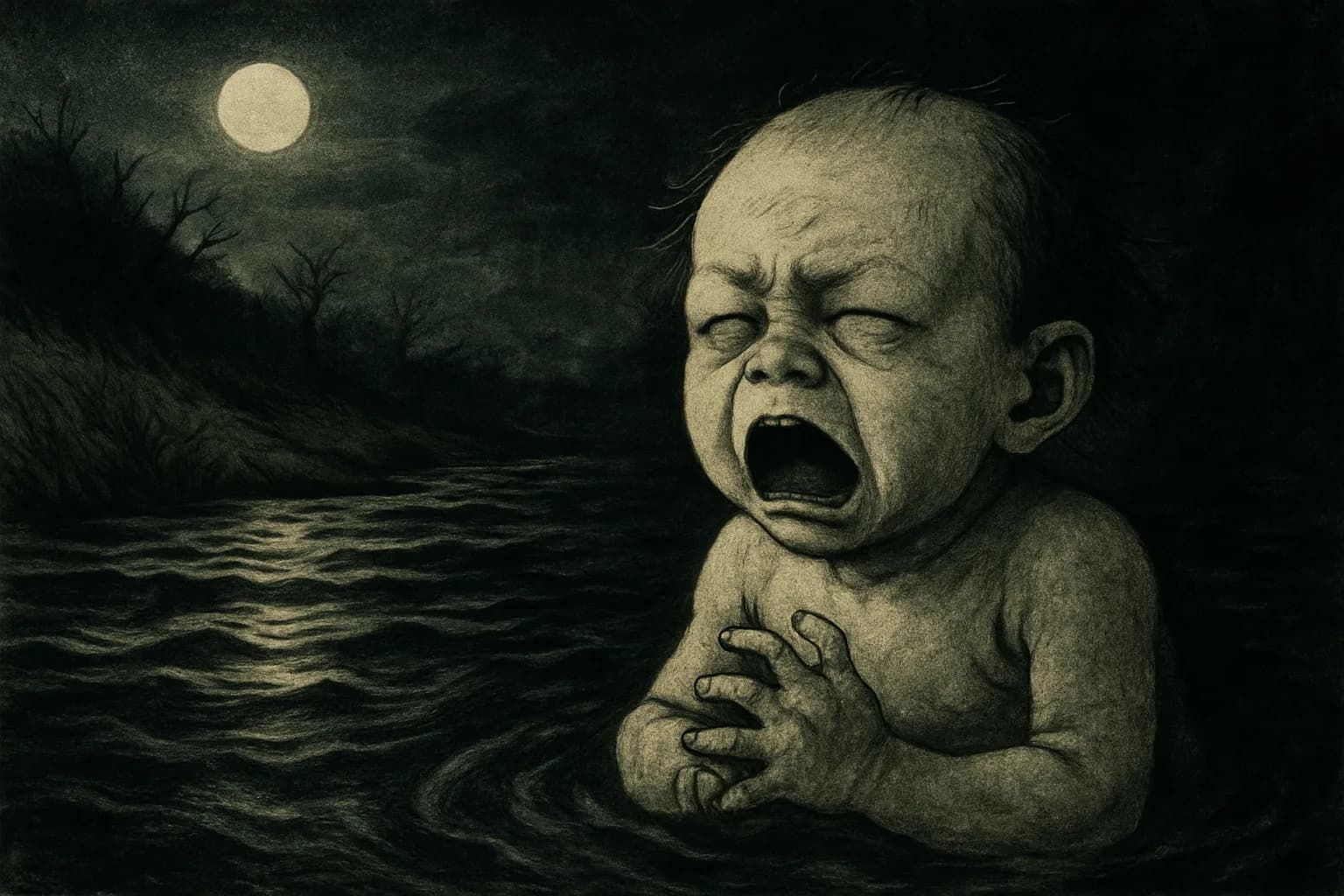
Somewhere out past the reeds, in the dark middle of a river, a baby is crying. No house stands anywhere near the bank. No one is missing a child. Go and check anyway, folklore warns, and the water will close over you before you find out what was really making the sound.
What does it look like?
Kawaakago (川赤子) means simply "river infant," and Toriyama Sekien drew it exactly that plainly in his 1779 bestiary Konjaku Gazu Zoku Hyakki — a small, pale face breaking the surface of dark water, an infant's head with nothing established below the waterline. Sekien gave it none of the kappa's inventory of features: no shell, no beak, no dish of water balanced on its skull. Where the kappa is a fully imagined body, kawaakago is closer to a sound wearing a face. Its entire identity is the cry itself, and the unsettling detail that anyone who traces the cry to its source finds no child there at all.
A cry with nothing behind it
Sekien's own note on the entry is short, in keeping with how he treated several of the stranger figures in Zoku Hyakki: the voice of an infant is heard coming from within the river, and it resembles a real baby's cry closely enough to fool the ear, but no baby is ever actually present. This is the whole of what the primary source gives us. Kawaakago never accumulated the layered village stories that grew up around kappa or yuki-onna — no named rescuer who outwitted it, no ritual to keep it at bay, no local shrine built to placate it. It survives almost entirely as this one image and this one warning, which is part of what makes it effective: there's no lore to soften it, just the bare fact of a crying sound where nothing should be crying.
Why you don't wade in
The danger in the tale isn't the creature attacking — it's what the cry gets you to do to yourself. A baby's cry is one of the most acute distress signals the human ear processes; people are built to move toward it without thinking. Kawaakago's entire method is to borrow that reflex. Step into the current to reach the sound and the river does the rest: cold water, uneven footing, an undertow that a person searching in the dark, at night, with their attention on a phantom child rather than their own feet, will not see coming. The stories don't describe the creature pulling anyone under by hand. It doesn't have to. It only has to make you go looking.
Where it comes from
Riverbank drownings needed no yokai to explain the water itself, but they needed one to explain why sensible adults sometimes walked into a current at night for no reason anyone could later account for. A crying-baby yokai answers that specific gap in a way a normal warning sign couldn't: "stay away from the river after dark" is advice; "the thing in the river can sound exactly like your own child" is a reason someone actually might not have listened. Japan's night rivers produce plenty of ambiguous sound on their own — the calls of nocturnal birds, foxes, and frogs are all, at the right pitch and distance, mistakable for an infant crying, a known enough phenomenon that it shows up across unrelated folklore traditions wherever people lived close to water and dark. Kawaakago reads as the folkloric packaging of that mistake: take a sound that already fools people, attach a fatal consequence to investigating it, and the result is a story that does real safety work while still being a monster.
It sits naturally alongside kappa in Sekien's river bestiary and alongside ubume in the broader catalogue of Japanese yokai built from birth and infancy gone wrong, but it belongs to neither family exactly. Ubume is a specific grieving ghost with a body and a reason. Kawaakago has no body and no story of its own life — only the river, the sound, and the outcome.
Kawaakago today
Kawaakago never left the page the way kappa did. There's no mascot, no snack named after it, no cheerful modern reinterpretation — it stayed exactly what Sekien drew it as, a small unsettling entry that turns up when someone works through Konjaku Gazu Zoku Hyakki in full rather than skimming for the famous names. That obscurity suits it. A yokai whose entire threat is an ordinary sound in an ordinary place doesn't need elaboration to keep working; it just needs a reader who has ever stood near a dark river at night and heard something they couldn't place.