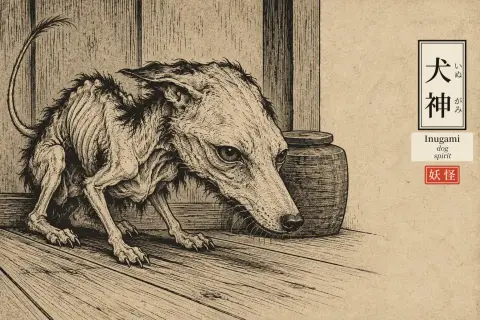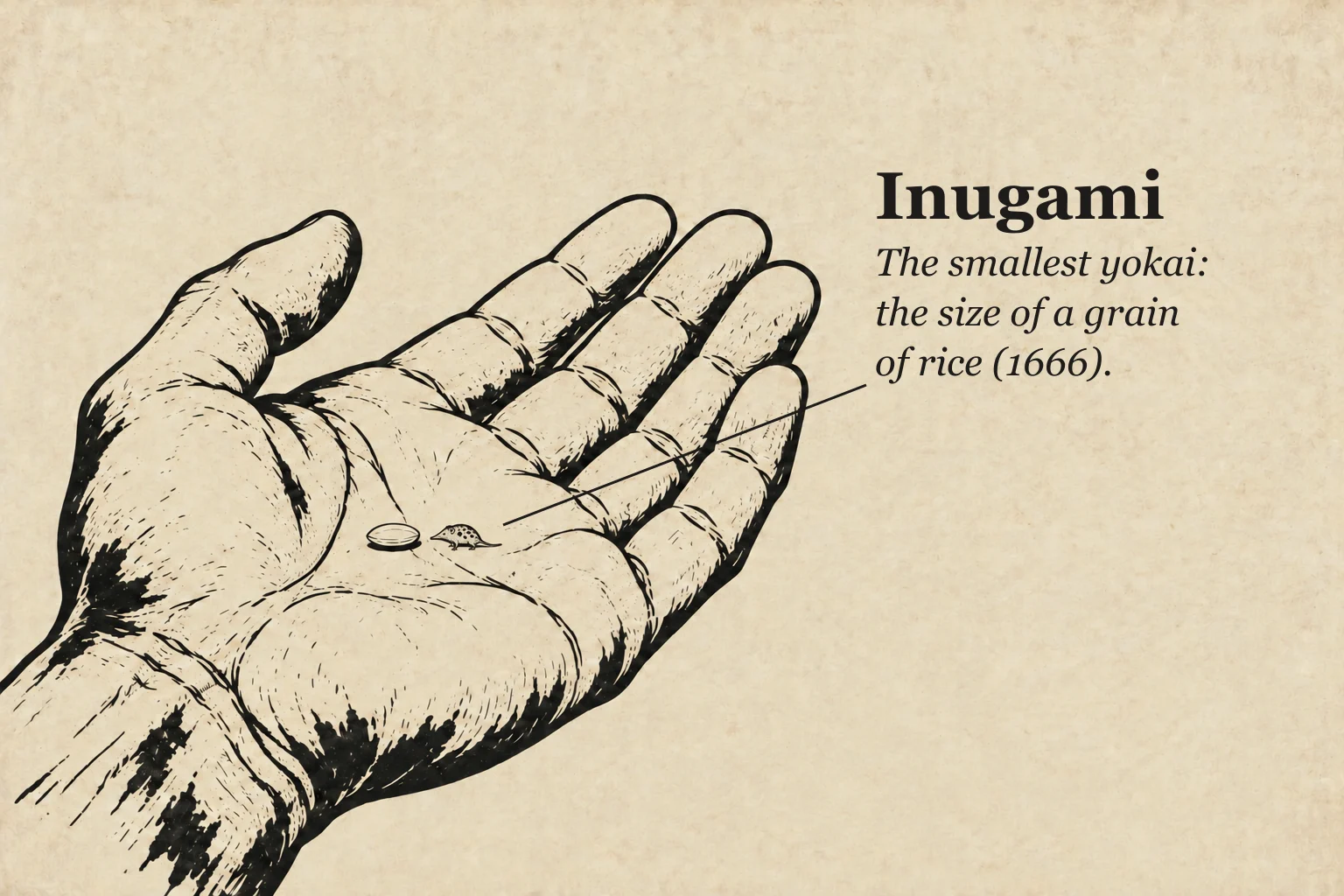
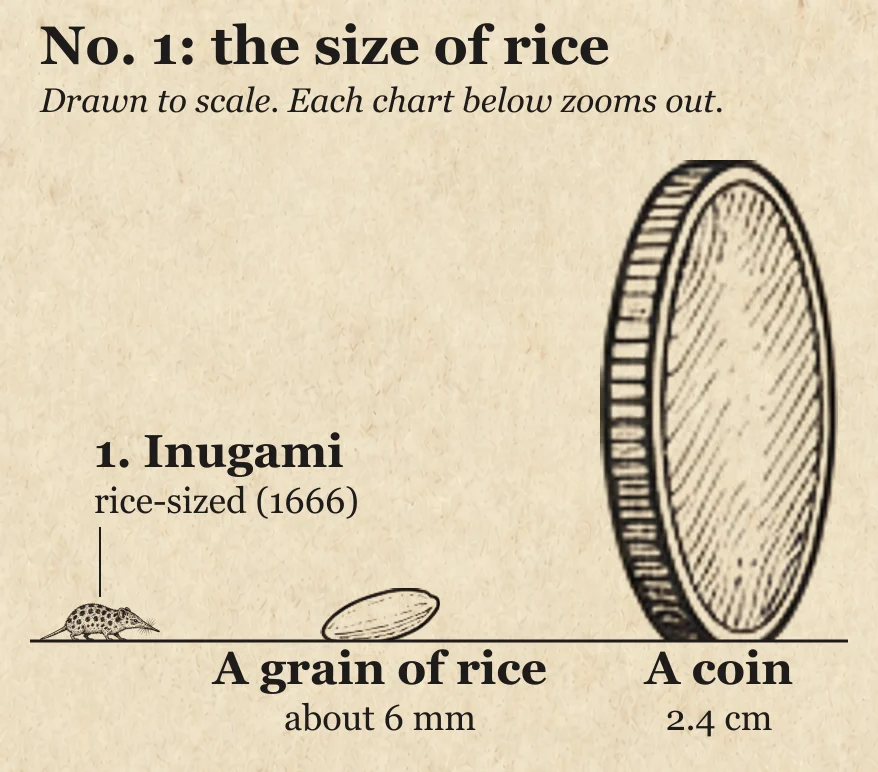
The smallest yokai is the inugami, a spirit no bigger than a grain of rice. A book of 1666 says so about the inugami of Tosa, on the island of Shikoku.
Most small yokai are not that small. They are the size of a snake, a spider or a baby. The biggest in this list is the enkō, the size of a child of three.
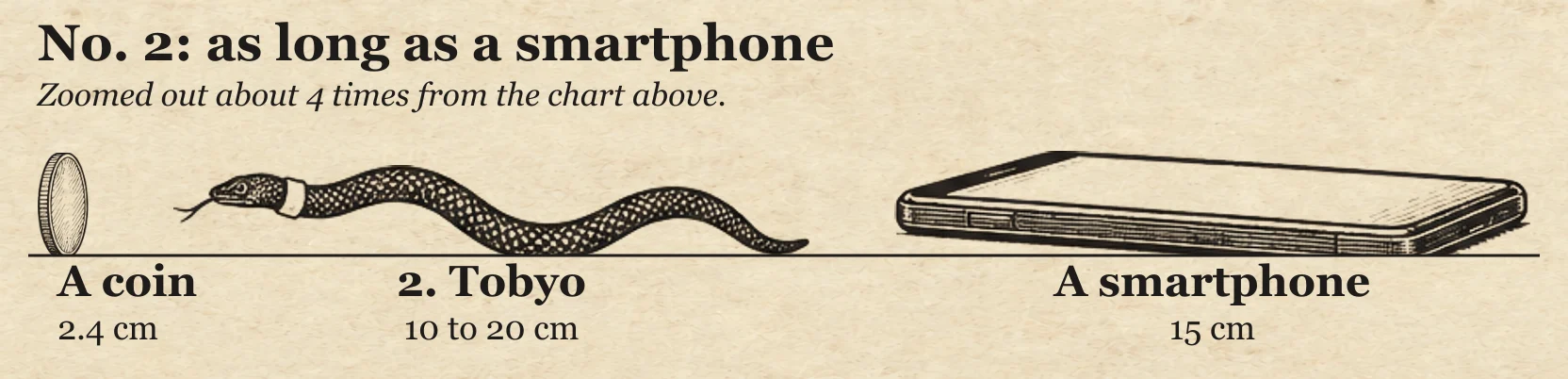
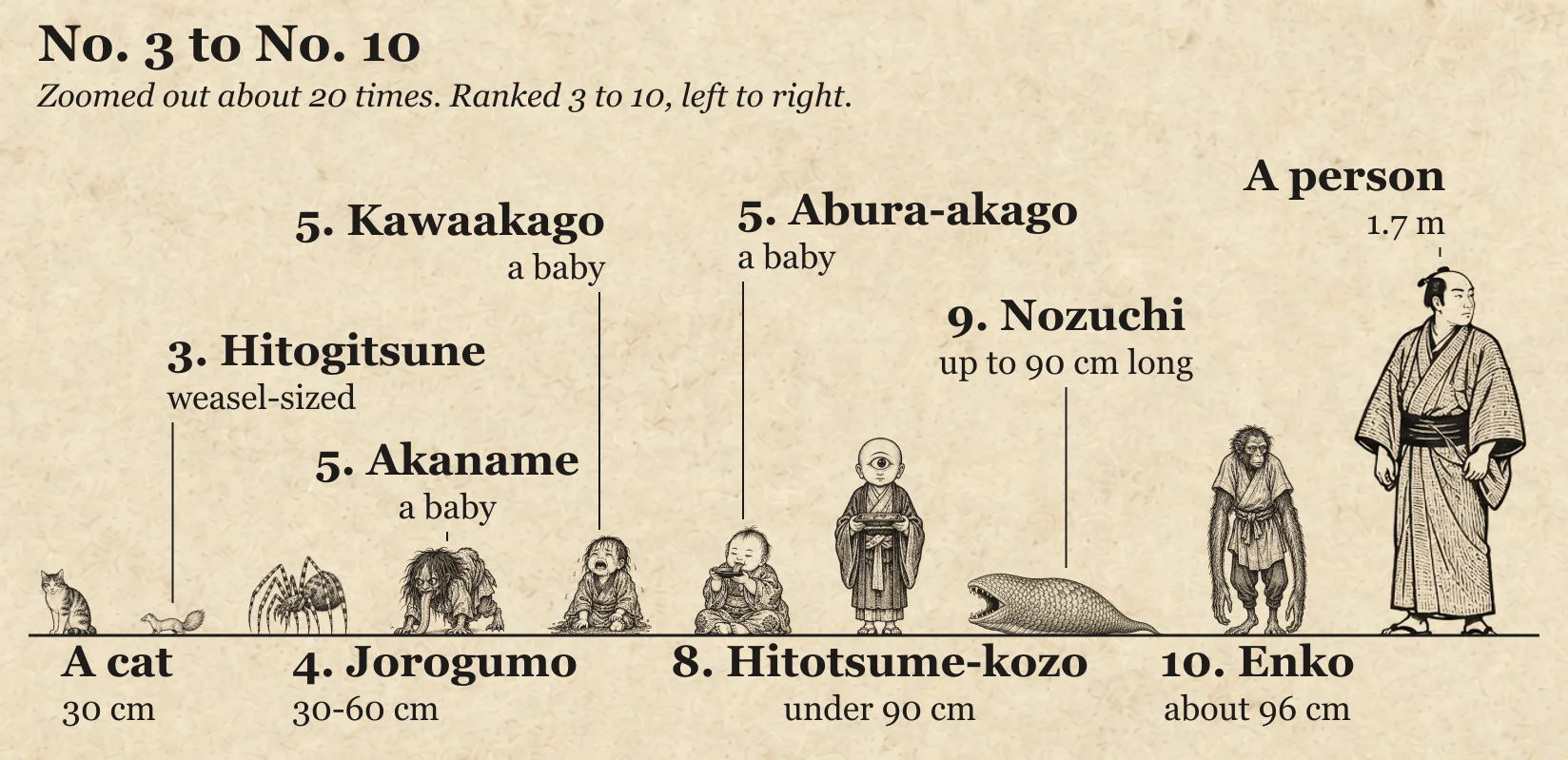
| Rank | Yokai | Size | Record | Kind |
|---|---|---|---|---|
| 1 | Inugami | Size of a grain of rice | Otogi Bōko (1666) | Described |
| 2 | Tōbyō | Snake 10 to 20 cm long | Shikoku and Chūgoku belief (recorded 1959) | Measured |
| 3 | Hitogitsune | No bigger than a weasel, about 30 cm | Izumo, told to Lafcadio Hearn (1894) | Described |
| 4 | Jorōgumo | Spider 1 to 2 shaku, 30 to 60 cm | Tonoigusa (1677) | Measured |
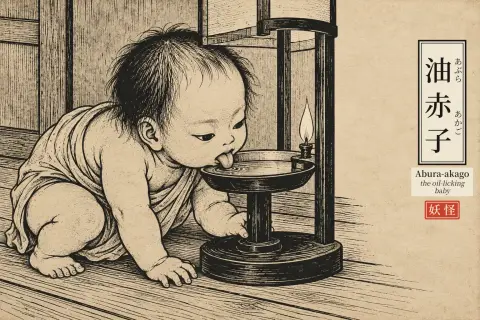
| 5 | Abura-akago | A baby, about 75 cm | Toriyama Sekien (1779) | Estimate |
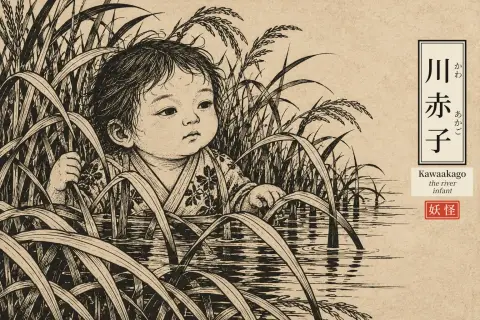
| 5 | Kawaakago | A baby, about 75 cm | Toriyama Sekien (1779) | Estimate |
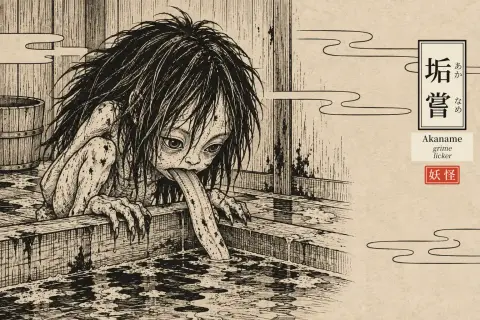
| 5 | Akaname | A baby, about 75 cm | Nittō Honzō Zusan (1780) | Estimate |
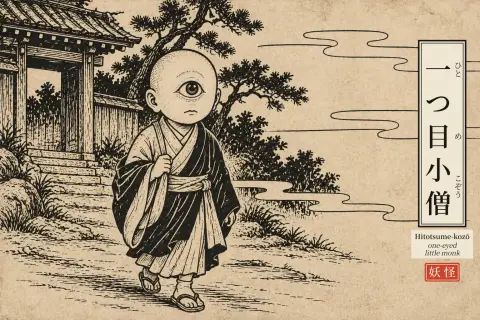
| 8 | Hitotsume-kozō | Under 3 shaku, about 90 cm | Sasayama tale (recorded 2022) | Measured |
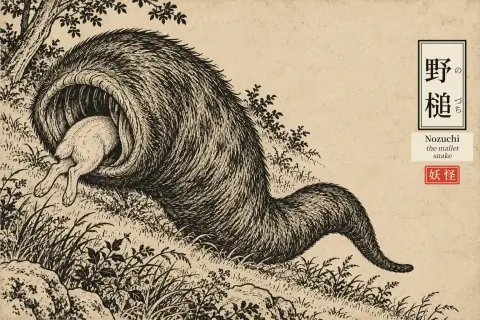
| 9 | Nozuchi | Up to 3 shaku, about 90 cm | Wakan Sansai Zue (1712) | Measured |
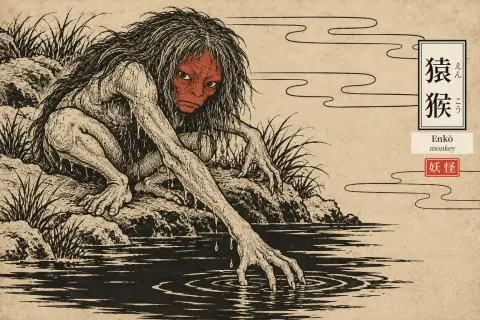
| 10 | Enkō | A child of three, about 96 cm | Tosa accounts | Estimate |
Measured means a record gives a number. One shaku is about 30 cm. Described means the record compares it to something, like a grain of rice. Estimate means the record only says "a baby" or "a child of three." We turn that age into a height with today's growth charts. Children in old Japan were often shorter, so these yokai may be smaller still.
Glowing balls of fire are left out. Their size is the size of a light, not a body.
Smaller than a cat
1. Inugami
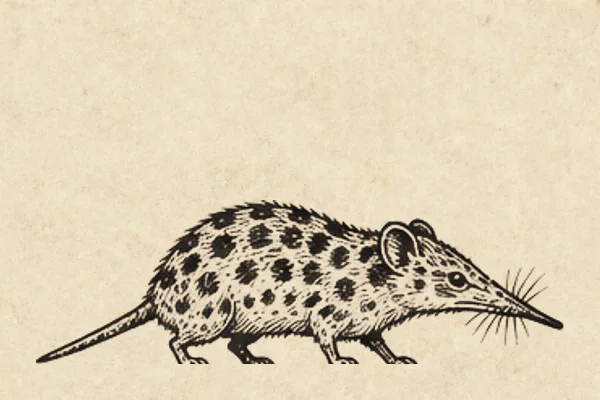
The inugami, or "dog god," is a spirit some families were said to keep. It brought them wealth and made their enemies sick. Its size depends on where you ask. Asai Ryōi's Otogi Bōko of 1666 says the inugami of Tosa is the size of a grain of rice. Other places make it a little bigger than a mouse. We rank it by its smallest form.
Medicine was said not to cure it. A healer had to drive it out. What they do record is the cost: families said to keep one could not marry outside their circle. The fear did more harm than the spirit.
2. Tōbyō
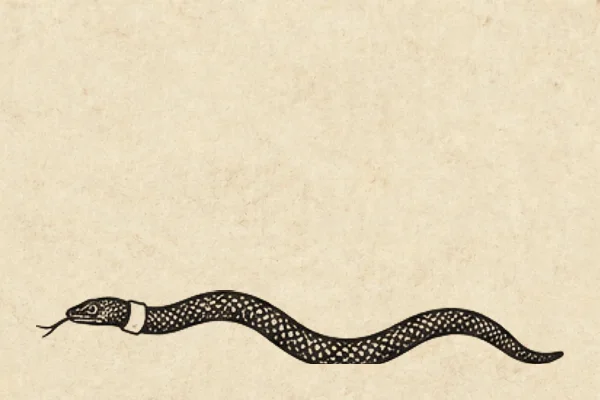
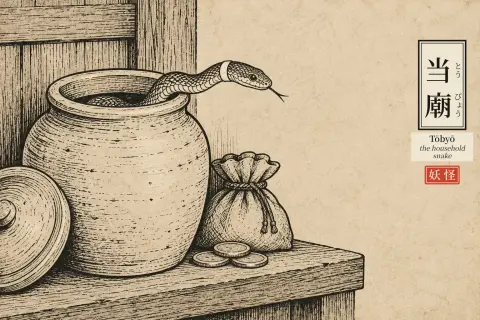
The tōbyō is a thin snake, 10 to 20 cm long, with a gold ring around its neck. It is about as long as a smartphone. Farm families in western Japan were said to keep it in a sealed jar under the kitchen floor. It brought the house wealth, and it came in a group of seventy-five.
3. Hitogitsune
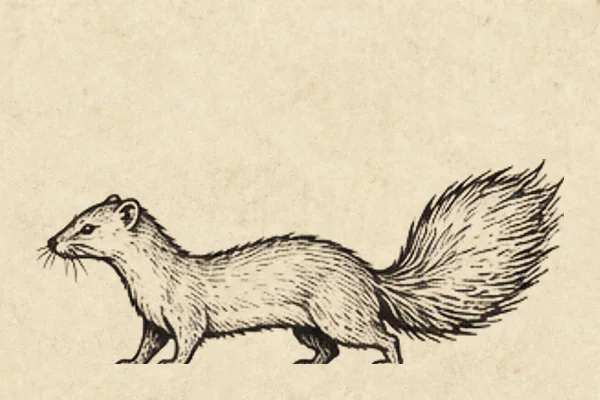
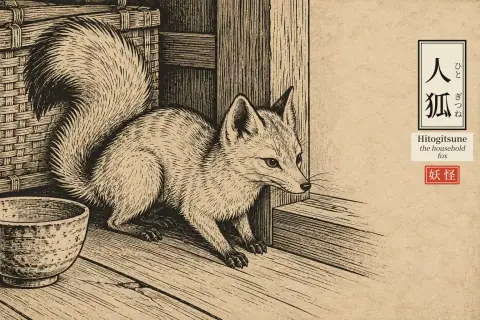
In Izumo, today's Shimane, some houses were said to keep a hitogitsune, a "person-fox." Lafcadio Hearn was told it was no bigger than a weasel, with a fox's tail. Most people could not see it at all. Like the tōbyō, it was said to come seventy-five at a time.
A spider and three babies
4. Jorōgumo
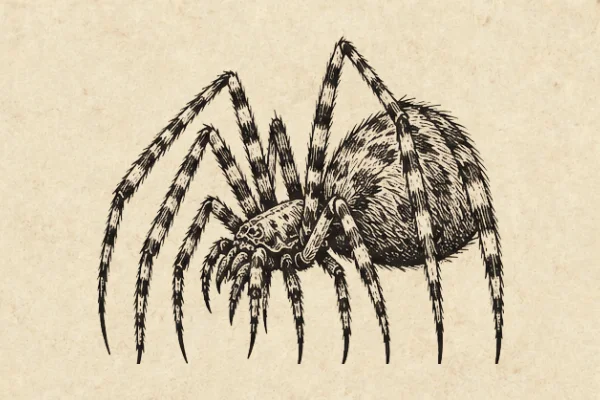
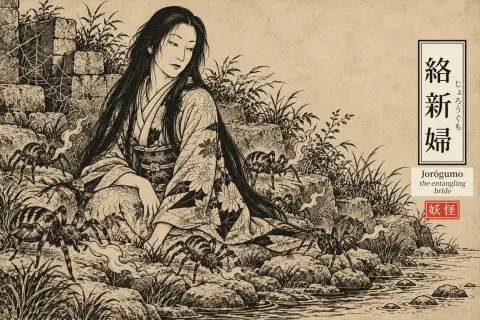
The jorōgumo is a spider that takes the shape of a beautiful woman. In the Tonoigusa of 1677, she comes to a young samurai with a baby in her arms. He sees what she is and cuts her with his sword. She escapes into the ceiling. The next day, a spider 1 to 2 shaku long lies dead there. Her trick is a thread around your ankle by the water. Tie it to a tree stump instead, and the stump is pulled into the pool.
5. Abura-akago
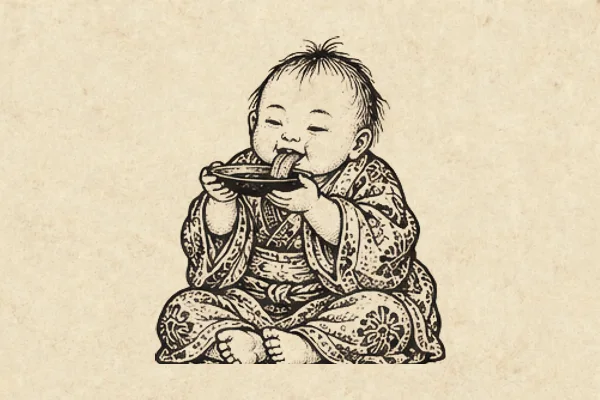
Toriyama Sekien drew Abura-akago, the "oil baby," in 1779. It licks the oil from a paper lamp. His note ties it to a ball of fire in Ōtsu and to an oil thief who could not rest after death. A one-year-old is about 75 cm tall, so that is our estimate.
5. Kawaakago
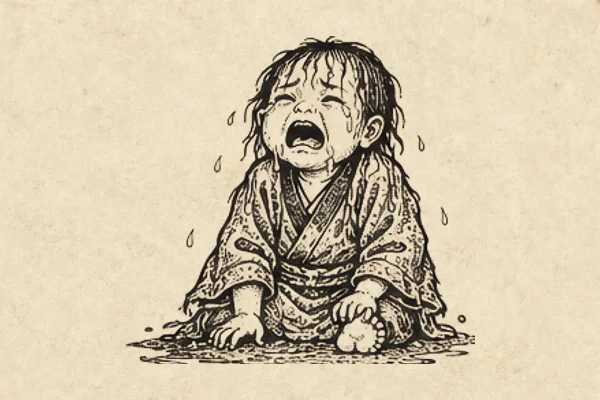
Kawaakago, the "river baby," sits in the reeds. Sekien's note of 1779 says only that it is shaped like a baby, and may be a kind of kappa. Modern books add the danger: follow its crying, and you end up in the water.
5. Akaname
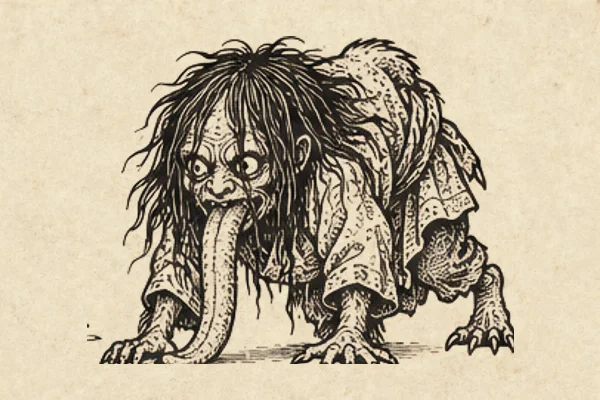
The akaname licks the grime from dirty baths at night. Sekien drew it in 1776 as a small, wild-haired figure. The Nittō Honzō Zusan of 1780 says it looks like a baby, with round eyes and a long tongue. The fix is simple: keep the bath clean.
The biggest of the small
8. Hitotsume-kozō
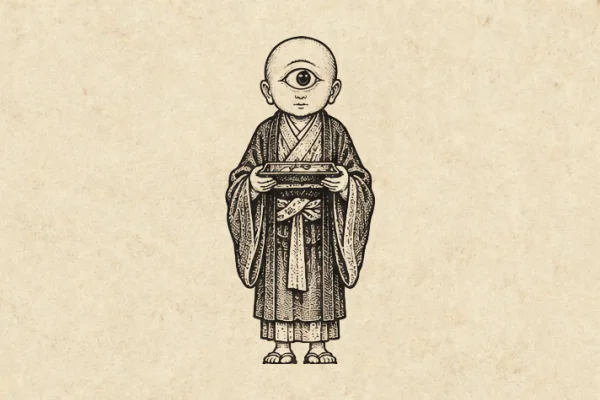
The one-eyed boy is a shaved-headed temple page with one eye in the middle of his face. In a Sasayama tale, he stands under 3 shaku and appears on a bridge on rainy autumn nights. Most stories make him a child of eight to ten. He rarely does harm. He just looks at you.
9. Nozuchi
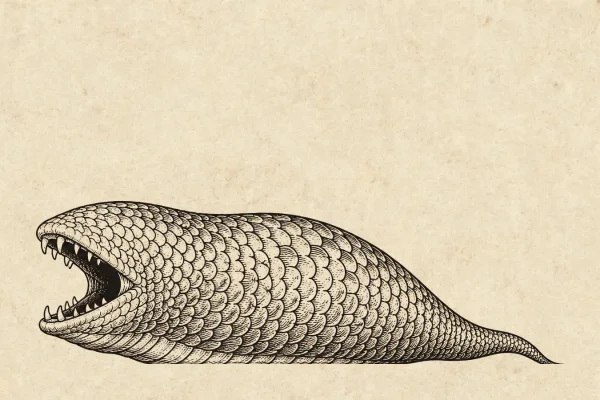
The nozuchi is a snake shaped like a wooden mallet, with a big mouth and no eyes. The Wakan Sansai Zue of 1712 says the large ones reach 3 shaku long and 5 sun, about 15 cm, thick. Mountain folk said it rolls down slopes at travellers. Another Edo book says the "nozuchi" of old texts was just a snake 12 to 15 cm long.
10. Enkō
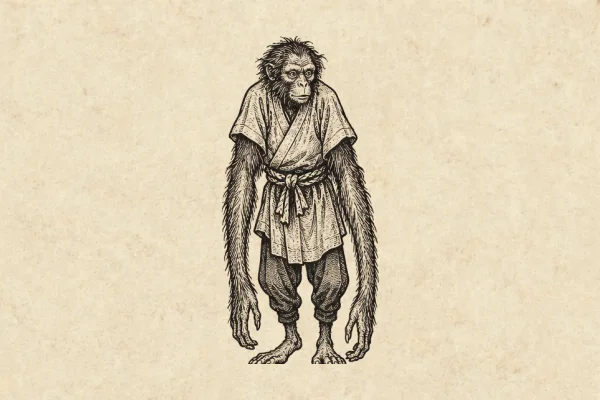
The enkō is a hairy, monkey-faced kappa of western Japan. Tosa accounts make it the size of a three-year-old child, about 96 cm. It pulls swimmers under. Its long arms could stretch and shrink at will.
Runners-up
These are about 1 m, with weaker numbers:
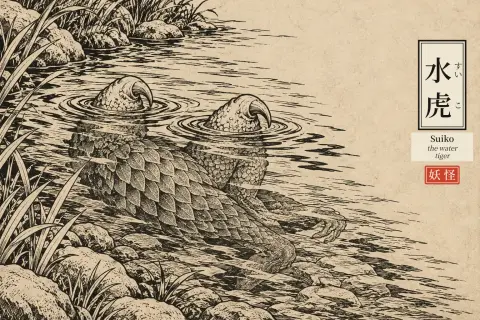
- Suiko: a scaled water creature the size of a child of three or four, from a Chinese book quoted in 1712.
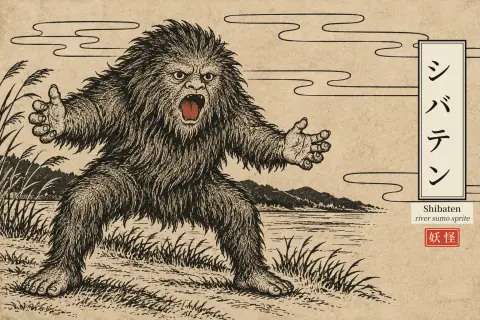
- Shibaten: a hairy little wrestler from Kōchi, about 1 m tall in modern yokai books.
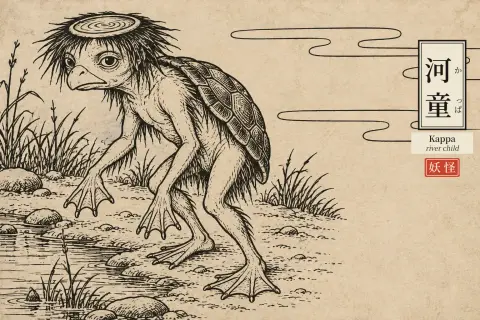
- Kappa: a child of four or five in 1775, or of ten in 1712.
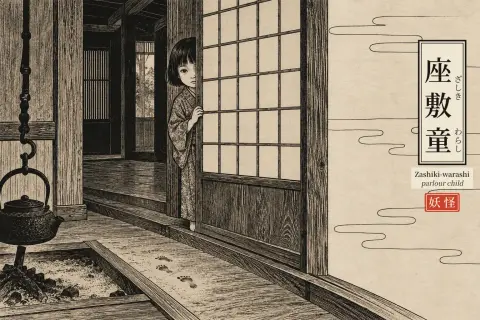
- Zashiki-warashi: a house child of five or six, but anywhere from three to fifteen.
Small things that mattered
The smallest yokai here are kept, not met. The inugami, the tōbyō and the hitogitsune all belong to a family. They live under the floor or in a jar. They bring luck to their keepers and sickness to others. A thing that small can hide anywhere, so it can be blamed for anything.
The baby-sized yokai work the other way. They are in plain sight, by a lamp, a bath or a river. Their danger is that we want to help a baby.
Four small yokai are not written up yet: the sparrow-sized nyūnai-suzume, the 46 cm raijū, the 61 cm zashiki-bōzu and the 90 cm makura-kozō. For the giants, see the biggest yokai.