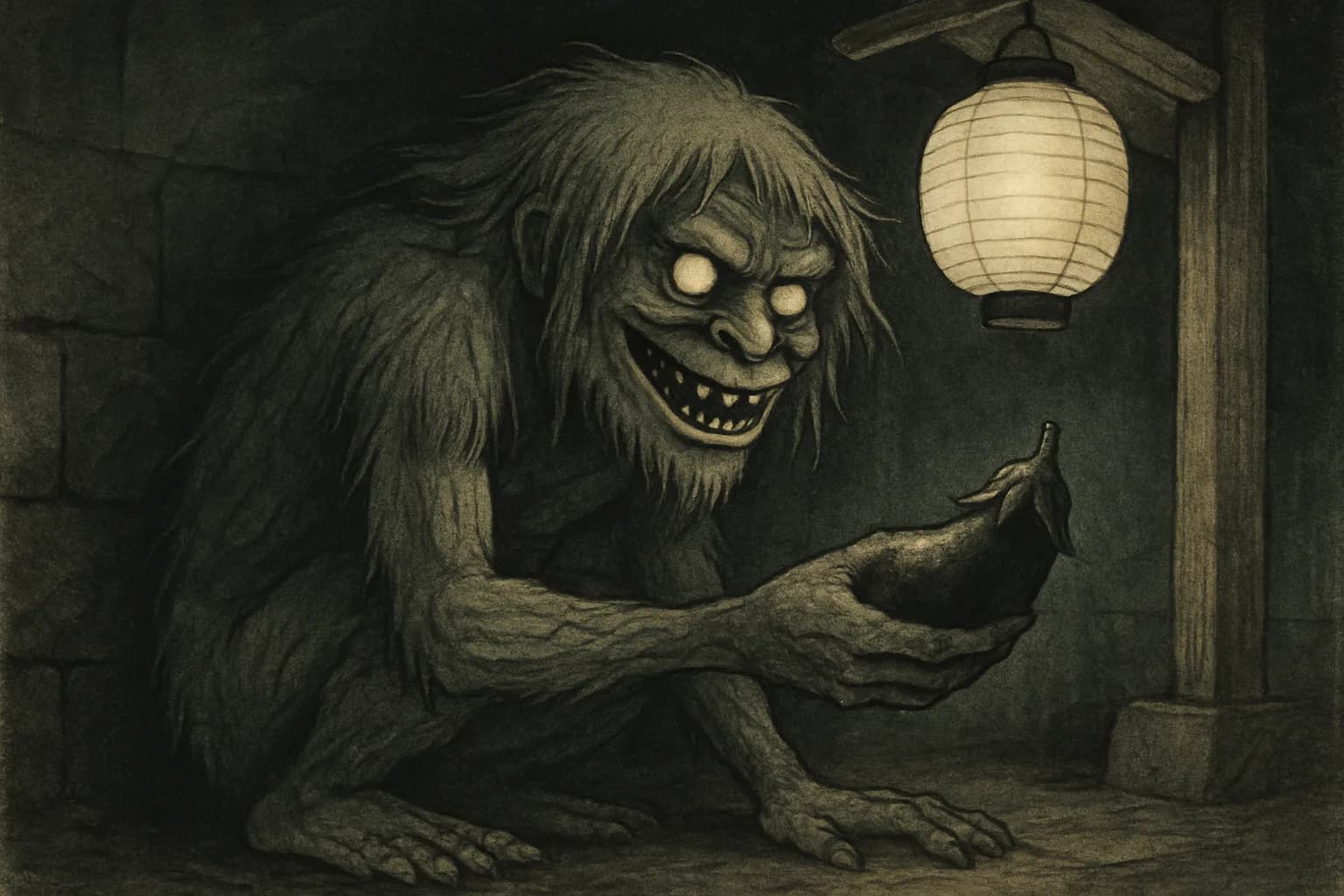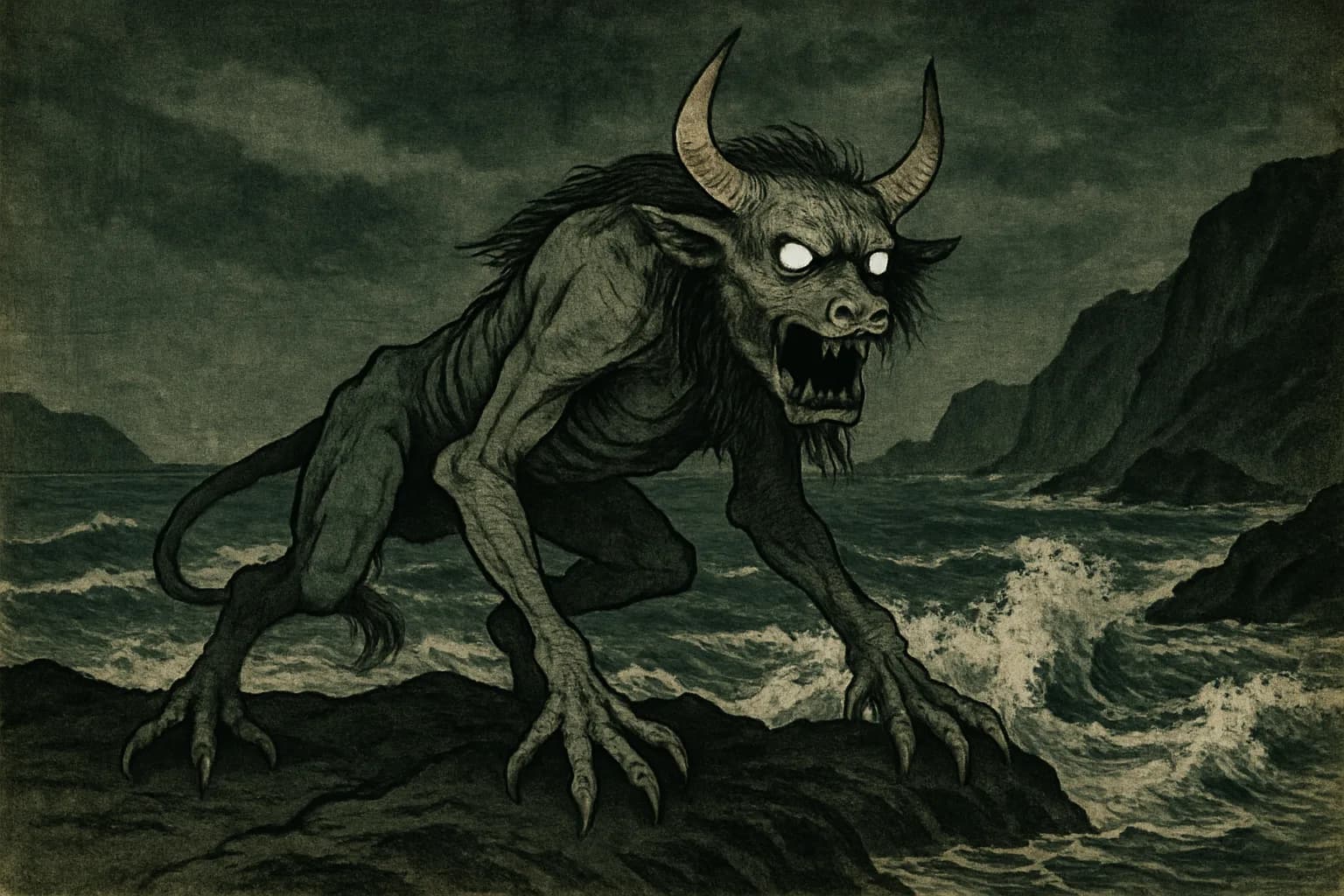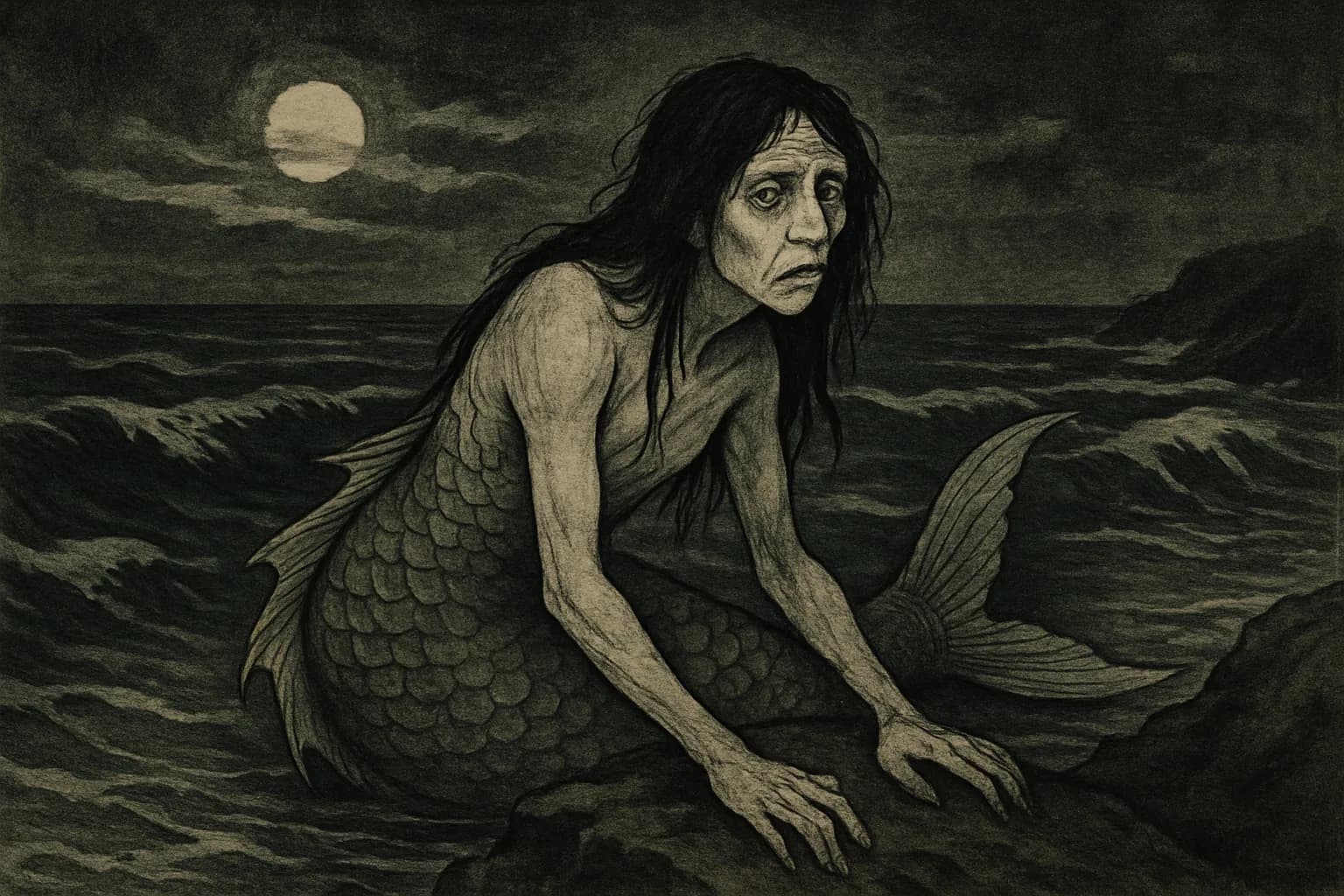
Not every river monster in Japan is Japanese to begin with. The suiko — literally "water tiger" — swam over from China, and old accounts are blunt about the fact that it is worse company than the kappa it gets mistaken for. Where a kappa might be talked out of drowning you with a bow and a cucumber, the suiko was recorded as a creature with no such soft spot.
What does a suiko look like?
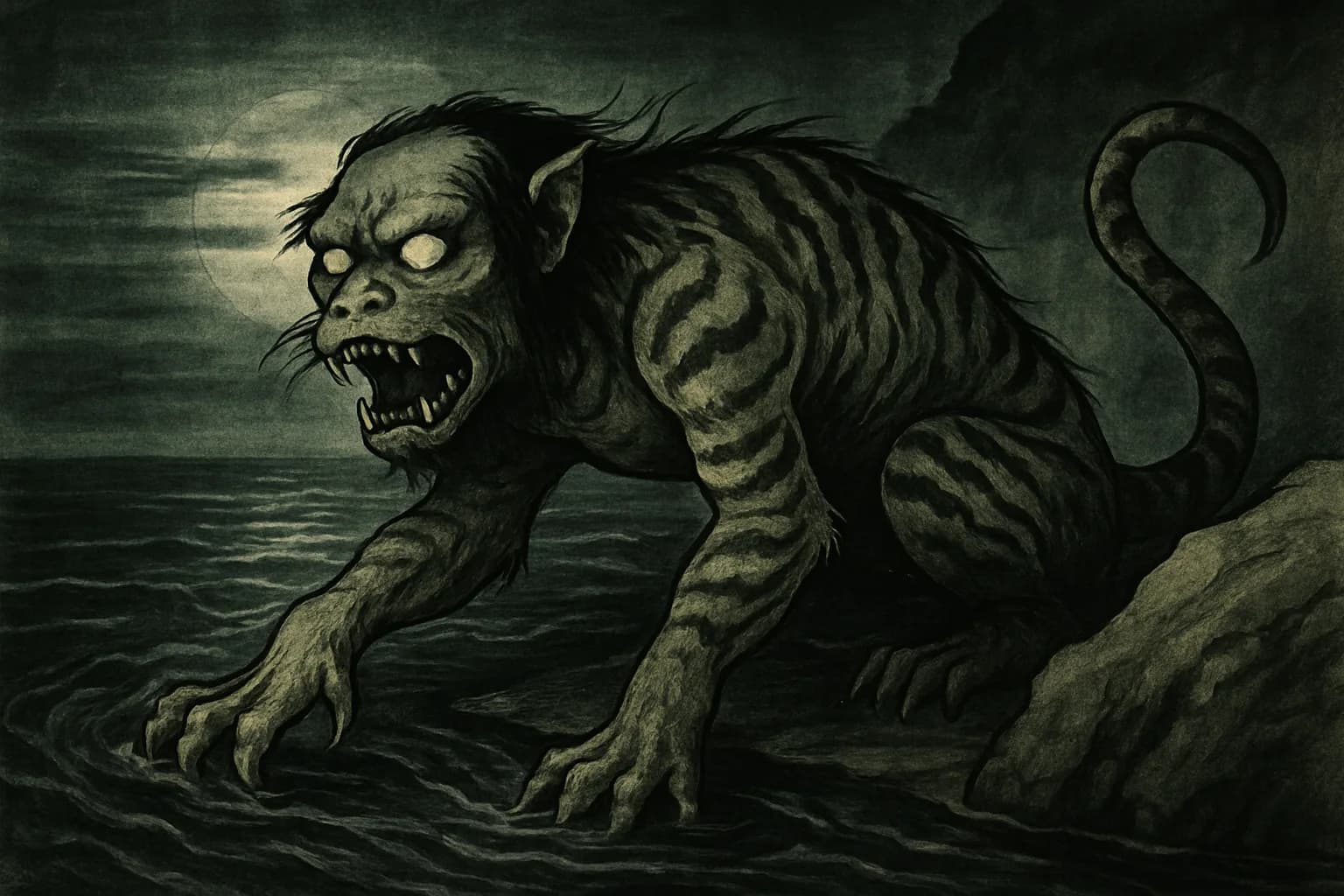
The Wakan Sansai Zue, Terashima Ryōan's illustrated 1712 encyclopedia, describes a body about the size of a three- or four-year-old child, cased in scales as tough as a pangolin's — hard enough, by some accounts, to turn an arrow. Its head carries a tiger's features, and its knees end in hooked growths said to resemble a tiger's claws, visible above the waterline even when the rest of the animal stays submerged. Toriyama Sekien picked up this description for his own catalogue, the Konjaku Hyakki Shūi (1781), and it is his print — a squat, armored figure crouched at a riverbank — that fixed the suiko's look for later readers.
A dangerous cousin of the kappa
Japanese sources have never fully agreed on how to file the suiko. The Wakan Sansai Zue treats it as a distinct species from the kawatarō (a regional kappa), while other Edo-period writers used the two names almost interchangeably. What both traditions agree on is temperament: the suiko is the meaner of the two. Folk accounts describe it lurking at river shallows and lakeshores, pulling in anyone careless enough to wade too close, with none of the kappa's taste for sumo challenges or polite bargaining.
The creature's range in Japan settled mainly along the rivers and lakes of the west — the Chikugo River basin in Kyushu and the shores of Lake Biwa in Shiga among the places its name attached to most firmly — which is also roughly where the Chinese belief that produced it seems to have taken hold first.
Where it comes from
The suiko's ancestor is the Chinese shuihu, first described in the Commentary on the Water Classic (6th century) and later quoted at length in the Ming-dynasty Bencao Gangmu, the great compendium of natural history and materia medica. Chinese sources placed the original shuihu at the confluence of the Shu and Mian rivers in what is now Hubei province, sunning itself on sandbanks in autumn and turning violent only if disturbed — closer to a dangerous wild animal in a medical text than a folkloric demon.
That account crossed to Japan through scholarly channels rather than village storytelling. Terashima Ryōan folded it into the Wakan Sansai Zue, an encyclopedia explicitly modeled on Chinese reference works, and reworked the description into something that could sit comfortably beside Japan's own river spirits. Sekien then took the encyclopedia entry and gave it the treatment he gave every other creature in his catalogues: a formal print, a short gloss, and a permanent place in the yokai canon. It is a rare case of a yokai whose paper trail runs backward through a natural-history text before it ever reaches a ghost story.
Suiko today
The suiko never got the second life the kappa did. There is no cucumber roll named after it, no cheerful mascot standing outside a train station. It survives mostly in the reprints of Sekien's catalogue and in yokai encyclopedias that file it, dutifully, as the kappa's older and less forgiving relation — a reminder that not every creature pulled from an Edo-period print goes on to become a national favorite. Some stay exactly what the sources made them: a scaled shape at the edge of the water, best left alone.