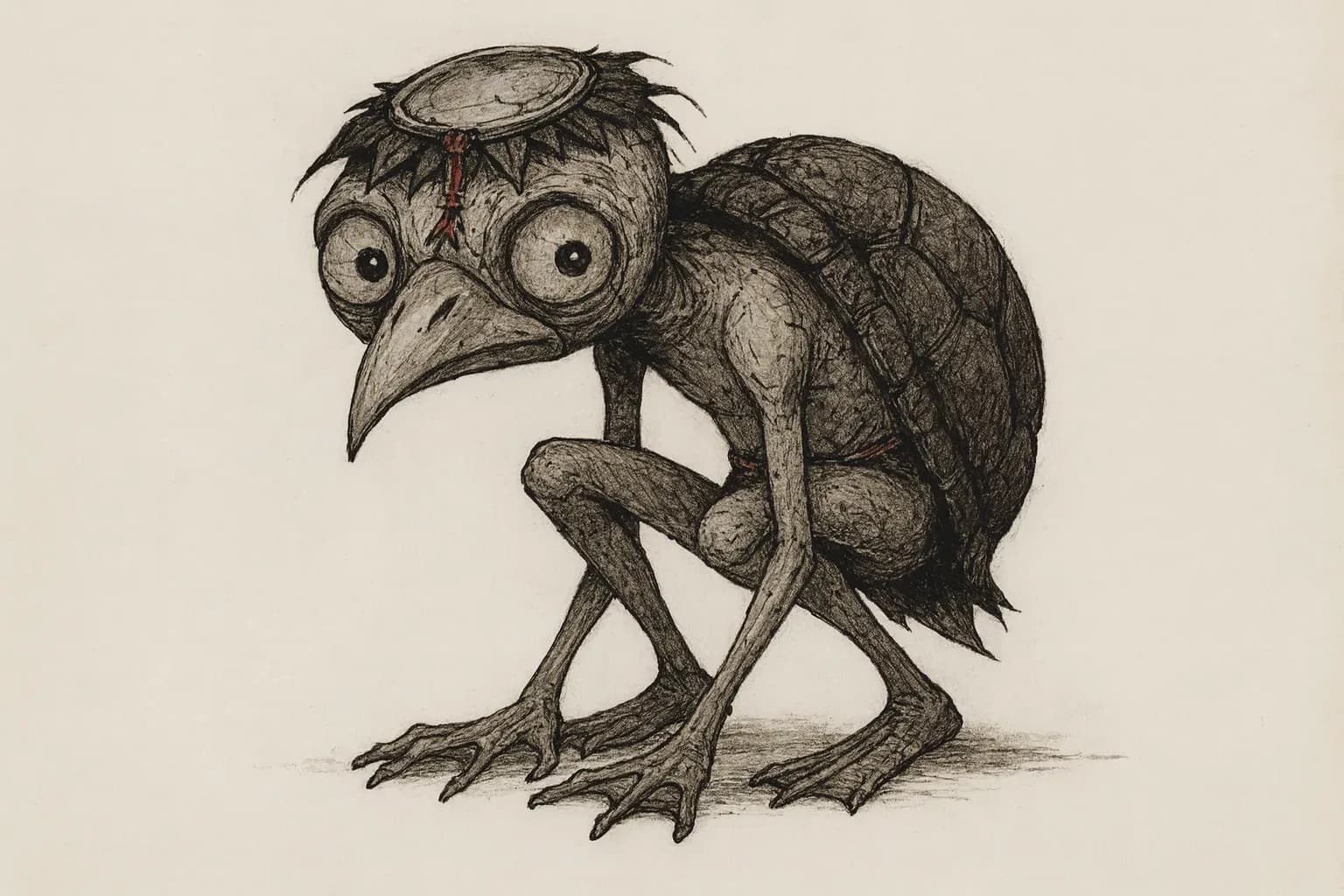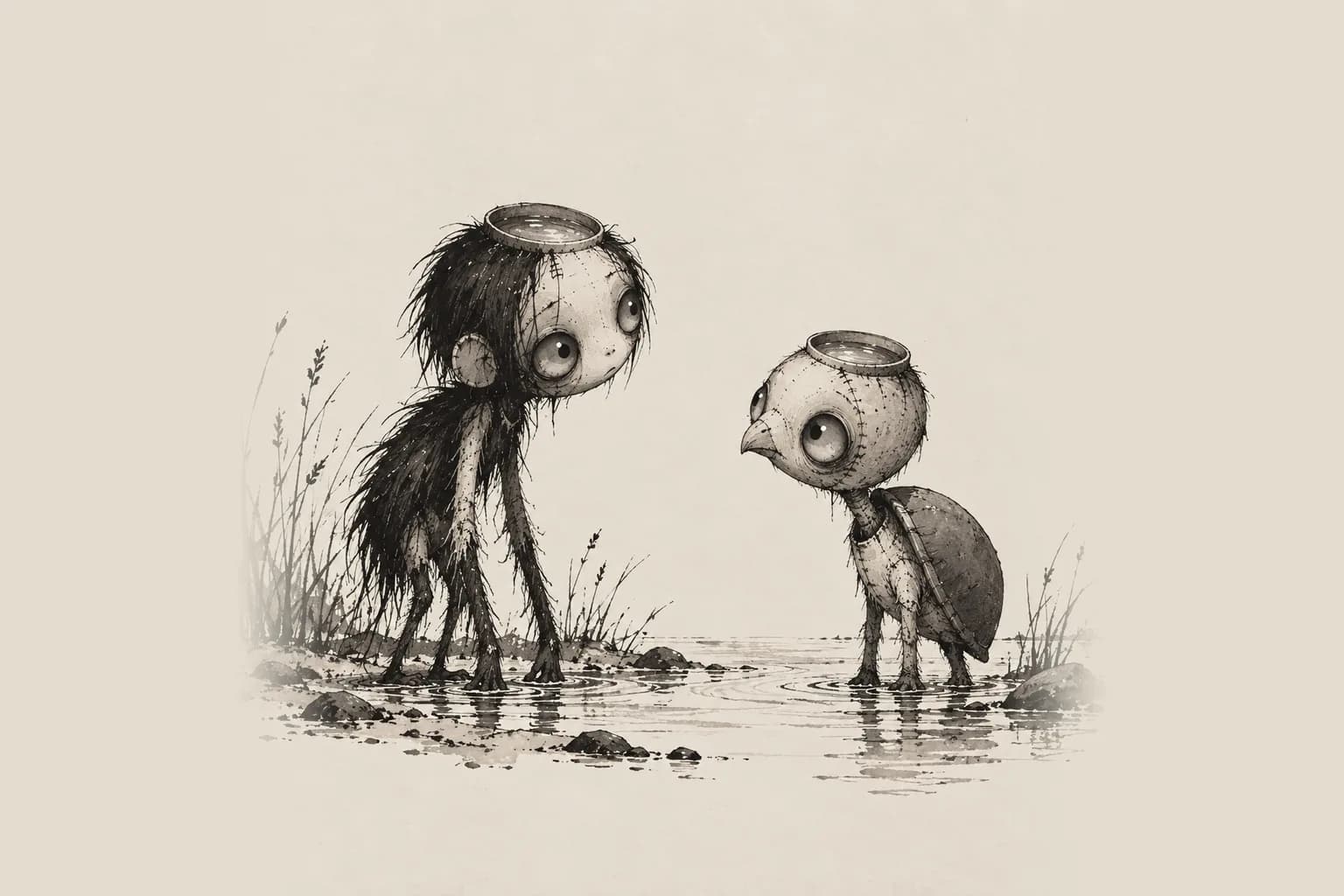
Picture a kappa and you see a green creature with a turtle's shell, a beak, and a dish of water on its head. That is the kappa of mascots and cucumber sushi. How old is that look?
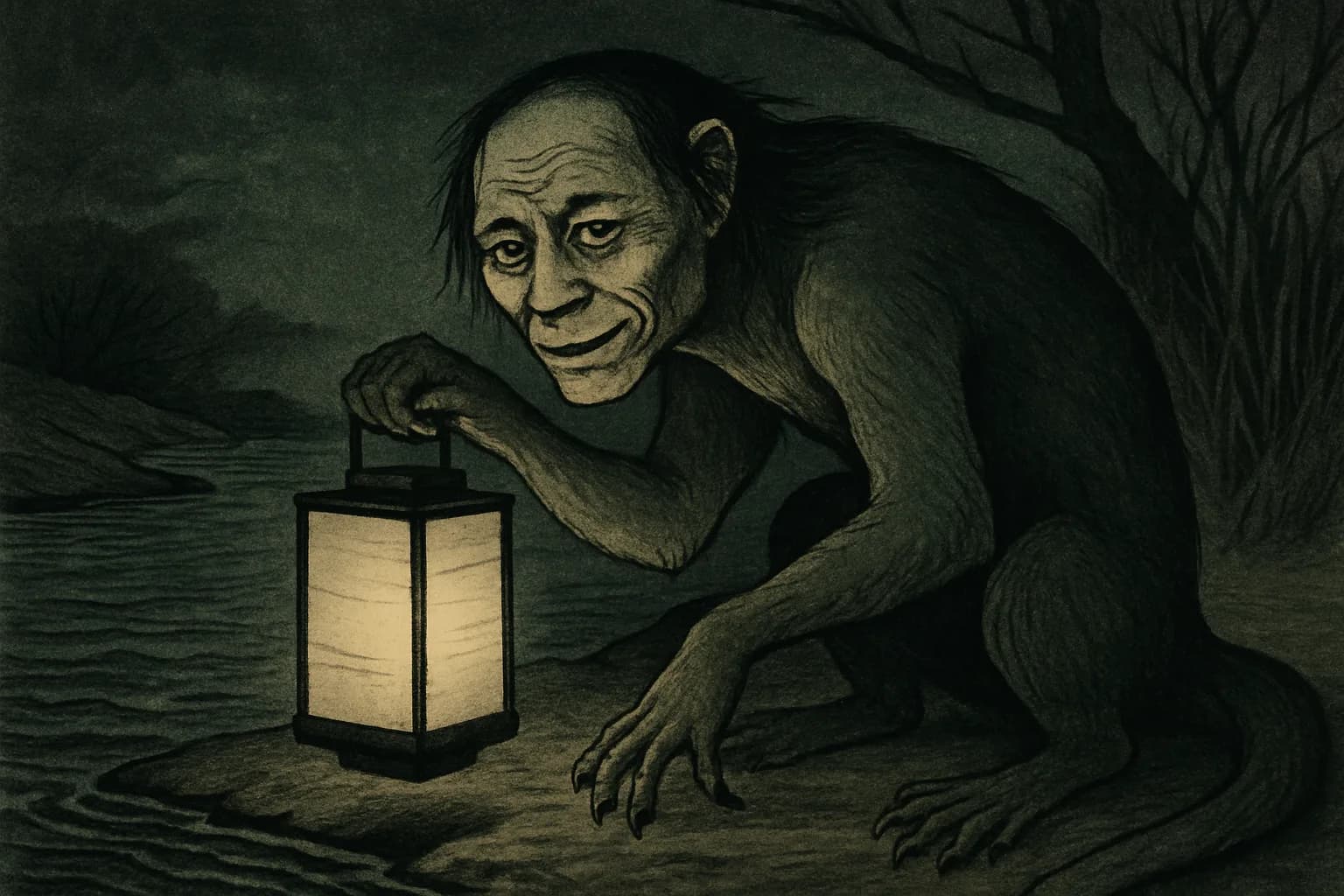
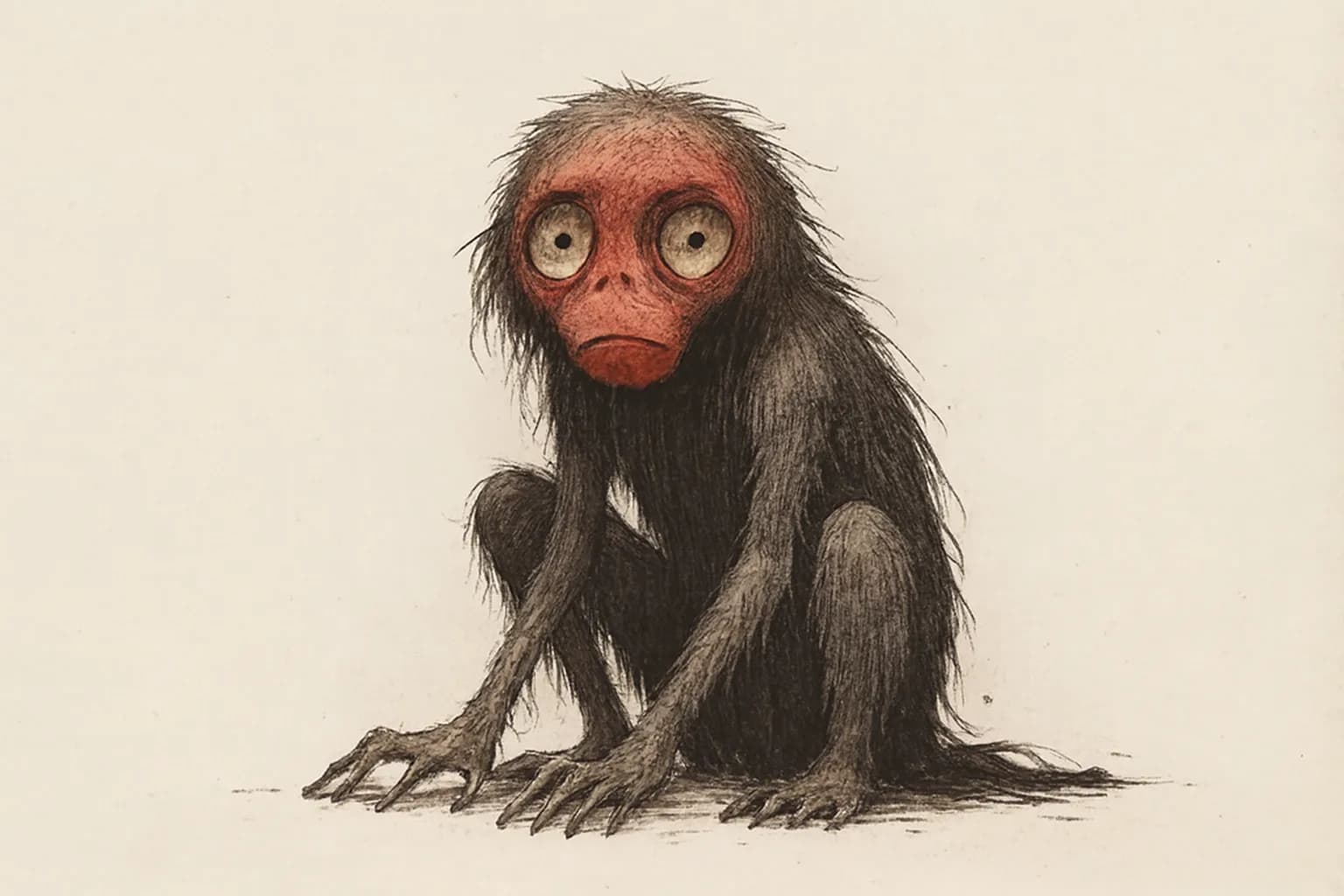
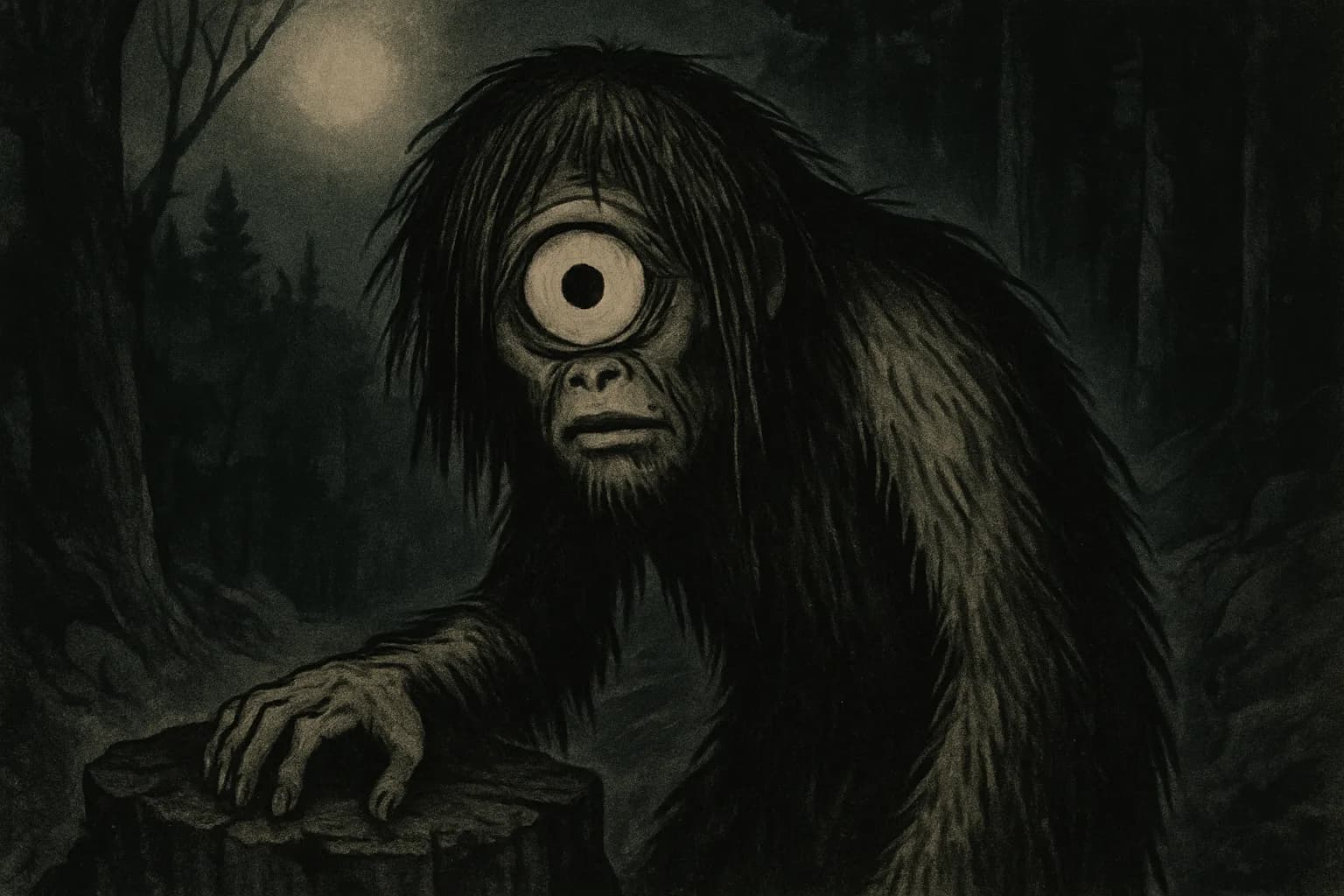
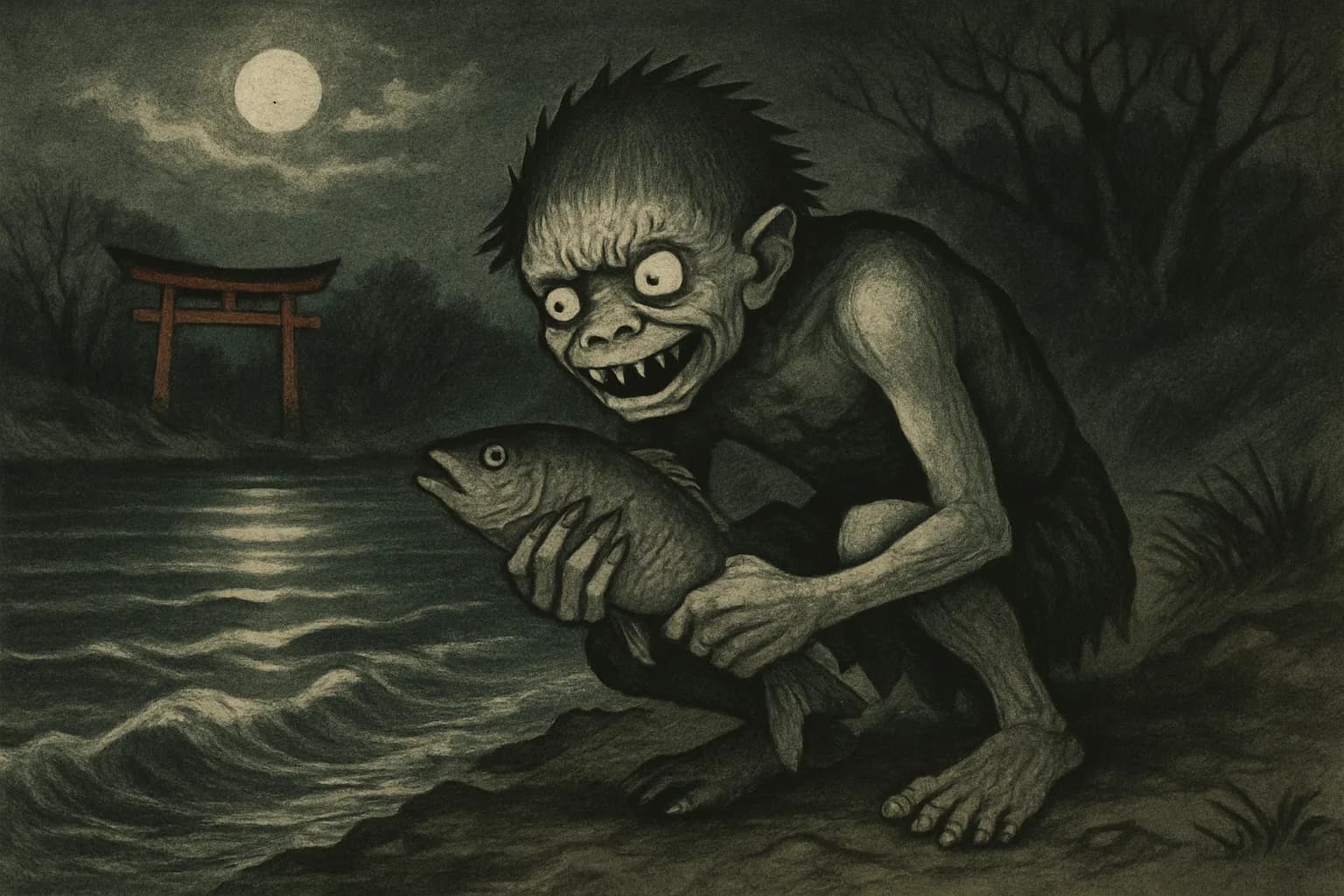
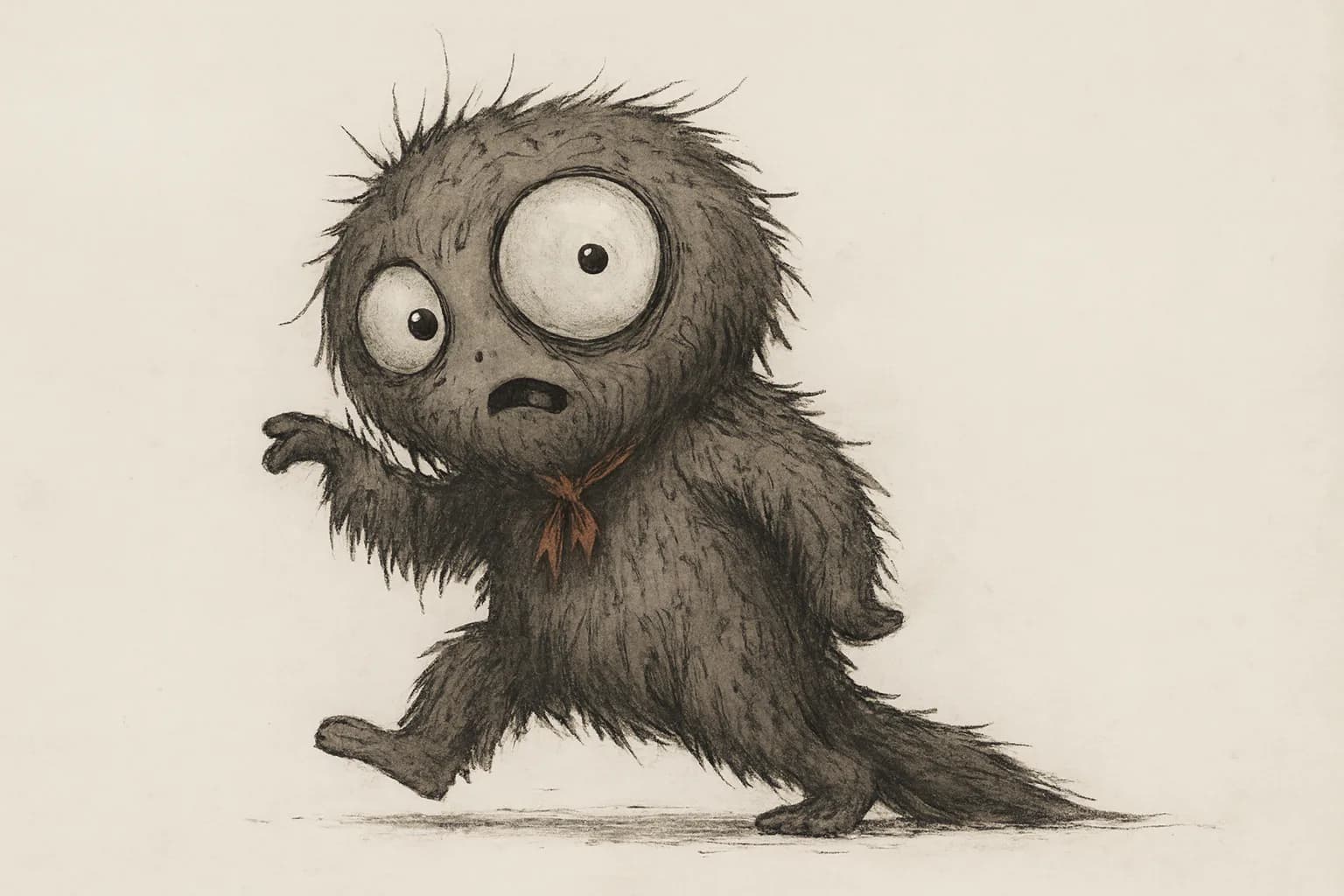
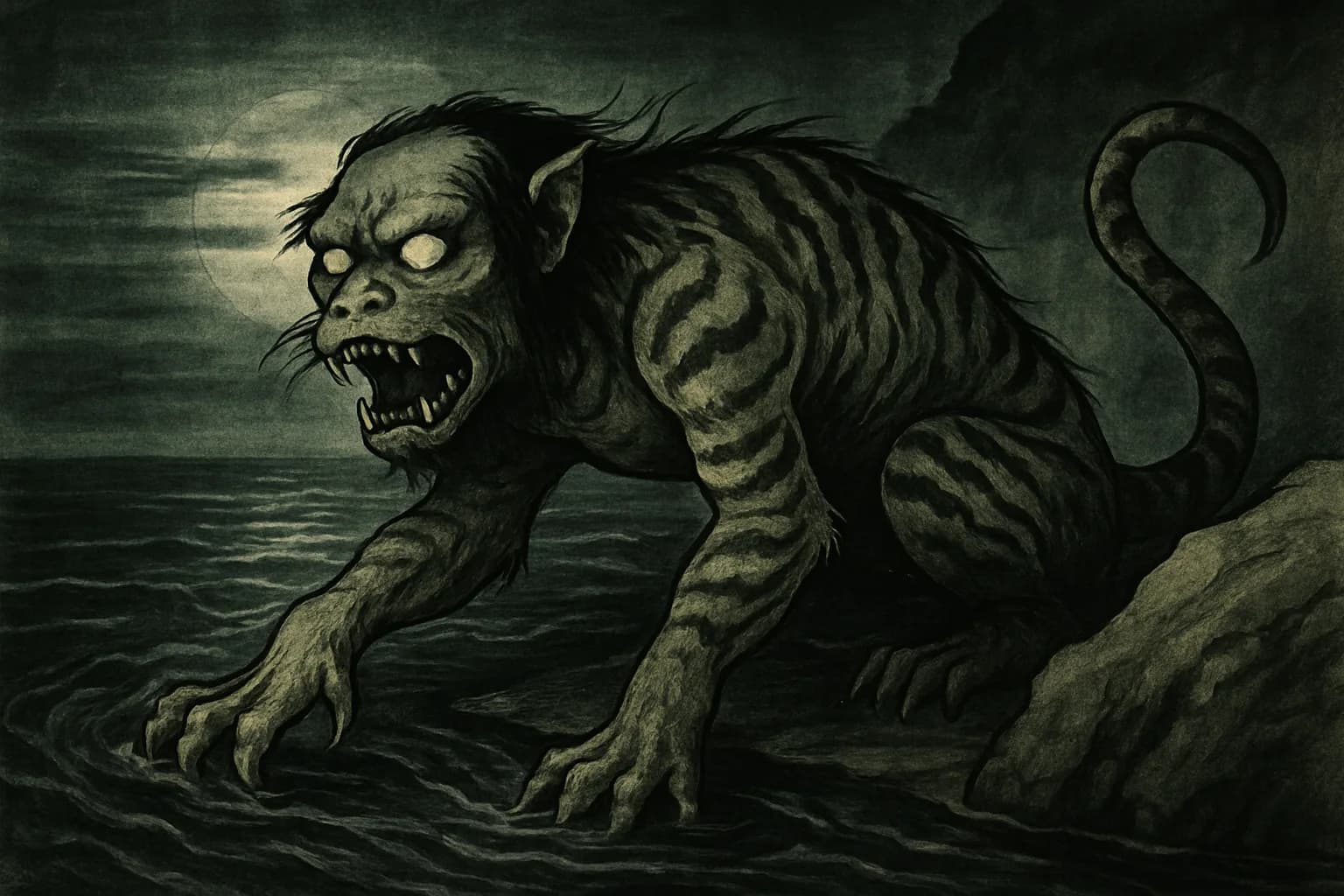
For its first three hundred years on record, the kappa was not a turtle. The oldest books call it an old otter, then a river monkey. The dish on its head came early. The shell came last, in the 1760s. Even then, the hairy kappa never went away.
In 1444 the kappa was an old otter
The oldest entry is in the Kagakushū, a Japanese dictionary with a preface dated 1444. It says simply that an otter, grown old, becomes a kawarō. That is an early form of the kappa's name.
So the first kappa on record is an animal that changed with age. It is the same logic as foxes and cats that turn into spirits when they live too long. Our ledger still has the otter as its own entry, the kawauso.
In 1603 it was a river monkey
In 1603, Jesuit missionaries printed the Nippo Jisho, a Japanese–Portuguese dictionary. Its entry for kawarō describes an animal like a monkey that lives in rivers.
The names tell the same story. In the Edo period, eastern Japan said kappa. The west said kawatarō or gataro. Parts of the west called it enkō, a word for a monkey. In southern Kyushu it was the hyōsube.
In 1775, Koshigaya Gozan's dialect dictionary Butsurui Shōko listed more than twenty local names. These were many river creatures, not one.
The dish was there by 1712
The dish arrived early. Terajima Ryōan's encyclopedia, the Wakan Sansai Zue, was finished in 1712. It gives the kawatarō the build of a ten-year-old child. It also shows that the dish on its head was already its weak point.
Later books add the water. The Rōō Chawa of 1742 has a fighter beating a kappa by spilling the water from its dish. The Butsurui Shōko of 1775 describes red hair and a hollow dish on top. When the dish holds water, it says, the kappa is very strong.
That is the source of the famous bow. Bow to a kappa, the story goes, and it bows back politely. The water spills, and its strength is gone.
The shell arrived in the 1760s
The turtle came later. In 1762, Gotō Rishun's Zuikan Shashin reported a kappa seen at Meguro in Edo. It printed a standing figure. Japanese reference works treat it as an early frog-and-softshell-turtle kappa.
Toriyama Sekien's picture books of the 1770s spread the same kind. In 1811, Kurimoto Tanshū's insect book Senchūfu drew a kappa modelled on a real softshell turtle.
But the monkey did not lose. In 1820, a scholarly collection, the Suiko Kōryaku, gathered twelve kappa pictures. Six show a hairy ape-man. Six show a softshell turtle. Even at the end of the Edo period, the two bodies stood side by side.
The cucumber started as any garden crop
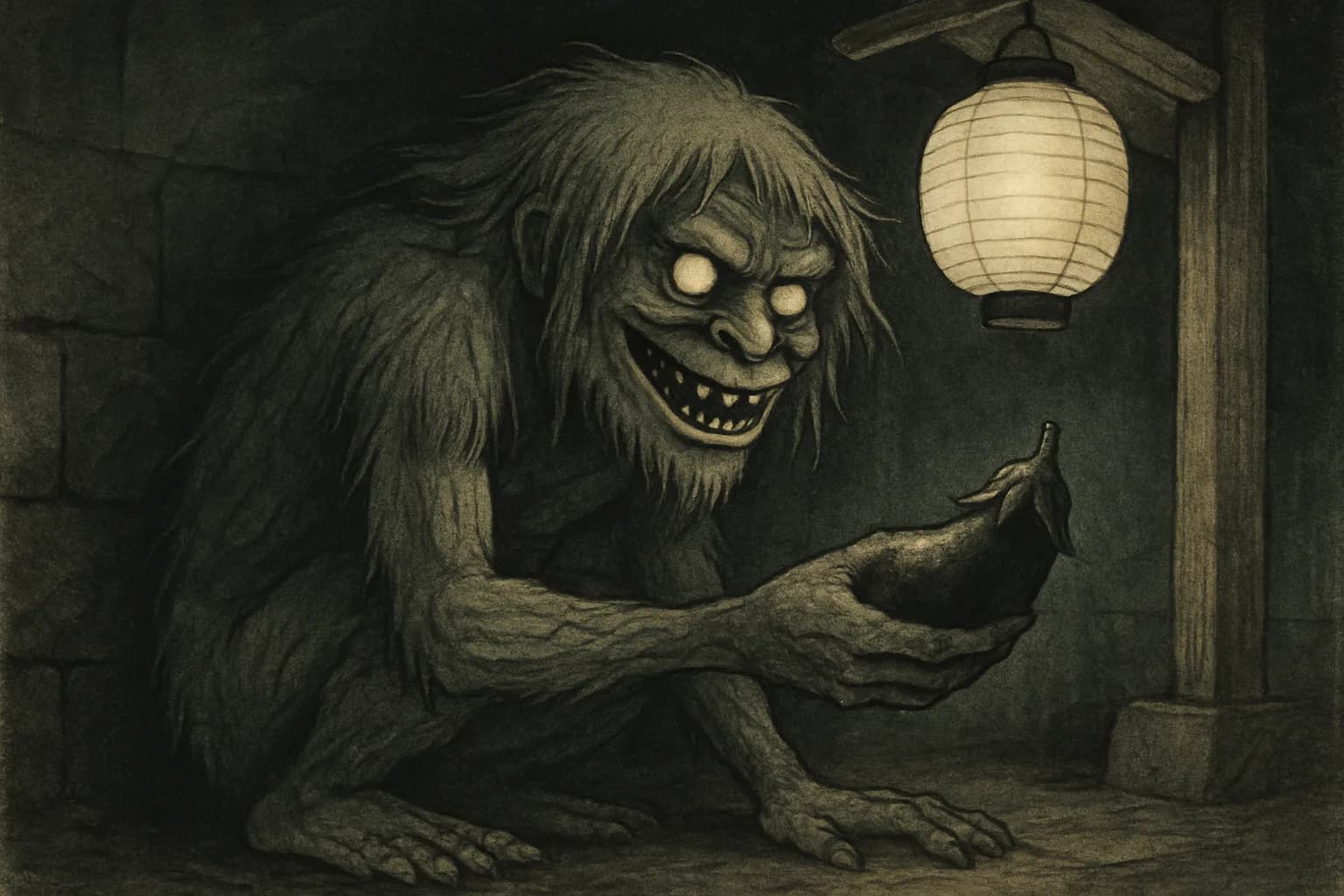
The cucumber is not in the oldest list. The Wakan Sansai Zue says the kappa steals melons, eggplants and field grain. Its cousin the hyōsube still loves eggplants in our ledger.
The cucumber became the kappa's food through offerings. In some places, a custom still holds on the 1st or 15th of the sixth month. The first cucumbers go to the kappa at a household shrine. Only then may people eat them. The cucumber sushi roll is still called kappa-maki.
That fits an old idea. The folklorist Yanagita Kunio saw the kappa as a water god that had come down in the world. The ledger lists suijin, the water god, beside it for this reason.
The other famous habits are dated too. The Wakan Sansai Zue already says the kappa loves sumo. In 1788, the picture book Yōkai Chakutōchō showed a kawatarō pulling out a person's shirikodama, a ball said to sit inside the body.
Our ledger is mostly hairy
We have eight kappa-family entries in our ledger of 327. We sorted them by body, using our own one-line descriptions.
| Body | Entries |
|---|---|
| Turtle-like | kappa |
| Hairy, monkey- or child-like | enkō, hyōsube, yamawaro, gangi-kozō, shibaten |
| Otter | kawauso |
| Scaled | suiko |
Only one of the eight has a shell, and it is the kappa itself. Five are hairy. The yamawaro, a hairy mountain child, is said to be the kappa's winter form. The enkō is a monkey in name and in body.
Edo merged the names, not the bodies
The word kappa won. The eastern name is the one the whole country uses today. But the old bodies stayed under their local names, on the riverbanks where they were first seen.
So the turtle kappa is one late Edo picture of many river creatures. The dish is older than the shell, and the monkey is older than both. What we cannot date is why the dish appeared. The books show it already in place by 1712, with no story of its arrival.