Every autumn in parts of Kyushu, loggers working the high forests used to leave a portion of their rice at the edge of the clearing before they went home. It wasn't an offering to a mountain god, exactly. It was payment. The mountain, that time of year, had a new tenant — one that had been living in the river all summer.
What does a yamawaro look like?
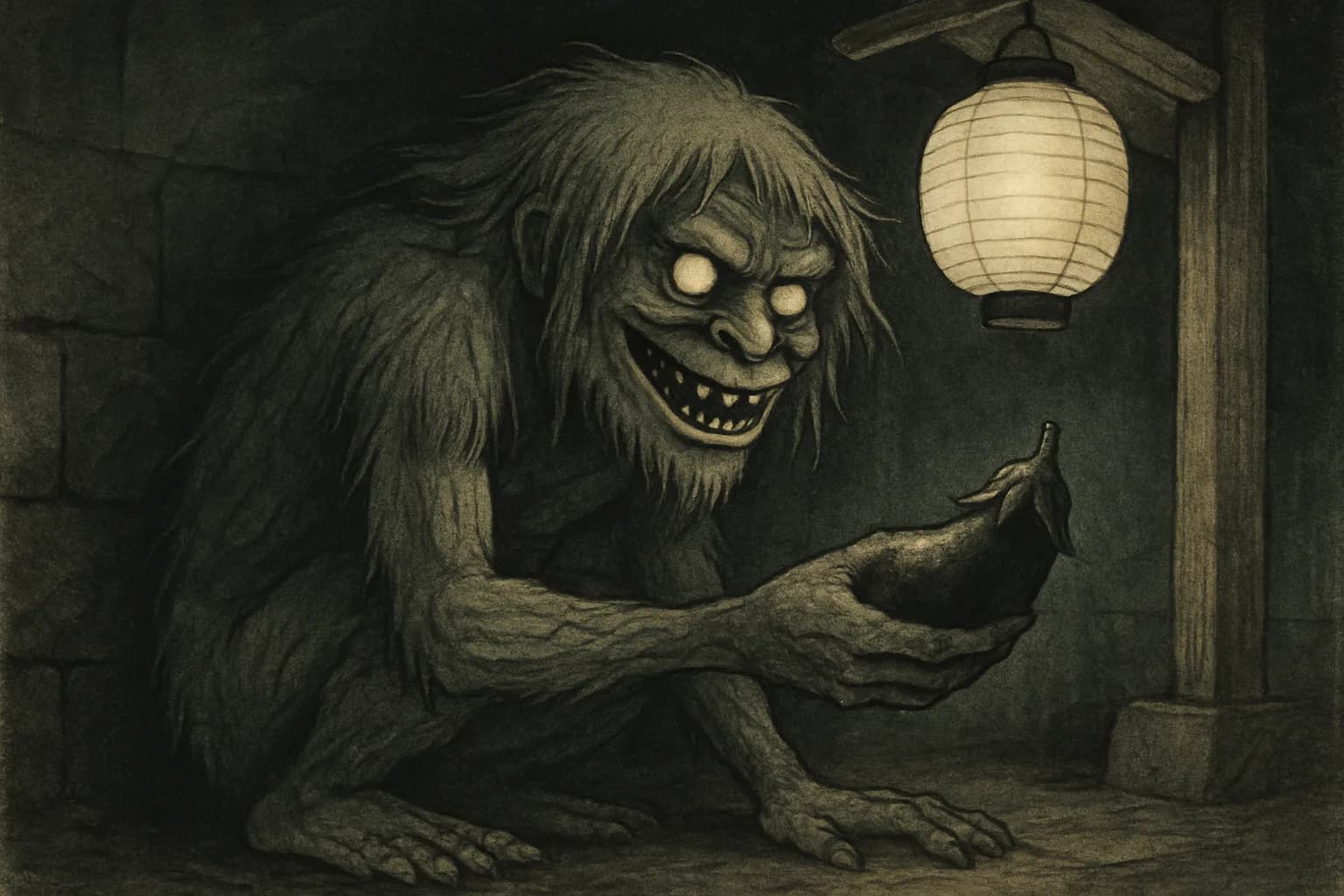
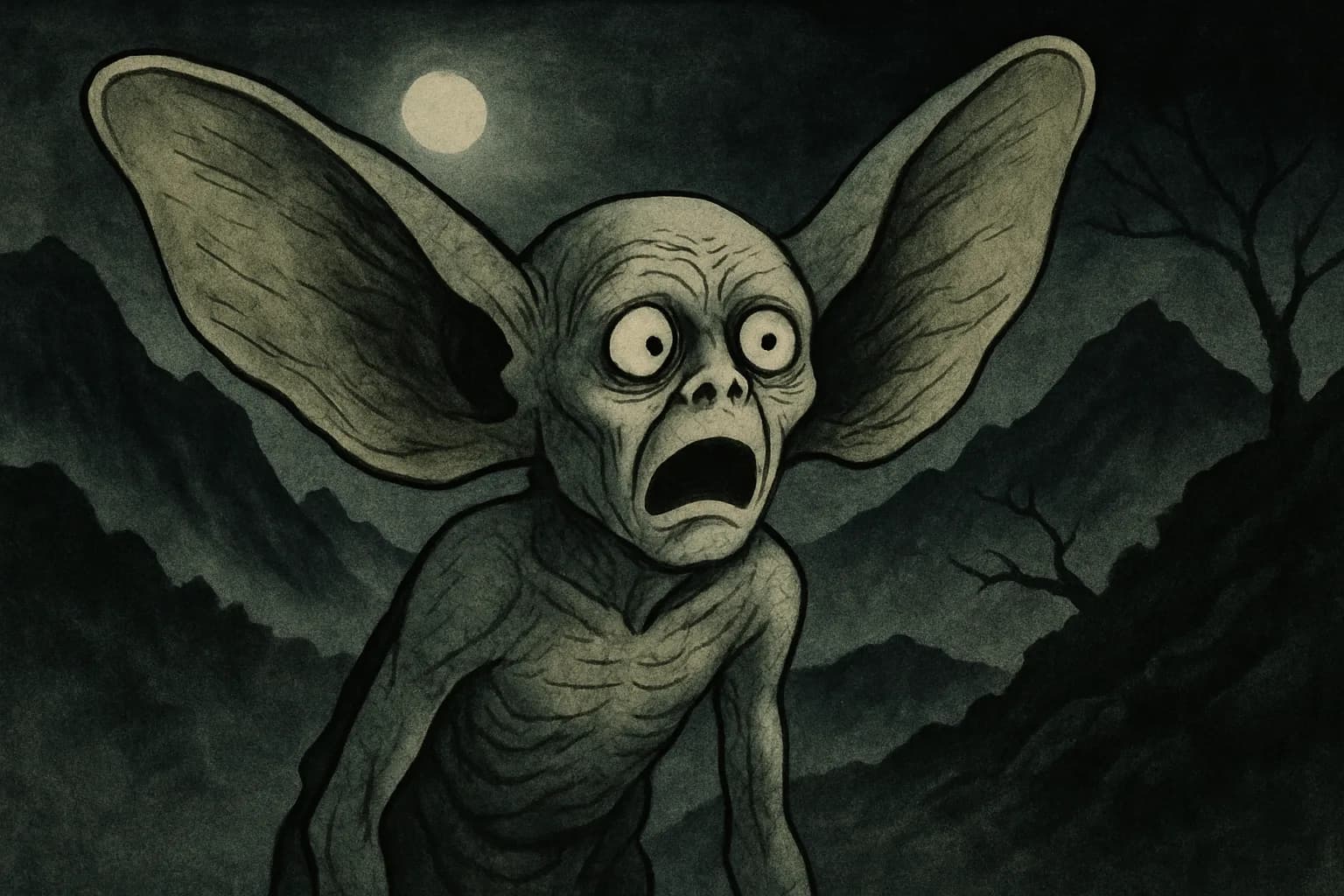
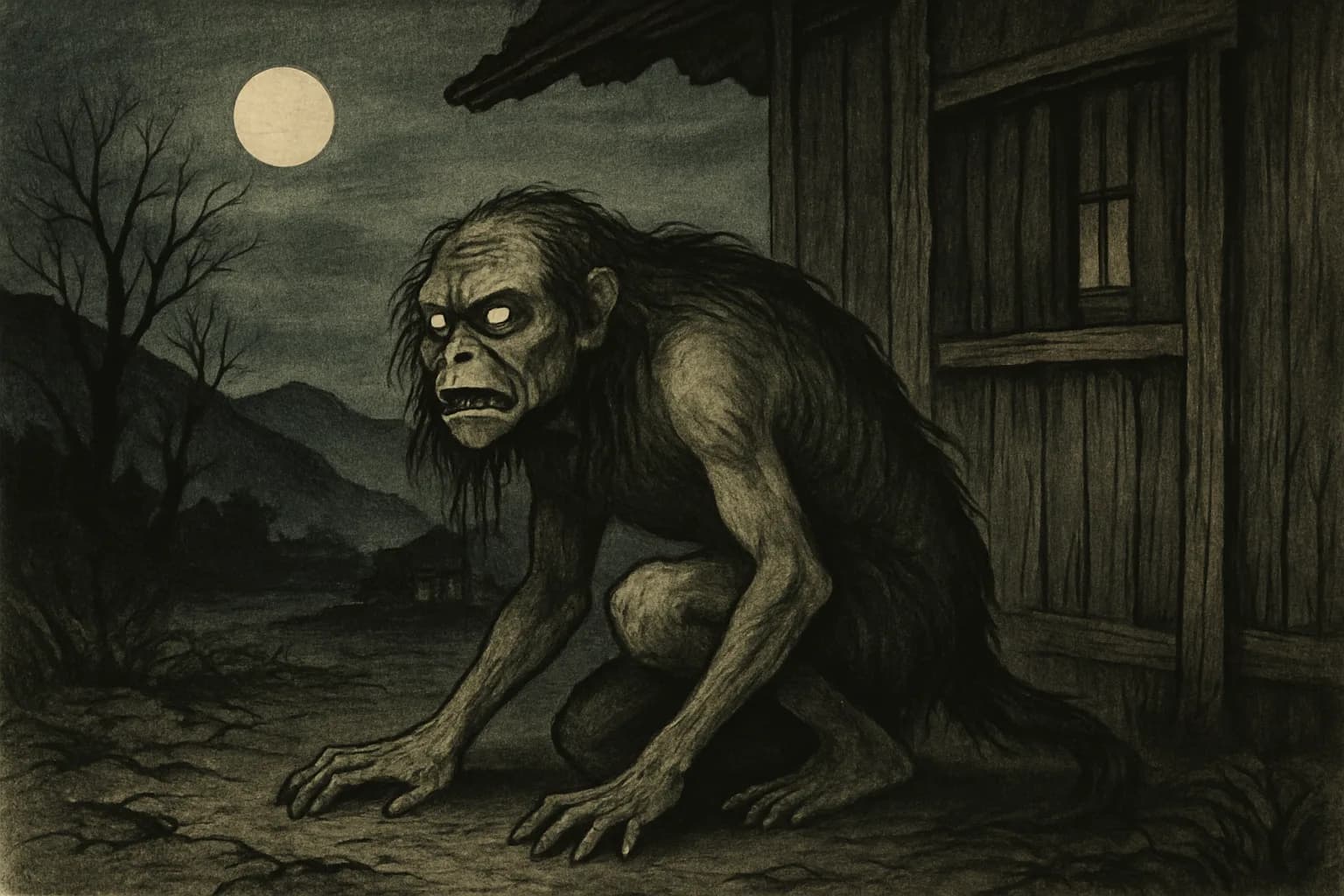
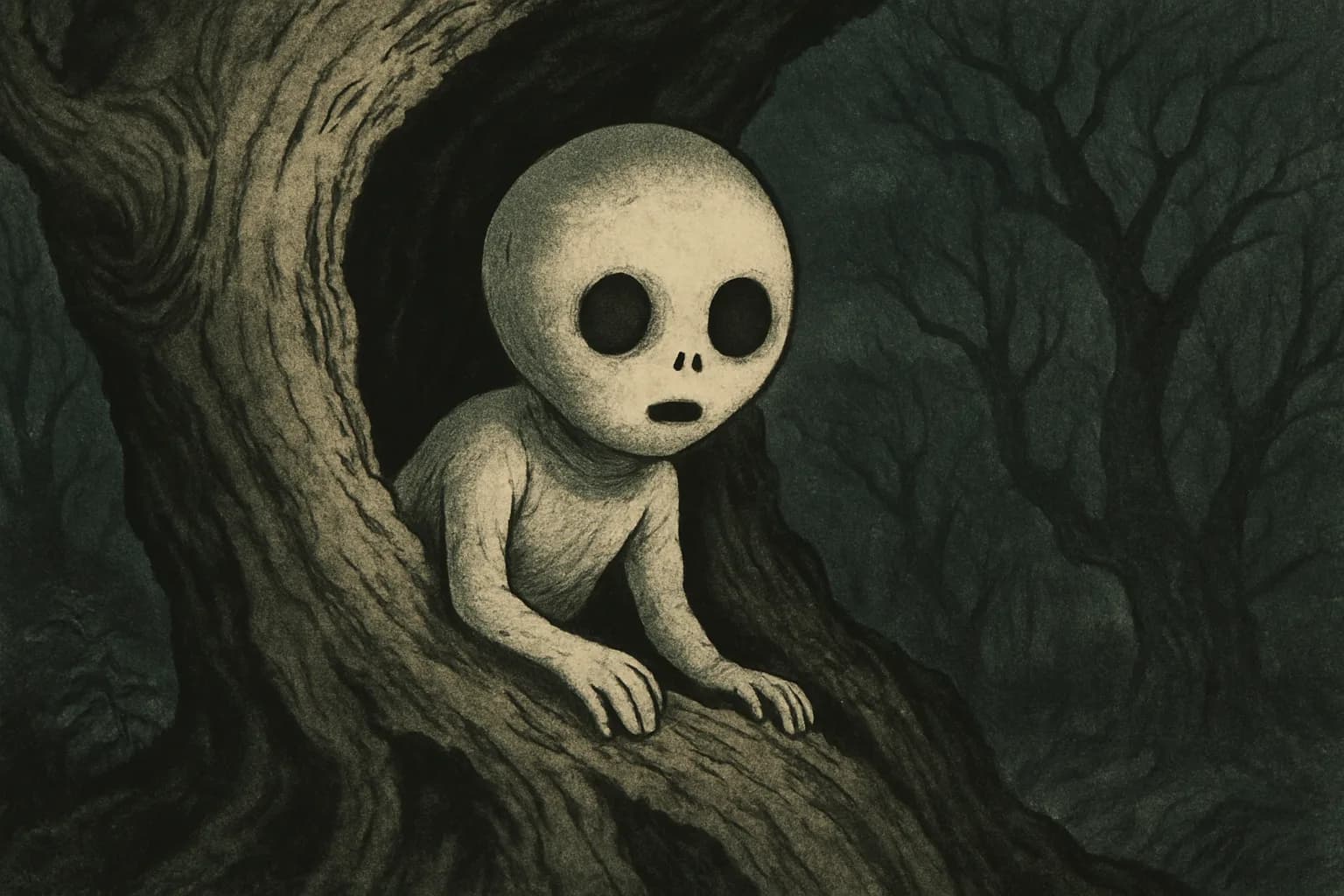
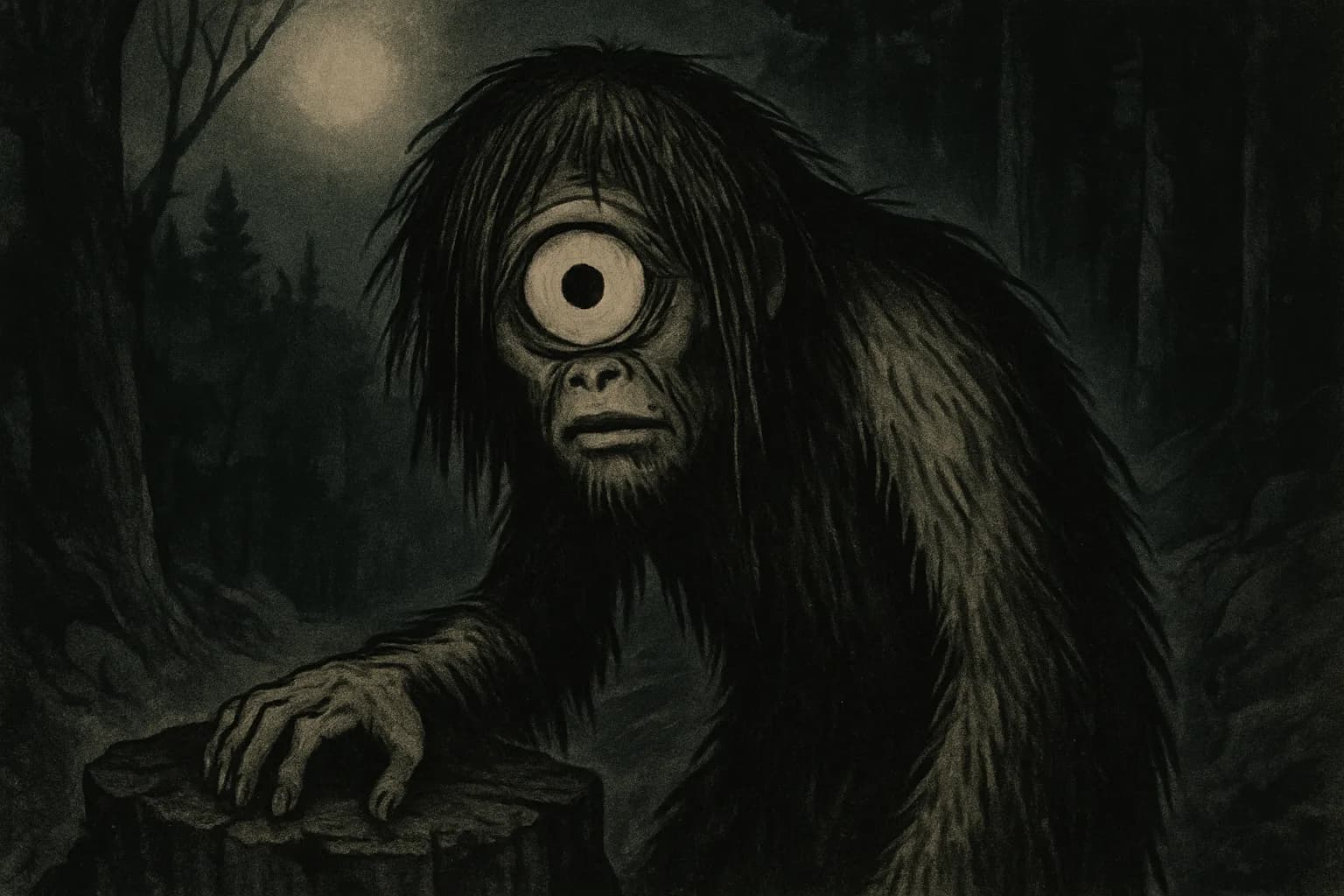
Accounts describe the yamawaro as roughly the size and shape of a child, its whole body matted in coarse brown or reddish hair, walking upright on two legs. Where it differs sharply from its river cousin is the face: many tellings give it a single eye, set in the middle of its head, rather than the kappa's two. It has no shell and carries no dish of water. What it does carry is the strength to drag felled timber down a slope that would take several men to move. Some accounts say it gives off a foul smell after bathing.
The kappa's other half
The defining piece of yamawaro folklore isn't really about the mountain at all — it's about the river. Across a wide stretch of Kyushu, villagers held that the kappa and the yamawaro were the same creature living two lives. In many Kumamoto tellings, the kappa climbs out of its river around the autumn equinox, sheds its water-loving habits, and moves up into the forested hills as a yamawaro for the cold months. Come the spring equinox, it reverses the trip, back down to the water, back to being a kappa. Some tellings tie the exact turning dates to the Buddhist higan observances that bracket both equinoxes. Other villages use other dates.
This is not a minor detail tacked onto the legend — it's the reason the yamawaro exists as a distinct name at all, rather than just being called a kappa in the mountains. Local memory kept the two forms separate enough to give the mountain version its own word, even while insisting underneath that they were one and the same animal.
A logger's unpaid help
Where the kappa is remembered mostly for river mischief, the yamawaro earned a reputation as actual labor. Woodcutters and charcoal burners working remote stands told of logs that moved overnight, stacked more neatly than they'd left them, or timber that seemed to haul itself partway down a trail no cart could reach. The going explanation was a yamawaro, working through the dark for whoever had been generous with food that day.
The arrangement had rules. Feed it — rice, rice balls, whatever the crew could spare — and the work continued without complaint. The pay had to be exactly what was promised. A different gift made it furious. Paying in advance meant it ran off. Some tellings add that it copies human songs and the sounds of the mountain.
That two-sided reputation — useful neighbor when respected, hazard when it isn't — is why folklorists file it as an ambiguous yokai rather than a purely benevolent or purely dangerous one. It never asked to be feared. It also never let an unpaid debt go.
Where it comes from
Reading the yamawaro as the kappa's seasonal disguise fits a pattern folklorists have long noted in Japanese mountain-and-water belief: spirits that migrate with the agricultural calendar, standing in for the idea that the powers governing a village's rice paddies in summer are the same powers that retreat to the hills once the fields are cut and drained for winter. A water god who becomes a mountain god each autumn is one version of a very old idea — that mountain and river are not separate territories but two ends of the same seasonal circuit water travels every year.
Kyushu's loggers, working forests that fed timber down to the same rivers the kappa was said to haunt, had every reason to keep that link alive. It gave a name and a face to the strange sounds and moved logs of a mountain worked mostly alone, and it gave them a simple, low-cost way to keep the mountain on their side: leave the rice out.
Yamawaro in Kyushu today
The yamawaro never became a mascot the way the kappa did, and it has no cucumber-roll or shopping-district namesake. It survives mostly in the folklore collections and regional yokai catalogues that recorded Kyushu's mountain-village beliefs before they faded, Mizuki Shigeru's yokai encyclopedias among them, filed there as a documented piece of tradition rather than as an invented character. In a handful of Kyushu towns, local histories and shrine notes still repeat the equinox story — the kappa going up the mountain in autumn, coming back down in spring — as an explanation for why the same water spirit has two names.