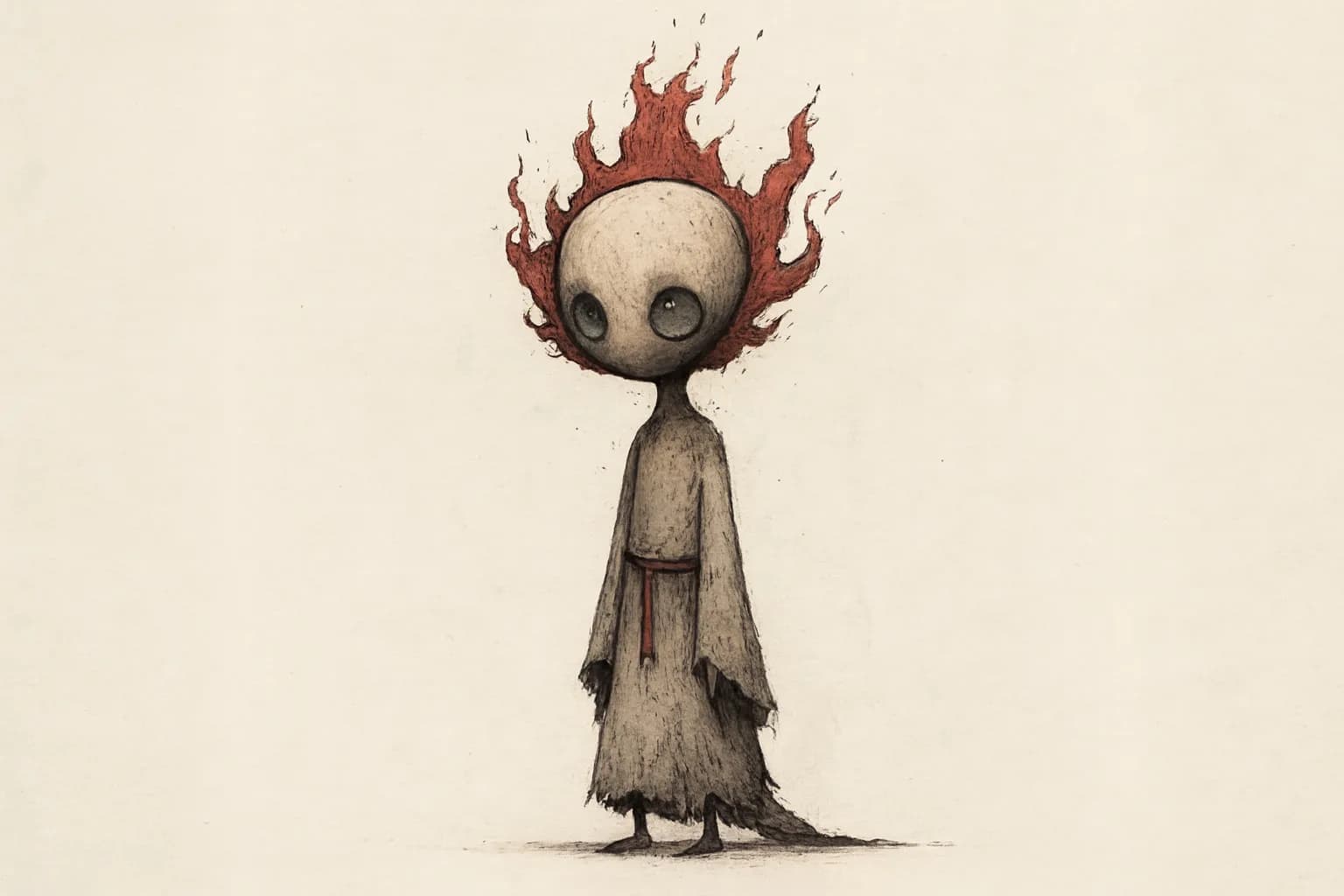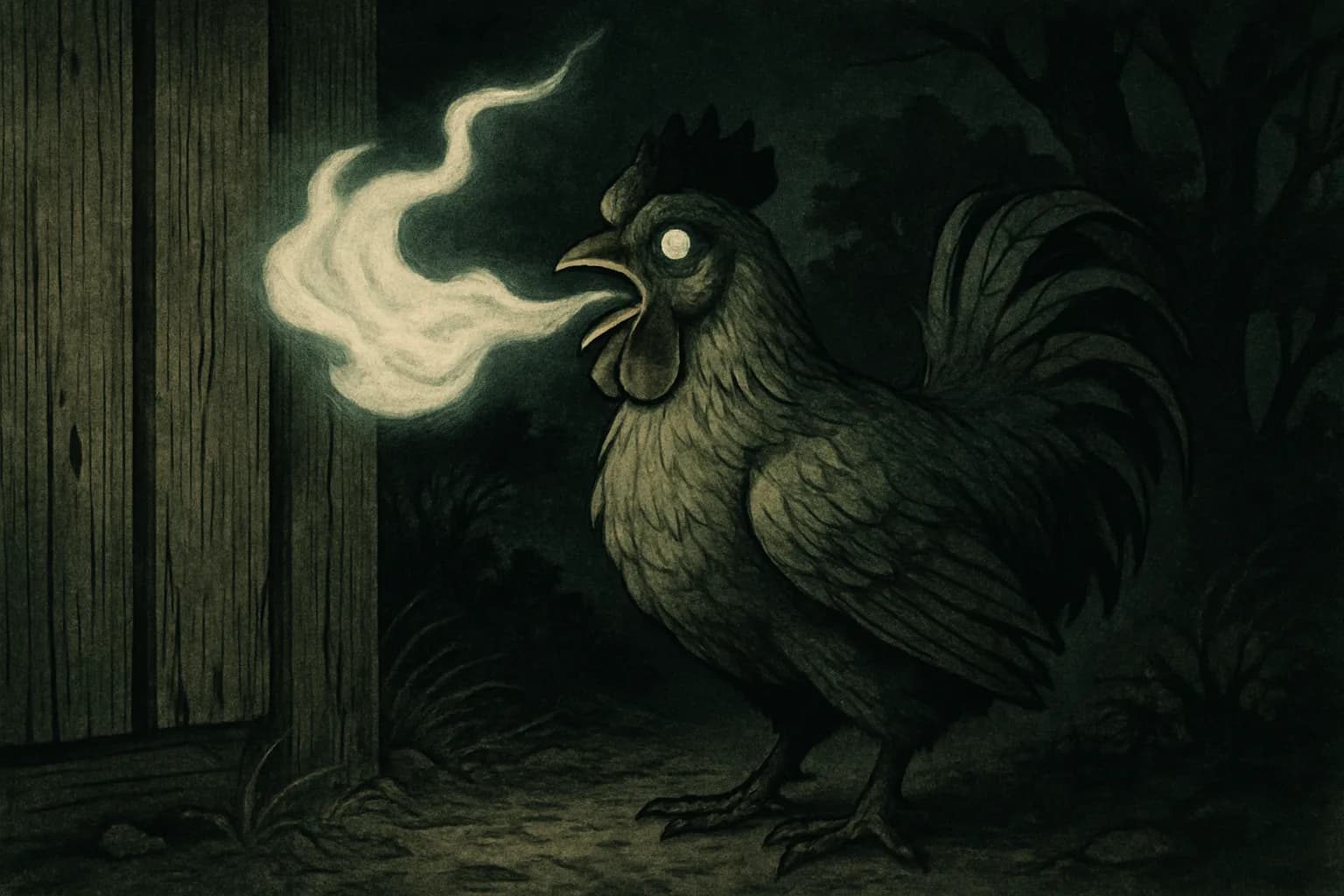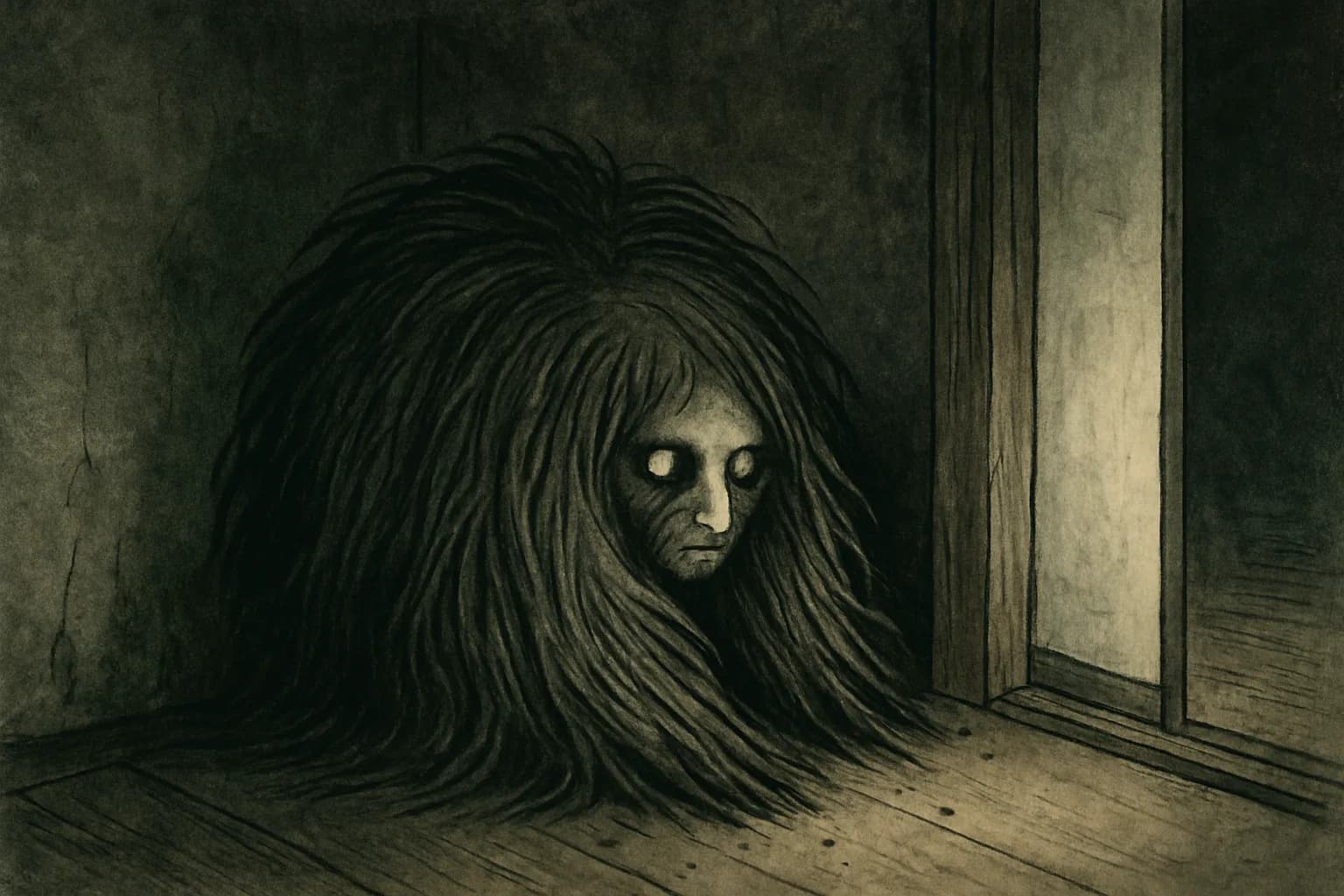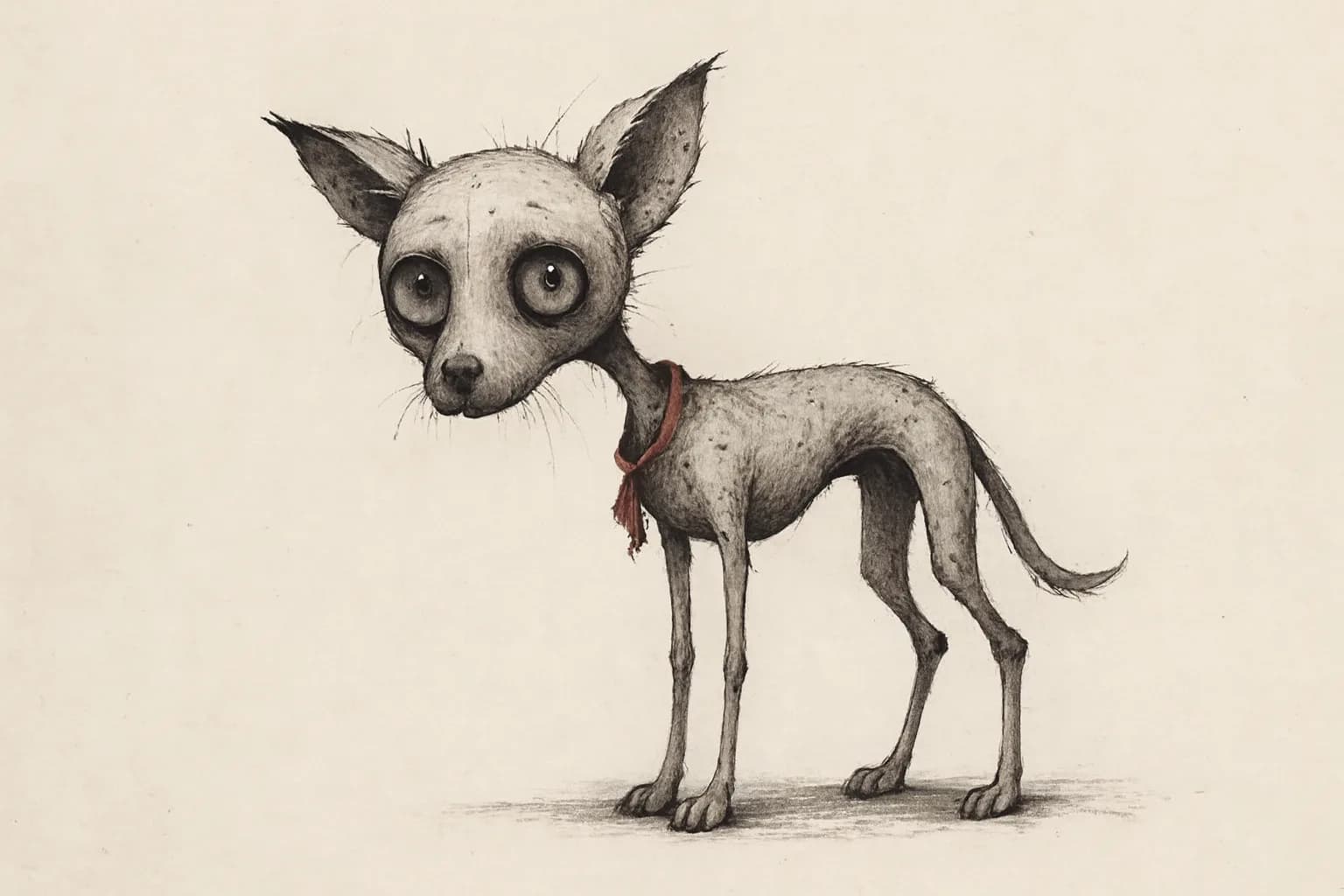
Deep in the mountains of old Tosa Province — today's Kōchi, on the island of Shikoku — villagers told of a creature that never announced itself with a roar or a rattling chain. It came for you only when you were already asleep, and the only warning you ever got was your own breath, drawn slowly out of your body. This is the yamachichi, the "mountain breath-thief," and its entire reputation rests on a single, quiet act performed in the dark.
What does it look like?
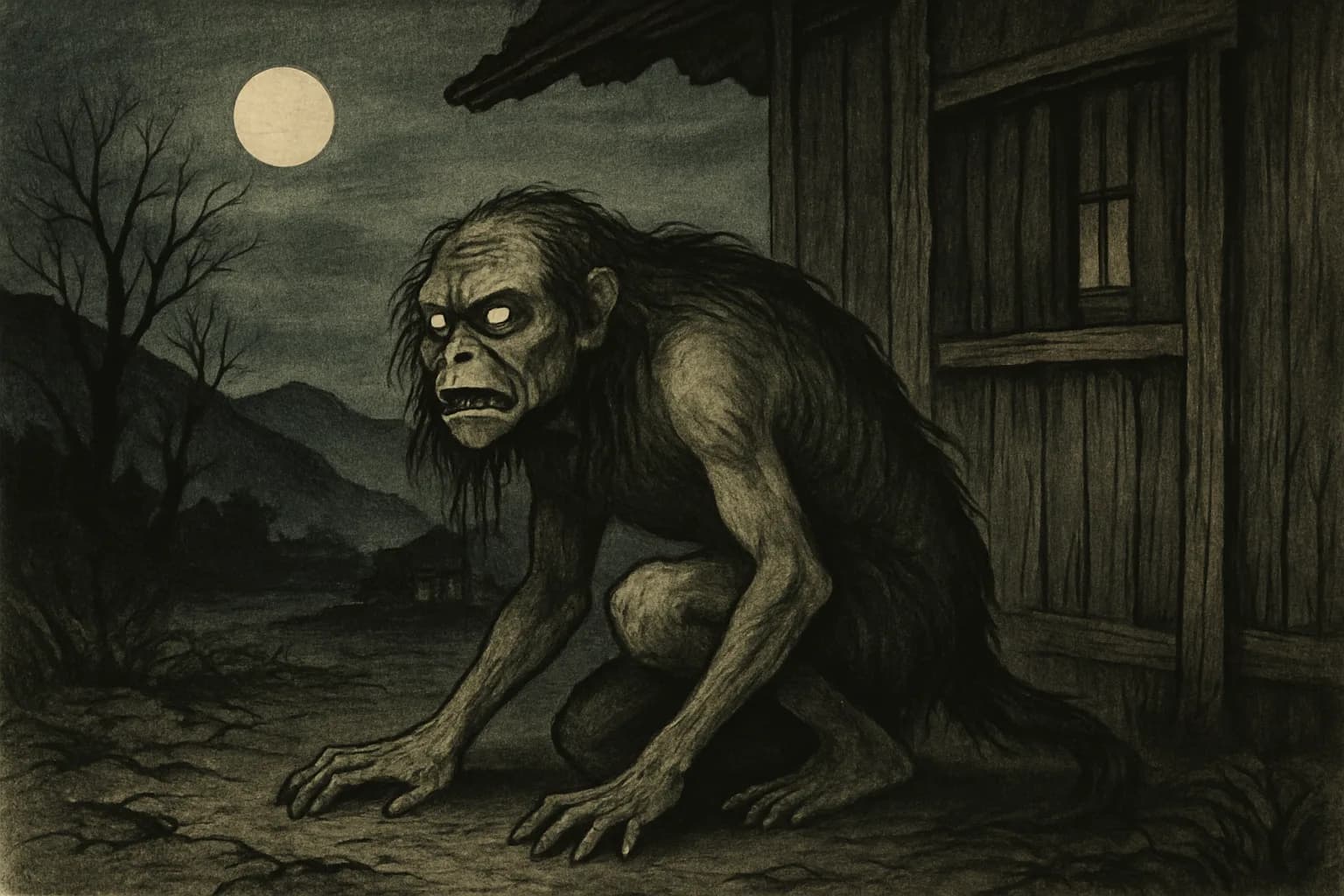
Toriyama Sekien recorded the yamachichi in his Konjaku Gazu Zoku Hyakki, describing and drawing it as an ape-like beast of the high mountains — shaggy, roughly the size of a large dog or small monkey, with a face and posture unmistakably simian. Unlike showier yokai such as the oni or the tengu, the yamachichi carries no weapon, no elaborate costume, no supernatural fire. Its danger is entirely bound up in its ordinariness: from a distance, in poor light, it could pass for an animal that simply doesn't belong this far from any village.
A visitor while you sleep
The yamachichi's one recorded habit is also its most unsettling: it creeps into houses at night and presses itself close to a sleeping person to draw the breath out of their body. Folklore around this act splits on a single hinge. If the sleeper stirs, wakes, or otherwise notices the creature mid-act, the encounter turns in the victim's favor — tradition holds they will go on to live a remarkably long life, sometimes said to reach a hundred years. But if the yamachichi finishes its work unnoticed, the sleeper does not wake again.
It is a rare structure among yokai stories: most monsters are dangerous because you see them. The yamachichi is dangerous because, most nights, you don't.
Rare and nearly impossible to catch
Even within the folklore, the yamachichi is described as scarce — a creature few claimed to have actually seen, and one that moved too fast to be caught or confirmed when it was. That rarity is part of the point. Sudden, unexplained deaths during sleep, and the rarer cases of people waking startled in the night for no clear reason, had a name and a shape to be blamed on, even though almost nobody could say they had truly laid eyes on the thing responsible. It functioned less like a monster you might realistically fight off and more like an explanation villagers reached for after the fact.
Where it comes from
The yamachichi belongs to a broader vein of Japanese mountain folklore in which the wilderness beyond the village is populated by half-glimpsed, animal-shaped beings that interfere with the most vulnerable human moments — birth, illness, and sleep. Tosa's mountains, isolated and thickly forested, were a natural setting for such tales: a place close enough to reach a farmhouse in the night, but wild enough that no one could say for certain what lived there. The breath-stealing motif also reflects an old, widespread instinct to explain sudden nighttime death or sleep paralysis through an external visitor rather than an internal, medical cause — a pattern that shows up, in different costumes, across many cultures' folklore.
Sekien's brief written account is, for most readers today, the entire surviving record of the yamachichi. It never accumulated the kabuki plays, proverbs, or regional festivals that built up around more prominent yokai like the kappa or the tengu, which is part of why it remains so obscure even among people well-versed in Japanese folklore.
Yamachichi today
The yamachichi has stayed mostly within the pages of yokai compendiums and Sekien scholarship rather than crossing into mainstream pop culture — it lacks the merchandising and mascot afterlife of a kappa or the temple statues of a tengu. What it does have is a steady presence in serious yokai reference works, where it's cited precisely because Sekien left so little else to go on: a single ape-like figure in the mountains of Tosa, drawn once, and never fully explained.