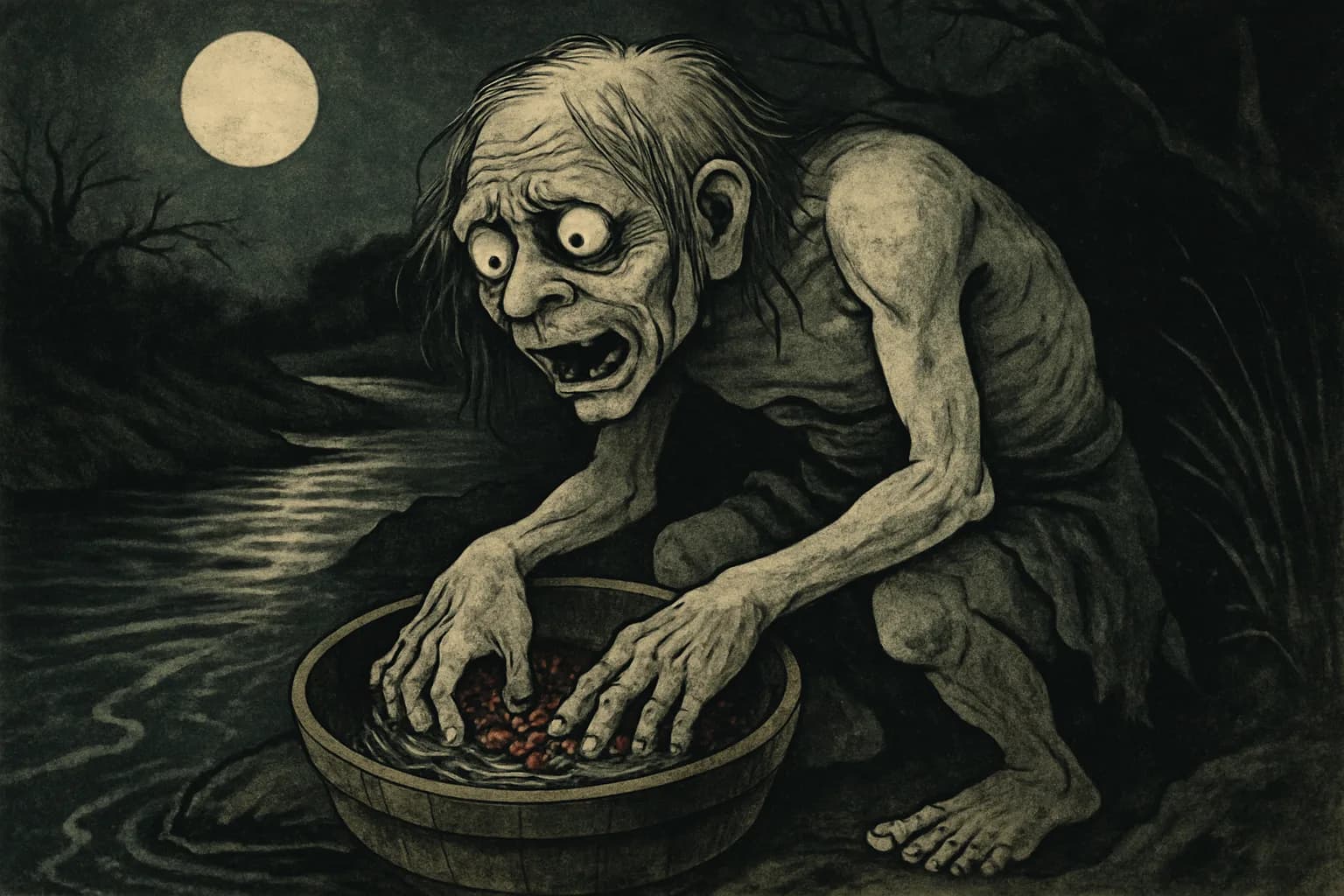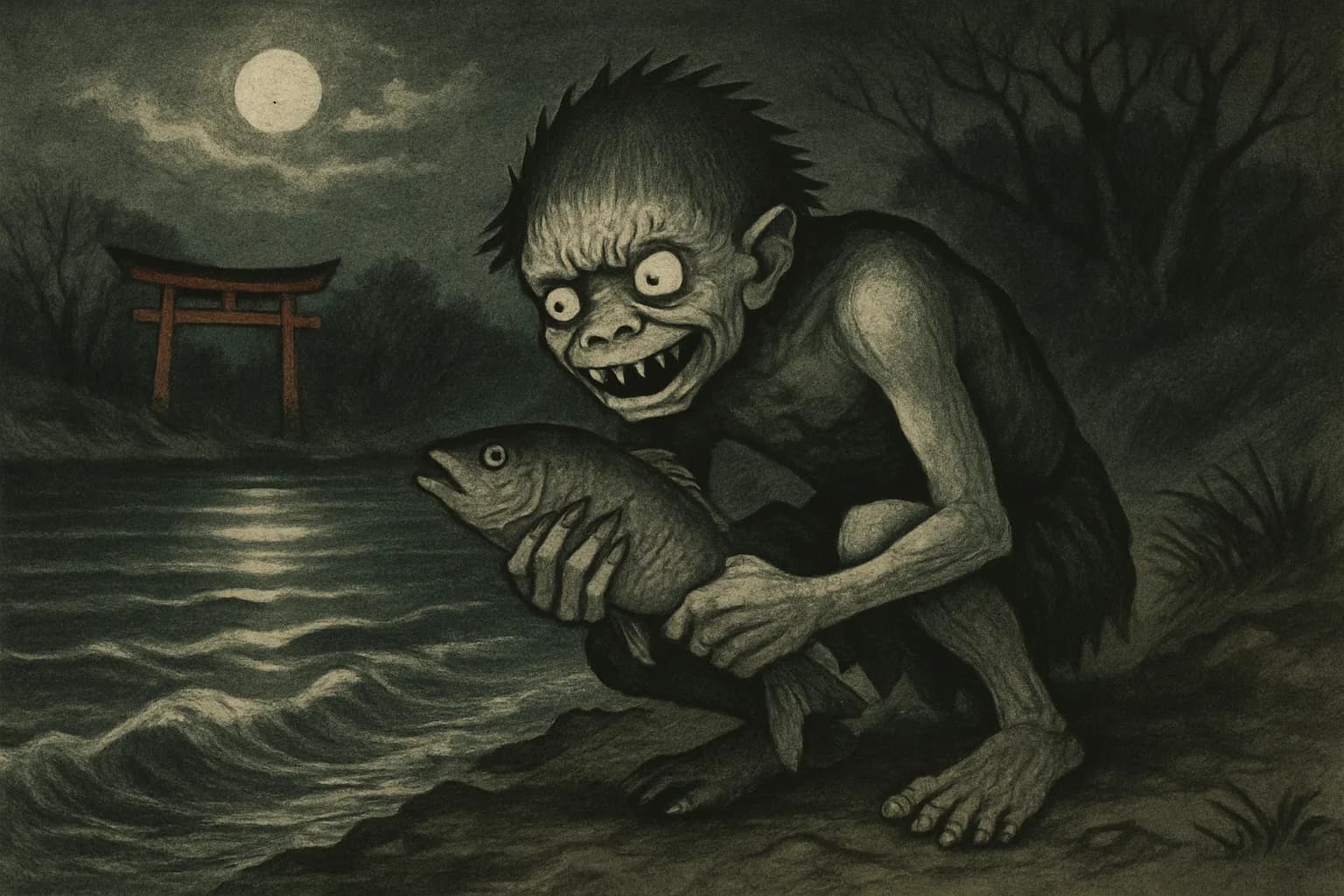
A traveler walking home along a riverbank at dusk hears someone call their name from across the water. No one is there. In villages along the rivers of Kaga and Echigo, that voice belonged to a kawauso — the otter that could borrow a human shape just long enough to lead someone astray, then vanish back into the current before they worked out what had happened.
What does a kawauso look like?
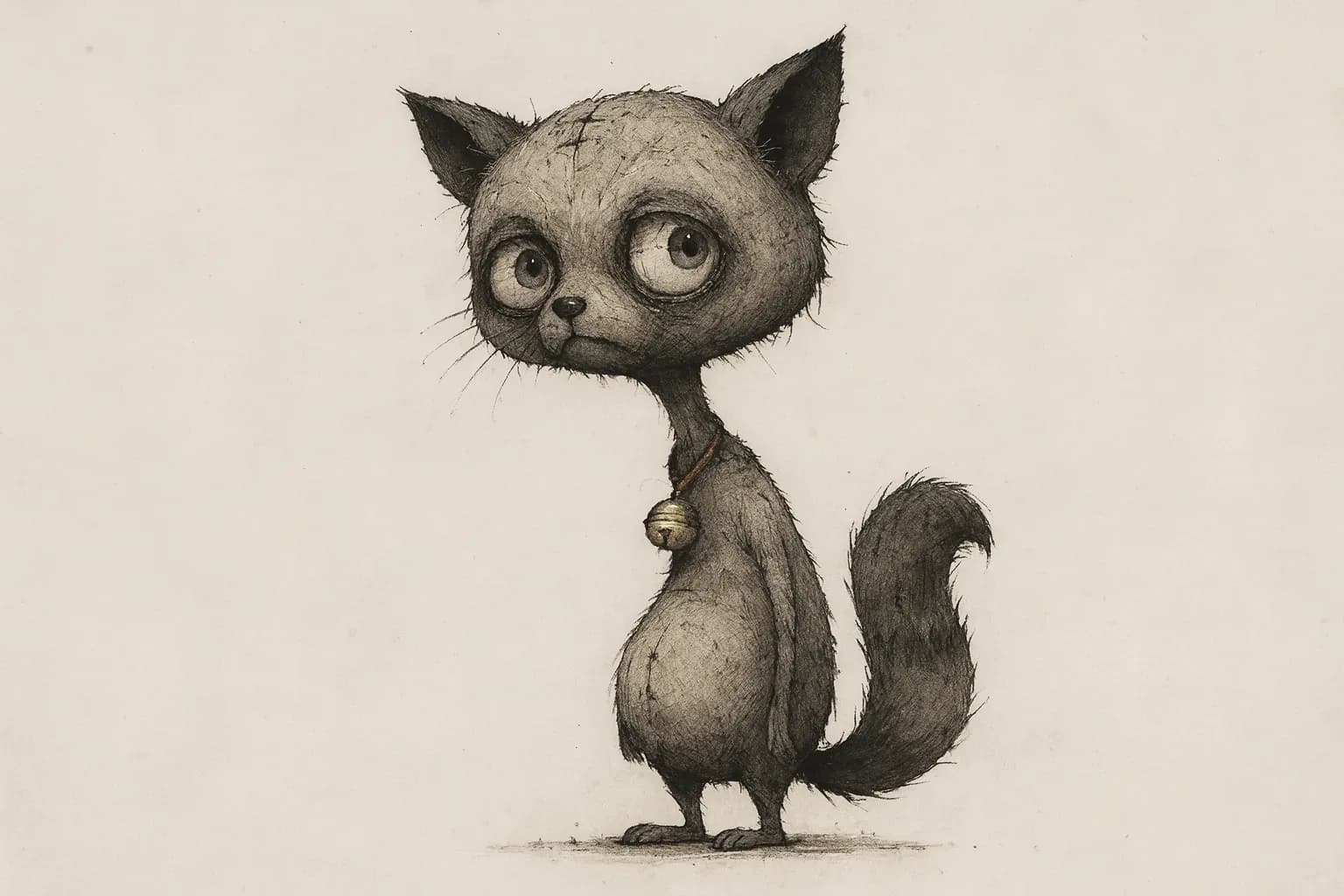
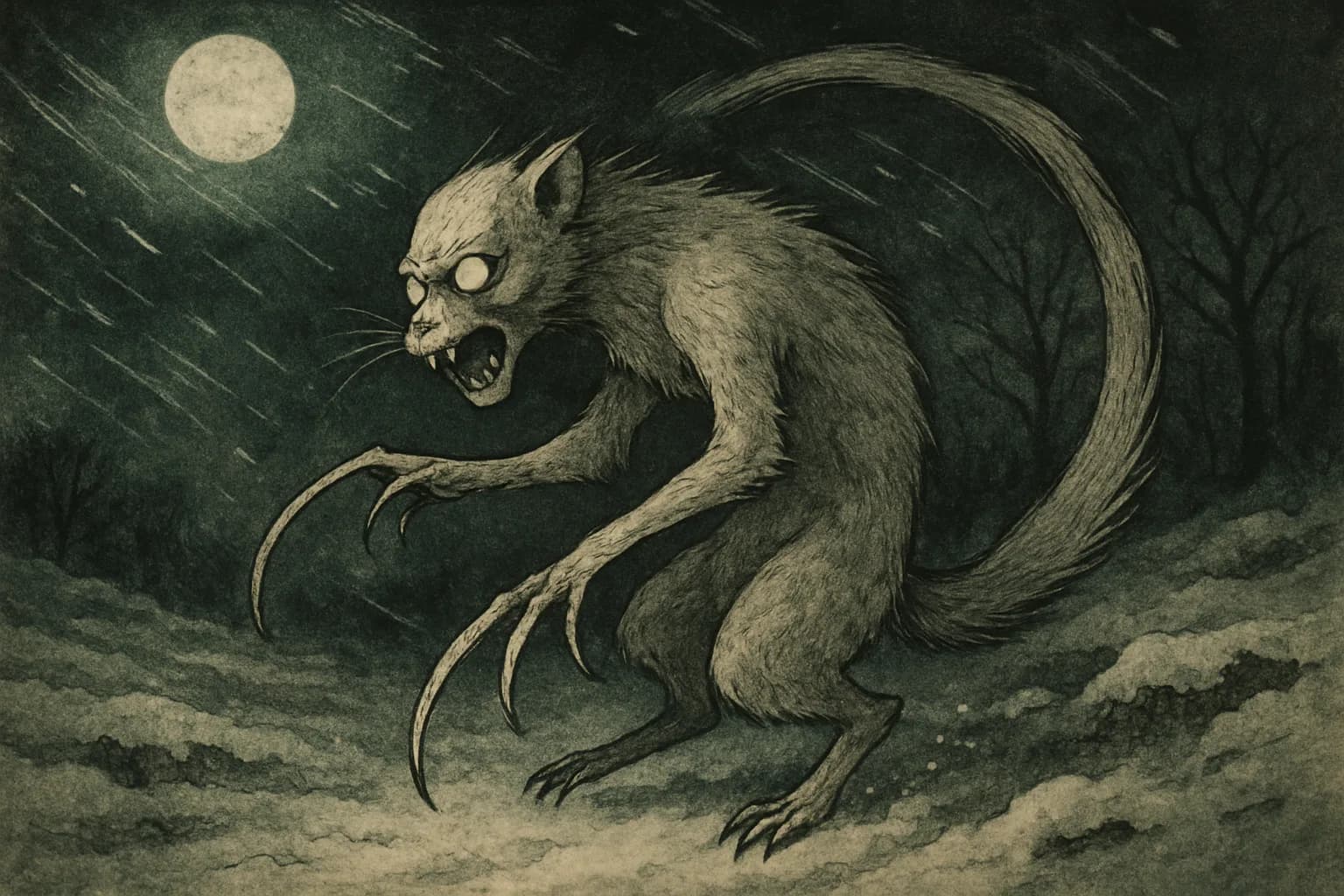
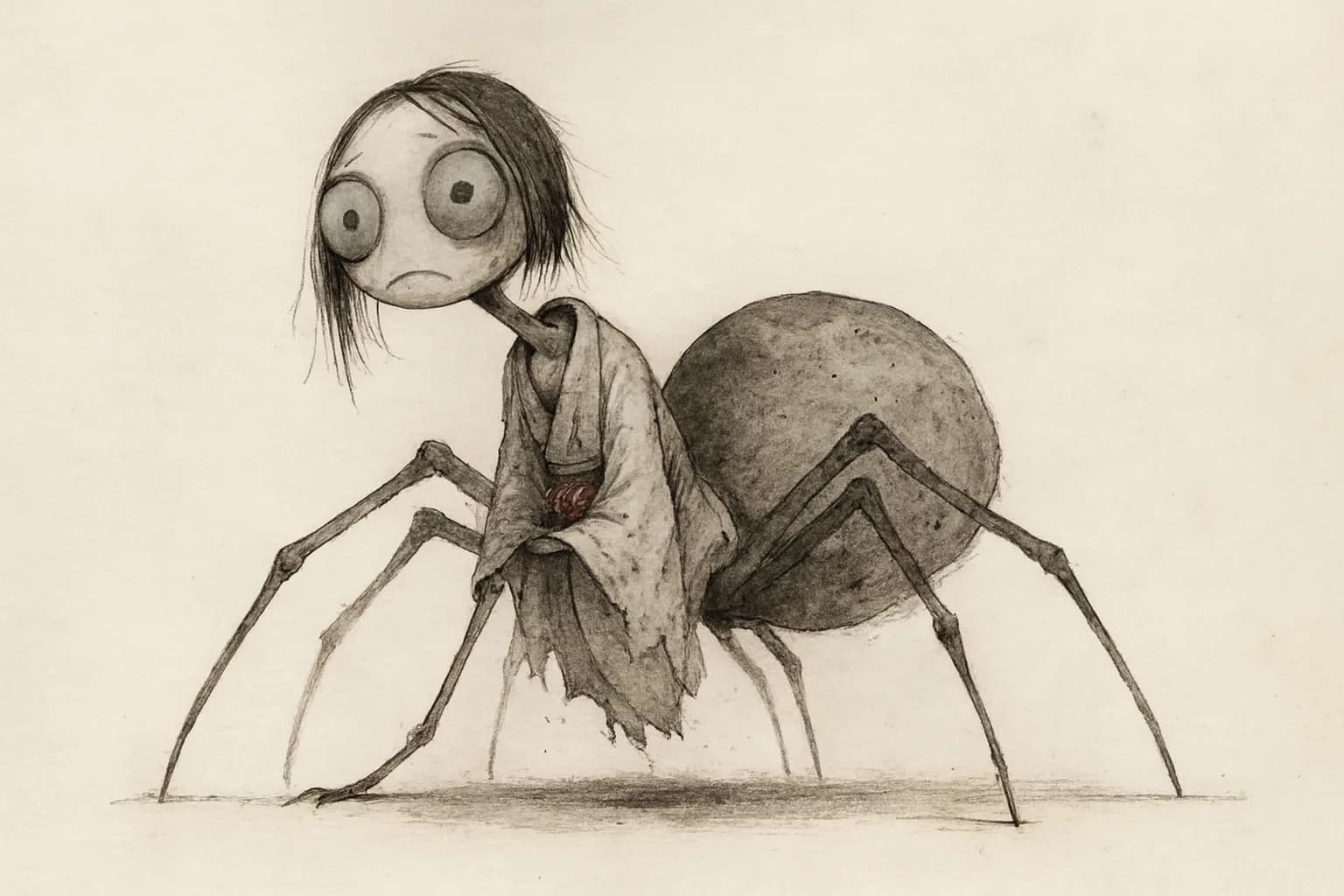
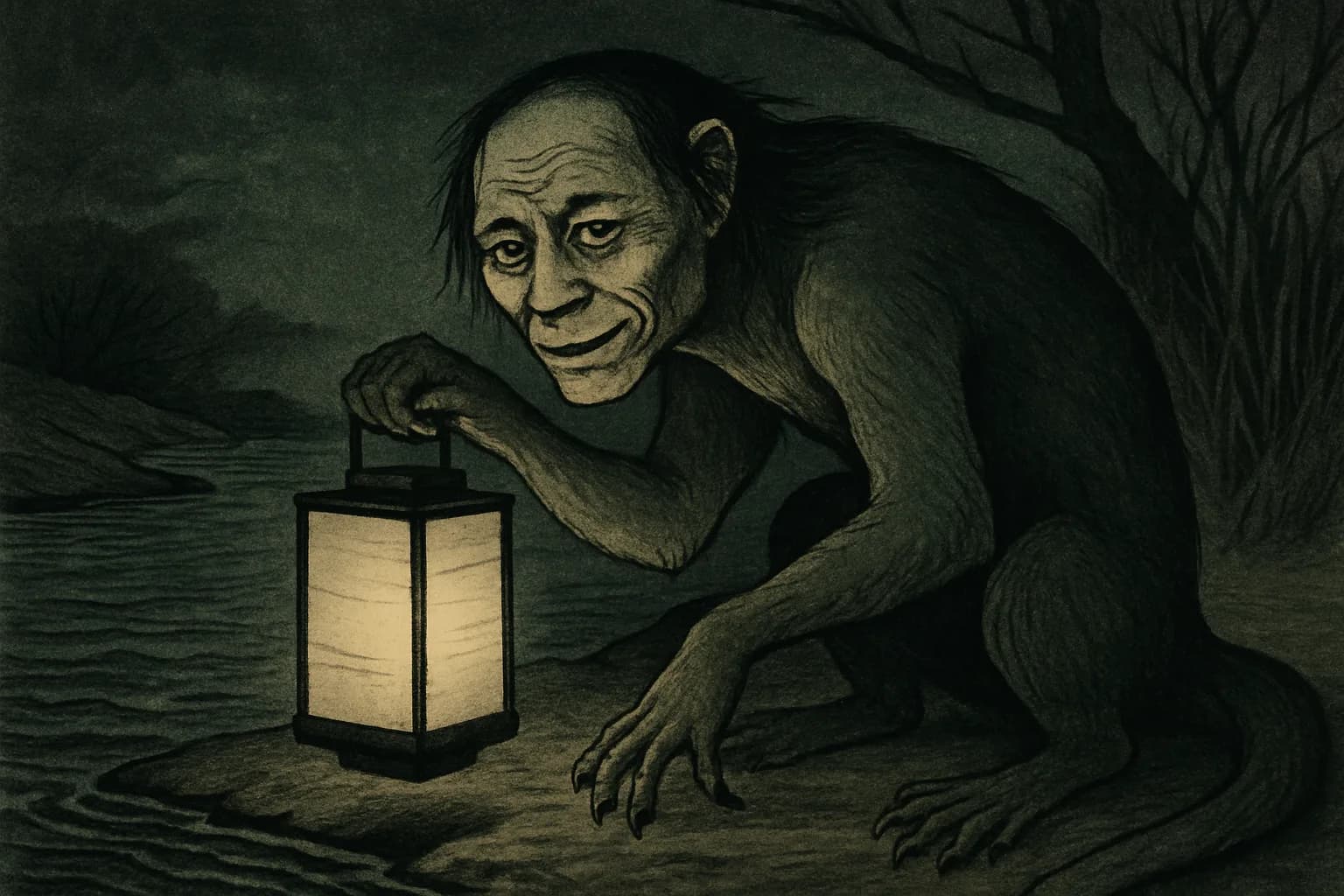
The kawauso started life as an ordinary animal: the Japanese river otter, once common along streams and coastlines across the country. In folklore it keeps the otter's sleek body and whiskered face but adds the tricks of a true yokai — the ability to take on a human shape, usually a young woman or a bald-headed monk, and to make itself seem larger or stranger than any real otter ever was. Toriyama Sekien drew it this way in his 1781 catalogue Konjaku Hyakki Shūi (今昔百鬼拾遺), showing the creature caught mid-transformation, an otter's outline still visible beneath a woman's borrowed form.
A trickster with a smaller reputation
Kawauso never became as famous as the kappa or the fox, but where it does appear, it behaves like a smaller, wetter cousin of both. It calls out names in a familiar voice to draw people off the path. It appears as a beautiful woman to unsettle lone travelers on night roads near the water, and just as often turns into a shabby old monk who asks strange questions before disappearing. Fishermen blamed it for empty traps and stolen catches, and unexplained lights flickering over rivers at night — the same phenomenon credited elsewhere to fox-fire — were sometimes called kawauso-bi, the otter's fire.
Some regional traditions go further and treat the kawauso as a lesser or younger form of the kappa itself, a river spirit that hadn't yet grown into the fully monstrous version. In Kaga and Echigo, where these tales cluster, storytellers sometimes traded the two creatures for each other depending on how serious the mischief was meant to sound.
Where it comes from
The Japanese river otter was a real, widespread animal well into the twentieth century, and the kawauso legend reads as a folk explanation for its more unsettling behavior — the calls that carried oddly across water at night, the sudden splashes with no clear cause, the sense of being watched from the reeds. As with the kappa, an animal genuinely encountered along the water's edge accumulated stranger and stranger stories the less often people actually saw it clearly.
Kawauso today
The animal side of this story has an ending the folklore never anticipated. The Japanese river otter was last confirmed alive in 1979, spotted along the Shimanto River area of Kochi Prefecture in Shikoku, and Japan's Ministry of the Environment formally declared the subspecies extinct in 2012. The yokai has outlasted the animal it was named for, kept alive mainly through Edo-period print collections and the later yokai encyclopedias compiled by researchers like Shigeru Mizuki, which preserved minor, regional figures like the kawauso alongside better-known monsters. The rivers of Kaga and Tosa that once told these stories no longer have the otters to blame.