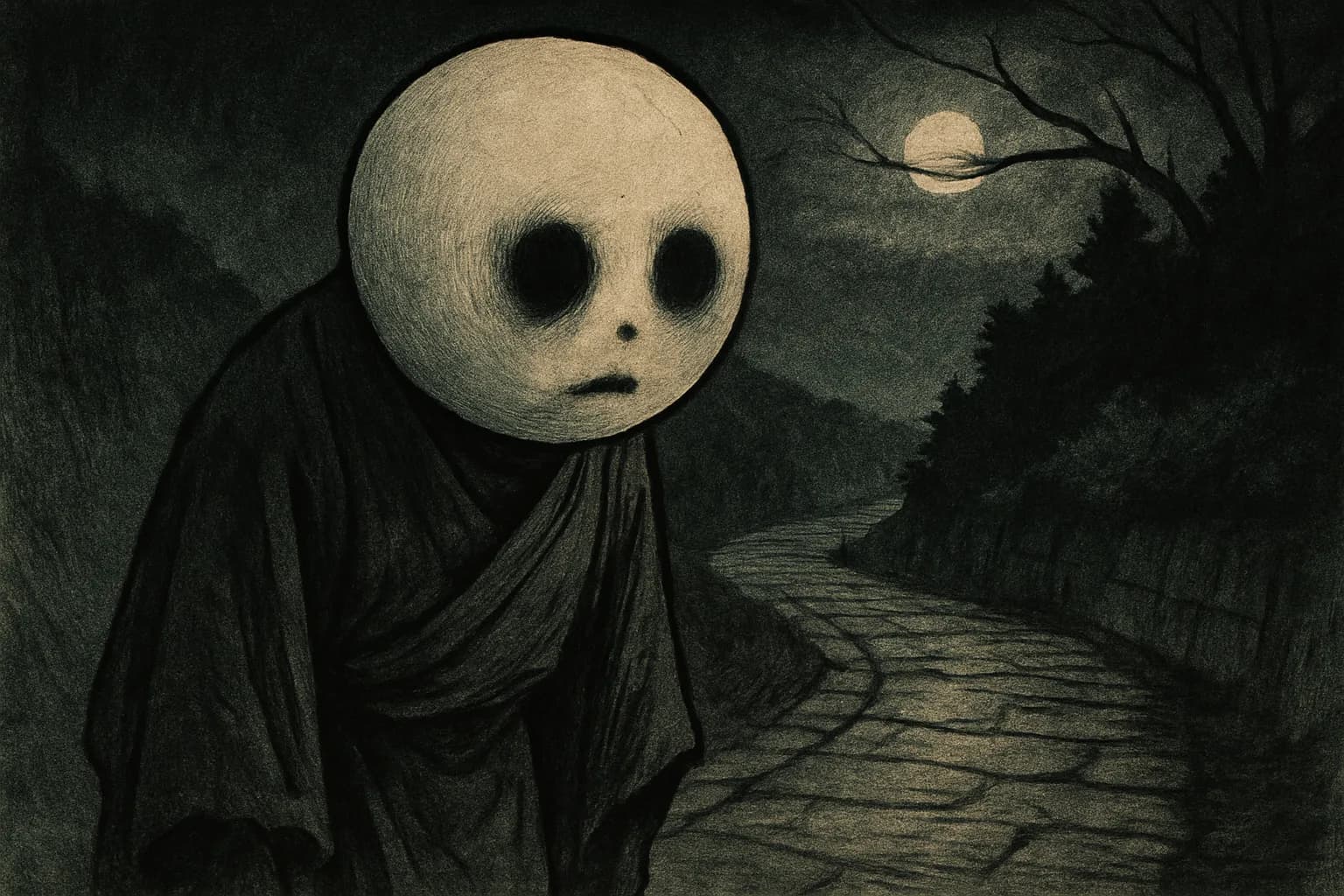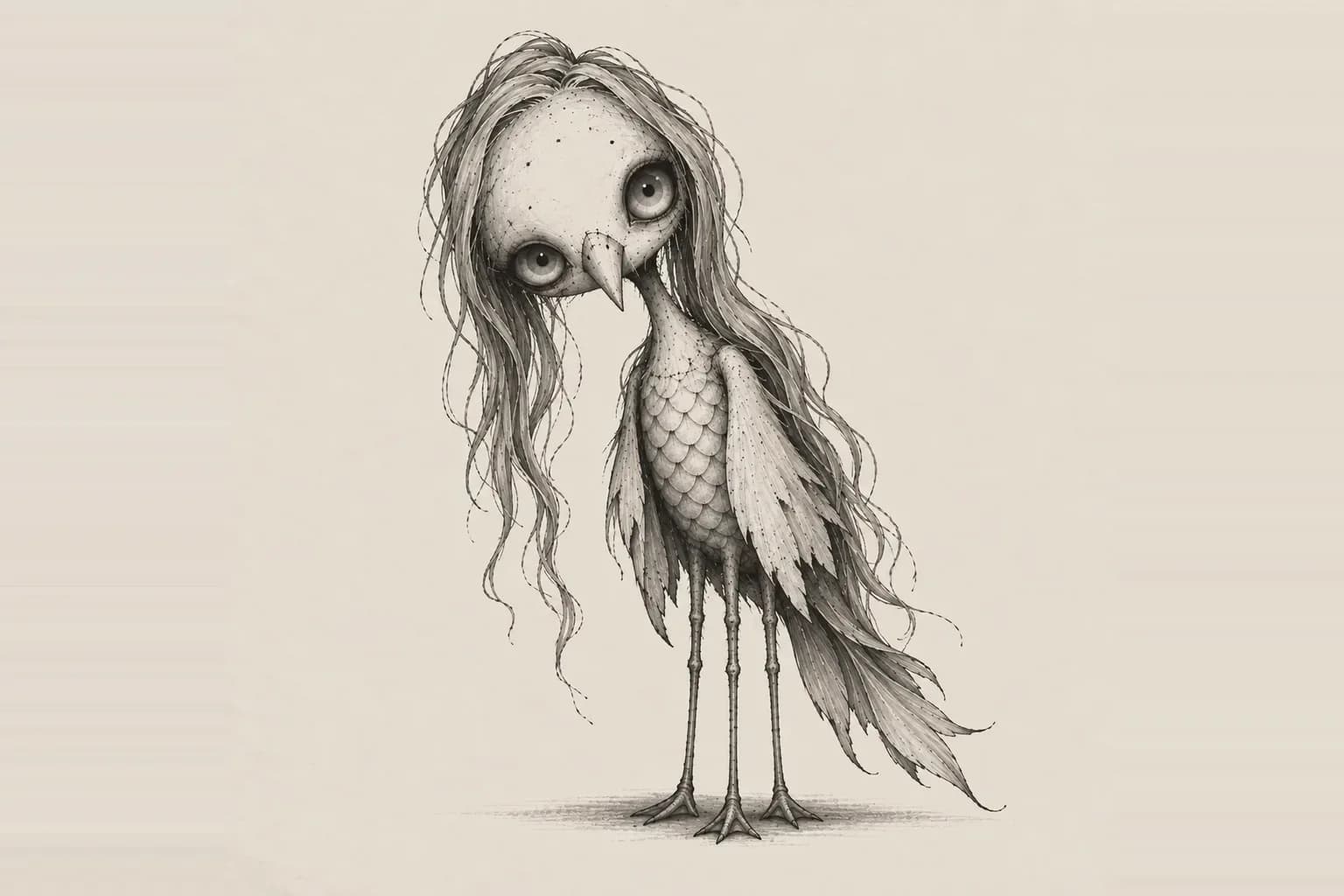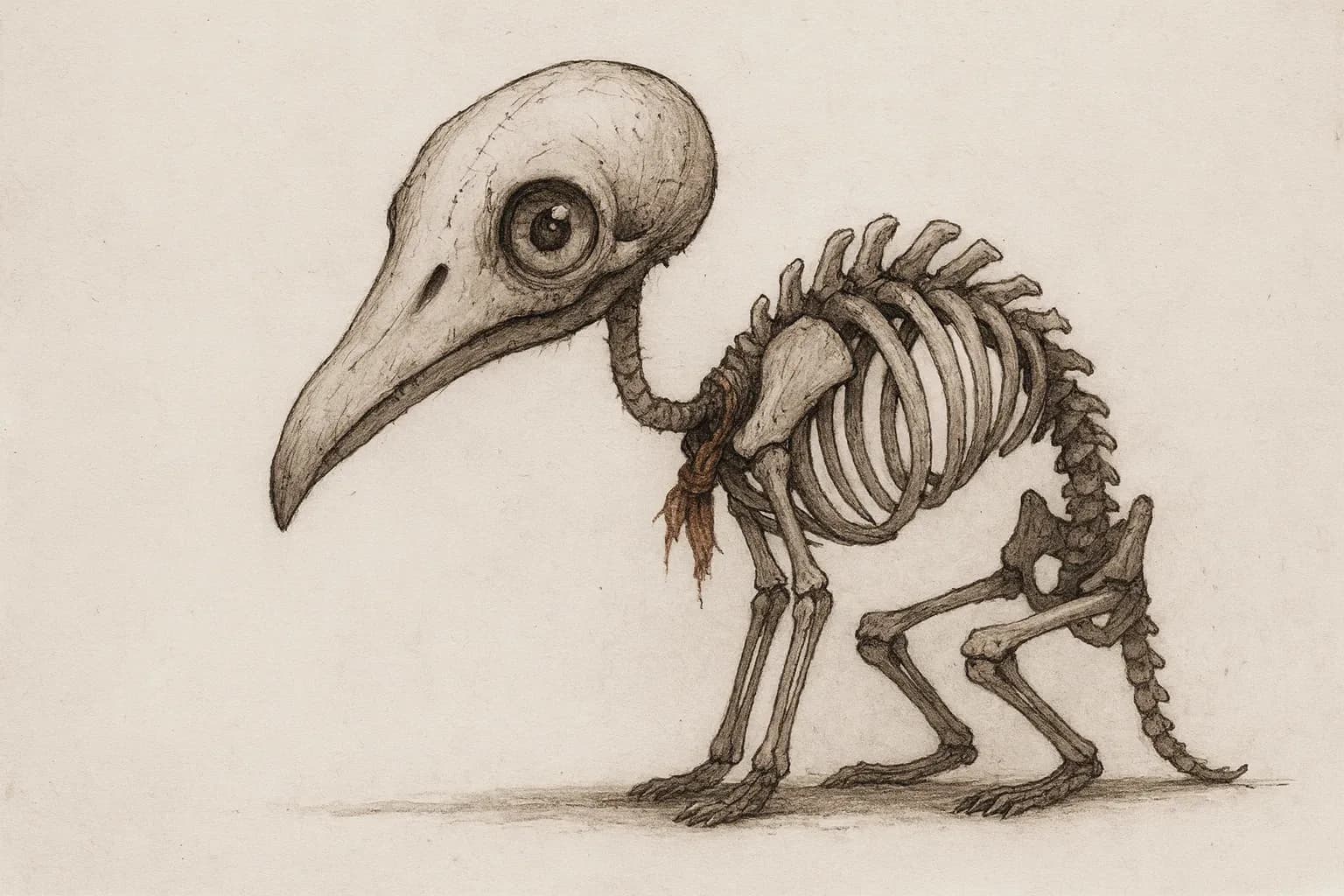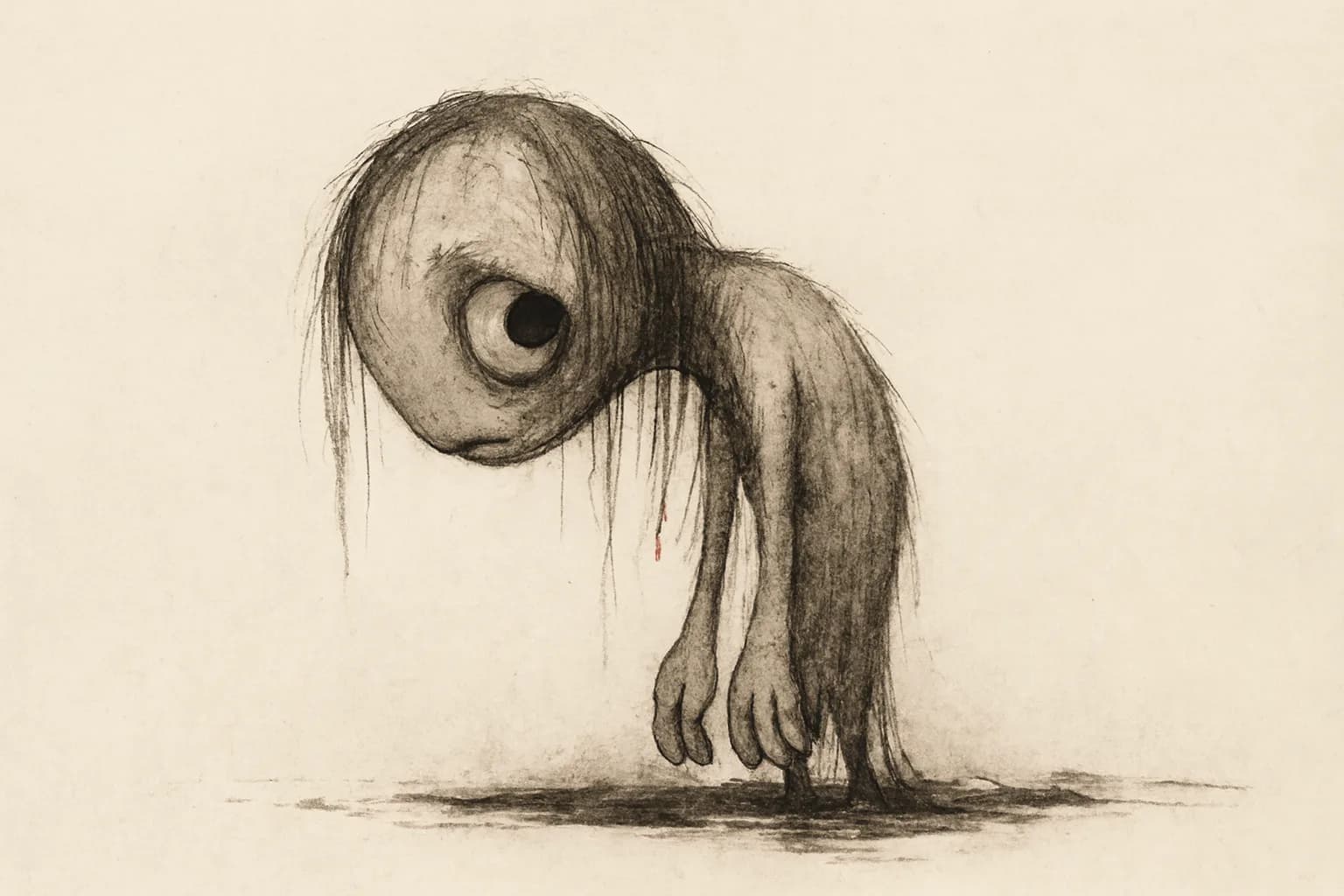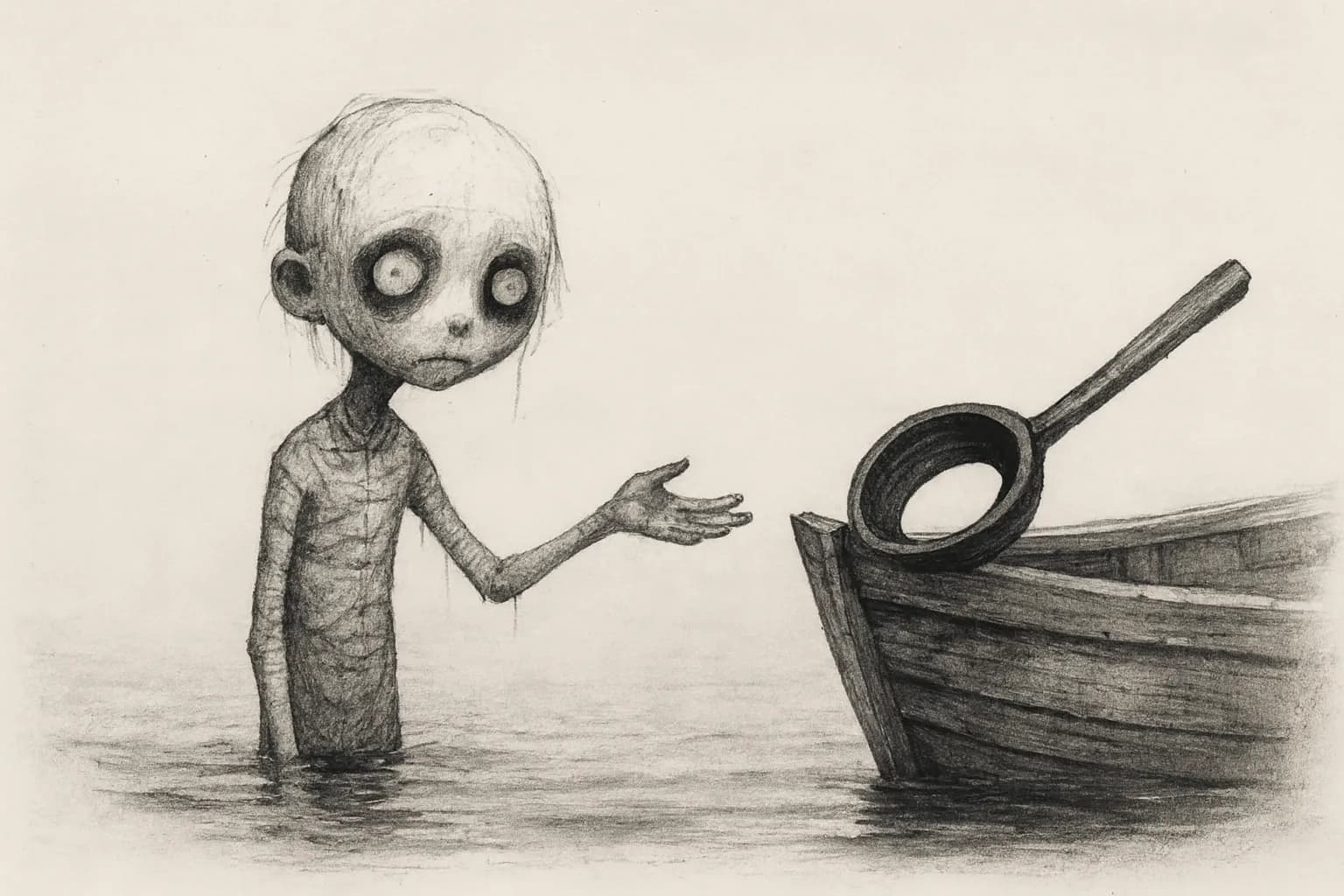
Walk along a ditch or a mountain stream after dark in almost any part of Japan, and old-timers will tell you what to listen for: a soft, wet, rhythmic shoki-shoki — the sound of dried beans being rubbed and rinsed in a colander. There is no one there. There is no water basin, no cook, no bag of beans. The sound is the entire haunting. Azukiarai, "the bean washer," may be the most minimal yokai in the whole folklore — a monster with no confirmed face, made entirely of something you hear from the dark.
A sound, not a shape
Most yokai come with a description — fur, fangs, a number of eyes. Azukiarai mostly doesn't. In the overwhelming majority of accounts collected from villages across Honshu, nobody sees anything at all. A traveler hears the scrubbing sound drifting from a streambank, a drainage ditch, or the dark space under a bridge, and that is the whole encounter. When 18th-century artist Toriyama Sekien included the creature in his bestiary Konjaku Hyakki Shūi (今昔百鬼拾遺, 1781), he still had to give it a body for the page, so he drew a stooped, aged figure crouched at the water's edge with a sieve — but Sekien's own text is careful to note that the sound is what people actually report, and that no two witnesses agree on what, if anything, is making it.
The verse that comes with the sound
In many regions the scrubbing is accompanied by a sung threat, passed down almost like a nursery rhyme:
Azuki togou ka, hito totte kuou ka — shoki shoki. "Shall I wash my beans, or shall I catch a person and eat them? Shoki, shoki."
Folklorists recording oral traditions in the early 20th century found versions of this chant repeated nearly word for word from Tohoku down to Kyushu, with only the local dialect changing. The rhyme does real work: it turns an ambiguous noise into a warning. A child who hears bean-washing sounds near the water after dusk has been given, in that instant, a reason to turn around and go home.
Who is doing the washing?
Village explanations for the sound split in a few directions, and none of them agree, which is itself telling.
Some tellings hold that Azukiarai is the restless spirit of a bean seller or a wandering monk who died at that spot — drowned, murdered, or simply worked to death — and now repeats the last task of his life forever. Others blame it on an animal: a kawauso (river otter) or a weasel splashing and rustling in a way that, heard through reeds at night, resembles scrubbing beans. Otters in particular carry a long reputation in Japanese folklore for making uncanny noises and playing tricks on travelers near water, which made them a convenient, half-plausible suspect whenever a strange sound needed an owner. A smaller number of local variants swap the ambiguous washer for an explicitly monstrous one, sometimes called Azuki-baba (小豆婆, "bean-washing hag"), who is blamed outright for missing children rather than merely rumored to threaten them.
The refusal to settle on one explanation is arguably the point. Azukiarai survives as folklore precisely because it never resolves into a fact you could disprove — it stays exactly as real as the sound you heard.
Where it comes from
Azukiarai belongs to a broad category folklorists sometimes call sound-only yokai — hauntings defined by an audible phenomenon rather than a sighting, alongside things like the phantom footsteps of betobeto-san. Riverbanks and irrigation ditches were genuinely dangerous after dark in pre-modern Japan: unlit, slick, and easy to fall into. A story that keeps people, especially children, away from the water's edge at night has an obvious practical use, and the bean-washing sound gave that caution a memorable, retellable shape rather than a flat rule. The specific choice of azuki beans is domestic and homely — the food itself is used in sweet dishes at festivals and life events — which makes the sound stranger for being so mundane, out of place beside a dark stream instead of a kitchen.
Azukiarai in Japan today
The bean washer has a modest but real modern footprint. It appears as one of the classic entries in illustrated yokai encyclopedias inspired by Sekien's work, and it has turned up as a background creature in the long-running GeGeGe no Kitaro anime, usually true to form: heard rather than seen, identified by that scrubbing sound alone. It has not become a mascot or a plush toy the way the kappa has — there is not much to merchandise about an empty riverbank — but the chant itself still gets quoted in regional folklore collections as one of the more perfectly formed pieces of Japanese oral tradition, a two-line threat still recognizable in a dozen dialects.