Travelers on the riverbanks of Kōchi and Tokushima used to hear the same challenge from a small, hairy stranger: fight me at sumo. The creature issuing it was the shibaten, a child-sized yokai. Folklorists class it as a close cousin of the kappa. Some call it a kind of kappa outright. Accept the match, and you could be wrestling until dawn.
What does a shibaten look like?
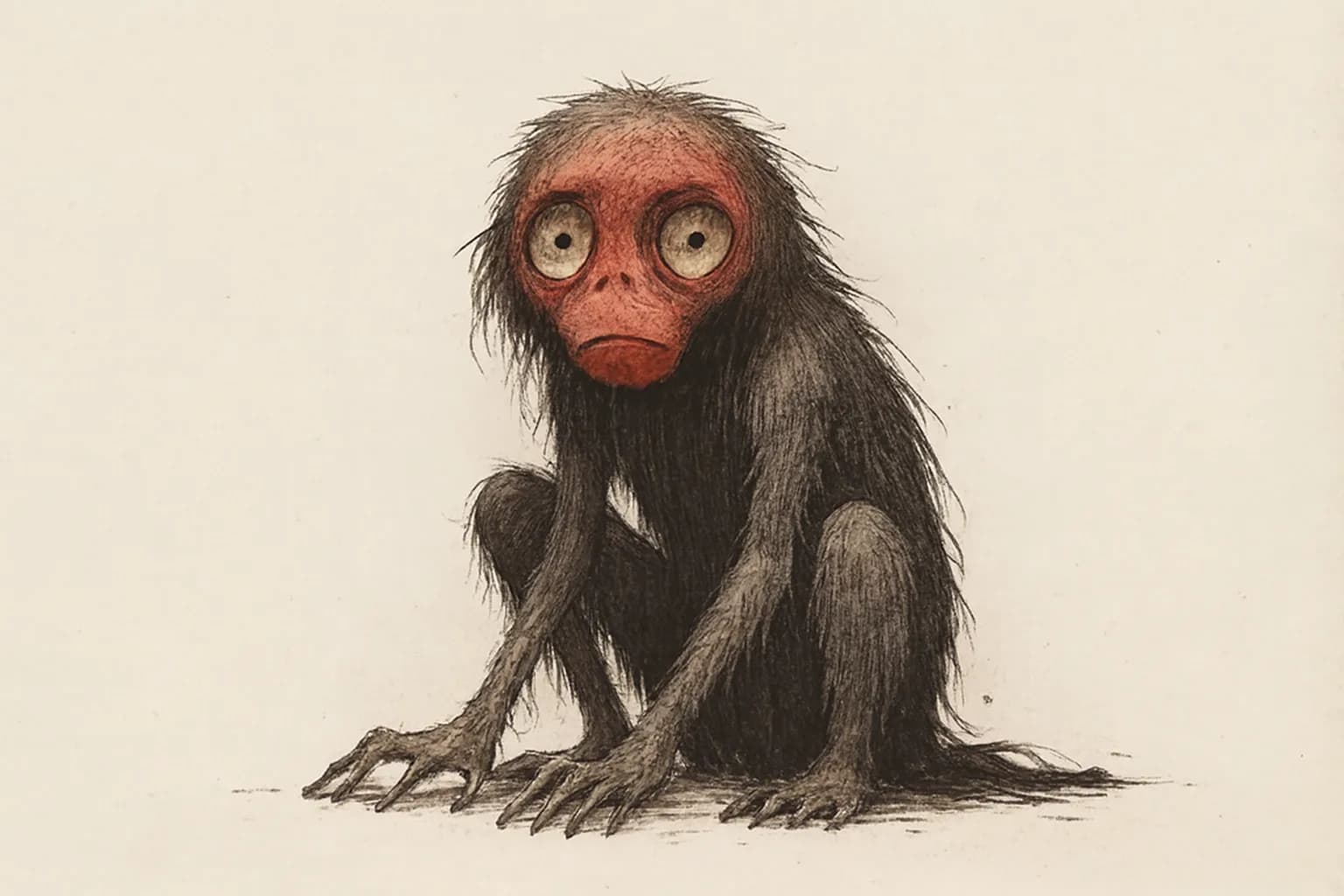
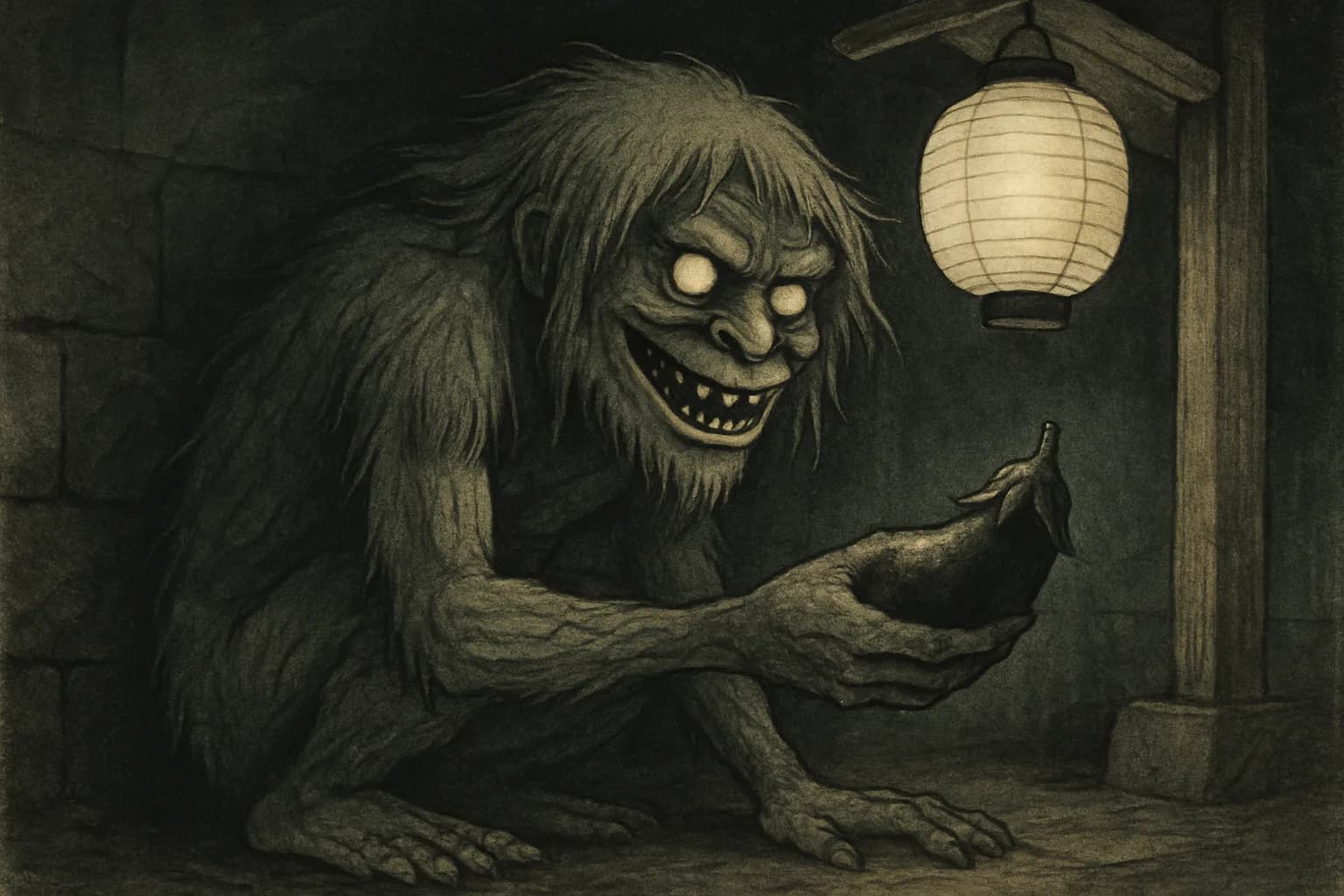
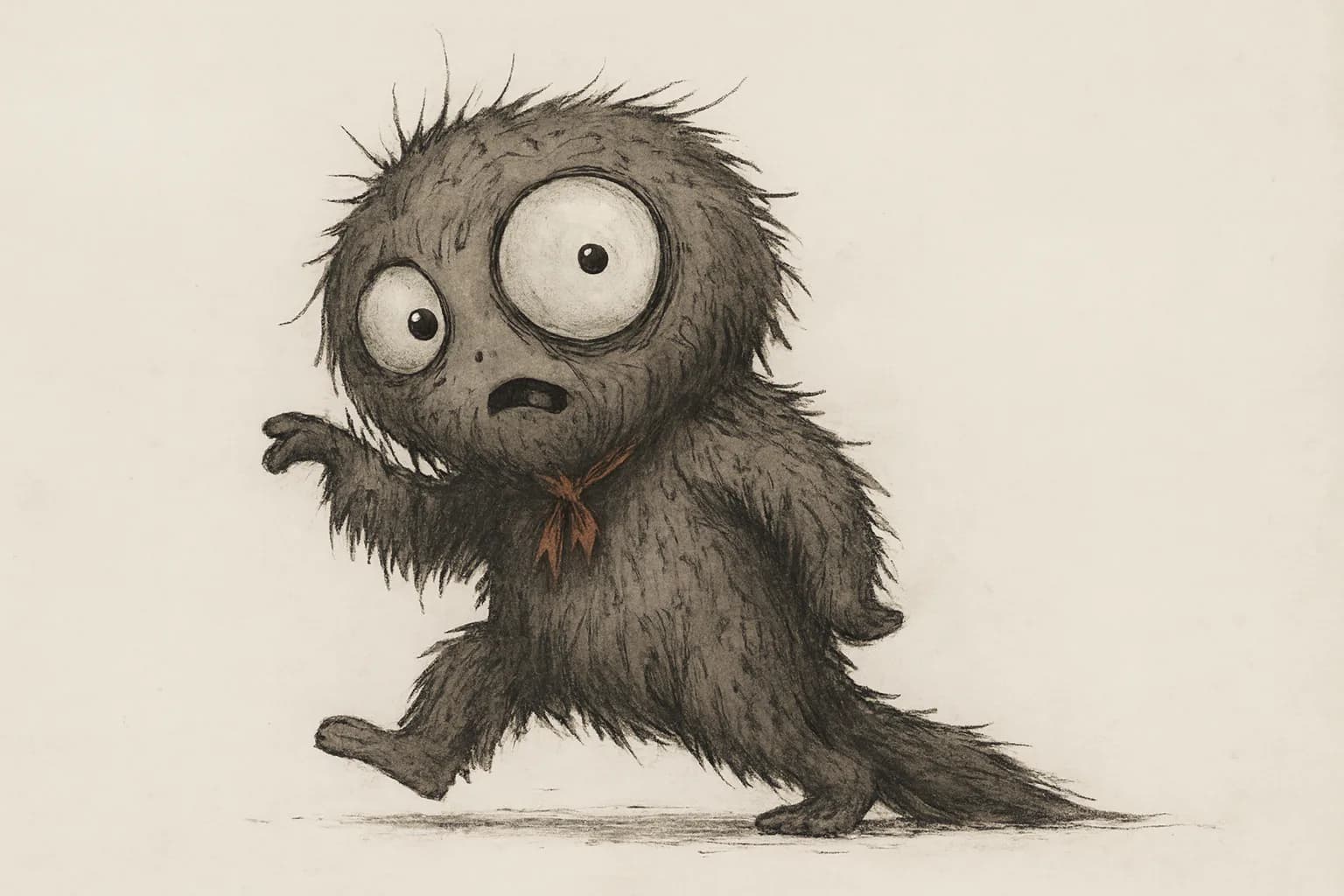
Sources describe it as about a meter tall, roughly the size of a small child. Thick, hairy fur covers its whole body. It turns up on river embankments, the low banks built along Shikoku's waterways. Its strength is said to outmatch a grown man's. That is the whole problem once the match begins.
One detail sets it apart from a true kappa. It resembles the enko, a monkey-like relative of the kappa, but it has no water-filled dish on its head.
A match you cannot walk away from
The shibaten's signature move is simple. It challenges any person it sees to sumo. Accept the challenge, and the match does not end quickly. Tricked into wrestling, a person could find themselves grappling the creature the entire night.
Around Ōkawa village, which still stands on its own today, and Honkawa village, now folded into the town of Ino, the match has a cruel shape to it. The shibaten keeps losing early on. But the longer the wrestling goes on, the more its body swells. Fattened up, it finally throws its opponent to the ground. Other tellings skip the wrestling. The shibaten tricks a traveler into grappling a rock or a bundle of straw, convinced they are fighting the yokai itself.
Not every encounter is physical. In the Iyayama district of Tokushima, deep in the mountains, the shibaten announces itself by sound alone. It makes the sound of a falling tree, or a landslide, to frighten whoever hears it.
From the hills to the river, one day a year
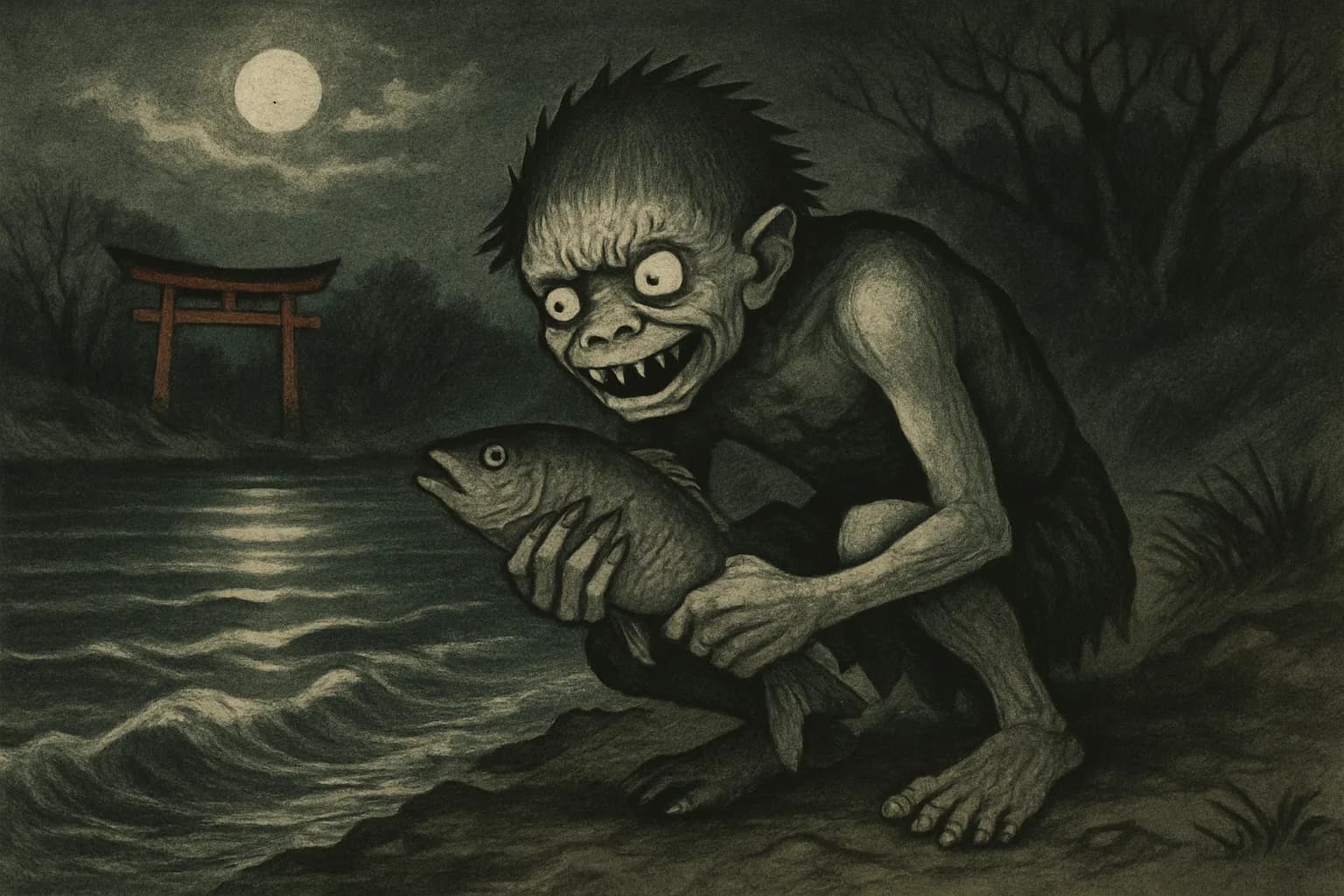
In Tosayama, a mountain district now part of Kōchi City, the shibaten is said to spend most of the year living quietly in the hills. But on the old lunar calendar's sixth day of the sixth month, the date of the local Gion festival, it changes. It leaves the mountains and enters the river. There it becomes an enko, a separate monkey-like water spirit.
Where the name comes from
The fuller form of the name is Shibatengu (芝天狗). The "tengu" half has its own theory behind it. Some researchers think the shibaten was originally thought of as a tengu, a mountain spirit. No source explains how it came to be seen as something smaller. The theory only connects the name back to a tengu origin. A second theory reads "shiba" as simply meaning "small" — the same root said to sit behind the name of the shiba inu dog.
Shibaten today
A picture-book called Shinsensei Ichidaiki (新先生一代記) carries an illustration labeled simply "Shibaten" (芝天).
The shibaten has mostly stayed a local figure. It is known in Kōchi and Tokushima, not nationwide the way the kappa is. Even so, word of it has traveled. On April 1, 2015, the Tokyo Shimbun, a paper based far away in the Kanto region, ran an April Fool's joke article. It asked whether "Tosa's legendary yokai Shibaten" had been sighted again. An old river challenge, it turns out, can still get a laugh out of readers who have never been near the river it comes from.