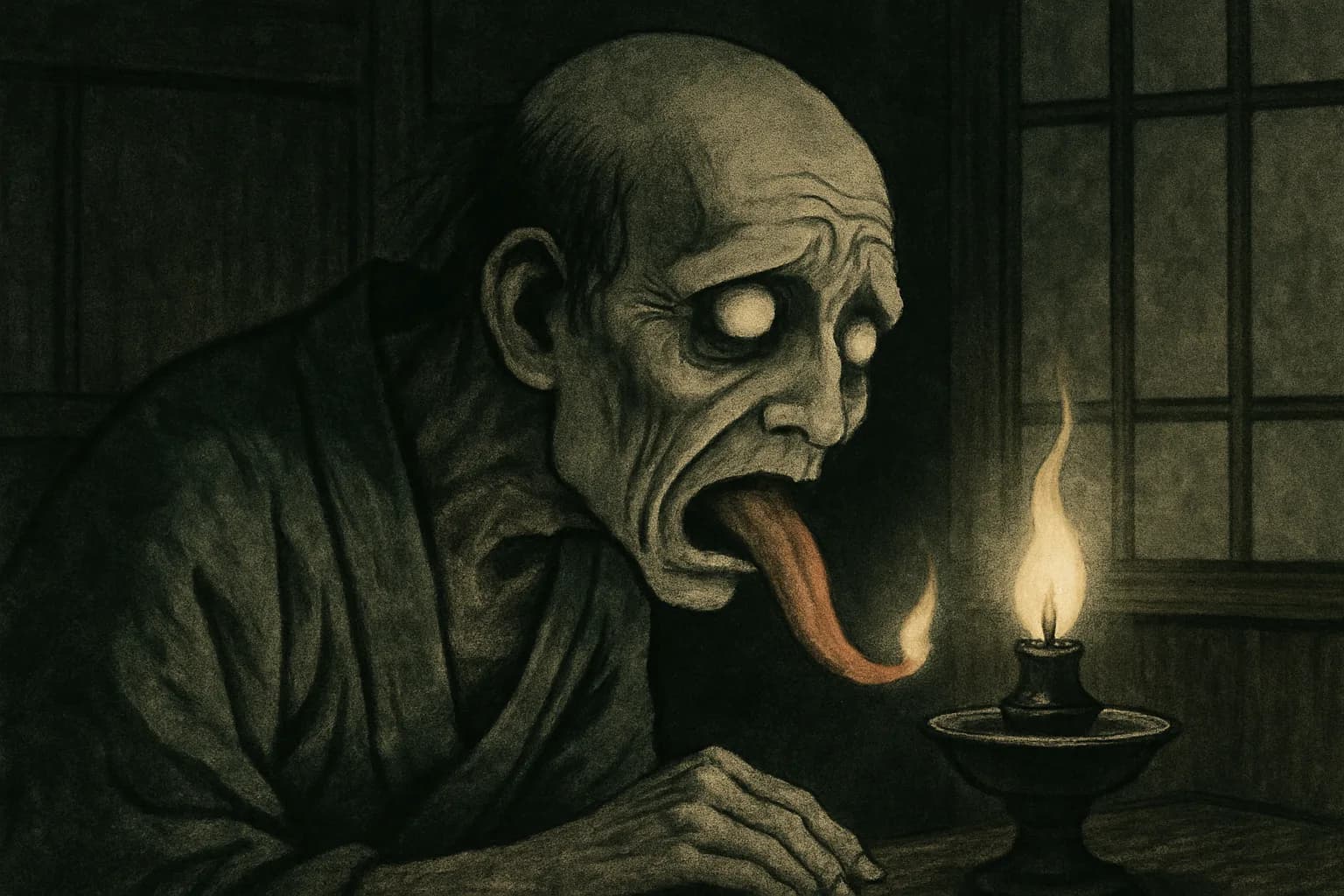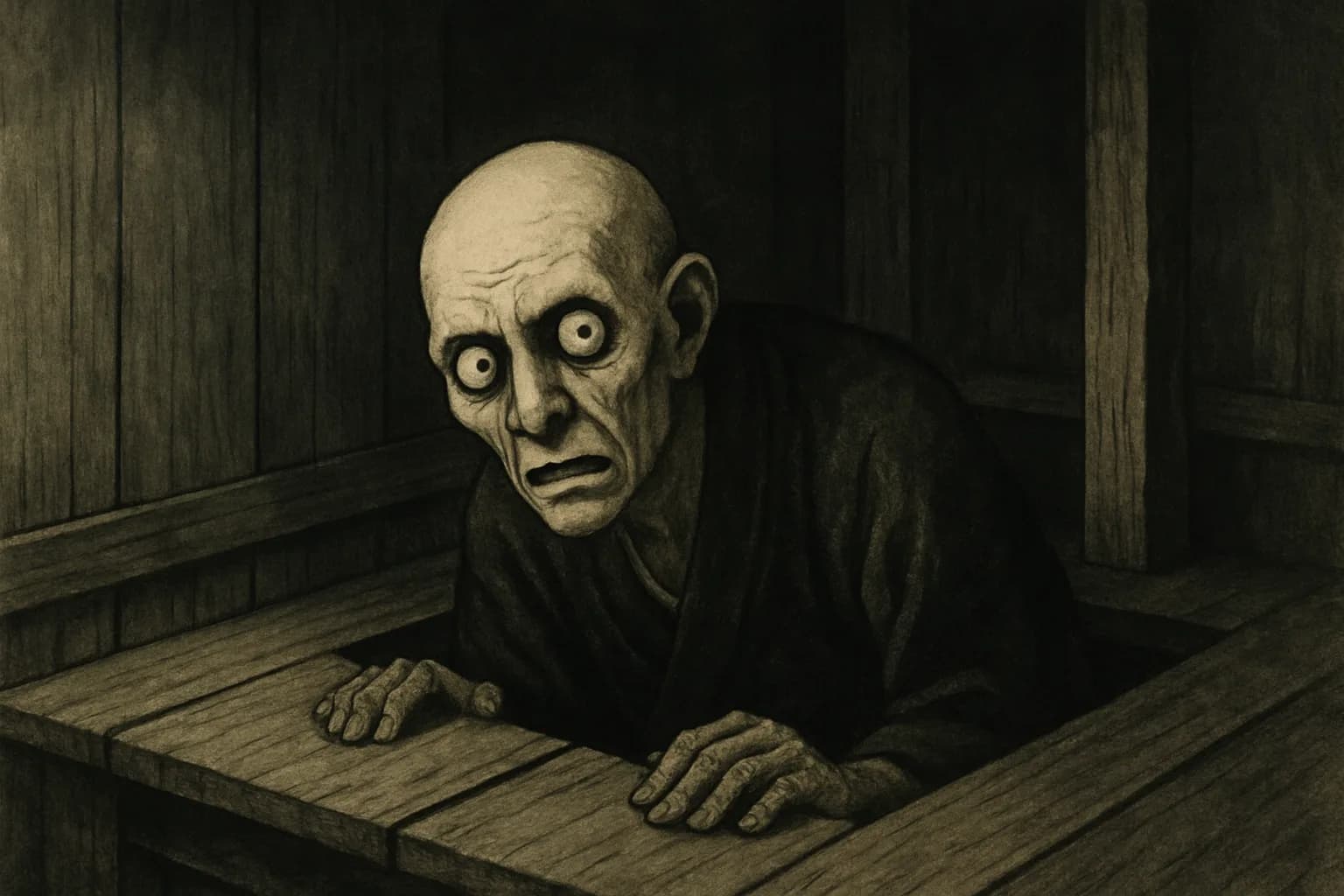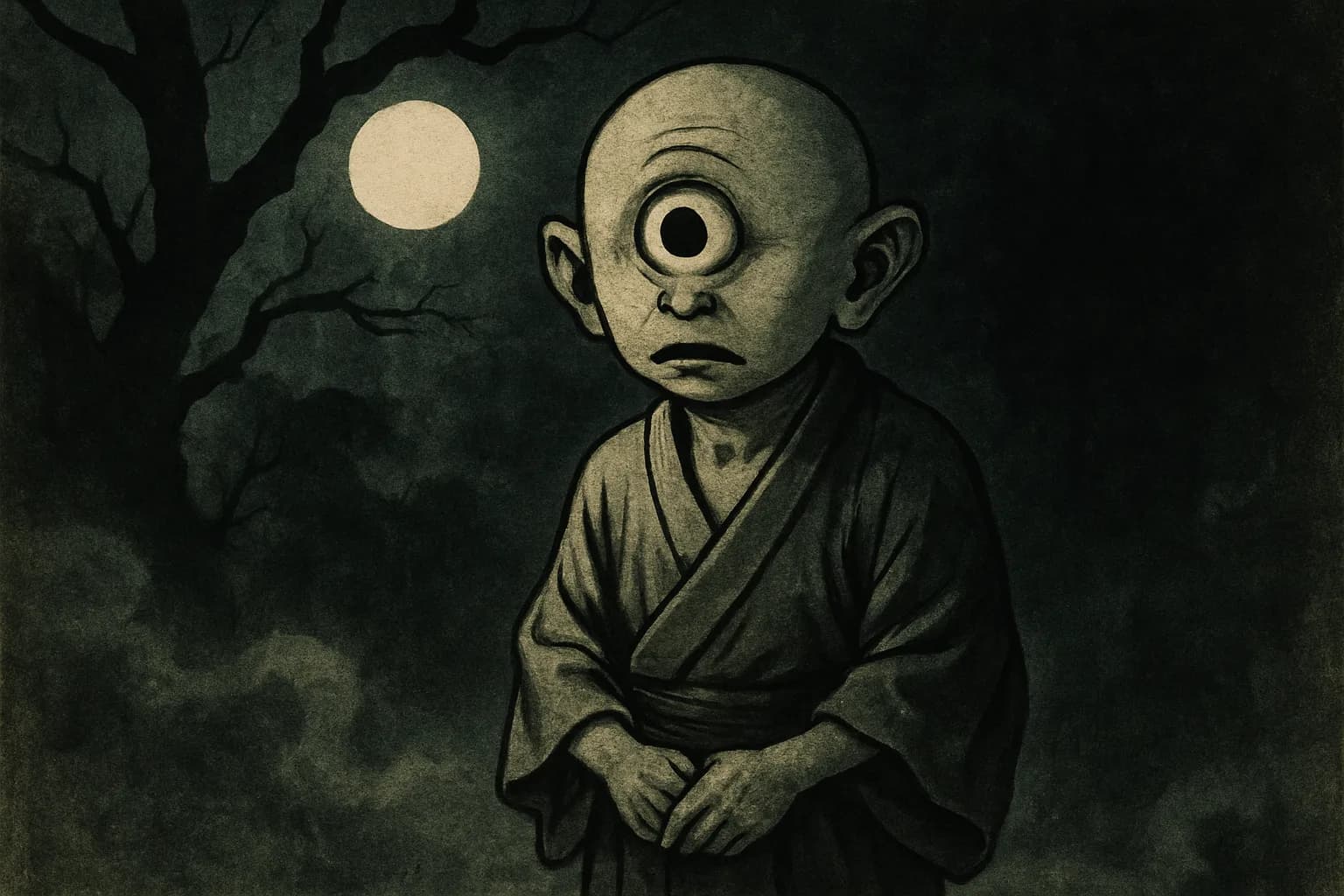
Leave a bathtub unscrubbed in old Edo and, by tradition, you weren't just inviting mildew. You were inviting the akaname — a small yokai whose entire existence is built around one job: slipping into a filthy bath after dark and licking the scum clean with a long, wet tongue. Its name is the job description. 垢 (aka) is the grime and body-soil that collects in a tub or drain; 嘗 (name) means "to lick." Put together, it is simply the grime licker.
What does it look like?
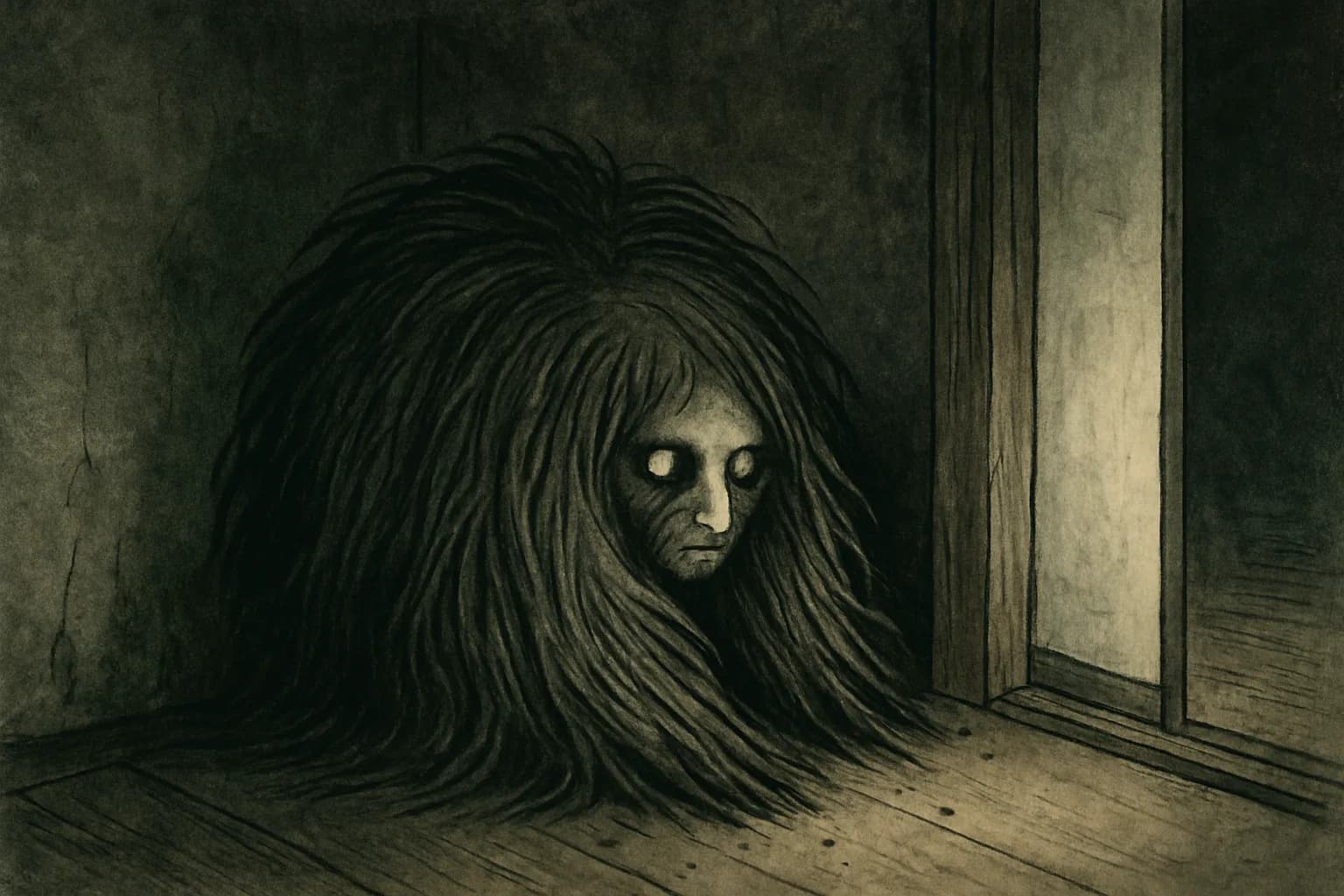
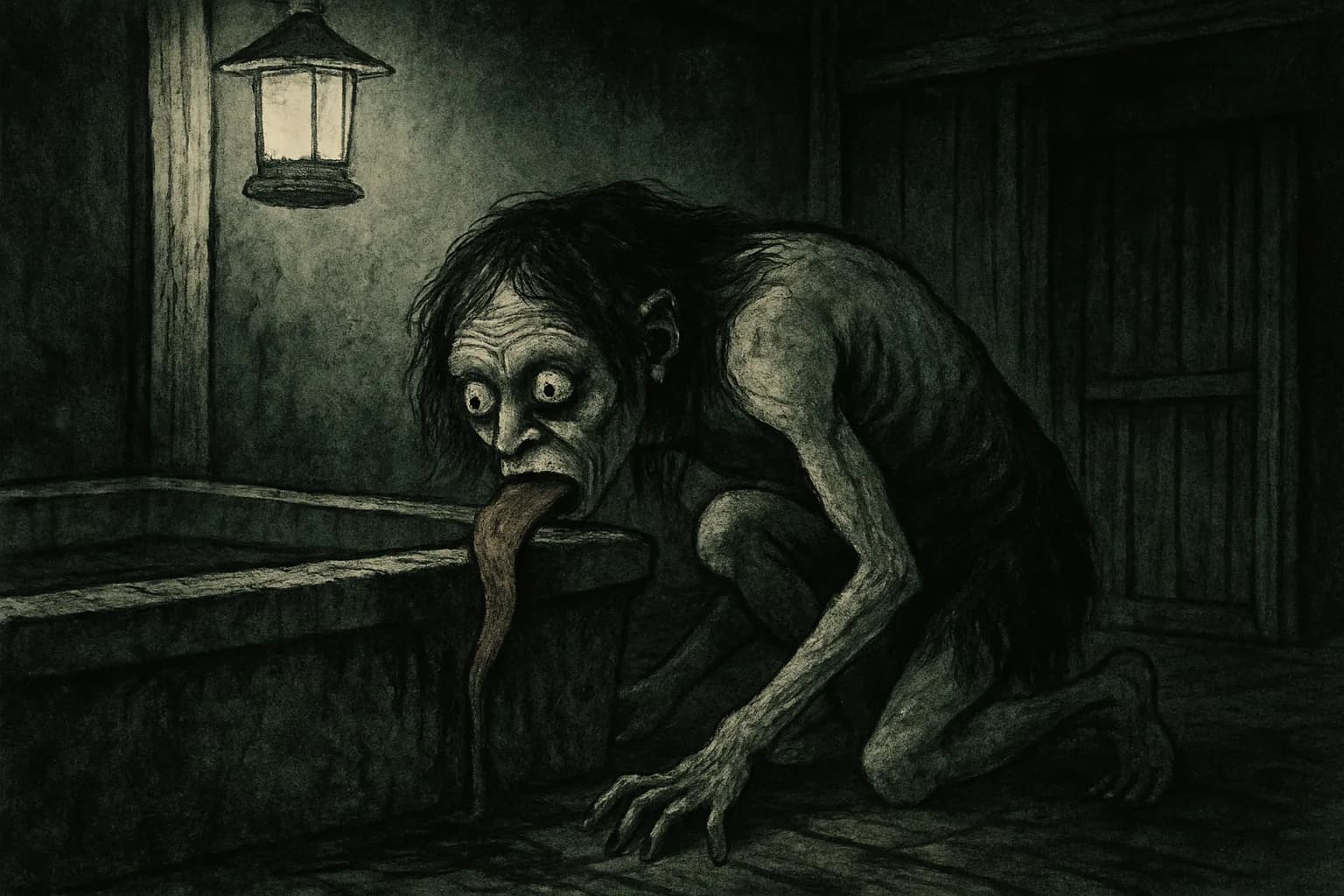
Toriyama Sekien drew the akaname in his 1776 picture book Gazu Hyakki Yagyō ("The Illustrated Night Parade of a Hundred Demons") as a small, unkempt figure crouched at the edge of a bath, tongue extended toward the standing water. It's usually described as child-sized, with wild, matted hair, reddish or grubby skin, and long claw-like fingers — a creature that looks exactly like something that has been living in the damp, unclean corners of a bathhouse. There's no armor of scales or shell here, no dramatic silhouette; it's built to be small enough to fit into the parts of a bath a person would rather not think about.
A job nobody else wants
The akaname's behavior is almost entirely captured by its name. At night, once the household or bathhouse has gone quiet, it creeps in and licks the residue left behind in the tub, along the floor, or around the drain — the soap scum, the skin oil, the general grime of a bath used all day and cleaned by nobody. It doesn't attack, curse, or steal anything. It isn't drawn to wealth or beauty, only to filth.
That narrow appetite is what makes it memorable. Most yokai stand in for a danger — drowning, getting lost on a mountain path, a fever no one can explain. The akaname stands in for a chore.
No monster to fight
Unlike river spirits or mountain ogres, the akaname comes with no charm, prayer, or trick to ward it off, because Edo-period tellers didn't really need one. The folklore does the persuading on its own: keep the bath clean, and there is nothing here to lick. Leave it dirty, and something will notice. The threat is less "monster in the dark" and more "someone — or something — is watching how well you keep house," which made the akaname a useful bit of moral pressure to pass on to children too young to be lectured about hygiene directly.
Sekien catalogued a close cousin in the same series: the tenjōname, or "ceiling licker," said to leave the dark stains sometimes found on the ceilings of old houses and temples. Between the two, Edo-period Japan had a yokai for nearly every surface a household failed to keep spotless.
Where it comes from
The akaname belongs to a distinct strain of Edo yokai lore: creatures invented not from a frightening natural event but from an everyday domestic irritation, given a face by an illustrator working through the hyakki yagyō ("night parade of a hundred demons") tradition. Public bathhouses, or sentō, were central to daily life in Edo-period cities, where most homes had no bath of their own. A shared tub that wasn't scrubbed regularly was a real, unglamorous problem — and the akaname turned that problem into a character, one Sekien could sketch and caption alongside far more fearsome company in his four-volume bestiary of yokai.
Scholars of yokai folklore generally read figures like the akaname as products of Sekien's own inventiveness working from popular sayings and wordplay rather than as creatures with a long oral tradition behind them, which is common among the "minor" entries in his picture books. That doesn't make it less real as folklore — it simply means its life began on the page, in ink, rather than passed mouth to mouth in a village for centuries first.
Akaname today
The akaname never became a bogeyman worth building shrines to placate, and unlike the kappa or the oni it has no cucumber, no dish of water, no sumo trick attached to it. Its afterlife is a quieter one: it's one of the hundreds of yokai preserved because Shigeru Mizuki, working centuries after Sekien, spent much of his career compiling exhaustive illustrated encyclopedias of Japanese yokai — reference works that kept minor figures like the akaname documented and searchable rather than forgotten in an old woodblock-printed book. It surfaces today mostly in that context: yokai dictionaries, folklore art books, and the steady modern interest in Sekien's original four-volume catalog, where it sits a few pages away from far more famous names, waiting in the corner of the bath.