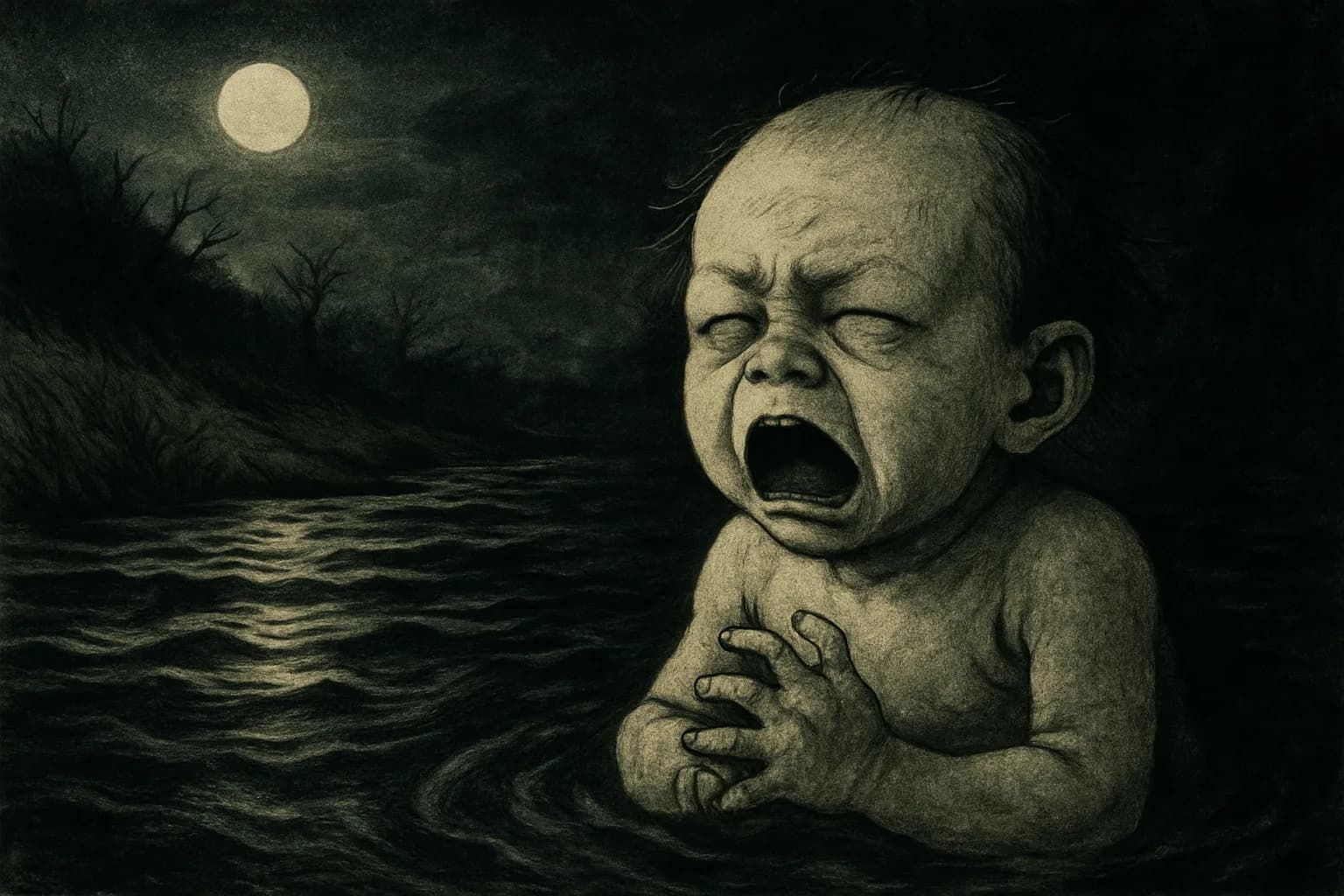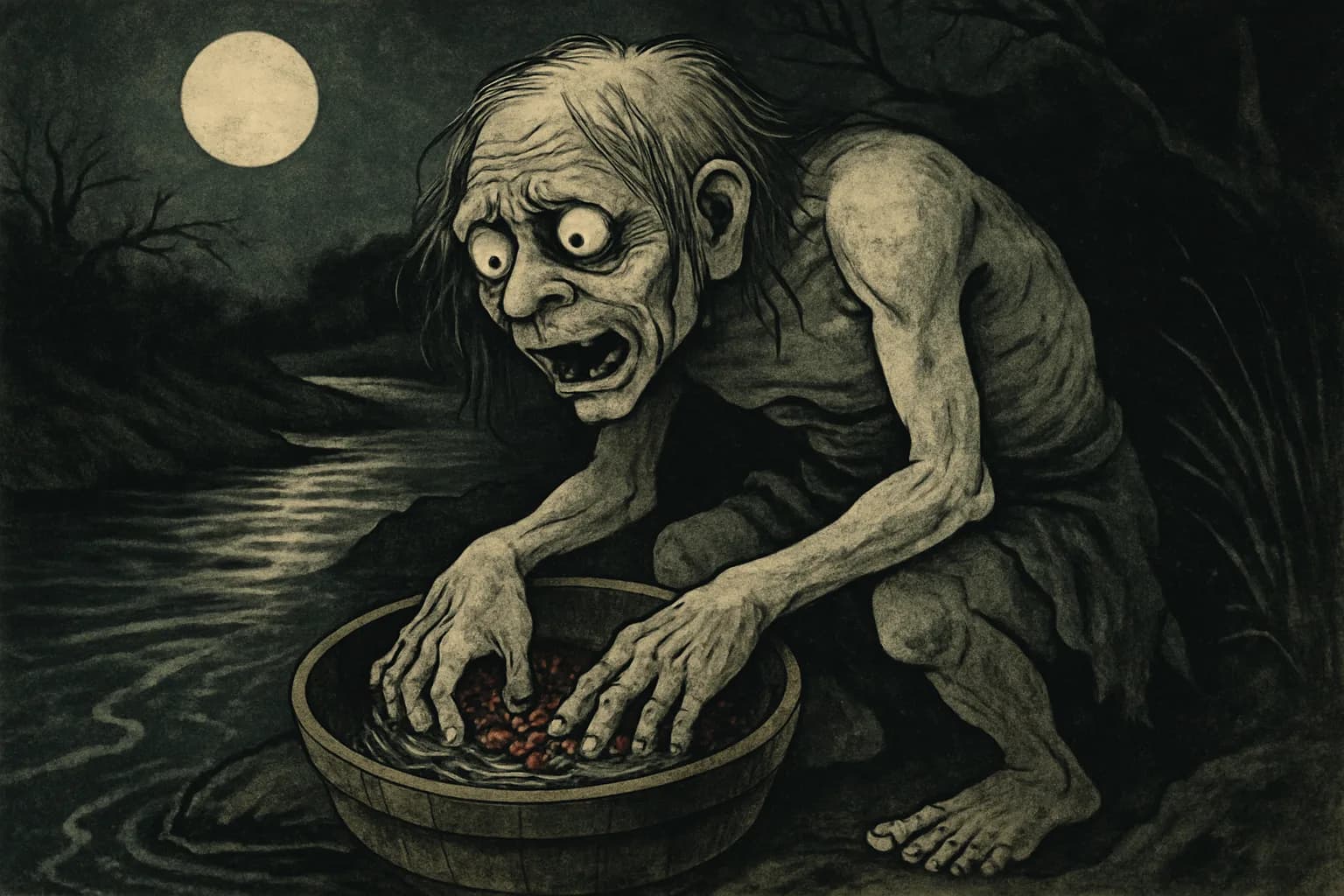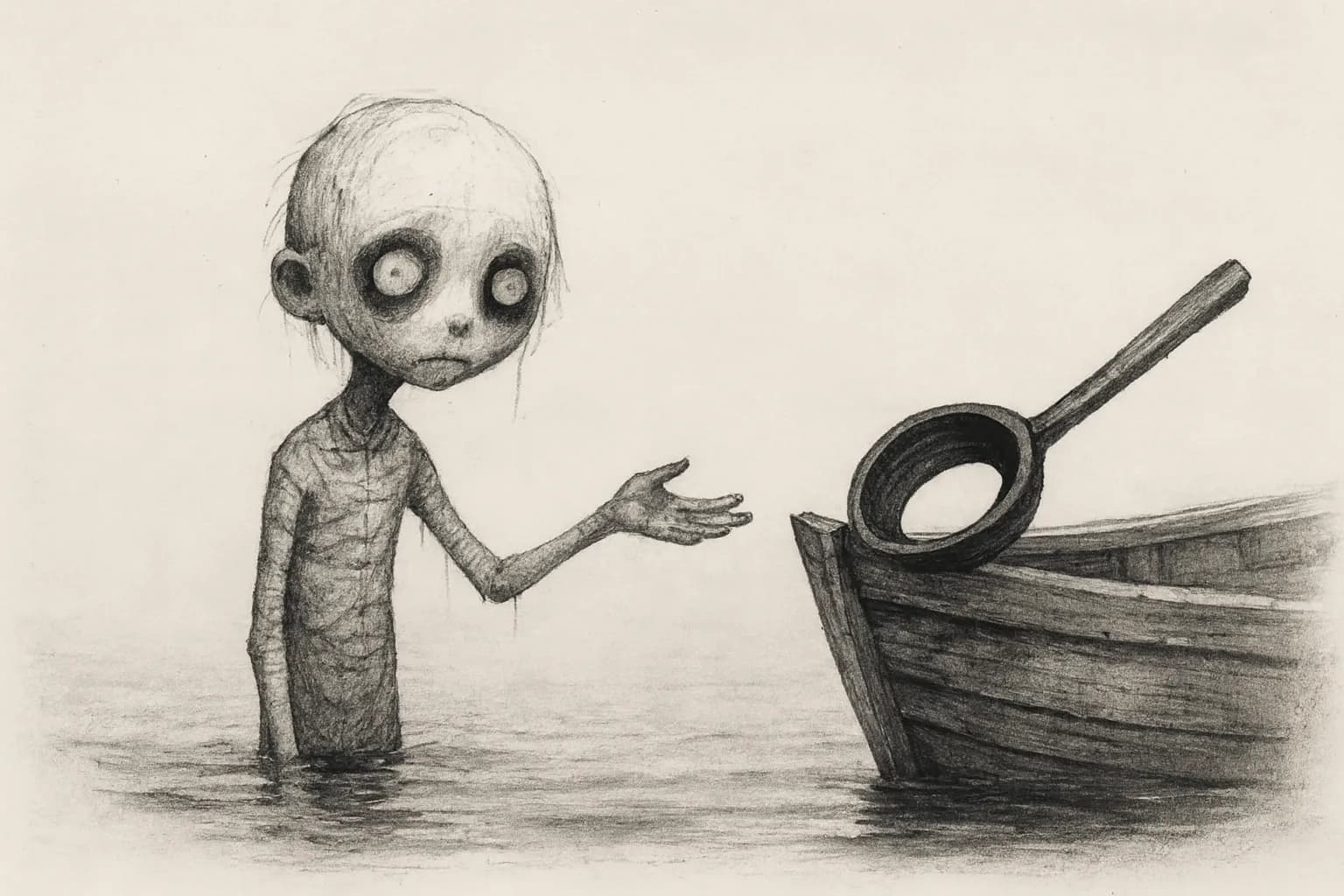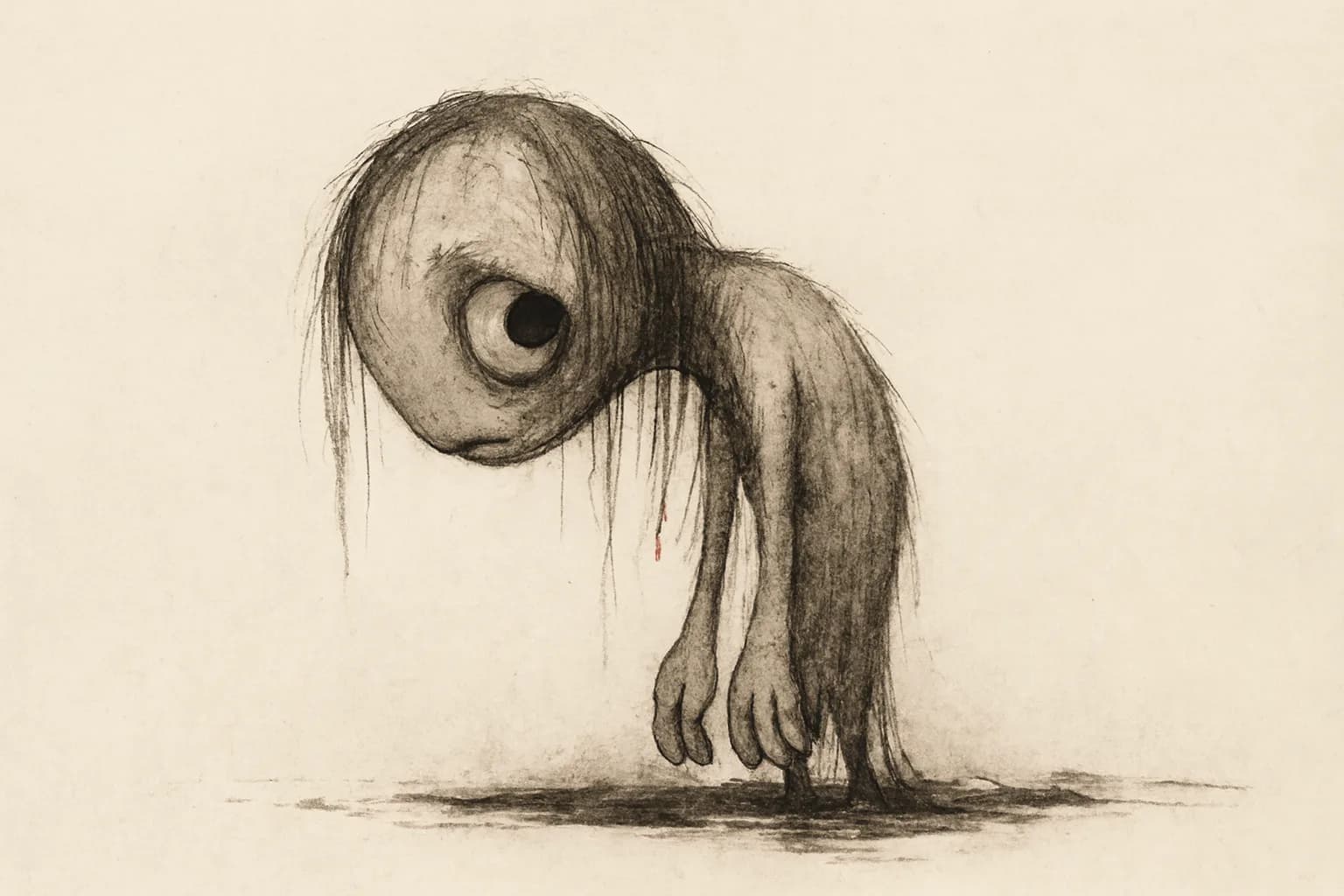
A muddy shape climbs out of a flooded rice paddy at night. It has one eye. It has three fingers on each clawed hand. It moans two words, over and over: kaese, kaese — "give it back, give it back." This is Dorotabo (泥田坊), and its name is blunt about what it is: 泥 (doro, "mud") + 田 (ta, "rice paddy") + 坊 (bō, a familiar suffix for a fellow or a monk). The mud-paddy fellow. Toriyama Sekien drew it in 1781, in his Konjaku Hyakki Shūi. Its story is not really about a monster. It is about a field, and who let it go to ruin.
What does it look like?
Sekien's print shows a squat, half-formed figure. It stands knee-deep in black paddy mud. Its skin looks wet and unfinished, like it never fully became a person. It has only one round eye, set wide on its face. Each hand carries just three thick fingers. Long, tangled hair hangs down over its shoulders. Most versions render it in mud-brown and shadow, with nothing bright about it at all. It does not look like a demon built to frighten. It looks like the earth itself, standing up with a complaint.
Kaese, kaese — the cry that names it
Dorotabo has one behavior, and every account agrees on it. At night, it rises out of an abandoned paddy. It repeats the same two words without stopping: kaese, kaese. It does not chase travelers. It does not curse a house or spread illness. It stands in the flooded field and asks for something back. That makes it unusual next to louder Edo-period monsters. Most yokai exist to scare a listener into caution. Dorotabo exists to make a listener feel guilty.
Villagers who heard the cry near an untended paddy had one explanation ready: somebody's family had let good farmland go to waste, and the land itself was complaining about it.
A field that outlived its farmer
Sekien's short text explains where the cry comes from. An old farmer clears a swampy plot and works it, alone, for years. He drains it, plants it, and turns it into a real rice paddy through nothing but stubborn labor. When he dies, the field passes to an heir who has no patience for farming. The heir sells the land for drinking money. Nobody tends it. Weeds and mud take it back over, season by season.
That, in the story, is when Dorotabo starts appearing. The old farmer's devotion to the paddy did not end when he died. It curdled into a grudge, rose out of the mud he had spent his life draining, and started demanding the field back from whoever passed by.
Where it comes from
Scholars generally read Dorotabo as a farming-village warning dressed as a ghost story. Edo-period Japan was full of small paddies built and maintained through one family's labor across generations. A sold or abandoned field was not just a loss of property. It was a visible failure to honor an ancestor's work, in a culture that took ancestor duty seriously. Dorotabo gives that failure a face and a voice.
It also sits next to a wider family of grudge-spirits in Japanese folklore — figures closer to an onryo (vengeful ghost) than to a nature spirit, except that Dorotabo's grudge is tied to a place, not to a person who wronged it directly. The mud remembers. The heir who sold the field is never named or punished in the tale. He is just gone, and the field is left to do the complaining.
Dorotabo today
Dorotabo never became one of the famous yokai. It has no cartoon mascot and no theme-park ride, unlike kappa or tanuki. Most people who know it at all know it from reprints of Sekien's own print, passed down through modern yokai encyclopedias and museum shows of his Hyakki Yagyō series.
That obscurity has not made the story less relevant. Rural Japan today has a real, well-documented problem with abandoned farmland, as aging farmers retire and their children stay in the cities. Whole paddies revert to marsh within a few seasons of being left alone. Dorotabo's complaint — somebody let this go, and I want it back — reads less like a fairy tale and more like a description of a field a few train stops outside any small town in Japan.