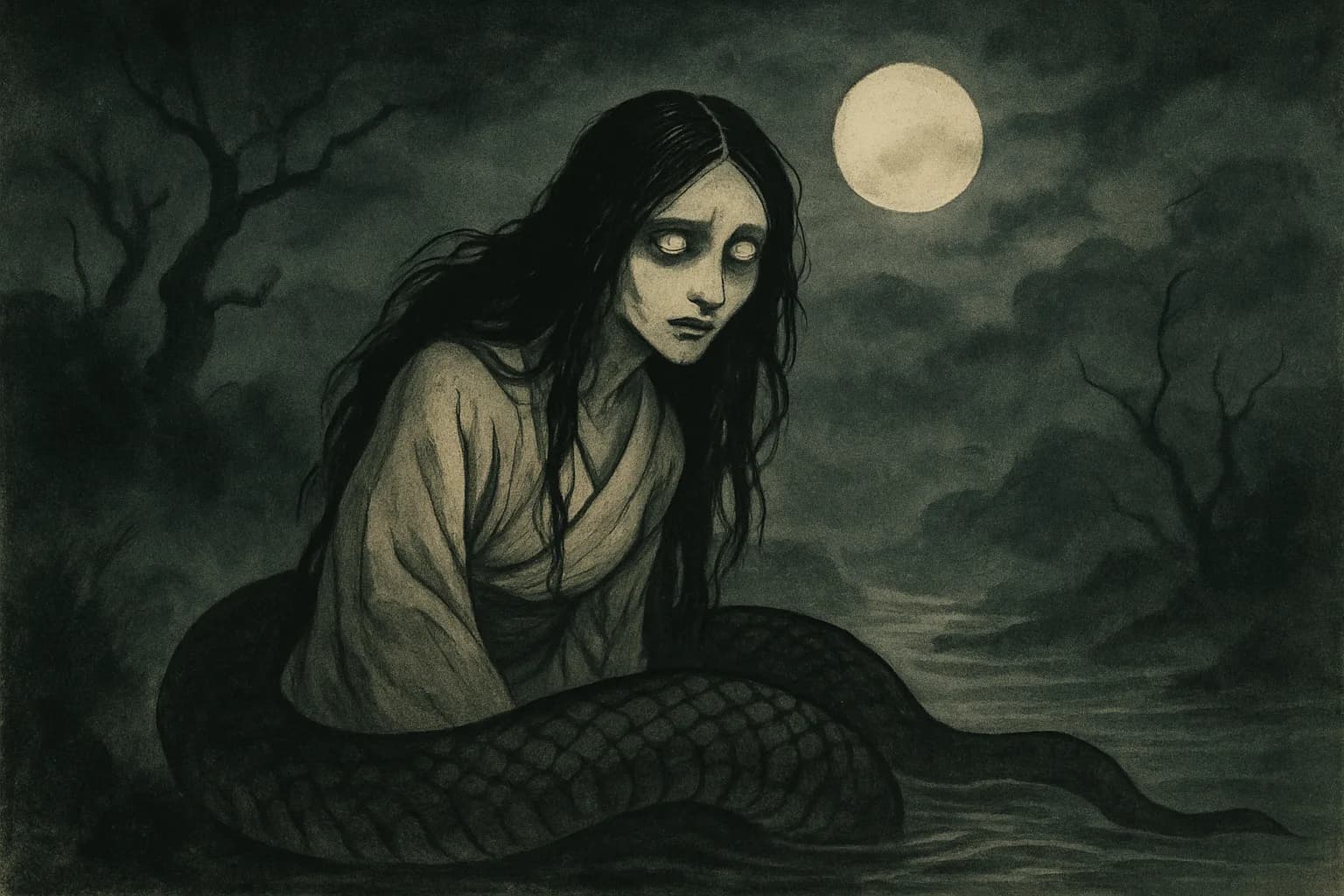
A woman stands alone at the tideline, soaked to the skin, cradling something wrapped in cloth. She looks like she needs help. Say yes to holding her bundle for even a moment and you've made the last mistake of your evening. Below the waist, under the wet kimono, she isn't a woman at all.
What does it look like?
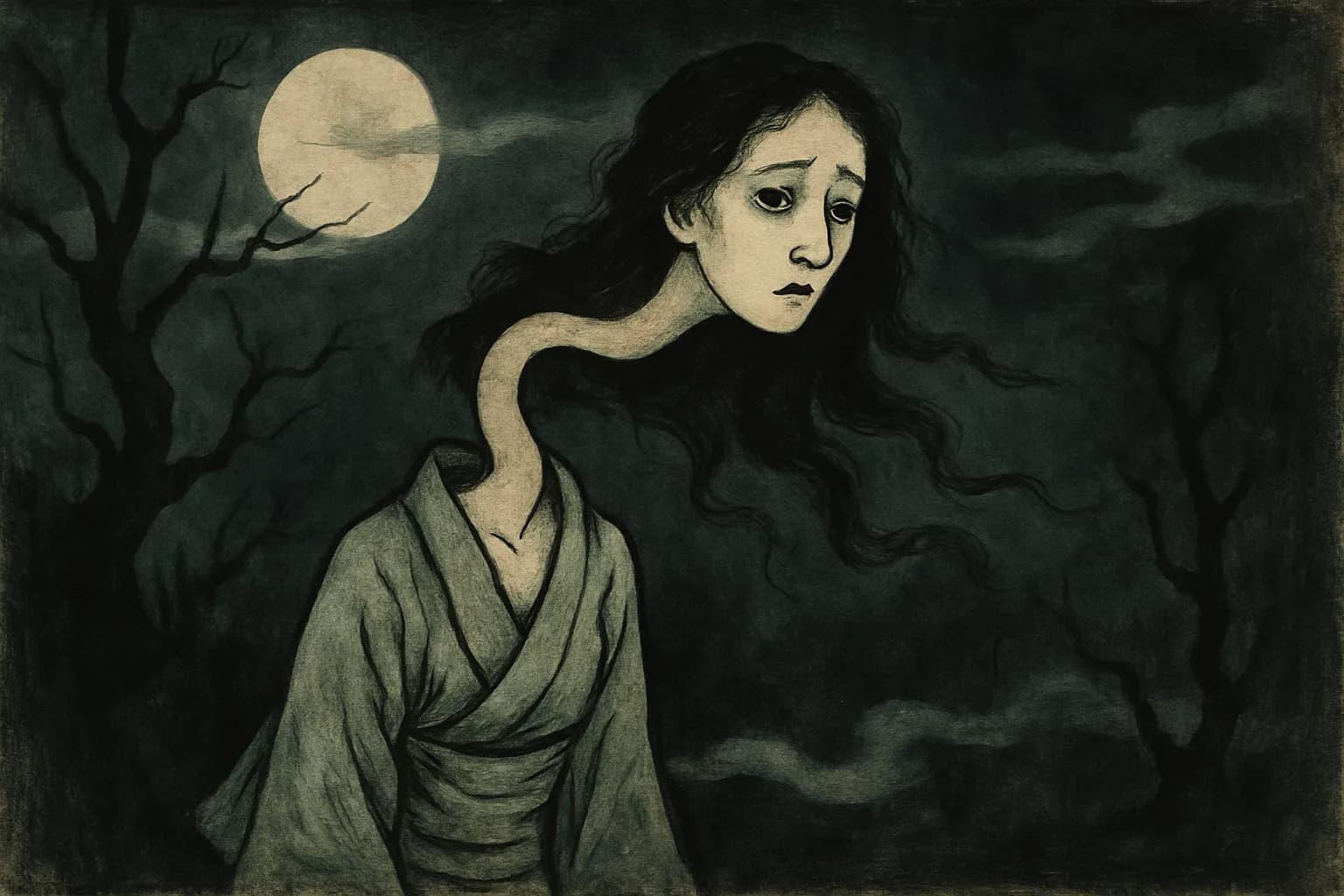
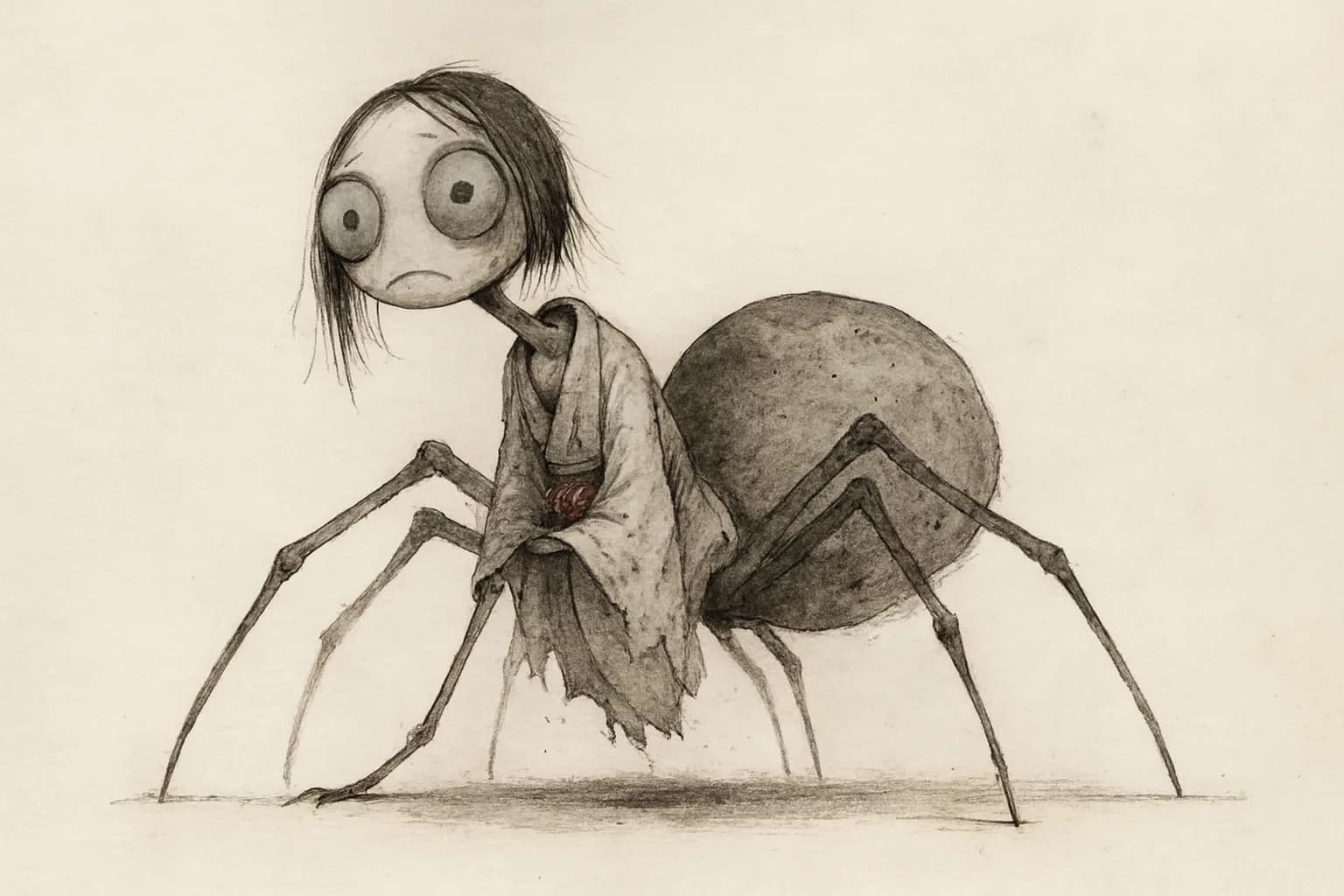
Nure-onna — literally the "wet woman," from 濡 (nure, "soaked") and 女 (onna, "woman") — has a human female face and torso set on a long, coiling serpent's body. Some depictions give her human-like arms; others show her armless, just a woman's head fused directly onto a snake's trunk. Her hair, black and constantly dripping, is the detail every version keeps. One 1862 account gives her a tail long enough to stretch over 300 meters.
She was first drawn this way in Sawaki Suushi's Hyakkai Zukan (1737), and codified a generation later in Toriyama Sekien's Gazu Hyakki Yagyō (1776), which shows her rising from the waves with that same unmistakable silhouette — woman above, serpent below. Oddly, for a creature illustrated so consistently, almost no written narrative about her survives from that period. The image came first. The stories accumulated regionally, later, and never fully agreed with each other.
Her one dated story comes from a 1929 book
That 1862 tale is the oldest dated story about her. But it does not come from an Edo-period record. It comes from a book published in 1929.
The book is Yōkai Gadan Zenshū, Nihon-hen (Collected Yokai Pictures and Tales, Japan volume). Its author was Fujisawa Morihiko, a folklorist of the early Shōwa era. Fujisawa did not name the older source used.
Here is the story Fujisawa gives. Young men were gathering timber on a river between Echigo and Aizu. Today those are Niigata and Fukushima. One boat drifted off. The men on it saw a woman washing her hair, and they fled back in terror. They told their friends it was nure-onna. Her tail could reach about 3 chō, around 327 meters. The friends did not believe them and went toward her. Screams were heard again and again. The friends never came back.
So the pictures are old, and the dated story is much younger. Keep that gap in mind when a website calls her legend "ancient."
The bundle by the water
The one piece of behavior that shows up again and again is the trap. Nure-onna appears at a riverbank or shoreline looking harmless, even pitiable, holding what looks exactly like a swaddled infant. She asks a passing stranger to hold the baby for her while she steps away — to wash her hair, to rest, to tend to something. A kind person obliges.
The bundle then turns unnaturally heavy. In many tellings it hardens into stone in the victim's arms, fused there, impossible to drop or throw. Trapped and unable to run, the victim is at her mercy — and mercy is not really on offer. Some modern retellings say she drinks the victim's blood while the prey stands frozen, still holding what it thought was a child.
A decoy for something worse
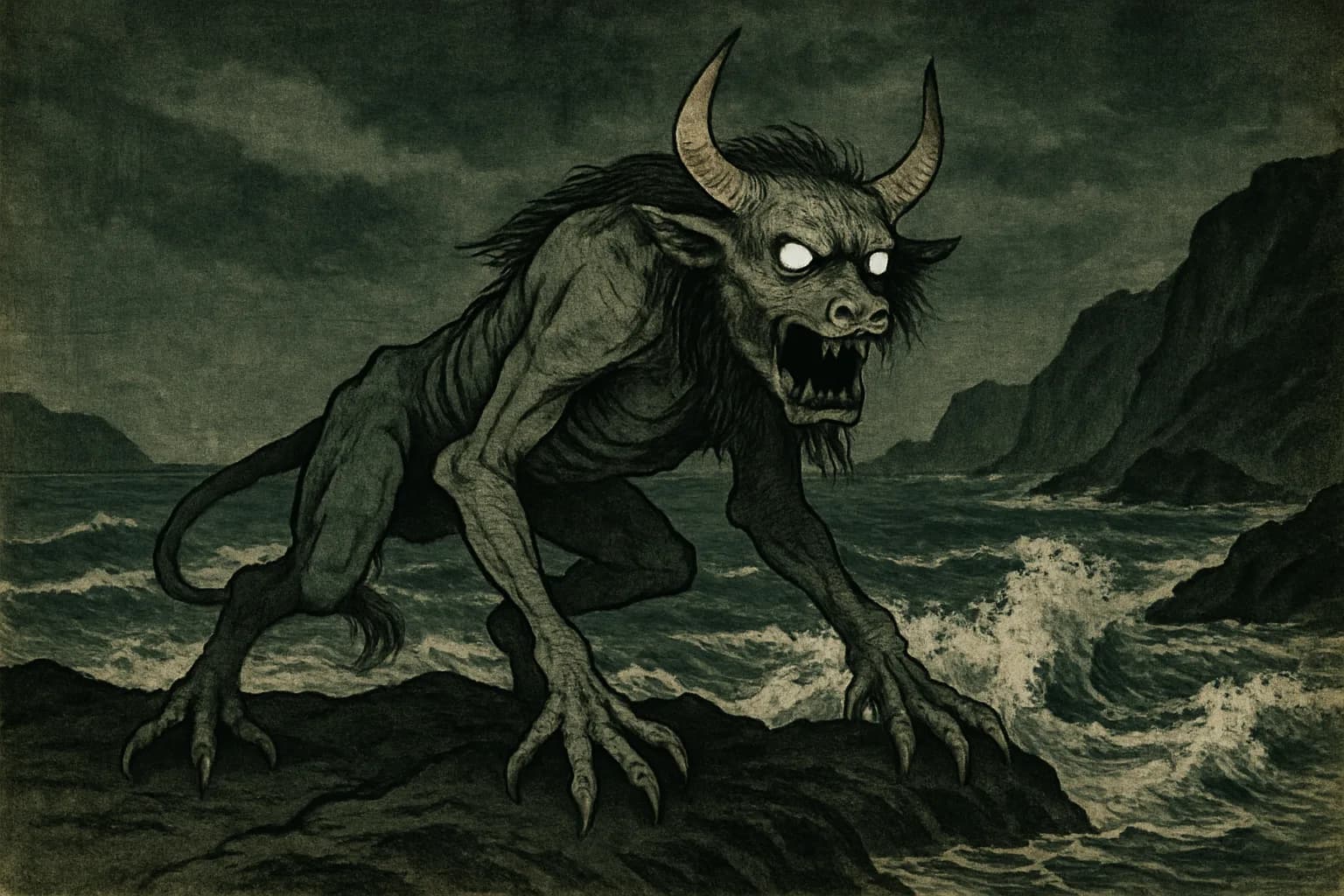
In the Iwami district of Shimane Prefecture, the story gets a second monster. There, nure-onna is said to work in concert with the ushi-oni, a horned, ox-headed yokai of the same coastline. She hands her bundle to a passerby by the sea, then withdraws into the water — and it's the ushi-oni that arrives to finish what she started. In one account from Ōda, a man who tried to flee found the stone baby impossible to shake loose, and as the ushi-oni closed in, he realized its voice was nure-onna's own.
Local wisdom offered one narrow way out: accept the bundle only while wearing gloves, and when the moment comes to run, throw everything away at once — baby, gloves, all of it — rather than trying to peel the stone free first. Hesitation is what the trap counts on.
Kyushu has a close cousin, the isoonna, another woman who haunts the shore. One 1862 tale even places nure-onna on a river between Niigata and Fukushima, well outside her core territory.
Nure-onago smiles instead of handing you a baby
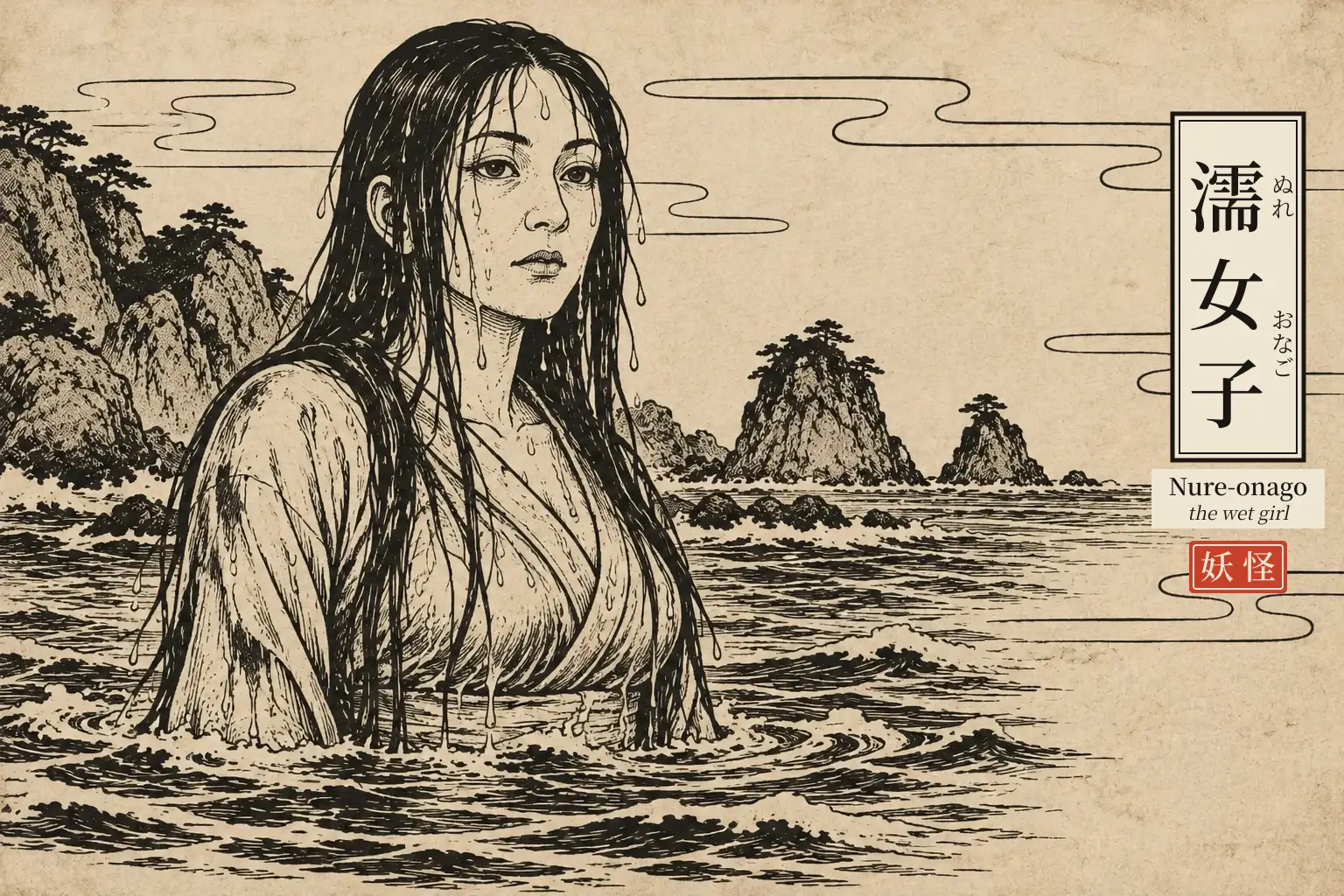
Search for nure-onna and you will also find nure-onago (濡女子). The name means "wet girl." In Iki and southern Tsushima, she is thought to be the same creature as nure-onna. Her trap is different, though.
Nure-onago is told in Shikoku and Kyushu. Reports come from the Uwa area of Ehime and from islands in the Inland Sea. Others come from Iki and southern Tsushima in Nagasaki. Her hair is wet, like nure-onna's. In one account her soaked body is wrapped in leaves.
She does not carry a bundle. She smiles at you. If you smile back, she follows you for the rest of your life. In another version, she vanishes if you tell her she is noisy.
Iso-onna is the Kyushu shore woman who drinks blood with her hair
Iso-onna (磯女) means "beach woman." She is told all over the coasts of Kyushu, from Amakusa in Kumamoto to the Shimabara Peninsula. Some places even call her nure-onna.
Her lower body changes from village to village. It may be blurry like a ghost's. It may look like a dragon or a snake. From behind, she can look like a plain rock.
In one story she stands on the sand with long black hair, staring out to sea. A man calls out to her. She screams with a voice sharp enough to pierce the ear. Then her hair wraps around him and drinks his blood through the strands.
The two figures share a shore, wet black hair and a snake-like body. That is why so many sources list them side by side.
Where it comes from
Folklorists read nure-onna, like a lot of coastal yokai, as a shape given to the real hazards of a working shoreline: undertows, sea snakes, the disorientation of fog and tide, and the basic danger of stopping to help a stranger alone in an isolated spot after dark. Fishing and farming communities that depended on the water needed a reason for its dangers, and a beautiful, wet-haired woman who could not be trusted was a more memorable warning than a list of tide tables.
Her name gives away the mechanism directly: everything about her is defined by being nure, soaked, never dry, never fully out of the water she came from.
Nure-onna today
She's kept her shape well. In the Nioh action games from Team Ninja and Koei Tecmo, nure-onna appears as a recurring yokai enemy — a serpent-tailed woman who coils around the player and drains their strength, a fairly direct translation of the old trap into combat mechanics. She also appears, mostly in the background, in several GeGeGe no Kitarō anime series.
The glove advice comes from the Iwami coast — a reminder that the stories out there were never really about snakes at all.
Quick answers
Is nure-onna dangerous? In the stories, yes. She traps people with the stone baby. In the Iwami version, the ushi-oni then eats the victim.
Is nure-onna the same as ushi-oni? No, they are two yokai. Along the coast from western Honshu to northern Kyushu, they rise from the sea together. Some say the ushi-oni takes the form of a beautiful woman, and may itself become nure-onna.
Is nure-onna a sea snake? One theory says she is a sea snake in disguise. That idea fits her snake body.
Where does nure-onna appear? By the sea and by rivers. The best-known tales come from Shimane, with others from Niigata and Fukushima.