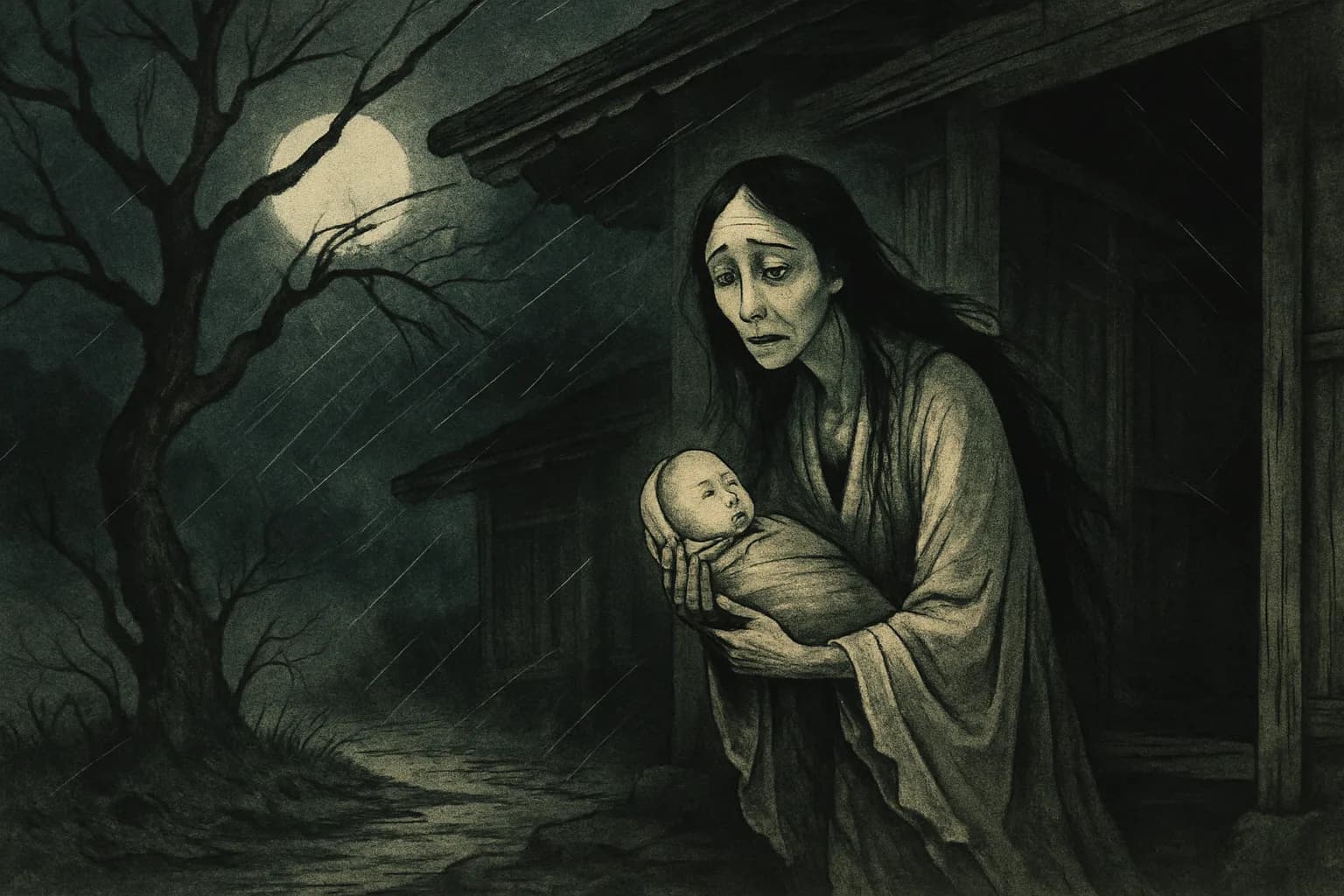
A woman stands alone by a river crossing at night, soaked from the waist down, cradling a bundle in her arms. As a traveler nears, she holds it out and asks, in a voice barely above a whisper, if they would mind holding her baby for just a moment. It is a request almost impossible to refuse — and in the folklore of every region of Japan, refusing is not always the safer choice either. This is Ubume, the ghost of a woman who died in pregnancy or childbirth, unable to let go of the child she never got to raise.
What does Ubume look like?
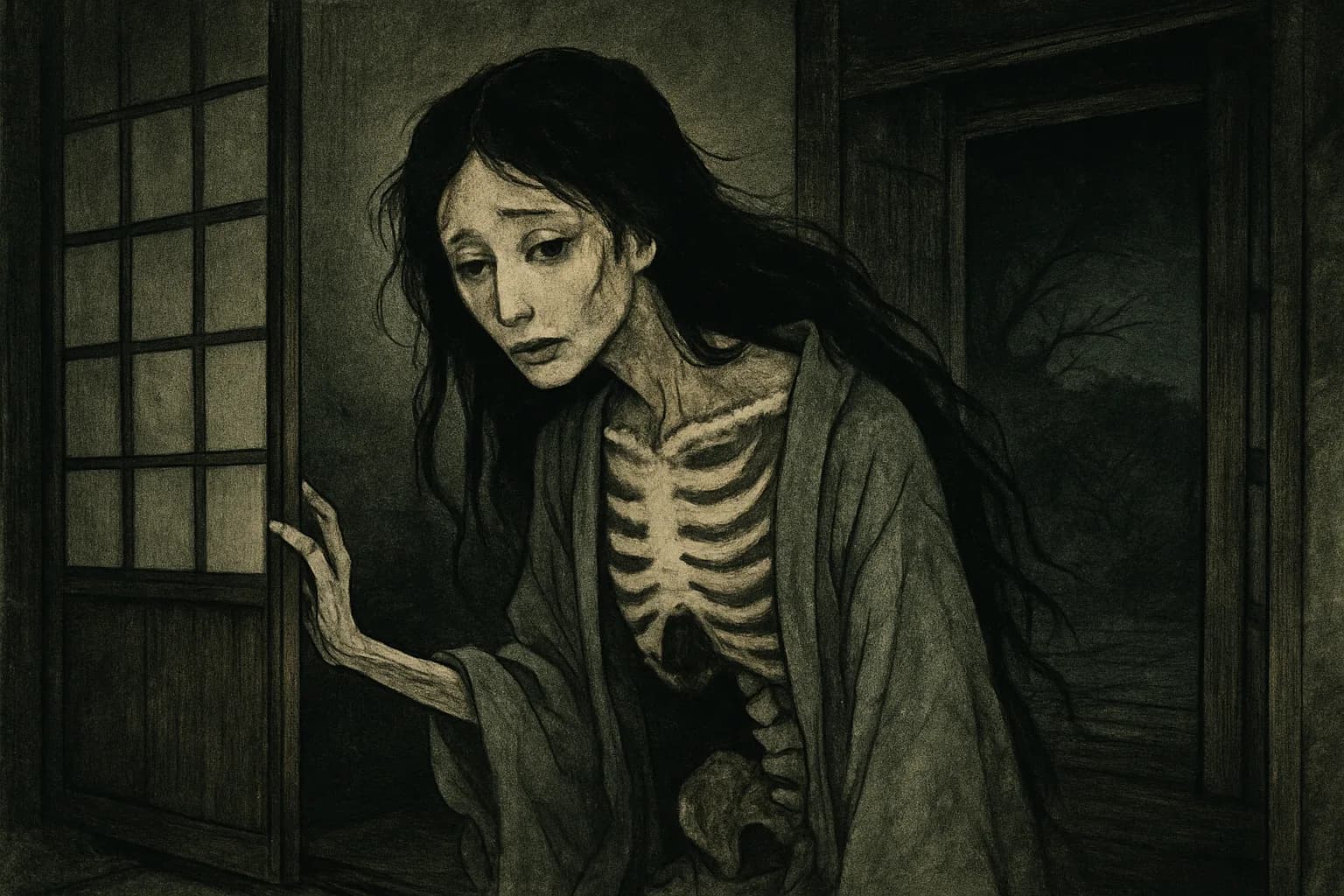
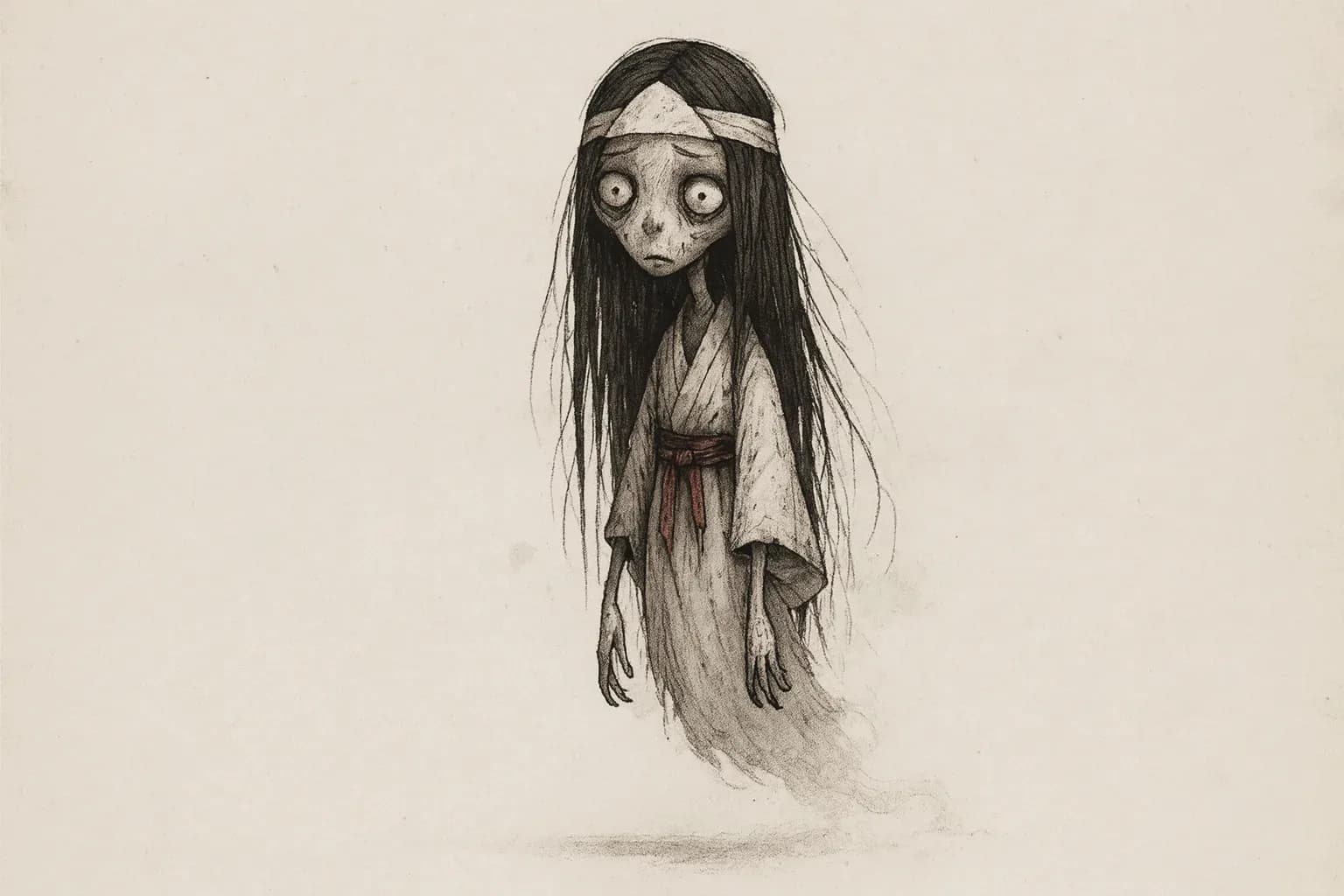
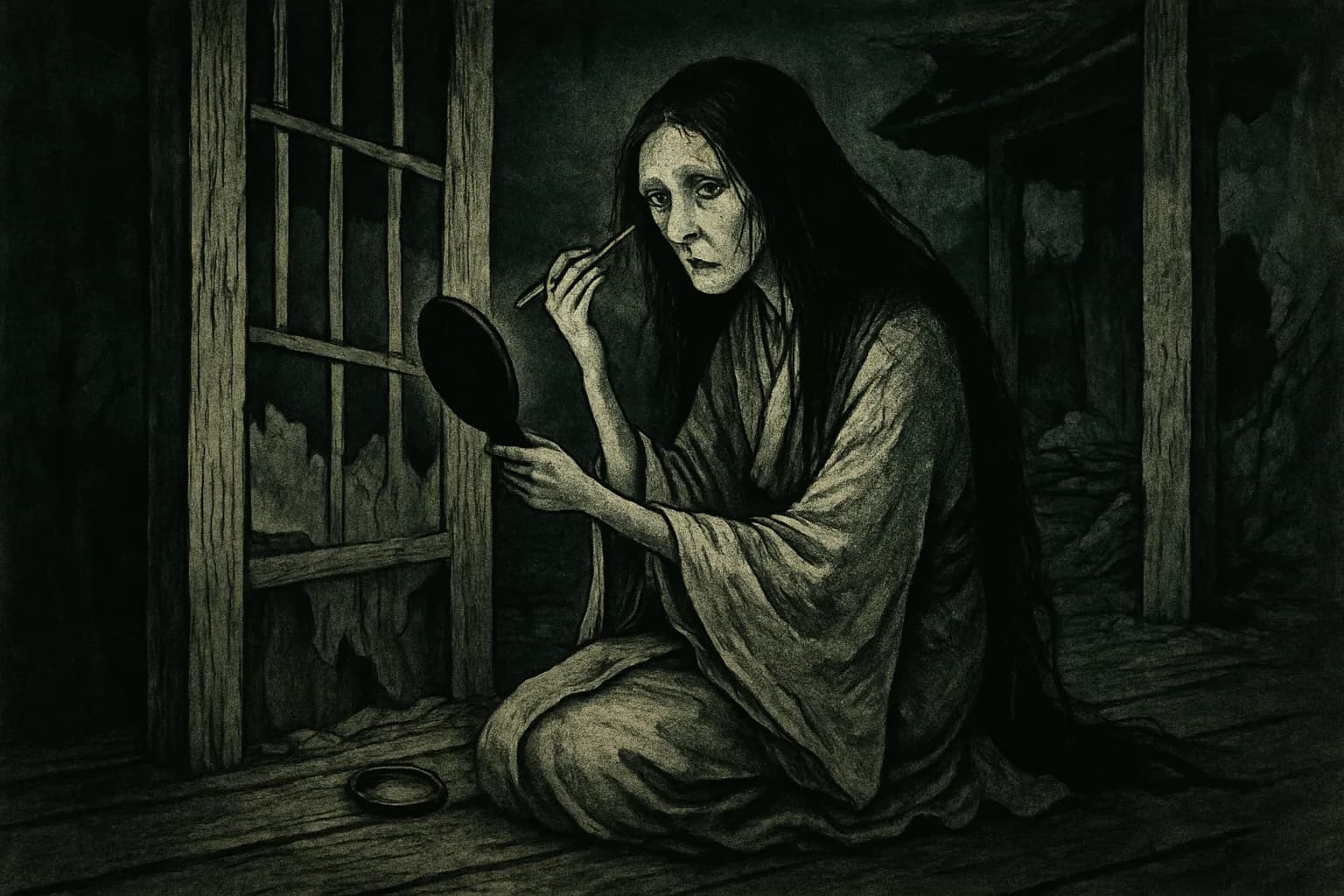
Ubume is usually described as a young woman in a torn or blood-stained white kimono, her lower body often soaked or bloodied, sometimes said to have no legs at all in the manner of a proper yūrei. She carries an infant, or what looks like one, wrapped tightly in cloth. In some regional accounts she appears only from the waist up, drifting rather than walking; in others she walks normally until you look too closely and realize her feet never quite touch the ground. Toriyama Sekien's Edo-period print of her shows exactly this scene: a gaunt woman in the reeds by a riverbank, offering up her bundle to the dark.
The baby that never stops growing
The core of nearly every Ubume story is the same cruel trick. She approaches a lone traveler — often at a bridge, ford, or crossroads, the classic liminal spots where yokai gather — and asks them to hold her child while she does something else: adjusts her sandal, fetches water, simply steps away. Whoever accepts finds the bundle growing heavier by the second. It goes from the ordinary weight of an infant to something like a sack of stone, pinning the holder's arms until they can barely stand. In many tellings the "baby" is eventually revealed to be a stone, a bundle of leaves, or nothing at all once Ubume vanishes and the spell breaks.
Not every version ends there. In a well-known type of the story going back to the twelfth-century collection Konjaku Monogatarishū, a traveler who keeps his nerve and holds the impossible weight without dropping it or fleeing is rewarded rather than punished — some versions grant him great physical strength from that day on, as though the ordeal itself were a test he had passed. Ubume, unlike a plain vengeful spirit, is not always malicious; her grief looks for someone willing to help her, and those who pass the test walk away with a gift instead of a curse.
A grief that outlasts the body
Ubume belongs to a broader Japanese category of women who die with unfinished business tied to motherhood, and her sorrow is treated in the old sources as more pitiable than evil. She is not hunting for revenge on the living the way a betrayed yūrei might be; she is stuck performing the one task death interrupted, unable to accept that she cannot nurse or carry her child herself. Buddhist temples in the Edo period offered specific memorial rites for women who died in childbirth, precisely because folk belief held that dying with a child unborn or newborn left the soul restless in exactly this way. Ubume is that restlessness given a shape you might meet on the road home.
The candy-shop ghost of Kyoto
One of the most concrete, still-told versions of this legend survives as a place you can actually visit. Near Rokudō Chinnō-ji temple in Kyoto's Higashiyama district, a shop called Minatoya sells a hard amber candy under the name kosodate ame — "child-rearing candy" — with a story attached: a pregnant woman died and was buried, but her grave began giving birth. Each night for six nights, a pale woman came to the shop to buy a single piece of candy with a coin, until the shopkeeper followed her back to the graveyard and found a newborn crying beside her grave, kept alive on nothing but the sweets she had bought. The shop has sold the same candy under that legend for generations, and it is one of the clearest surviving links between Ubume-type folklore and a real, specific place rather than a vague village tale.
Ubume in Japan today
Ubume's clearest foothold in contemporary pop culture is literary rather than visual: she gives her name to Natsuhiko Kyōgoku's 1994 mystery novel Ubume no Natsu ("The Summer of the Ubume"), the book that launched his long-running Kyōgokudō series blending yokai folklore with detective fiction, later adapted into a 2005 film. The novel treats her not as a jump-scare monster but as the emotional center of a case about a pregnancy that seems to never end — a modern echo of exactly the grief the old stories describe. Outside fiction, she remains a stock figure in kaidan (ghost story) retellings and in the wider, still-circulating Japanese legend type of the "child-raising ghost" who keeps caring for a baby from beyond the grave, of which the Kyoto candy shop is only the best-documented example.