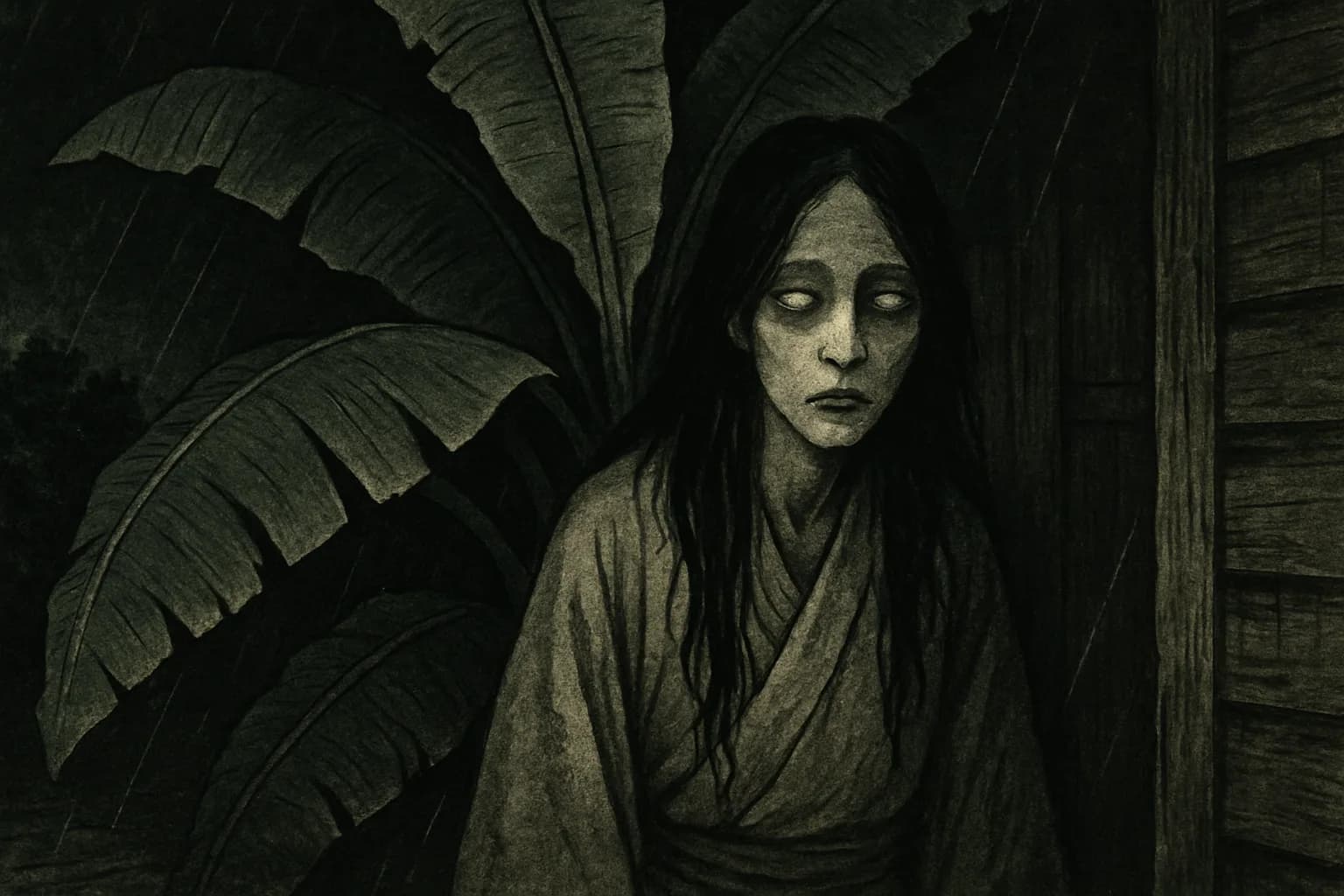
A monk reads sutras alone at night, lamp lit, rain outside. A woman comes to the door and asks a strange question: can a plant without a mind still reach Buddhahood? This is bashō no sei — 芭蕉 (bashō), the banana plant, and 精 (sei), its living spirit. It grows thickest in Kyushu and the Ryukyu Islands, where the plant itself grows wild and old enough to matter.
What does it look like?
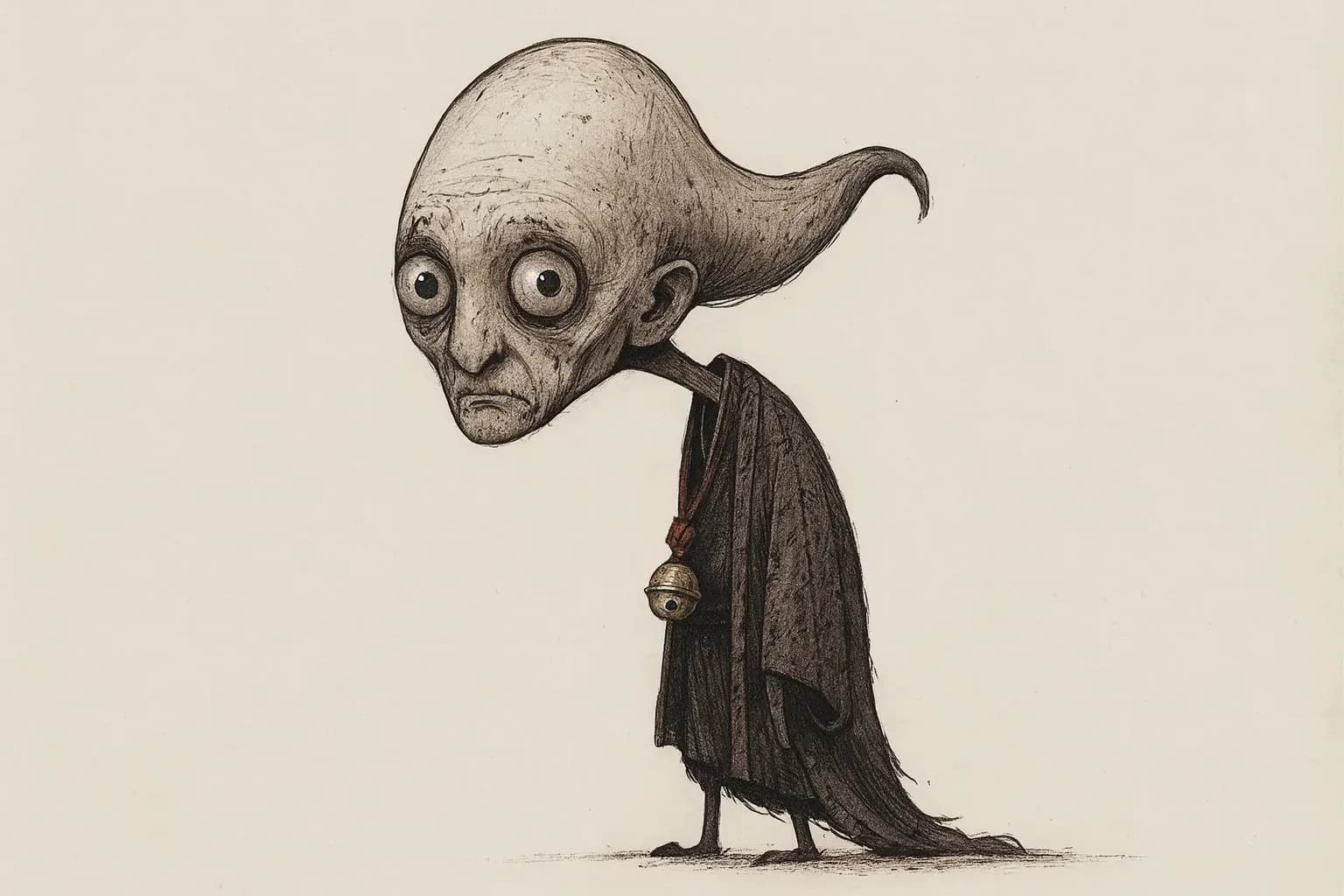
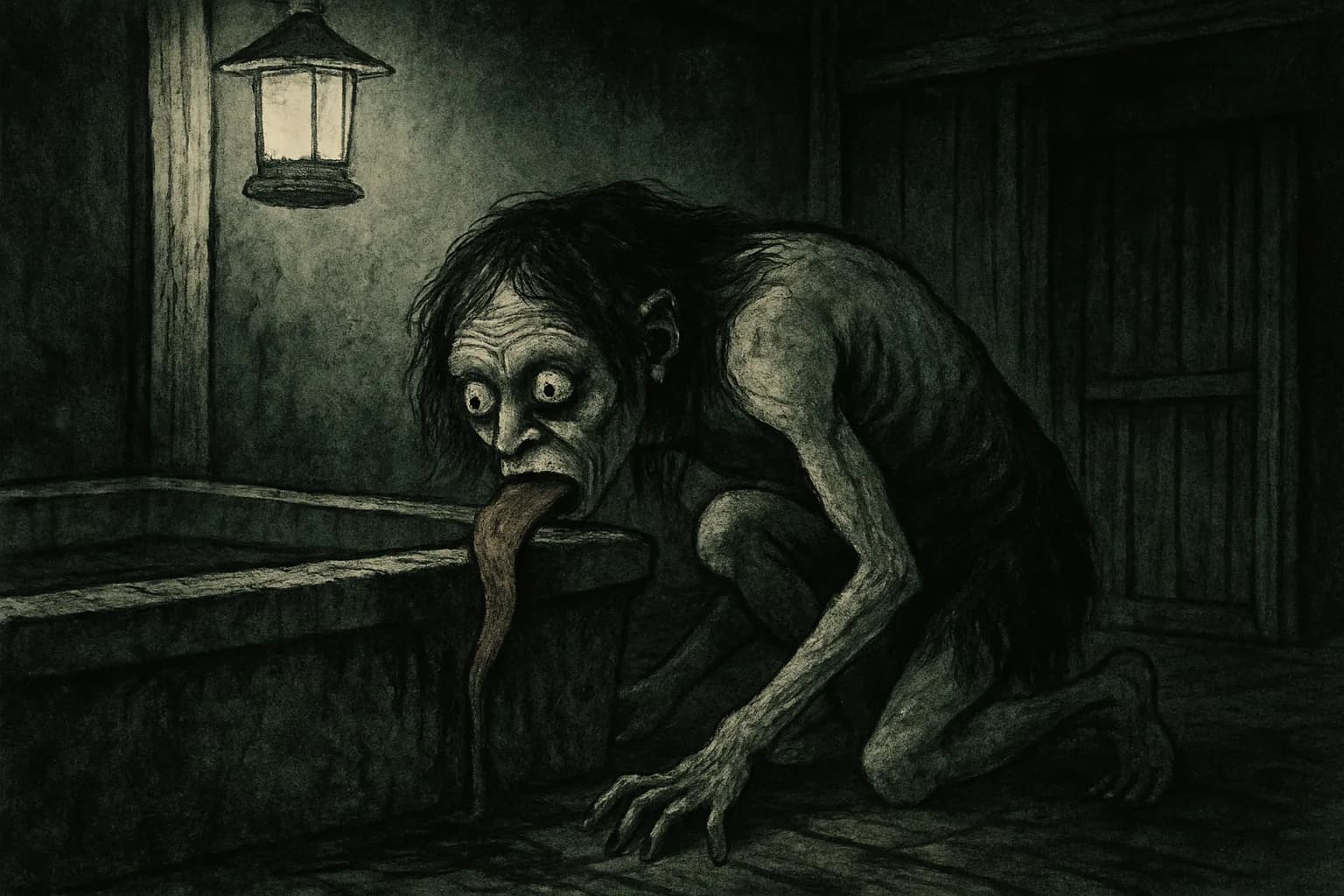
Bashō no sei shows itself two ways. Sometimes it is only a face, caught for a moment among the broad banana leaves. A traveler would see the shape of eyes or a mouth in the leaf pattern and look away fast. Other times it takes a full human shape, almost always a young woman. She appears best at night, especially in the rain, when wide leaves rustle loud enough to cover footsteps.
The face-among-leaves image is not unique to this plant. Ninmenju, a tree said to grow human-faced fruit, carries a similar idea. So does kodama, the spirit an old tree gains simply by living long enough. Bashō no sei belongs to that same family: a plant old enough, and left alone long enough, to grow something like a mind.
The banana groves of Okinawa
In the Ryukyu Islands, banana plants were once grown in wide, closely packed groves. The Edo-period naturalist Satō Chūryō recorded local accounts of these groves after visiting the islands. He wrote of strange things seen there at night, and of a standing warning: women should not walk through a banana grove after dark.
Some tellings go further. They say the spirit could attack a person outright, and that a victim might later give birth to something not fully human. Families dealt with this by treating the newborn with kumazasa, a low bamboo grass believed to hold power against the affliction.
How to keep it away
Across the old accounts, one piece of advice repeats: carry a blade near banana plants at night. A story from Shinshū, the old name for Nagano, explains why that advice made sense to the people who followed it.
A monk reading alone at night is visited by a beautiful woman. She returns night after night and sits with him as he reads. Suspicious of her, he strikes at her one evening with a small blade. She cries out and vanishes into the dark. The next morning, he finds a banana plant in the garden cut clean through the stem. The woman had been the plant all along.
Where it comes from
Toriyama Sekien drew bashō no sei for his 1781 collection Konjaku Hyakki Shūi, and he traced the idea back to China. His notes point to a Yuan-dynasty book of strange stories, where a banana plant's spirit takes a woman's shape and walks among people.
The same story became a Noh play, simply titled Bashō. In it, a spirit in a woman's form visits a monk who is chanting sutras at night. She puts a real question from Buddhist teaching to him: can a plant, which has no mind of its own, still reach enlightenment? The idea has a name, sōmoku jōbutsu, the belief that plants can awaken too. A monk asked if a plant could reach enlightenment. Sekien drew the answer as a woman.
Bashō no sei today
The Noh play Bashō is still performed today, one of the stranger entries in a repertoire built mostly around ghosts and warriors. In Okinawa, the older custom has quietly outlived the fear behind it. Kumazasa is still commonly planted close to houses, long after most people stopped worrying about what it was once meant to guard against.