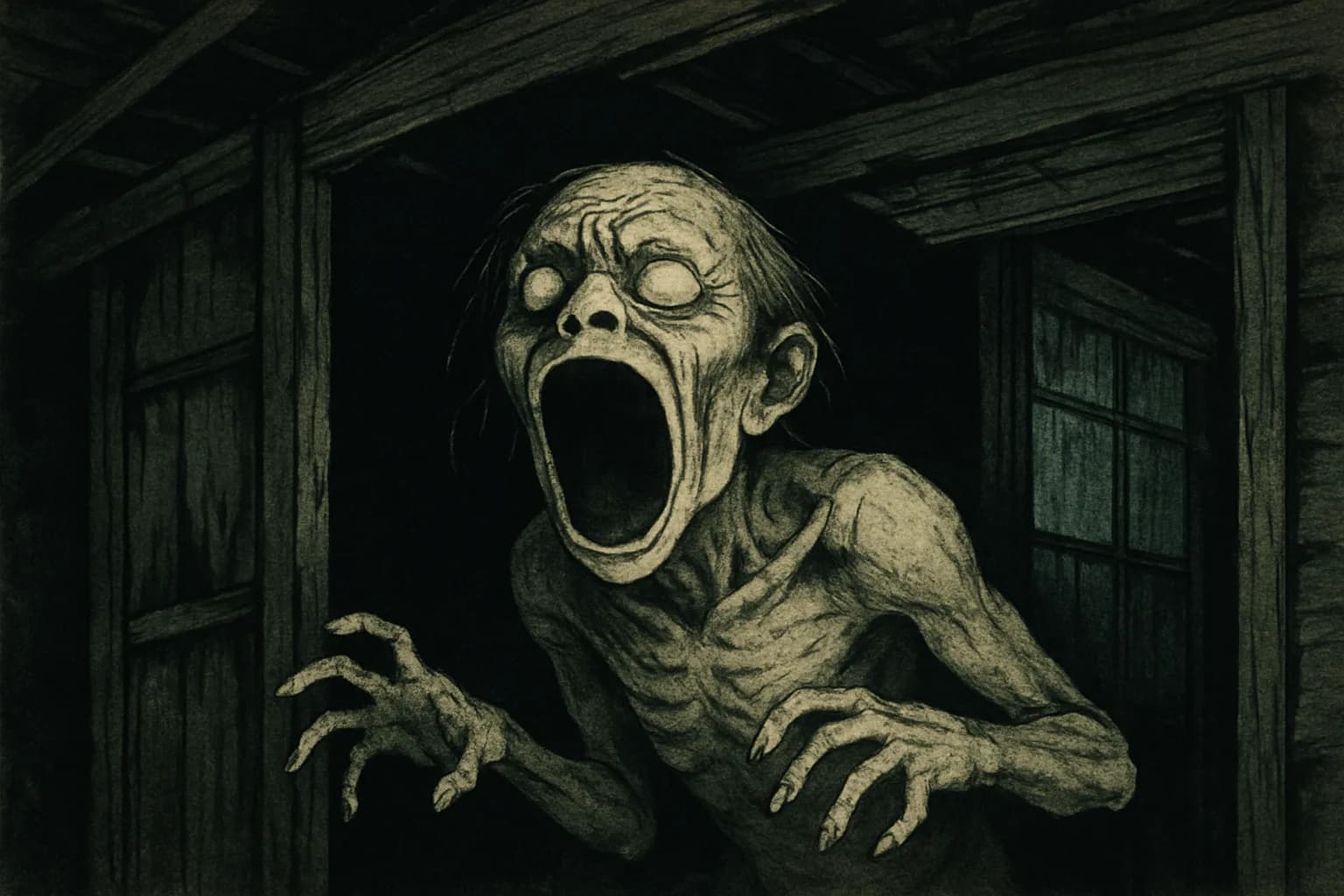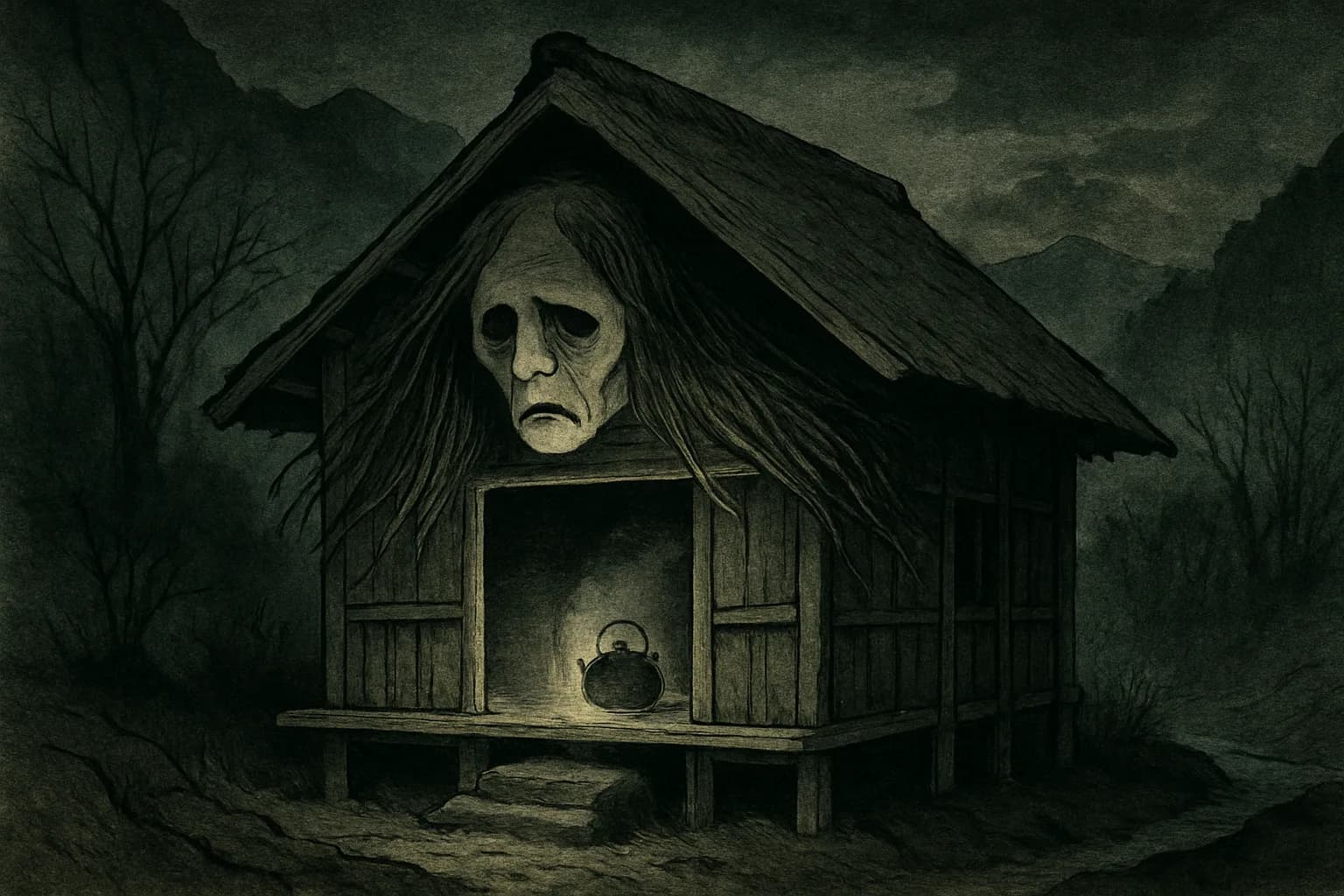
Most entries on this site are creatures. This one is a house. Deep in the mountains around Tono, in Iwate Prefecture, a traveler occasionally wanders onto a mansion that has no business being there. The gate is black lacquer. The garden is bright with red and white flowers. Inside, a kettle boils and a bowl of rice sits ready on the table — but nobody is home, and nobody ever was, not that anyone has seen.
What does it look like?
The mayoiga (迷い家, "the house you get lost into") never looks abandoned. It looks like real, working wealth. Visitors describe fine lacquerware laid out inside: red and black bowls, plates, and cups. In the main room sits the irori, a sunken hearth, with an iron kettle boiling over the coals. Chickens peck around the yard. A cow and a horse stand in the stable, groomed and fed. Every detail says someone lives here and stepped out a minute ago. No one ever comes back while a visitor is watching.
The bowl that never runs dry
The clearest telling comes from Yanagita Kunio's Tono Monogatari (1910), his landmark collection of oral folklore from Iwate. Tales 63 and 64 trace back to Sasaki Kizen, a young storyteller from Tsuchibuchi, a village in the Tono area. In the story, a woman gathering chestnuts wanders deep into the mountains and finds the house. She looks around, frightened, and leaves without taking a thing. Days later, a red lacquered bowl drifts down the river behind her home. She fishes it out and starts using it to measure rice from the family's storage bin. However much rice she scoops out, the bin never runs low. From that day on, her household prospers.
The rule that undoes it
The gift comes with one condition: don't go back for more. A companion tale in the same book follows a man who found a mayoiga and also left empty-handed. When he told his family, they scolded him for taking nothing. He led them back into the mountains to find the house again — and it was gone. No path led to it. That family never prospered from a mayoiga, or from anything else the story mentions. Folklorists reading Tono's tales together see this as the actual rule: the house rewards someone who stumbles onto it by chance and takes little. It gives nothing to anyone who comes looking for it on purpose.
Where it comes from
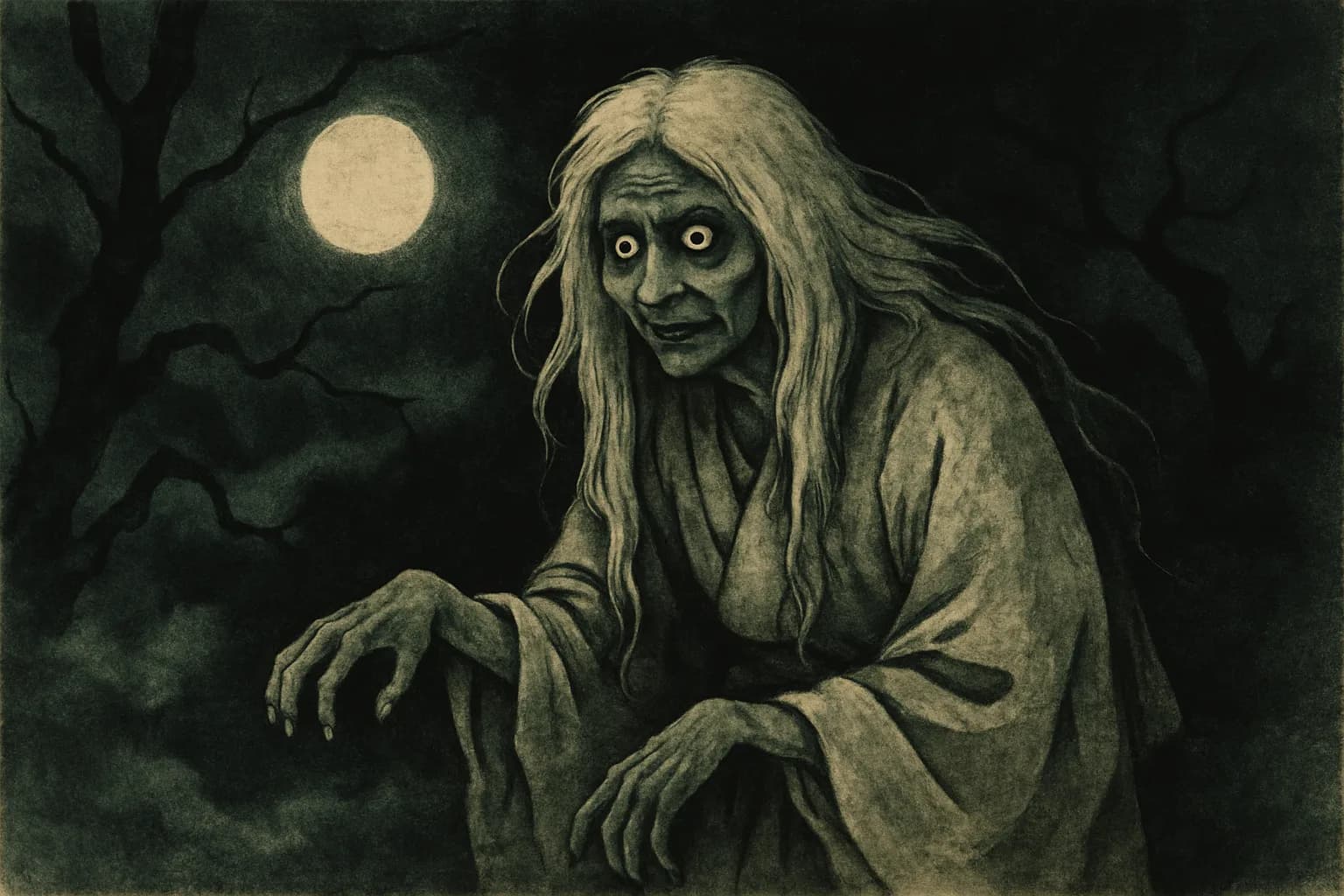
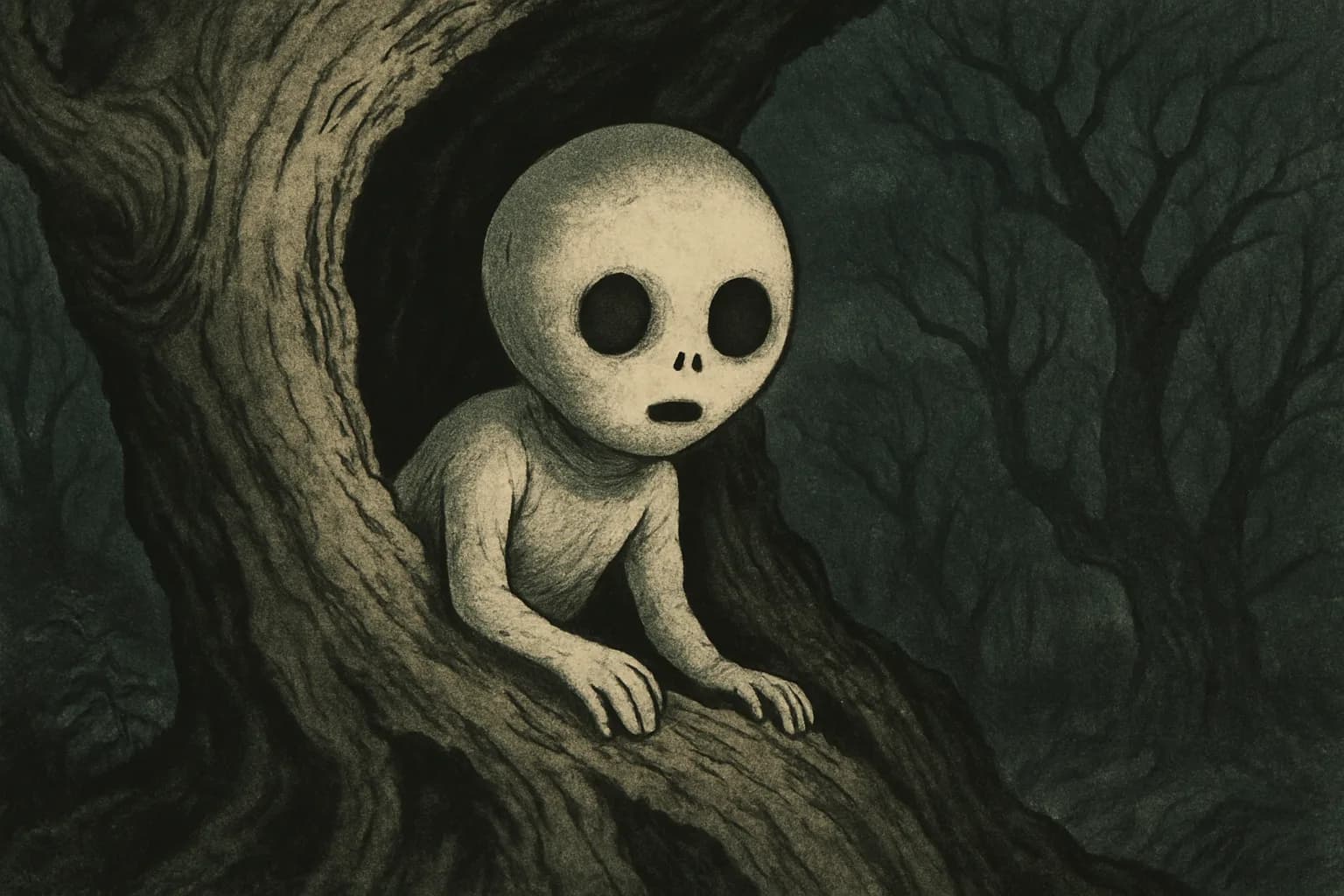
Scholars group the mayoiga with other Japanese legends of a hidden world glimpsed at the edge of the mountains, never entered by choice. One reading ties it to yama no kami, the mountain god, testing whoever wanders too far off the trail. Another connects it to older Chinese tales of a timeless village found once by a lost fisherman, stories that reached Japan long before Yanagita went into the field. Either way, the outcome stays the same from telling to telling. Humility earns something. Greed earns nothing. It is the same warning zashiki-warashi carries about a household's luck, just told from the outside instead of from the spirit living in the guest room. Deeper in the same forests, travelers also blame lost footing on kodama, tree spirits that throw a call back before anyone has spoken, and on yamauba, the old woman of the mountains, who tests a very different kind of failing: curiosity, not greed.
Mayoiga today
The name jumped straight into modern fiction. In 2016, an anime series took it outright: Mayoiga, released in English as The Lost Village, directed by Tsutomu Mizushima and written by Mari Okada. Its plot follows a busload of strangers on their way to a village rumored to be a lost utopia — the same promise the Tono legend makes, and the same warning about people who go looking for paradise on purpose. Around Tono itself, the story stays local and unadorned. The folklore museums that keep Yanagita's tales alive still tell it alongside the zashiki-warashi and the horse-bride legend of Oshira-sama, with no monument and no marked trail. By the terms of its own story, nothing could be marked. Find a mayoiga once, and you were never meant to find it again.