Most of Japan is mountain. Almost nobody lives on it.
That is the shape of the problem. Villages sat in the flat parts, in valleys and on coastal strips, and the forest began where the fields stopped. To get to the next village you walked through it.
This site files 34 creatures under mountains and the wild. Read their descriptions and one word keeps coming back. It is not mountain. It is traveller.
The mountain was two things at once
It fed you. Folklorists recording village belief found a god that moved with the farming year — down from the mountain in spring to watch over the rice, back up after the harvest. The timber came from up there. So did the water. So, in most places, did the dead.
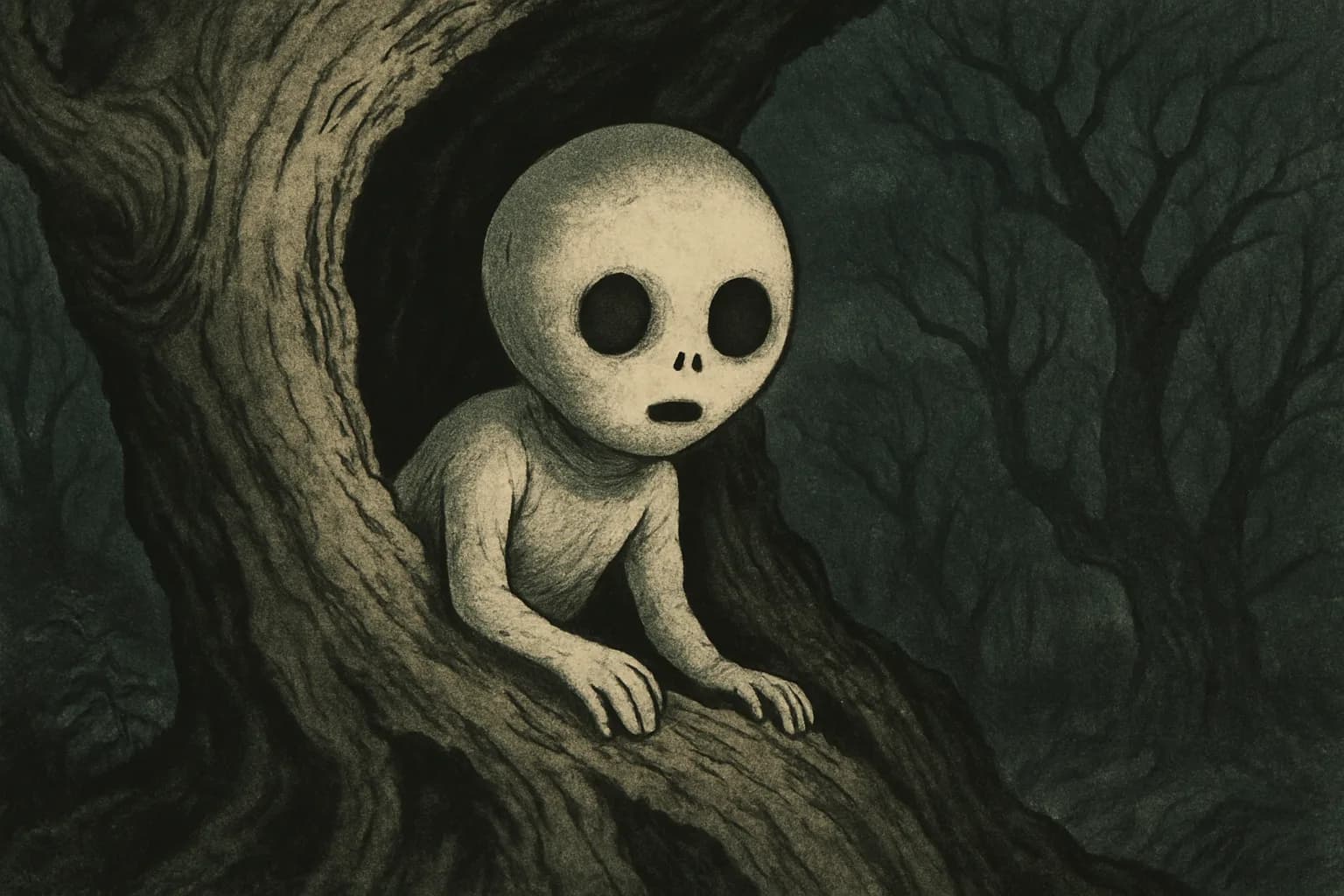
Kodama belongs to that half. It lives in the trees too old to cut, which is a belief and a forestry rule at the same time. So does Daidarabocchi, the giant who shaped the land, recorded in an eighth-century provincial gazetteer. He never hurt anyone. He just kept leaving lakes where he sat down.
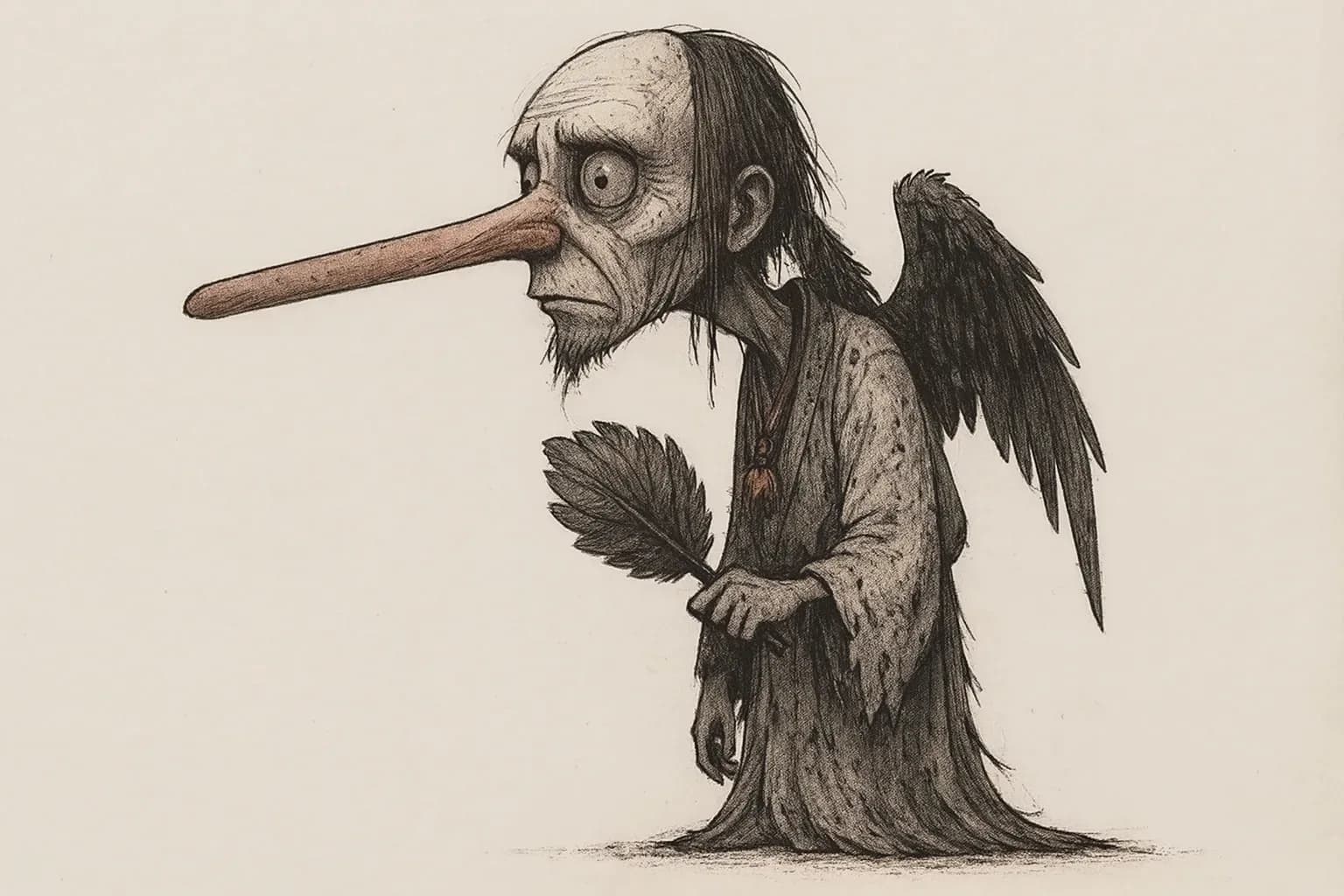
Tengu sits across both halves, and it changed sides on the way. It starts in medieval religious writing as a figure of clerical arrogance — a monk whose pride turned him into something else. It ends up as the teacher on the mountain, the one who trains a swordsman nobody else could train. The mountain went from where you were punished to where you were taught.
Yamachichi and yamawaro are the deep-mountain ones, from Shikoku and Kyushu respectively, and they belong to villages that lived up there rather than travelled through. They are outnumbered.
And the mountain stood in your way. The same slope that grew the timber was the thing between you and anywhere else. A day's journey meant hours inside it, on foot, often alone, and often finishing after dark.
Eleven of the 34 are described in terms of somebody passing through.
What they do to you
Look at what these creatures actually do.
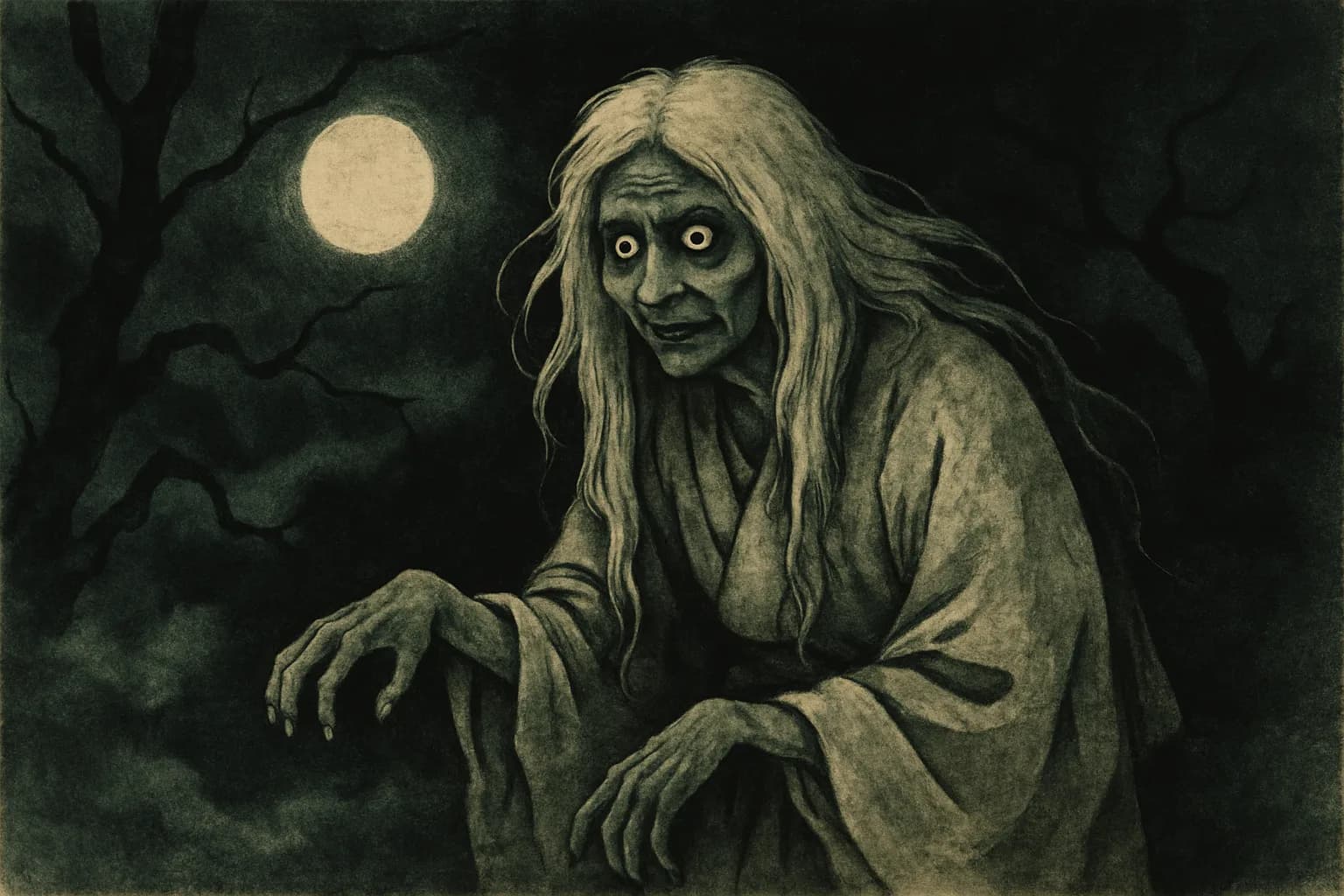
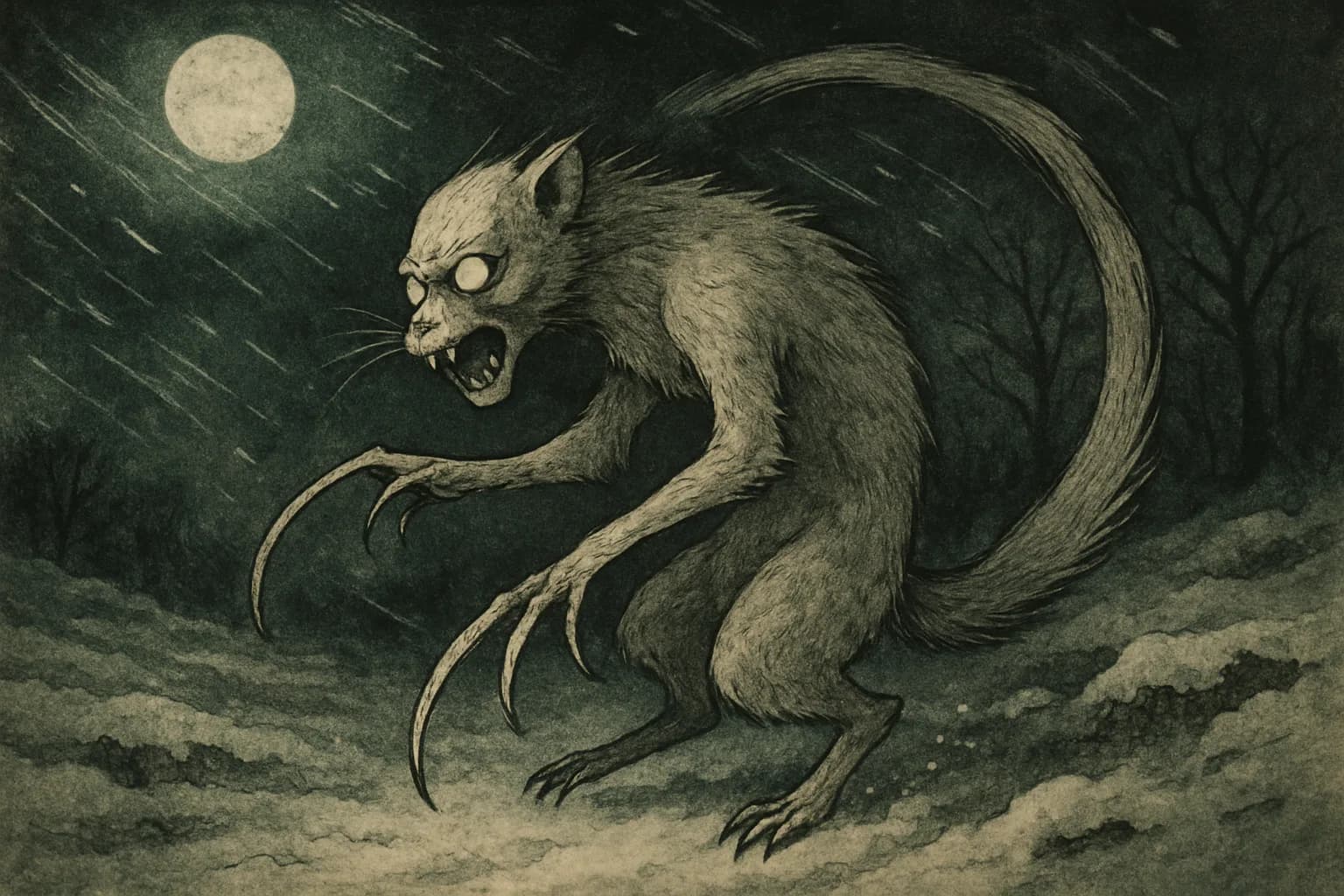
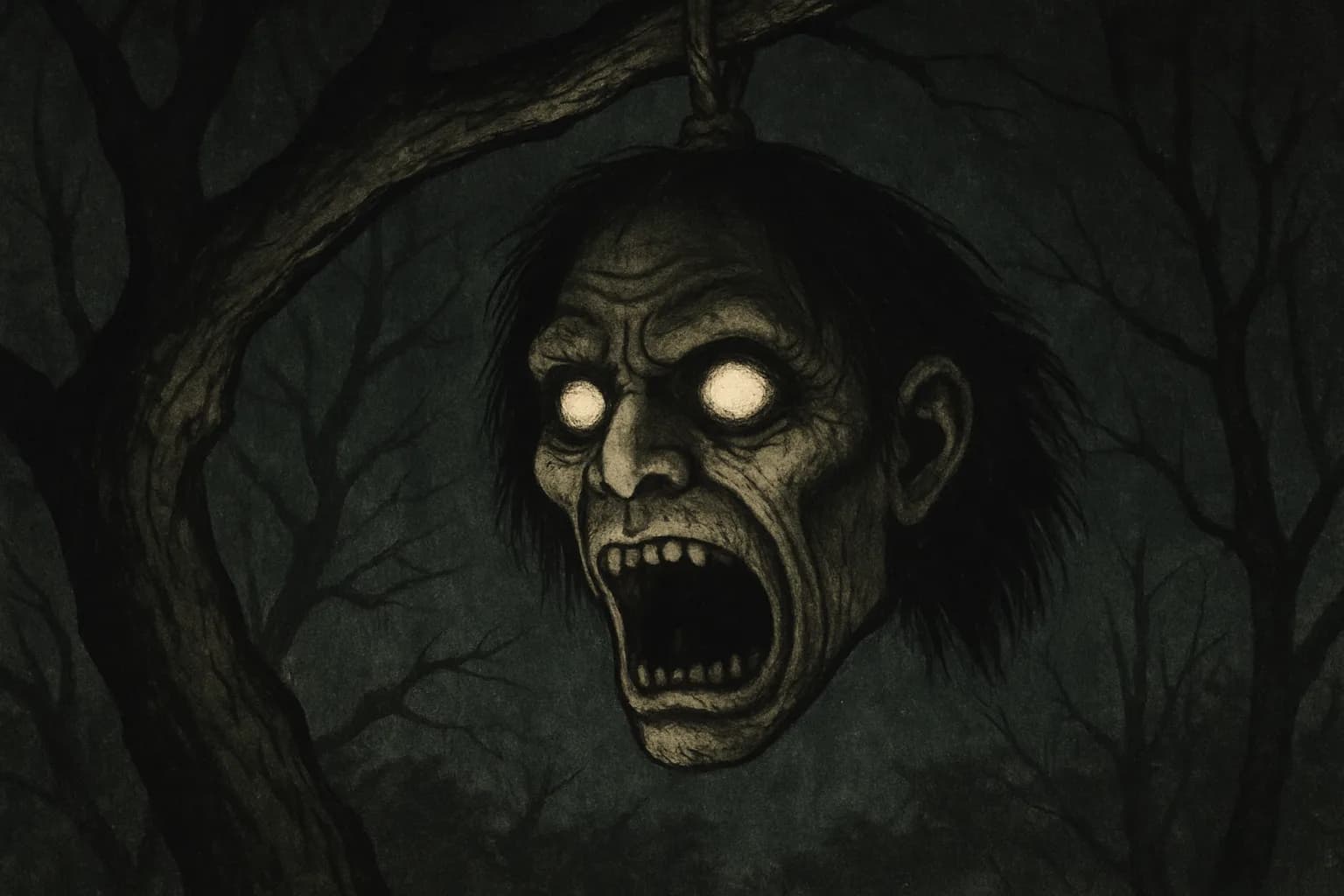
Yamauba offers a traveller shelter for the night, and may eat them. Kamaitachi opens a cut on a walker's legs on a dry, windy day, with nothing there to have done it. Tsurube-otoshi drops out of the treetops onto whoever is underneath. Sagari hangs down out of a roadside tree and screams at whoever passes below.
None of those are about the mountain. They are about being on it.
It helps to remember what travel actually was. You walked. There was no lighting once you left the village, and a lantern shows you a few feet of path and nothing else. Distances were reckoned in hours rather than kilometres, which means a delay of any kind finished your journey in the dark. And the creatures cluster on the route rather than in the depths — the roadside tree, the pass, the stretch between two places, not the summit. Almost none of them live where you were going. They live in the part you had to get through.
The fear is not being eaten
Here is the part that surprised me when I read the entries side by side.
Very few of these creatures are predators. What they mostly appear to do is refuse to be identified.
Betobeto-san is footsteps behind you at night. They stop when you stop. There is nothing to see, and the remedy is to stand aside and say please, go ahead — after which the footsteps pass and you walk on.
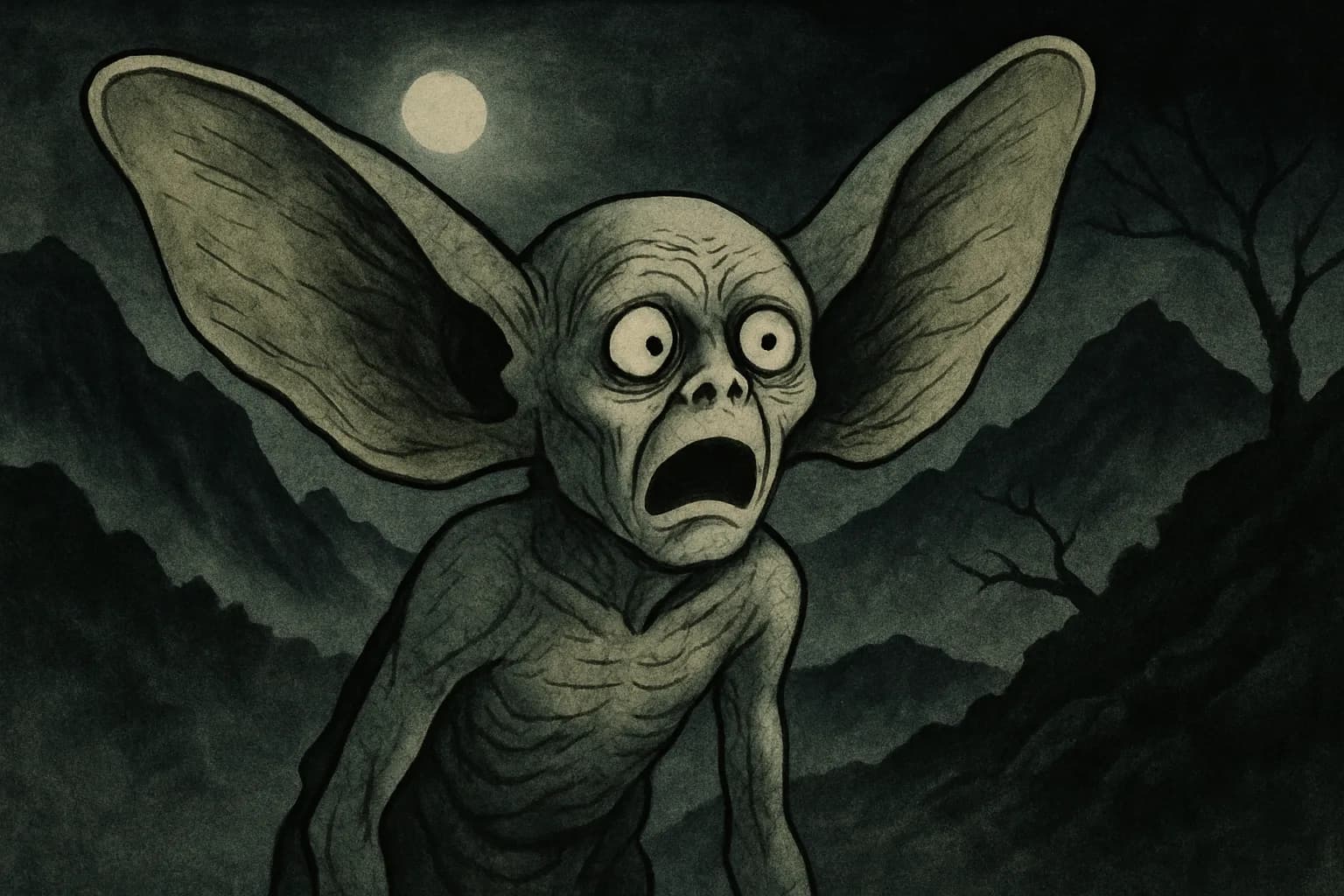
Yamabiko is your own voice coming back. Somebody decided the voice was somebody.
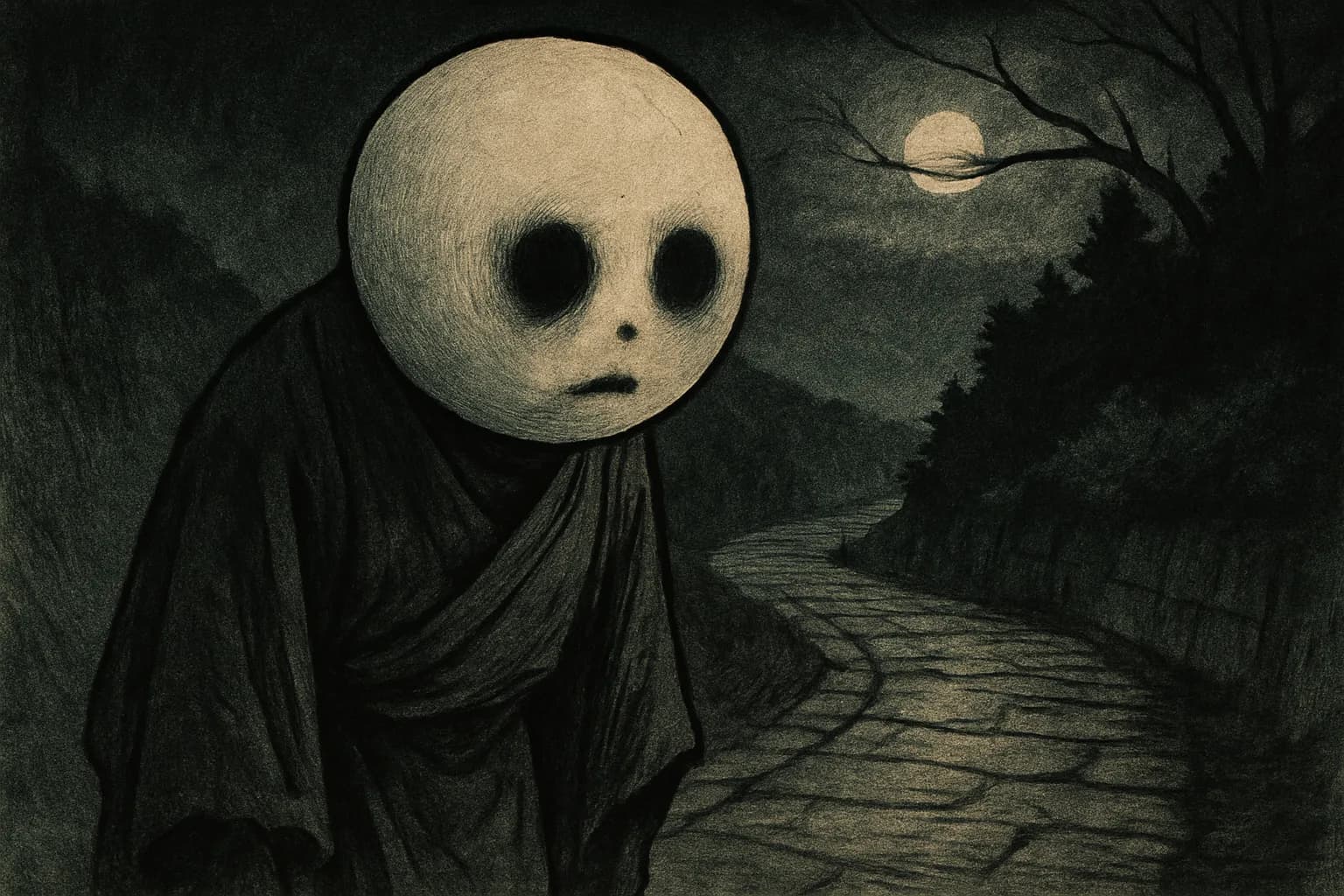
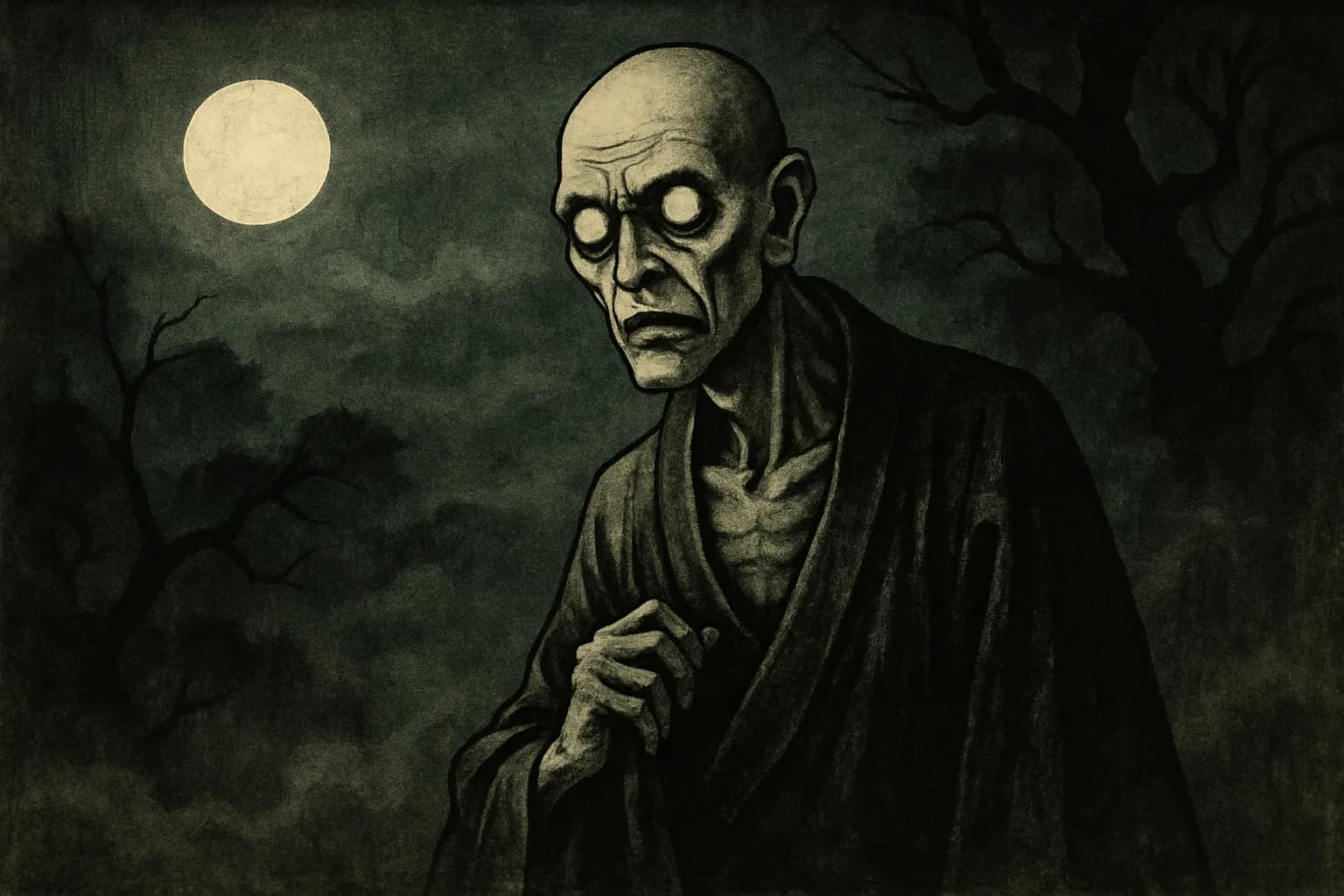
Mikoshi-nyudo grows taller the more you look up at it, which means the act of trying to see it is the thing that makes it worse.
That is not a fear of animals. It is the fear of not being able to account for what is there — on a path you cannot see the end of, with nobody to ask.
The same fear, moved indoors
Eleven more of the 34 are not outdoors at all. They are the house at night.
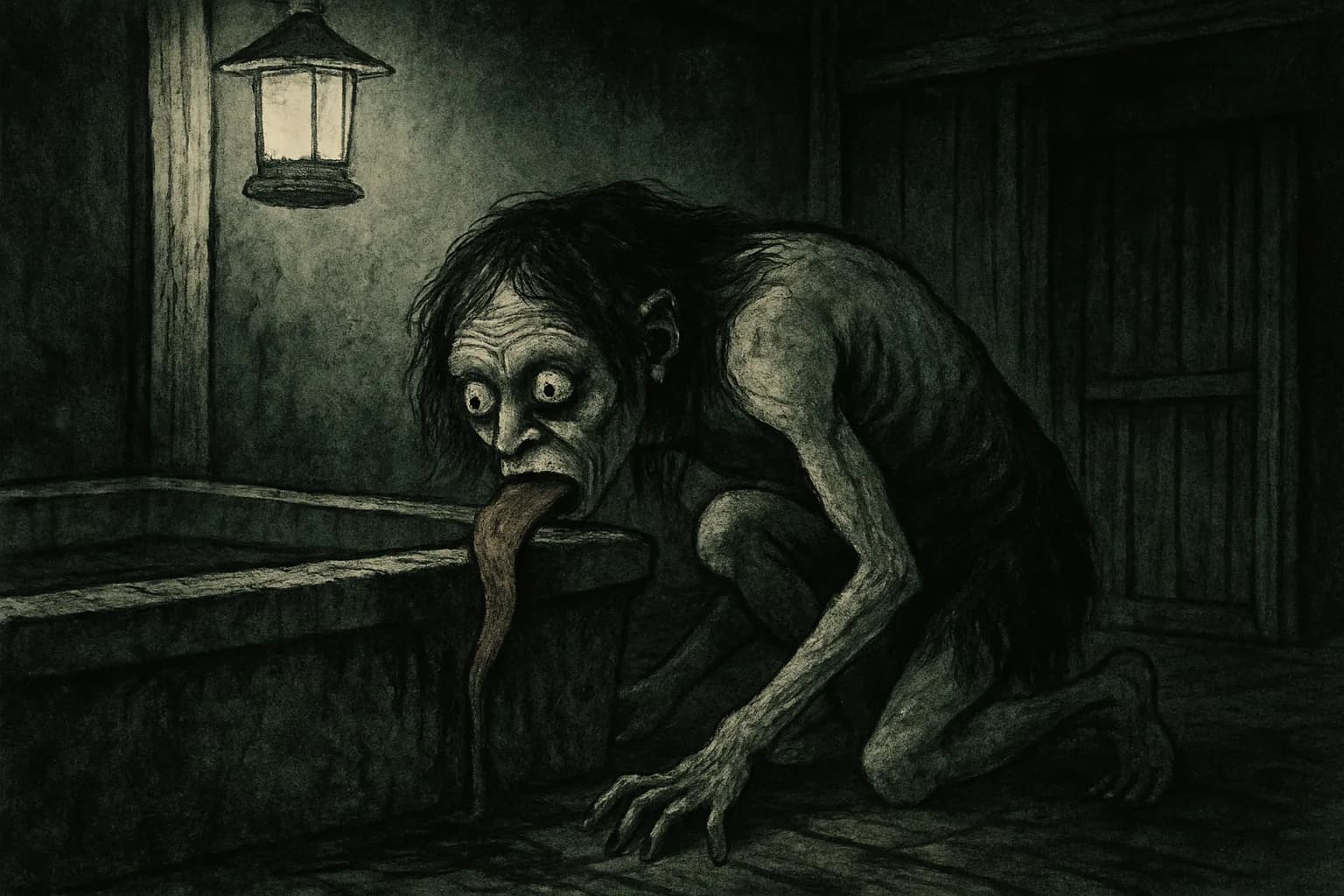
Akaname licks the scum in a bathhouse nobody cleaned. Tenjoname licks ceilings, which is offered as the explanation for the dark stains up there. Uwan is a shout from an empty building. Mokumokuren is the eyes that open across a torn paper screen.
Put them next to the road creatures and the shared condition is obvious. You cannot see properly, and you are on your own. The mountain version happens on a path. The household version happens in a room you have slept in a thousand times, on the one night something in it does not add up.
Which is what the word has always meant
This is where the category stops being a list of monsters and starts making sense as a single idea.
The second character in 妖怪 is 怪, the character in ayashimu — to find something odd, to doubt what you are seeing. A yokai is not defined by having claws. It is defined by somebody being unable to explain something, and giving the gap a name and a face.
A mountain road after dark is the place where that happens most. Sounds have no visible cause. Distances are wrong. Something moves and you do not get to find out what.
So the answer to why Japan has so many mountain yokai is not that the mountains were sacred, though they were. It is that the mountains were crossed — on foot, alone, often at night, by people who needed a word for the thing they could not identify.
They had one. They used it a lot.
Where to start
For the mountain that fed people, read kodama, daidarabocchi and tengu. For the mountain that had to be crossed, read yamauba, kamaitachi, tsurube-otoshi and betobeto-san — and notice how often the entry describes somebody walking.
Every entry names where the creature is first written down, with a date. That is the fastest way to see which of the two halves you are holding.