A stone hits your shoulder. You feel it land. No bruise ever shows. You climb up to the roof to catch whoever threw it. No one is there.
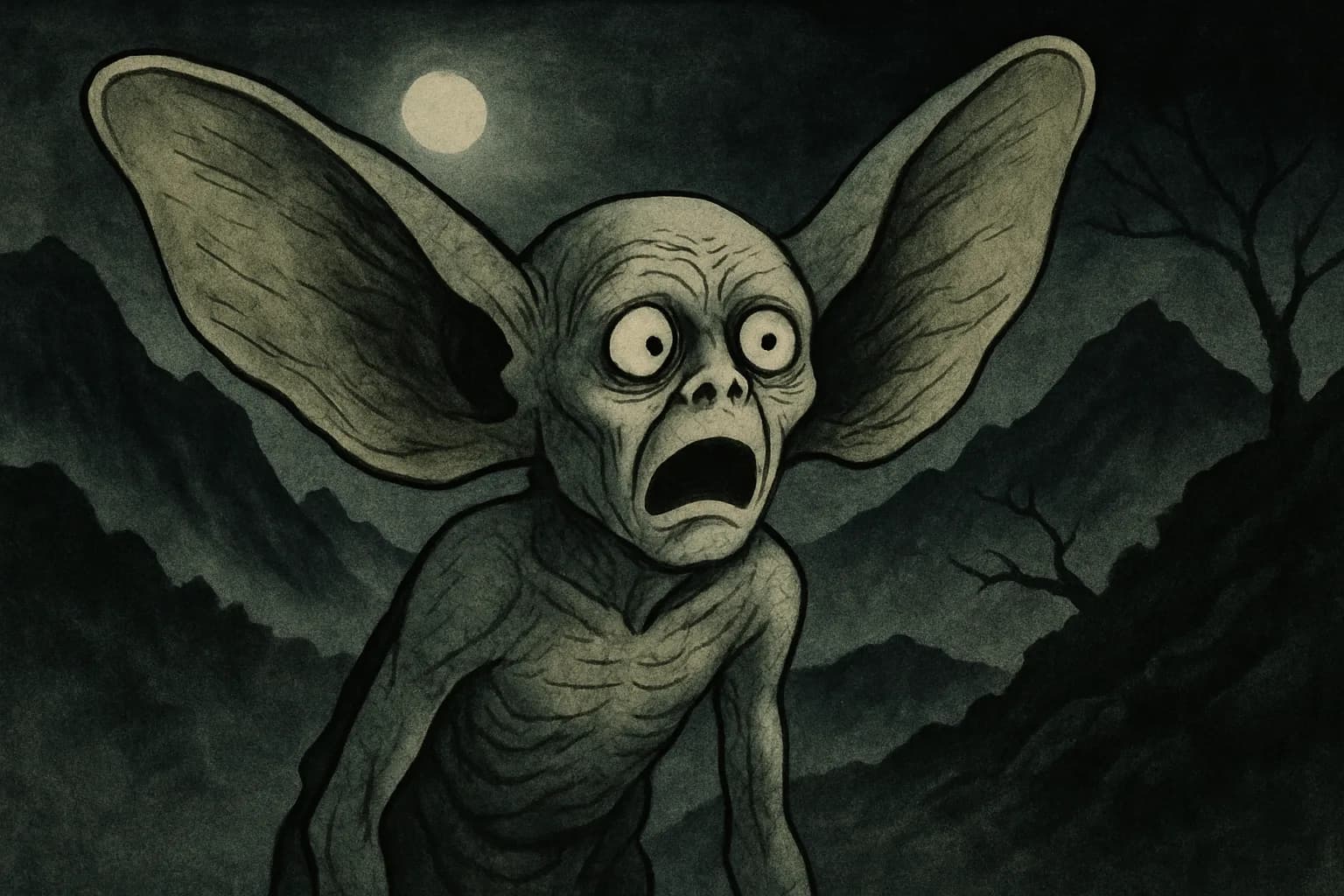
This is tengu-tsubute (天狗礫) — a shower of stones that falls from nowhere. The name blames a tengu, the long-nosed mountain goblin, for the throw. No one has ever caught one in the act.
What happens during tengu-tsubute?
No one sees a tengu throw anything. Only the result shows up.
Stones strike a roof, a wall, or a person, seemingly out of thin air. In one well-recorded Edo-period case, anywhere from twenty to sixty small stones fell at once. People hit by one felt the impact clearly. No wound or mark was ever left behind.
Climbing up to find the thrower never worked, either. The stones seemed to switch sides. One moment they came from behind. Turn around, and the next one came from the opposite direction.
In an even stranger account, the fallen stones themselves vanished afterward. Only a ripple on a nearby river showed that something had landed.
Tradition also adds two warnings. Getting struck by the stone could make a person ill. Simply encountering the phenomenon was said to bring bad luck in the next hunt.
Blamed on a tengu — or something else
Most tellings point at the tengu. Folklore says it throws stones to make people repent bad conduct.
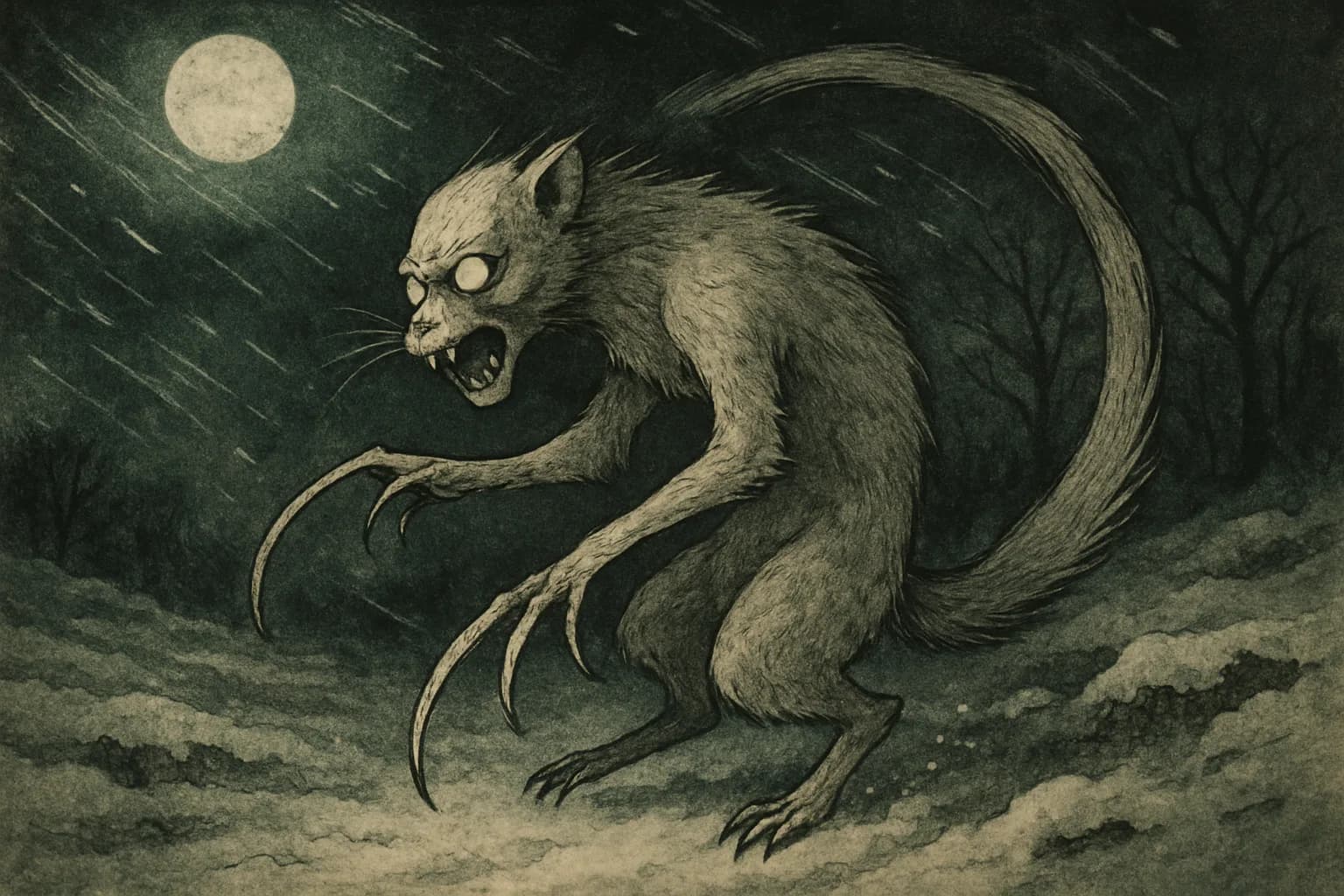
Not every household agreed. Some blamed the kitsune and tanuki instead — fox and raccoon-dog spirits already famous for mischief and illusion.
Recorded incidents across Japan
The stories read like local news reports, not myth.
A Shinto priest at Daishoji Shrine, in what is now Kaga, Ishikawa, had his own encounter with it. It is recorded in a collection called Seijō Kaidanroku. Stones fell from the sky, but none ever landed where they should have. A nearby river rippled as if struck. No stone was ever found.
In 1755, stones fell day and night on two streets in Kanazawa's old castle town, Owari-machi and Ima-machi. The shower would not stop. A tengu got the blame. Local historian Morita Heiji recorded the case in his Kanazawa Koseki-shi.
The most detailed account comes from Edo, in 1854. An egg merchant's house in Kōjimachi was pelted again and again. Watchers climbed onto the roof to catch the culprit. The stones kept switching sides on them, as if the thrower could see exactly where they stood.
The strangest case ran in a Tokyo newspaper, the Tokyo E-iri Shimbun, in March 1876. Stones began falling inside the house of a man named Nakamura Shigejirō on March 10. The report ran four days later.
If it happens to you
Only one case records anyone trying to stop it — Nakamura Shigejirō's, in 1876.
He put the fallen stones on his household shrine. He offered sake and food. He and his wife prayed for the trouble to end.
It didn't work. The stones on the shrine vanished, and the shower grew worse. He drew a sword against an enemy he couldn't see. That failed too. Stones kept falling at the same hour every day.
Shigejirō finally called the police. An officer watched the stones fall with his own eyes. Word spread, and a crowd of onlookers gathered outside the house.
A passing rickshaw driver named Kobayashi Chōei offered a different fix: a prayer against fox and tanuki, the usual suspects when a tengu isn't to blame. Shigejirō accepted. The newspaper never says whether it worked.
Where it comes from
Tengu-tsubute is young, as named yokai go. Toriyama Sekien drew and named it in 1781, in his illustrated catalog Konjaku Hyakki Shūi.
The idea behind it is much older. The 9th-century chronicle Sandai Jitsuroku records stone arrowheads falling on Akita Castle. At the time, no one blamed a goblin. The stones were thought to be dropped by the heavenly gods, together with thunder.
By the 11th century, during the reign of Emperor Shirakawa, warrior monks threw stones during protest marches on the capital. Those stones were read as a sign of divine will, not a human act.
A 12th-century anthology, Hōbutsushū, even records a human bandit nicknamed Kanatsubute — "metal pebble" — who robbed travelers by pelting them with stones before he was caught and executed. The crime was ordinary. The fear of stones falling from nowhere was clearly already old.
Mysterious stone showers already had centuries of history. Sekien just gave them a name.
Tengu-tsubute today
The phenomenon still turns up in modern Japanese collections of strange and unsolved cases, including the 2008 book Oedo no "Toshi Densetsu", which retells the 1854 Kōjimachi incident for a contemporary audience.
Japanese Wikipedia's own entry on tengu-tsubute makes one more comparison worth noting: a site that catalogs unexplained phenomena once cited a comparable case from South Africa, decades later and a continent away — a woman pelted by a rain of stones.
Sekien's print isn't the last word on tengu-tsubute, either. In his 1784 collection Hyakki Tsurezure Bukuro, he drew a second, related yokai: Taimatsu-maru, a fire-carrying bird of prey said to haunt deep mountain forests, lit by the same strange glow that tengu-tsubute gives off. It isn't described as a comforting light in the dark. It's described as a yokai that gets in the way of monks at prayer.