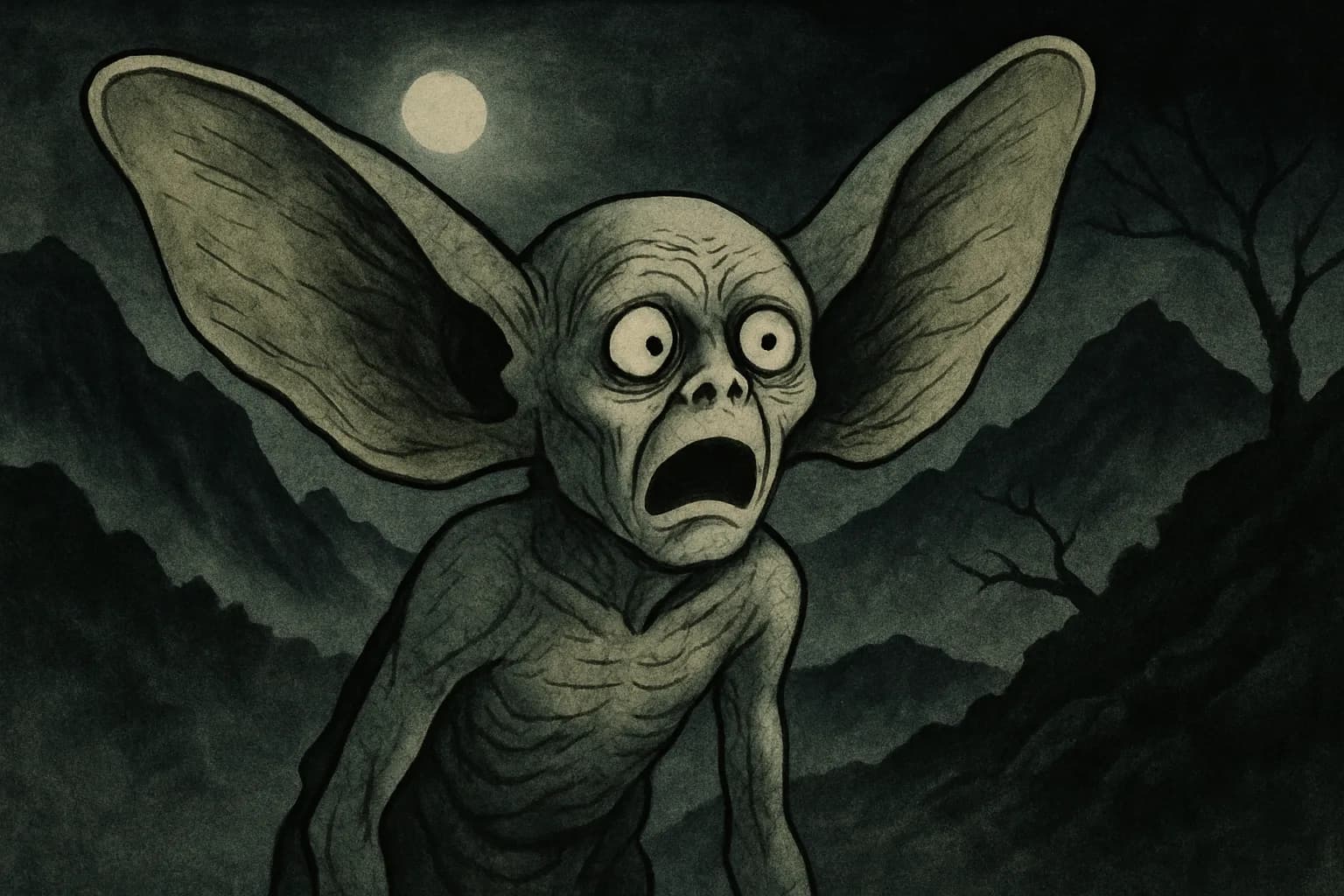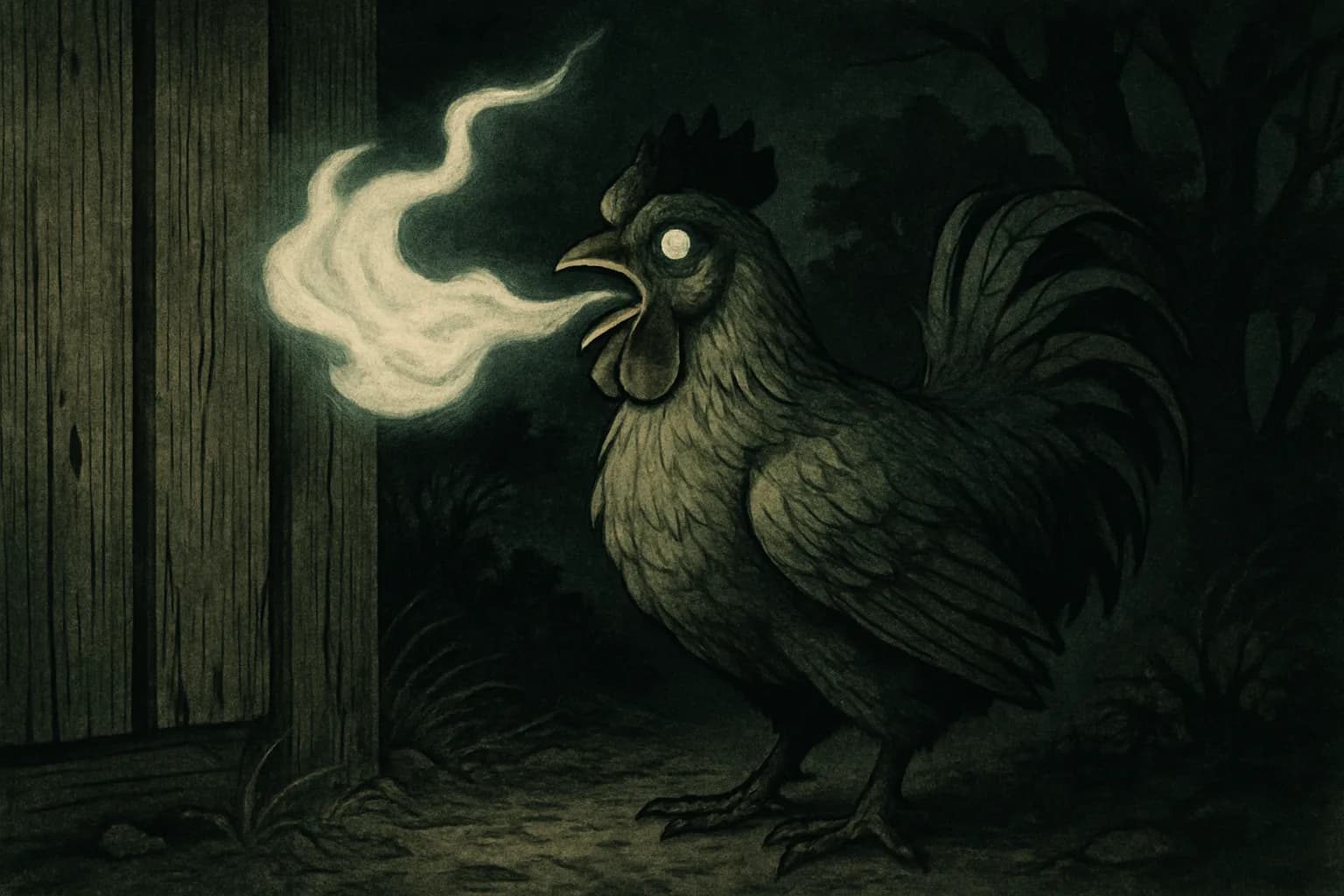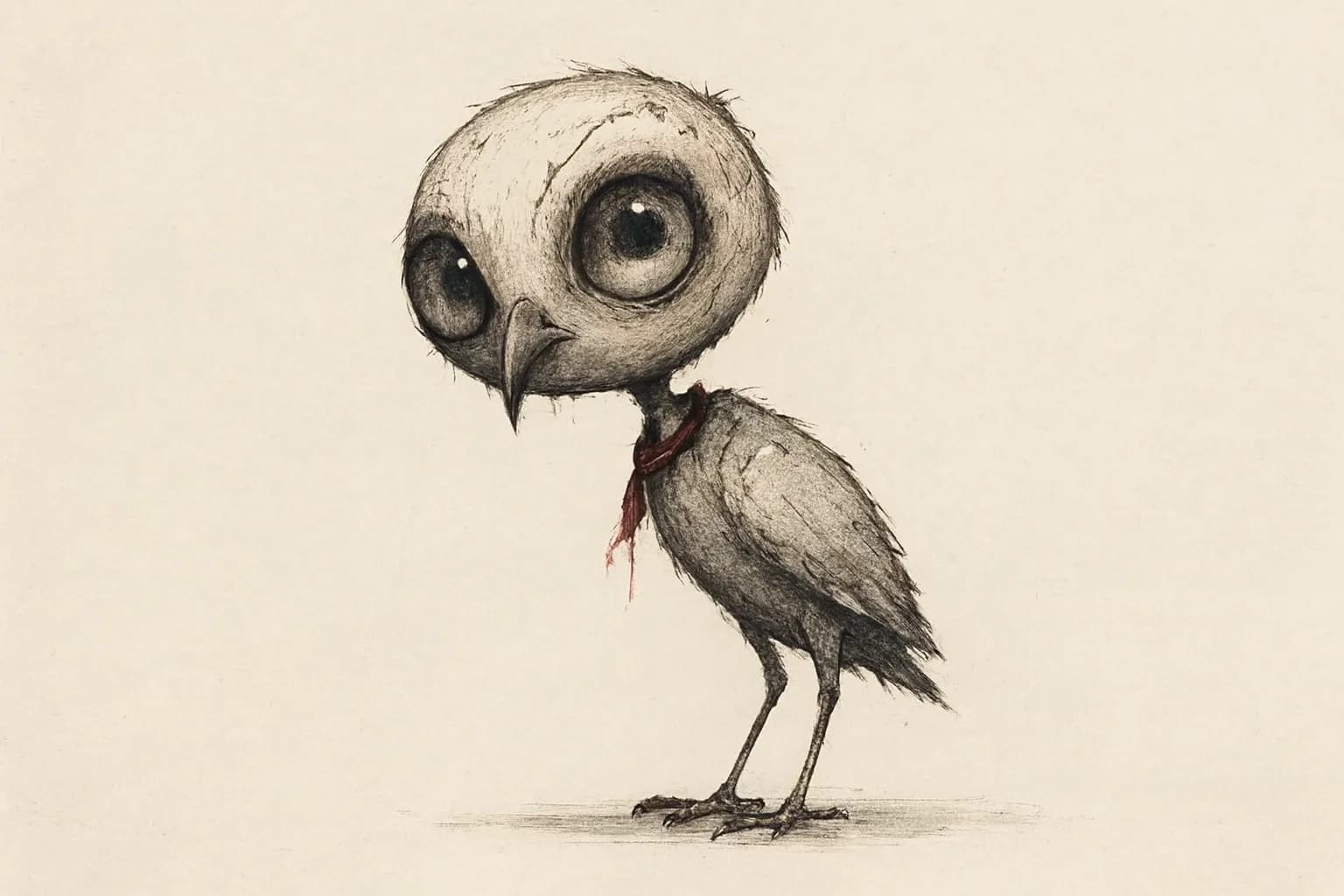
Walk a mountain road at night in old Tosa or Kii, and you might hear sparrows. Not one bird, but several, chirping and fluttering just past the edge of your lantern light. That should be impossible. Sparrows are daytime birds. They roost at dusk and stay silent until dawn. Villagers gave the sound a name anyway: yosuzume, the night sparrow. 夜 (yo) means "night." 雀 (suzume) means "sparrow." The name states the wrongness plainly, right in the two characters.
What does it sound like?
Nobody describes seeing a yosuzume clearly. Like a lot of Japan's roadside yokai, it is defined by sound rather than sight. Travelers report quick chirping and the flutter of small wings, always just out of lantern range, keeping pace alongside the road. Some accounts add a flicker of movement at the corner of the eye — a shape too fast and too dark to be a real bird. Most tellings don't bother with a body at all. The chirping is the whole encounter.
That absence of a clear shape is not an oversight. It's the point. A traveler who cannot see what is making the sound has no way to reassure themselves that it is, in fact, ordinary birds.
Why the sound is wrong in the first place
Real sparrows sleep after sunset. Any Japanese villager walking home from the fields at dusk would have known that as plainly as knowing dogs bark and cats don't. So chirping on a mountain path after dark was never mistaken for a stray flock stirring in a bush. It registered instantly as out of place, which is exactly what made it worth naming and passing down.
That single detail does most of the work here. Folklore rarely needs a fanged monster when an ordinary thing can just be happening at the wrong hour.
An escort, or a warning
In the Tosa tradition — today's Kochi Prefecture, on Shikoku — the yosuzume's chirping is tied to a second, more dangerous presence on the road: the okuri-inu, a dog-shaped yokai that trails lone night walkers and turns on anyone who stumbles. Some tellings treat the sparrows as an escort for the dog, or as a sign that it is somewhere nearby, keeping its distance for now. As long as the chirping continues, the walker is merely being watched.
The danger sits in what happens next. If the chirping stops without warning, tradition says that is the moment to be afraid — not the sound itself, but its sudden absence. A walker who noticed the birds fall silent knew to keep moving steadily, stay calm, and not give whatever was listening a reason to close the distance.
Where it comes from
Mountain paths before electric light were genuinely unsafe places after dark: uneven ground, sudden drops, and long stretches with no one nearby to help if something went wrong. Folklore across Japan tends to answer that fear the same way — by giving an unexplained sound a name, a set of rules, and a warning sign to watch for. The yamabiko, blamed for echoes bouncing back off mountain rock, works the same way. So does betobeto-san, the footsteps that trail a walker on a Nara road and vanish the moment you ask them to go first. Yosuzume belongs to that same family: a real, disorienting sensation — birdsong where there shouldn't be any — turned into a creature with a rule a person could actually use.
Read this way, the yosuzume isn't really about sparrows. It's about learning to trust an instinct that something on a dark road has changed, well before you can say exactly what.
Yosuzume today
Yosuzume never picked up a mascot or a merchandising life the way the kappa did. It survives mainly in reference works on Japanese folklore — general yokai encyclopedias and regional folklore collections from Kochi and Wakayama still list it alongside okuri-inu as a pair of beliefs from the same stretch of mountain road. There is no cartoon version waiting at a train station gift shop. What's left is closer to a piece of inherited advice: if you ever hear birds chirping on an empty road after dark, the birds themselves were never the problem. It's the quiet after they stop.