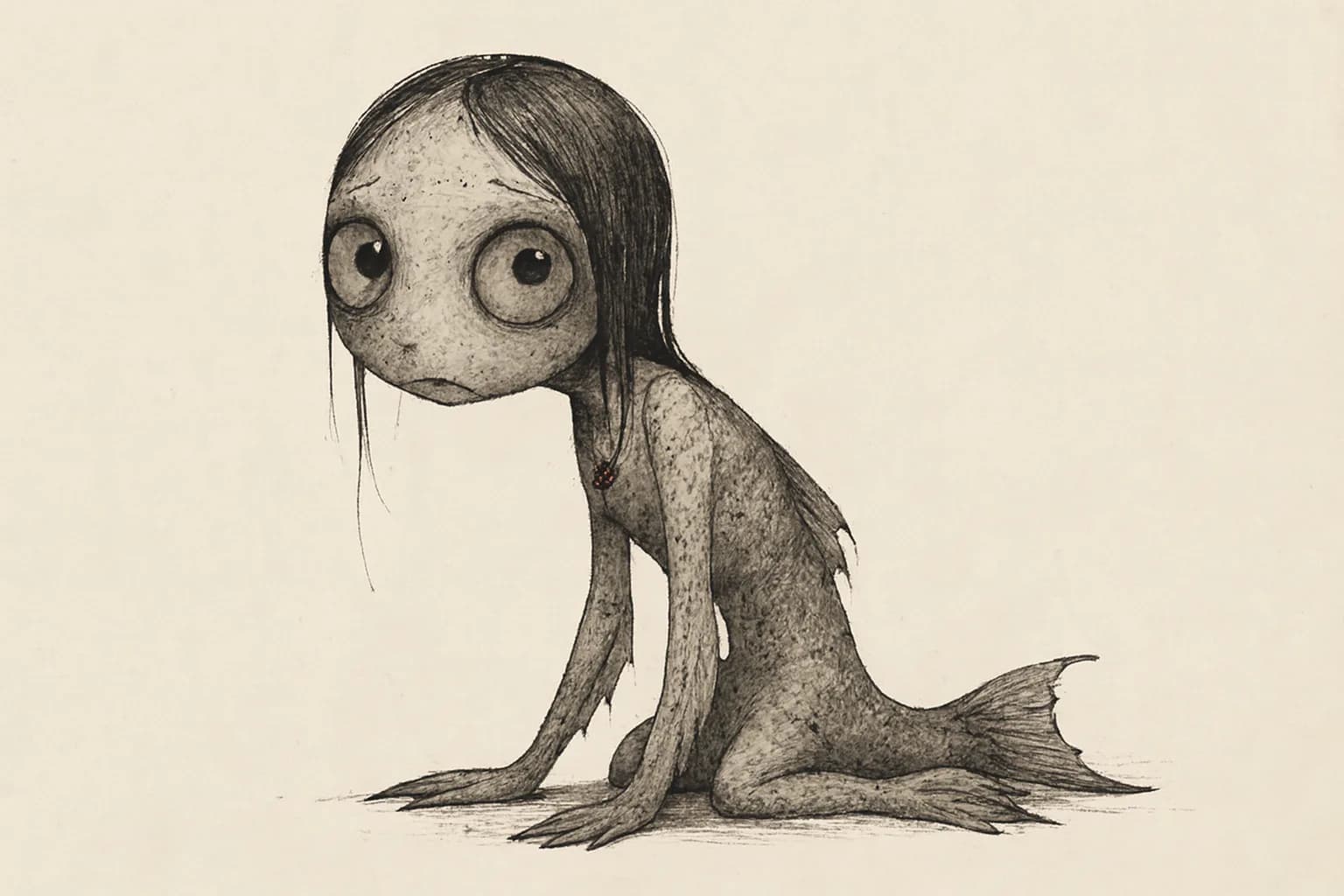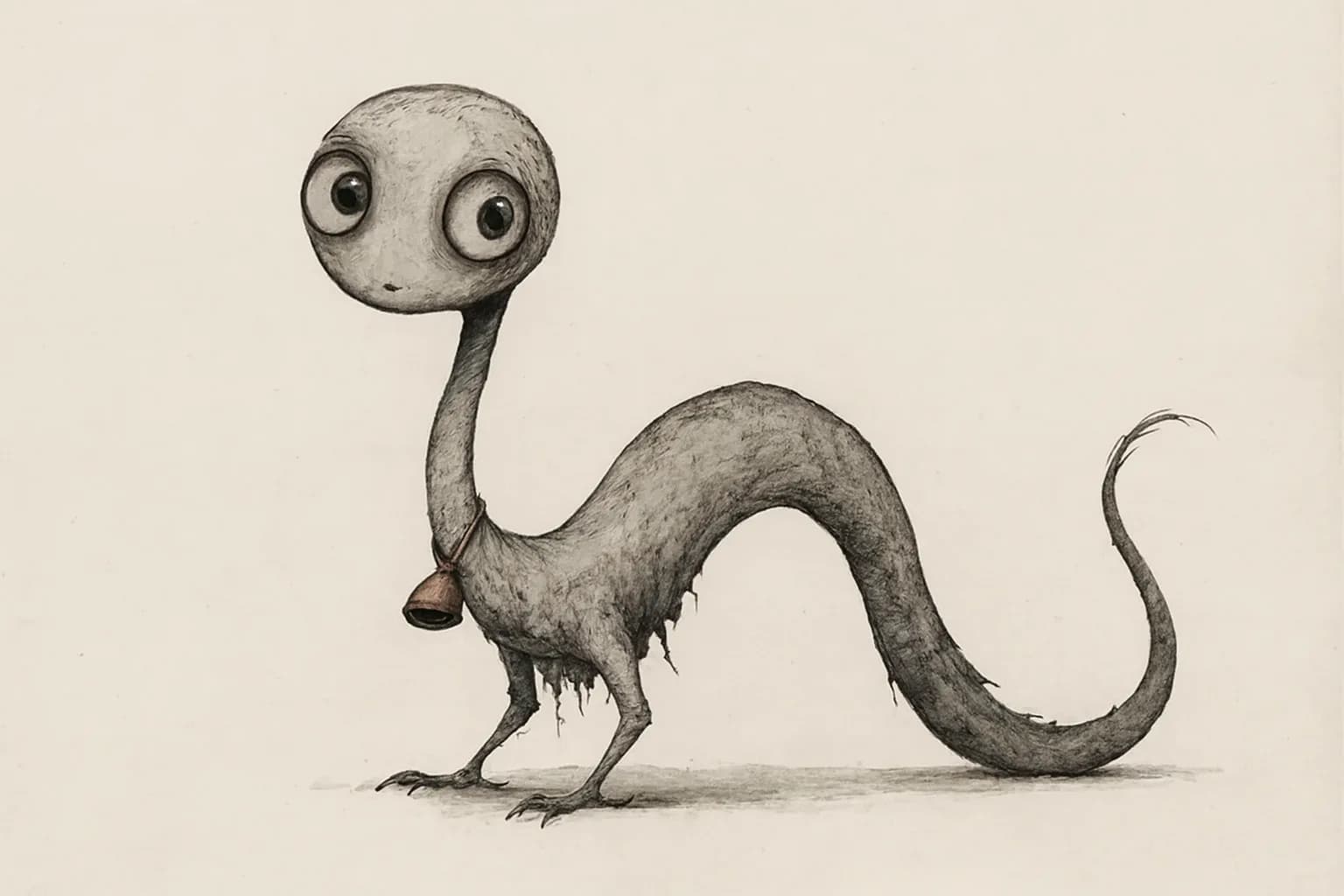
The Oki Islands sit off the coast of Shimane. They are a scatter of rock in the Sea of Japan, cold enough to sink a ship fast. Local legend gave the water there an owner. Yofune-nushi means "master of the night boat." It was a great serpent that lived on the sea floor. It rose after dark, and once a year the islands were expected to pay it.
What does it look like?
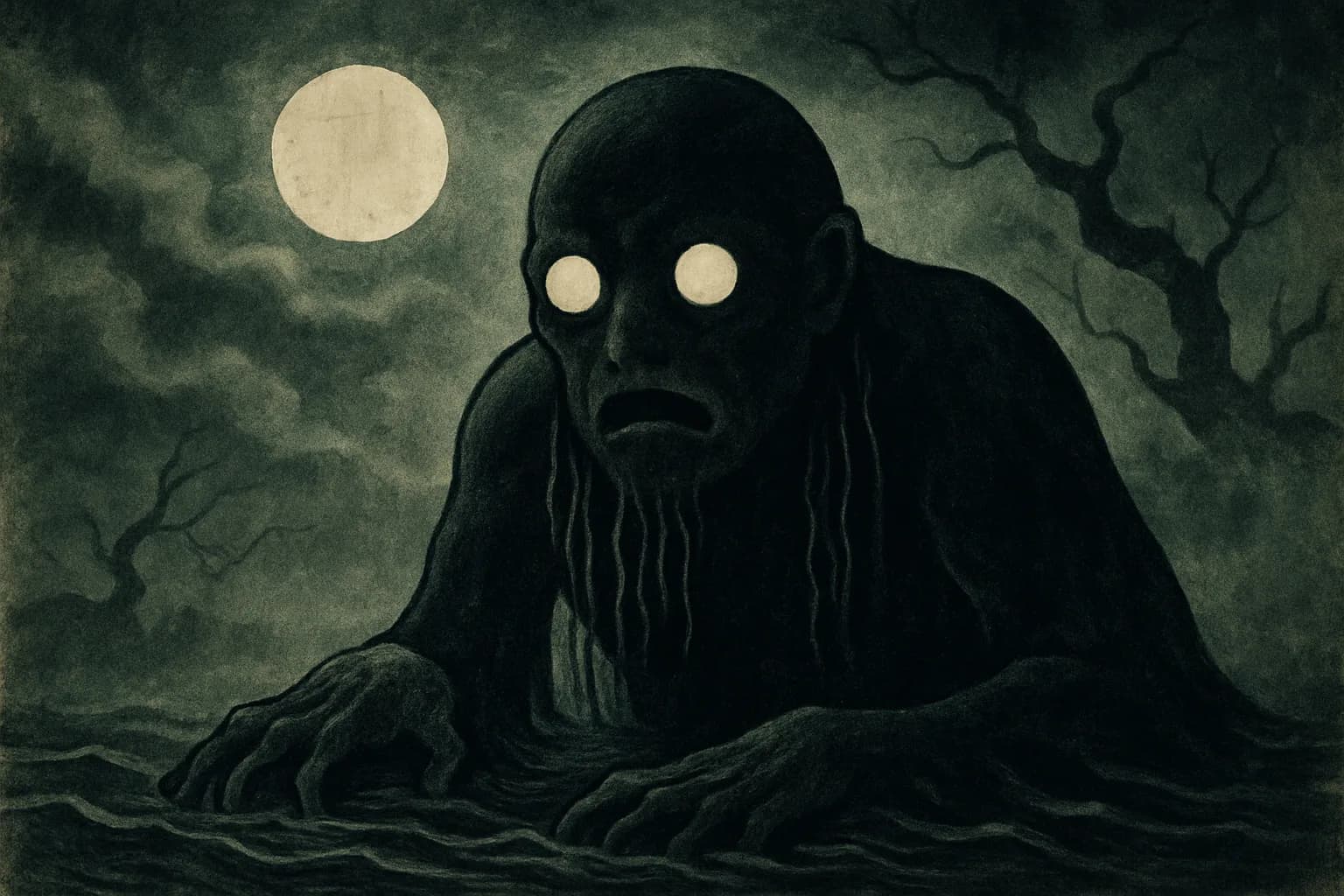
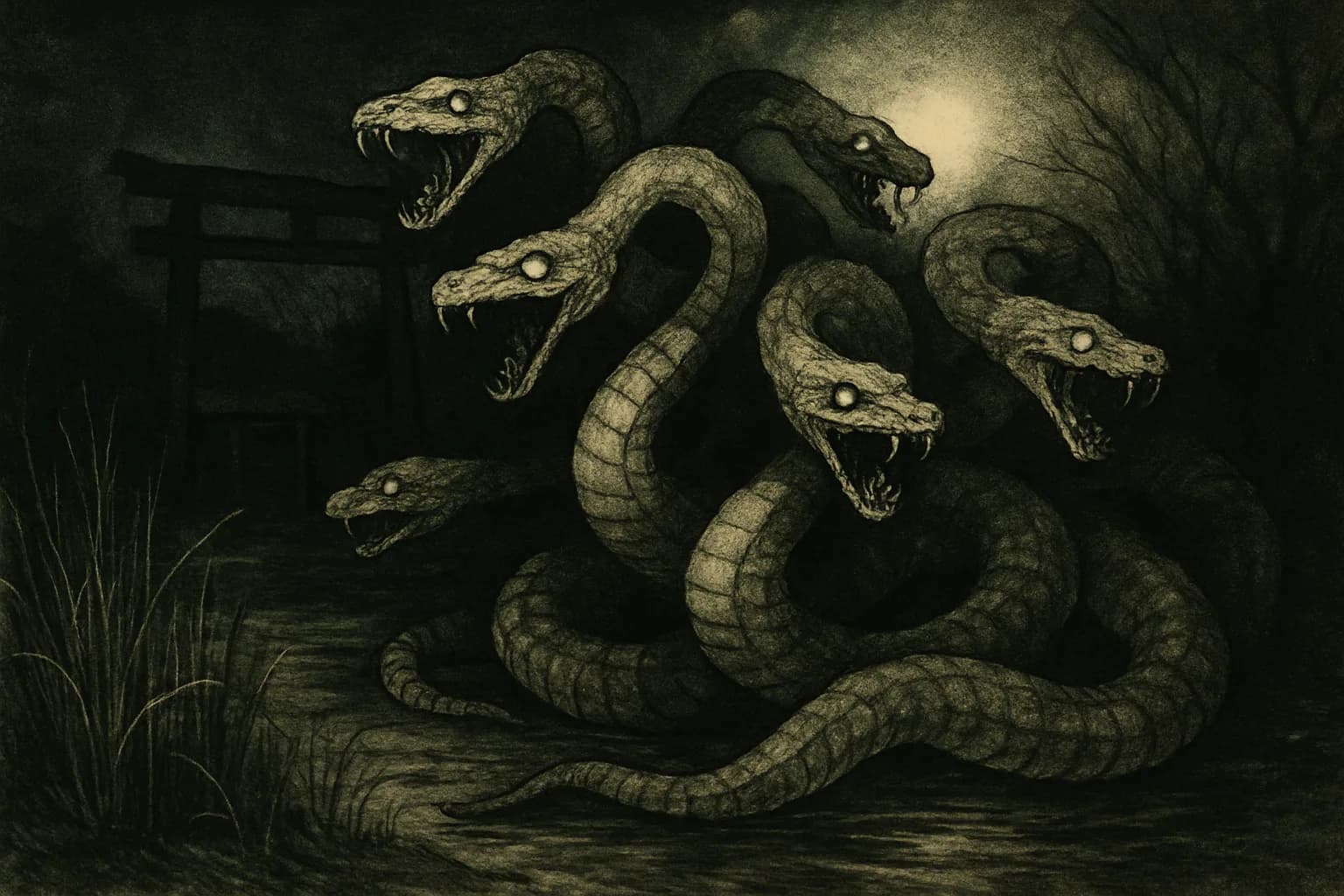
Accounts describe a long, serpentine body. It stayed in deep water and was rarely seen whole. It did not walk the land or wear a human face, the way many yokai do. It kept to a sea cave beneath the surface. The fear was less about its shape than about what happened when a boat crossed its water uninvited: the calm going wrong, something long moving under the hull.
The yearly price
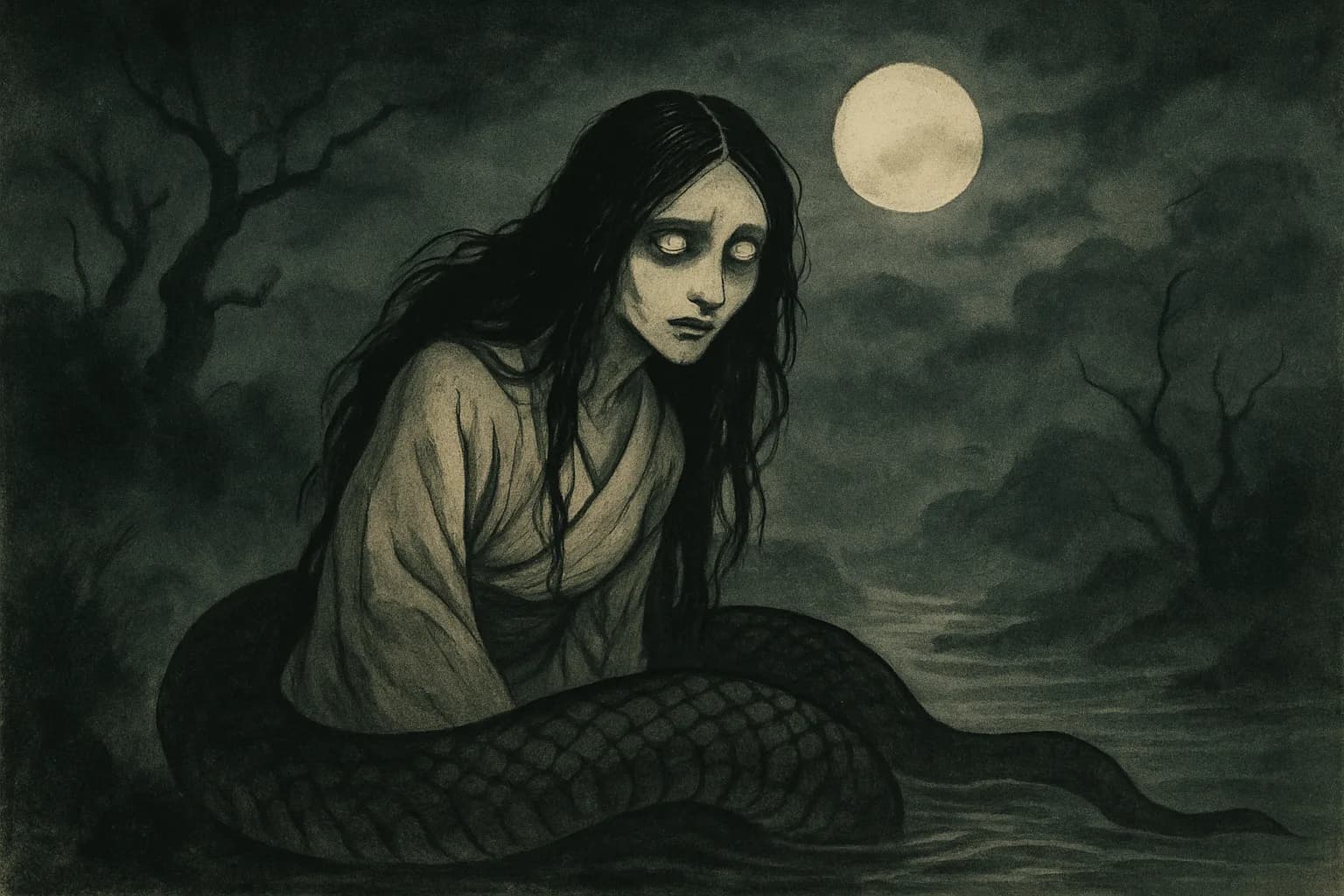
Once a year, on the thirteenth day of the sixth month, the islands were said to send Yofune-nushi a young woman. Refuse, and the serpent answered with storms. Those storms were bad enough to wreck the fishing fleet the islands lived on. So the sacrifice went on, season after season. It was an arrangement nobody could afford to break first.
Tokoyo and the serpent
The best-known version of the story turns on a young woman named Tokoyo. Her father was a samurai named Oribe Shima. He had been exiled to Oki by Hōjō Takatoki, regent of the Kamakura shogunate. Tokoyo crossed to the islands to find him. She arrived just as a girl was being led to the shore for that year's sacrifice.
She took the girl's place. She dove into the water with a dagger and found Yofune-nushi in its cave. By some tellings, a cursed wooden statue of Takatoki was hidden there too — the source of an illness plaguing the regent on the mainland. She blinded the serpent first, then killed it. She carried both the creature's body and the statue back to shore.
With the curse lifted, Takatoki is said to have pardoned her father. The serpent's remains were buried at a shrine on the islands. Locals still call the site the Tomb of the Sea Serpent.
This telling reached English readers through Richard Gordon Smith, a British naturalist who lived in Japan. He published it in Ancient Tales and Folk-lore of Japan (1908). Smith said plainly that he could not confirm the story himself. That caution is worth keeping — no Japanese source has turned up the Tokoyo episode in quite that shape. What does hold up on its own is the belief underneath it: a serpent-god off Oki, a yearly toll, storms if it went unpaid. The folklorist Takagi Toshio recorded that core belief too, in his 1918 survey of Japanese folktales, drawing on oral tradition rather than Smith's book.
Where it comes from
Read as folklore, Yofune-nushi fits a pattern common along dangerous coastlines. A real hazard — the open sea around a small island chain — gets a will and a price attached to it. A community that loses boats and sailors to sudden weather has reason to imagine something down there that must be kept happy. The story of a girl who goes into the water and does not drown reads as the other half of that fear. It is proof, told and retold, that the arrangement could be broken.
The Oki Islands carried a second layer of real history alongside the legend. They sit far enough offshore that the Kamakura and later shoguns used them to exile people who had fallen out of favor. The most famous were Emperor Go-Toba, exiled there in the 13th century, and Emperor Go-Daigo, exiled in the 14th. A story about a girl crossing to Oki to find an exiled father fits comfortably inside that history, whether or not the tale itself is old.
Yofune-nushi today
The serpent has stayed mostly local. It was never folded into a mascot or a franchise the way the kappa was. It also has no fixed image from a famous Edo-period print, unlike many older yokai. Artists who draw it today draw it fresh rather than copy a canonical look. On the Oki Islands themselves, the Tokoyo story is still told as part of the region's folklore tourism, alongside the islands' better-documented history as a place of imperial exile.
Coastal Shimane keeps several sea-serpent legends in close company. Yamata-no-Orochi, the eight-headed serpent of the Kojiki, comes from the same prefecture — inland along the Hii River, rather than out at Oki. Sailors elsewhere on the coast told closer cousins of this story too. Funayurei are the drowned dead who beg a ladle before swamping a boat. Umibozu is the black shape that rises from water gone unnaturally still. All three share the same warning underneath the details: do not trust calm water after dark.