On wet nights around the lake country of Mino and Ōmi, old travelers described a trouble that had nothing to do with the rain itself: cold sparks that landed on a fisherman's straw raincoat and would not go out. Worse, brushing at them did no good — every sweep of the hand was said to leave more sparks glowing than before. The phenomenon had a name ready for it: minobi, "raincoat fire," from 蓑 (mino, the straw rain cape worn by farmers and fishermen) and 火 (bi, fire).
What does minobi look like?
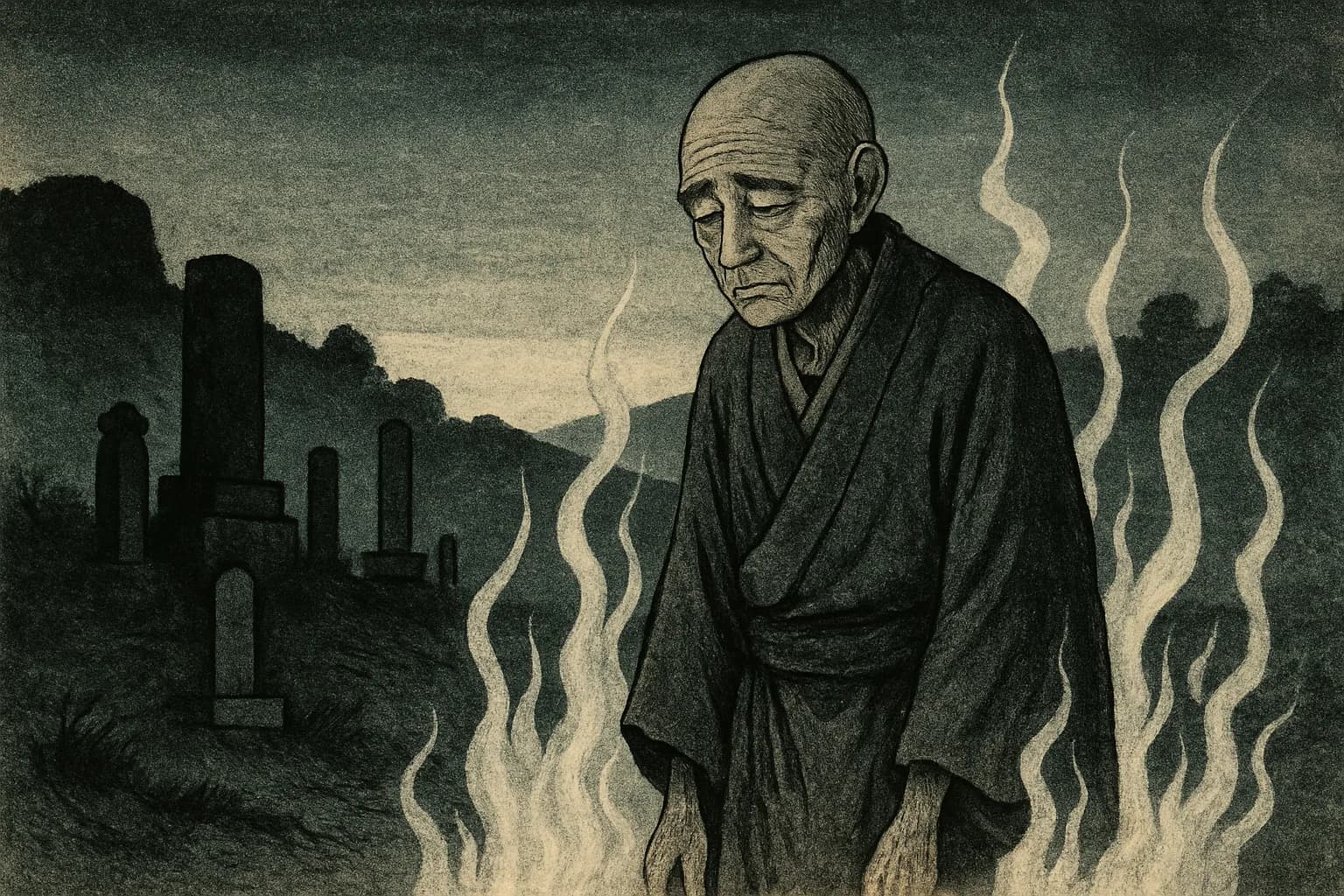
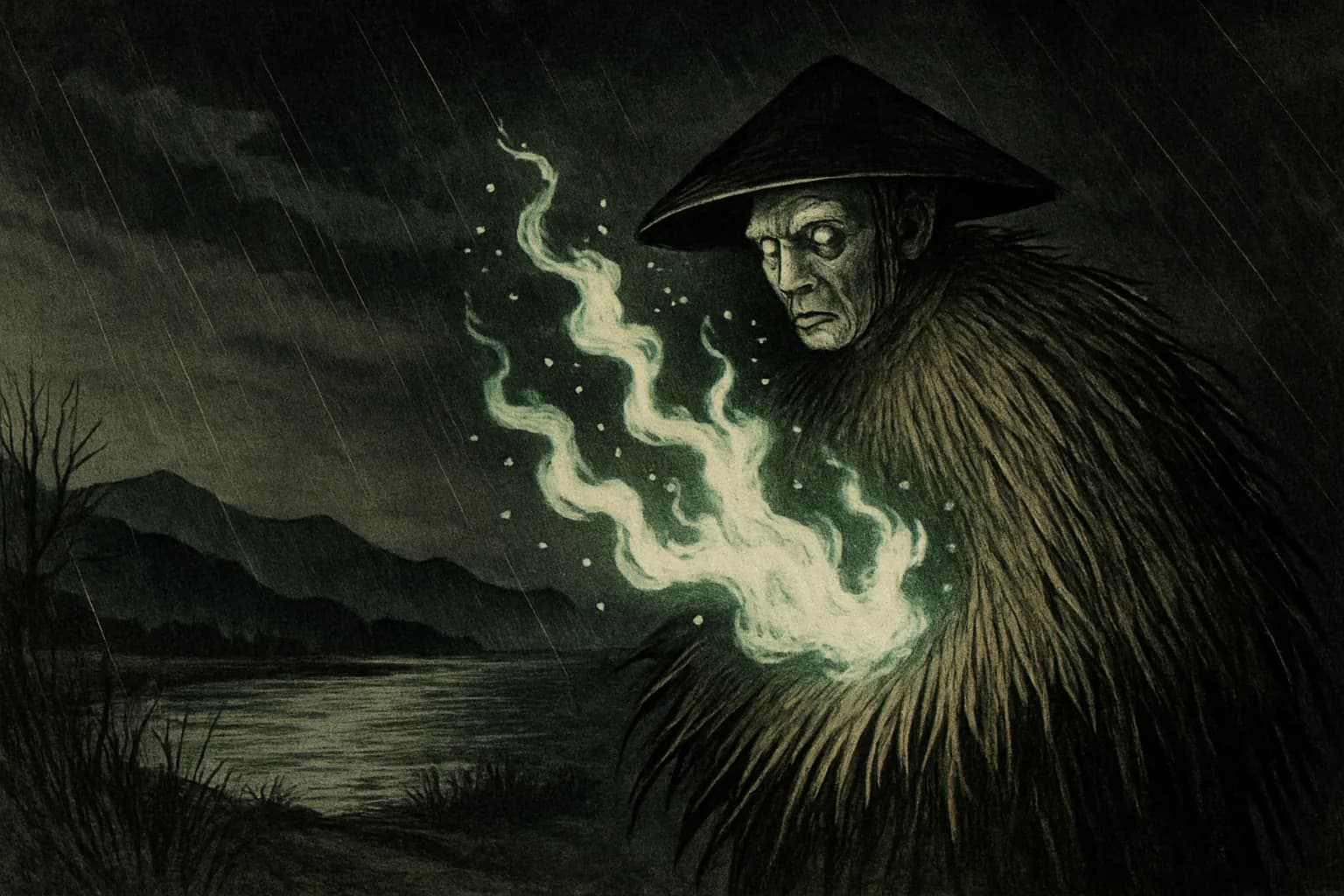
Minobi has no face, no limbs, no shape of its own. It exists only as a scatter of small lights on somebody else's clothing. Toriyama Sekien's illustration in his Konjaku Hyakki Shūi (1781) shows exactly this: a lone man in a straw mino and wide hat, trudging home through rain, with a dusting of glowing embers caught across his shoulders and back, as if sparks from someone else's fire had drifted over and stuck. The lights are described as small, numerous, and cold — they scorch nothing and give off no real heat, which puts minobi in the same family as onibi and kitsunebi: unexplained fires with no fuel and no obvious source.
The trouble with brushing it off
The detail every account agrees on is the one that gives minobi its bite. A traveler irritated by the sparks and swatting at his cape would find not fewer lights but more, spreading further across the straw with each attempt, until the whole garment glimmered faintly in the dark. No story blames minobi for a death or a fire that got out of hand — it sits at the unsettling rather than dangerous end of the yokai spectrum, the kind of tale meant to make a lone walker pick up his pace rather than fear for his life.
Where minobi comes from
Sekien places the phenomenon in Mino Province — now Gifu — and along the shores of Lake Biwa in neighboring Ōmi, lake country and rice country alike, exactly where a farmer or fisherman caught out after dark in bad weather would already be wearing a straw mino. That's probably not incidental: before oiled or rubberized cloth, the mino was the everyday raincoat, so a story that specifically haunts it was a story built to catch as many nighttime walkers as possible.
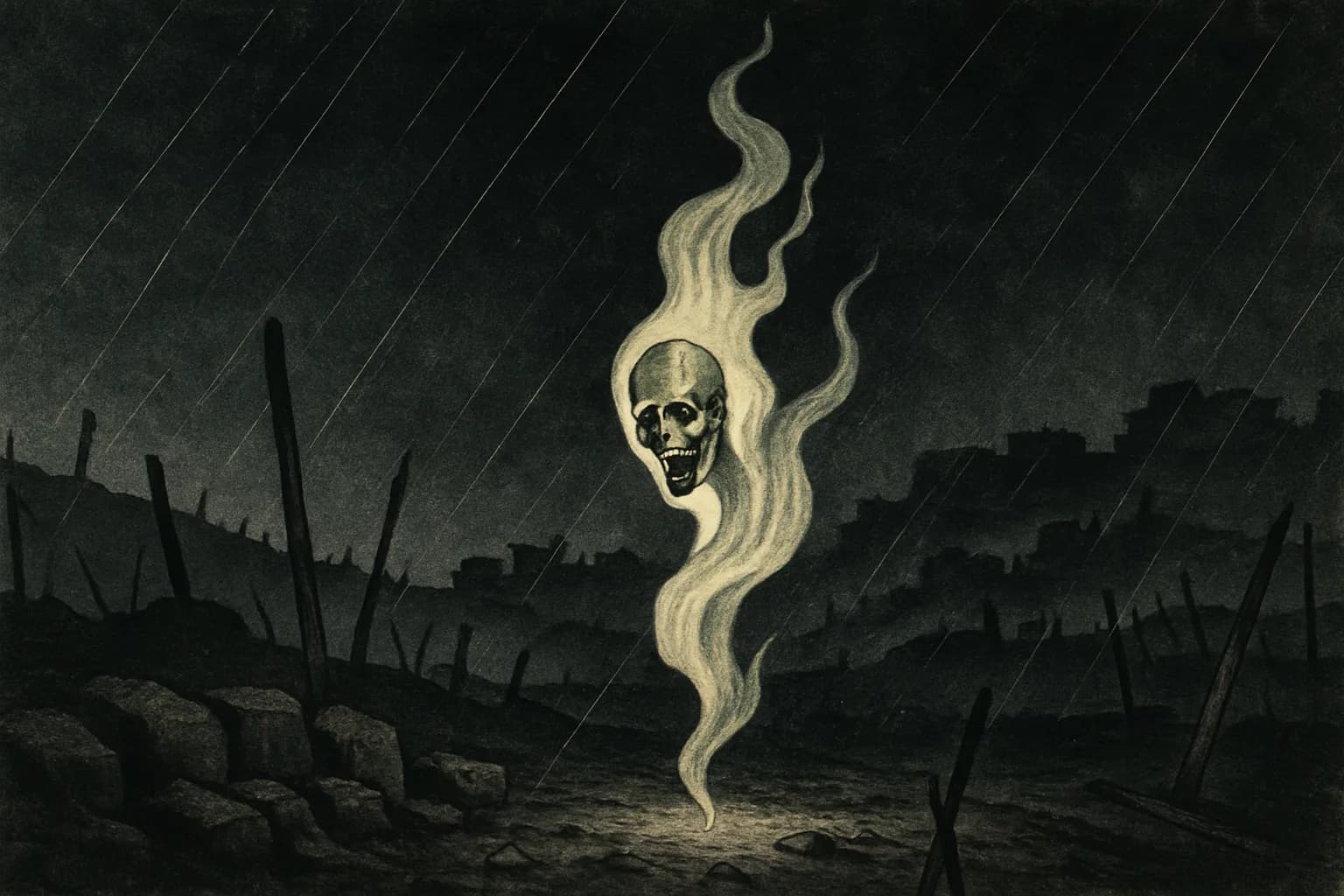
Later folklorists point to the same kind of explanation offered for most of Japan's wandering fires: bioluminescent fungus and decaying plant matter. Old, wet straw is a plausible host for the faintly glowing fungi behind foxfire, and a raincoat that had spent years being rained on and left in damp storage would have had plenty of chances to pick some up. Whether any particular sighting was fungal glow, marsh gas, or fireflies tangled in loose straw, the folklore did what it always did with an unexplained light: gave it a place, a name, and a rule of behavior — don't bother brushing it off — rather than leaving it a mystery.
Minobi in Japan today
Minobi never became one of the famous yokai. It has no cucumber-loving fame like the kappa's, and no single anchoring legend the way Oji has its fox-fire procession. It survives mainly as one of the roughly forty entries in Sekien's Konjaku Hyakki Shūi, still consulted by yokai researchers and illustrators cataloguing Japan's lesser-known supernatural lights. In Sekien's woodblock print, the fisherman never turns to look at what has happened to his shoulders — he just keeps walking, a handful of sparks glowing steadily in the rain behind him, as if brushing them off was never really worth trying twice.