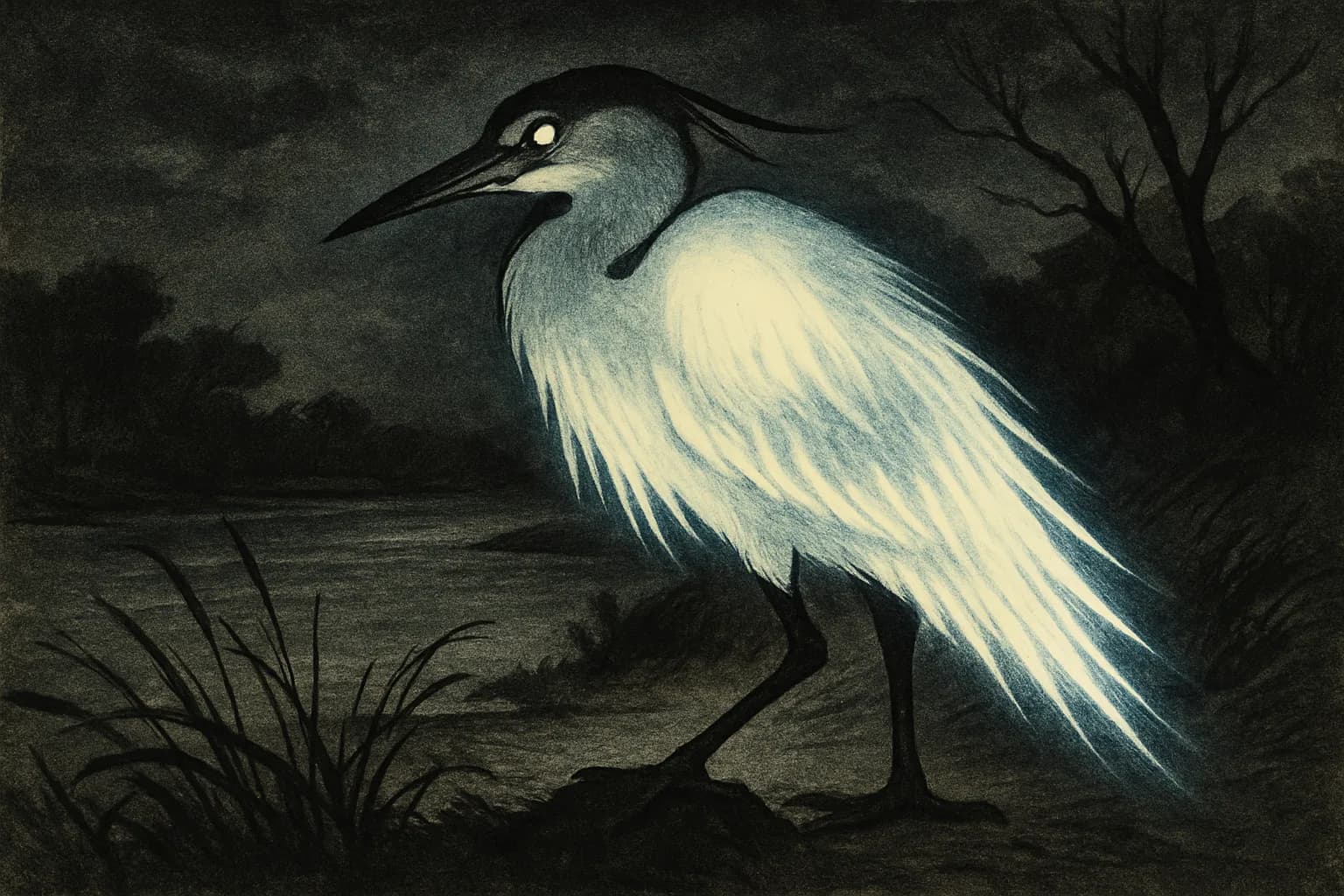
Something crosses the night sky over a marsh, wings beating slow and heavy, and along its body runs a faint blue-white fire — not a spark, not a lantern, but the bird itself alight. Farmers who saw it had no trouble naming the culprit: a heron, and an old one. The aosagibi, "blue heron fire" (青 ao, blue; 鷺 sagi, heron; 火 bi, fire), is one of the rare entries in the Edo-period yokai catalogue built on an animal everyone could recognize, doing something no one could explain.
What does it look like?
Toriyama Sekien drew the aosagibi plainly, in his 1779 print collection Konjaku Gazu Zoku Hyakki ("The Illustrated Bestiary of the Hundred Demons, Continued, Past and Present"): a heron in flight, wholly ordinary in shape, with light radiating from its neck and wing feathers. There is no monstrous transformation here, no extra limbs or faces — the horror, such as it is, lies entirely in the glow. Sekien's brief accompanying note explained it as an old heron whose plumage shines in the dark, a light some observers described as blue-white and cold, closer to foxfire than flame.
An old bird's fire
The heron behind the legend is almost certainly the goisagi, the black-crowned night heron (Nycticorax nycticorax), a bird that already carried a strange story before Sekien ever picked up his brush. According to a classical court anecdote retold in several Heian and medieval collections, an emperor once ordered his attendants to catch a heron standing in the palace garden. Told it was being summoned by imperial command, the bird stood still and let itself be caught — and was rewarded for its obedience with the fifth court rank, goi. The name stuck: goi-no-sagi, "the heron of the fifth rank," shortened over time to goisagi. A bird already elevated to near-courtier status was a natural candidate for further legend, and the aosagibi supplied it: age it long enough, the stories say, and a heron's feathers begin to burn on their own.
Sightings clustered exactly where you would expect a heavy, slow-flying night bird to be seen at all — over rice paddies, riverbanks, and marsh edges after dark, where a lone unexplained light moving at wing height was unsettling enough to be worth a name.
Not the only night-light in the marsh
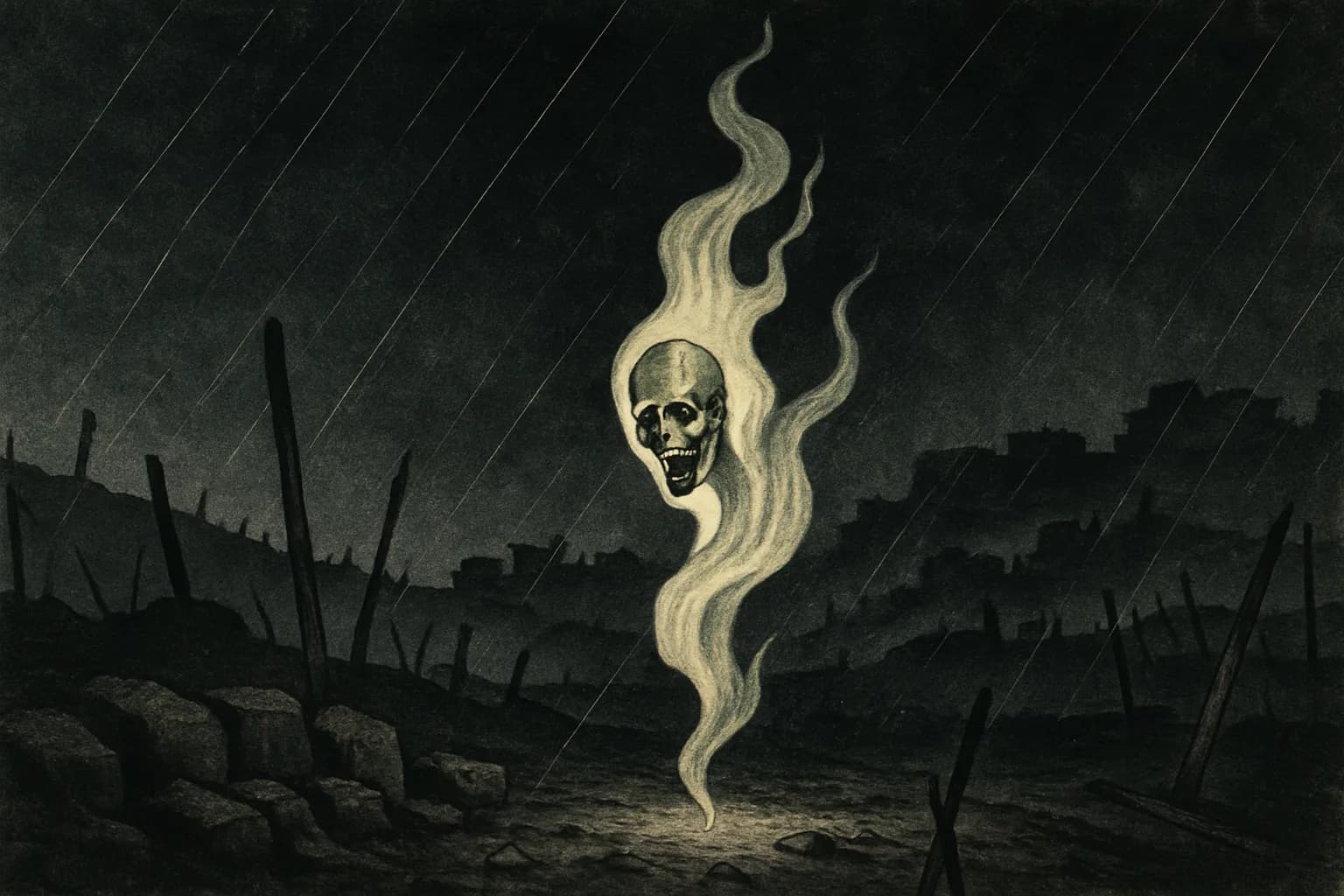
Sekien filled the same volumes with a whole family of unexplained fires — kitsunebi drifting over fields at a fox's mischief, shiranui strung out over the Ariake and Yatsushiro seas, will-o'-the-wisp lights blamed on everything from foxes to drowned souls. The aosagibi stands apart from most of them for having a fixed, identifiable body attached to the light. Where kitsunebi is pure phenomenon — a glow with no visible source — the aosagibi is always described as a bird you could, in principle, watch land.
Where it comes from
Some later naturalists have offered a prosaic explanation for the original sighting: bioluminescent fungus or phosphorescent decay clinging to old feathers, or even luminous bacteria picked up from a night heron's diet of fish and carrion, could plausibly account for a faint glow on a bird's plumage in the dark — the same category of mundane cause folklorists reach for with marsh-gas theories of kitsunebi and onibi. Nothing pins the effect down with certainty, and that gap between a genuinely strange sight and no tidy explanation is exactly the space Edo-period yokai catalogues were built to fill. Sekien rarely invented a phenomenon from nothing; more often he gave a name and a picture to something travelers already swore they had seen.
Aosagibi today
The aosagibi never became a mascot or a movie monster — it is too quiet a yokai for that, more atmosphere than menace. It survives mainly in reprints and studies of Sekien's bestiaries, cited alongside kitsunebi and hitodama as part of Edo Japan's shared vocabulary for the unexplained lights of the countryside at night. The goisagi itself is still a common sight around Japan's rivers and rice paddies today, hunting motionless at the water's edge at dusk — a plain grey-and-black bird that, for one Edo-period artist at least, was never quite finished becoming something stranger.