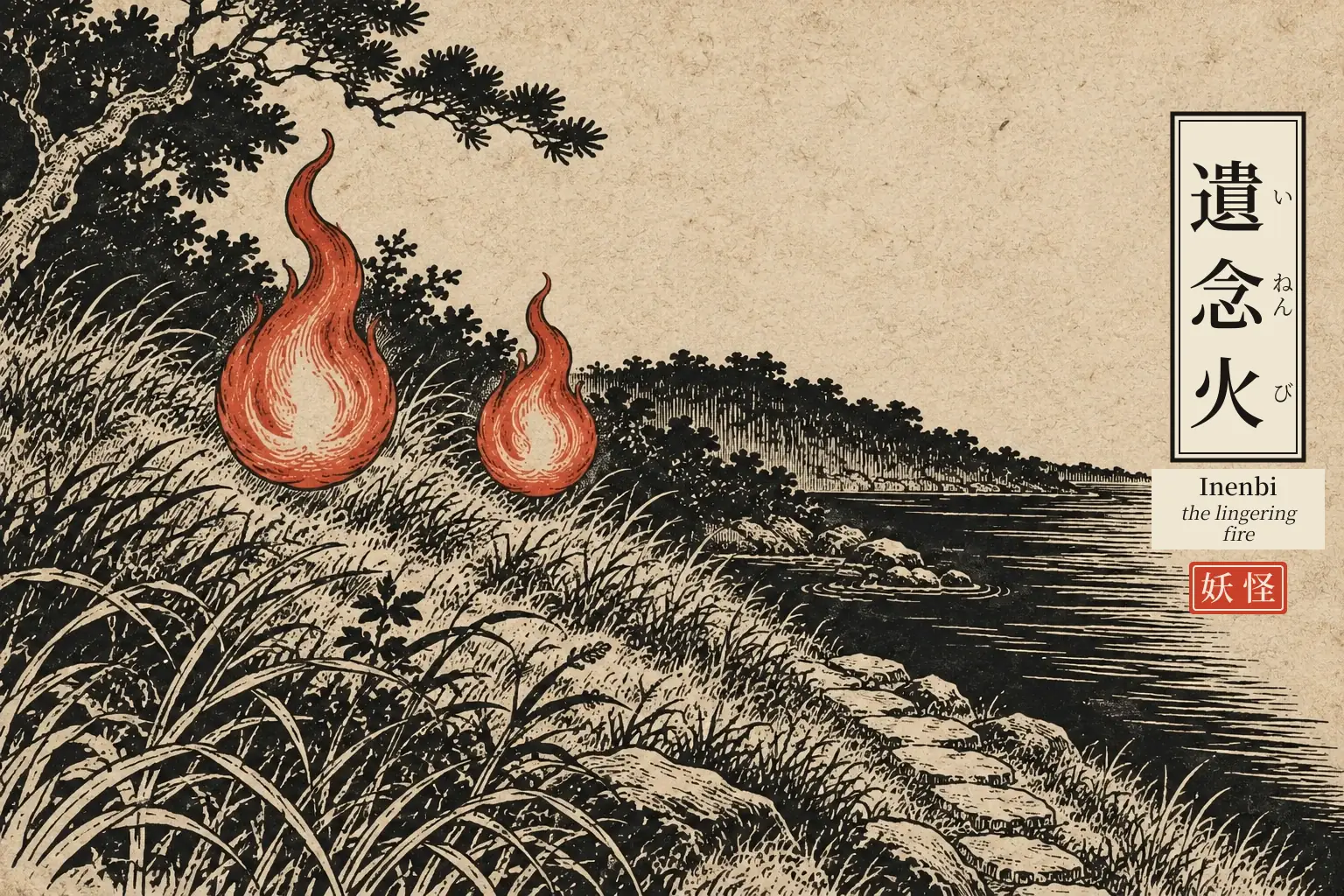
Most fire yokai drift. They cross fields, follow roads, chase travelers down a dark path. Inenbi does none of that. It picks a single spot — a slope, a riverbank, a mountaintop — and burns there, in some tellings night after night, for as long as anyone keeps the story. The name tells you why. 遺念 (inen) is an Okinawan word for a lingering spirit, a ghost that has not let go of something; 火 (bi) is simply fire. Inenbi is that spirit, showing itself as flame.
What does it look like?
Inenbi has no body to describe, only fire. Most tellings put it as two flames rather than one. They are said to be a man and a woman. It is also called 因縁火 (innenbi), written with the characters for "karmic cause."
Where it differs from other ghost-lights of Japanese folklore is in how little it moves. A great deal of fire-yokai lore is about wandering and chasing. Inenbi does the opposite: it stays close to one place, rather than roaming or taking to the air. It tends to appear in quiet, empty ground — up a mountain, along a lonely road — and only rarely shows itself over open water.
Lovers who could not leave
Most accounts tie inenbi to a man and a woman who died badly. One strand of telling has them collapse on the road after eloping together; a separate strand describes a double suicide after a love affair went wrong. The details change from telling to telling, but the shape does not: two people, one tragedy, two flames left behind.
The slope at Shikinazaka
The best-known version comes from old Shuri, a city folded into Naha in 1954. It is centered on a slope locally called Shikinazaka, south of the former city, and this pair of flames also goes by its own name there, Toji Machā Bii — tōji meaning "wife" in the local speech.
The story: a husband and wife were close, and he always went out to meet her on her way home from trading in town. Someone jealous of the marriage told the husband a lie — that his wife was out carrying on affairs instead of working. Too ashamed to bear it, he drowned himself in the river below the slope. When his wife learned what had happened, she drowned herself there too. Since then, two inenbi are said to rise between Shikinazaka and that river.
A hairpin in Nago
Nago City keeps a harsher version of the same idea. A young couple were happy together, but the husband began to suspect his wife of infidelity simply because her work kept her out late. One night he disguised himself and ambushed her on her way home. She fought back and stabbed him in the throat with a hairpin, then hurried home, only to find he had not come back. She returned to where she had left him and found him dead. Grief took her, and she killed herself as well. Two inenbi are said to appear there nightly — the husband's lingering regret and the wife's loyalty, both still burning.
A storm on the mountain
A third telling, from the old mountain district of Nago-chō, turns on a single missed night. A woman had been secretly meeting her lover at a mountaintop after dark. During a violent storm, the man assumed she would not come and stayed home. She came anyway, found him absent, and took it as proof of his faithlessness. She killed herself on the spot. Learning what he had done, the man was overcome with regret at his own coldness and followed her into death. Since then, two fires are said to appear on that mountaintop at the same hour each time.
Where it comes from
Inenbi has no dated print behind it, the way some mainland yokai trace back to an Edo-period picture scroll. It belongs to Okinawan oral tradition. Yanagita Kunio listed it in the journal Minkan Denshō in 1939. His entry cites an earlier book, Yanbaru no Dozoku (1929). What survives across its versions is not a fixed story but a pattern: jealousy, a death that didn't need to happen, and a second death that followed it. The fire is what that pattern leaves standing in the landscape — unmoving, unlike most other fire yokai.
Go deeper
Books worth owning if this world pulls you in.
- The Book of Yokai →Michael Dylan FosterThe most readable scholarly introduction to yokai — where they come from, what they mean, and the major creatures.
- Japandemonium Illustrated: The Yokai Encyclopedias of Toriyama Sekien →trans. Hiroko Yoda & Matt AltThe complete Edo-period bestiaries that so many of these entries trace back to, in full English translation.
Some links are affiliate links; if you buy through them we may earn a small commission at no extra cost to you.
Inenbi in Okinawa today
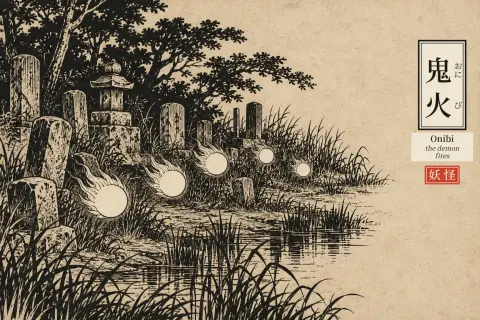
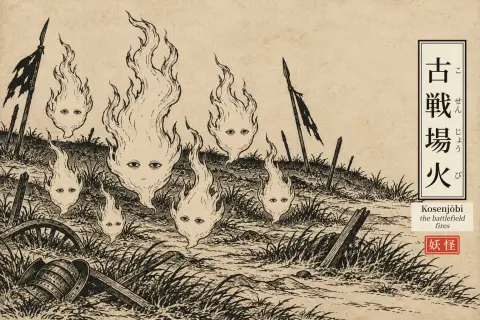
Inenbi has stayed a part of Okinawan folklore collections rather than becoming a mainland household name, closer in that sense to kosenjobi or the many regional onibi than to kitsunebi or a famous hitodama tale. It turns up in yokai compendiums as a quiet entry under "ghost lights" — a fire with a story behind it, tied to a real slope or a real mountaintop that someone could still walk to.