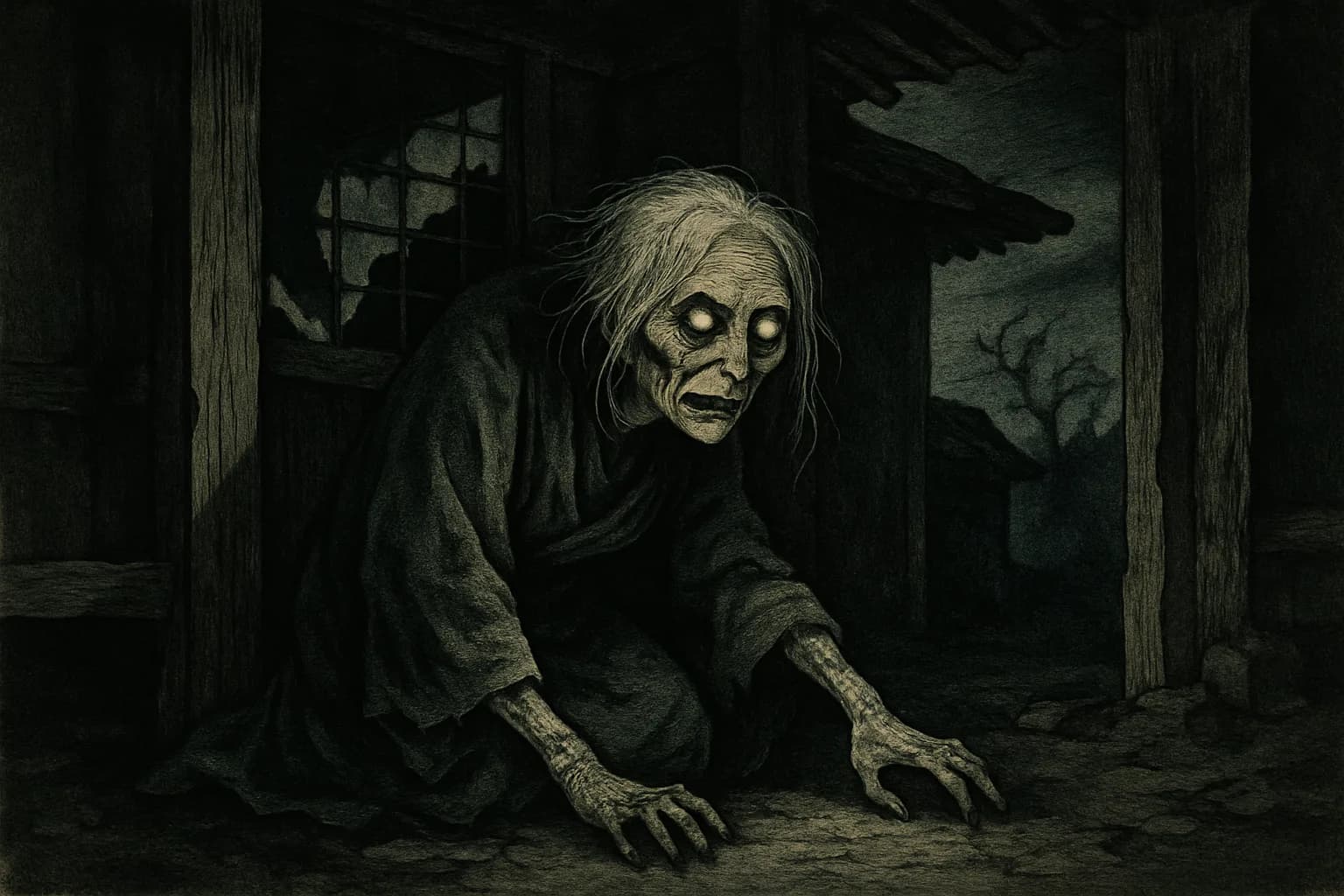
Deep in the mountains, an old temple can outlive its own reason to exist. The monks die out. The parish moves away, or simply stops visiting. But something can still be living in the back rooms, behind closed sliding doors. Toriyama Sekien gave that presence a name in Konjaku Hyakki Shūi (1781): Kokuri-baba (古庫裏婆), the hag of the old kuri.
What does she look like?
Sekien's print shows an old woman sitting quietly indoors. A cat rests beside her. In her hands she twists loose strands into thread, the way any grandmother might spin by lamplight. Nothing in the scene looks monstrous at first glance. That calm is the whole point. She is doing ordinary work, in an ordinary room, and the thread in her hands is not what it looks like.
A name with a trick in it
Kuri (庫裏) is a temple's kitchen and living quarters, tucked behind the main hall. Add ko (古, "old") and baba (婆, "old woman"), and the name reads plainly: the old woman of the old kuri. But Sekien liked to bury a second meaning under the first. "Kokuri" also echoes mukuri kokuri, a phrase Edo parents used to frighten children into behaving. That phrase itself had worn down over centuries from an old wartime warning about invaders from the continent. Say her name out loud, and it already sounds like something meant to scare a child at bedtime.
The widow who stayed
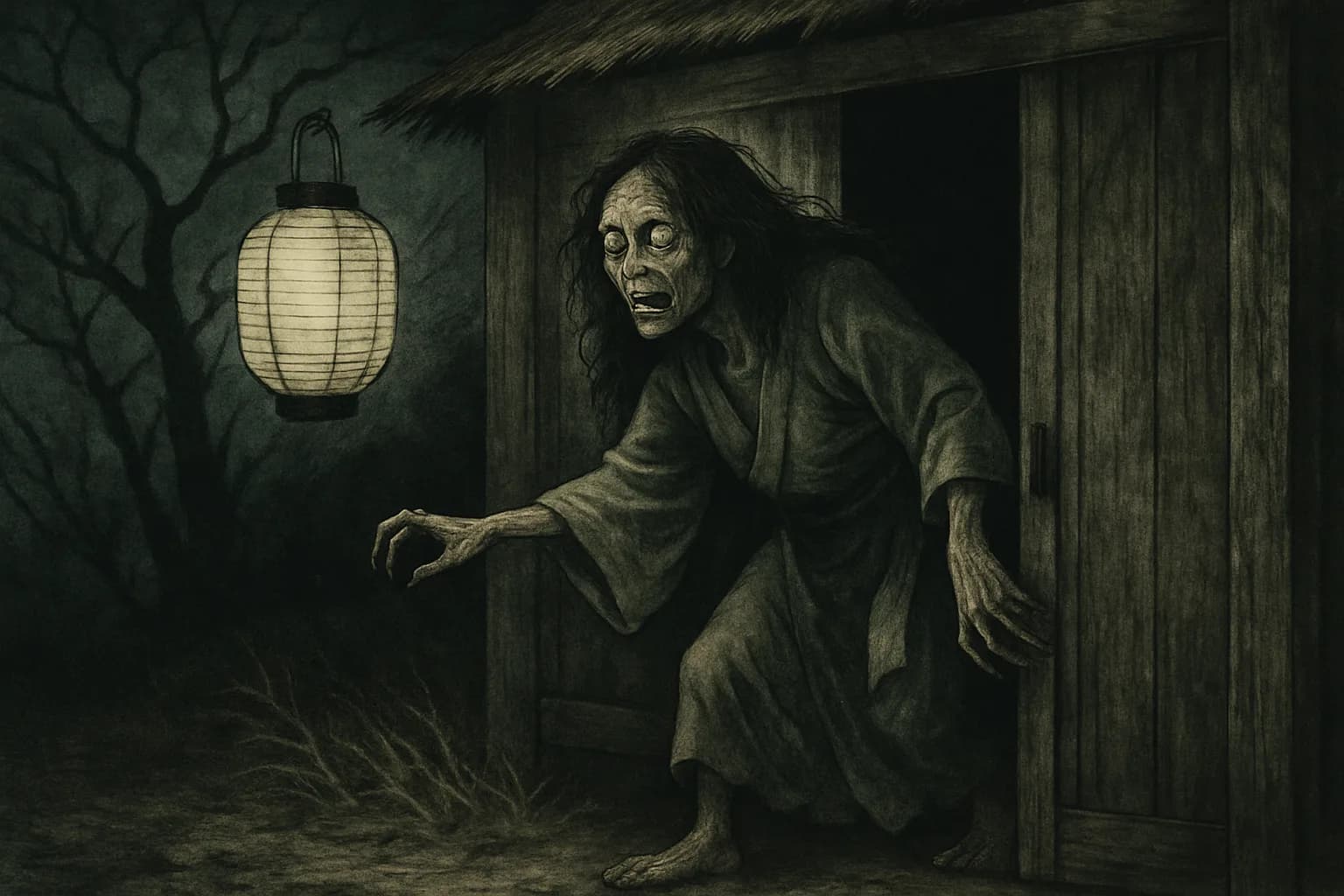
Sekien's own note explains who she was. Kokuri-baba was once the wife of a temple's head priest, seven generations before the temple he describes. While her husband lived, she kept the place running: cooking, cleaning, and tending to the parish. When he died, she did not leave. She shut herself inside the kuri instead.
At first her sin was small. When her stored food ran out, she started stealing the rice and coins that visitors left as offerings. Then it got worse. She began digging up bodies from the temple graveyard, weaving their hair into clothing, stripping their skin, and eating what was left. A theft that size does not go unpunished in a Buddhist universe. It is what kept her from ever moving on to her next life, and that failure to move on is what made her a yokai instead of just a memory.
Cats, corpses, and thread
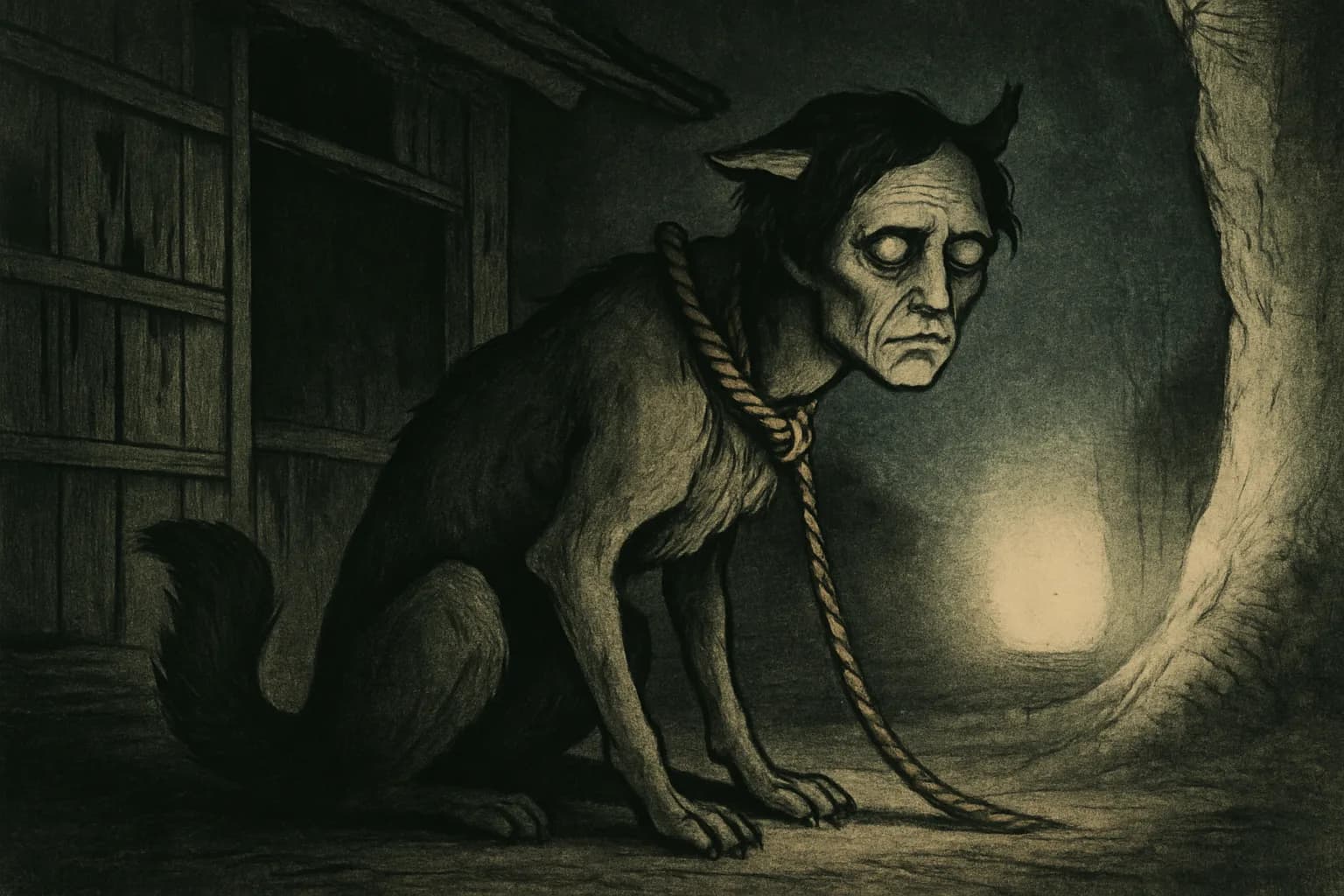
The cat beside her in Sekien's print is not just decoration. Edo-period Japan already distrusted cats around the dead. A cat that leaped over a coffin was said to make the corpse sit up and walk, and mourners kept blades on the casket lid to guard against it. A related fear grew into its own monster, the kasha, a flaming cart-demon that snatched sinners' bodies straight out of their coffins. Sekien's readers would have looked at an old woman, a cat, and a spool of thread, and understood at once what kind of thread it really was.
Not the only ghost of an empty institution
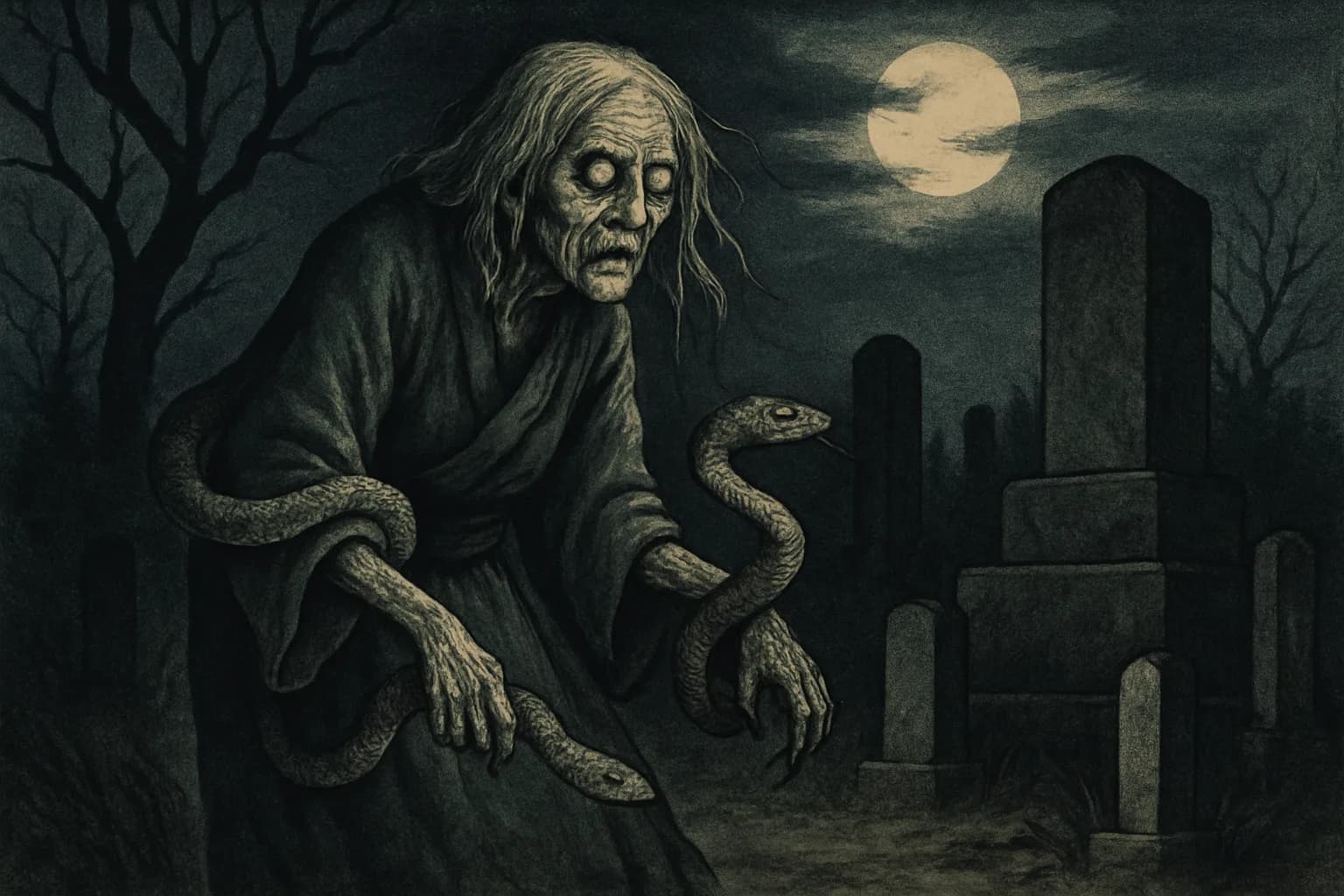
Kokuri-baba shares her book with other elderly horrors, including Jakotsu-baba, the snake-wielding grave guardian from the same 1781 volume. She is not even the only Sekien yokai haunting a place that outlived its purpose. Noderabō, from an earlier print series, is a starved monk who still rings a temple bell that nobody is left to hear.
She also invites comparison to an older and far more famous cannibal hag: the demon of Adachigahara in Michinoku, known today through Noh theater and a burial mound called Kurozuka. That story predates Sekien by centuries, and his own text never claims to retell it. But the shape repeats: an old woman alone near a graveyard, a stranger who gets too close, a pile of bodies where there should be none. Japan's hag legends kept circling back to that image long before, and long after, Sekien picked up his brush.
Where it comes from
No version of Kokuri-baba predates Sekien's book. He built her, as he built many of his creatures, out of pieces already lying around: a real word for a real part of a temple, a folk phrase that already meant "something frightening," and a real anxiety about rural temples losing their congregations. Small mountain temples genuinely did fail this way, left to a single aging caretaker and then to no one at all. Kokuri-baba is what that slow failure looks like turned inside out, imagined as one woman who refused to notice her own death.
Kokuri-baba today
She never crossed into the fame that the kappa or the fox spirit enjoy. There is no festival mask built around her, no mascot, no famous stage scene. She survives the way most of Sekien's quieter inventions do: reprinted in yokai encyclopedias, catalogued beside the other hags and ghosts of Konjaku Hyakki Shūi, and occasionally cited by folklorists studying Edo-period beliefs about cats and the dead. Her temple is still empty. Her thread is still not finished.