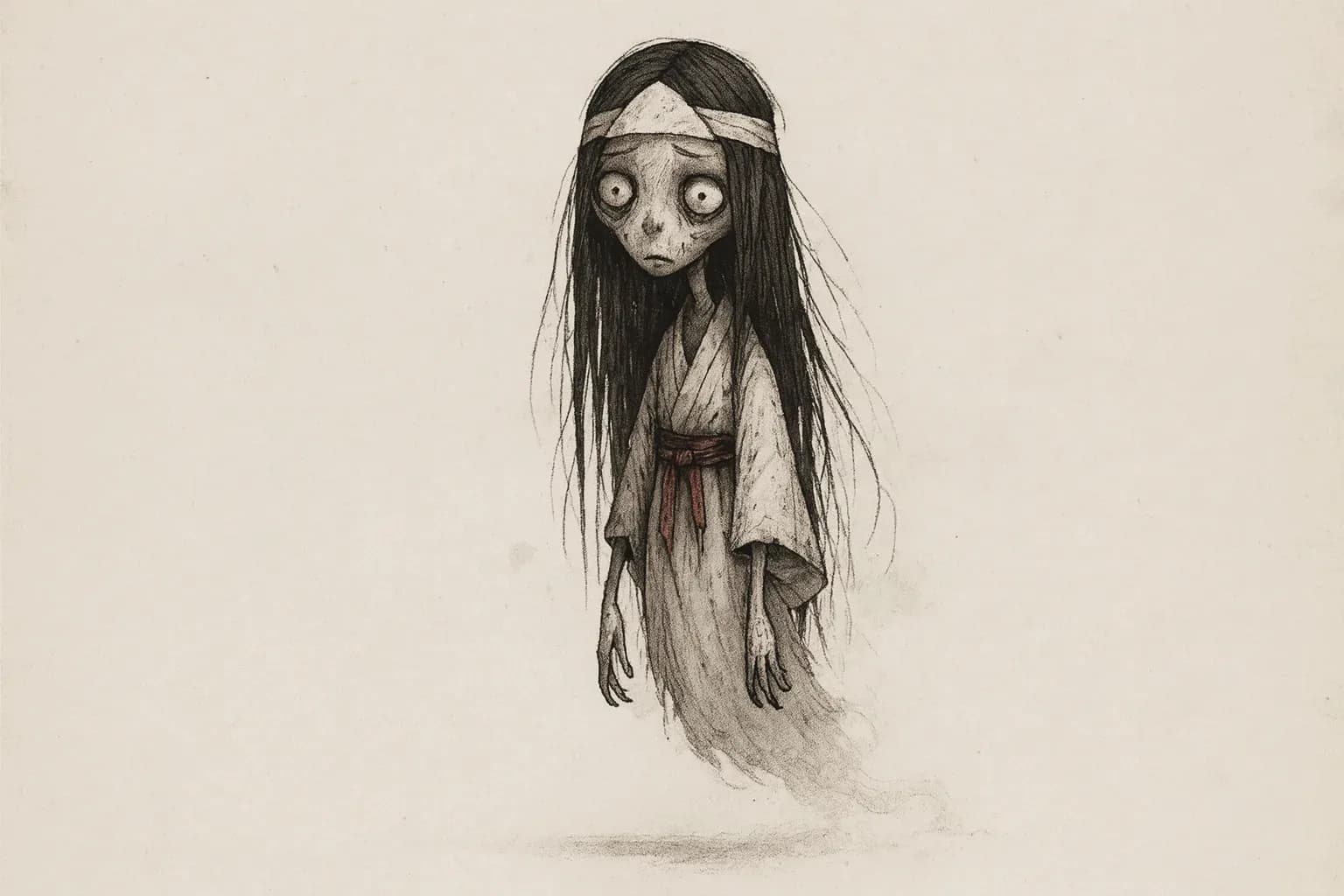
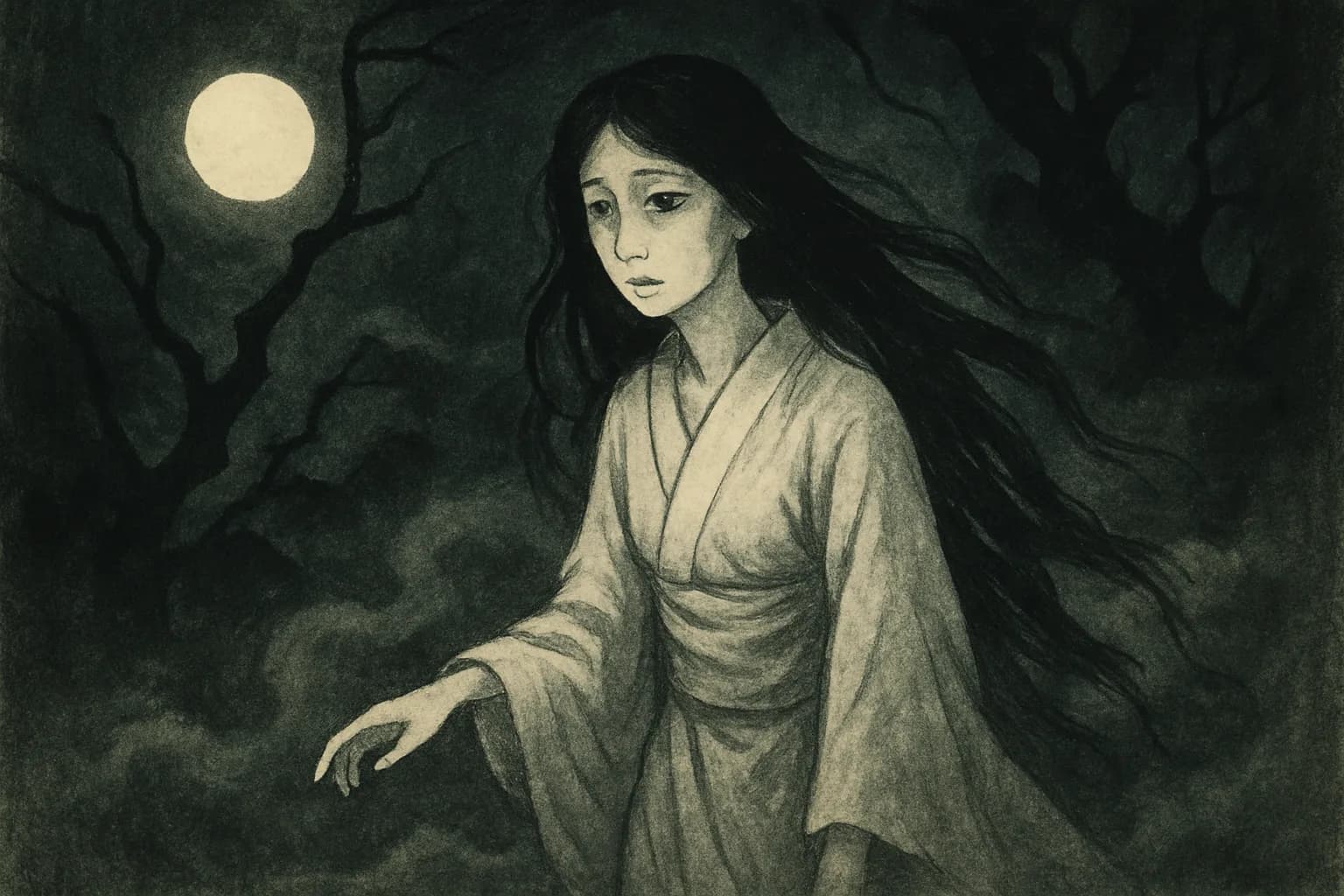
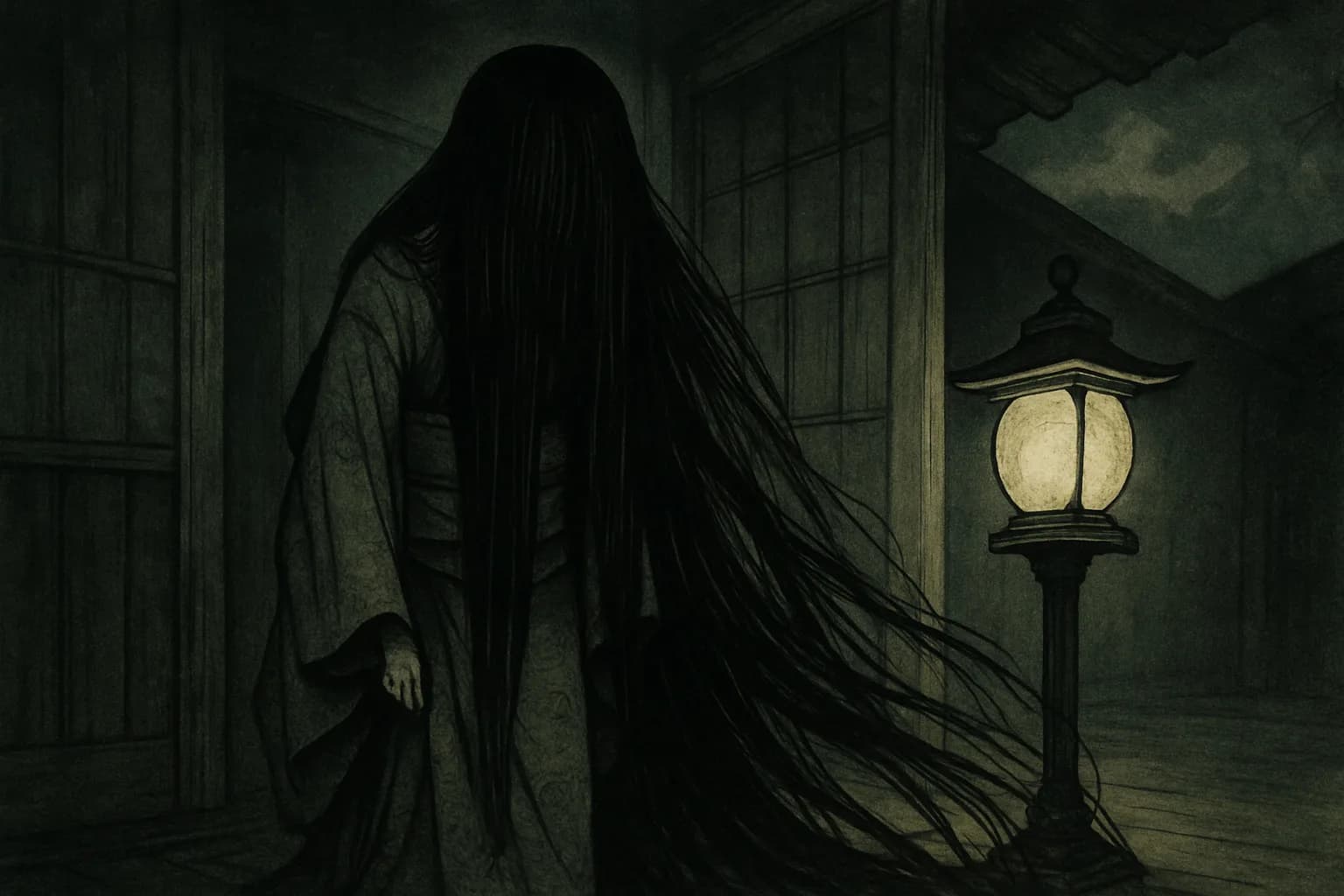
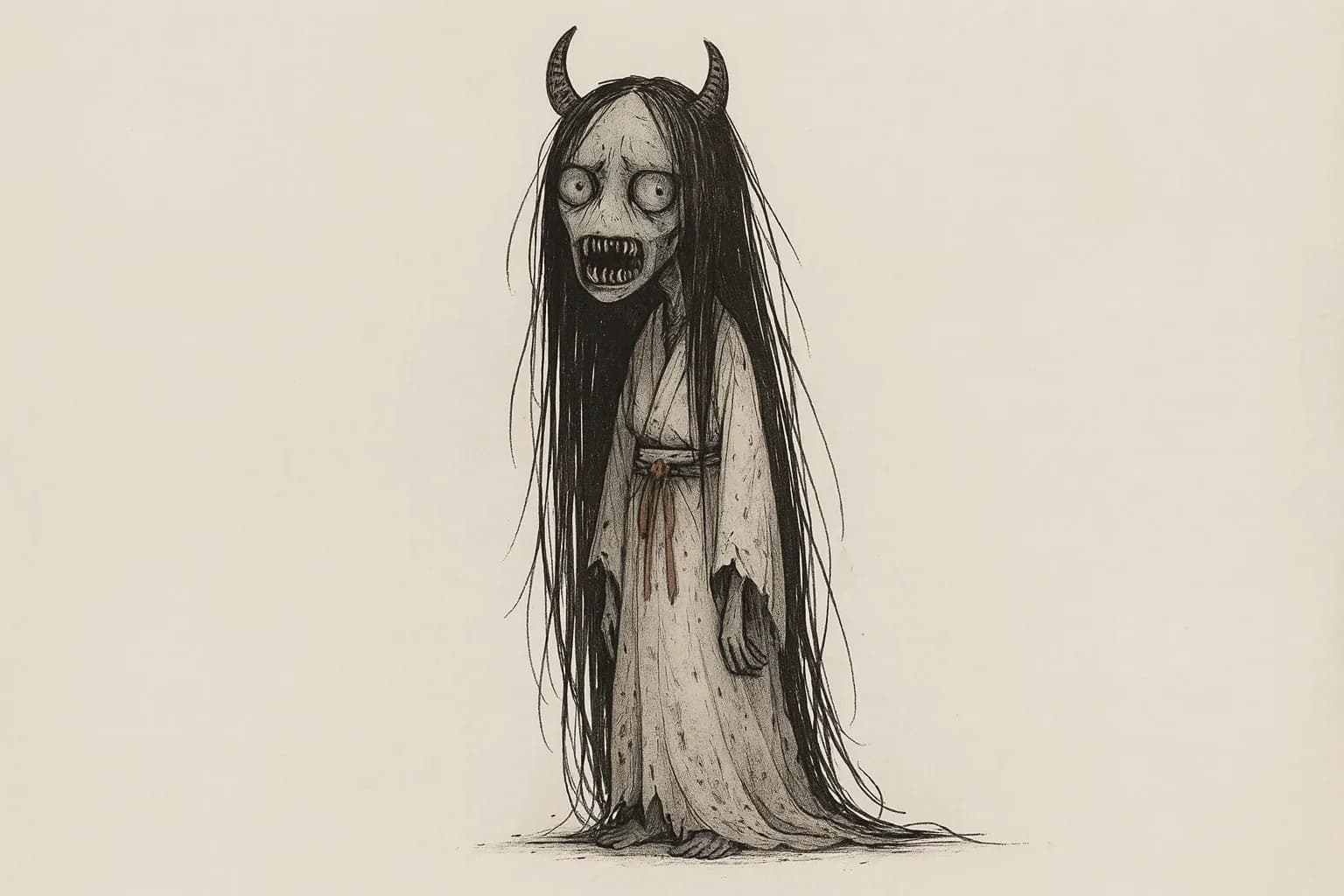
Every English page about Japanese ghosts opens the same way. The ghost is a woman. She wears a white robe. Her black hair hangs loose. She has no feet.
The pages then explain why. Women were powerless. Women held grudges. A wronged wife came back.
We file 26 creatures under Ghosts & Yūrei. So we stopped explaining and counted them.
The first count agrees with the cliché: 20 of the 26 are women.
The second count breaks it. Only four of those women are dead people — and all three of the men are.
How we counted
We read all 26 entries and asked two questions of each.
Does the entry give the creature a gender? And is it the spirit of a person who died?
Gender is not a field in our data. Nothing in the site stores it. We read what each entry actually says, which is why the second question matters more than it looks.
Twenty of the twenty-six are women
| How many | |
|---|---|
| Female | 20 |
| Male | 3 |
| No gender given | 3 |
So the cliché survives the first count. Four out of five are women.
The three men are tesso, noderabo and abura-akago.
The three with no gender are yurei itself, zashiki-warashi (a child) and inugami (a dog).
Now ask which ones are dead
This is the question nobody asks. A ghost is a dead person. Being a monster is not the same thing.
| How many | |
|---|---|
| The spirit of a dead person | 8 |
| Disputed | 2 |
| Not a dead person at all | 16 |
Sixteen of twenty-six are not dead. Put the two counts together and the shape changes.
| Dead | Disputed | Not dead | |
|---|---|---|---|
| Female (20) | 4 | 1 | 15 |
| Male (3) | 3 | 0 | 0 |
| No gender (3) | 1 | 1 | 1 |
Every male entry on our ghost shelf is a dead person. Four of the twenty women are.
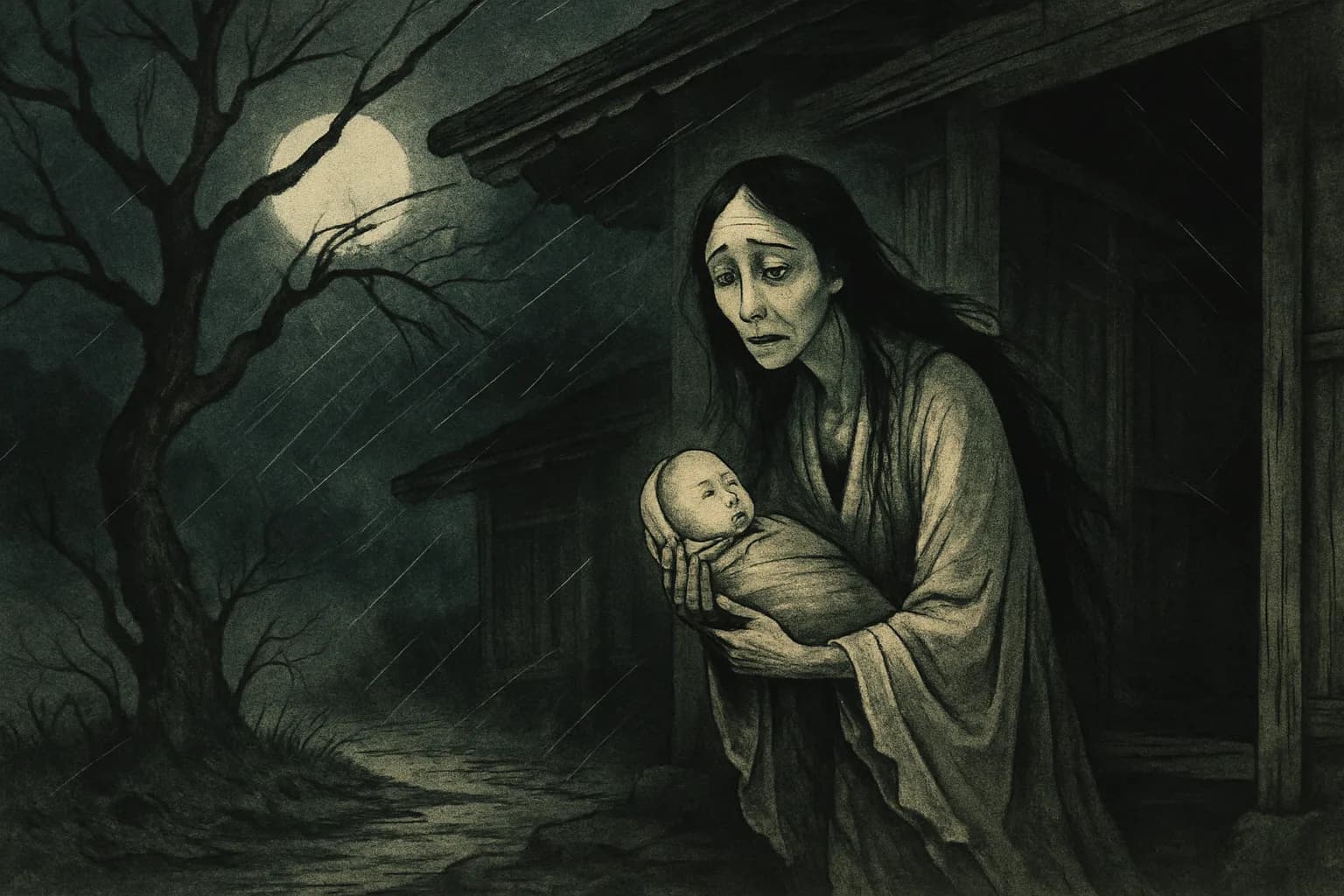
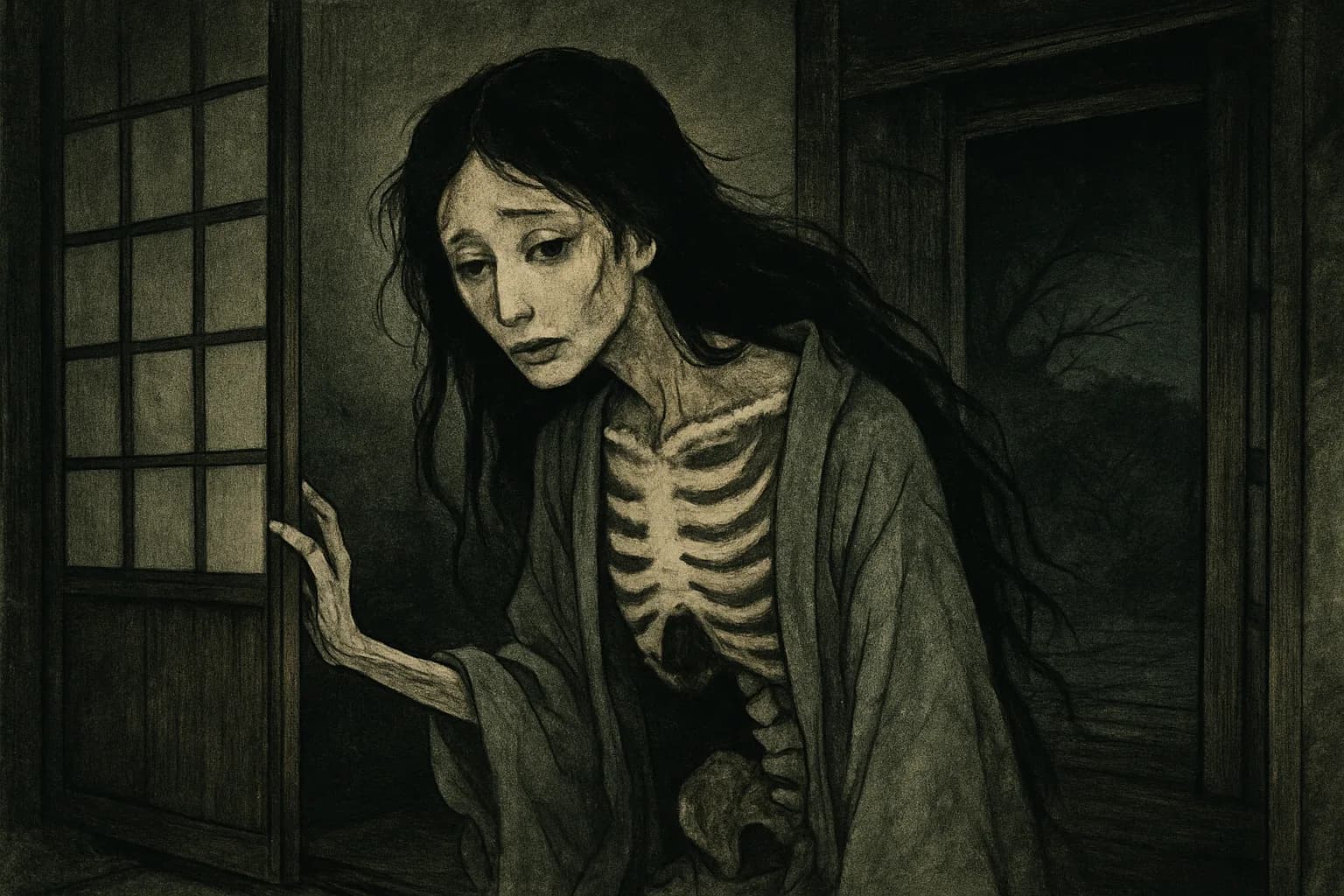
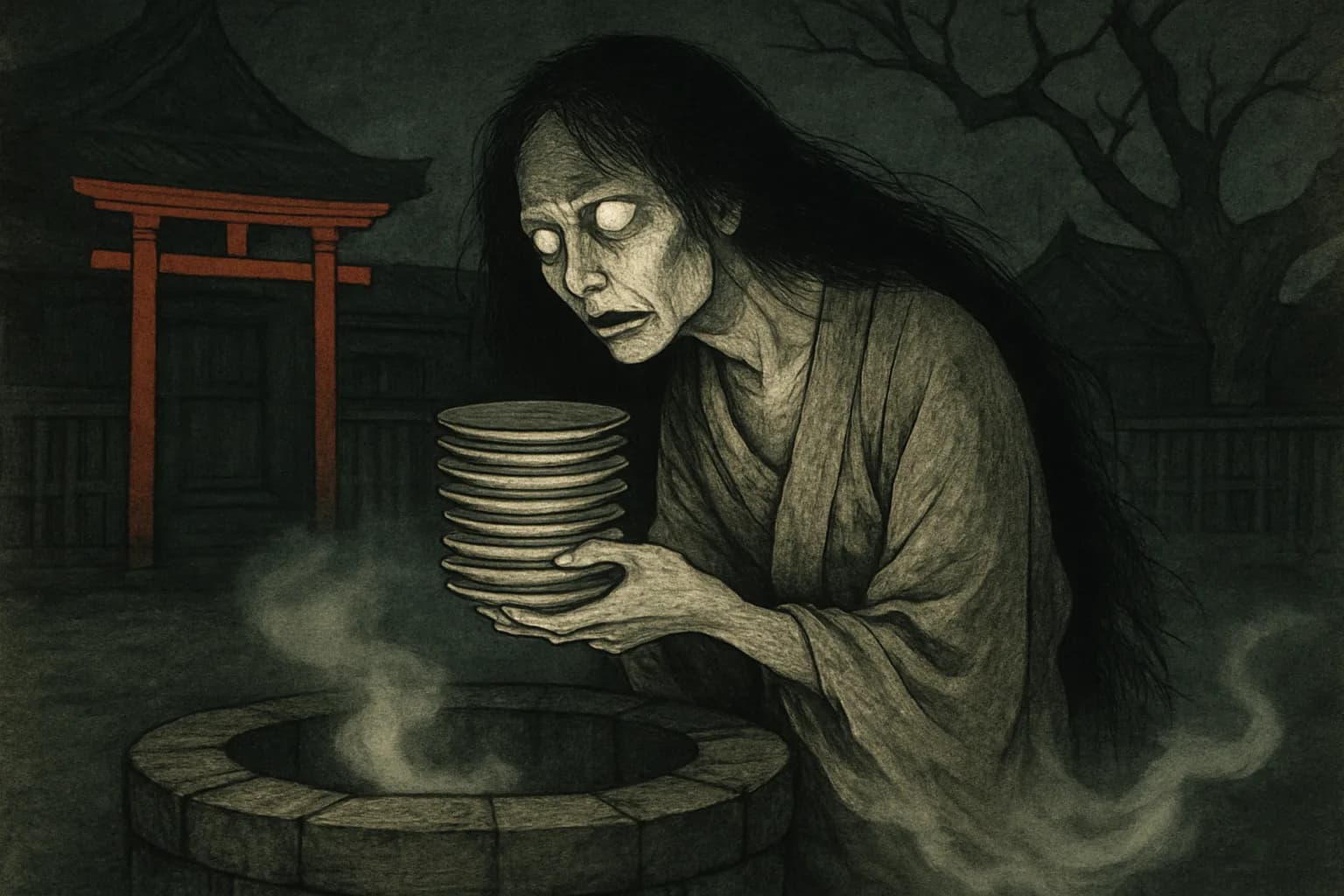
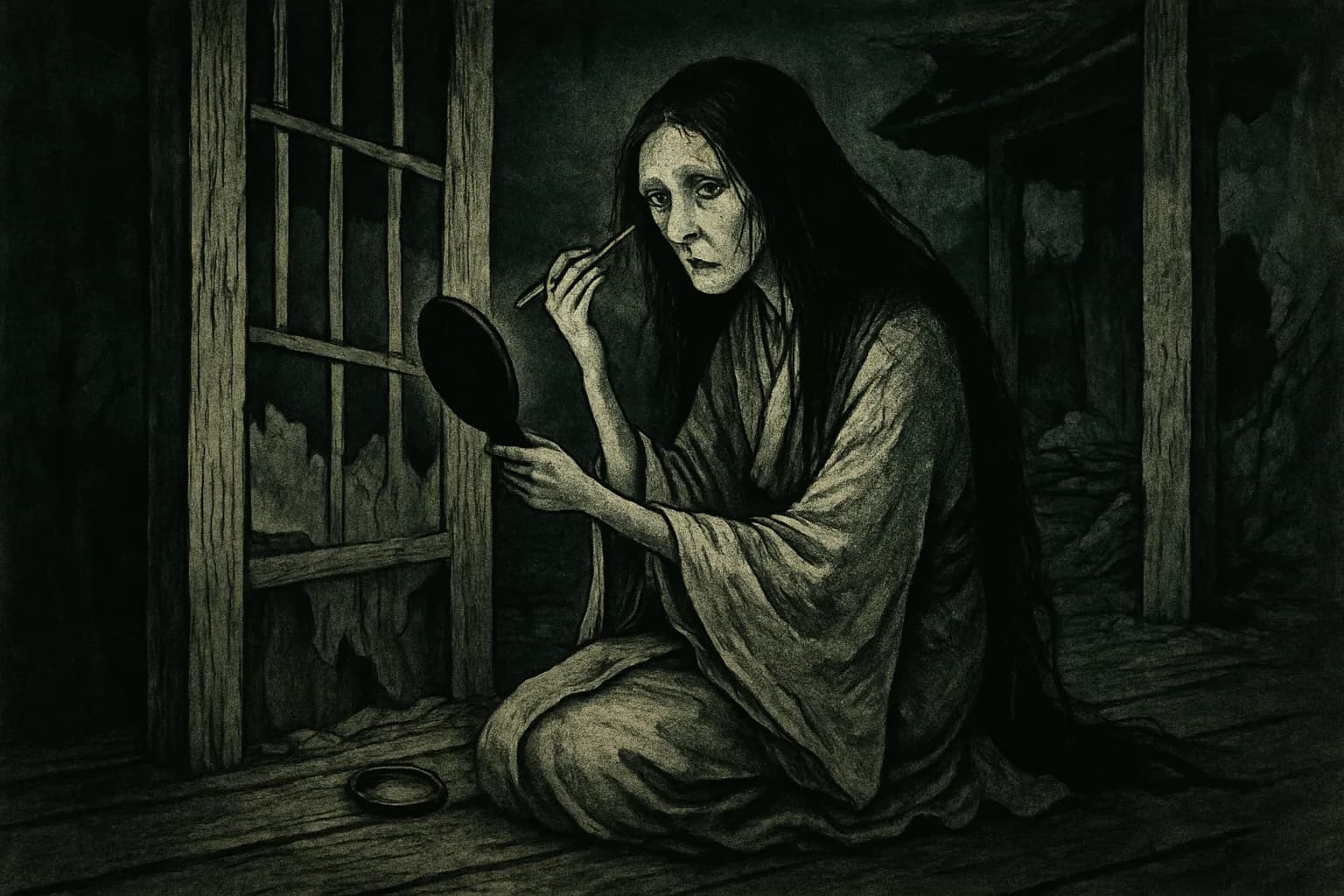
The four are ubume, who died in childbirth. Hone-onna, who knows she is dead and visits her lover anyway. Ao-nyobo, a court lady still making up her face in a ruined palace. And sarakazoe, who is Okiku, counting plates in the well she was thrown into.
The three names you already know
English lists of Japanese ghosts tend to give the same three women.
Okiku counts plates in the well she was thrown into. She is on our shelf as sarakazoe, and she is one of the four dead women above.
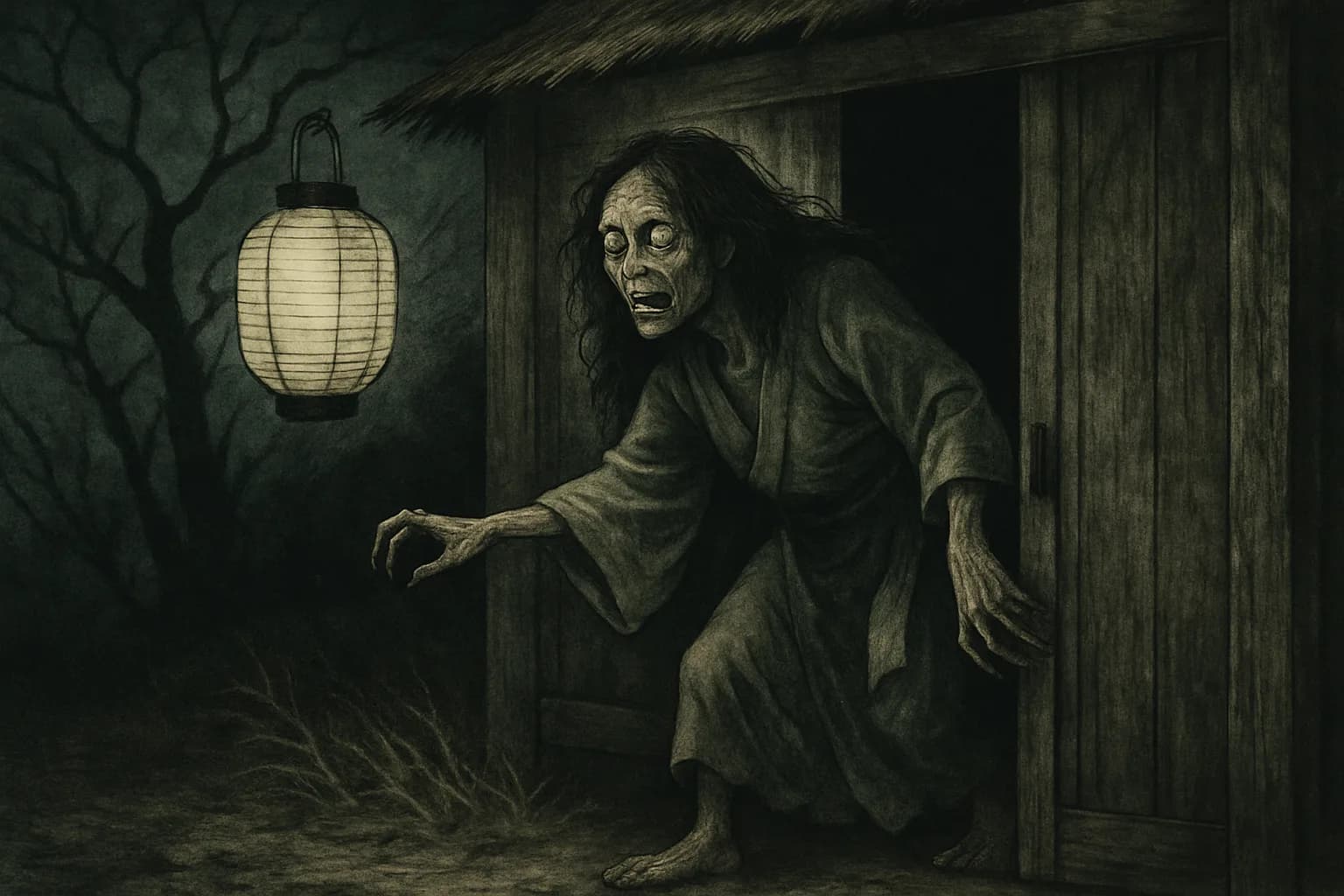
Otsuyu arrives with a peony lantern and visits her lover through the nights of Obon. She sits inside our hone-onna entry, because a skeleton is what everyone else sees.
Oiwa is the poisoned wife of Tōkaidō Yotsuya Kaidan, the kabuki play of 1825. She is not on our shelf at all. She belongs to the stage, not to the bestiaries.
All three are dead women. All three are famous. That is how a genre gets mistaken for a census.
The women are mostly not ghosts
Look at what the other fifteen actually are.
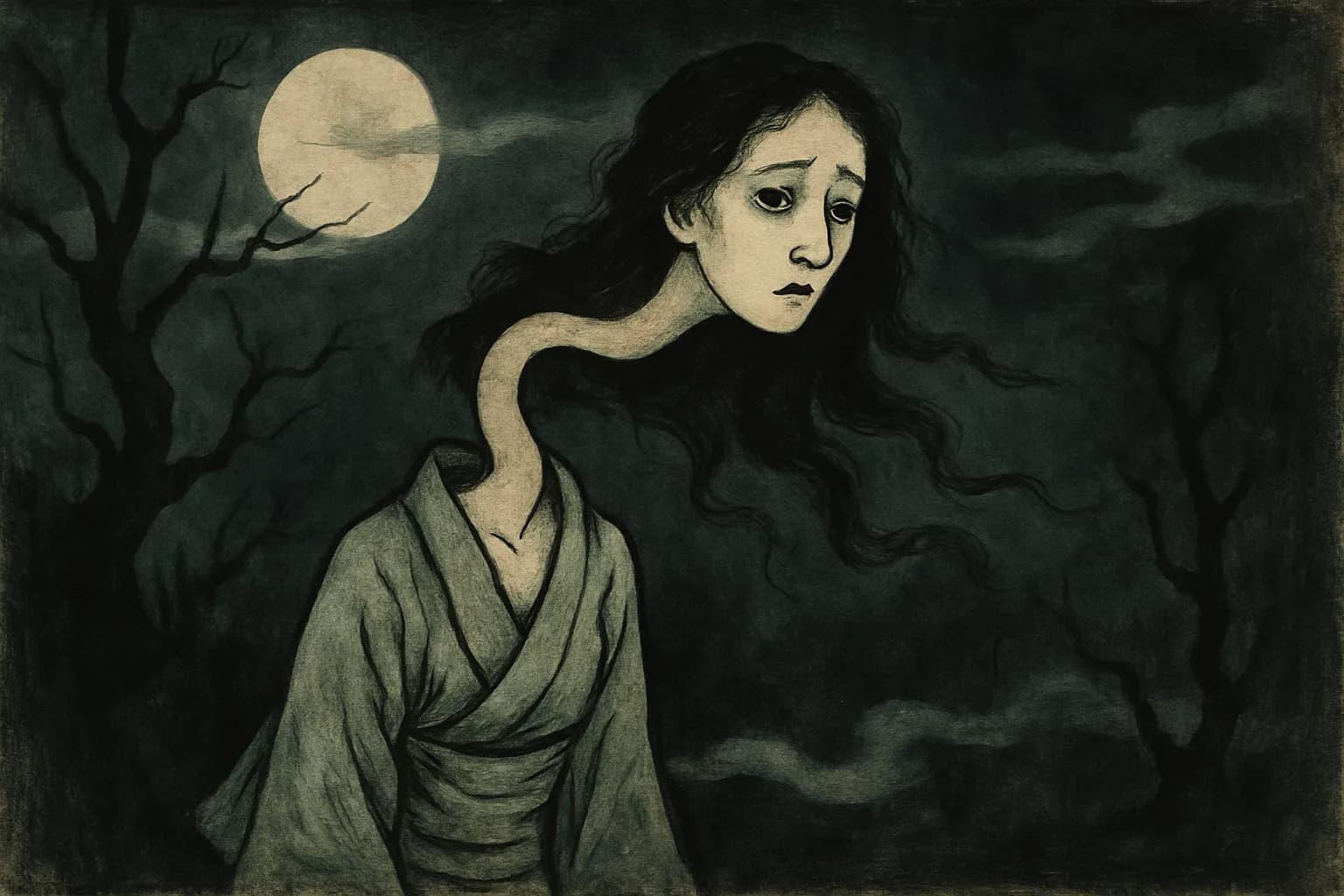
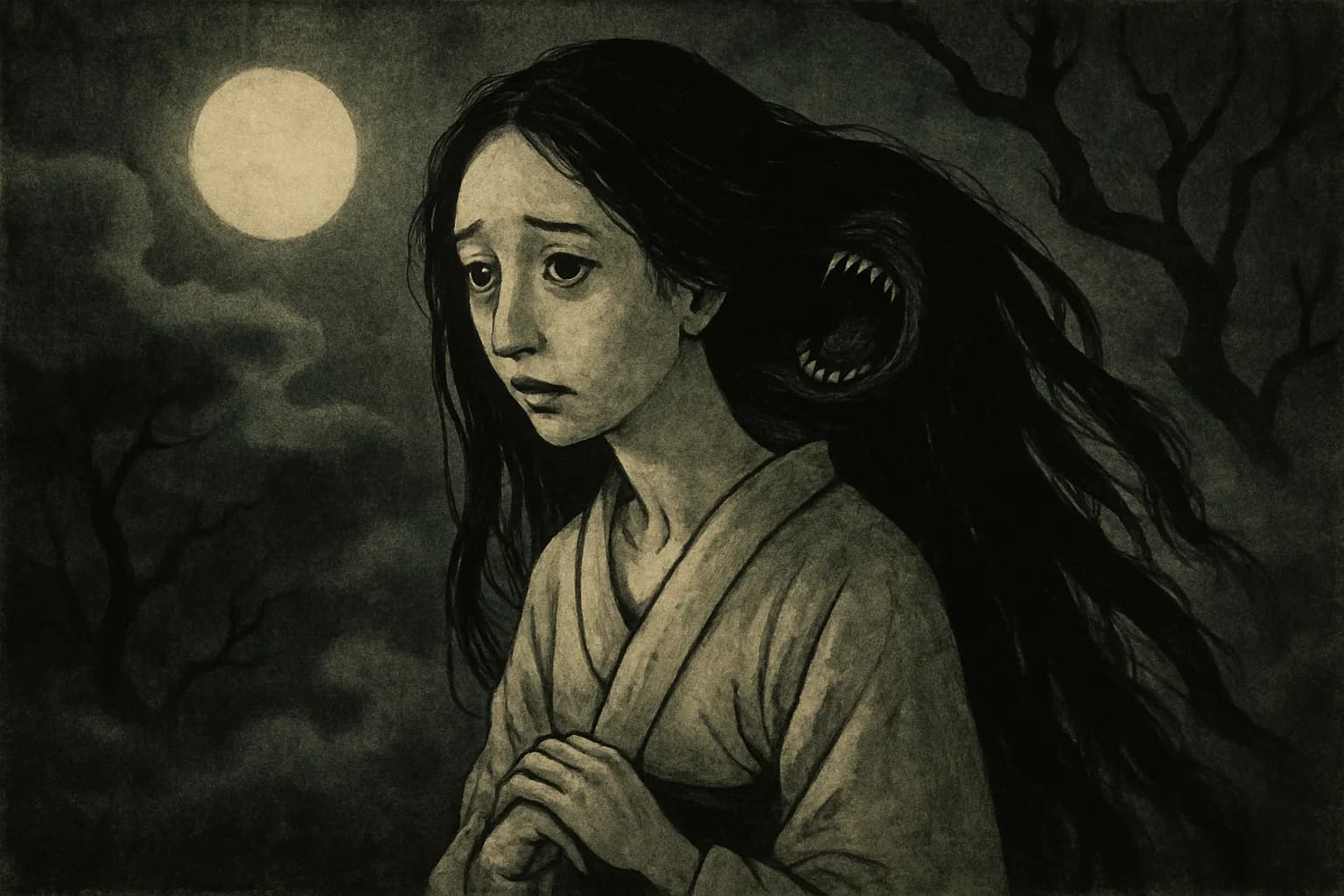
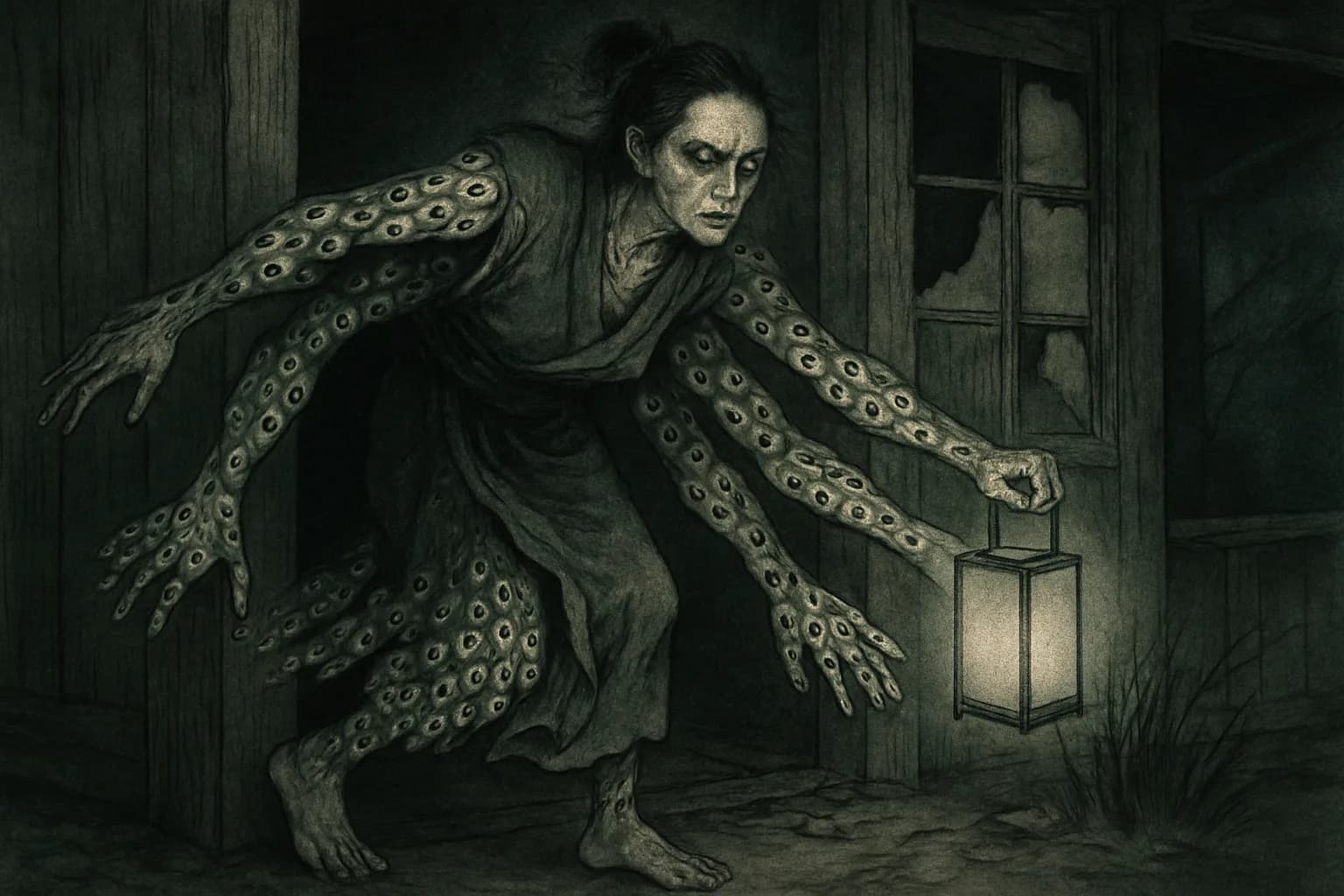
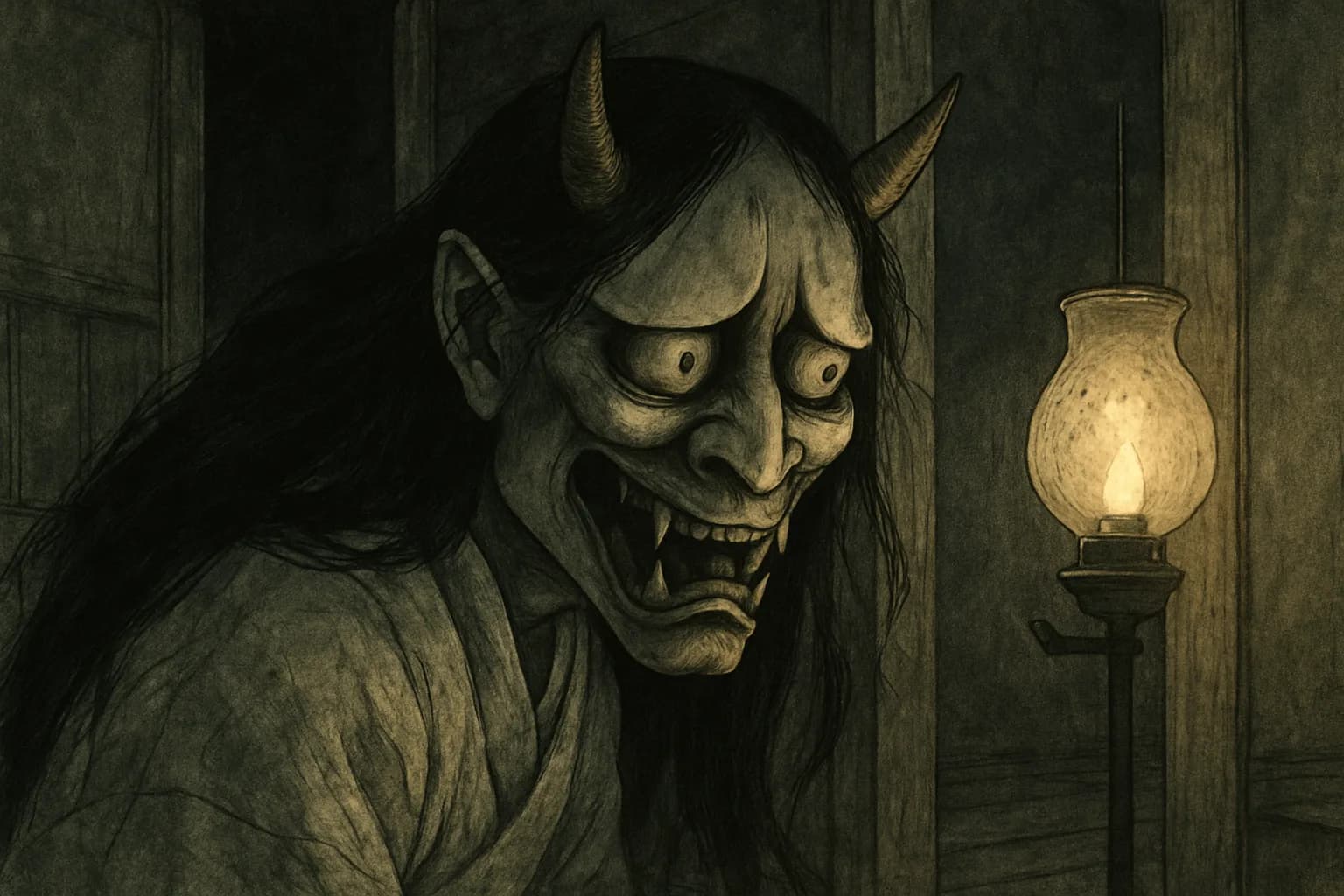
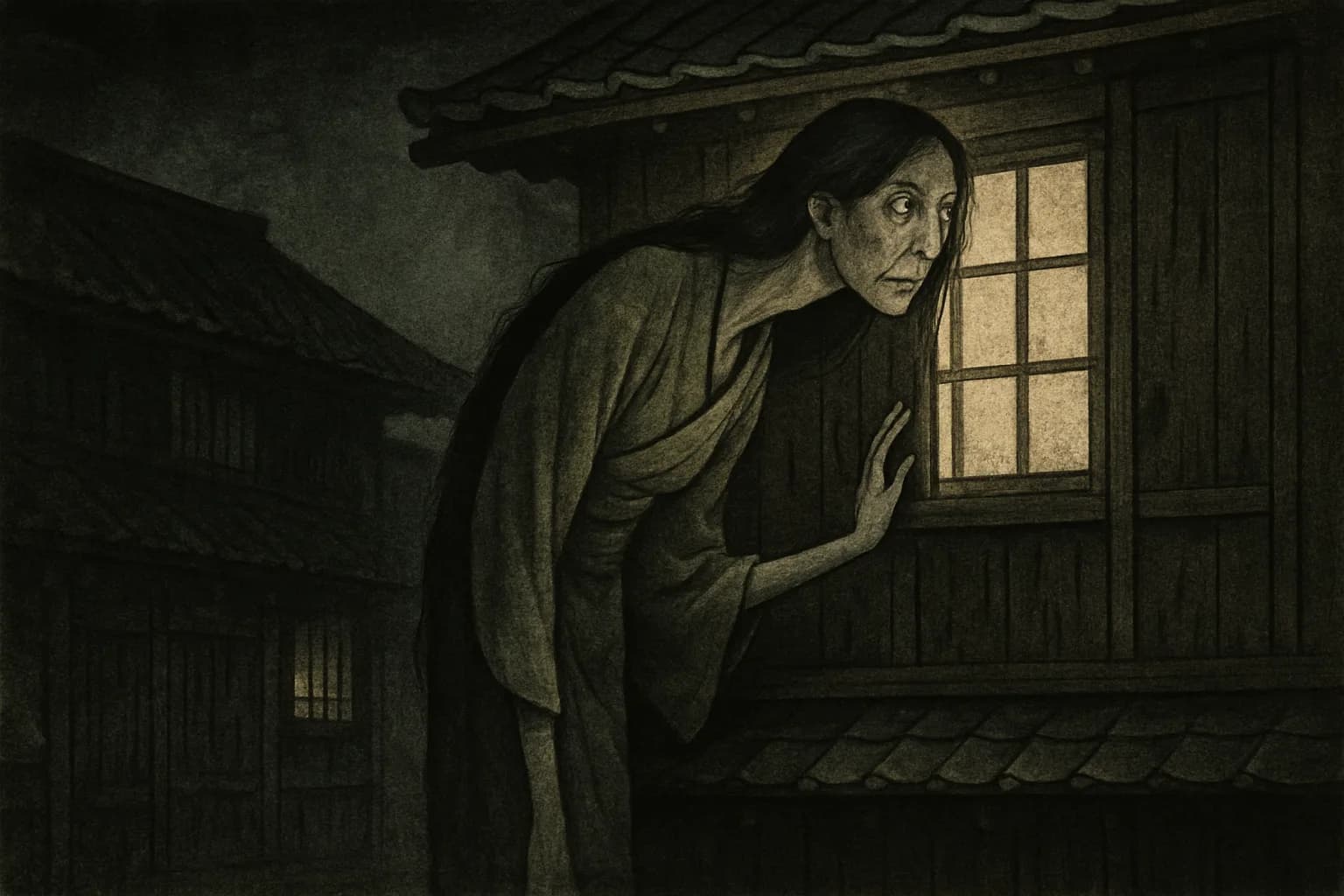
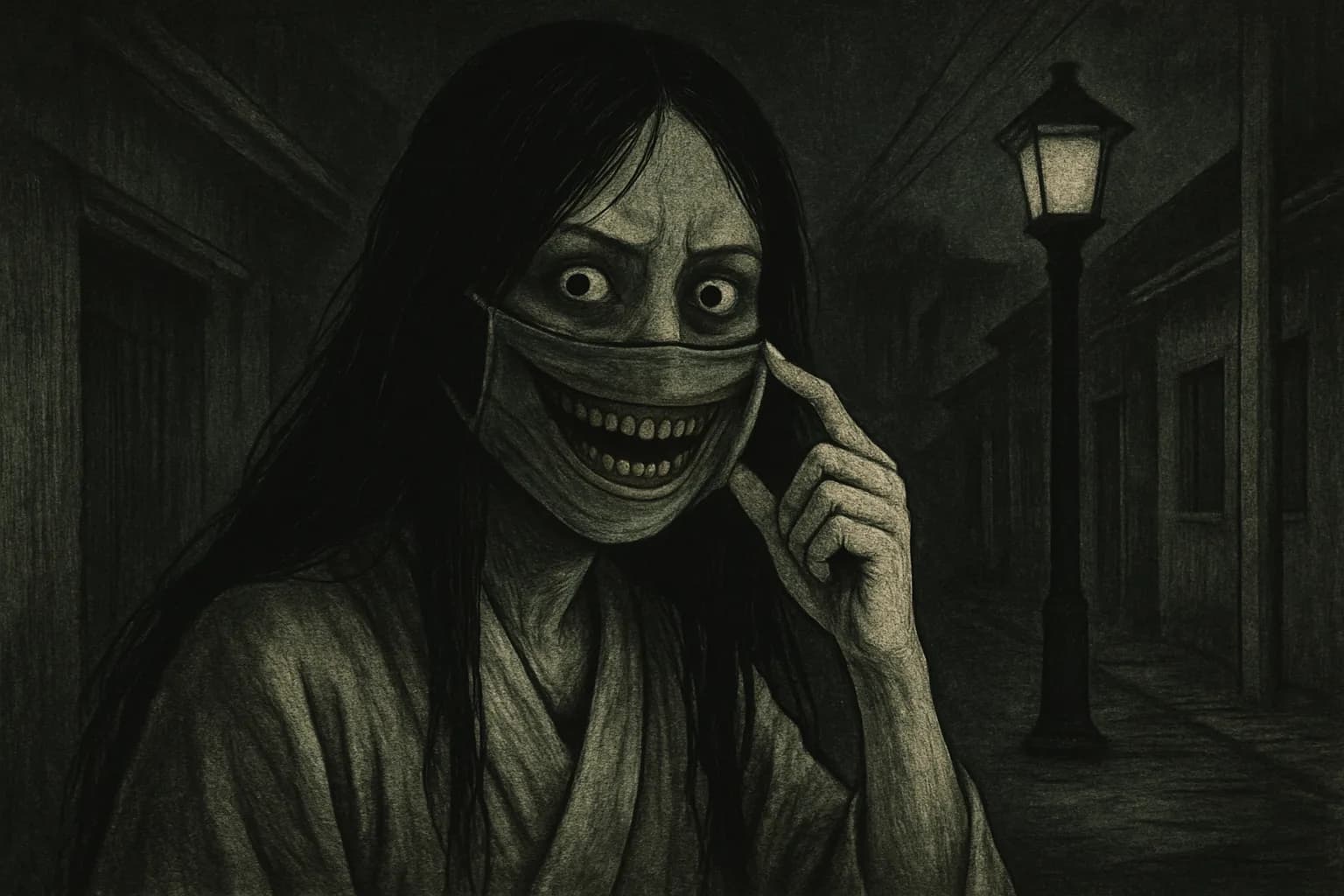
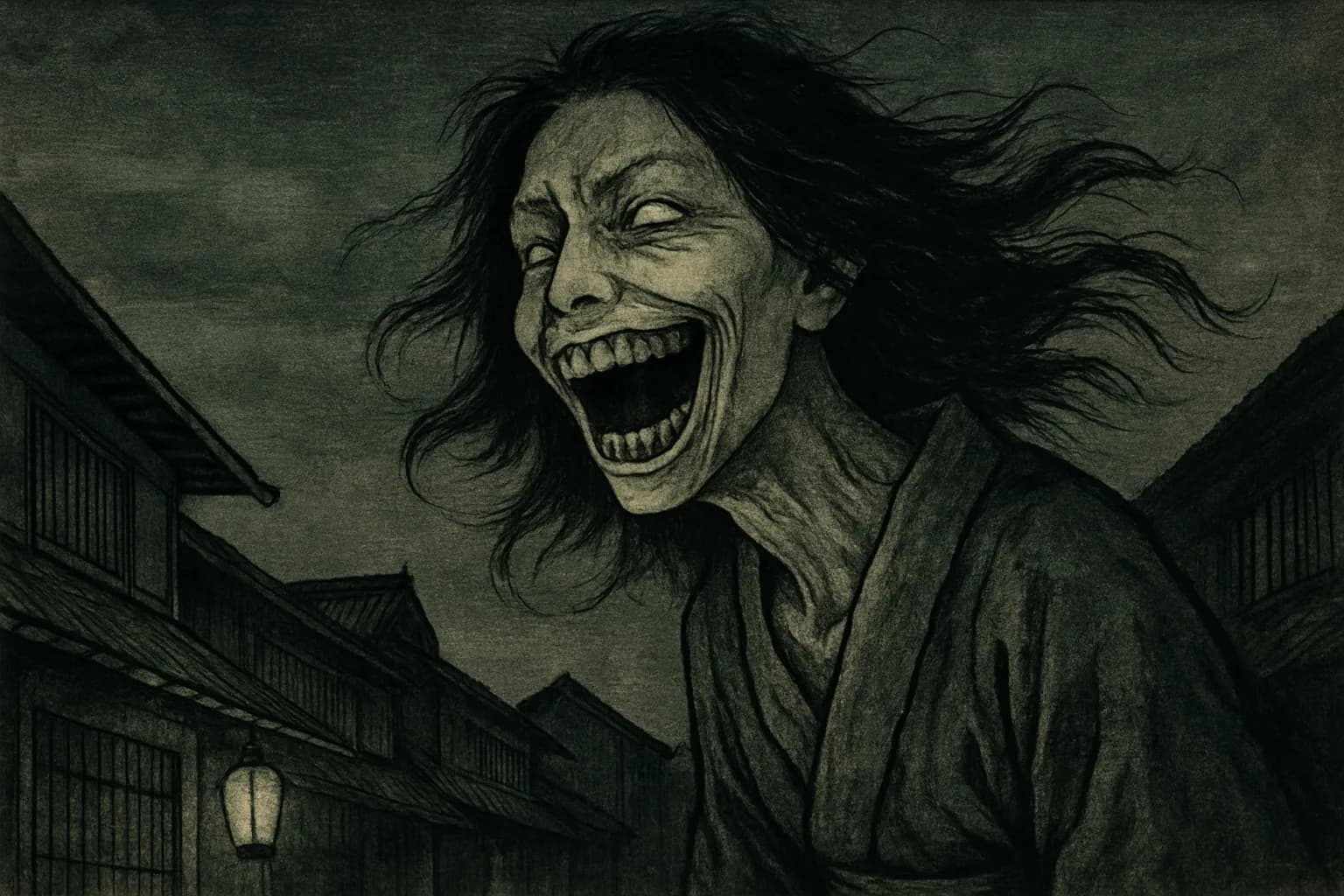
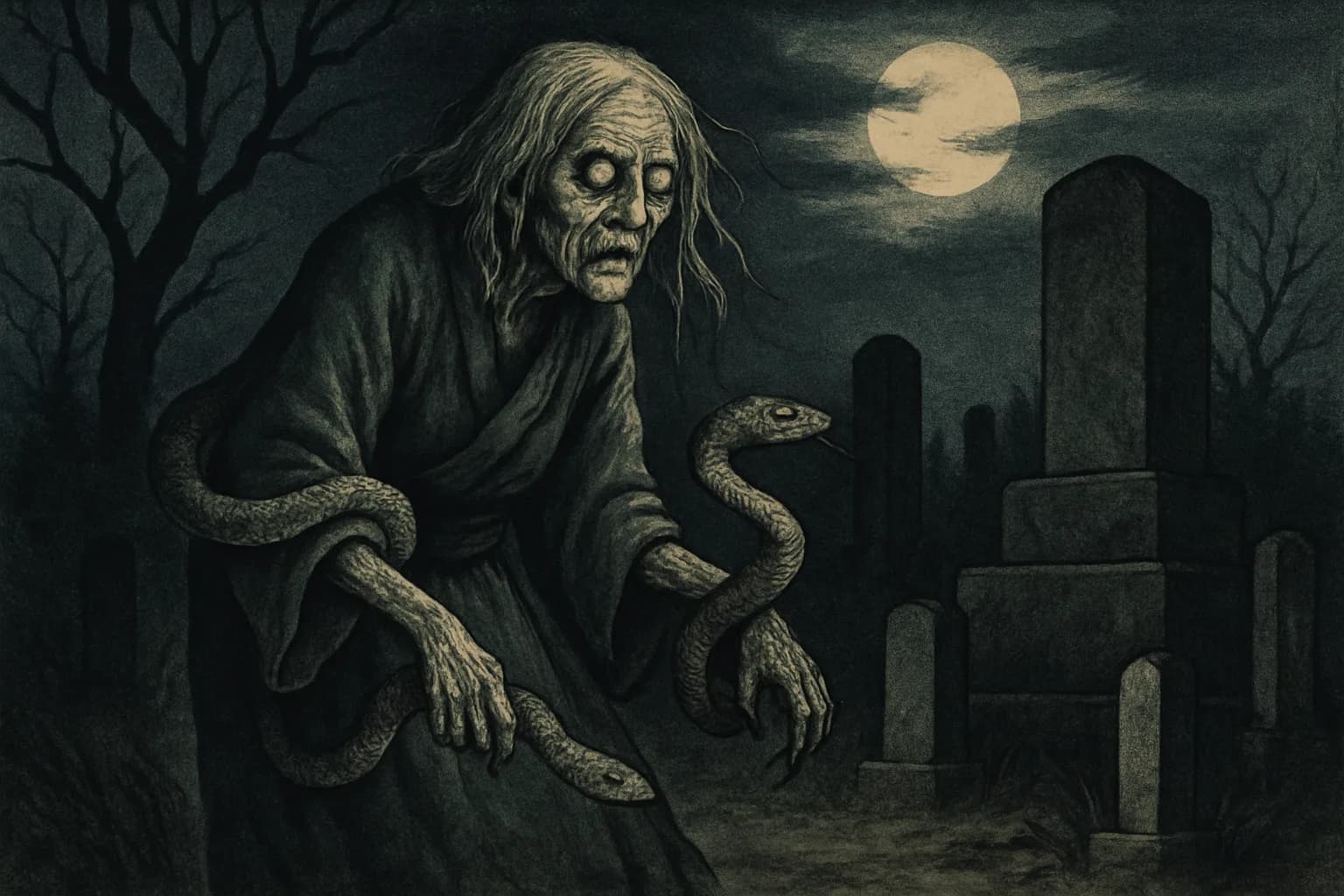
Dodomeki is a living thief. An eye opens on her arm for every coin she takes. Futakuchi-onna is a living wife with a second mouth in the back of her head. Taka-onna stretches her body to look into upper windows. Rokurokubi sends her neck out at night and wakes up in the morning.
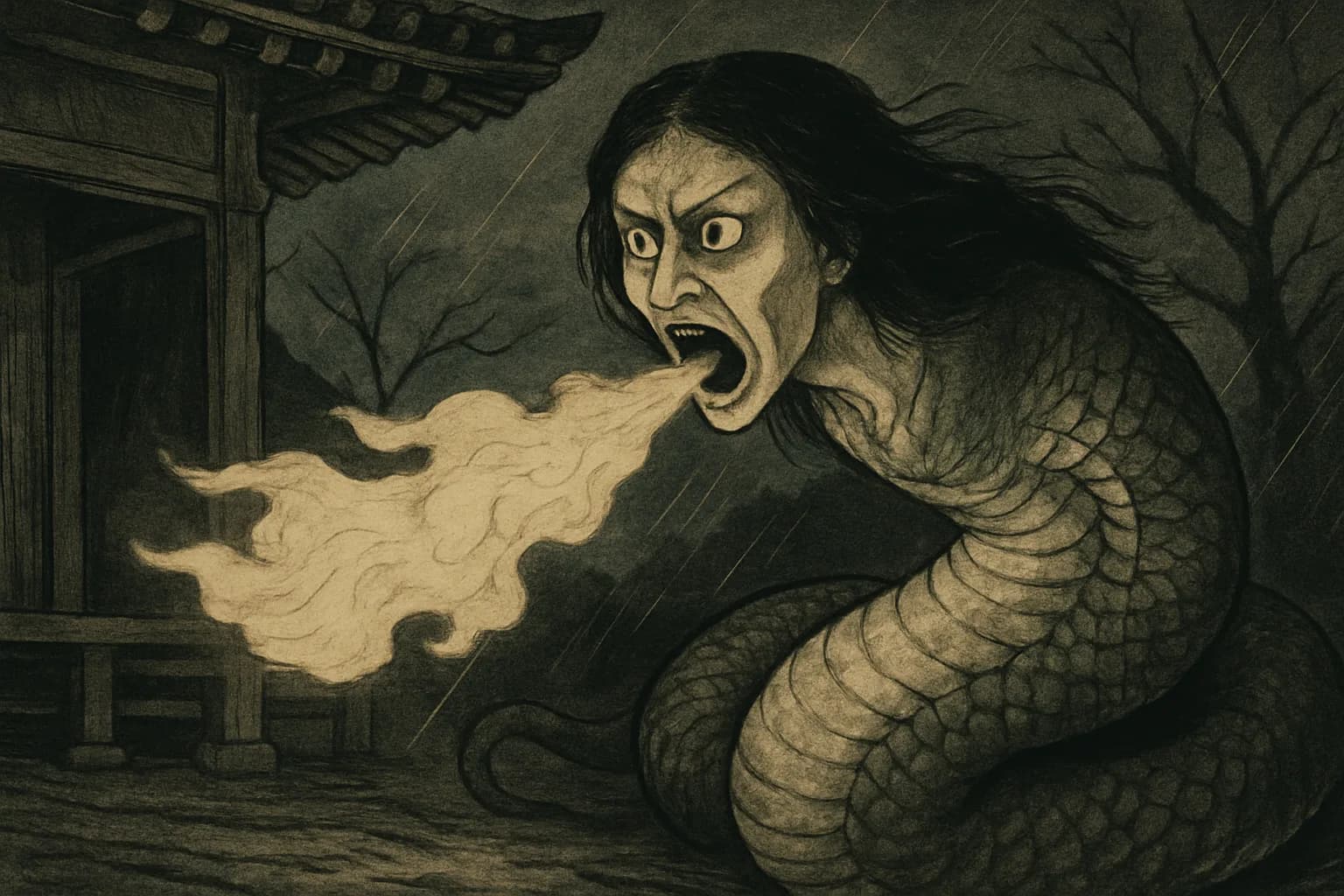
Kiyohime is alive when she becomes a serpent. Kurozuka and kokuri-baba are women living in bad houses, doing terrible things while still breathing.
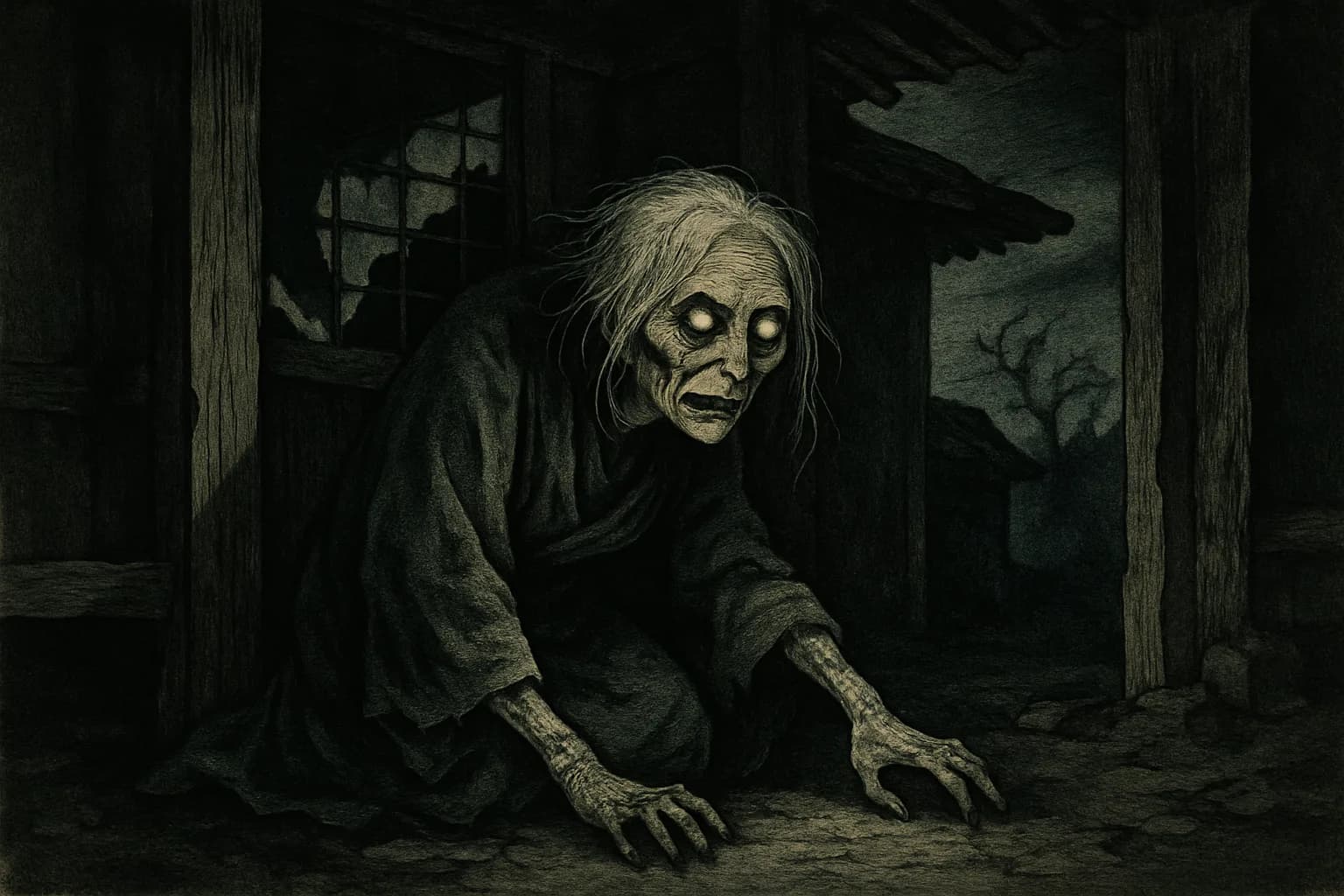
None of that is haunting. It is transformation. A living woman changes shape, and the shape records something she did, or something done to her.
The men are dead, and they are still working
The three men die first, then carry on with the job.
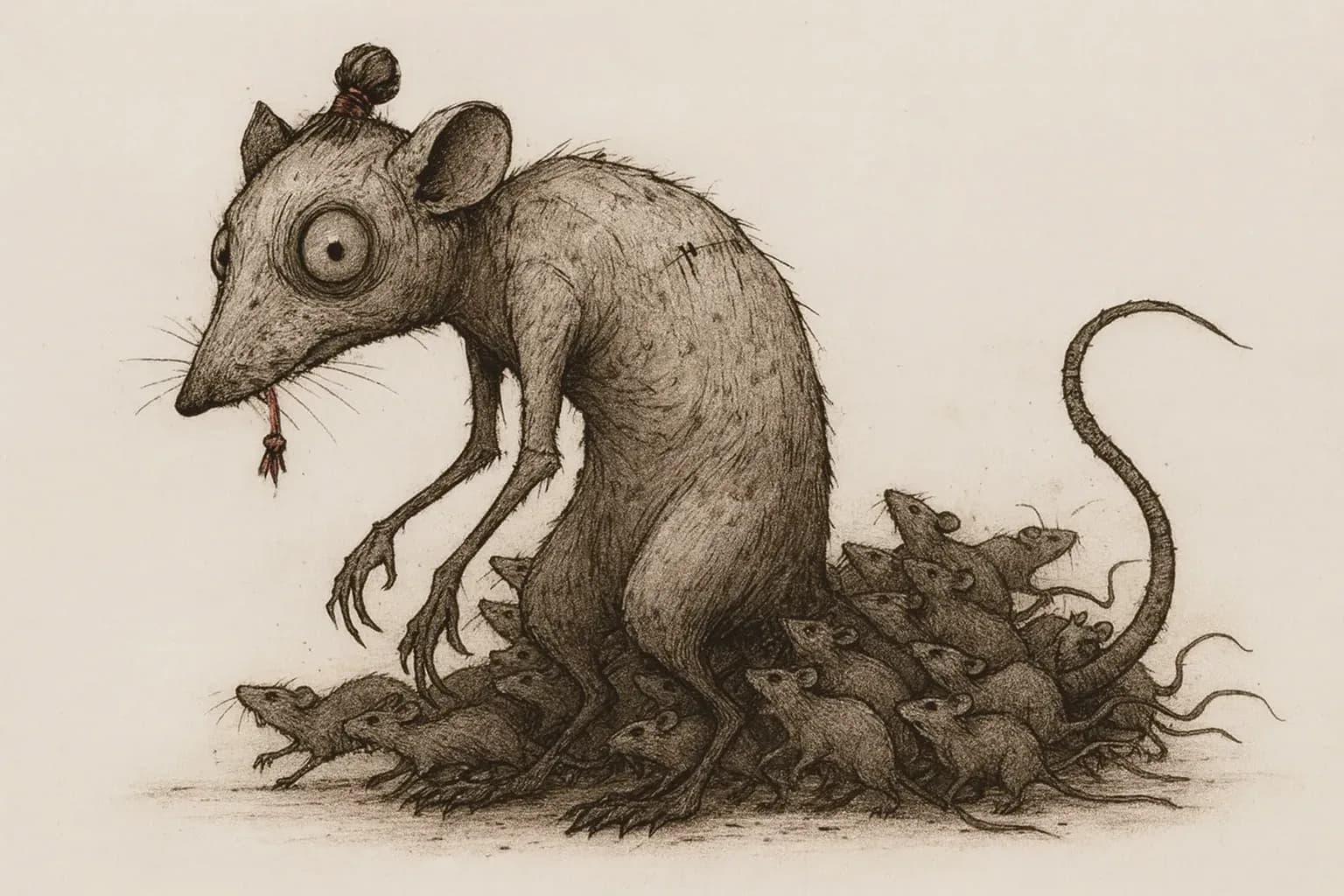
Tesso is the monk Raigō. A promise to his temple was broken. He shut himself away and starved to death over a hundred days. His grudge came back as rats that ate the scriptures.
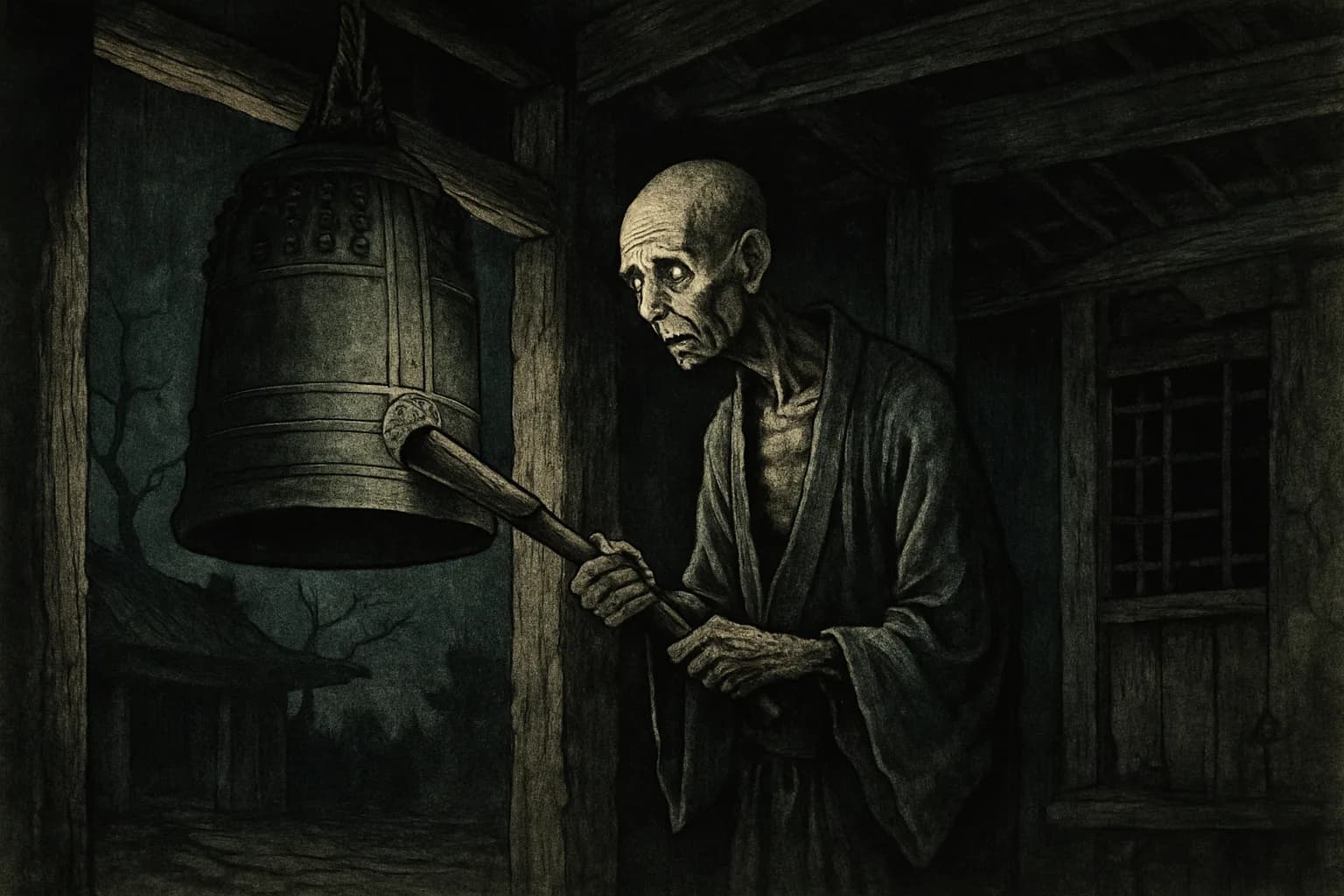
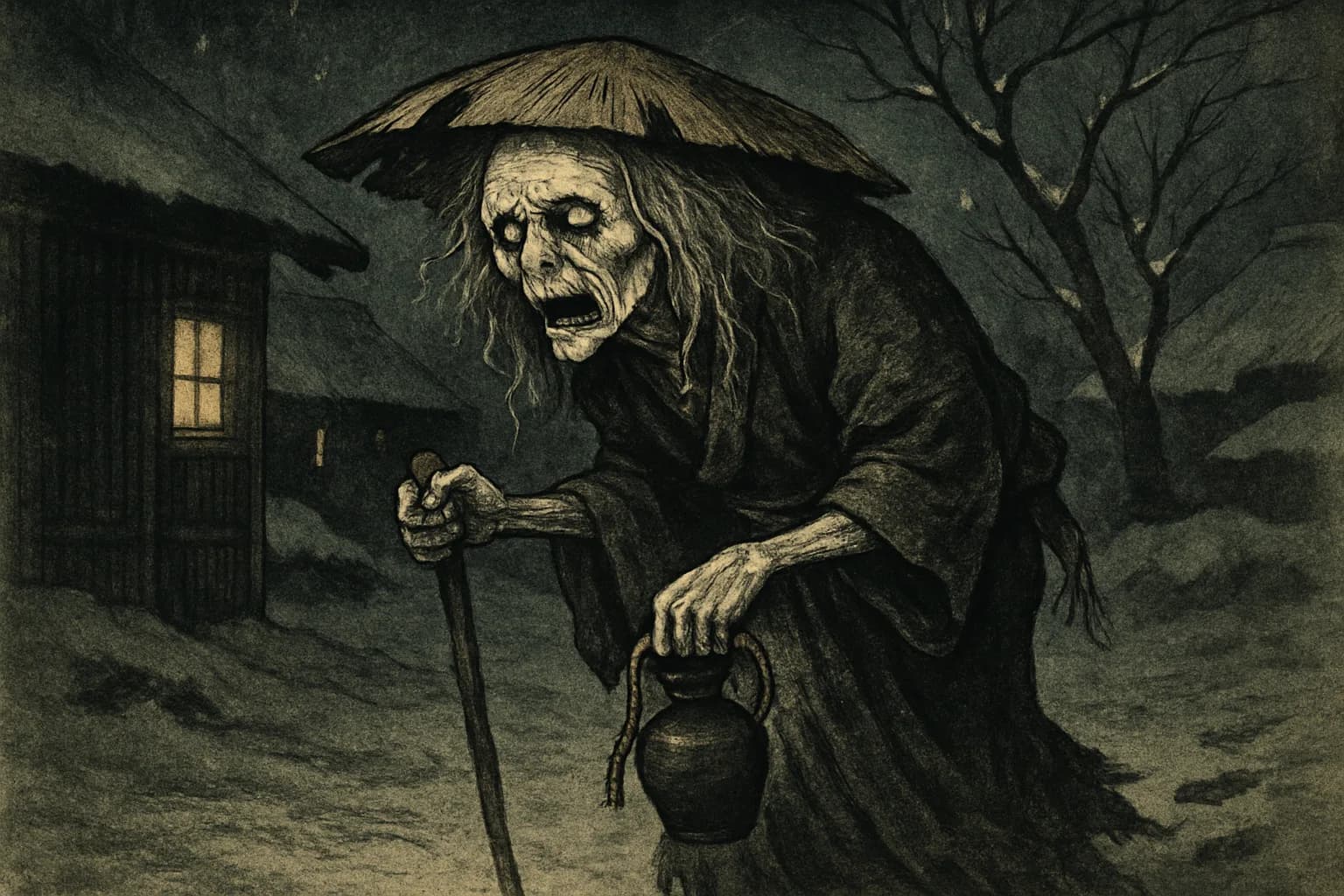
Noderabo is the last monk of a ruined temple. He died there alone. He is still ringing the evening bell for a parish that no longer exists.
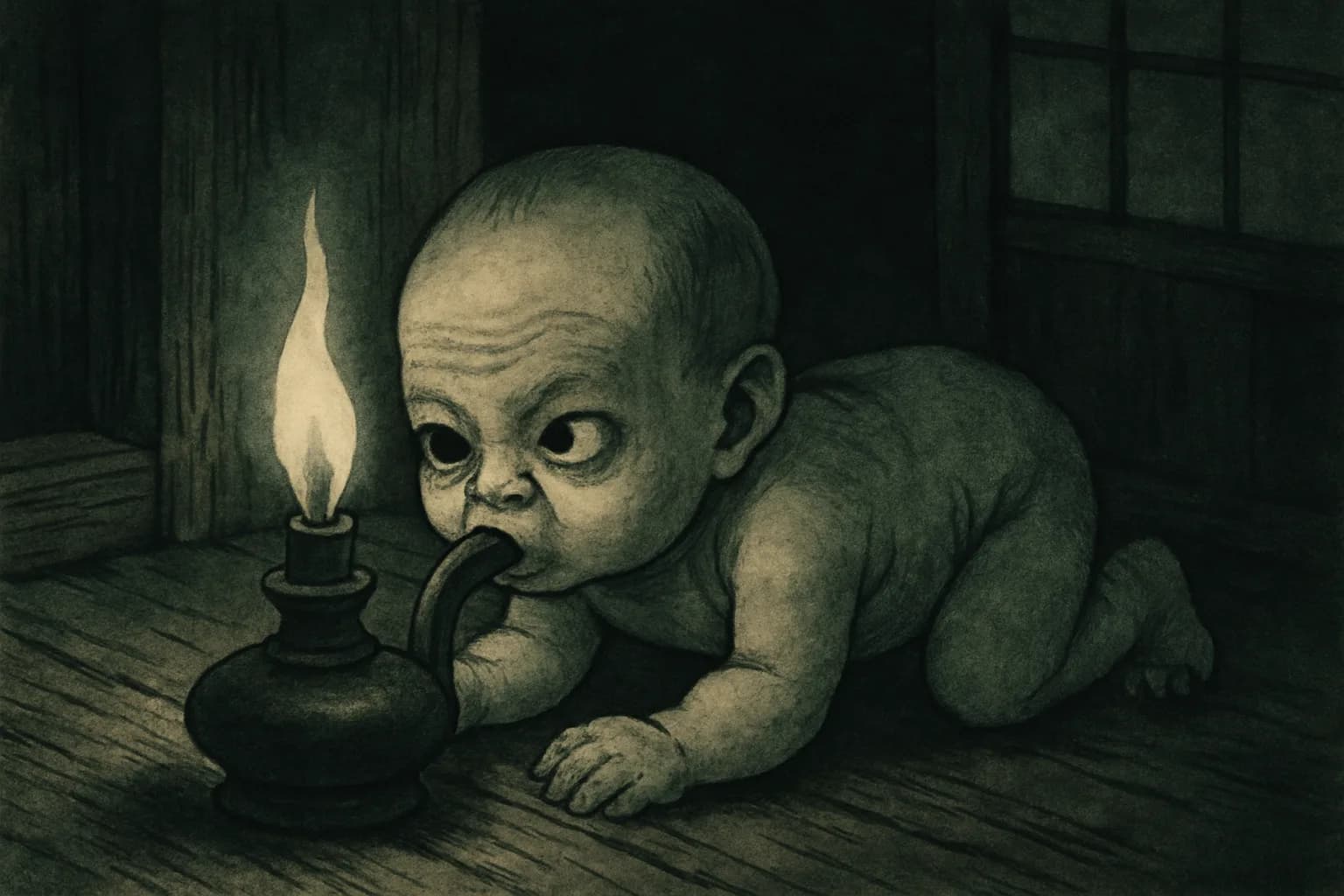
Abura-akago was a man who stole lamp oil. When he died, the theft did not stop. His spirit still slips into houses and drinks the oil.
Each one had an office or a trade, and death did not release him from it. The women change bodies, and the men keep their posts — that reads as a pattern, not a proof. The counts under it are plain enough.
Then where does the woman in white come from?
Not from this shelf. From pictures.
The image is usually traced to Maruyama Ōkyo, whose mid-eighteenth-century hanging scroll shows a footless female ghost. Kabuki took the look and made it standard. Tōkaidō Yotsuya Kaidan opened in 1825 and gave the stage its most famous wronged wife, Oiwa.
The details are funeral details. The white robe is a shini-shōzoku, the kimono a corpse was dressed in. The loose hair is funeral hair, because Edo women bound theirs up in life.
So the famous look is a convention of painting and theatre. That convention is female. "Japanese ghosts are women" describes a genre of picture, not a population of the dead.
Our shelf has a second bias, and it is one man
There is one more thing the count shows.
For 21 of the 26, the source field names a Toriyama Sekien print — his books of 1776, 1779 and 1781.
In four of those it names something older too: Edo kaidan collections, or the Heike Monogatari tradition behind Raigō. For the other seventeen, the print is all there is.
And several of his women have nothing behind them. No earlier source is recorded for ao-nyobo, kerakera-onna or jakotsu-baba. Sekien named them, drew them, and in one case wrote his own note explaining the name.
So part of that 20 is not what villages believed. It is what one Edo artist chose to publish.
What the count is, and is not
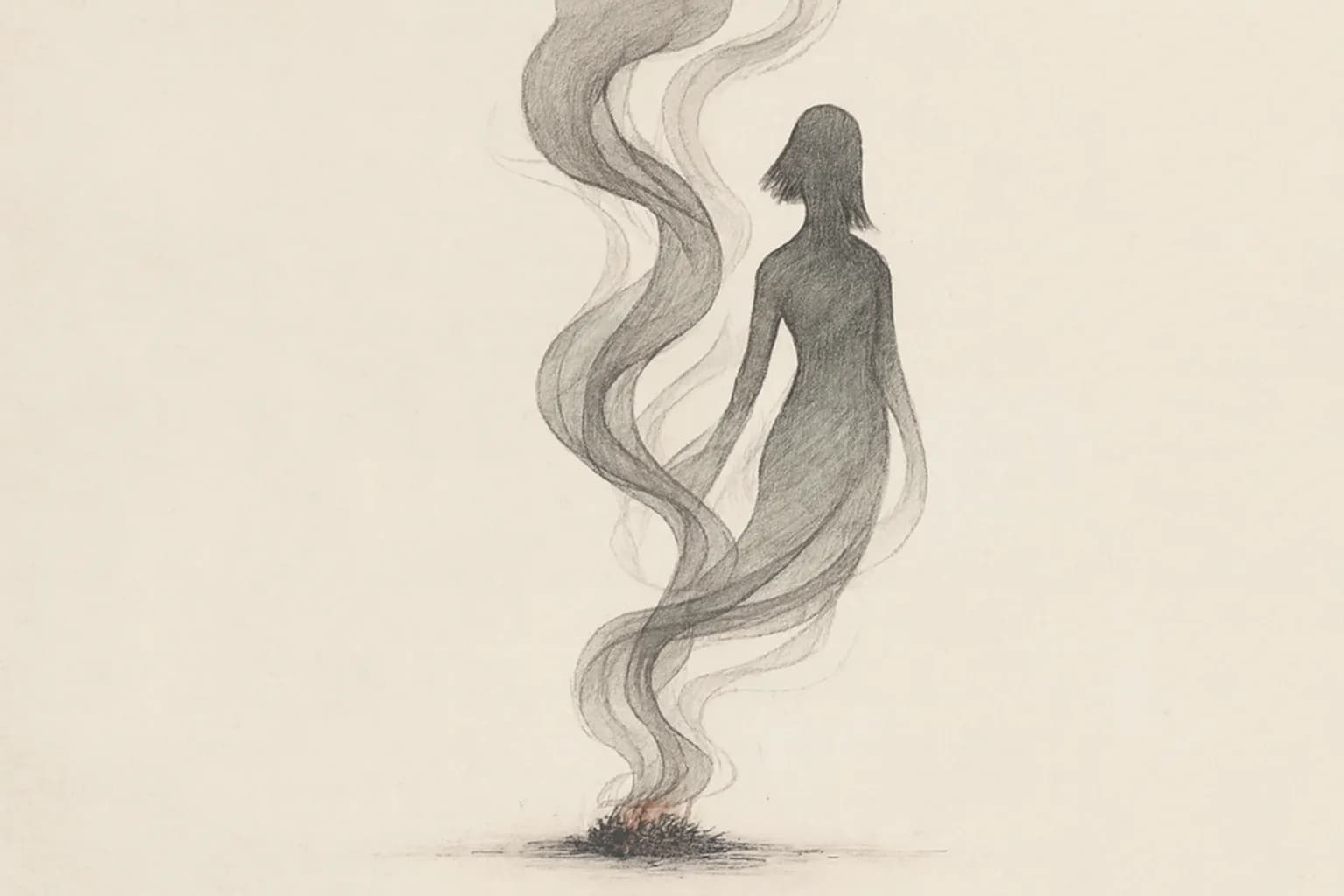
Our 26 are not a census of Japanese ghost lore; they are the creatures English readers look up. Gender is read from our own text, and rokurokubi is the least settled of them — in Lafcadio Hearn's 1904 telling, the headless ones include men. Two cases are genuinely disputed and we counted them as such: one reading of zashiki-warashi makes it a dead child, and en-enra is smoke that is only rarely said to be a dead person.
Among the entries that are actually dead people, our shelf is four women, three men, and one figure with no gender at all. That is close to even. What is overwhelmingly female is something else: the living woman who turns into something.
So the sentence people repeat is true, and it is not about ghosts. The woman in the white robe is a picture from the 1700s, and the thing English readers call a Japanese ghost is mostly a woman who never died.