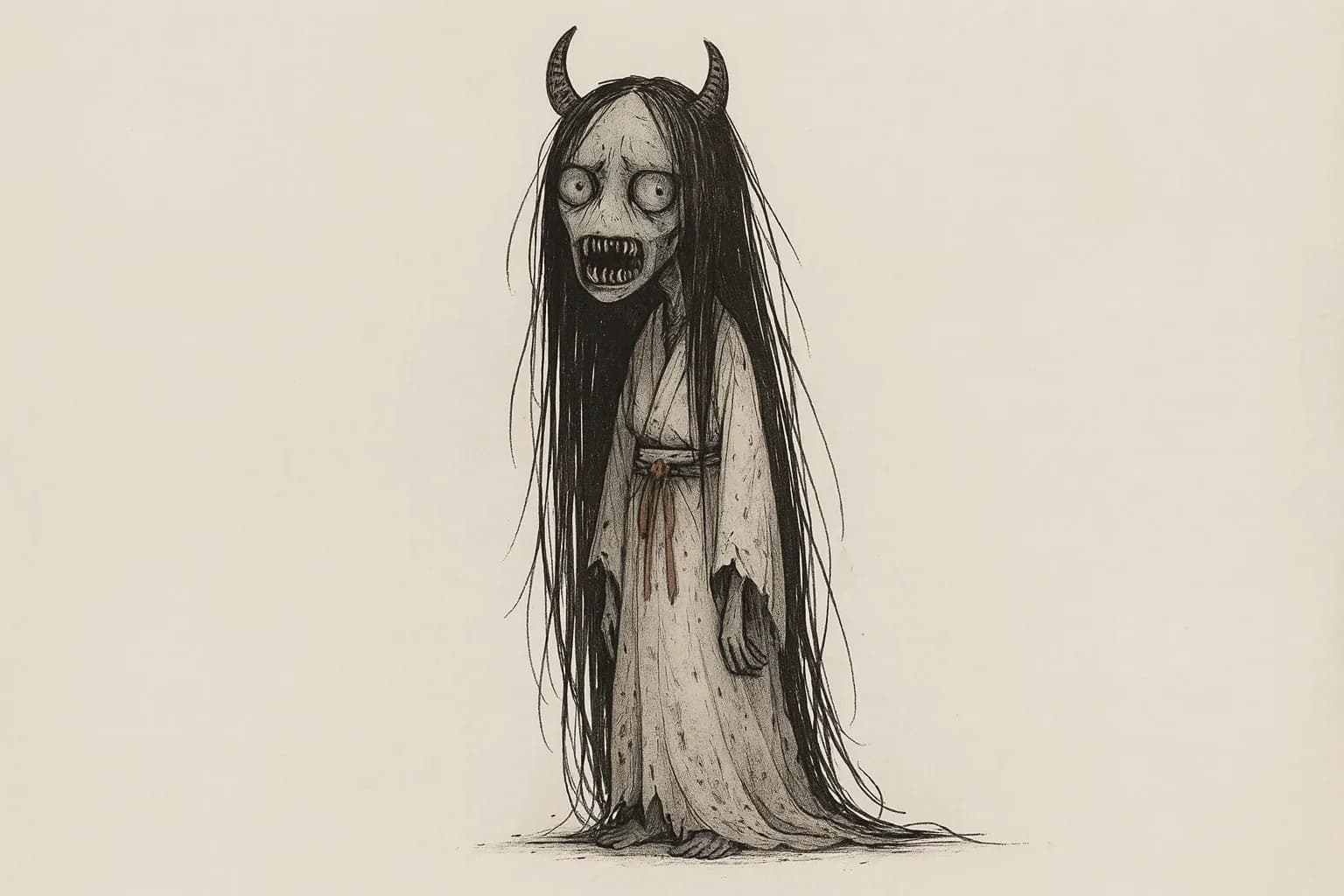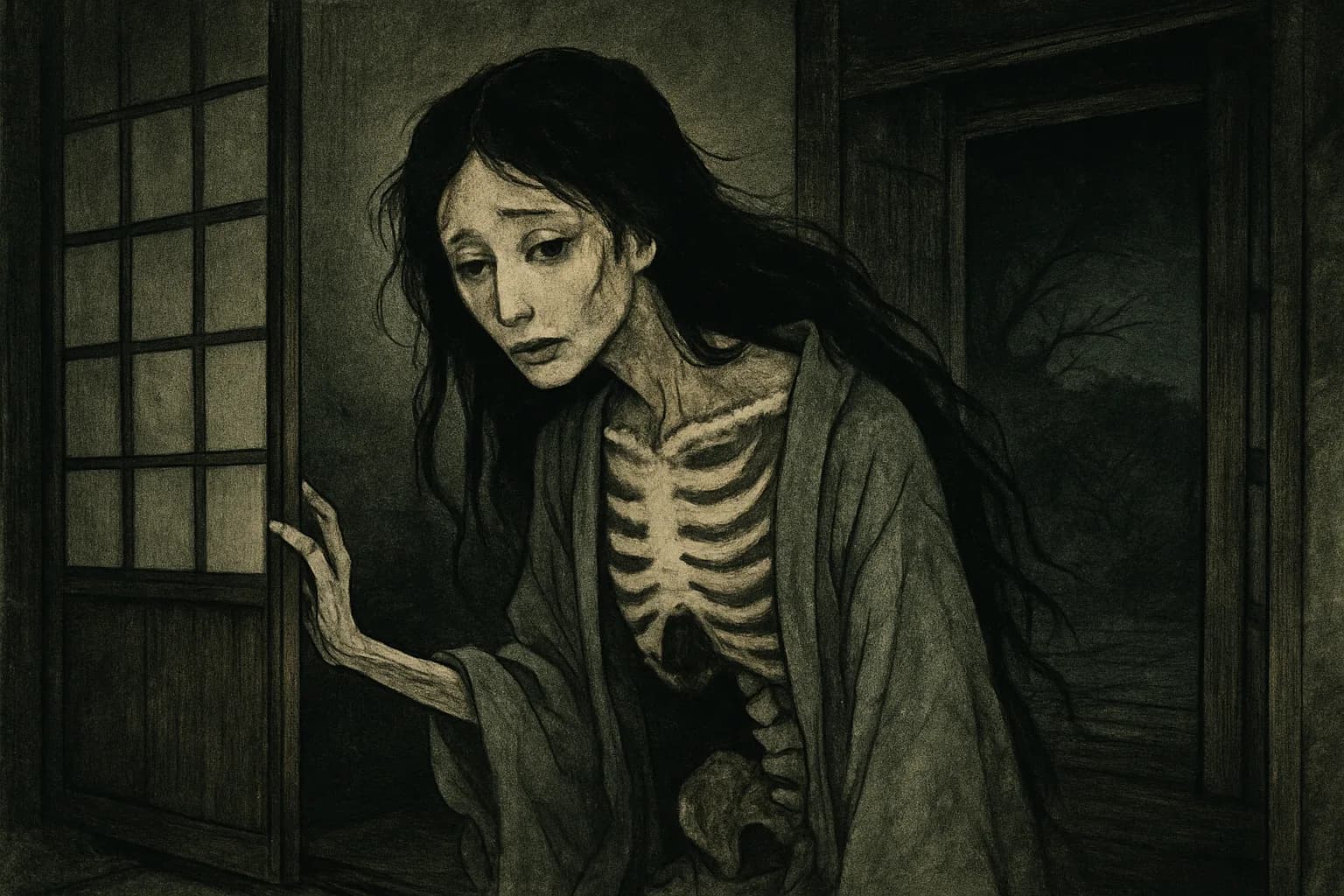
Listen for wooden clogs on a summer night — a slow, hollow karan, koron coming closer down an empty street — and you have already heard the calling card of Hone-onna, the Bone Woman. She is dead, she knows she is dead, and she is on her way to see the man she loves anyway. Everyone else who looks at her sees a corpse. He sees the woman he fell for.
What does a hone-onna look like?
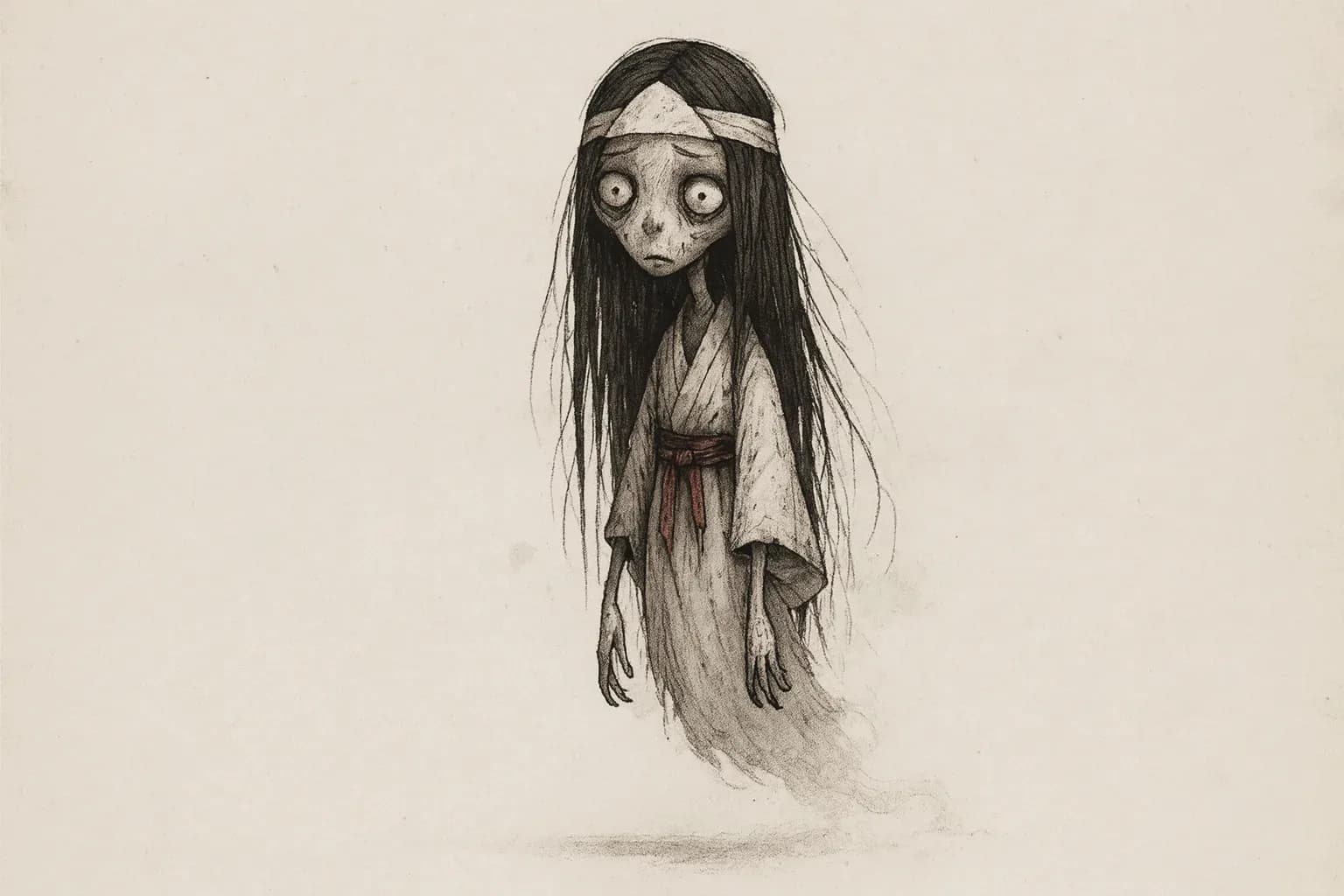
To her lover, a hone-onna looks exactly as she did in life: young, lovely, dressed for a summer evening, often carrying a paper lantern painted with peonies. To anyone else — a servant peering through a gap in the shutters, a priest with the eyes to see past illusion — she is a walking skeleton, flesh long since gone, held together by nothing but her own refusal to stop loving. The disguise isn't magic so much as devotion: love blinds the one man who needs to see clearly, while it does nothing at all for everyone standing outside that particular delusion.
She comes only at night and only to one house. She never eats, never lingers past first light, and never explains where she goes when the sun comes up.
The tale of Otsuyu and the peony lantern
The story that made Hone-onna famous is Botan Dōrō, "The Peony Lantern." A widowed man named Ogiwara Shinnojō meets a beautiful woman, Otsuyu, and her maid one evening during the Obon festival — the time of year when the dead are said to visit the living. Otsuyu carries a lantern decorated with peony blossoms. The two fall in love, and she returns to his house every night after that, always leaving before dawn.
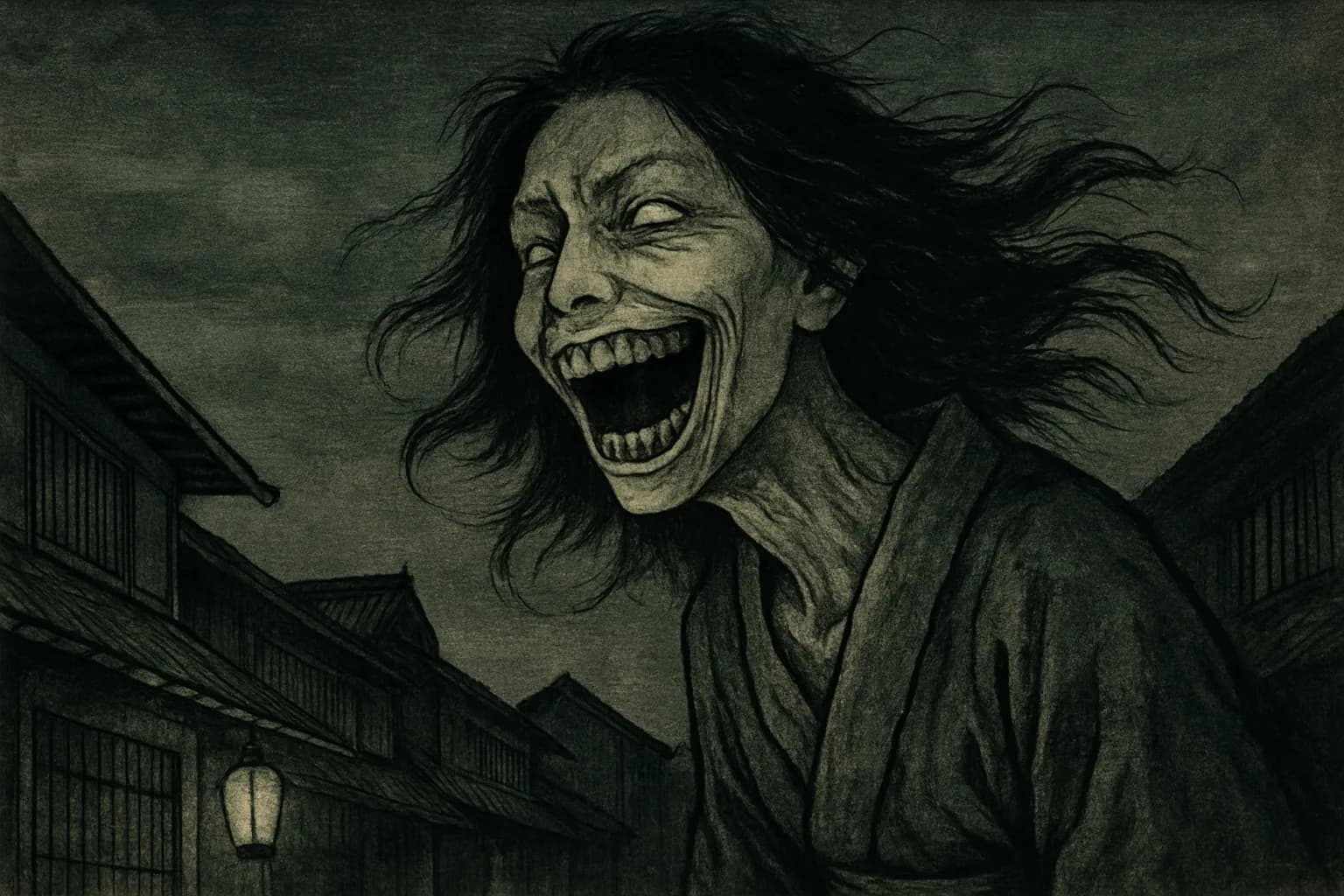
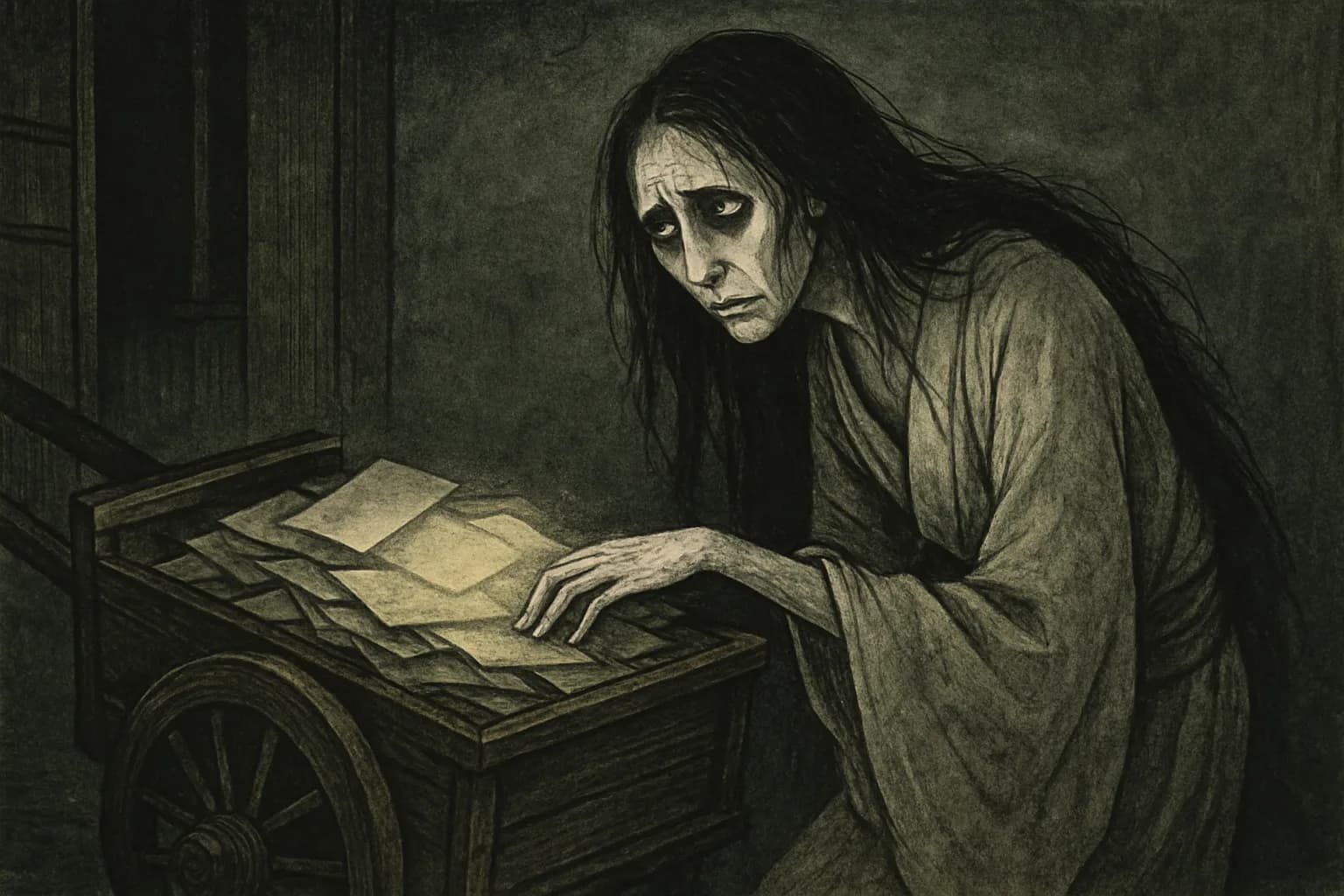
A neighbor grows suspicious and looks in on the couple one night. He finds Ogiwara in bed not with a woman, but with a skeleton, laughing and murmuring as though nothing were wrong. Ogiwara is dying by inches and doesn't know it — Otsuyu has been dead for some time, and each visit is draining him toward the grave he'll soon share with her. A priest gives him an ofuda talisman and a small image of Kannon to seal his house against her, and for a while it works: Otsuyu weeps outside, unable to cross the threshold. But Ogiwara can't bear to be parted from her, so he removes the ward himself and lets her in. He is found dead the next morning, his face at peace, twined together with her bones.
Where Hone-onna comes from
The story didn't start in Japan. Its root is a Chinese ghost tale, "The Peony Lantern," collected in Qu You's Jiandeng Xinhua (New Tales Under the Lamplight, 1378). The Japanese scholar-monk Asai Ryōi adapted it into his 1666 collection Otogi Bōko, transplanting the story onto Japanese soil and giving it the Obon setting that ties Otsuyu's visits to the season when ancestral spirits are already expected to come calling. A little over a century later, Toriyama Sekien drew the Bone Woman herself into his yokai catalogue Konjaku Hyakki Shūi (1781), captioning the skeletal figure with a summary of the Otogi Bōko tale and giving the type its lasting name.
Read as folklore rather than horror, Hone-onna is less a monster than a warning wrapped around a real anxiety: a stranger's beauty may be concealing something the besotted can't or won't see, and grief for the dead, left unresolved, can hollow out the living just as surely.
Hone-onna today
The peony lantern story outgrew its origins in Chinese folk fiction to become one of Japan's essential ghost stories. The rakugo storyteller San'yūtei Enchō reworked it into the extended comic-tragic narrative Kaidan Botan Dōrō, serialized in the 1880s and still performed by rakugo artists today. It reached the kabuki stage in 1892 and remains in the classical repertoire, staged with the hanamichi runway extended into the audience so Otsuyu's approach — that clack of wooden geta drawing nearer in the dark — lands as close as the actors can make it. Ghost stories in Japan are traditionally told in summer, to raise a chill against the heat, and Botan Dōrō's Obon setting has kept it a fixture of exactly that season for well over a century.