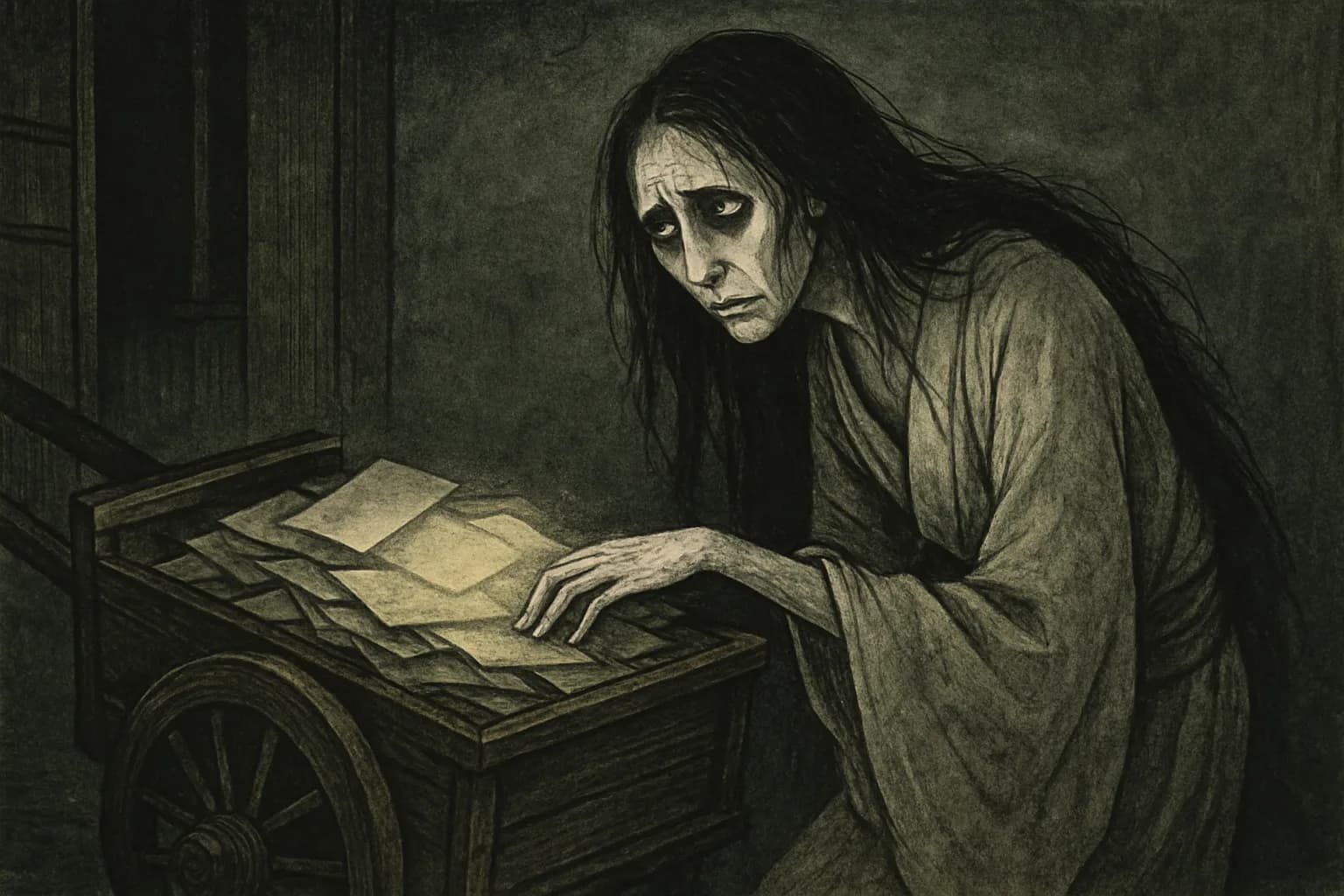
A fuguruma was a low, wheeled cart built for carrying paper — sutras in a temple, official documents in a magistrate's office, and in a noble household, correspondence. Letters, especially, had a way of piling up in one: notes from suitors, replies drafted and never sent, poems exchanged over years of courtship that a woman kept rather than burned. Toriyama Sekien looked at a cart like that, stacked with decades of paper nobody had thrown away, and drew a woman rising out of it.
What does she look like?
Sekien's print shows an elegant court lady in layered robes, seated among — or emerging from — a fuguruma piled with scrolls and loose letters. There is nothing monstrous about her face or posture; she is drawn with the same refined, unhurried linework Sekien gave the other tool-spirits in this particular book, figures closer to courtly portraiture than to the grotesque, toothy household objects of his earlier catalogues. The letters are the only clue that something is wrong. They are never quoted, never named, just present in quantity — years of paper doing the work that a wound or a weapon would do in a more violent yokai's picture.
A spirit made of accumulated longing
The idea behind fuguruma-yōhi is less "an object wakes up" than "a feeling, given enough time and enough paper, condenses into a person." Her name makes the logic explicit: 妃 (hi) is a word for a consort or a high-ranking noblewoman, and 妖 (yō) marks her as uncanny — a bewitching lady, not a battered tool with a grudge. She is not the cart itself so much as what the cart has been quietly holding: longing that was written down but never delivered, or delivered and never answered, kept instead of discarded, until it took a shape of its own.
That distinguishes her from most tsukumogami, whose anger in the classic Tsukumogami-ki tradition comes from being thrown out after long service. Nothing here was thrown away. The letters were kept — which is exactly the problem. A feeling a person refuses to let go of, Sekien's picture suggests, doesn't fade quietly; it waits in the box you kept it in.
Where it comes from
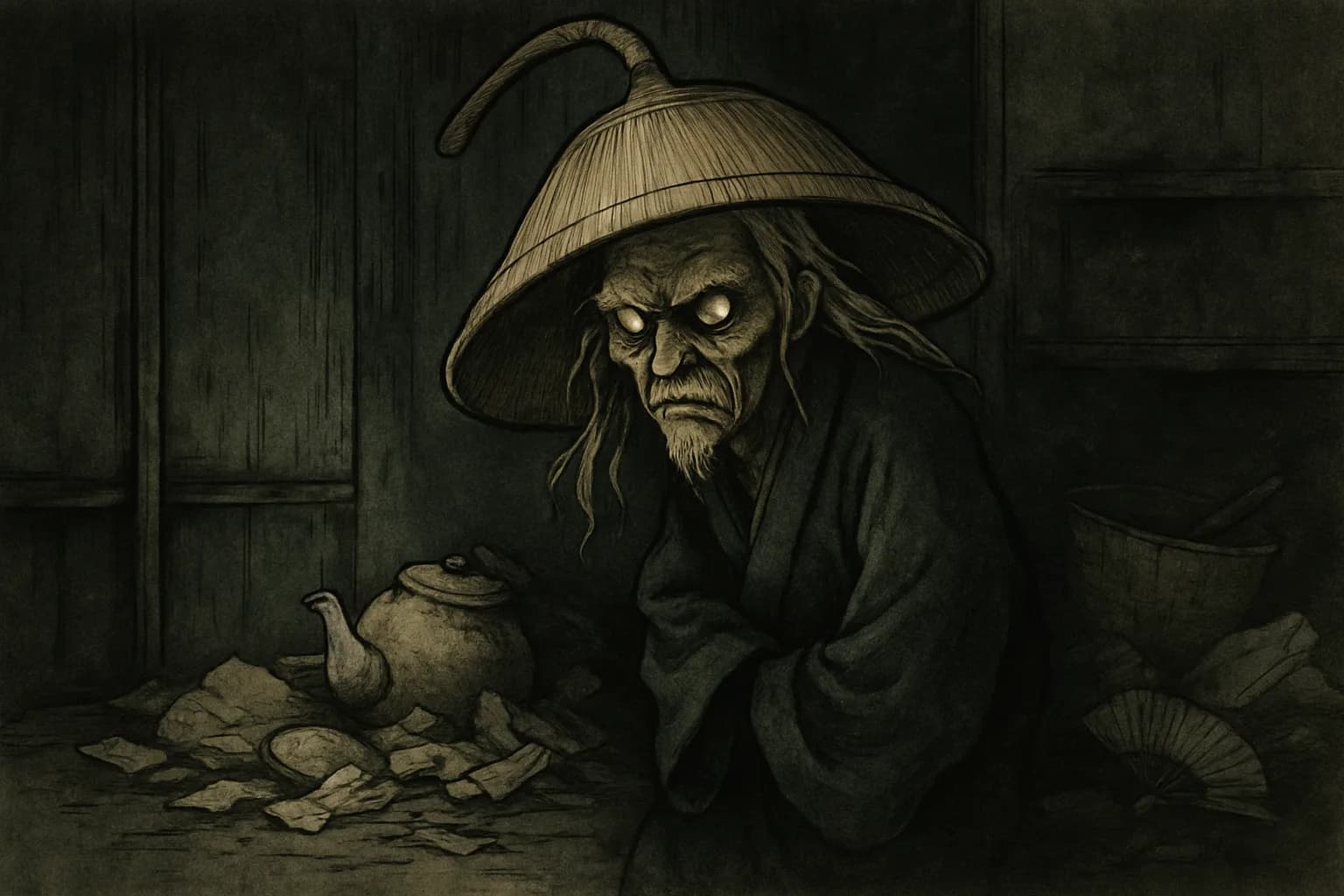
Fuguruma-yōhi appears in Hyakki Tsurezure Bukuro (百器徒然袋, 1784), the fourth and final of Toriyama Sekien's great yokai print catalogues, following Gazu Hyakki Yagyō (1776), Konjaku Gazu Zoku Hyakki (1779), and Konjaku Hyakki Shūi (1781). Unlike those earlier volumes, which mix in ghosts, animal spirits, and creatures of the wild, Hyakki Tsurezure Bukuro is devoted entirely to tsukumogami — old tools that have become spirits. Its title is itself a pun, borrowing the tsurezure ("idle hours," "boredom") of Yoshida Kenkō's 14th-century essay collection Tsurezuregusa and attaching it to fukuro, "a sack" or "bag": a bagful of idle-hours tales about things left too long unused, or too long unforgotten.
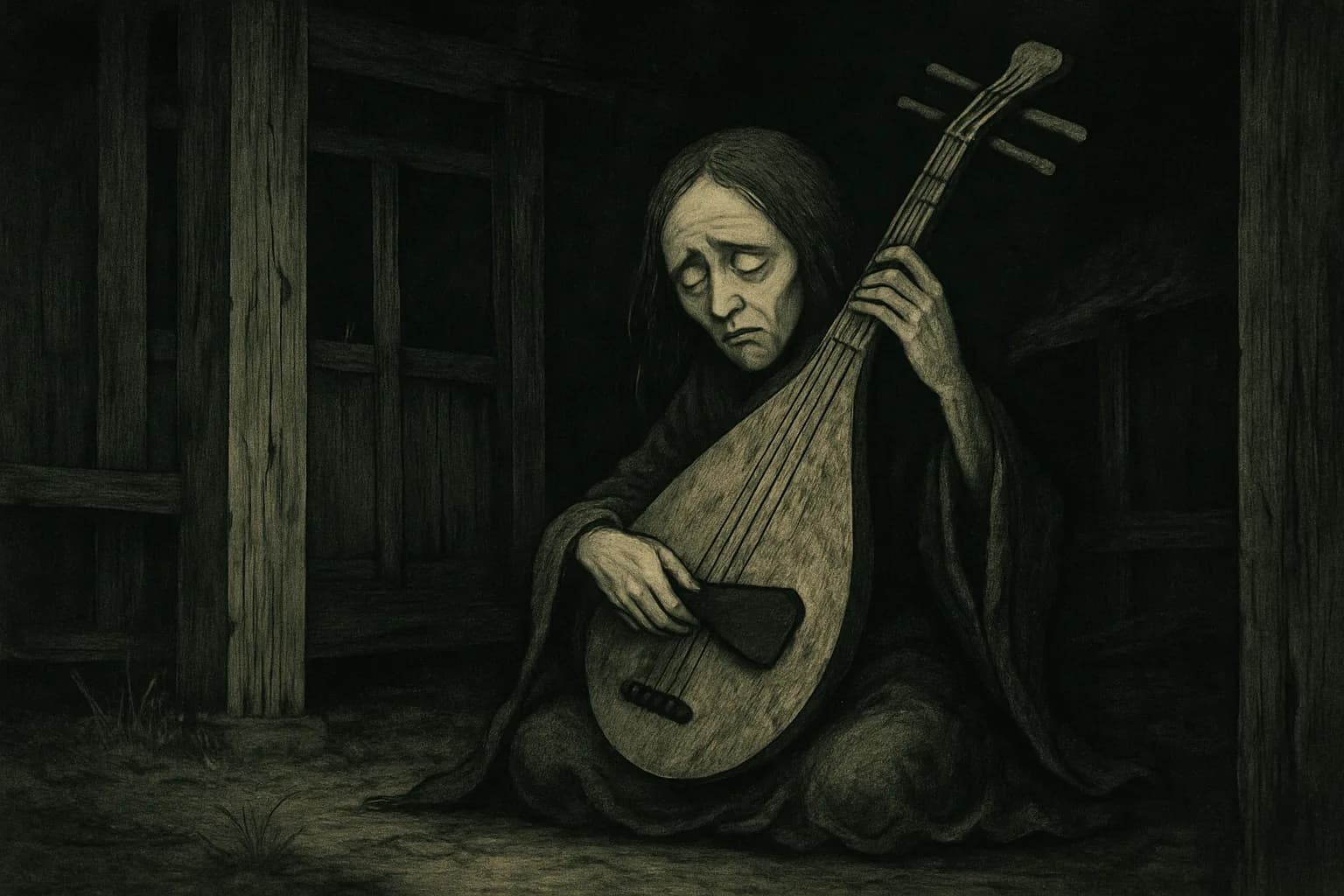
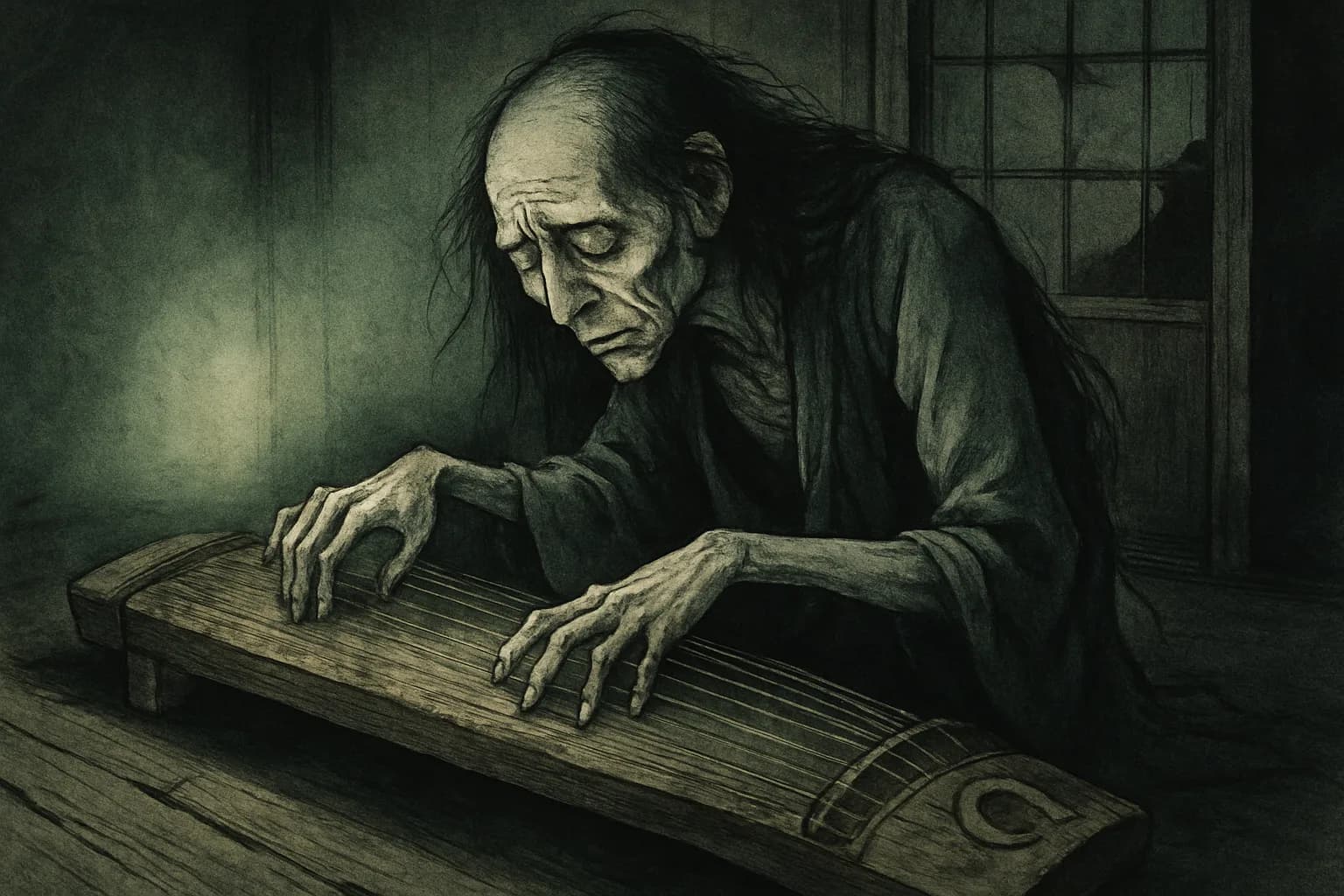
Within that book, several entries draw on refined court and artistic culture rather than kitchen implements — a biwa, a koto, a mirror stand — and fuguruma-yōhi belongs to that set. She reads as Sekien's gloss on a very old literary preoccupation, the letters and poems exchanged in Heian-period romance, filtered through an Edo print artist's eye for a good visual pun.
Fuguruma-yohi today
Fuguruma-yōhi never picked up an oral folk tradition the way the kappa or the hone-onna did — no regional retellings, no kabuki adaptation, no proverb built around her. She exists almost entirely inside Sekien's book, which survives in facsimile reprints and in the digitized ukiyo-e holdings of institutions that have photographed the Hyakki Tsurezure Bukuro page by page. Read against her more famous shelfmates, she is a quieter kind of yokai: not a warning told to frighten children away from a river or a road at night, but a single artist's 18th-century joke about what happens to a box of letters nobody ever sorts through.