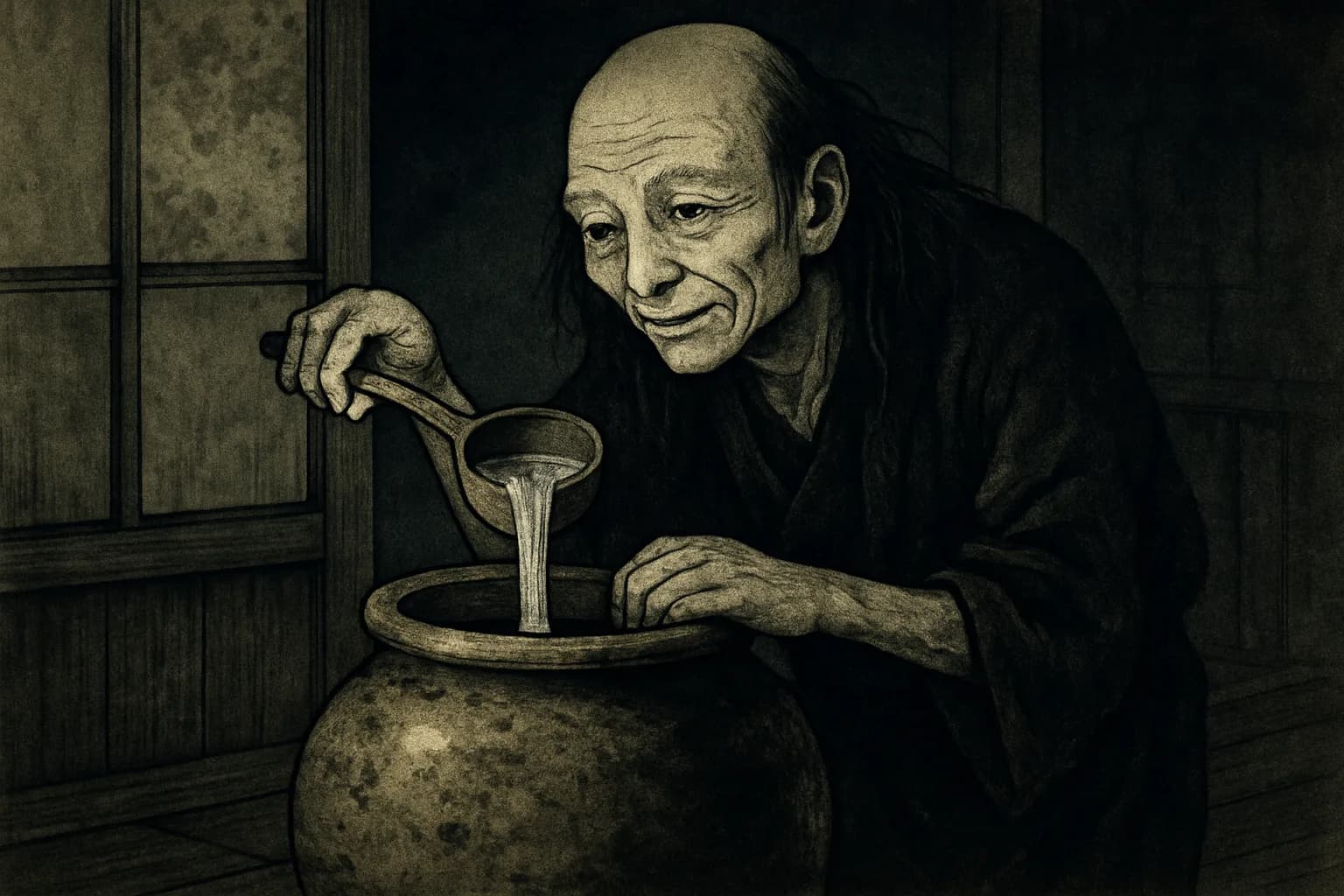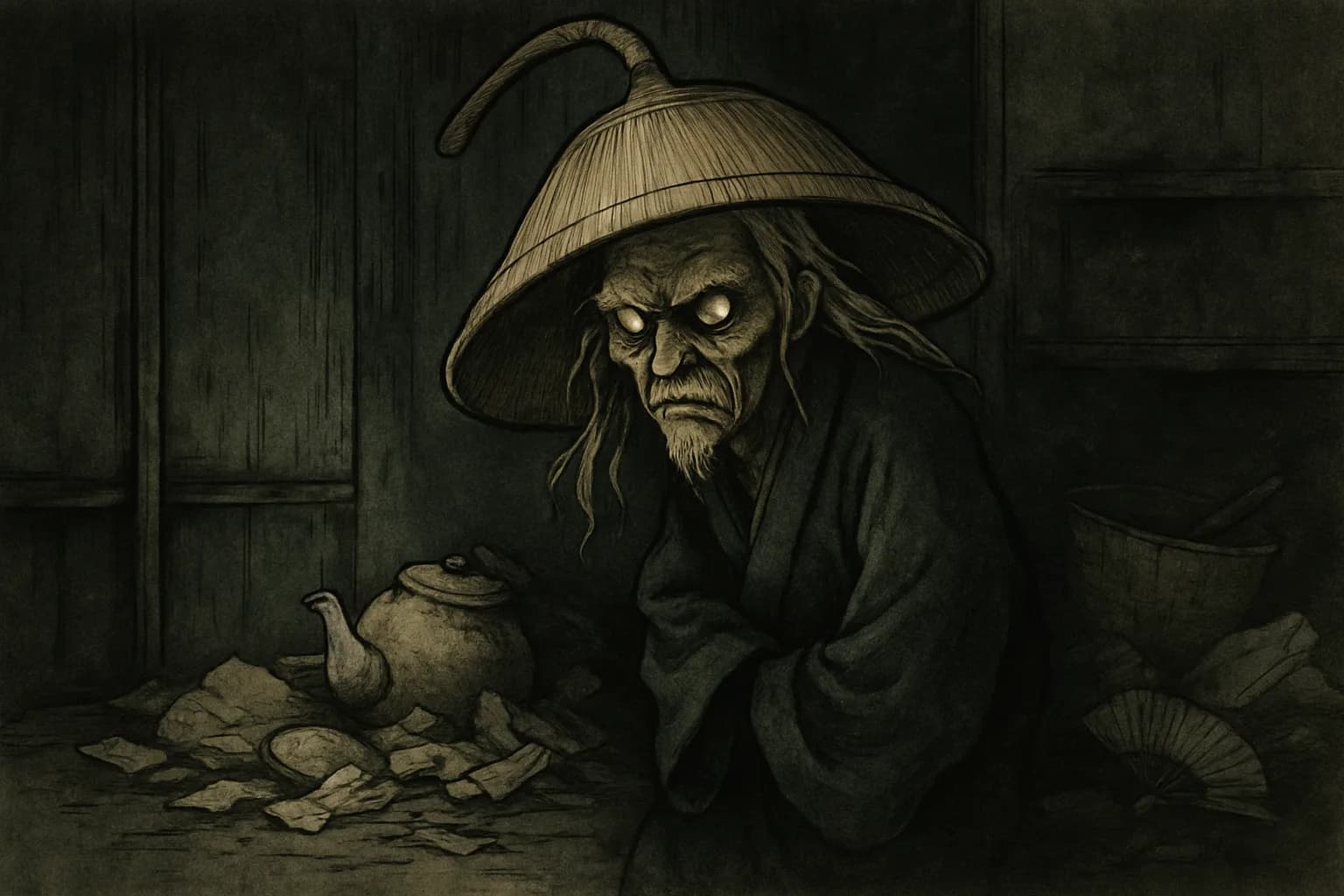
Every household in Edo-period Japan kept a chirizuka — a mound out back where broken pots, worn-out tools, and anything else too far gone to mend simply piled up. Toriyama Sekien looked at that pile and asked who, exactly, was in charge of it. His answer was Chirizuka-kaiō: a king, seated on his own throne of junk, ruling over every object a household had ever given up on.
What does it look like?
Sekien's print shows an old, bearded figure in ragged court dress, cross-legged atop a heap of cast-off household goods — cracked jars, a broken umbrella, worn-through baskets, the debris of a lifetime of use. He is not drawn as a monster in the ordinary sense; nothing about him is fanged or clawed. His authority is entirely in the posture: he sits the way a king sits, on a throne built entirely from what everyone else decided was worthless.
A king for things nobody wants
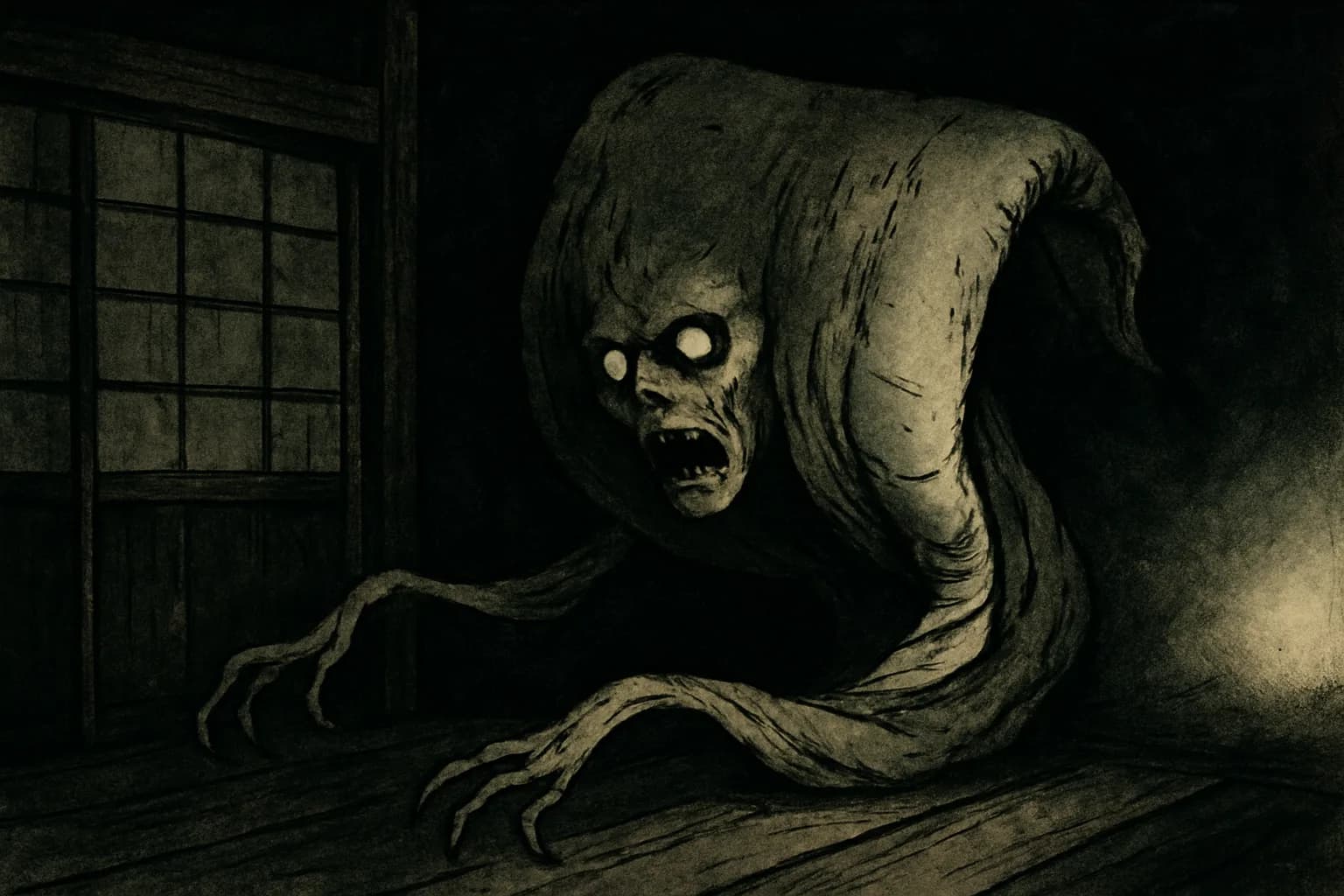
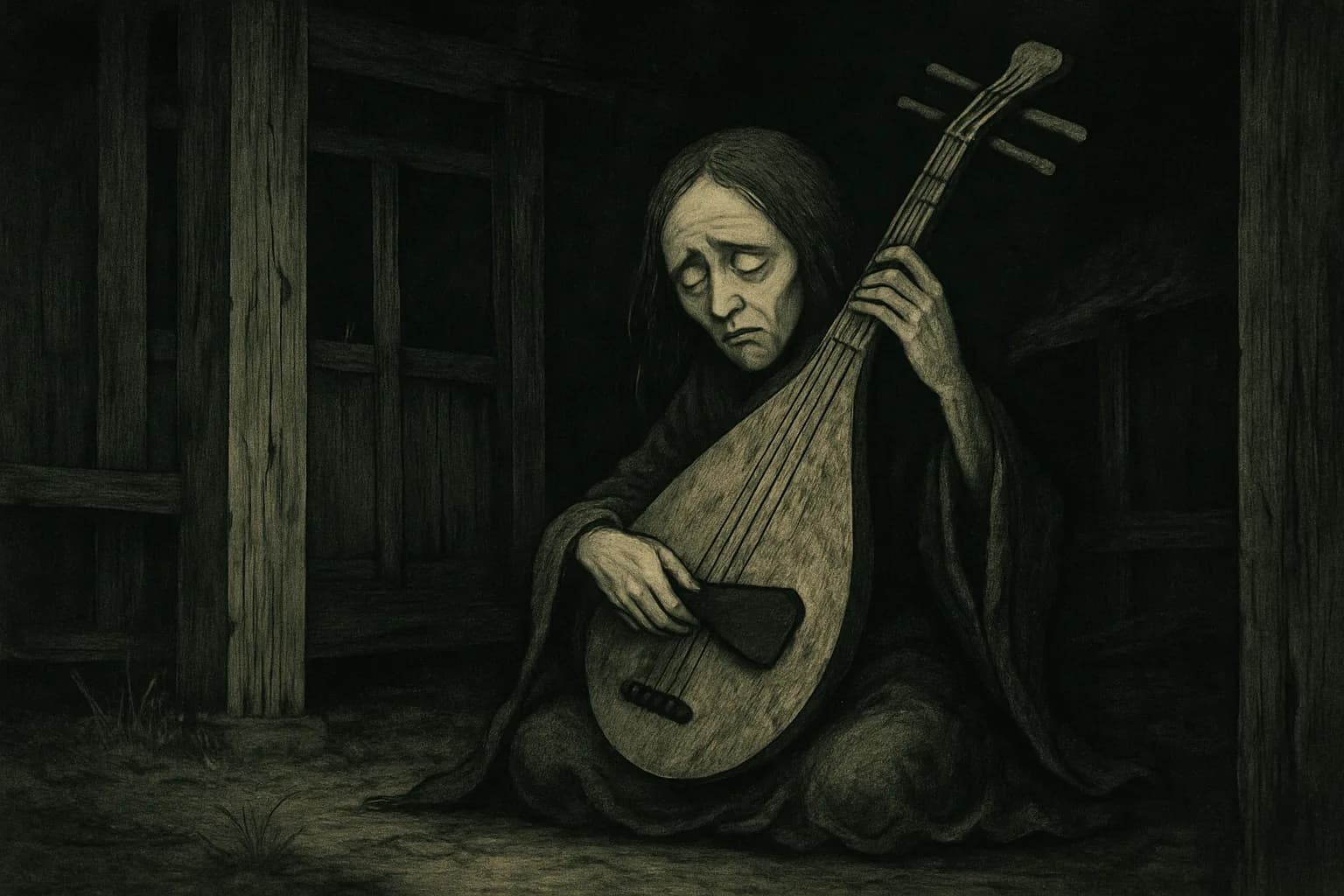
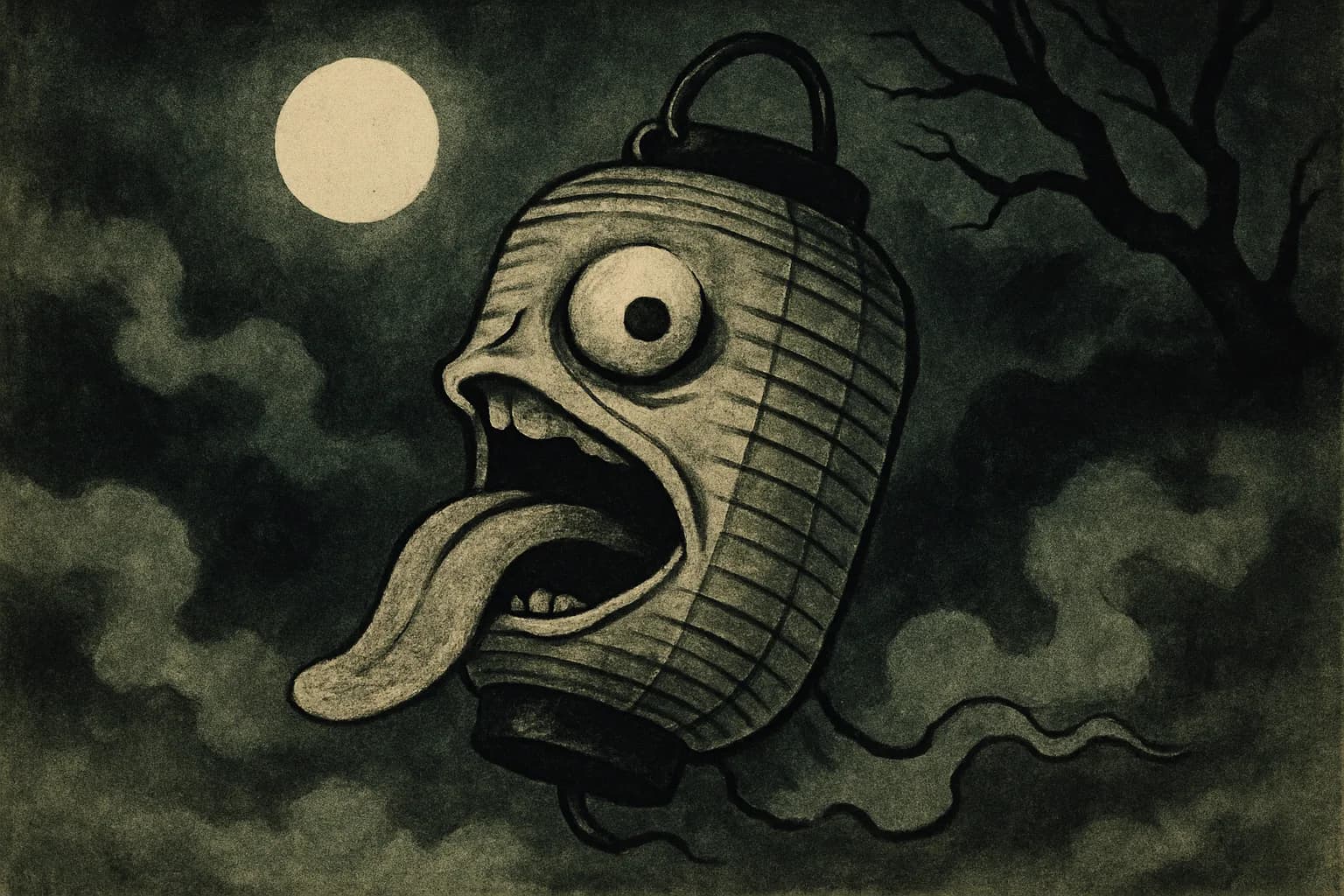
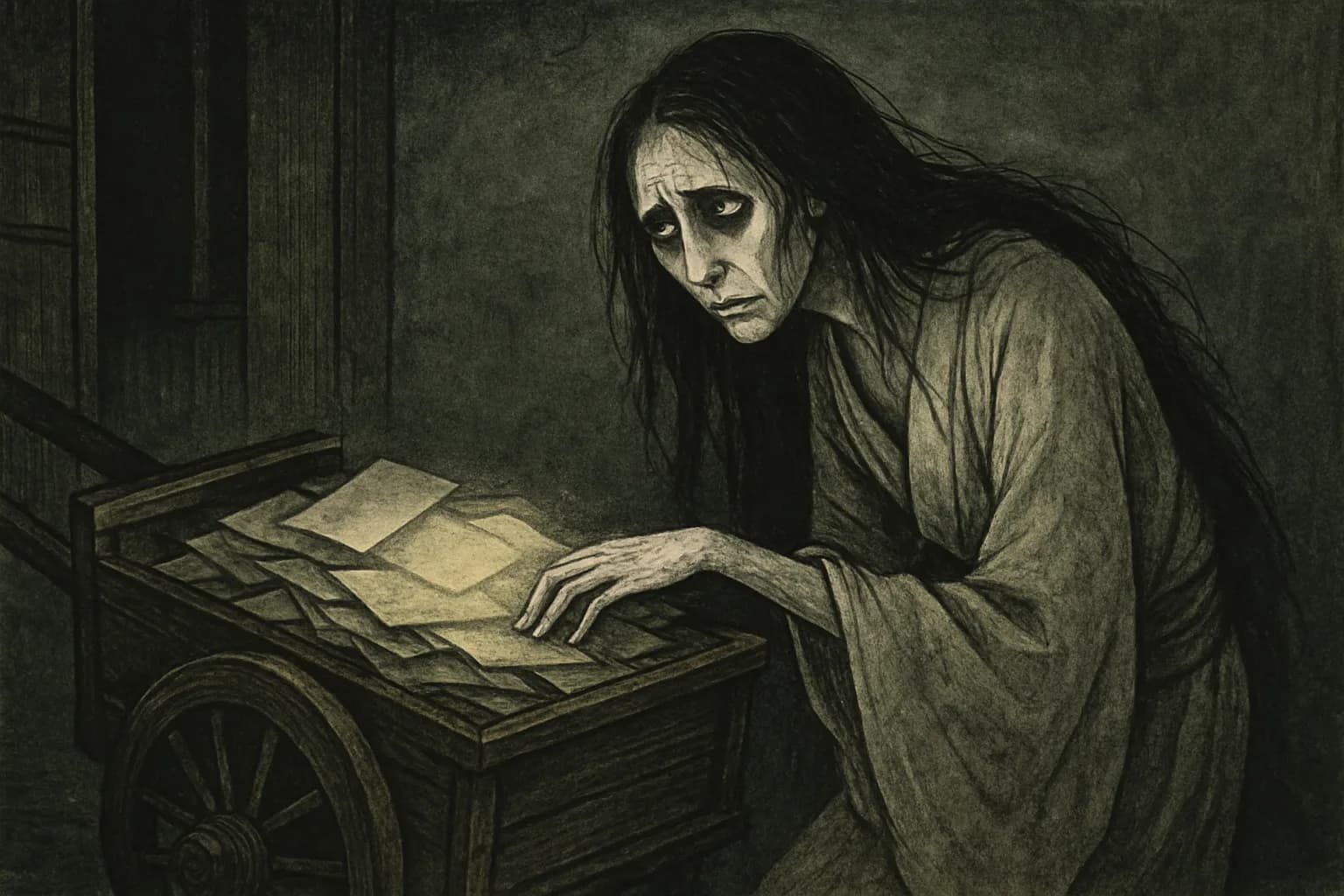
The idea Sekien is illustrating is the tsukumogami (付喪神), the belief that household tools left in use for around a hundred years can wake into a spirit — and, in one strand of the tradition, take revenge on the family that finally discards them. That story is told most fully in the Muromachi-period Tsukumogami-ki, in which tools thrown out during the year-end housecleaning grow furious at being abandoned after decades of loyal service, band together, and go on a rampage before eventually settling into a quieter, more Buddhist old age.
Sekien's Hyakki Tsurezure Bukuro (百器徒然袋, 1784), the fourth and final volume of his yokai print series, is built almost entirely around this idea — each page a different worn-out object given a spirit and a name. Chirizuka-kaiō is the volume's odd one out: not a specific tool that has come alive, but a ruler standing over all of them at once, as if every abandoned kettle, sash, and futon in the book ultimately answers to him. Where a scroll like shirouneri gives one old rag its own grievance, Chirizuka-kaiō gives the whole rubbish heap a government.
Not folk memory, but a print artist's joke
Scholars generally treat most of the Hyakki Tsurezure Bukuro's entries as Sekien's own invention rather than yokai anyone in an Edo village actually told stories about around a fire. Chirizuka-kaiō is a clear case of that: there is no older tale of a rubbish-heap king waiting to be discovered behind the print. Sekien took a real household fixture — the dust heap every home kept — and a genuinely old folk belief about worn-out tools growing resentful, and fused them into a single crowned figure. It is less village legend than an artist's caption made visible: a wry, illustrated pun on the idea that even garbage has a hierarchy.
Where it comes from
The name plays it straight rather than cleverly: chirizuka is simply the old word for a rubbish mound, and kaiō, "mysterious king," is the title Sekien gives its unlikely ruler. Read together, the four characters do exactly what they say — this is the king of the junk pile, no more and no less. That bluntness is part of the joke. Sekien's other tsukumogami entries tend to hide a pun or a piece of wordplay in their names; Chirizuka-kaiō instead states its premise as flatly as a job title, which is what makes a king of trash feel, on the page, oddly dignified rather than absurd.
Chirizuka-kaiō today
Chirizuka-kaiō never picked up a second life the way kappa or tanuki did — there is no mascot, no snack named after him. He survives almost entirely in reprints and translations of the Hyakki Tsurezure Bukuro and in yokai reference works that catalogue Sekien's four print series entry by entry. What keeps him from being a total footnote is how legible the joke still is: anyone who has ever hesitated over a broken umbrella before finally putting it out with the trash has, for a moment, stood in Chirizuka-kaiō's kingdom.