Toriyama Sekien drew it as a long body of ragged cloth, curling through the air like a dragon. It is a rag, worn with age, that has stopped behaving like a rag. Shirouneri is what happens when the dirtiest, most forgettable object in the house decides it is done being ignored.
What does it look like?
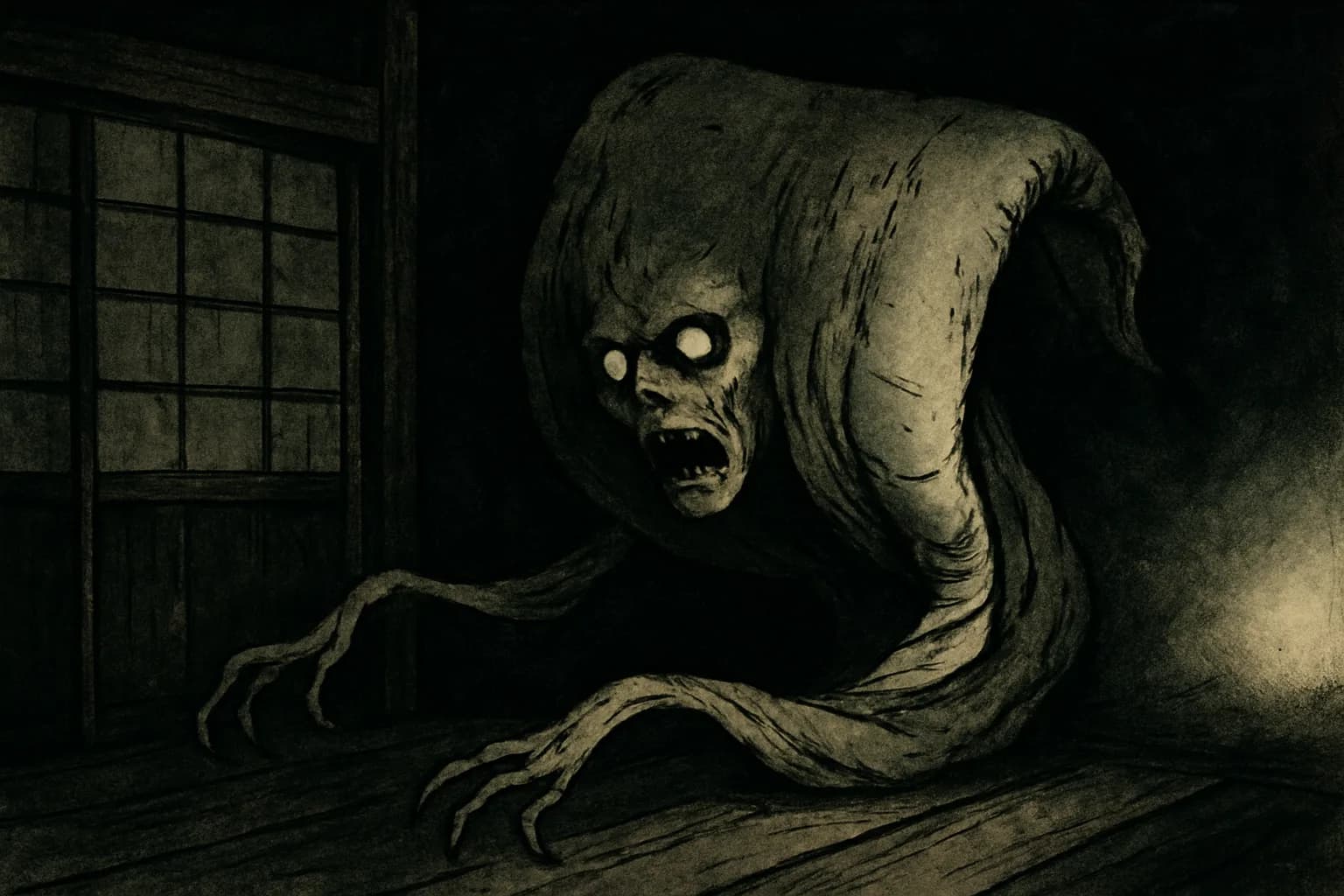
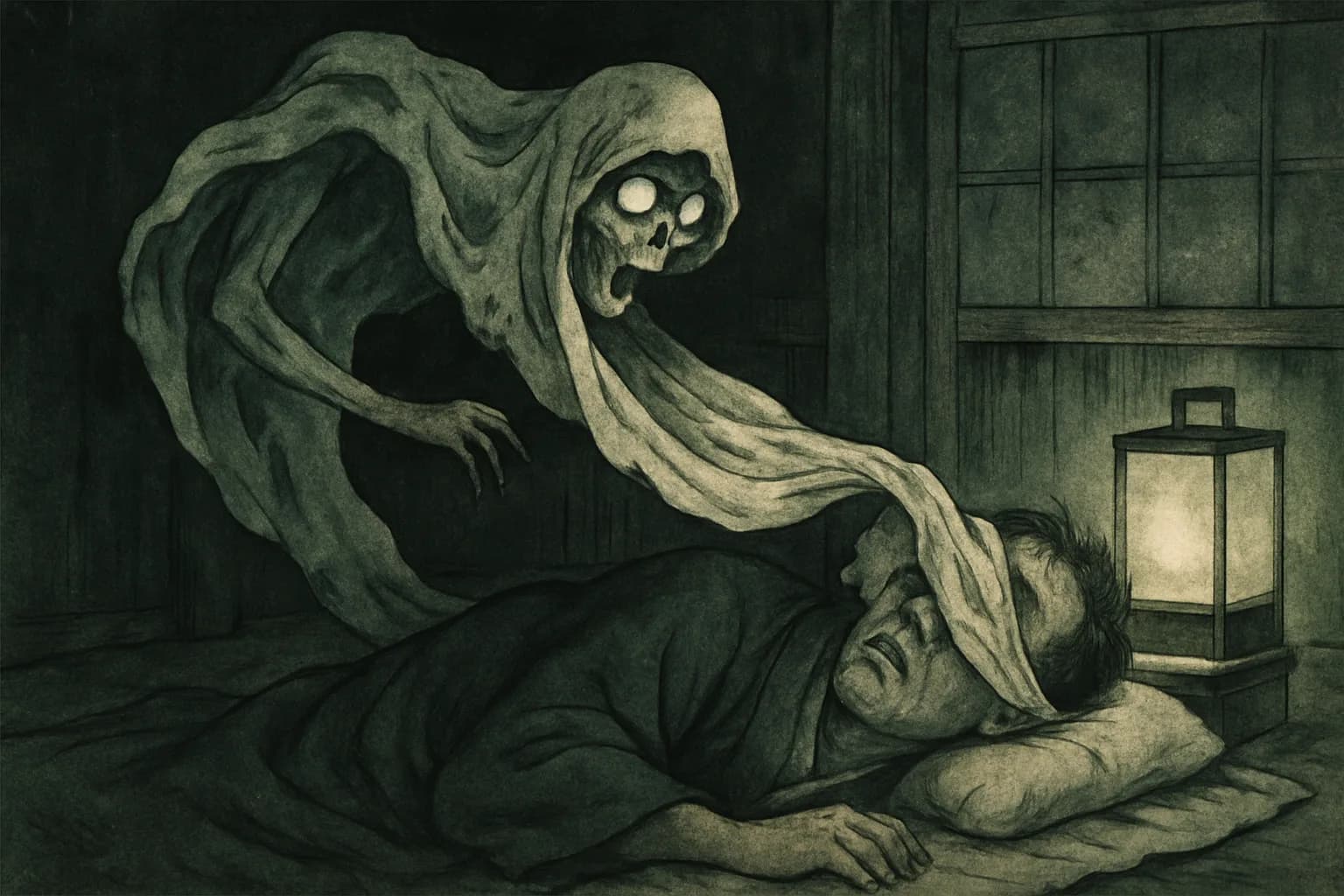
The classic image is a length of tattered pale fabric, twisting through the air like a serpent. Sekien shapes it into a dragon-like creature. His caption says what it is: "an old fukin that has changed." A fukin is a kitchen cloth for wiping dishes and tables. Later books often swap in a zōkin, a floor rag. The horror is in the motion: a thing that should be folded away is moving under its own power.
A name built from a wave
The name splits into two ideas. 白 (shiro) simply means white, describing the cloth's original color. 容裔 is an old compound read yōei. It describes things fluttering in the wind. Sekien gave it the reading uneri, "undulating." The sound is also a joke. Tsurezuregusa, Kenkō's classic essay book, mentions a figure called "Shiroururi." Sekien bent that name into Shirouneri. So the name is wordplay as much as a description.
What it does after dark
Sekien says nothing about what shirouneri does. His caption only names it as an old cloth that changed. The attacks come from 20th-century yokai books. They say it wraps around people and knocks them out with slime and a foul smell. Researchers trace this to a 1974 book by the writer Yamada Norio. In his story, a maid kills a samurai in Iwate and tries to flee. The house's old floor rag leaps onto her face and smothers her. Yamada's book is known for tales he invented himself.
Where it comes from
Shirouneri belongs to the tsukumogami tradition — the belief that a household tool or object, after enough years of use (or, just as often, enough years of neglect), can gain a spirit of its own. That idea has real roots in the Muromachi-period Tsukumogami-ki, an illustrated tale in which discarded tools grow resentful at being thrown out after long service and take revenge on the household before eventually seeking Buddhist salvation. A kitchen cloth used until it fell to rags was exactly the kind of long-serving, ill-treated object that belief expected to hold a grudge.
The creature first appears in print in Toriyama Sekien's Hyakki Tsurezure Bukuro (百器徒然袋, 1784), the last of his four major yokai print series and the one most devoted to tsukumogami specifically. Sekien's captions in this volume are often brief, and shirouneri's is no exception. It gives a name, a pun and a source object, but no story. Unlike household names such as kappa or tengu, shirouneri was likely never told around a fire in a village. Researchers think Sekien invented it.
A shared shelf of bedroom horrors
Shirouneri keeps company with other tsukumogami from the same book that turn ordinary household items sinister. Boroboroton, for one, is a tattered old futon come to life. None of them needed elaborate backstories. Sekien's trick, repeated across the volume, was simply to take the most unremarkable, most neglected object in a room and ask what it might do if it woke up resentful.
Shirouneri today
Shirouneri never became as famous as Sekien's best-known creations. It does have a bronze statue on Mizuki Shigeru Road in Sakaiminato. Otherwise it lives mostly in reproductions of the Hyakki Tsurezure Bukuro and in yokai encyclopedias, cited as one of the clearer examples of an Edo-period artist spinning a monster out of nothing more than a dirty rag and a well-chosen word for how it might move.