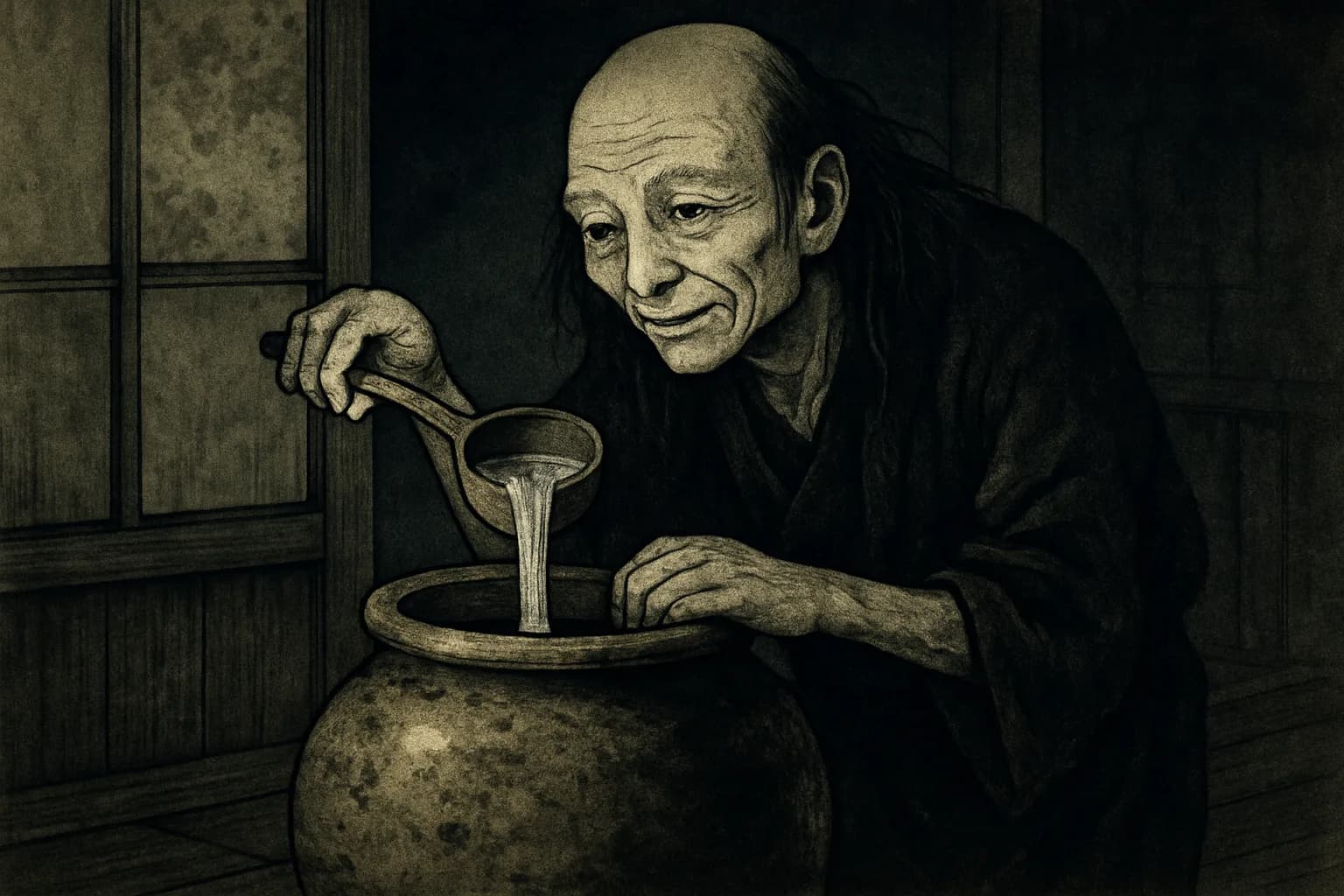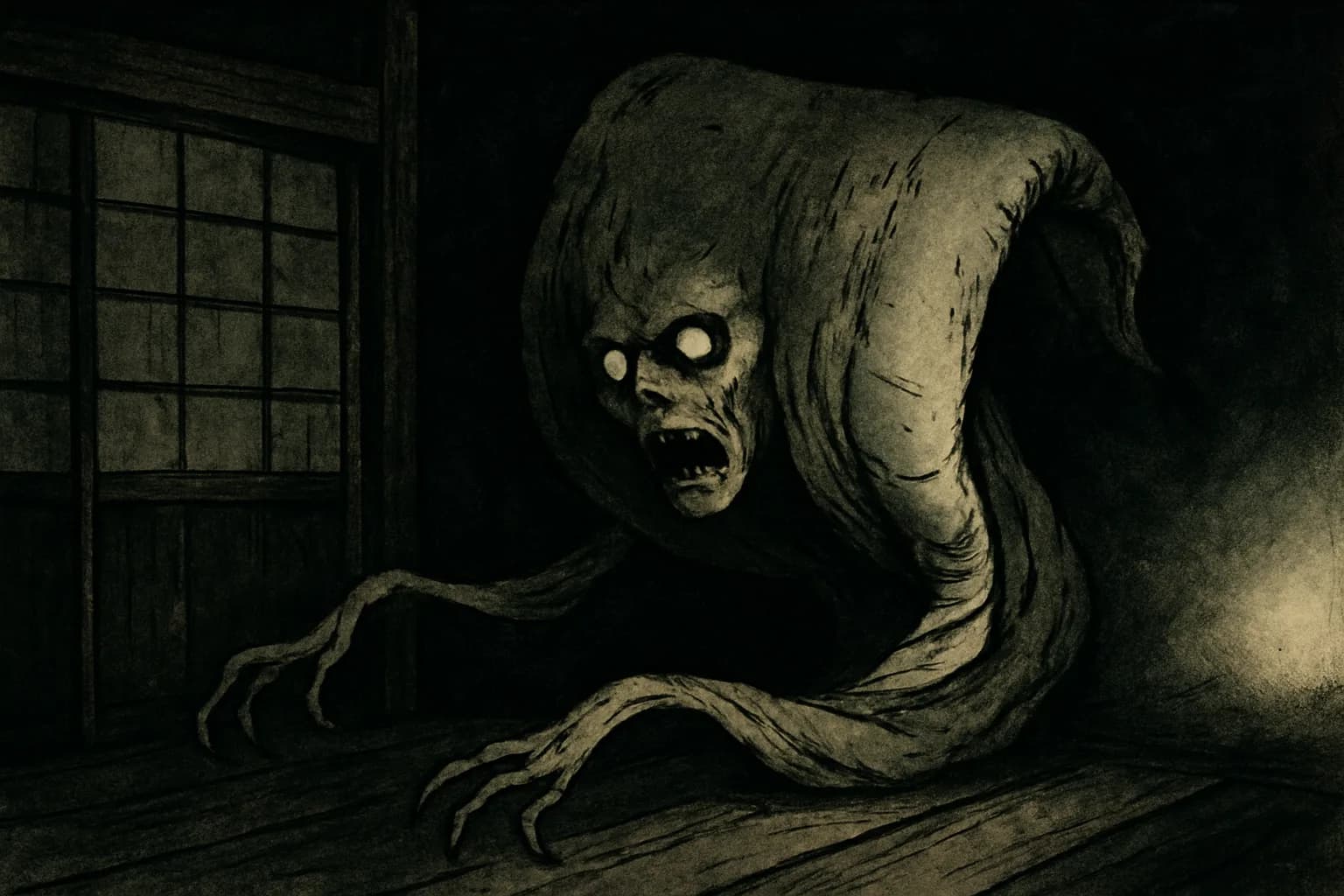
Not every tsukumogami, the tool spirits of long-used objects, is a pot or a lantern. Boroboroton is the thing you sleep under. It is a futon worn to rags, and it has come alive.
What does it look like?
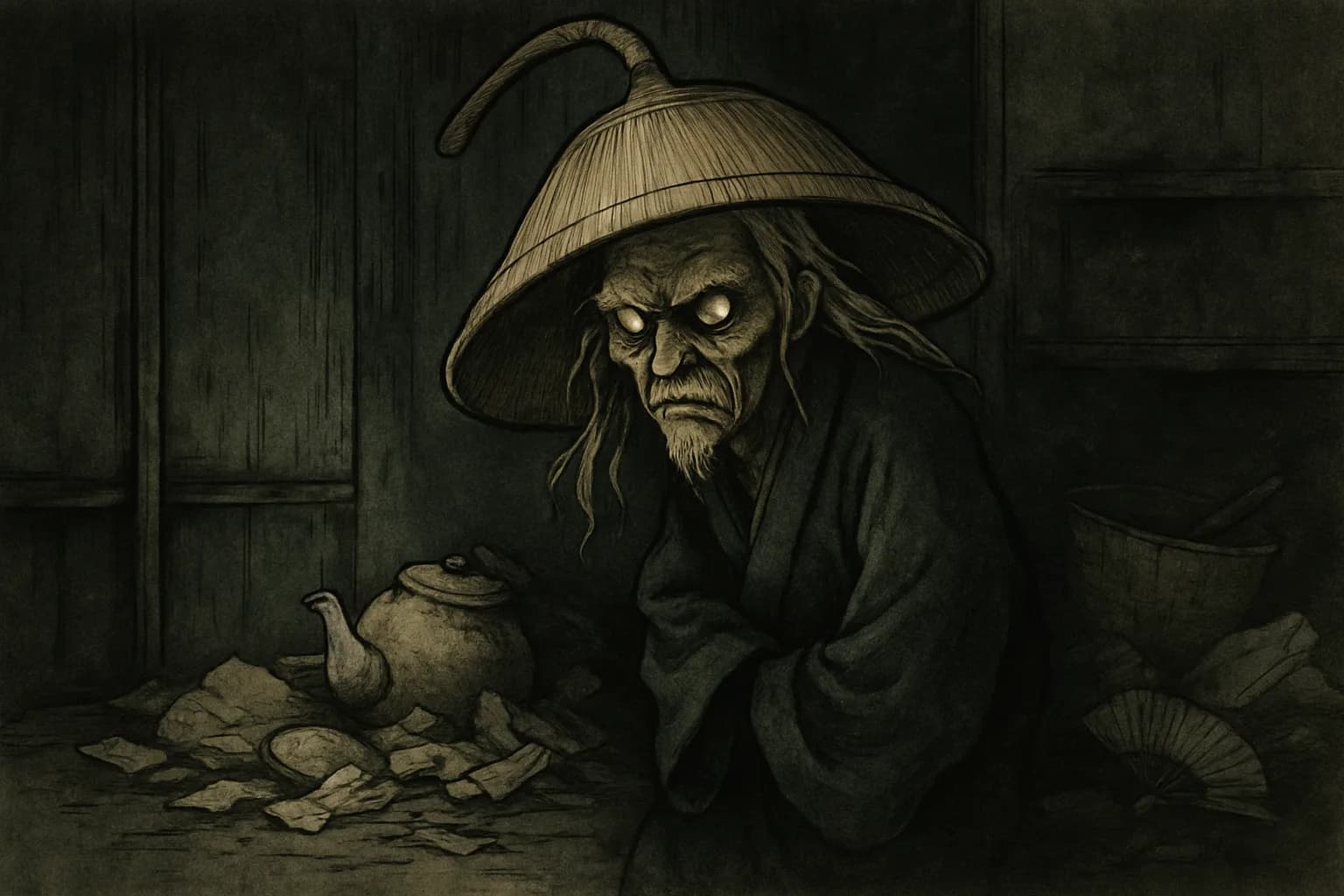
Toriyama Sekien drew boroboroton exactly as its name promises: a torn, threadbare futon. But it is not just lying there. The futon has grown eyes. Scraps of cloth or cotton batting form its arms and legs. Sekien's caption tells no story of an attack. The picture is the whole joke.
A name that plays a trick
The name is a pun built to be noticed. 暮露 (boro) is written with characters that also name a type of shabby-robed wandering mendicant monk, and the phonetic overlap with boroboro — the everyday Japanese word for something worn to rags — is the whole joke: the futon is boro twice over, tattered like old cloth and tattered like an itinerant monk's dress. The doubling marks (々々) in the name literally repeat the syllable, so the name itself sounds threadbare, worn thin by reuse. 団, the last character, is simply the -ton of futon. Sekien's readers, steeped in wordplay, would have caught the layered joke instantly; a modern reader mostly needs to know that "boroboroton" is Edo-period Japanese for "the world's most run-down futon."
Where the idea comes from
Boroboroton belongs to the tsukumogami (付喪神), household tools and objects said to gain a spirit after long years of use — or, just as often, after being left to rot from neglect. The concept has a real textual root in the Muromachi-period Tsukumogami-ki, an illustrated tale in which tools discarded during the New Year's housecleaning grow resentful at being thrown away after years of loyal service and take revenge on the household before eventually finding Buddhist salvation. A futon left folded and forgotten for a decade, never aired, never patched, was exactly the kind of object that belief expected to hold a grudge.
Boroboroton itself first appears in Toriyama Sekien's Hyakki Tsurezure Bukuro (百器徒然袋, 1784), the fourth and last of his print series and the one most devoted to tsukumogami specifically. Many of the entries in that volume, scholars generally agree, are less a record of oral village folklore than Sekien's own literary wit — puns and sketches built to fit the tsukumogami idea onto whatever household object hadn't been used yet. Boroboroton reads as one of these: less a story anyone told around a fire, more a joke a print artist built and then let loose into the yokai canon, where it has stayed ever since.
Bedroom company
The same volume also produced shirouneri, an old rag that comes alive in similar disrepair. Both sit alongside the older makuragaeshi, the spirit that flips a sleeper's pillow in the night. None of the three needed a monstrous body to be unsettling — the fright is that the room you sleep in, and the things you sleep on, might not be as inert as you assume.
Boroboroton today
Boroboroton never became a mascot the way kappa or tanuki did; it stayed a print-page curiosity, one entry among dozens in Sekien's later, denser books. It survives mainly through yokai encyclopedias and reproductions of the Hyakki Tsurezure Bukuro itself, cited by folklorists as a clear case of an Edo-period artist manufacturing a monster from a pun and a household object nobody bothered to look after. The moral, if it has one, was never subtle: a futon kept long past its life may not stay a futon.