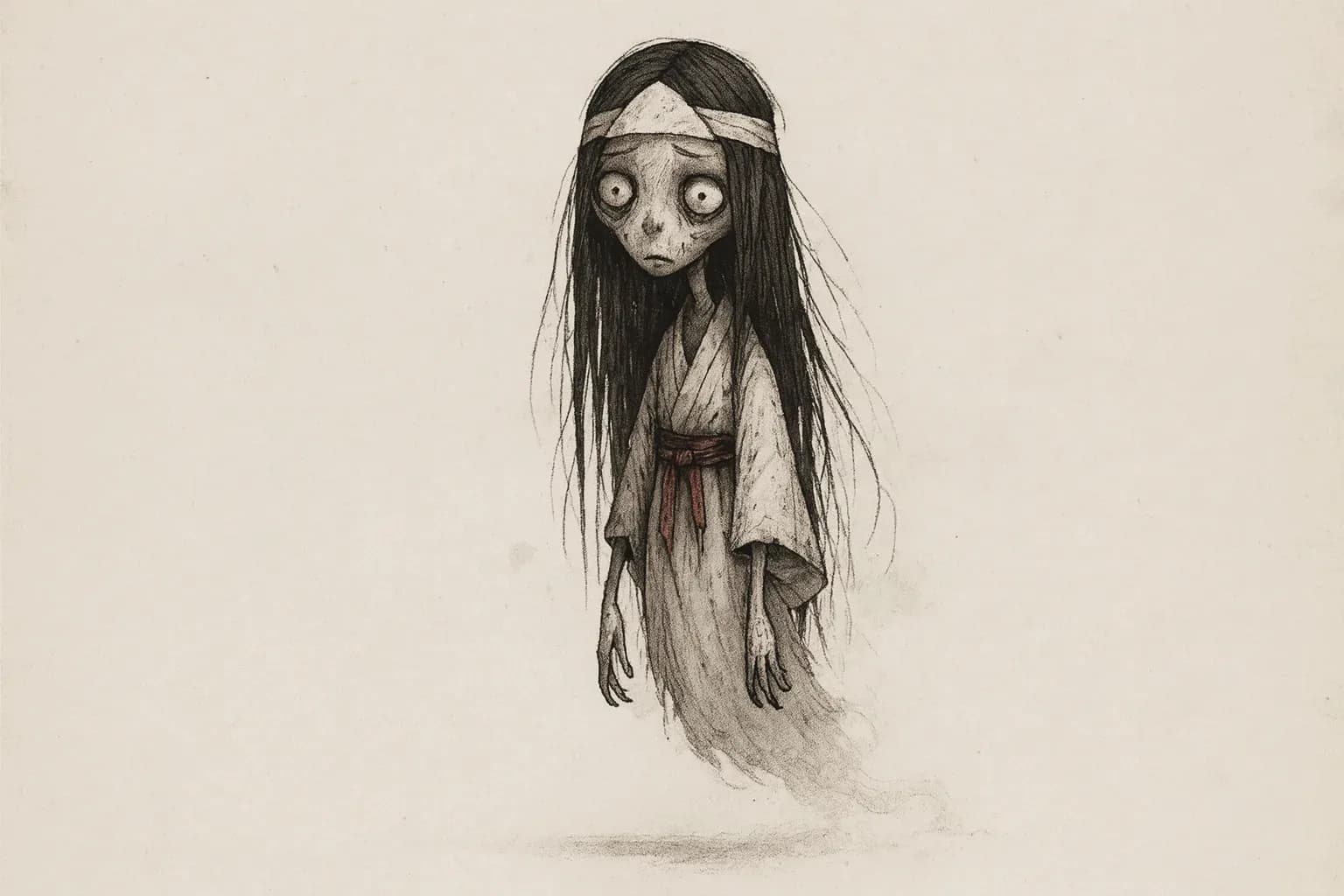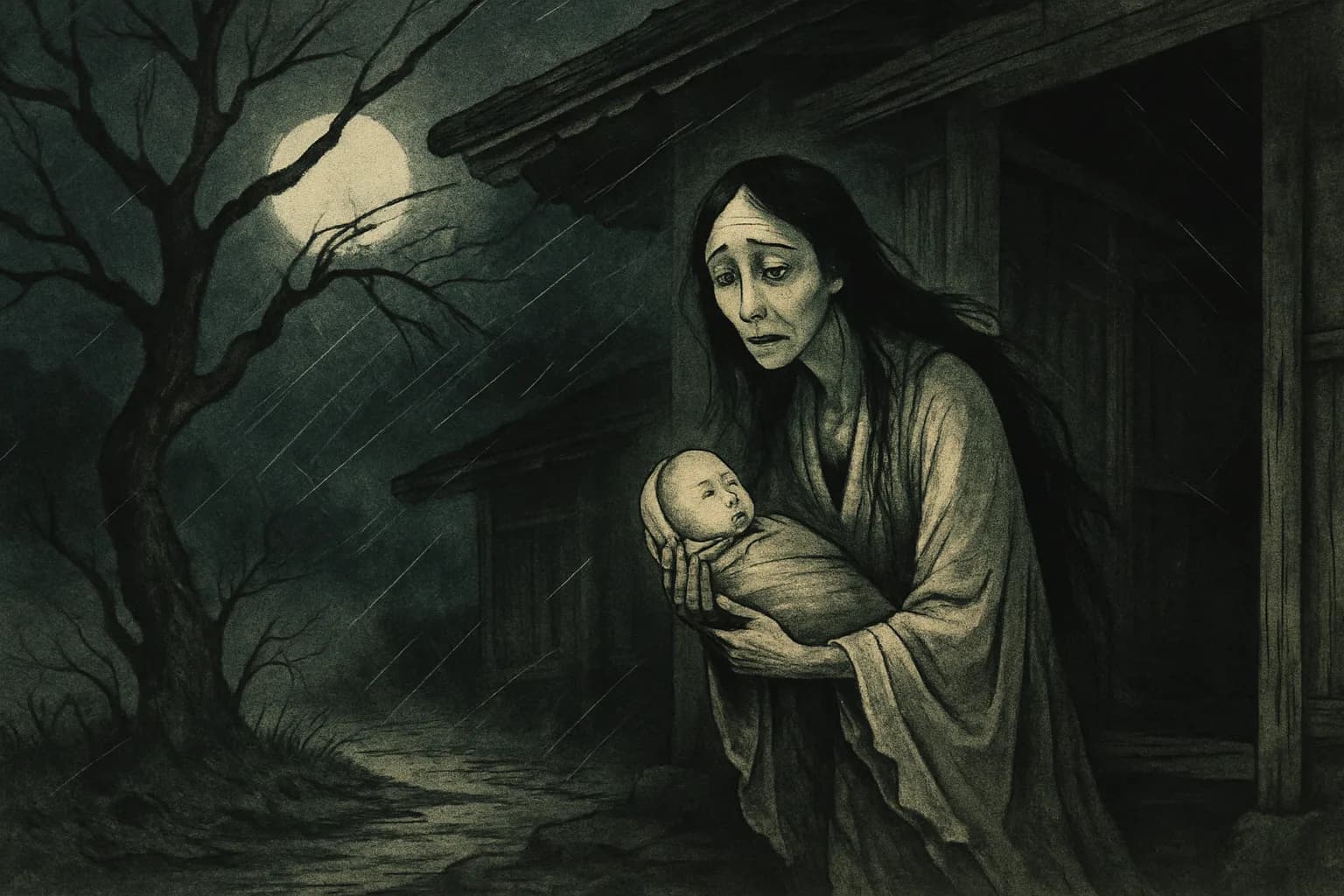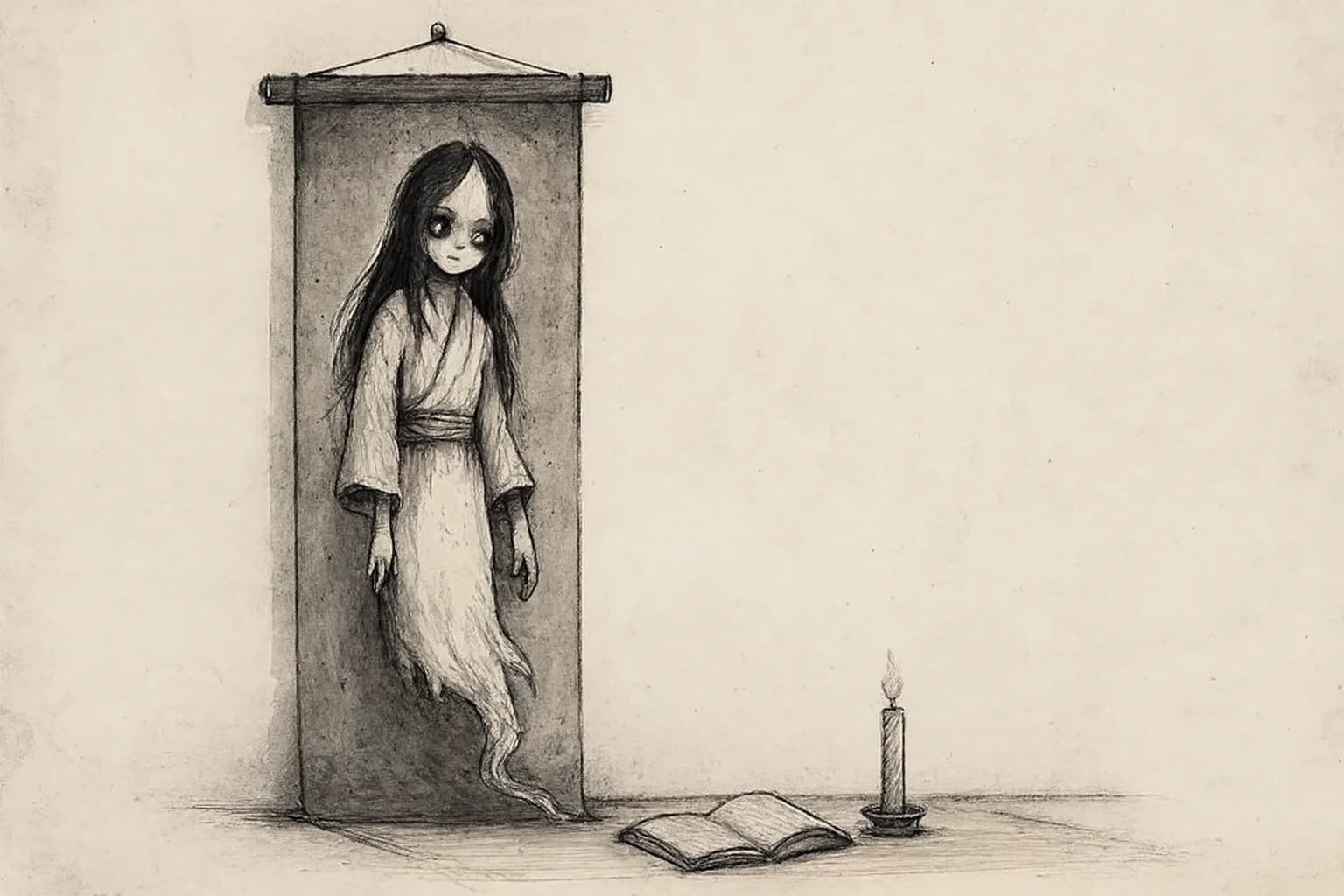
A Japanese ghost is easy to spot. She wears white. Her black hair hangs loose. Her hands droop from the wrists. And below the knees, there is nothing at all.
Why no feet? Because the dead were drawn as they looked in the coffin, and then artists slowly erased the rest. The look was not one person's idea. It was built over about a hundred years, from the 1670s to the late 1700s, one part at a time.
The painter Maruyama Ōkyo usually gets the credit. He made the look famous. But a footless ghost was printed in Kyoto 60 years before he was born.
Older ghosts looked like the living
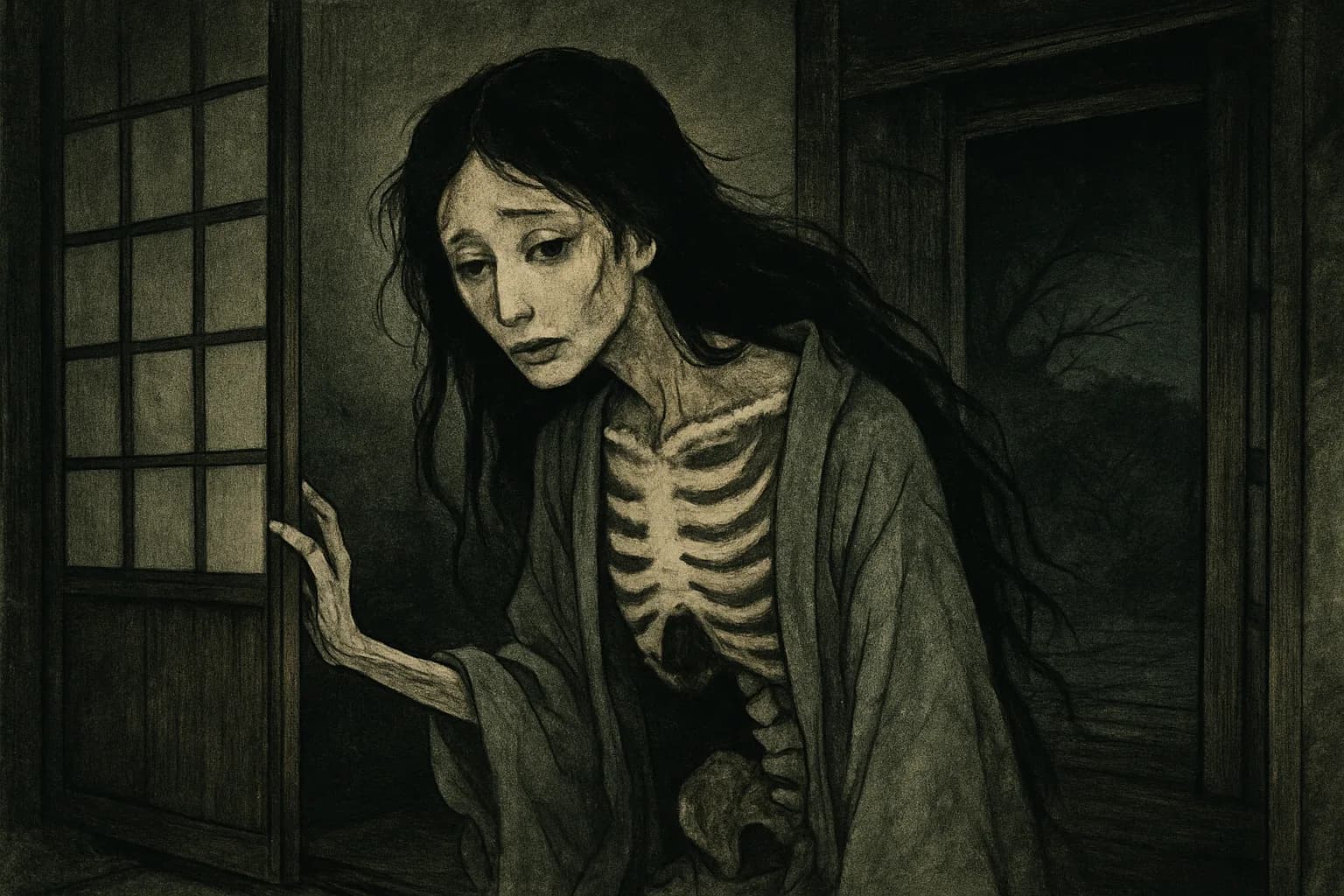
In early Japanese stories and songs, the dead came back looking as they had in life. A ghost could pass for a neighbour. Many old tales turn on a late discovery: the guest who left before dawn, the lover who was really a skeleton.
The Edo period changed the costume. Ghosts began to appear the way a body was prepared for burial. That one idea explains most of the modern look.
The white robe and the triangle are funeral clothes
The white robe is a burial kimono. In the Edo period, the dead were dressed in a plain, unlined white garment called a katabira. Some carried Buddhist sutras written on the cloth. White was also the colour of ritual purity, worn by priests and by the dead.
The small white triangle on the forehead is funeral gear too. Japanese calls it hitaikakushi or nukaeboshi, a paper or cloth headpiece placed on the dead before the coffin closed.
The loose hair has the same root. Women wore their long hair pinned up in daily life. For the funeral and burial, it was let down. A ghost with loose hair is wearing it the way it was in the coffin.
A footless ghost was printed in 1673
The feet came off in stages. But the first footless ghost is earlier than most English pages say.
In 1673, a Kyoto publisher printed a jōruri puppet-play book, Kazan-in Kisaki Arasoi, by Inoue Harima-no-jō. One of its pictures shows a ghost with no feet. Ōkyo was born in 1733. So the idea of a footless ghost already existed in Kyoto two generations before him.
It had not yet won, though. Otogi Banashi, a story collection of the Genroku era (1688 to 1704), still gave its ghosts two feet.
The legs faded between 1716 and 1736
The change shows up in the Kyōhō era. In Taihei Hyaku Monogatari, printed in 1732, the ghosts narrow below the waist. Pictures of this period begin to blur the lower body into mist.
The hands came next. Later pictures bend the elbows and let the hands hang limp. By the late 1700s, the full set was in place: white robe, triangle, loose hair, dangling hands, and nothing below the knees.
Even then, people noticed it was a convention. The poet Yokoi Yayū, in a collection printed in 1787 and 1788, remarked that some ghosts have a lower body and some do not. More than a century after 1673, the rule was still not fixed.
The hour and the place were fixed too
The costume was not the only thing that settled. So did the schedule.
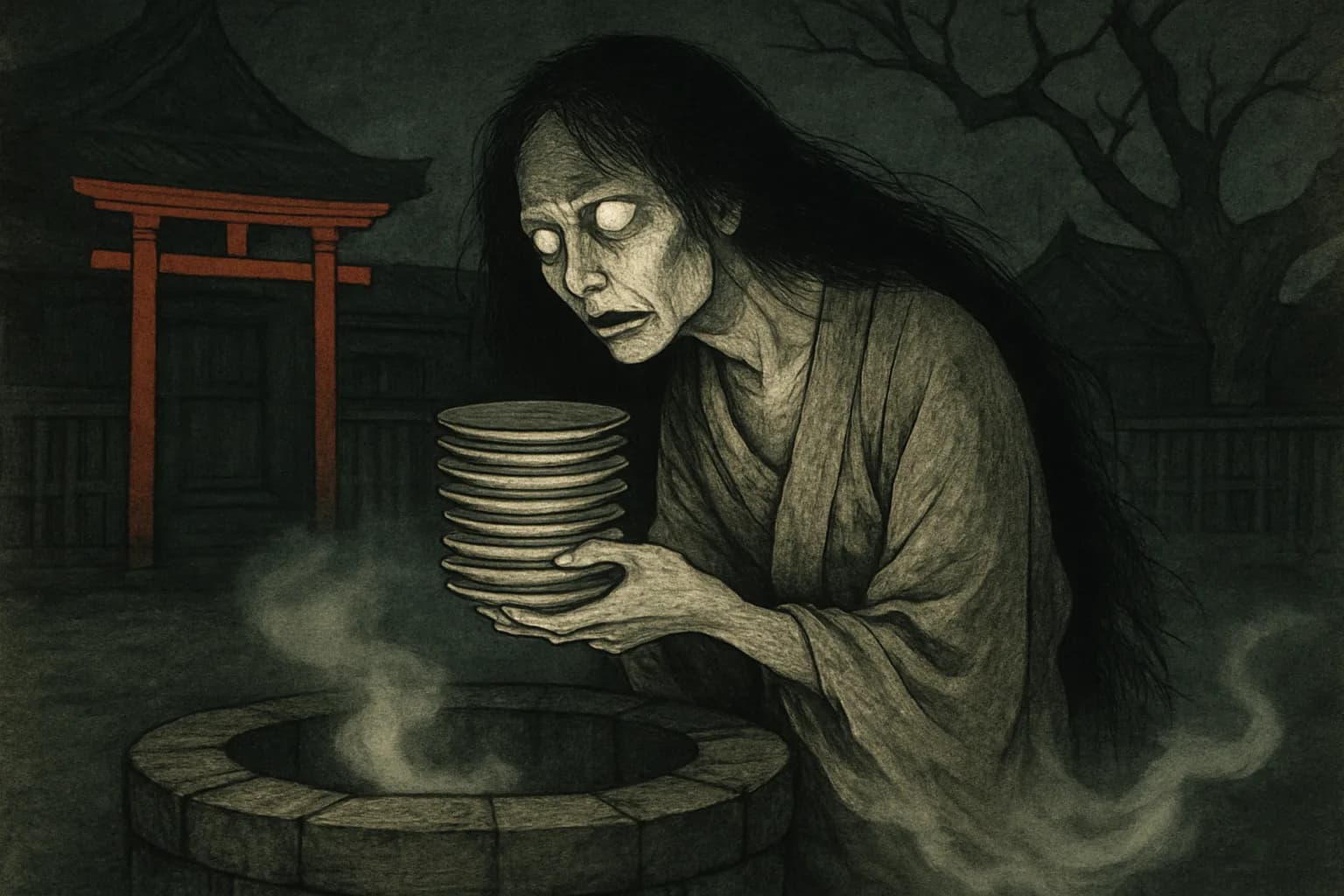
Older spirits liked edges. They appeared at dusk, the hour between day and night, and at crossroads on the edge of town. Japanese calls that dusk hour ōmagatoki, "the hour of meeting demons."
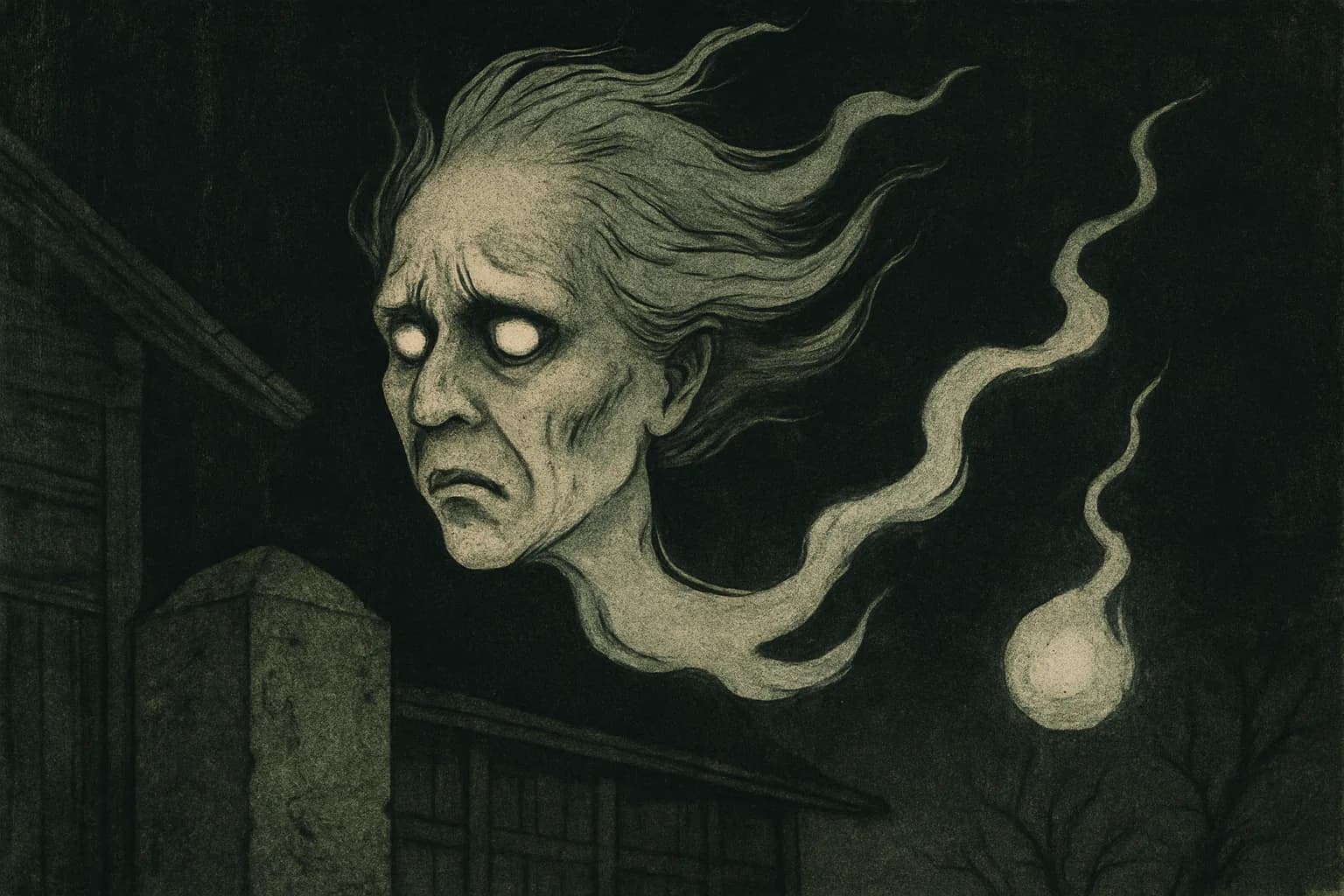
The Edo ghost moved to the middle of the night. It came at ushimitsu-doki, around two in the morning. It stood in graveyards, or under a willow by the river. Small floating flames, hitodama, often drifted beside it, blue or pale green.
So by the end of the period, a ghost had a uniform, a time and an address. Audiences could recognise one in a single glance, before it said a word.
Ōkyo got the credit because his ghost was the best
So why does every guide name Maruyama Ōkyo? Because his ghost was the one people remembered. His painting, often called The Ghost of Oyuki, shows a pale woman fading out below the waist. It seems to have been famous in his own lifetime, and it influenced many later painters. Japanese researchers call the claim that he drew the first footless ghost a popular myth. He did not invent the look. He perfected it.
Kabuki made it move, and Meiji added the clogs
Kabuki then made it physical. On stage, actors hid their legs under long robes, or were lifted on ropes to float. Tōkaidō Yotsuya Kaidan, first staged in 1825, gave the theatre its most famous ghost, Oiwa. Japan now marks 26 July, the day of that premiere, as "Ghost Day."
One modern detail goes the other way. In the Peony Lantern story, the ghost Otsuyu arrives with the clack of wooden clogs. Ghosts with no feet do not wear clogs. That sound comes from the Meiji-era retelling, which borrowed from a Chinese tale. It was added after the footless look was already settled.
Our timeline rests on a handful of dated books and pictures, and an earlier footless ghost may yet turn up. But the shape of the story is clear. Nobody decided that Japanese ghosts have no feet. Artists drew the coffin, then let the rest fade.