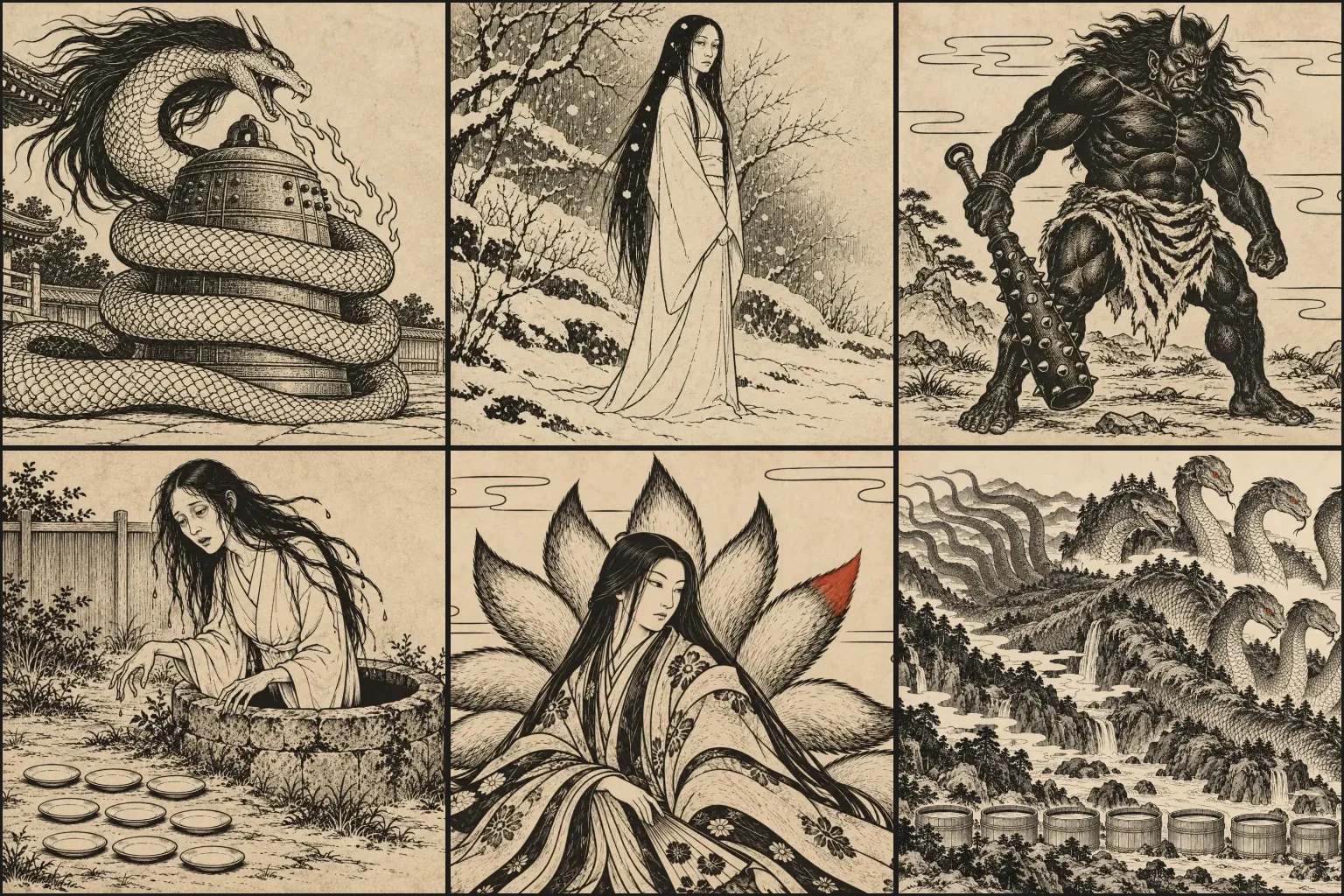
Here are thirty Japanese folklore stories, each told in two lines. Pick one that grabs you, then open its page for the whole tale.
Many of these are not bedtime stories with a neat lesson. A girl melts a temple bell with a monk inside it. A farmer's daughter marries a horse. A ghost counts plates in a well until a monk shouts the last number for her.
Every story here names the oldest source our page gives for it. The oldest comes from the Kojiki, Japan's first history, in 712. The newest was posted on a Japanese message board in 2004. Inside each group, dated stories run oldest to newest, and undated legends come last.
Love, promises and revenge
In these tales, love ends badly. Often someone sees, or tells, what they should not.
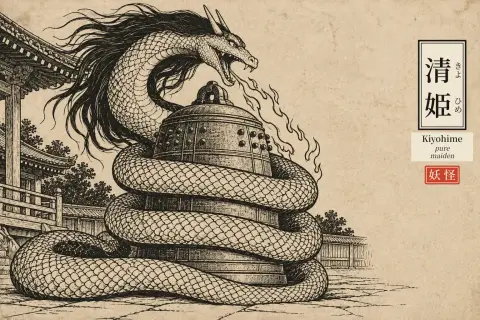 The Bell of Dōjō-ji (Hokke Kenki, c. 1040s). A young monk promises to marry Kiyohime, then flees by another road. She swims the river as a serpent and melts the temple bell he hides under.
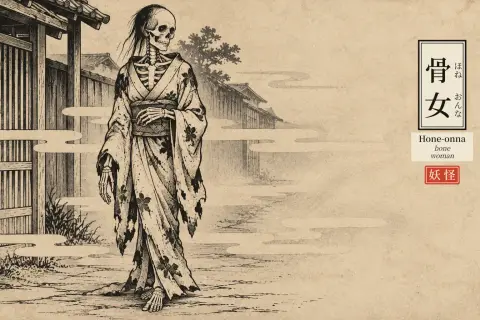 The Peony Lantern (Otogi Bōko, 1666). A widower's beautiful visitor comes every night. A neighbor peeks through the wall and sees him hugging a skeleton.
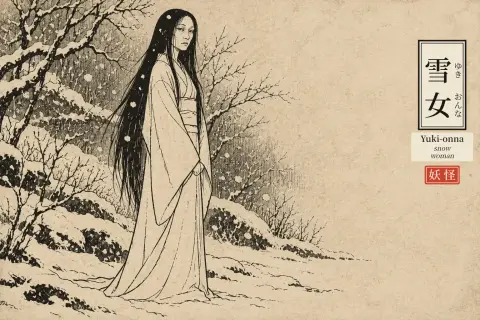 The Snow Wife's Promise (Hearn, Kwaidan, 1904). A snow woman spares young Minokichi if he never tells. Years later he tells his wife. She was that woman.
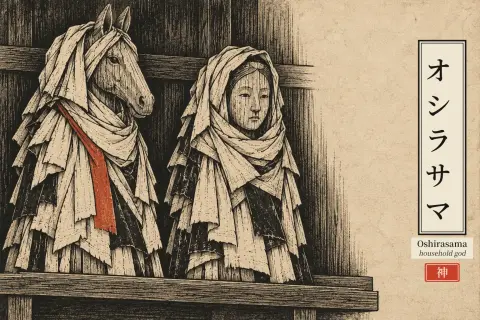 The Girl and the Horse (Tōno Monogatari, 1910). A farmer's daughter marries his horse, so he kills it. She rides its head up into the sky.
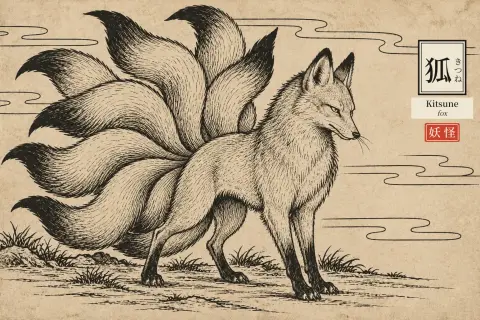 Kuzunoha the Fox Wife (old legend). A man saves a fox, and she becomes his wife. When her secret comes out, she leaves, and her son grows up to be a famous diviner.
Heroes and monster hunts
In these tales, someone finally stands up to the monster.
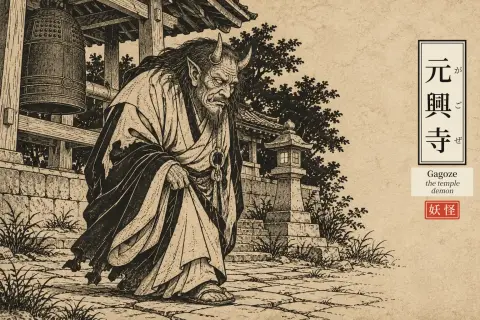 The Demon of Gangō-ji's Bell Tower (Nihon Ryōiki, early 800s). Temple boys keep dying at night. A strong boy drags the demon by its hair until dawn, and the torn hair becomes a temple treasure.
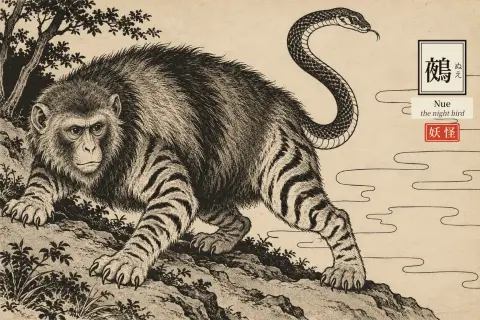 Yorimasa Shoots the Nue (Heike Monogatari, 1200s). A crying black cloud makes the emperor ill. One arrow brings down a beast with a monkey's head and a snake for a tail.
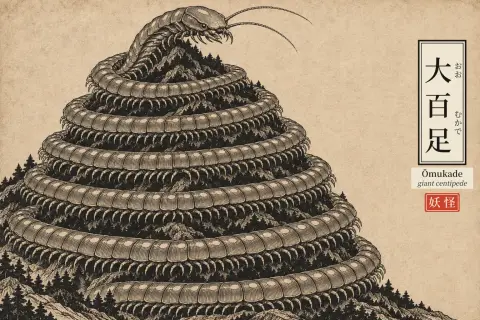 Tawara Tōta and the Centipede (Taiheiki, 1300s). Two arrows bounce off a giant centipede. The third, wet with the hero's spit, kills it.
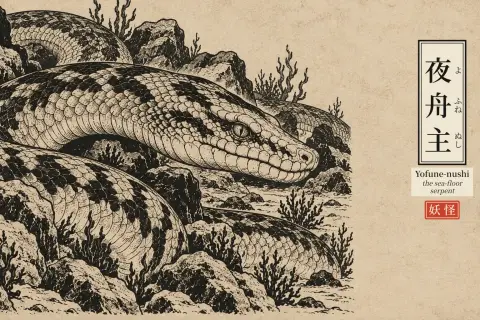 Tokoyo and the Sea Serpent (Gordon Smith, 1908). Each year the islands give a girl to a serpent. Tokoyo dives in with a dagger and kills it.
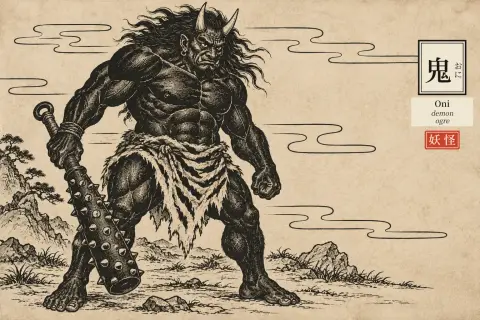 Shuten-dōji of Mount Ōe (old legend). An oni chief kidnaps women from the capital. Warriors dressed as priests poison his sake and cut off his head, which still lunges at a helmet.
Ghost stories
These are kaidan, the ghost stories told at night by candlelight.
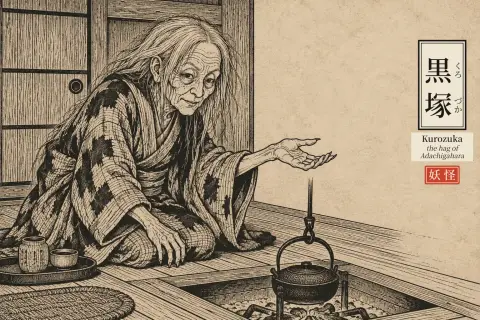 The Hag of Adachigahara (Noh play, Muromachi era). An old woman shelters travelling priests but forbids one room. Inside is a mountain of bones.
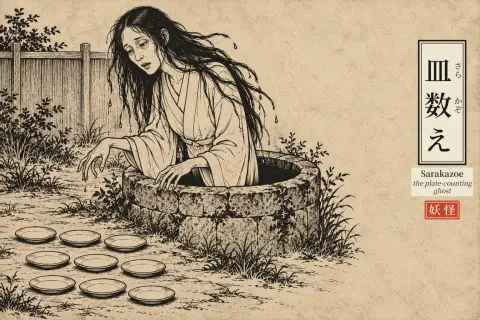 Okiku and the Nine Plates (Honchō Koji Innenshū, 1689). A maid is killed over a missing plate and thrown down a well. Each night her ghost counts to nine, until a monk shouts "ten!"
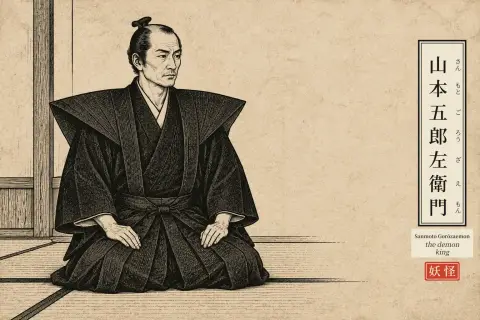 Thirty Nights in Miyoshi (Inō Mononoke Roku, events of 1749). A sixteen-year-old faces thirty nights of hauntings and never runs. A demon king had bet he could scare him, and lost.
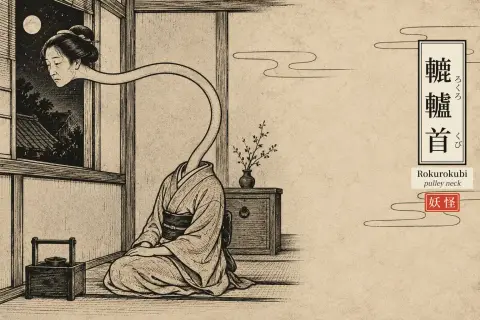 Kwairyō and the Flying Heads (Kaibutsu Yoron, 1803). A monk finds his hosts lying headless at night. One flying head bites his sleeve and dies still hanging there.
 The Faceless Woman of Akasaka (Hearn, Kwaidan, 1904). A merchant finds a crying woman with no face. He runs to a noodle seller, who wipes his own face blank too.
Tricky animals
Foxes, cats and tanuki change shape. Some cause harm. Others bring luck.
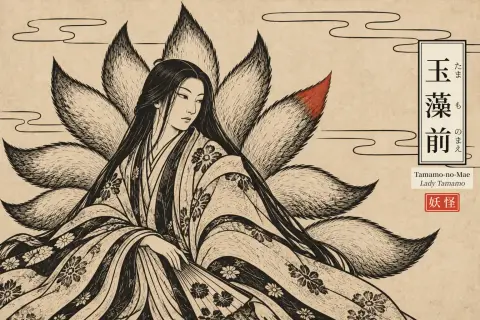 The Fox at Toba's Court (Shinmeikyō, late 1300s). The emperor's new favorite is brilliant and beautiful, and he falls ill. A diviner reveals she is a fox.
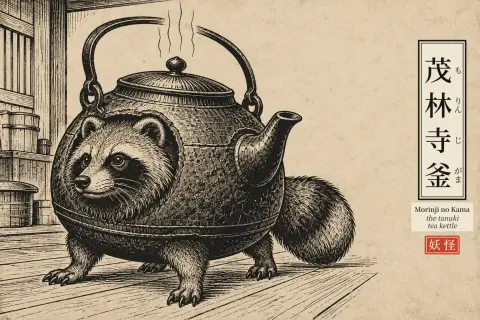 The Lucky Tea Kettle (domain list of temple treasures, 1726). A tanuki turns into a kettle to repay a kindness. On the fire it grows legs, then makes its owner rich as a tightrope act.
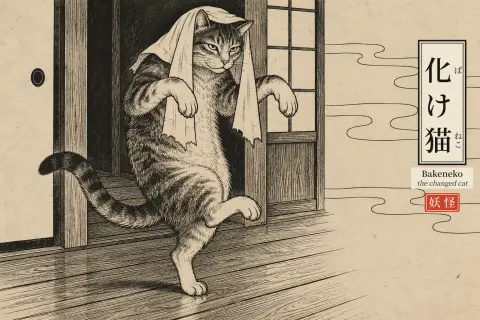 The Nabeshima Cat (kabuki play, 1853). A cat licks the blood of a dead mother, then takes the shape of the lord's favorite woman. A loyal retainer unmasks it.
Myths of the gods
These come from Japan's oldest books.
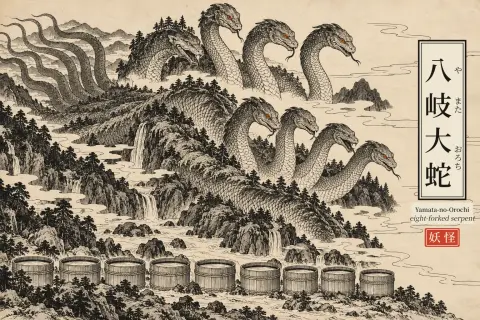 Susanoo and the Eight-Headed Serpent (Kojiki, 712). The god gets the serpent drunk on eight vats of sake and cuts it up. Inside its tail he finds a sword.
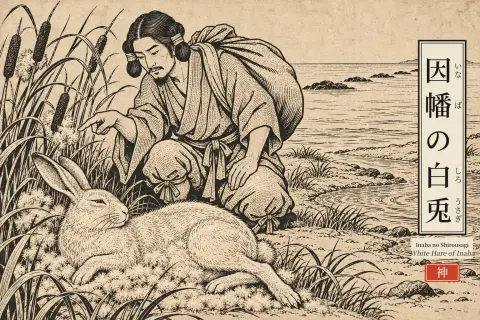 The White Hare of Inaba (Kojiki, 712). A hare tricks sea beasts into making a bridge and loses its fur. A god heals it, and the book starts calling the hare a god.
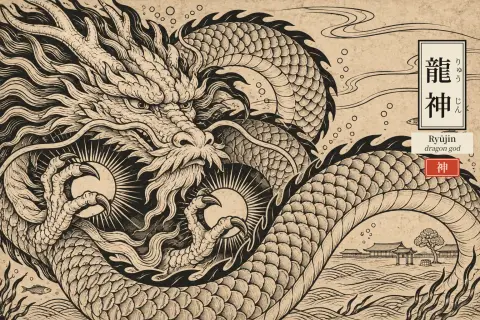 The Lost Fishhook (Kojiki, 712). A god goes down to the sea palace and marries its princess. He watches her give birth, though she forbade it, and sees a huge sea beast.
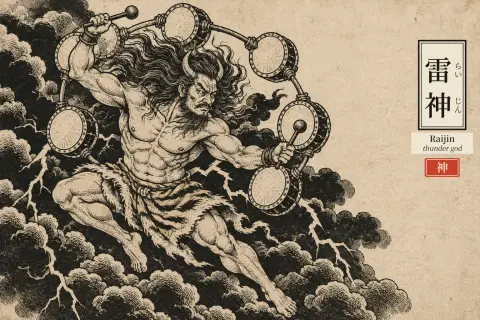 Sugaru Catches the Thunder (Nihon Ryōiki, early 800s). An emperor's servant catches the thunder and carries it to the palace. Years later, the thunder strikes his grave and gets its foot stuck.
Village tales
These are tales of houses and villages. Two were written down in 1910, in one small town in the north.
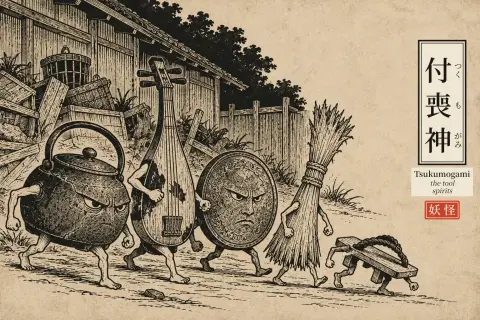 The Night the Tools Rebelled (picture scroll, 1400s–1500s). Old tools thrown out at New Year attack people. Beaten, they become monks.
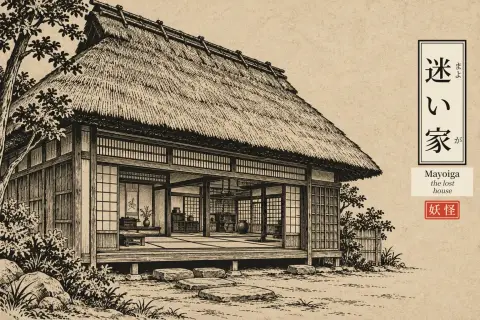 The Bowl from the Lost House (Tōno Monogatari, 1910). A wife finds an empty mansion and takes nothing. Later a red bowl floats down to her, and the grain it measures never runs low.
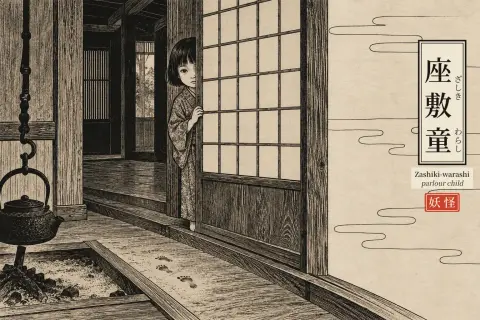 The Girls Who Left the House (Tōno Monogatari, 1910). Two strange girls say they are leaving a rich family. Soon over twenty of the family die in one day.
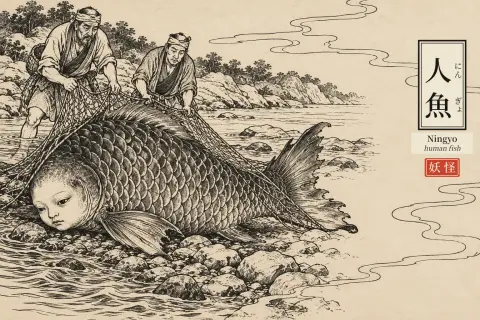 The Eight-Hundred-Year Nun (old legend). A girl eats a strange fish at a banquet and stops aging. She outlives everyone, then walks into a cave.
Modern rumors
Japanese folklore did not stop. These spread at school and online.
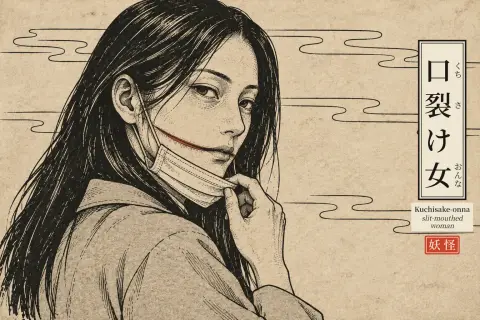 The Slit-Mouthed Woman (school rumor, 1978). A masked woman asks a child, "Am I pretty?" Then she pulls down the mask.
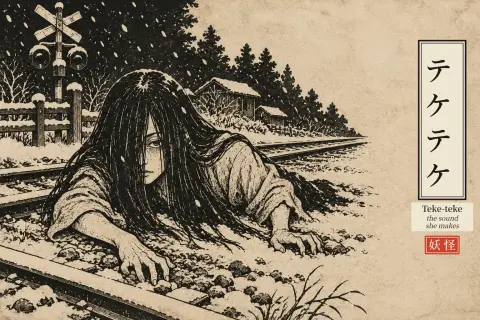 The Half-Woman on the Tracks (manga, 1990s). A woman cut in two by a train stays alive in the cold. Now she hunts anyone who hears her story.
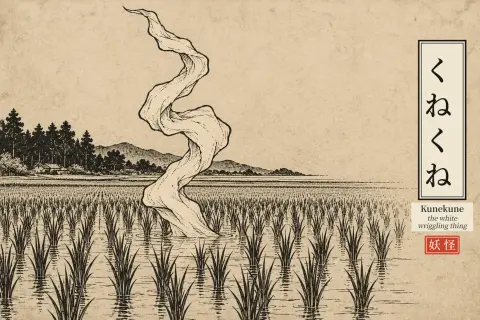 The White Thing in the Rice Field (website post, 2000). Something white twists far out in a field. Someone looks through binoculars and loses their mind.
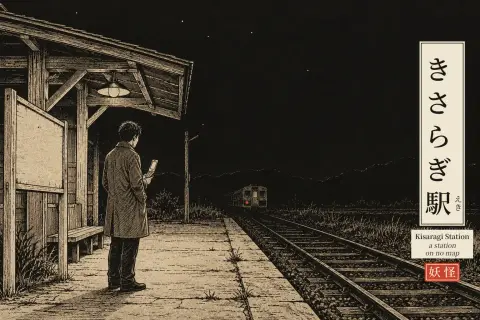 The Station Not on Any Map (message board, 2004). Someone posts live from a train that will not stop. It reaches a station no one knows, and the posts end.
More stories sit inside the other creatures of this catalogue. About half of our creature and god pages tell one.