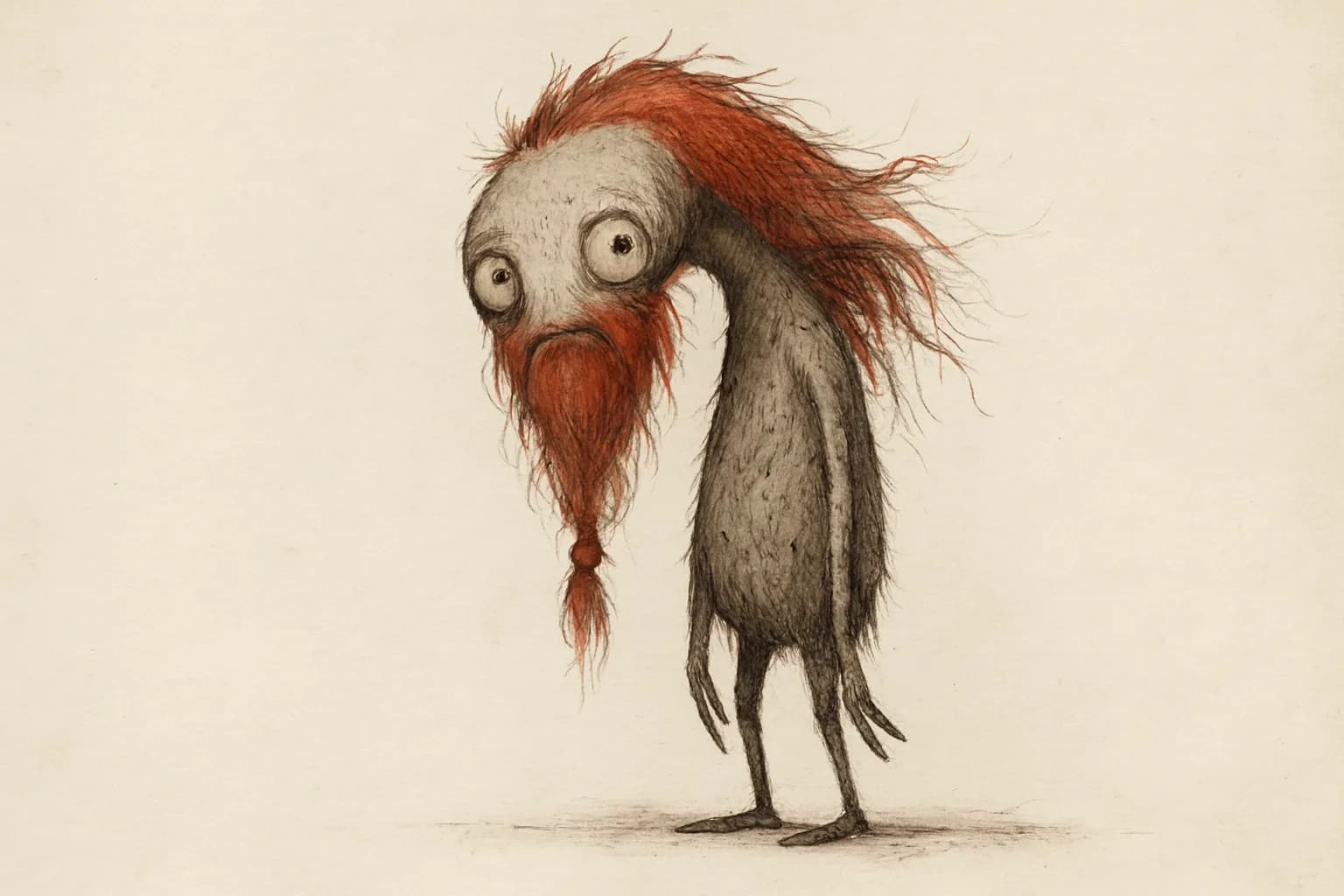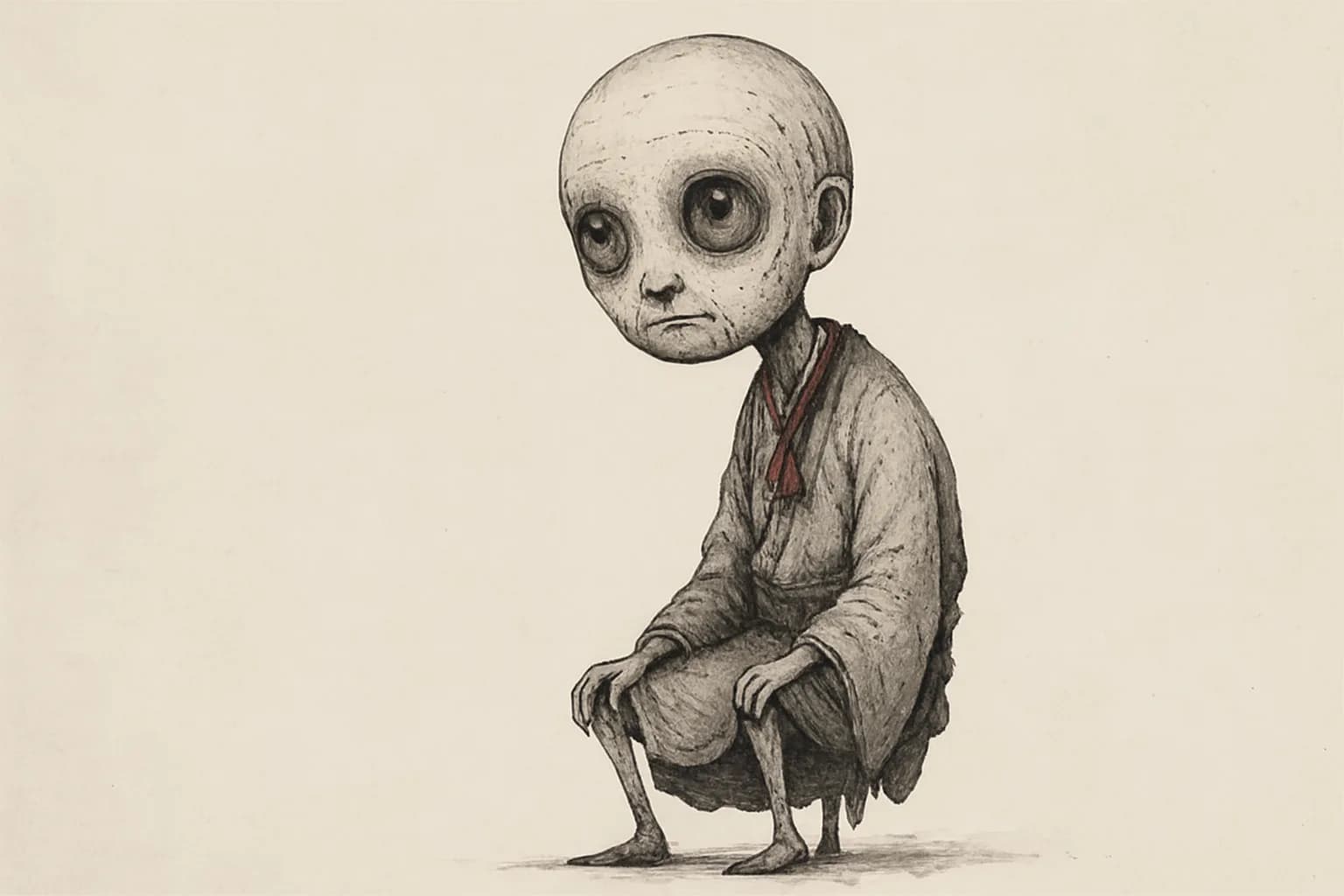
In the summer of 1749, in the castle town of Miyoshi in Bingo Province, a sixteen-year-old named Inō Heitarō sat through thirty straight nights of hauntings in his own house. On the final night, the thing behind it all finally showed itself. It called itself Sanmoto Gorōzaemon, a maō — demon king — who ruled over lesser yokai the way a lord rules over vassals. It had come, it said, to settle a bet. It had lost.
The record of those thirty nights survives as the Inō Mononoke Roku, one of Edo Japan's strangest documents: a dated, first-person account of a haunting, written as if it really happened to a real family.
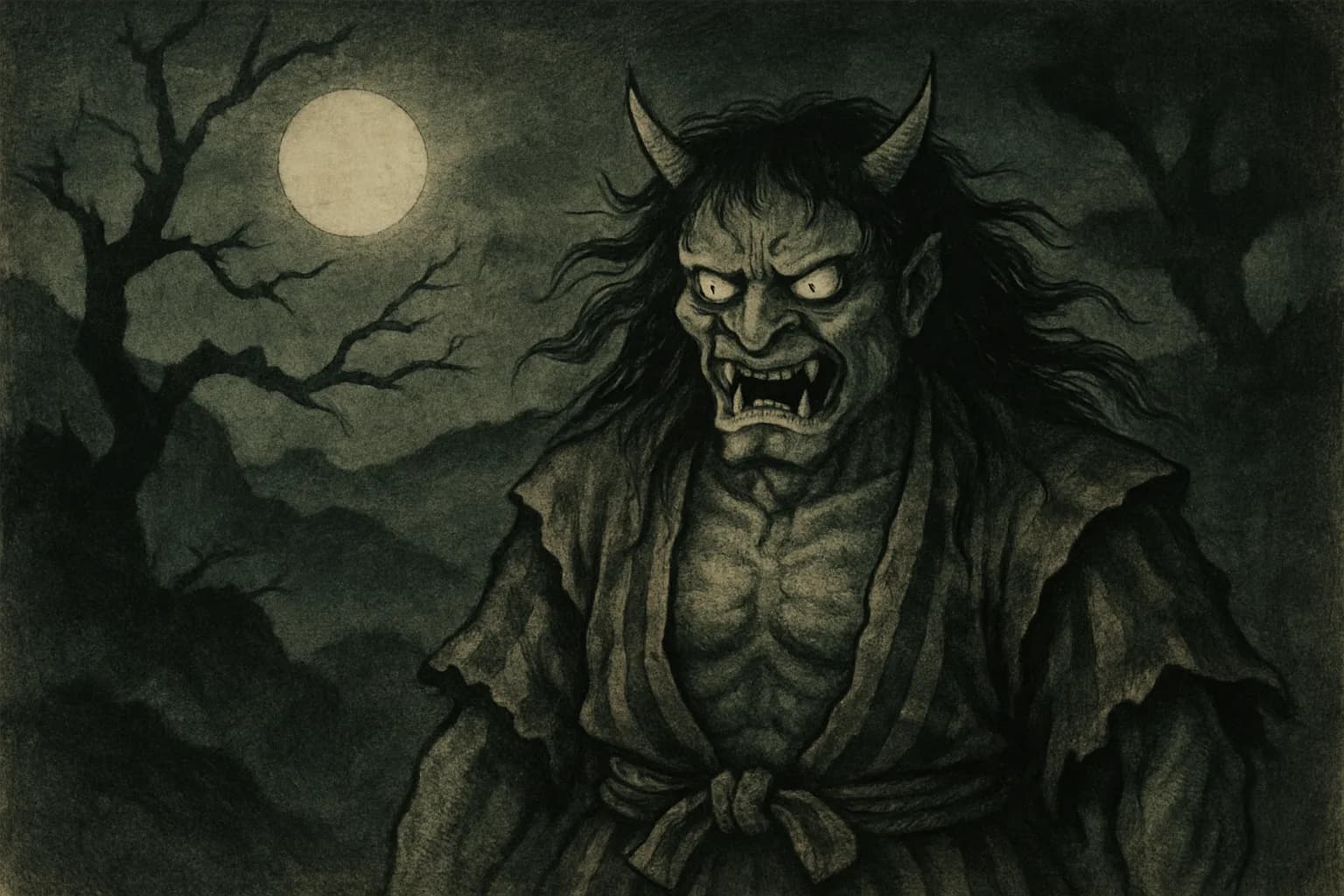
What does Sanmoto Gorōzaemon look like?
Illustrated copies of the Inō Mononoke Roku do not draw Sanmoto Gorōzaemon as a monster. He arrives on the last night dressed as a court official, seated with calm dignity, more bureaucrat than fiend. He is enormous and commands a following of countless smaller creatures, but nothing about his final appearance is grotesque. The horror had already come from thirty nights of smaller apparitions — not from him.
His name is itself a small puzzle. The characters 山本 are almost always read Yamamoto in Japanese. In this tale alone, tradition insists on the unusual reading Sanmoto. Paired with 五郎左衛門, an ordinary Edo-period man's name, the whole thing reads less like a monster's title and more like a person's business card.
Thirty nights of hauntings
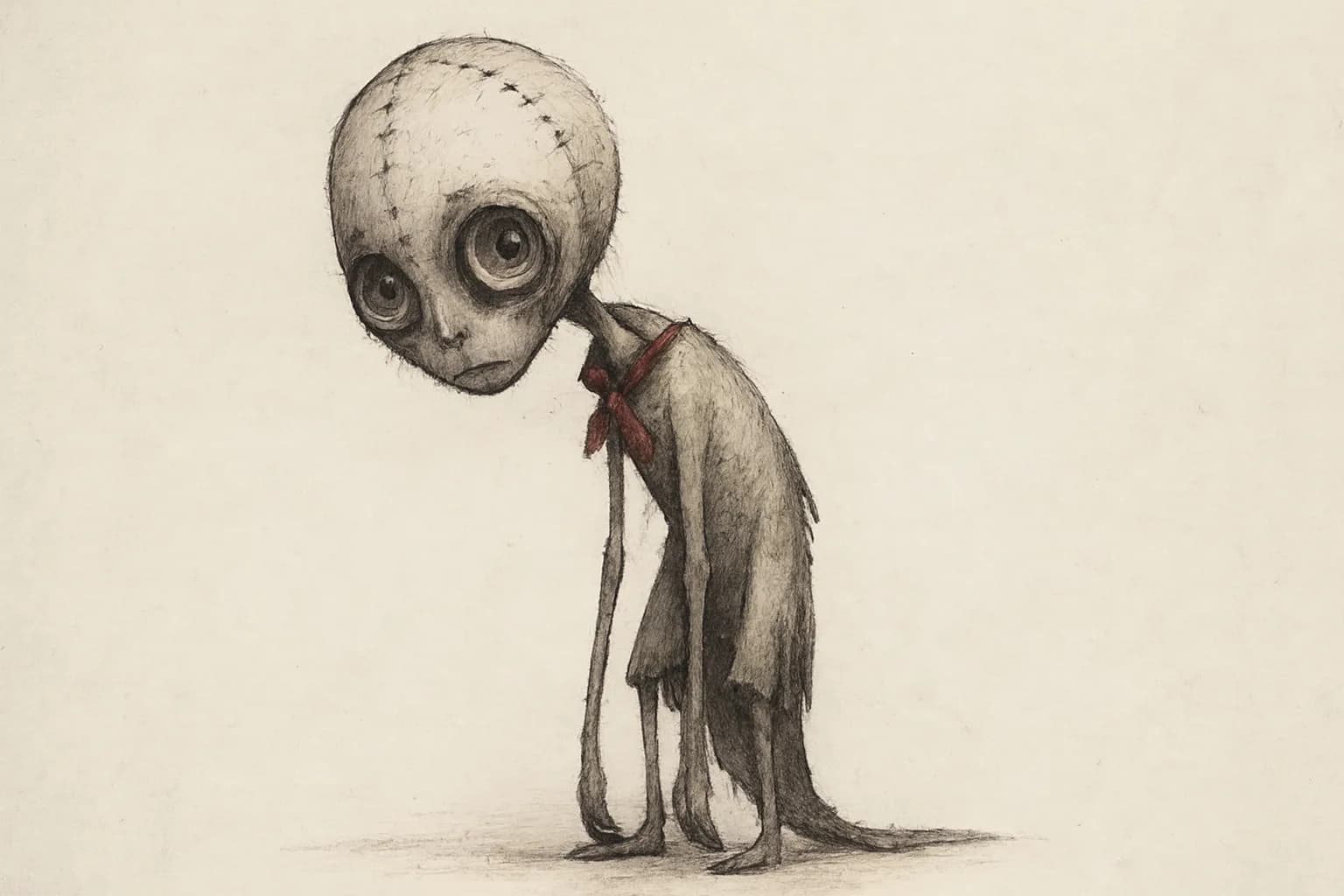
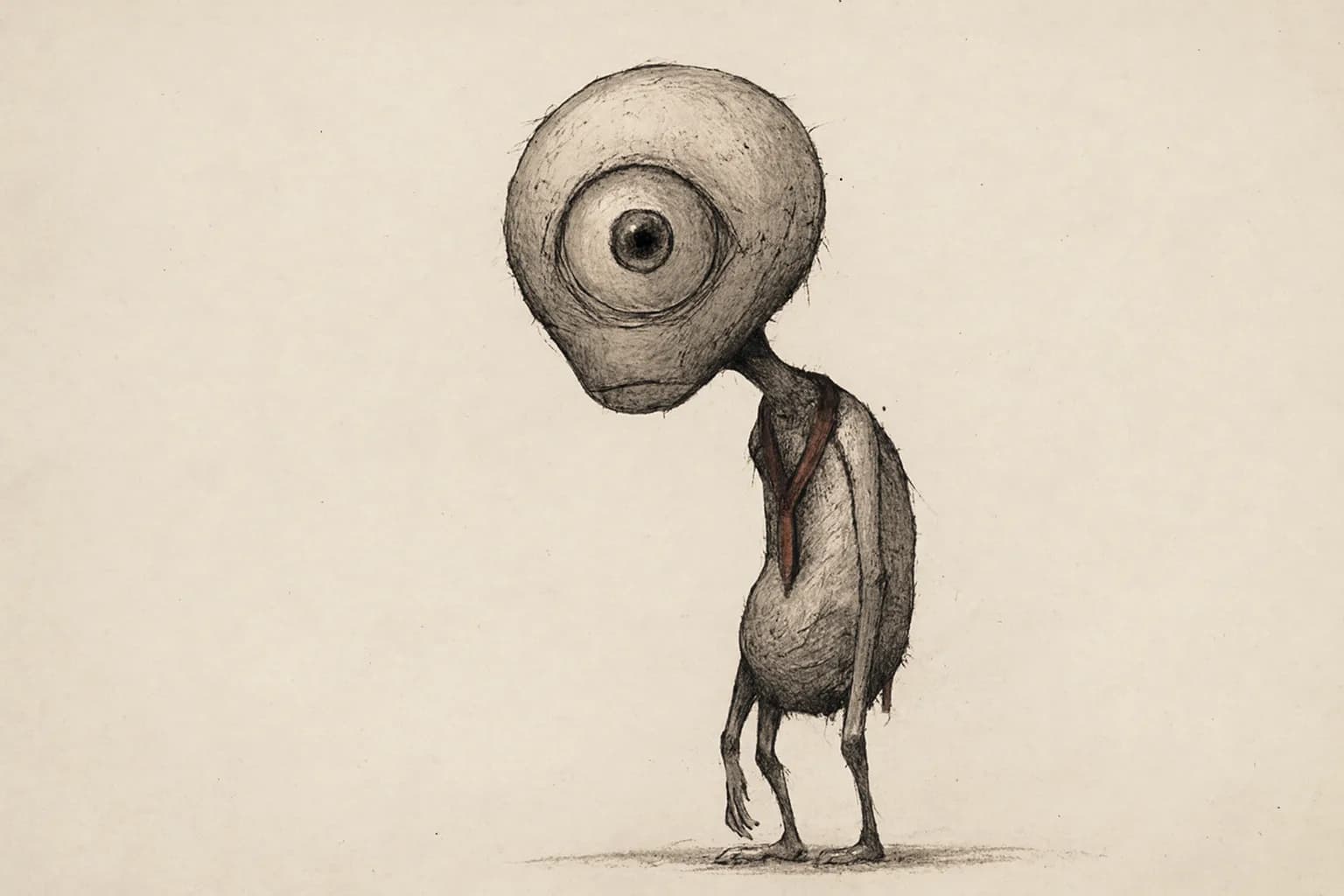
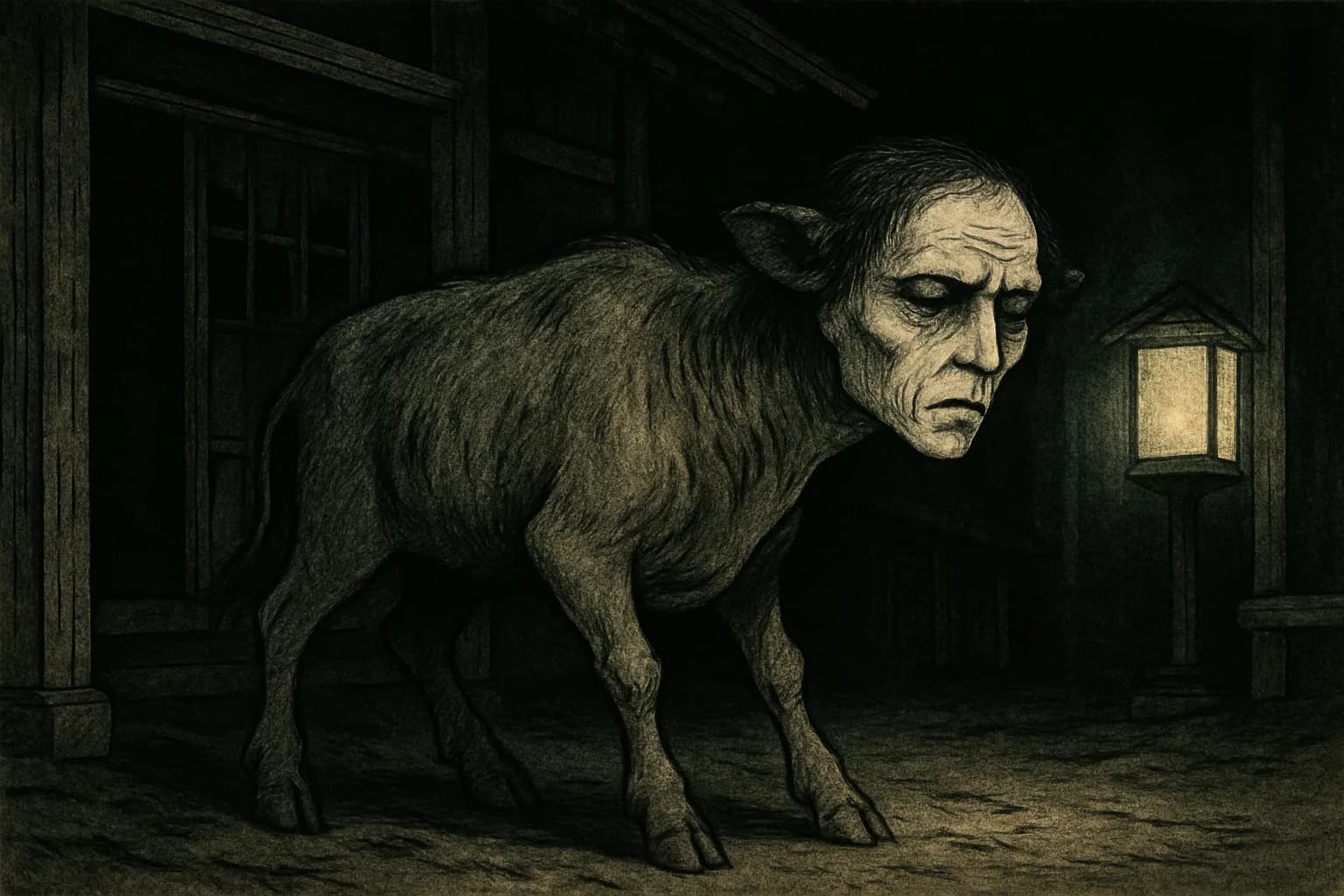
Each night of the ordeal brought something different. Manuscripts describe a giant eye staring down from the ceiling. A woman's severed head floats through a room, laughing. Something enormous and hairy blocks a hallway in the dark. The tatami mats ripple as if things are moving beneath them.
None of it drove Heitarō from the house. He kept watching, night after night, and kept recording what he saw.
The wager revealed
On the thirtieth night, Sanmoto Gorōzaemon explained the point of it all. The whole haunting had been a test, and a wager. Demon lords like him sometimes bet on whether a human could be frightened out of their own home. He had picked Heitarō's house for his turn, and Heitarō's nerve had cost him the bet.
Impressed rather than angry, Sanmoto Gorōzaemon gave the boy an iron mallet before leaving. Strike it, he said, and Sanmoto's followers would come to help. Then the demon king said he was off to see Shinno Akugoro, the yokai lord he had made the wager with, to report how badly it had gone.
Where it comes from
The Inō Mononoke Roku is unusual among Edo-period kaidan — ghost stories — because it names a real place, a real family, and a real date: Miyoshi, in Bingo Province, in 1749. Later generations of the Inō family recopied and preserved the account, and illustrated scrolls of it circulated for decades afterward.
Folklorists read it less as a report of an actual haunting and more as a coming-of-age story dressed as one. A boy proves his composure against escalating fear, and a demon — of all people — is the one who certifies it. The wager framing does real work here: it turns a string of frightening images into a single test with a winner, which is rarer in yokai literature than it sounds.
Sanmoto Gorōzaemon today
The tale's hometown has not let it go. The Miyoshi Mononoke Museum, which opened in Miyoshi, Hiroshima Prefecture, in 2019, was built around the Yumoto Kōichi collection of yokai art and gives the Inō Mononoke Roku a central place among its exhibits. Visitors can see reproductions of the same scrolls that recorded Heitarō's thirty nights, in the same region where they are set.