Sanmoto Gorōzaemon spent thirty nights trying to frighten a teenager out of his own house, and lost. On the last night he finally explained why. He had made a wager, demon lord to demon lord, and the lord on the other side of that bet was named Shinno Akugorō (神野悪五郎). That single mention is the whole of his part. Shinno Akugorō never speaks. He never enters a room. He is named once, by his rival, and the story moves on without him.
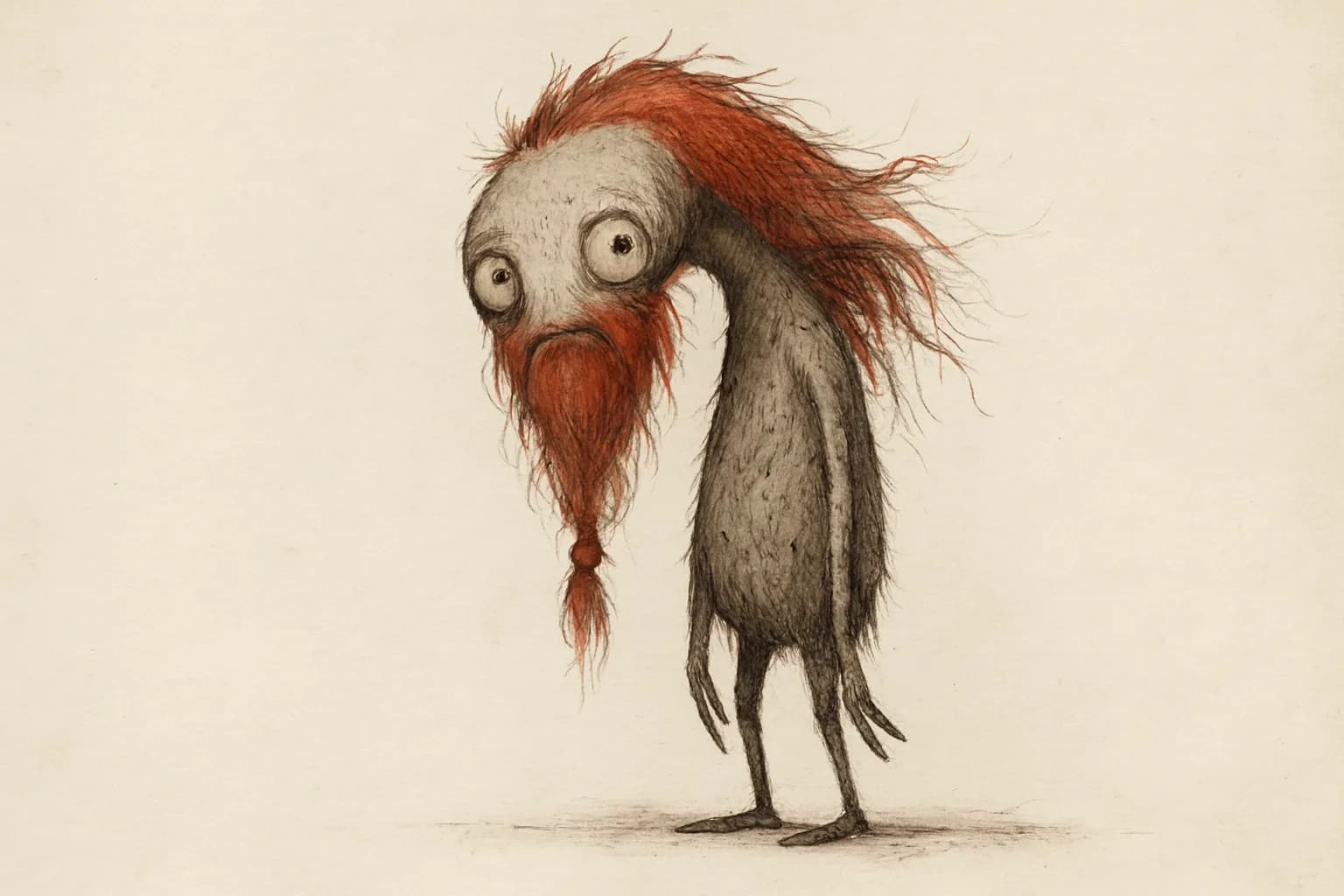
What does Shinno Akugorō look like?
No one can say. He does not appear in the Inō Mononoke Roku, so no illustrator ever drew him for it. Even his name refuses to sit still. Surviving manuscripts spell it several ways — 神ン野悪五郎, 真野悪五郎, 信野悪太郎 — small variations picked up as scribes copied the tale by hand over the decades. His rival's name changed too, but Shinno Akugorō's grip on his own identity is looser still.
His given name reads like an ordinary Edo-period man's: 神野 (Shinno) as a surname, 五郎 (Gorō) as a first name, the kind of name a real merchant or samurai might carry. One character breaks the pattern. 悪 means "evil," sitting where a polite word would usually go. It is the only hint, in the name itself, that something is wrong with this particular Gorō.
The wager for the demon crown
The Inō Mononoke Roku explains the terms just once, near the end. Two maō — demon lords — had a running contest. Whichever one frightened one hundred people first would be recognized as the senior of the two. Sanmoto Gorōzaemon had reached eighty-five. The boy Inō Heitarō, who endured all thirty nights without fleeing his house, would have been his eighty-sixth. Heitarō's calm broke the count instead. That single failure is what the wager with Shinno Akugorō cost him.
Named, but absent
This is the strange part. Shinno Akugorō set the terms of a contest that produced thirty nights of hauntings, a floating severed head, and a boy's entire summer. None of it happened in front of him. Sanmoto Gorōzaemon does all the appearing: he arrives on the final night dressed as a court official, with a vast retinue of lesser yokai in tow. Before leaving, he hands Heitarō an iron mallet and a warning. If the other demon lord ever comes looking for him, Sanmoto says, strike the mallet and help will arrive. Shinno Akugorō is turned, in that one line, from an absent name into an unfinished threat.
Where it comes from
The Inō Mononoke Roku records real names and a real date: Miyoshi, in Bingo Province, in 1749. It is one of Edo Japan's kaidan (ghost stories) written as if it truly happened, and later generations of the Inō family kept copying and illustrating it. Shinno Akugorō rides along in every copy as a name in someone else's mouth.
A separate, later document gives him more shape than the ghost story ever did. The Meiji-era occult notebook Ikyō Bibōroku, compiled by Miyaji Suii, lists thirteen lords said to rule the demon realm. Shinno Akugorō appears sixth in that ranking, under a fuller name: 神野悪五郎日影. The same notebook places him near Mount Hikuma in Bizen Province, where a glowing object was said to sit atop a cedar tree at the summit. It is a different tradition, written well after the Miyoshi haunting, but it does something the original tale never bothers to: it gives the absent rival an address.
Shinno Akugorō today
The Miyoshi Mononoke Museum opened in Hiroshima Prefecture in 2019, built around the Yumoto Kōichi collection of yokai art. The Inō Mononoke Roku sits at the center of its exhibits, with reproductions of the scrolls that recorded Heitarō's thirty nights. Shinno Akugorō is named on the same placards as Sanmoto Gorōzaemon, credited as the demon lord who set the whole wager in motion. He still has no scene of his own there either.