The oldest yokai on record is Yamata-no-Orochi, the eight-headed serpent. Japan's oldest surviving book, the Kojiki, wrote it down in 712.
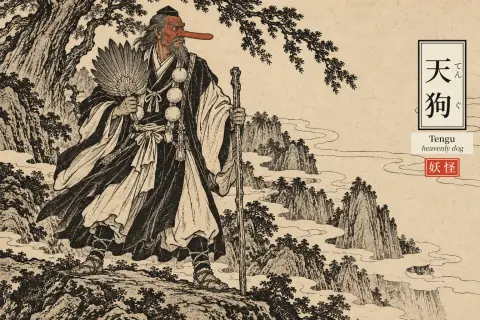
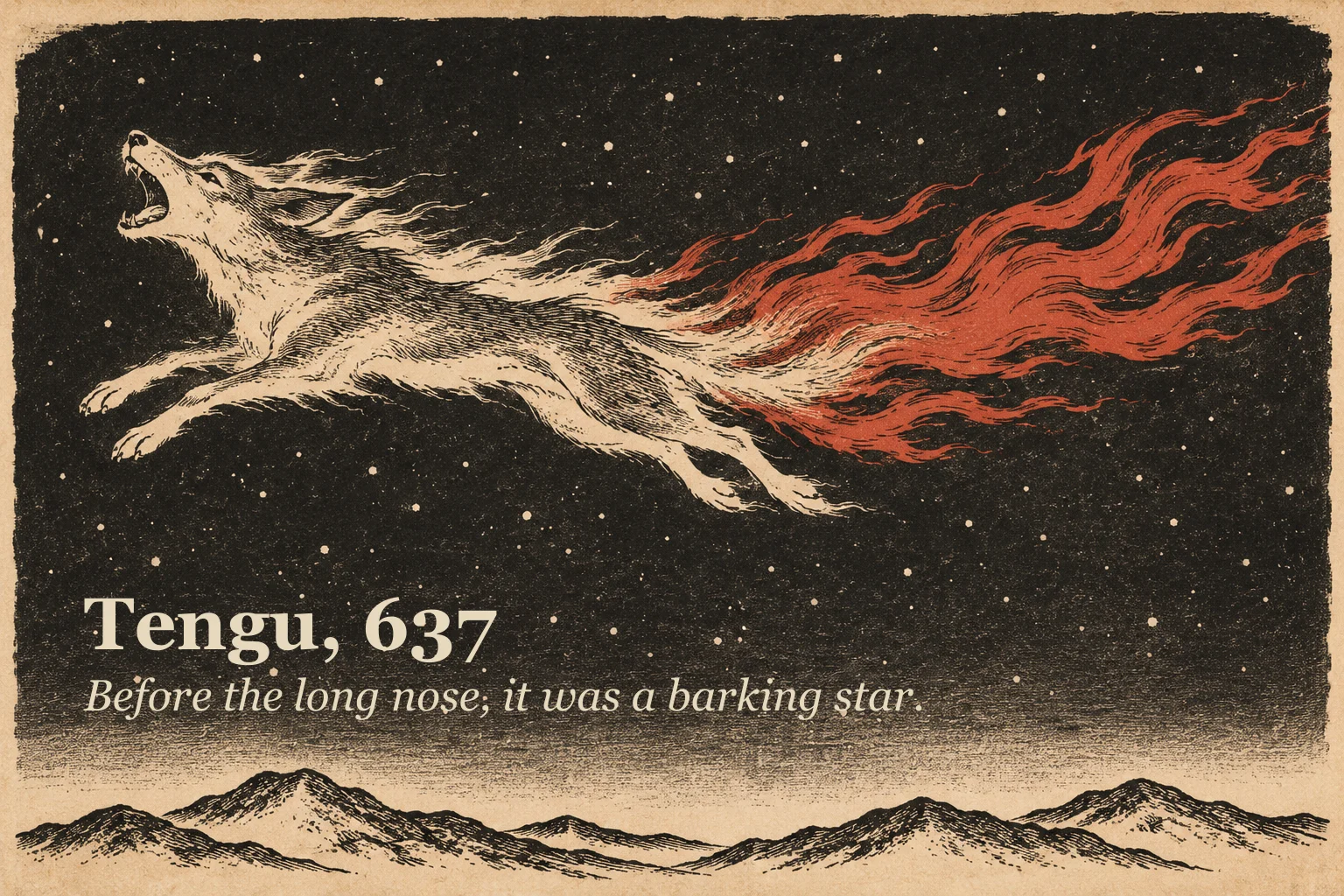
The bigger surprise is the tengu. Its oldest record, from the year 637, has no long nose and no mountain. It is a star that barked as it crossed the sky.
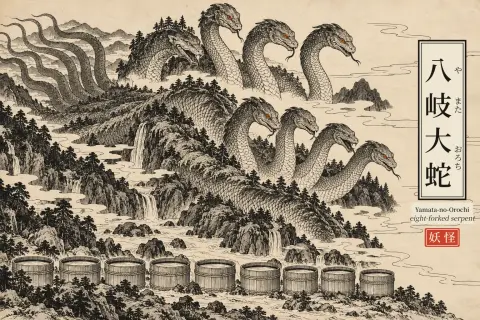
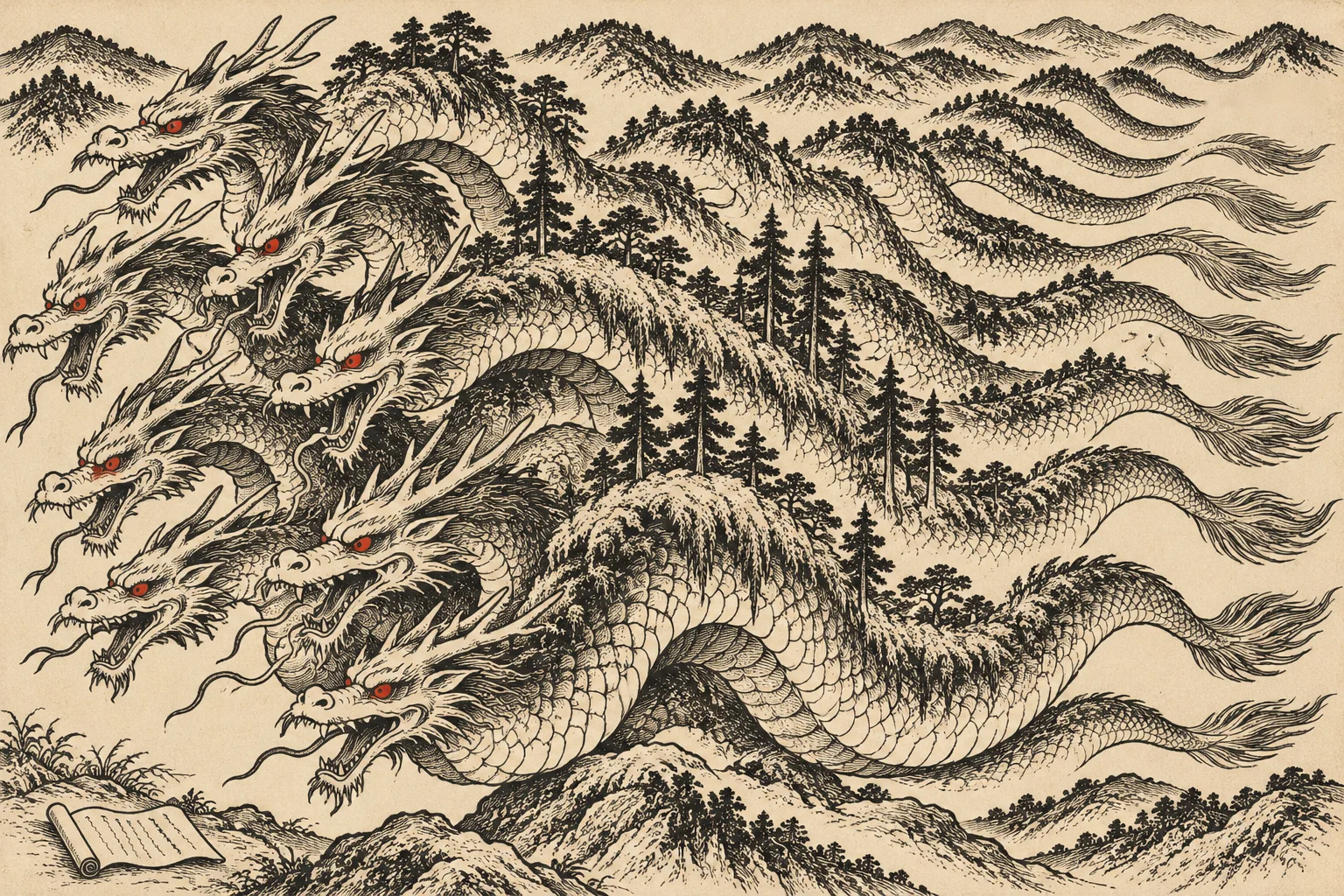 Our drawing of No. 1. The Kojiki says its body covered eight valleys and eight hills.
| Rank | Yokai | First record | Year written | What it says |
|---|---|---|---|---|
| 1 | Yamata-no-Orochi | Kojiki | 712 | A serpent with eight heads and eight tails |
| 1 | Wani | Kojiki | 712 | Sea monsters a hare tricks into a bridge |
| 3 | Mujina | Nihon Shoki | 720 | A badger that turned into a person and sang (627) |
| 3 | Ningyo | Nihon Shoki | 720 | A thing like a child, "neither fish nor human" (619) |
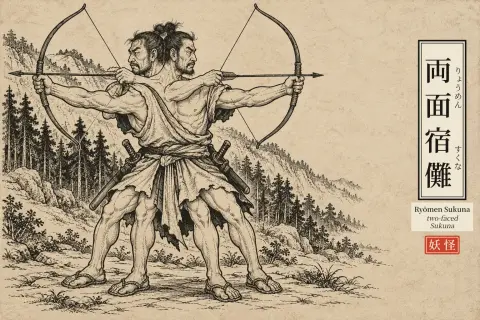
| 3 | Ryōmen-Sukuna | Nihon Shoki | 720 | One body, two faces, four arms |
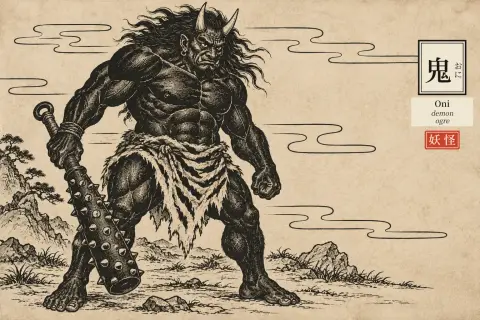
| 3 | Oni | Nihon Shoki | 720 | An oni in a big hat watching a funeral (661) |
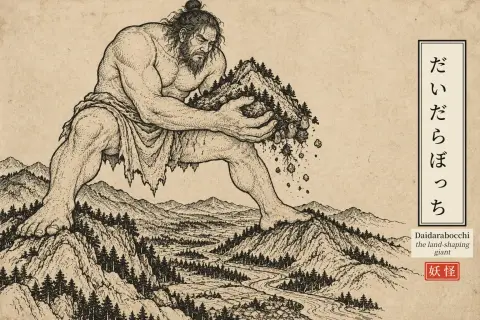
| 7 | Daidarabocchi | Hitachi no Kuni Fudoki | 713–721 | A giant who ate clams from a hilltop |
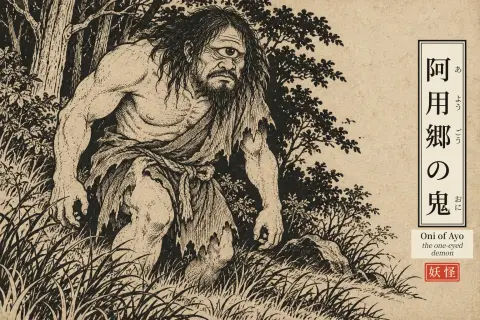
| 8 | Ayo-no-Oni | Izumo no Kuni Fudoki | 733 | A one-eyed oni that ate a farmer |
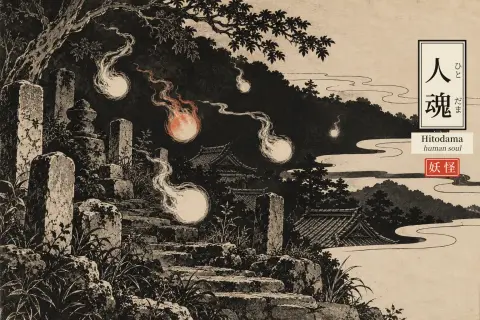
| 9 | Hitodama | Man'yōshū | After 759 | A poem already knows hitodama are pale blue |
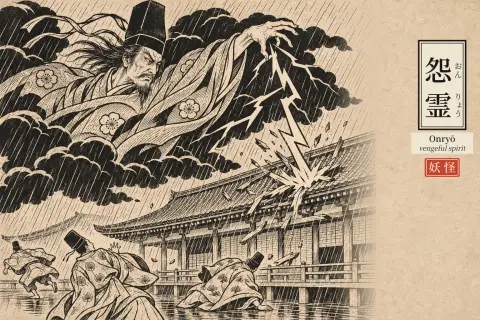
| 10 | Onryō | Shoku Nihongi | 797 | A dead rebel's spirit that killed a monk (746) |
We rank by the year the book was finished. A year in brackets is when the story happens. Ties share a rank. Some books have only a date range. We use the latest year. So the report of 713 to 721 ranks after 720.
Two from Japan's oldest book
1. Yamata-no-Orochi
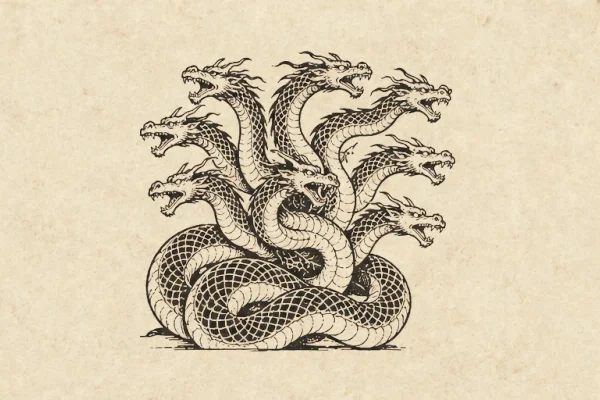
The Orochi has eight heads, eight tails and eyes as red as winter cherries. Trees grow on its back. Each year it ate one daughter of an old couple. The god Susanoo filled eight tubs with strong sake. The serpent drank, fell asleep, and he cut it to pieces. The Kojiki is the oldest book Japan still has, so by book date nothing can rank higher.
1. Wani
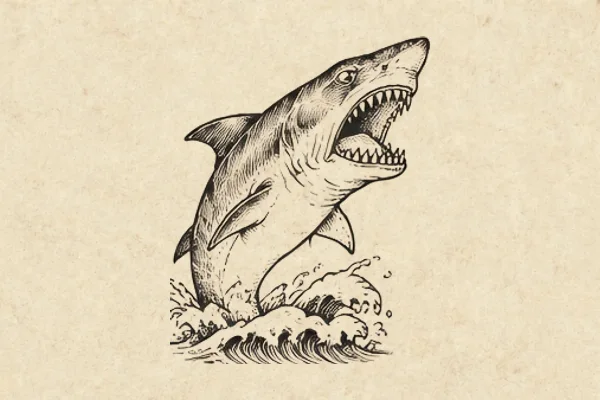
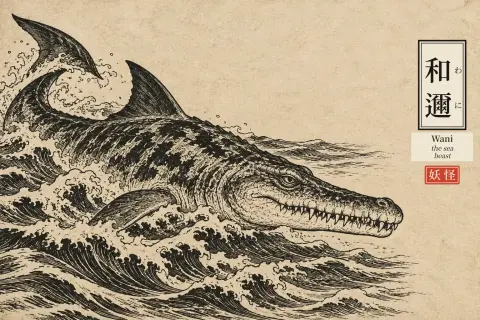
In the same book, a white hare wants to cross the sea. It tells the wani to line up so it can count them. It hops across their backs, then laughs at the trick. The last wani skins it. Later in the Kojiki, a sea princess turns into a wani to give birth. Scholars still argue whether a wani is a shark or a crocodile.
Four from the first official history
3. Mujina
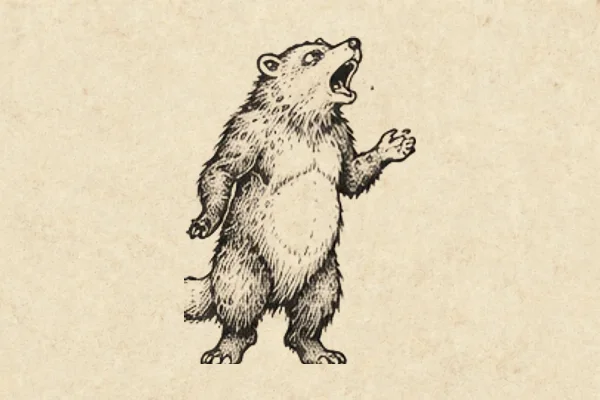
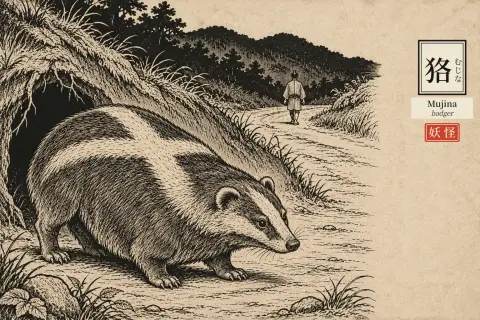
The Nihon Shoki came out eight years after the Kojiki. Under the year 627 it says that in Mutsu, in the far north, "a mujina turned into a person and sang." That is the whole entry. One old copy reads "mingled with people" instead, so not everyone agrees it changed shape.
3. Ningyo
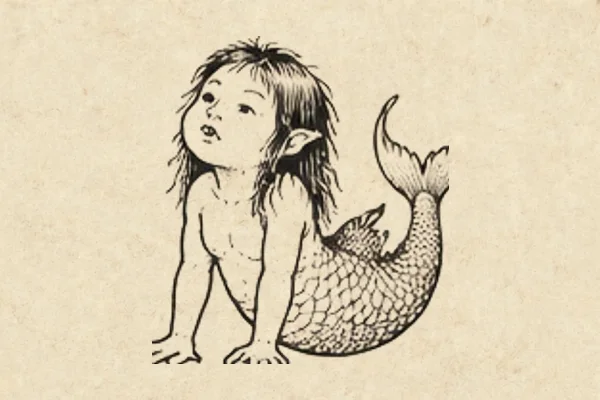
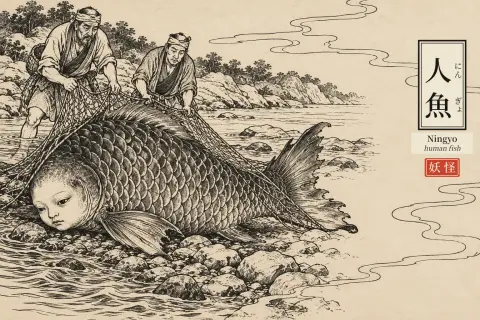
In 619, a fisherman near today's Osaka caught something in his net. The Nihon Shoki says it was shaped like a child, "neither fish nor human." Nobody knew what to call it. So Japan's oldest mermaid has no name at all. The word ningyo came later.
3. Ryōmen-Sukuna
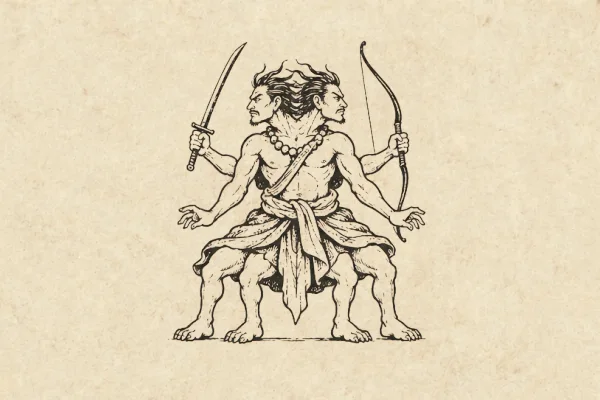
Fans of Jujutsu Kaisen know this name. Here is its oldest record. In Hida, in the mountains, lived Sukuna. He had one body with two faces looking opposite ways. He had four arms and four legs. He wore swords on both sides and used bows and arrows with all four hands. He robbed the people and ignored the emperor, so a general was sent to kill him.
3. Oni
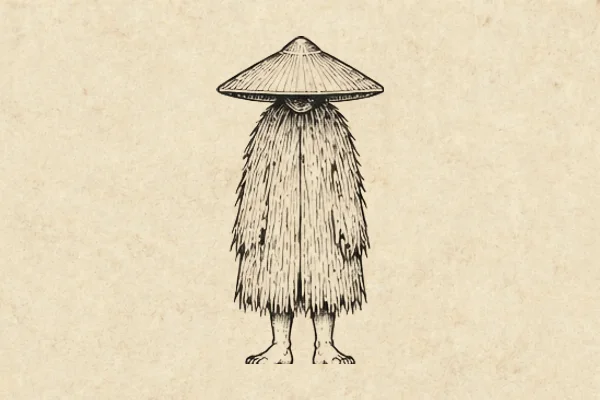
Empress Saimei died in 661. At her funeral, says the Nihon Shoki, "an oni in a big hat" watched from the top of Mount Asakura. Everyone who saw it wondered. It does nothing else. This oni has no horns and no club, just a hat and a stare.
Two from reports on the provinces
7. Daidarabocchi
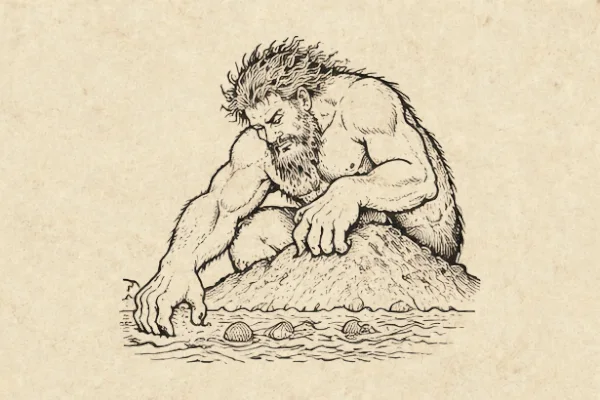
The Hitachi no Kuni Fudoki was a report on today's Ibaraki. It tells of a very tall person who sat on a hill and scooped clams from the sea. The shells piled up into a mound. The book gives no name. Later stories call him Daidarabocchi. The report was finished sometime between 713 and 721. By our rule, that puts it just after the Nihon Shoki.
8. Ayo-no-Oni
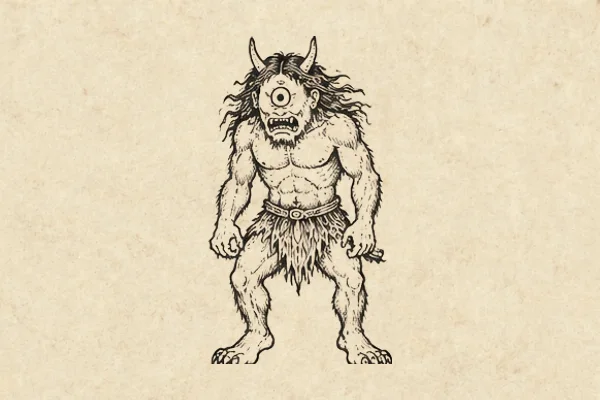
The Izumo no Kuni Fudoki of 733 tells of a farmer in Ayo village. A one-eyed oni came and ate him. His parents hid in the bamboo. As the leaves shook, he cried "ayo, ayo," and the village took its name from that cry. The record gives Ayo-no-Oni a single eye.
A poem and a ghost
9. Hitodama
Poem 3889 in the Man'yōshū remembers someone met alone on a rainy night, "pale blue like a hitodama." Some read it as a dead person who came back as one. Either way, this poet already pictured the soul-fire as pale blue. Hitodama means "person soul." The book was finished sometime after 759.
10. Onryō
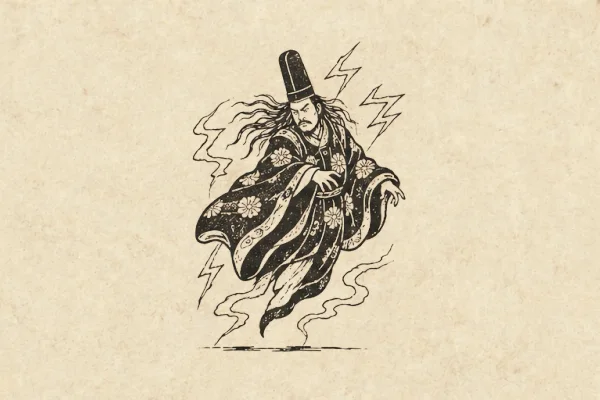
In 740, a noble named Fujiwara no Hirotsugu rebelled and was killed. Six years later, the monk Genbō died. The Shoku Nihongi of 797 reports what people said: Hirotsugu's spirit had harmed him. It is the oldest record on our list of an onryō, a dead person's spirit taking revenge. The book never uses the word onryō. That word came later.
Old names that meant something else
Some yokai names are older than any of these. But back then, they meant other things.
- Tengu, 637. A great star crossed the sky with a sound like thunder. A monk said: "It is not a shooting star. It is a tengu. Its barking sounds like thunder." Tengu means "heavenly dog," though old readers glossed it "heavenly fox." We rank the creature, not the word. A barking star is not the mountain tengu. In the late 10th century, the Utsubo Monogatari first blames a tengu for strange sounds in the mountains.
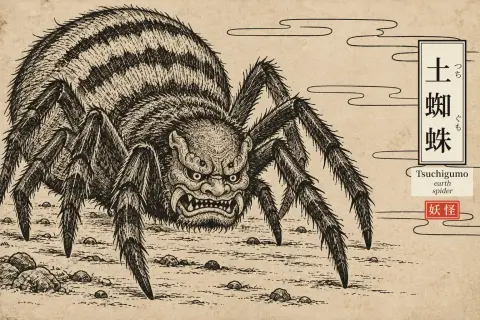
- Tsuchigumo, 712. In the Kojiki, "earth spiders with tails" is a name for local people who fought the court. The giant spider arrives in a 14th-century picture scroll.
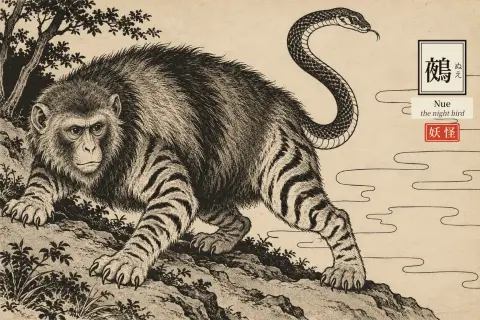
- Nue, 712. In a Kojiki song, the nue is a real bird that cries at night. In the 13th-century Heike Monogatari, a monster's cry sounds like a nue. Later, the monster took the bird's name.
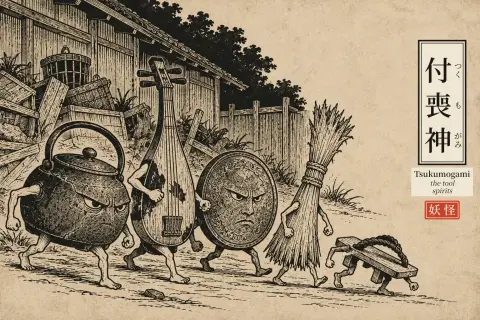
- Tsukumogami, 10th century. In the Ise Monogatari, a word with the same sound means an old woman's white hair, "one year short of a hundred." The tool-spirit name plays on it. A diary of 1485 mentions a picture scroll of tool spirits.
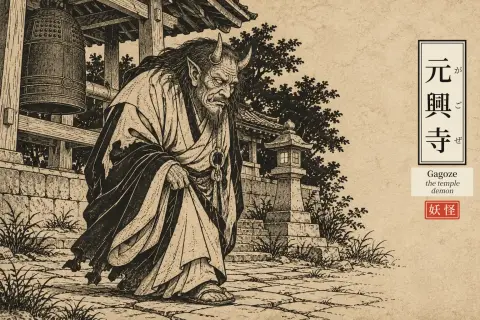
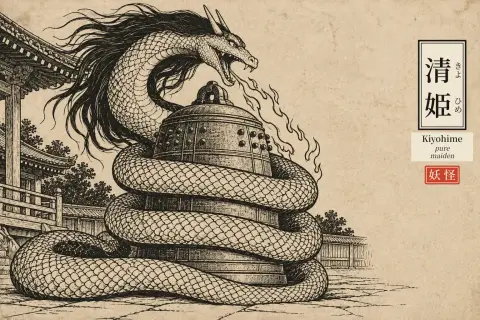
Some went the other way. The thing came first, and the name came centuries later. The mermaid of 619 had no name. The oni of the Gangō-ji bell tower, in a book of about 822, got the name Gagoze only centuries later. The woman who became a snake at Dōjō-ji was named Kiyohime only in 1742.
Next in line: Gagoze (about 822) and Kiyohime (1040 to 1044).
Most yokai are not this old
Ten yokai on our list were written down before 800. Most of the rest come much later.
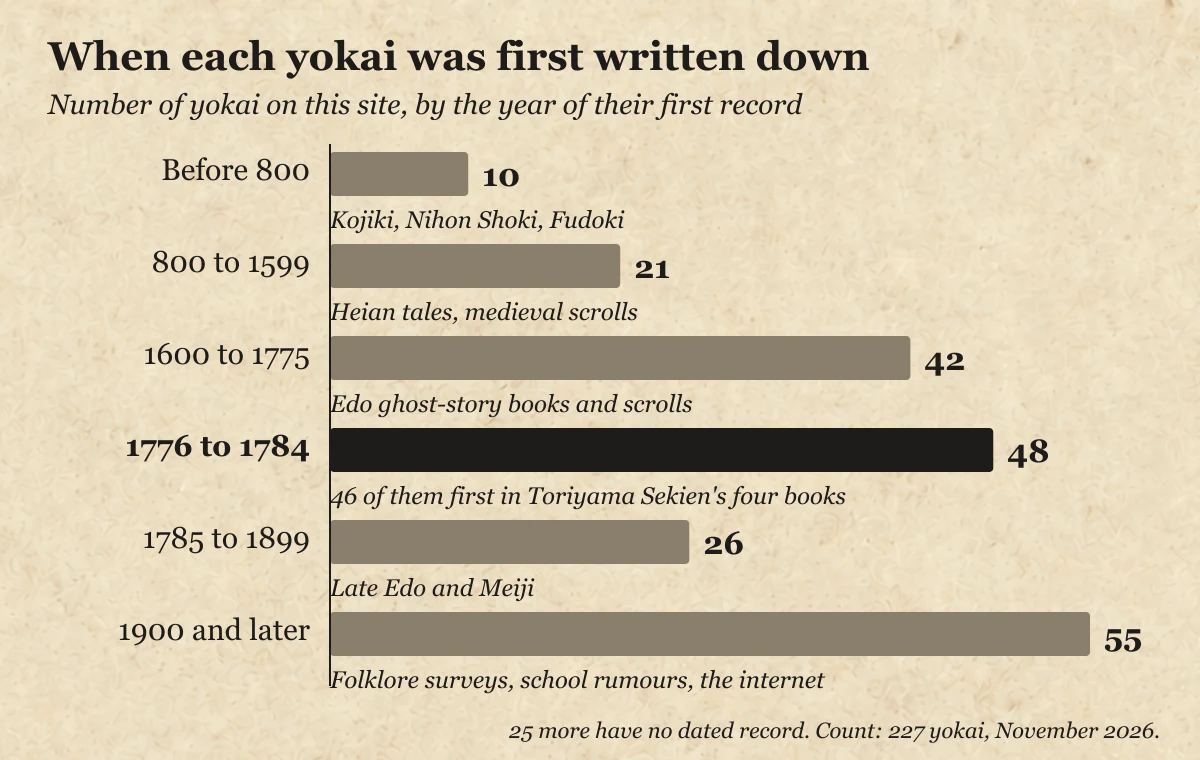 Our count of the 227 yokai on this site, by the oldest dated record we found. We chose many entries from Edo picture books, so the 1770s are crowded partly because of us.
The tallest bar before 1900 covers just eight years, 1776 to 1784. Forty-six of those yokai first appear in four picture books by one artist, Toriyama Sekien.
Sekien did not start from nothing. He copied some figures from an older scroll of 1737. But his books did something new. Each page gave one creature, one name and one picture, about two hundred in all. Later artists kept going back to those pages. The best known is Mizuki Shigeru, whose comics made yokai famous across Japan from the 1960s.
So when a yokai is called "ancient," check the year. Ten on our list really are. Many others were first drawn in the 1700s.
For the other end of time, see the newest yokai. The newest was born on a forum in 2008.