Two things can be standing at the end of your bed at three in the morning, and Japanese has separate words for them.
One of them is a yokai (妖怪) — a creature. It has a shape, a habitat, and rules. It was never alive in the way you are alive, and it was certainly never you. The other is a yurei (幽霊) — a ghost. It was a person. It has a name, a grudge, and it came here looking for someone specific.
That is the whole distinction in one line. What makes it interesting is how much work Japanese folklore has put into keeping the two apart, and how often it has failed.
The short answer
A yokai belongs to a place. A yurei belongs to a person.
Walk the same mountain pass at dusk and you may meet the same creature your grandfather met, because the creature lives there. It is not interested in you in particular; you simply arrived. That is the logic of a kappa in its river or a tengu on its peak. The encounter is a matter of geography and bad timing.
A yurei works the other way round. It does not wait anywhere. It goes to the person it has business with, and it will find them in a locked room in a city they moved to specifically to get away. The encounter is a matter of what you did.
This place-versus-person split is the formulation the folklorist Yanagita Kunio arrived at in the first half of the twentieth century, and it is still the cleanest test anyone has offered. He added a second observation that is easy to check against the old stories: yokai tend to appear at twilight, in that hour the language calls ōmagatoki — the meeting-time of demons — and they appear to whoever is passing. Yurei come much later, around two in the morning, and they come for one person.
You can also just look
Edo-period artists were practical about this, and by the end of the eighteenth century a yurei was recognisable at a glance.
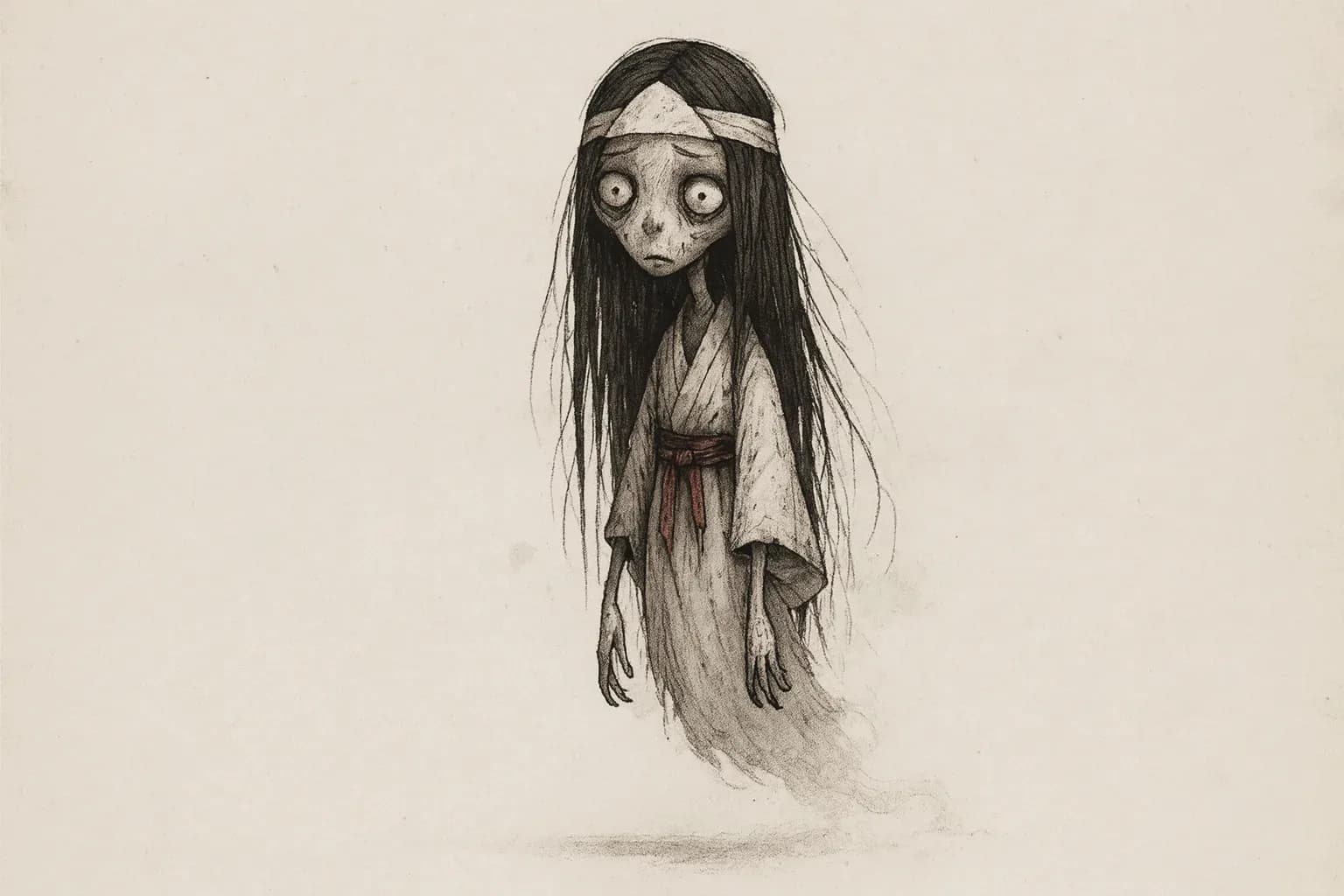
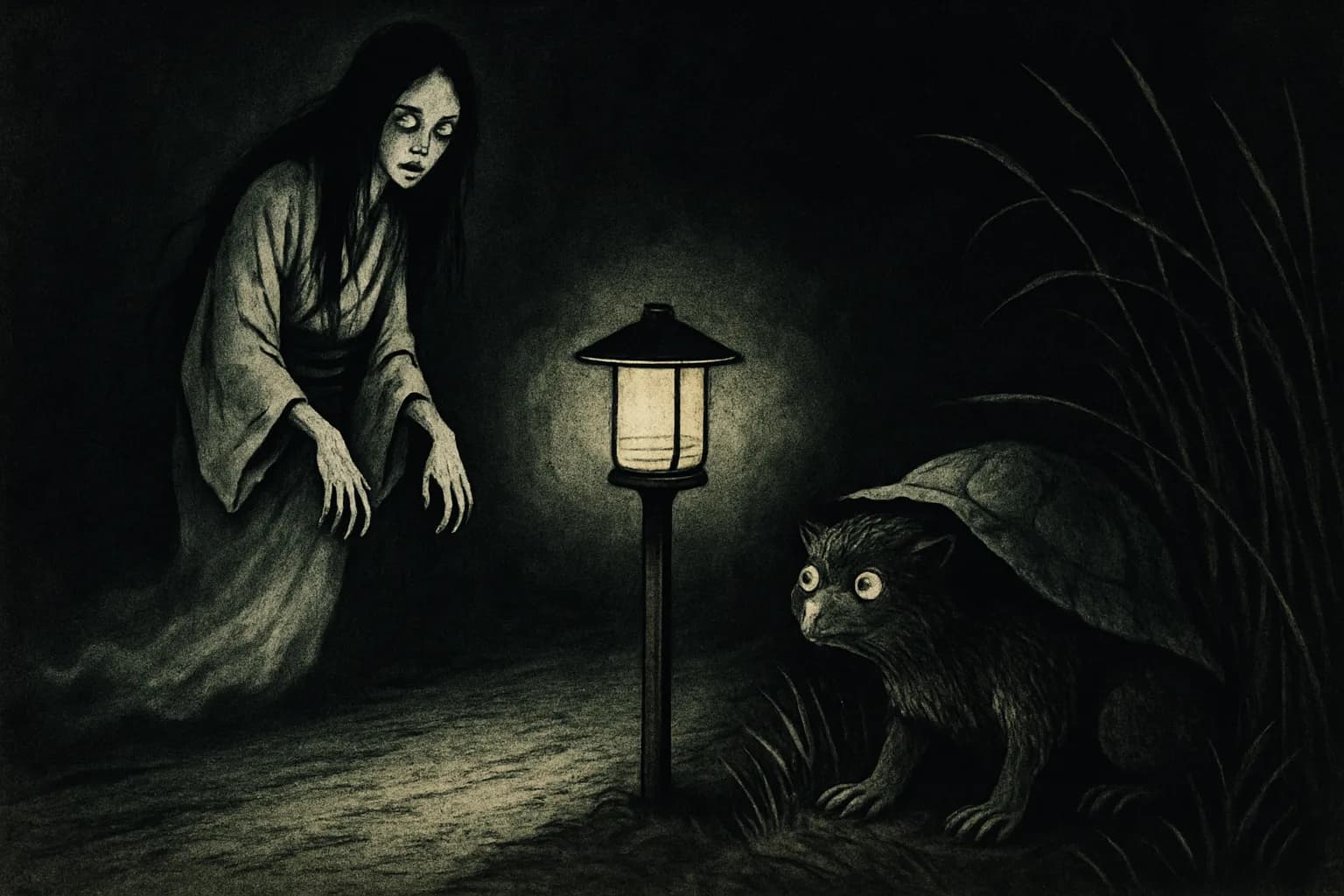
She wears a kyōkatabira, the plain white kimono a corpse is dressed in for burial, wrapped right over left in the way only the dead are wrapped. Her hair is long, black, and loose, because a living woman's hair was bound. She may wear a small triangle of white cloth on her forehead. Her hands hang forward from the wrists. And below the knee she has nothing at all — the figure simply thins out into air.
The footlessness is the tell, and it seems to have been an artistic decision rather than an old belief. Tradition credits the painter Maruyama Ōkyo with fixing it in the late 1700s, and whether or not one man deserves the credit, the convention hardened fast and it has never really loosened. It is why a Japanese audience can identify a ghost in a film frame before anyone speaks.
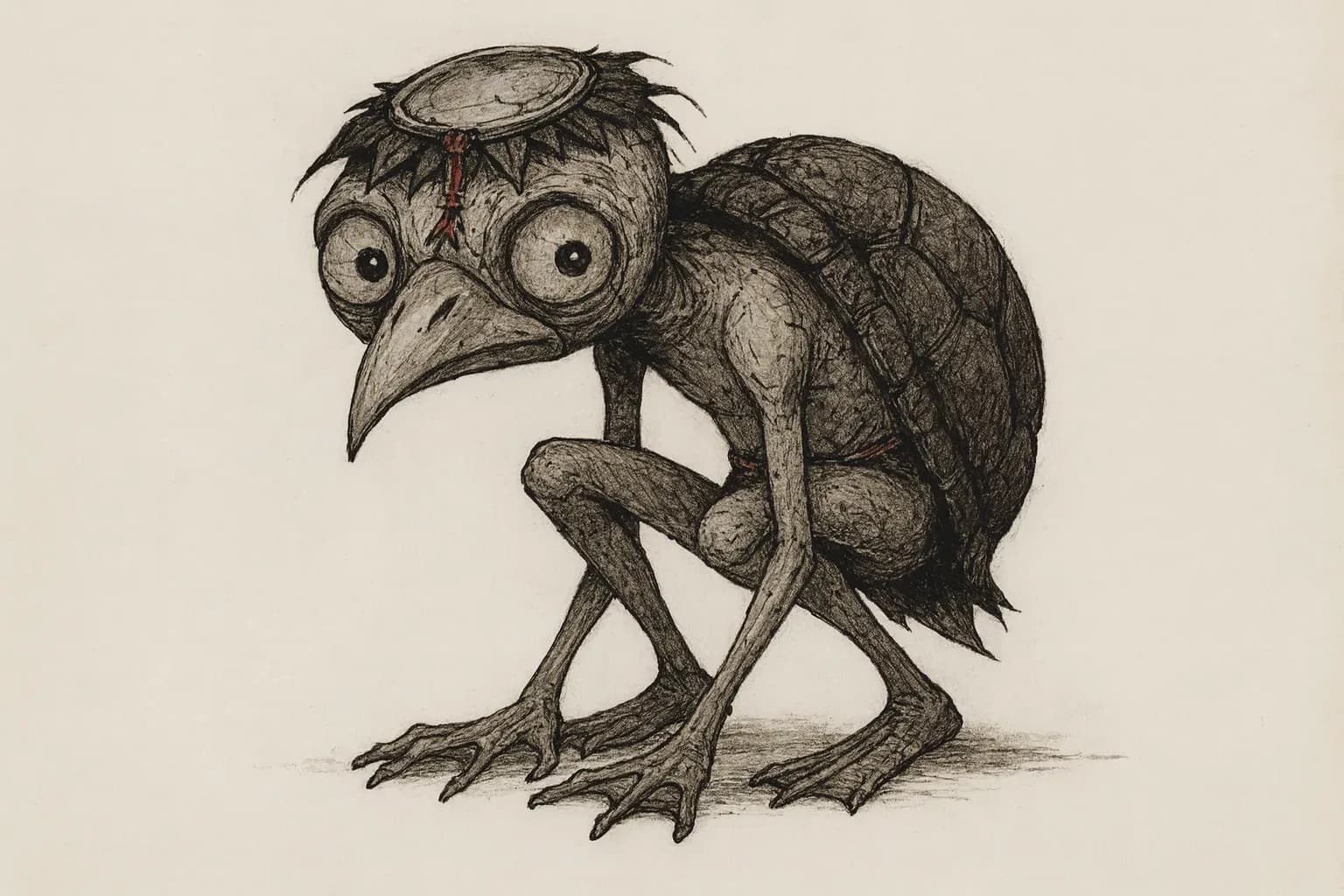
A yokai, by contrast, looks like something. It has fur, scales, a shell, an extra eye, a dish of water on its head. It has feet. Illustrators drew yokai as natural history and drew yurei as portraiture, and the difference in genre is visible.
Where the line stops working
Here is the complication that anyone who reads the primary sources runs into immediately.
When Toriyama Sekien compiled his Gazu Hyakki Yagyō in 1776 — the picture-book that fixed the visual vocabulary of Japanese monsters for everyone who came after — he put the yurei in it. She stands there among the shapeshifters and the animate household objects, in white, with no feet. Sekien was not confused. He was working with a broader category than the one modern classification uses. In his world, 妖怪 covered everything that should not be there, and a returning dead woman qualified.
So the tidy distinction is genuinely useful, and it is also a later imposition. The Edo compilers did not draw it, and a good deal of Japanese folklore sits on the wrong side of it.
Consider the cases the categories fight over:
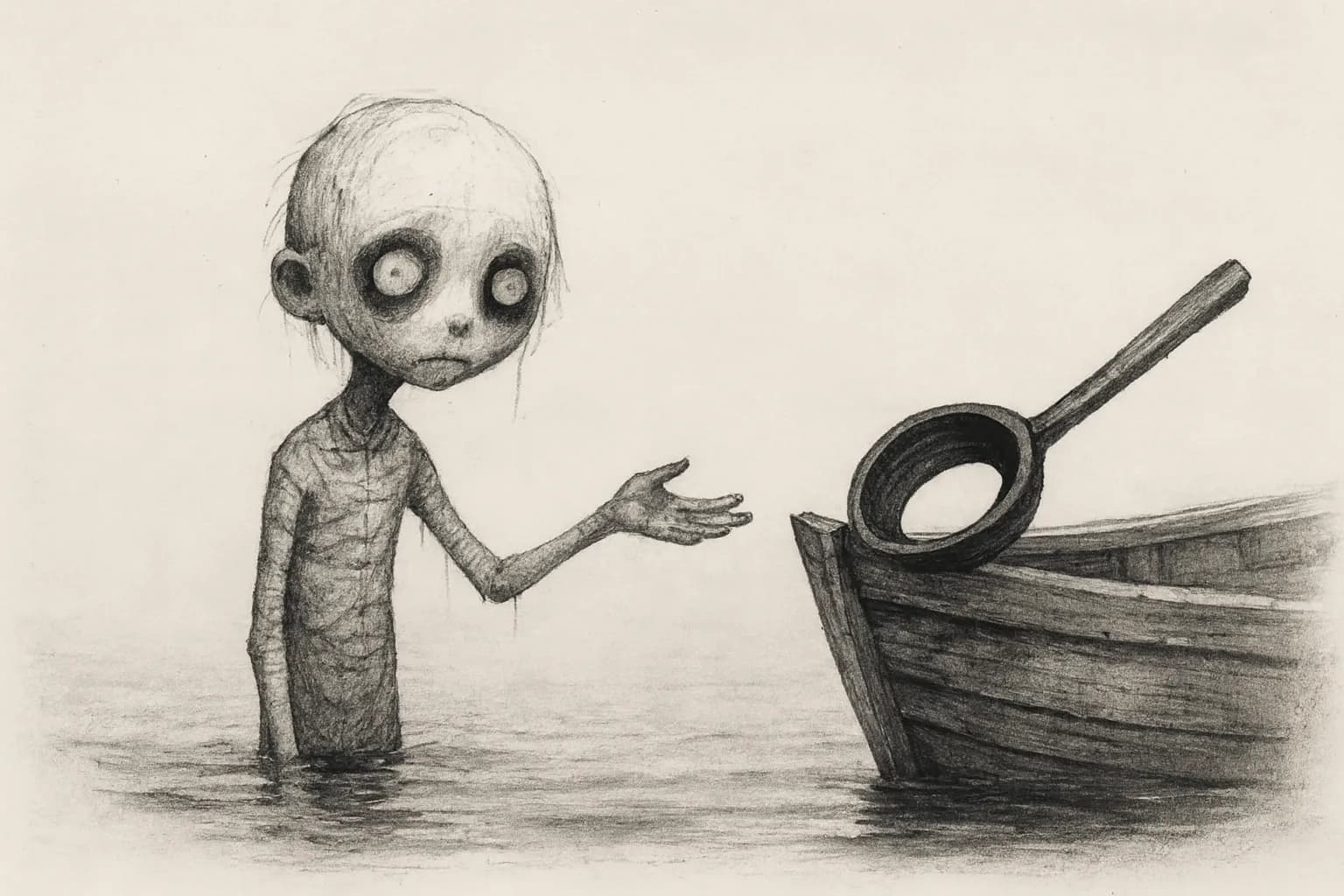
A funayurei is a drowned sailor who did not get a funeral. That is a yurei by every criterion — a specific dead person with unfinished business. Except that it does not haunt anyone in particular. It waits at a fixed stretch of water, appears to whatever boat is passing, and asks for a ladle so it can swamp the hull. Place, not person. It behaves like a yokai and it is filed with them.
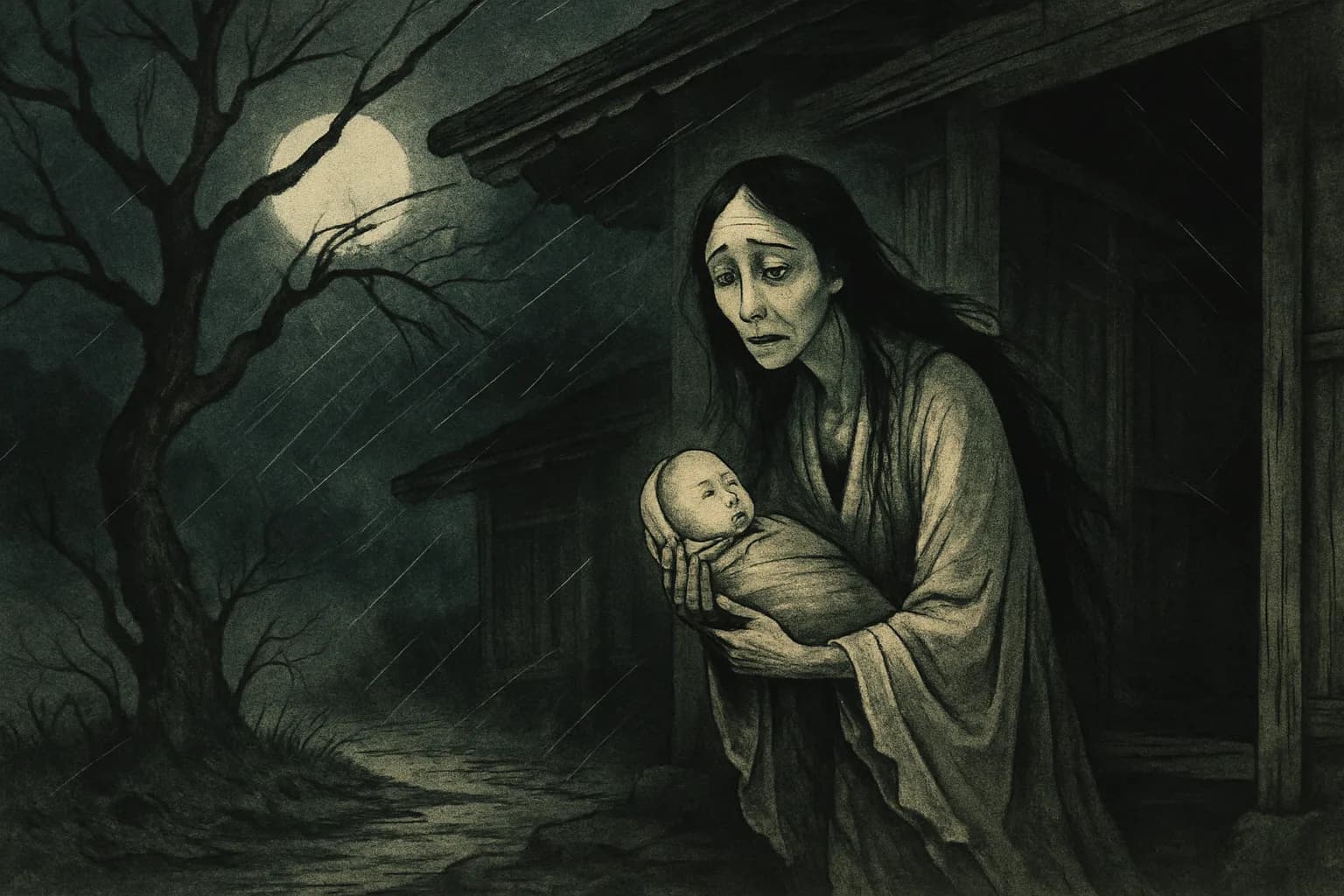
An ubume is a woman who died in childbirth and comes back carrying the baby. She is a ghost with a name and a reason, and she is also, in most of the picture-books, a bird-like creature with a shape of her own.
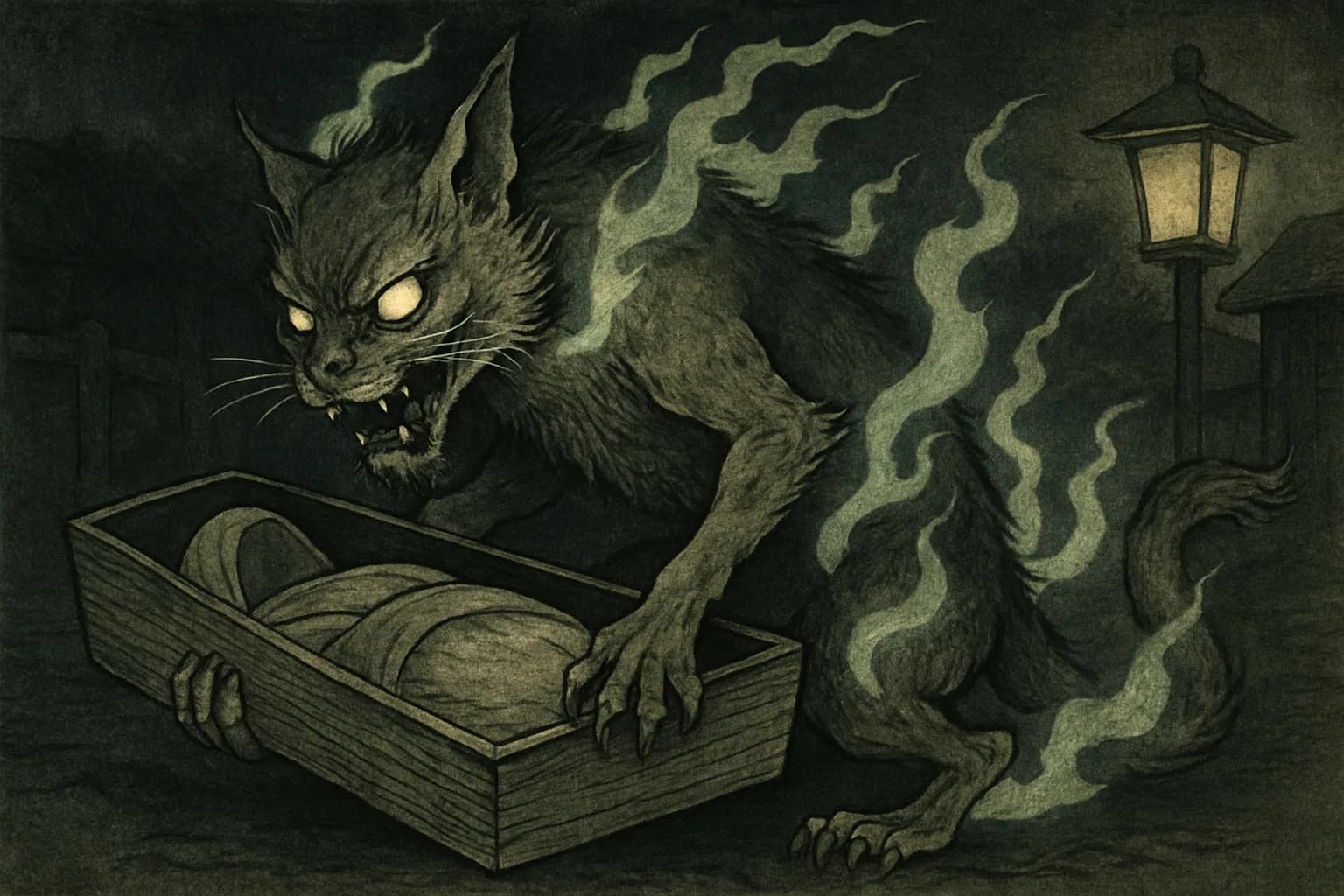
A kasha goes the other way. It is unambiguously a creature — often a monstrous cat — but its entire job is corpses, hauling the bodies of the wicked out of their coffins before burial. Nothing about it was ever human, and it lives on the edge of human death.
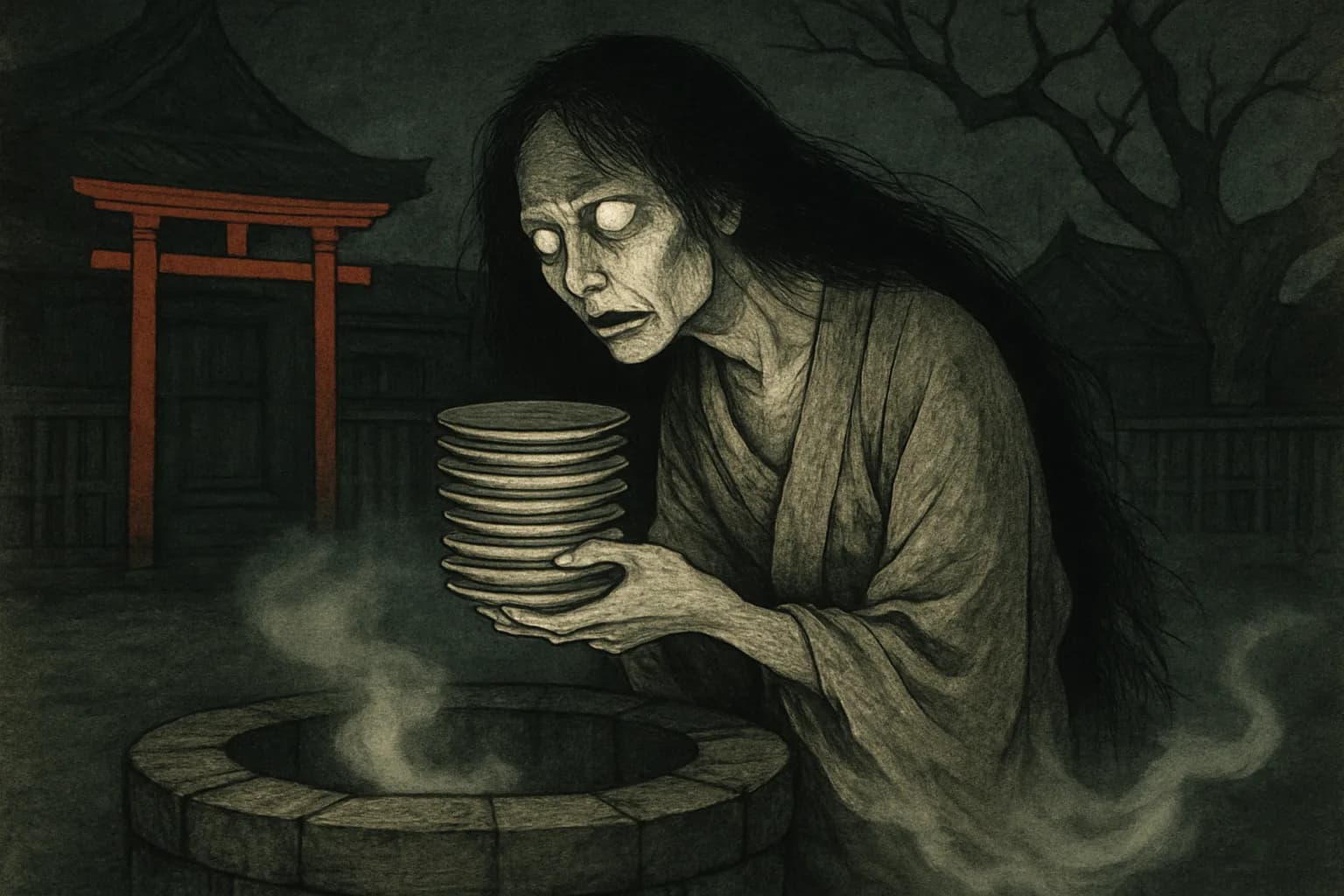
And Okiku, the servant counting plates at the bottom of a well until she reaches nine and screams, is a yurei in every telling. She also has an entry in Sekien's monster catalogue, as sarakazoe, the plate-counter. Her story has been retold so many times that the woman has quietly become a phenomenon: something that happens at that well, to anyone who is there at the wrong hour.
That last drift is worth noticing. Tell a ghost story often enough and the ghost stops being a person and becomes a fixture of a location — which is to say, it turns into a yokai.
A rule you can actually use
Ask what the thing wants.
If the answer is a name — if it is looking for the man who killed it, the family that wronged it, the child it left behind — you have a yurei. Its story ends when it gets what it is owed, or when a priest talks it into leaving.
If the answer is a behaviour — it drowns whoever swims here, it counts the hairs off your head, it licks the grime out of unclean bathrooms — you have a yokai. Its story does not end. It is still there, and it will be there next year, because that is what it does.
The old kaidan collections are full of the first kind. The picture-books are full of the second. And the reason the two keep getting shelved together is that both of them are answers to the same question, which is what the dark is for.