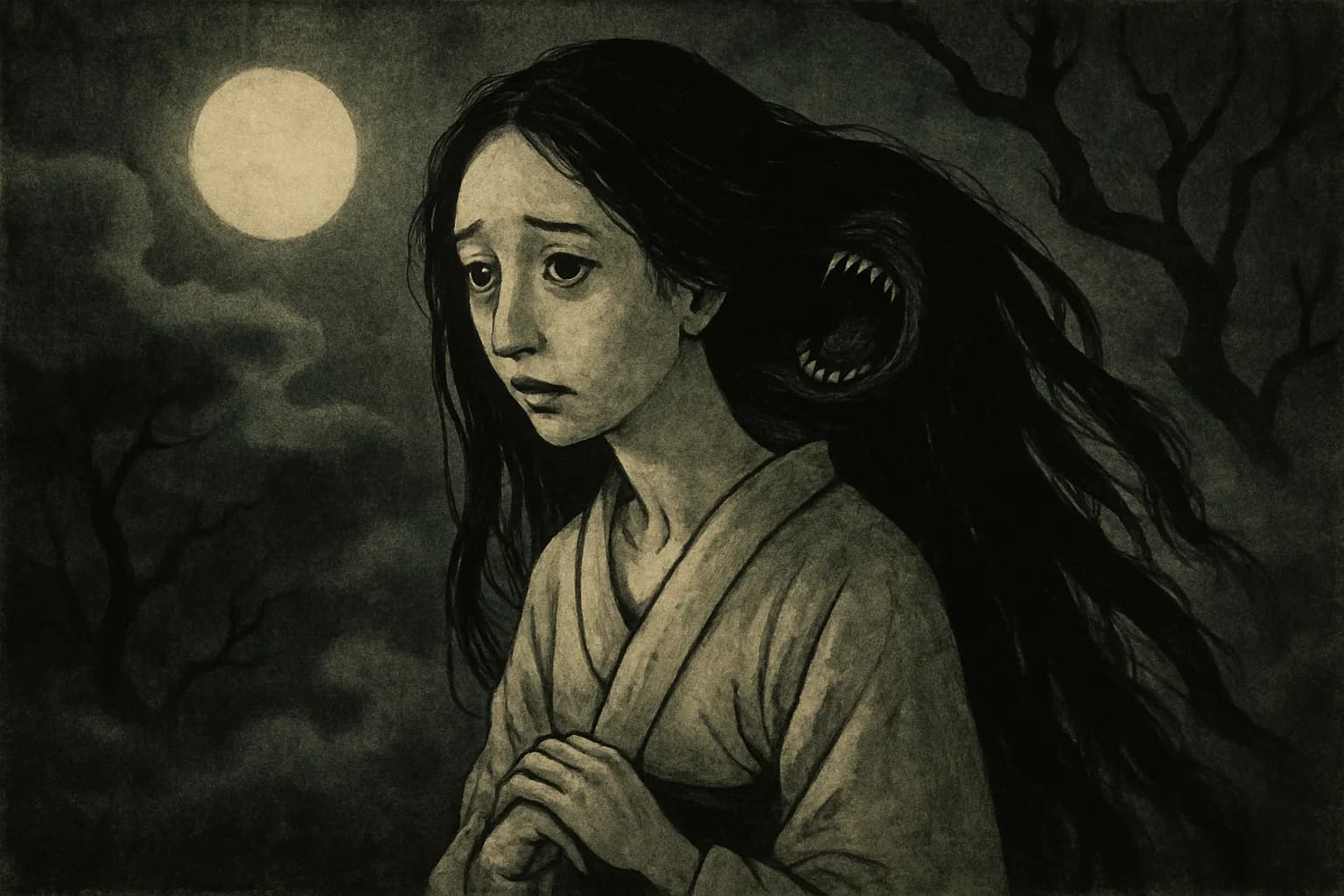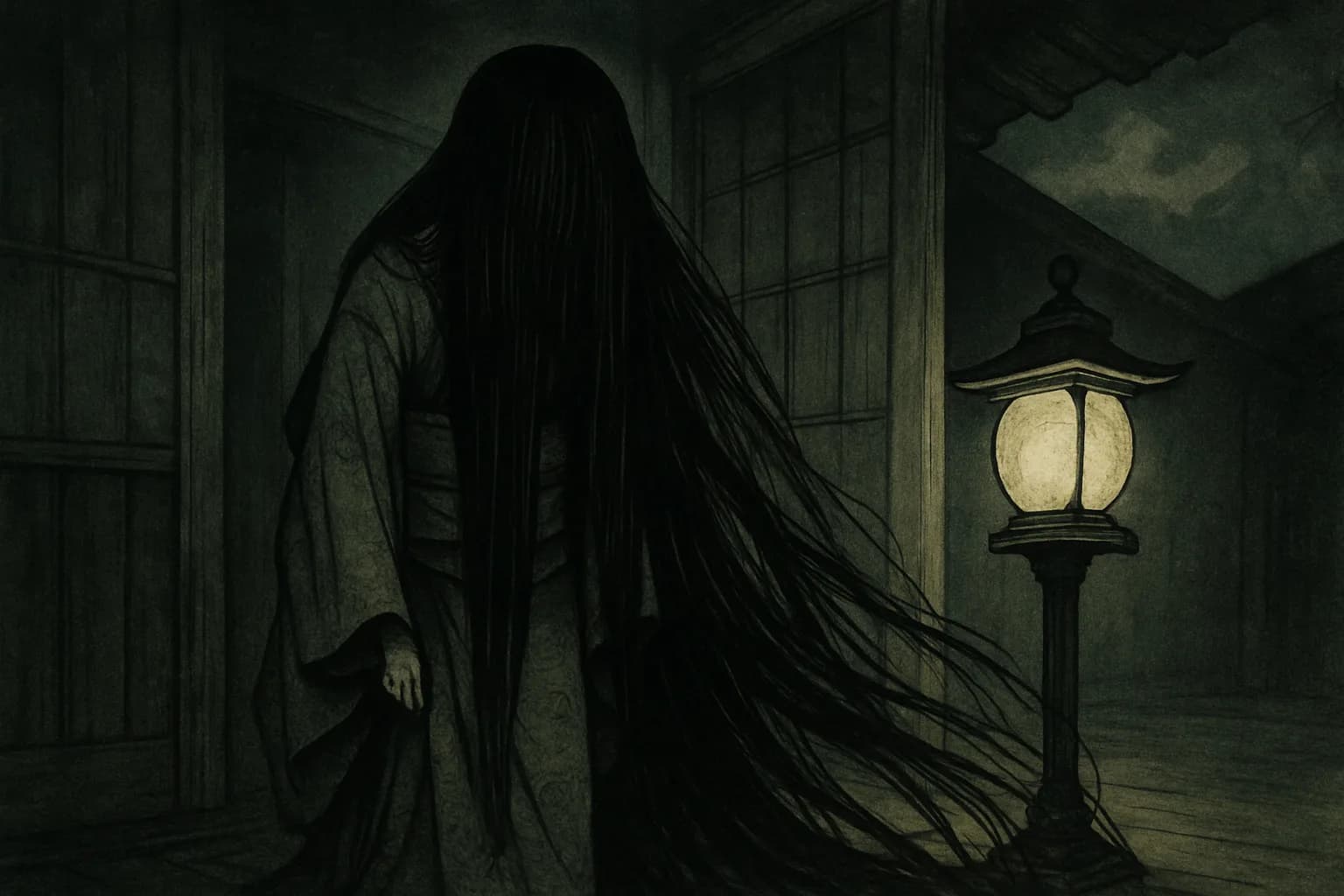
Walk through Yoshiwara, Edo's licensed pleasure quarter, after dark in an Edo-period kaidan (ghost story) and you might catch sight of a woman you recognize — a courtesan you've visited before, her hair loose and glossy down her back. Call out to her. If she turns around, you will wish she hadn't. Beneath the hair there is no face at all, just more hair, pouring out where her eyes and mouth should be.
That is the kejoro (毛倡妓), the "hair courtesan," a yokai that Toriyama Sekien recorded in his 1779 bestiary Konjaku Gazu Zoku Hyakki and left almost entirely unexplained. He gave her a name, a picture, and a single line of description. Everything else was left to the reader's imagination, which is presumably the point.
What does it look like?
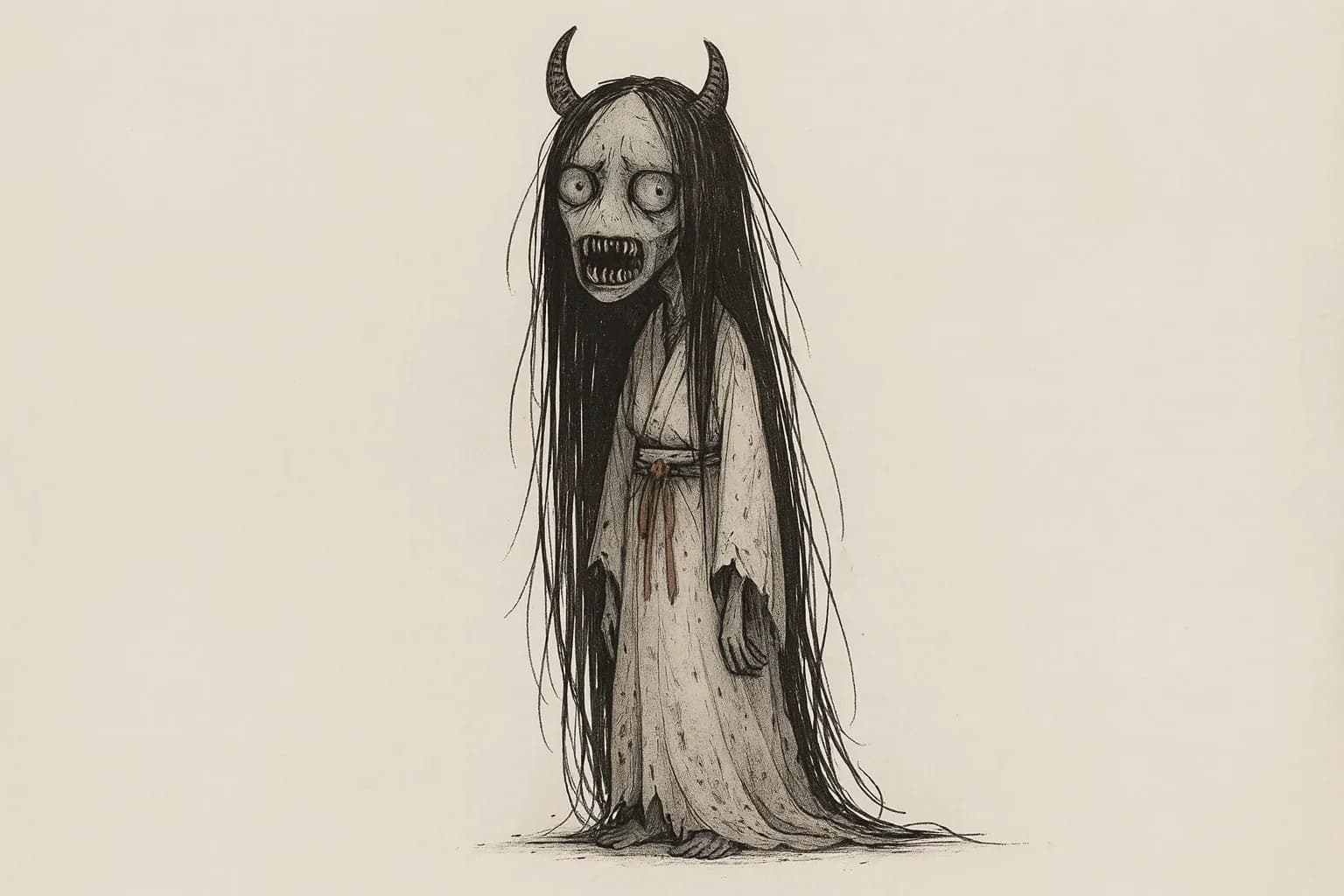
From behind, a kejoro is indistinguishable from any working courtesan of the pleasure district: fine robes, an elaborate hairstyle loosened for the evening, an inviting posture. It's only when she turns that the illusion breaks. Sekien's picture and the tradition that followed it show a mass of thick, disheveled black hair falling from the crown of her head and swallowing her face whole — no eyes, no nose, no mouth, just hair where a face should be.
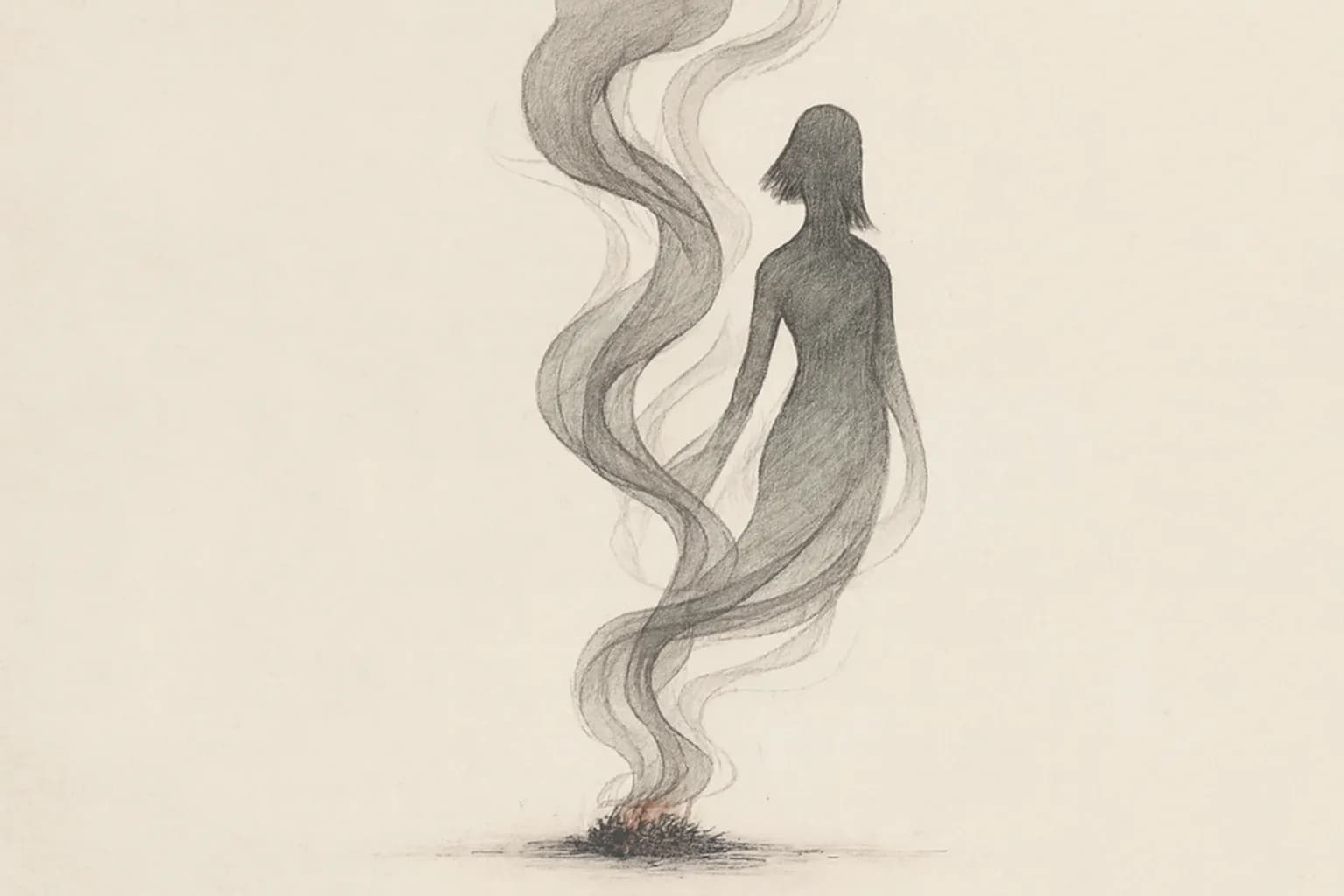
Even this is contested. Some retellings picture a woman genuinely covered head to toe in hair, an almost animal pelt under her clothes. Others go further and suggest there is no woman there at all — that the kejoro is hair given shape and appetite, with nothing solid underneath it. Sekien's own text doesn't settle the question, and Edo-period artists illustrated her both ways.
A courtesan who is not what she seems
The story attached to Sekien's entry is simple and short, in the way that the best kaidan often are. A man in the Yoshiwara district spots a courtesan walking ahead of him and thinks he knows her — perhaps a woman he's spent an evening with before. He approaches, maybe calls out. She turns.
What he finds waiting for him is the hair. No face to recognize, no eyes to meet his. Later tellings, circulated in the cheap illustrated kibyōshi booklets that Edo readers devoured for entertainment, added that the shock alone could be enough to kill a man, or at least leave him raving. The kejoro doesn't chase, doesn't grab, doesn't need to. She only has to turn around.
Where it comes from
The Yoshiwara pleasure quarter was the obvious setting for a story like this. It was a place built entirely on appearances — courtesans ranked and marketed by beauty, clients competing for the most desirable woman in the house — and a monster that punishes a man for chasing a pretty face from behind fits that world with uncomfortable precision. Some readers of Sekien have taken the kejoro as exactly that: a piece of dry social commentary on a district where a woman's worth began and ended with her looks, dressed up as a ghost story so it could travel further than a moral essay ever would.
There's also a possible echo of shinjū-date, a real practice in which Yoshiwara women were said to shave patches of their own hair as a drastic, self-inflicted way of making themselves undesirable to an unwanted patron — a way of controlling, however painfully, who got to see them. Whether or not Sekien had that specifically in mind, the kejoro shares its logic: hair as something a woman in that world could use to unmake herself in front of a man's eyes.
Unlike a fox-spirit or a house god demoted into folklore, the kejoro seems to have no life before Sekien's book. She belongs to a small, strange category of Edo yokai that were less collected from oral tradition than composed for the page — one image, one caption, released into the world of hyakki yagyō parade scrolls and pleasure-quarter fiction to be picked up, illustrated again, and half-explained by whoever encountered her next.
Kejoro today
The kejoro has stayed mostly a specialist's yokai, better known to readers of Sekien's bestiaries and yokai encyclopedias than to a general audience — she has no cucumber, no folk remedy, no shrine. She shows up occasionally in yokai-themed manga, art books, and card games that work directly from Sekien's catalog, usually rendered close to his original composition: courtesan's robes, elegant from the back, a black curtain of hair where the face belongs. It's a small, sharp image, and it hasn't needed much updating in two and a half centuries to still land.