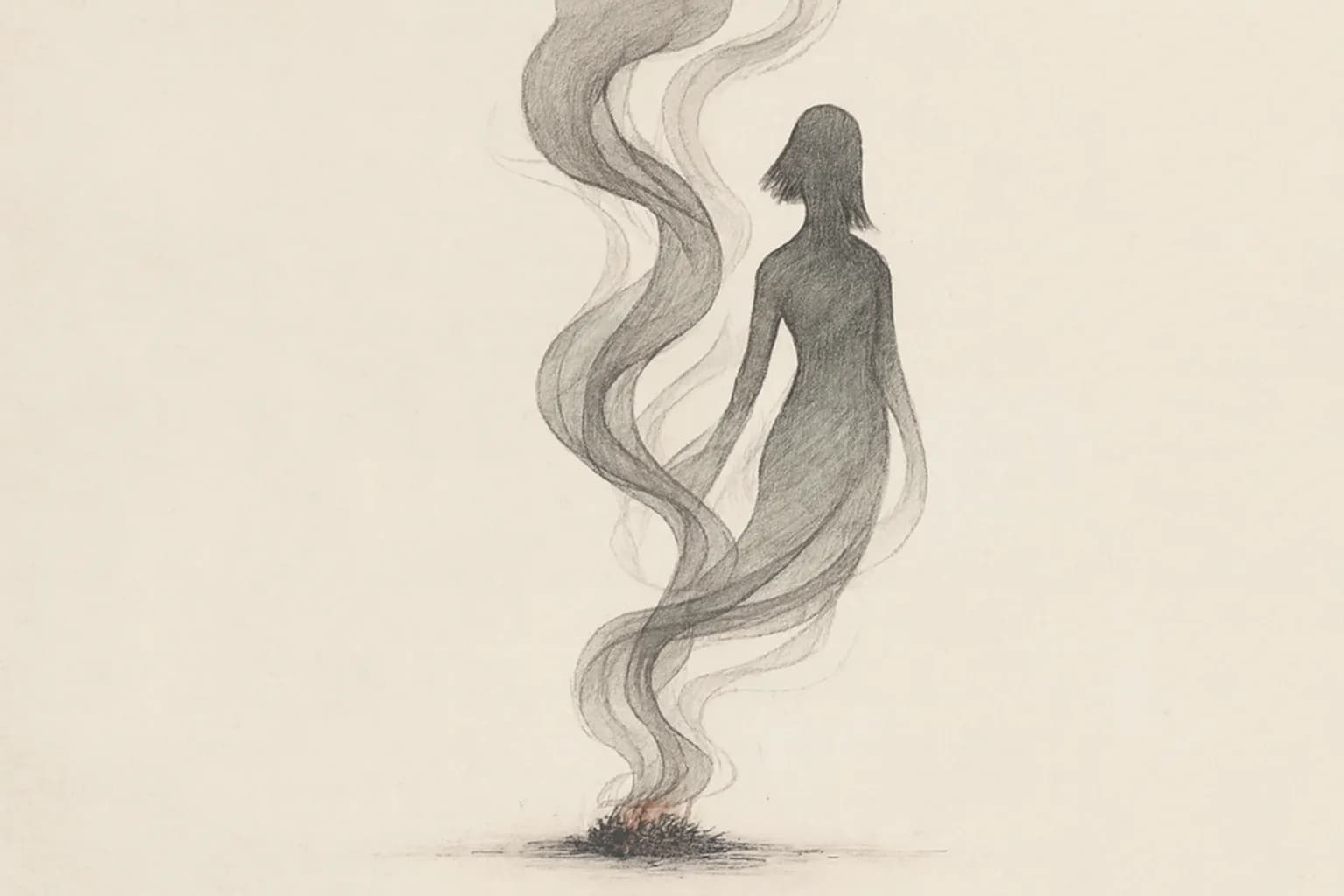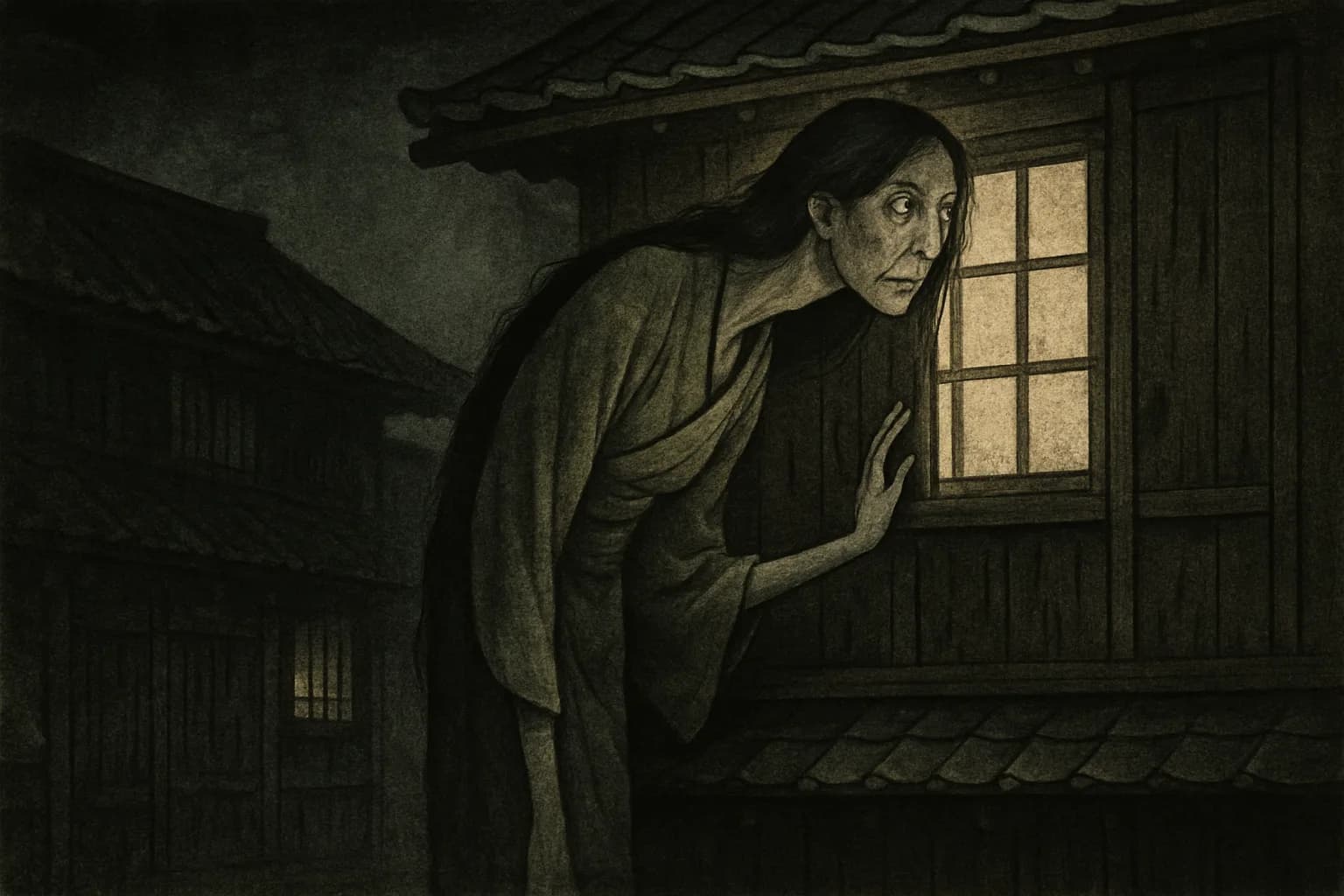
An upstairs room in the pleasure quarter is where a woman was meant to be seen, framed in a lit window for the street below. Taka-onna reverses the arrangement. She is the one outside, in the dark, and by the time anyone notices her she has already stretched past the rooftops to look in from above — a face at a second-floor window that has no business being that high off the ground.
What does it look like?
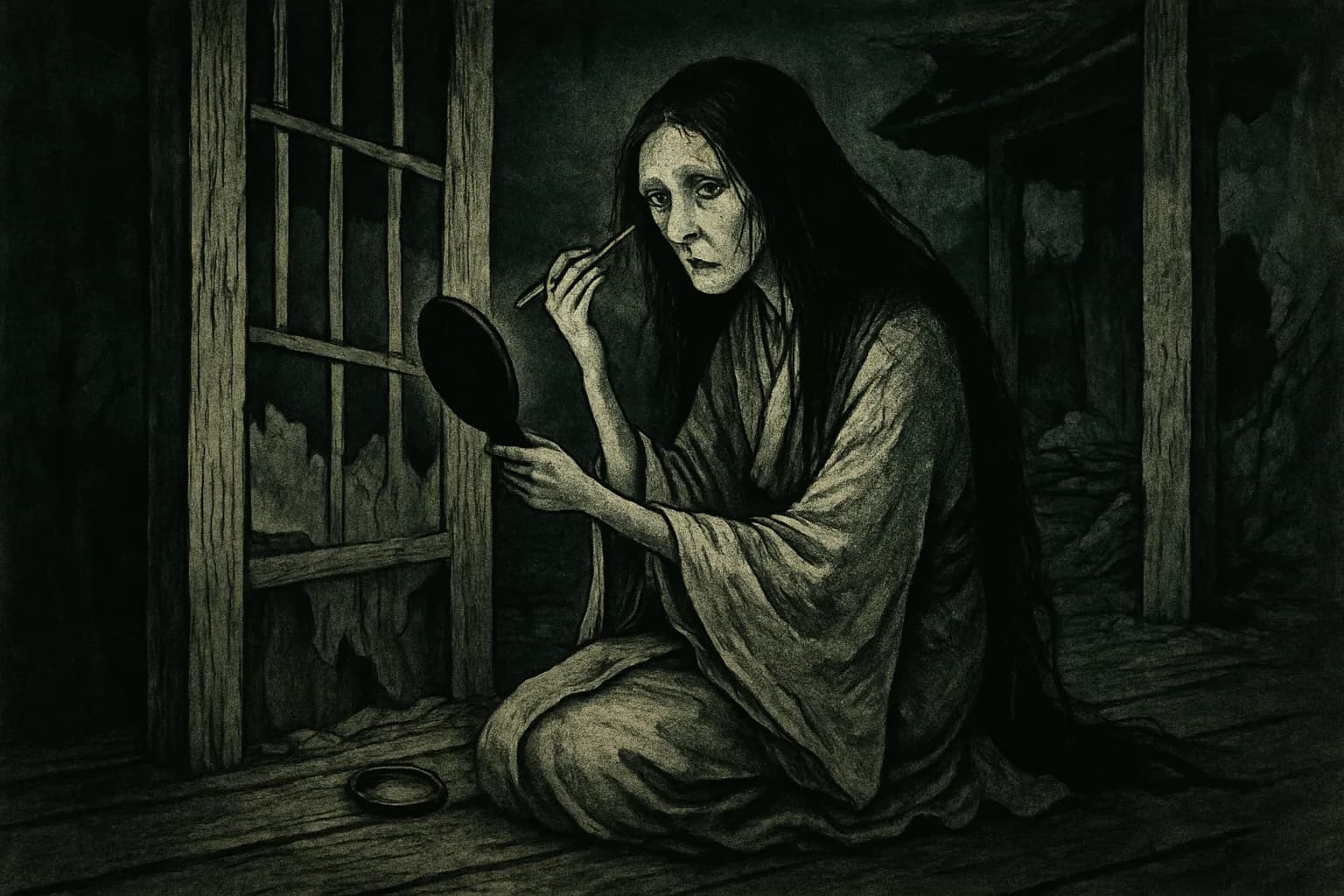
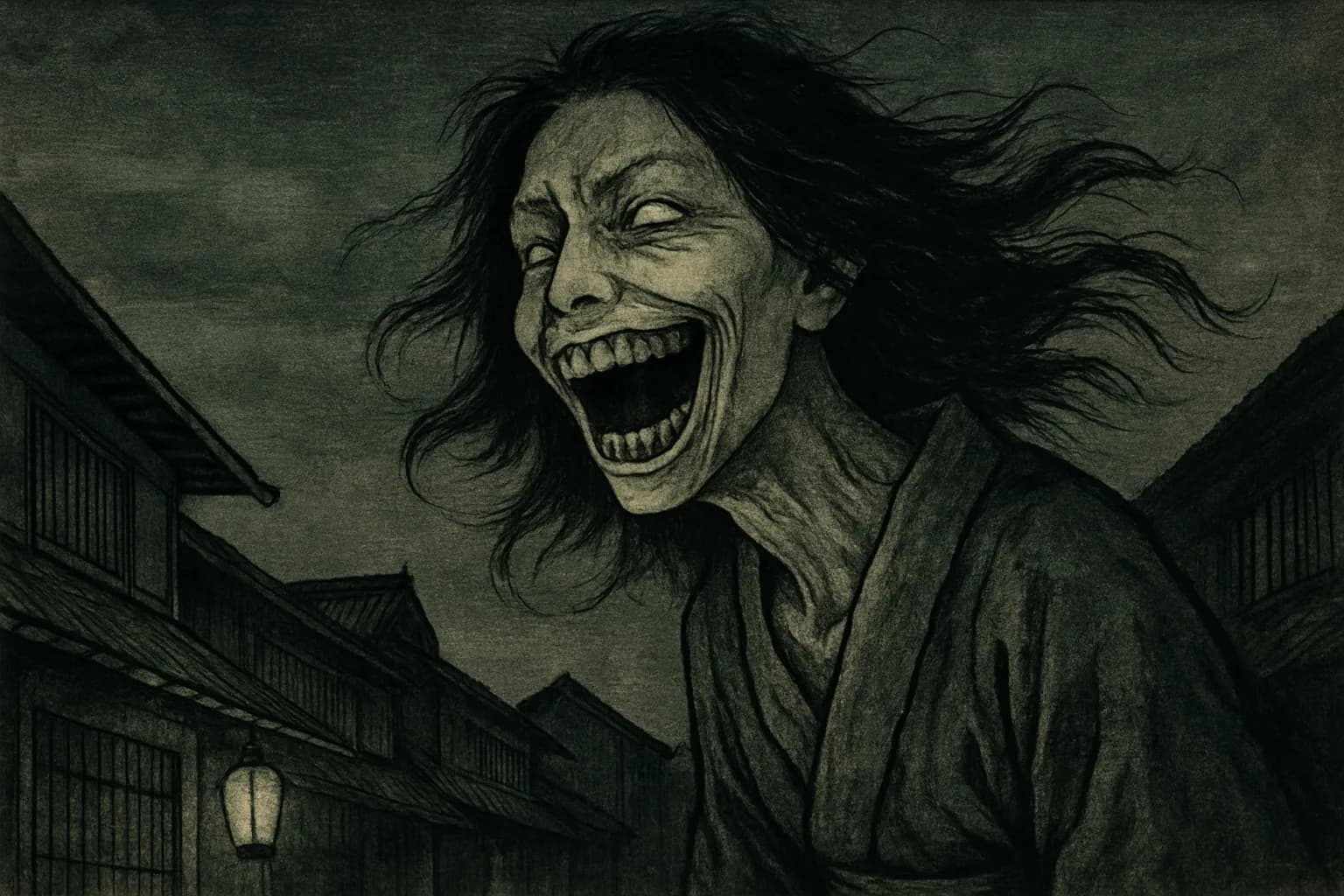
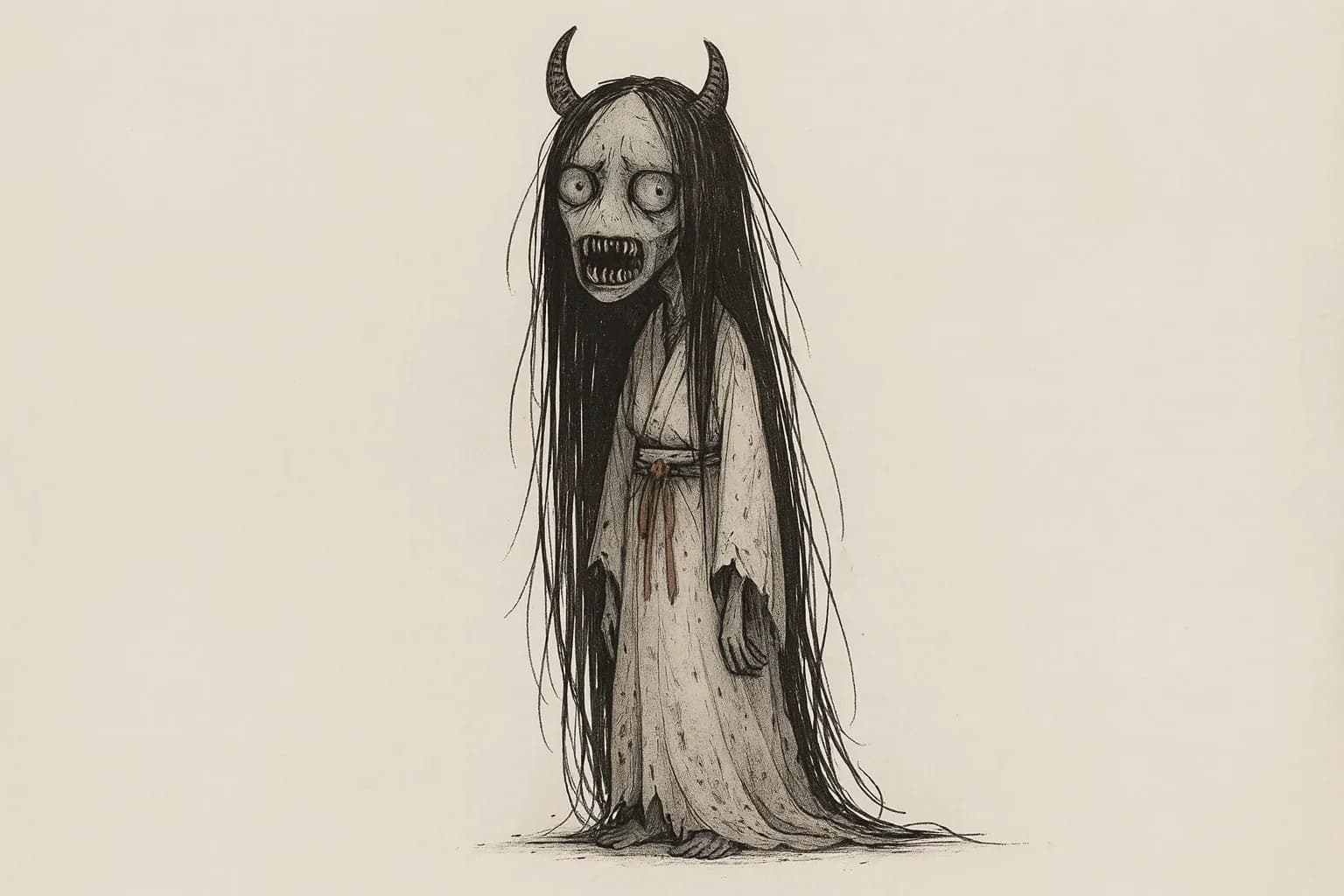
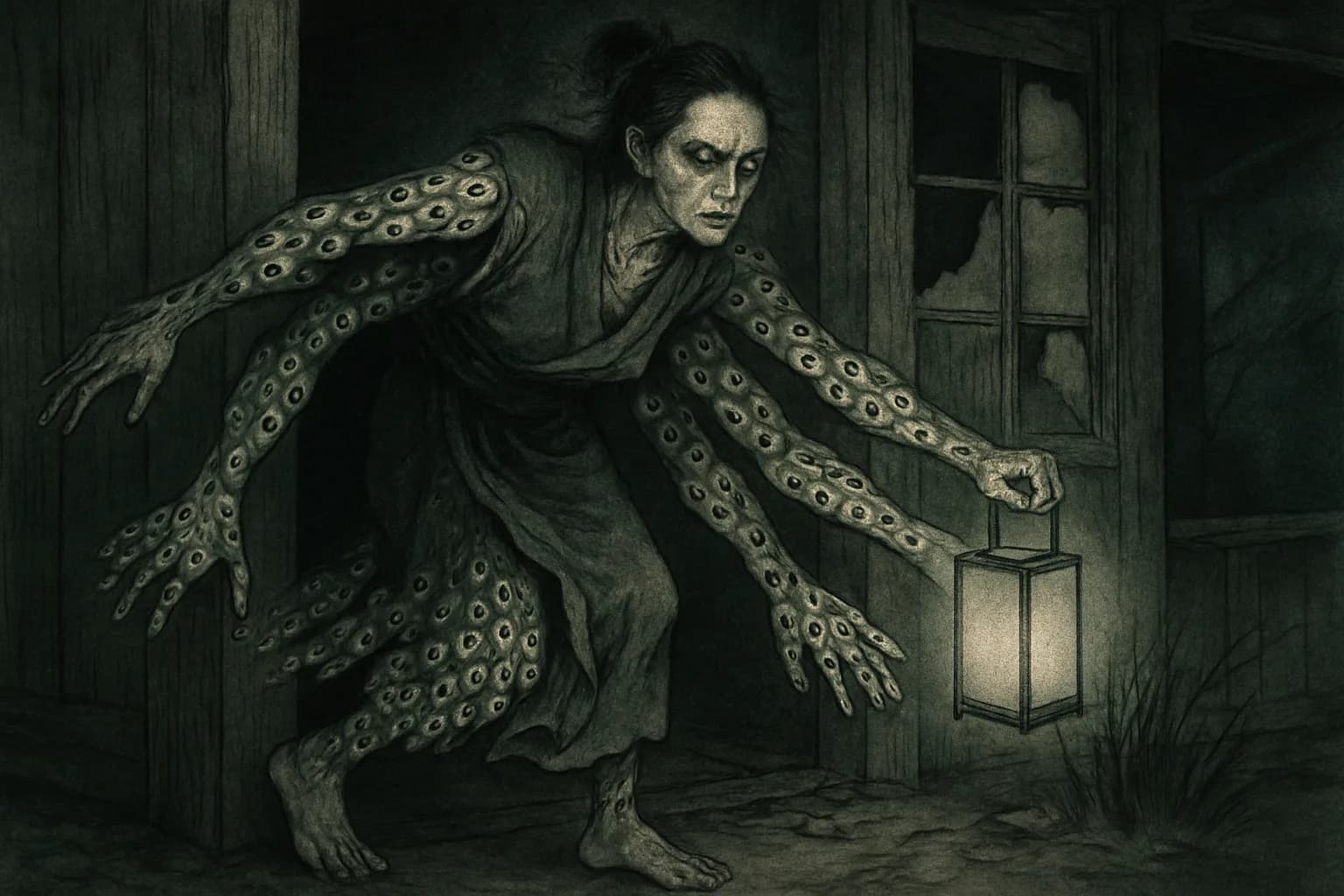
Toriyama Sekien's print, from his 1776 catalogue Gazu Hyakki Yagyo (画図百鬼夜行, "The Illustrated Night Parade of a Hundred Demons"), shows an ordinary-looking woman in kimono whose neck and torso have drawn out to an impossible length, lifting her head level with an upstairs window while her feet stay planted on the street below. Nothing about her face is monstrous. It is only the proportions that are wrong — a body stretched like taffy so that an eye which belongs at street level ends up staring in through glass or paper screens two stories up.
A yokai built on a single gesture
Sekien's catalogues are full of entries with almost no accompanying story, and Taka-onna is one of them. There's no rescued village, no named victim, no ritual for driving her off — just the image and the name, "tall woman," doing all the work. What the picture communicates on its own is a woman driven, by whatever emotion put her there, to abandon the modesty expected of her and make herself grotesquely visible in pursuit of a look inside somewhere she wasn't invited.
The personality folklore has settled on for her is envy — the same appetite that, in countless Edo-period stories, was blamed for turning ordinary women into monsters when jealousy, curiosity, or desire ran past the bounds of what a household could tolerate. Read that way, Taka-onna isn't hunting anyone. She's straining upward to see something she's been shut out of: a rival, a lover, a life going on without her one floor above street level.
A relative in the same neighborhood
Taka-onna keeps close company with Rokurokubi, the yokai whose neck stretches and coils at night while her body sleeps, and both are generally placed in the same Edo pleasure-quarter milieu — a world of courtesans, teahouses, and upper-floor rooms where being looked at was a professional condition and looking back was not supposed to happen from outside. Where Rokurokubi's stretching is furtive, confined to a sleeping woman's own room after dark, Taka-onna's is public and upright, carried out in full view on the street. Both figures take an ordinary anatomical feature — neck, height — and push it past the point of belonging to a person, using the distortion to mark a woman whose wanting has become visible on her body.
Where it comes from
No source predates Sekien's print, and no regional oral tradition independent of it has been recorded, which puts Taka-onna among the yokai that scholars generally treat as artist's inventions rather than transcriptions of village belief. Sekien worked by taking an anxiety already circulating around him and giving it a single, drawable image; here the anxiety is a very concrete feature of Yoshiwara-era urban life, where upper-floor windows were where courtesans displayed themselves to the street and where jealousy, gossip, and unwanted looking were constant undercurrents of the trade. Taka-onna inverts the usual direction of that gaze — instead of a woman framed in the window for others to look at, she is outside, straining to see in — and the discomfort of the image comes from how easily either position could belong to the same woman on a different night.
Taka-onna today
Taka-onna has stayed almost entirely inside the reference literature — reprinted in modern editions of Sekien's four print series and cited in yokai encyclopedias alongside her Edo pleasure-quarter relatives, but without a defining legend, a signature victim, or a battle that would give an illustrator or game designer something to build a set piece around. She hasn't picked up the pop-culture life that Rokurokubi has. What's left is the print itself: one woman, stretched taut against a row of rooftops, looking in at a window that was never meant to have anyone outside it.